These ideas run from a simple hook set to a full pull-out pantry install, and the one that fits your space is decided by whether you own the walls or just the weekend.
A butterfly hook in tile grout takes a masonry bit and a willingness to patch later; a fabric over-the-door organizer takes nothing but a door that still closes when the pockets are full.
1. Shelf Risers
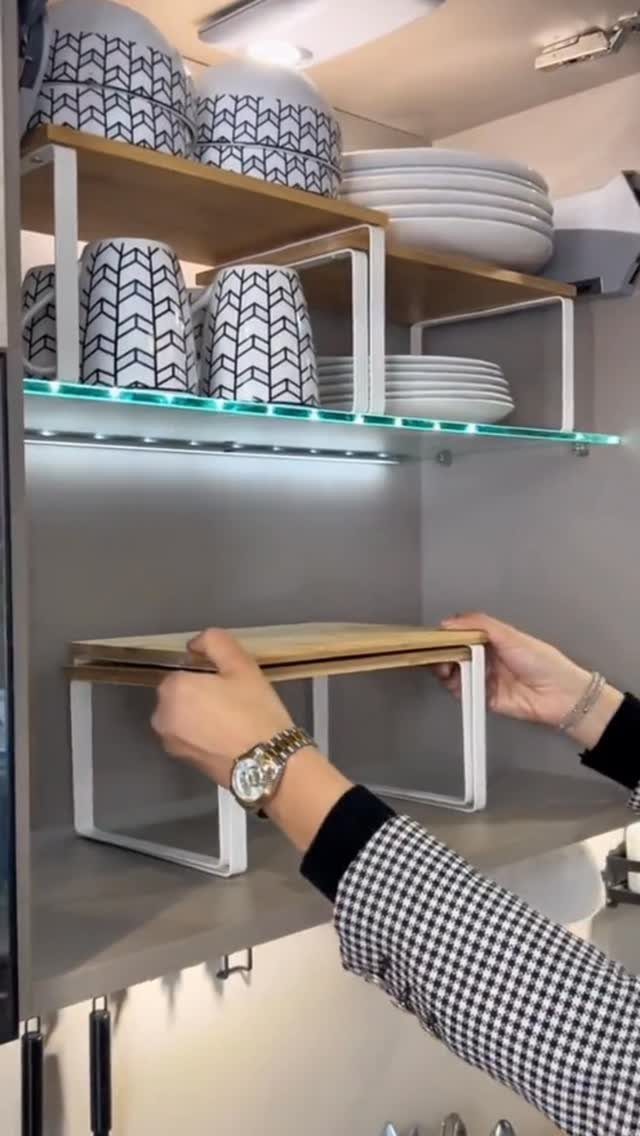
A shelf riser adds a second level inside a cabinet, turning one shelf into two without any installation. A white metal frame with a wood surface reads cleaner than all-metal versions and hides crumbs better than raw wood.
I look for legs that sit flat rather than clip-on brackets, since those work on wire shelving too.

【Maximize Wardrobe Space】Effortlessly organize pants, suits, scarves, skirts, ties and more. This multi-functional closet rod transforms any closet by utilizing vertical space efficiently, turning clutter into an orderly system.

【Pull Out Valet Rods】This closet valet rod glides smoothly on the track and features a special damping system, allowing you to effortlessly organize and access your clothing. Simply pull it out when needed, and it slides back smoothly and effortlessly.

★Material &Size :Cold steel, Stainless steel, Plastic.Durable for long time to use.292mm/11.5inch Size,Suitable for wardrobes with an internal depth of 30–35 cm(11.8–13.8 inches).
2. Closet Hanging Organizers
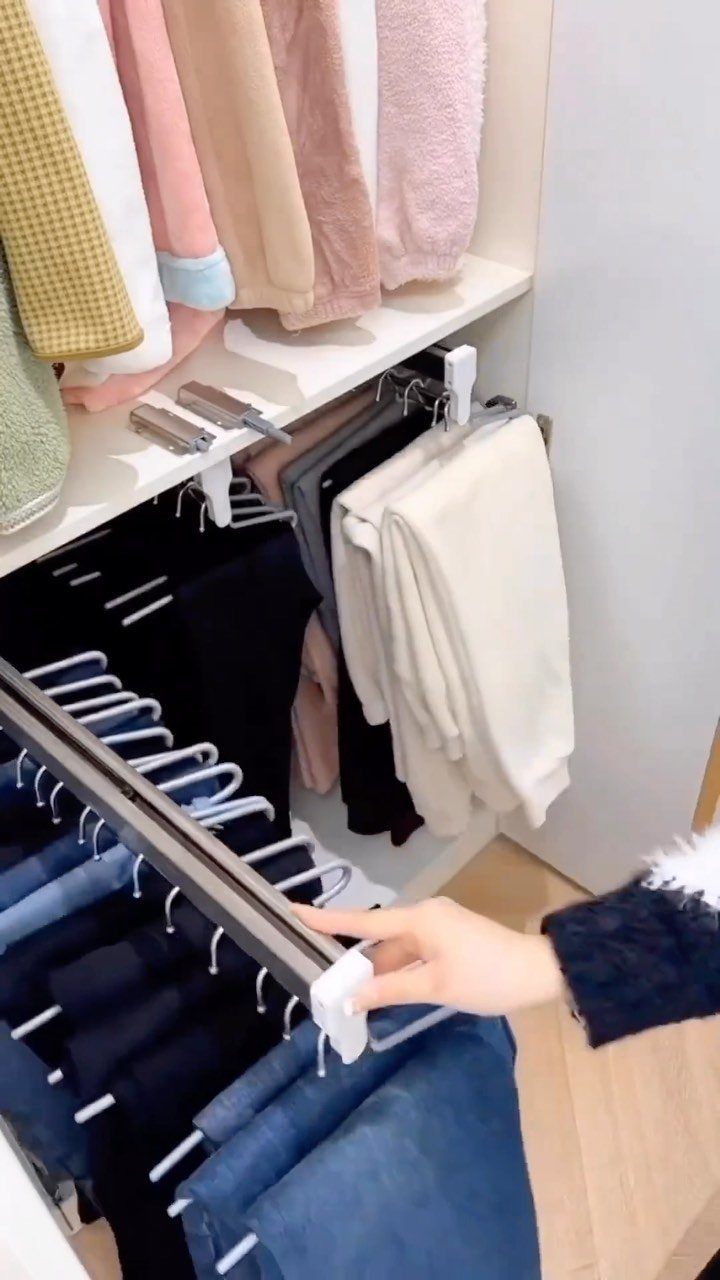
A slide-out pants rack mounted to closet sides keeps trousers pressed and visible without consuming rod space the way clip hangers do. Hanging inside a narrow white closet, folded clothes stack above while standard hangers hold other pieces alongside.
This works when you have vertical depth to spare but width is tight.
Check that your closet walls are solid enough for the mounting hardware; particleboard backing strips out under repeated pulling. I would skip this in a rental with thin hollow-core doors unless you are willing to patch later.

80L Expandable Larger Capacity : Under the bed storage with dimensions 31.5 x 15.75 x 9.45 inches (with wheels), height adjustable from 9.45" to 11.02" to fit most bed frames. Perfect for storing clothing, shoe, bedding, pillow, towel, and seasonal decor like wrapping paper, Christmas and Halloween supplies. Slides smoothly under bed, couch, closet and table to maximize unused space

[Quality Metal Container] Never settle for flimsy plastic&linen under bed storage bins which rip all too easily. This under the bed storage container is completely made of metal, compared with other under bed storage bins, smaller mesh size of the shelf is used for a larger load-bearing capacity. Plus, the whole frame was welded into a whole that never falls apart.

Leather Handles&Rotating wheels: our underbed storage is equipped with leather handles, which are comfortable to hold; it comes with 4 x 360°rotating wheels, two of which have locking function; when placed under the bed, the wheels make it very convenient to push and pull
3. Floating Shelves
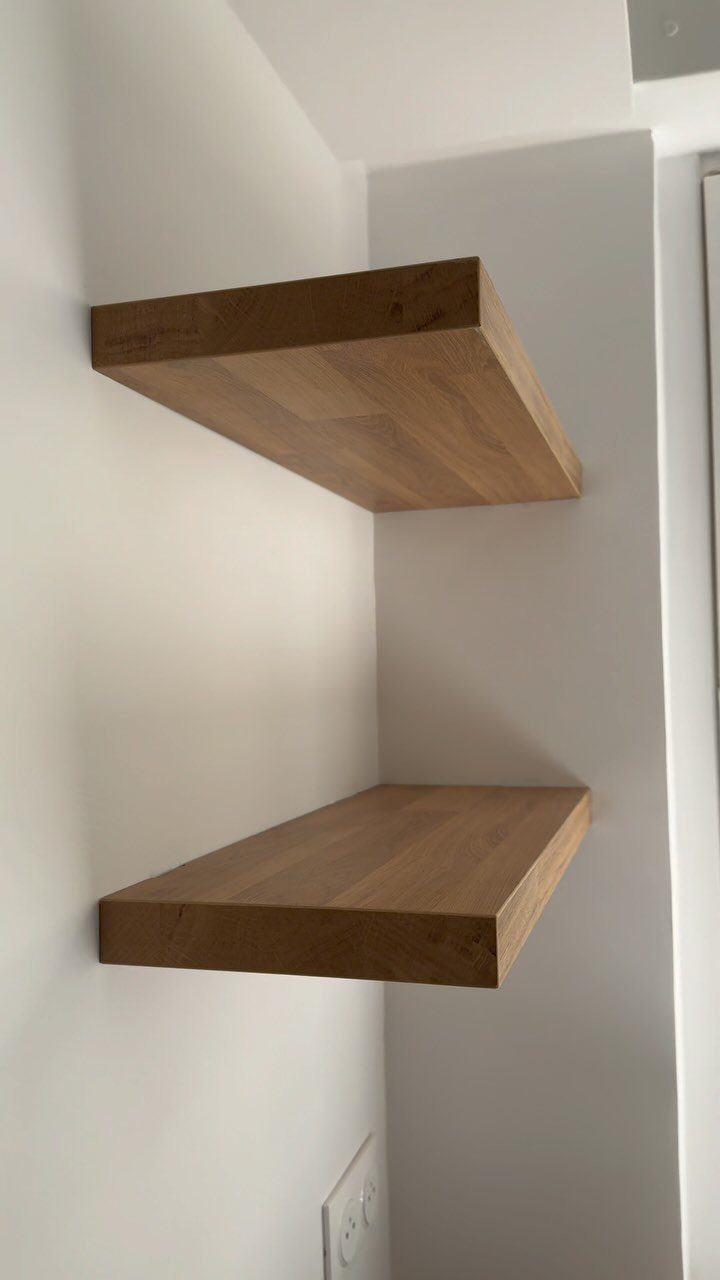
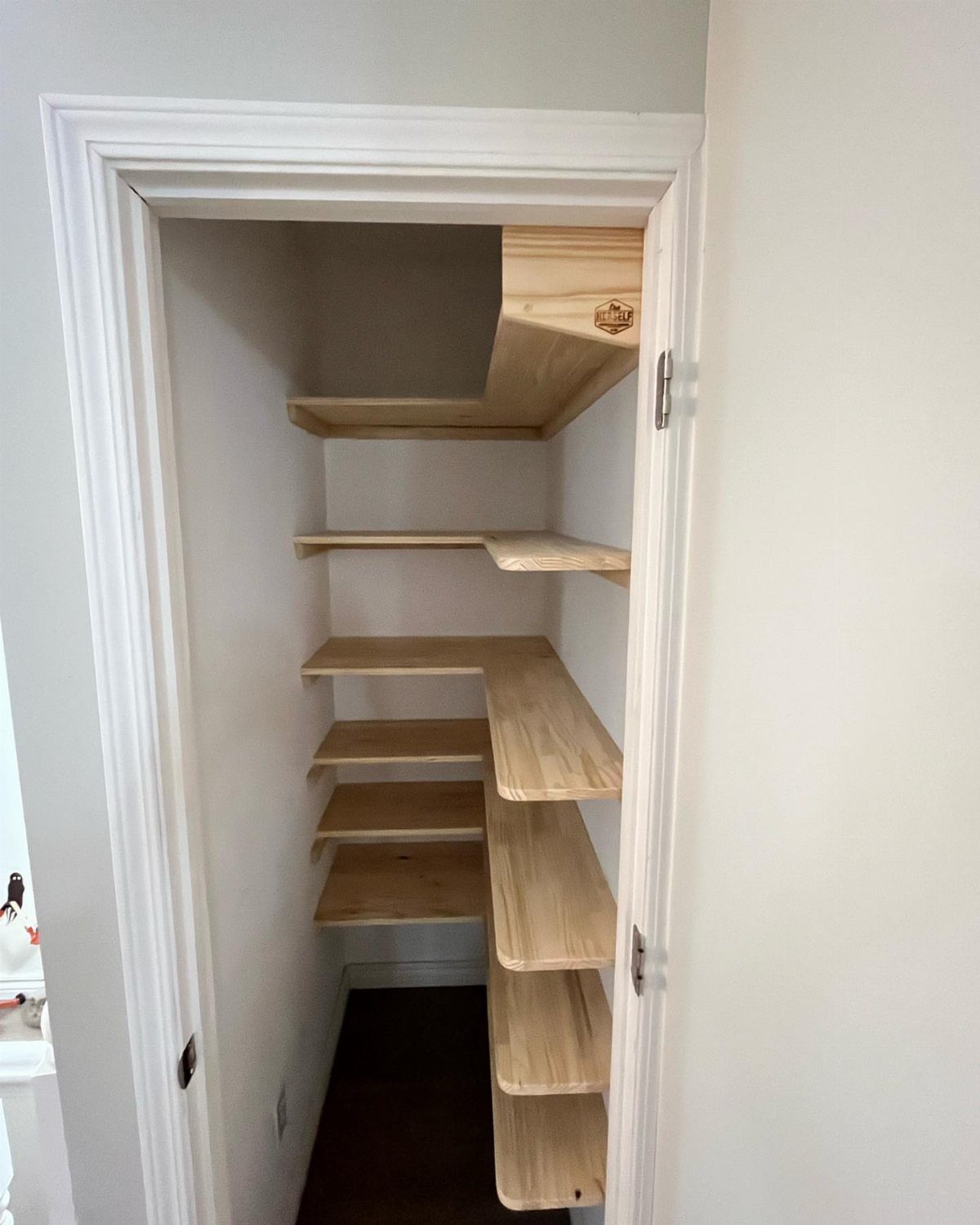
Thick natural wood shelves bracketed into a wall niche turn dead corner space into display or storage without legs intruding below.
Set in a white alcove, the wood tone becomes the single warm element and keeps the look intentional rather than cluttered.
Installation means finding studs or using toggle bolts rated for the shelf weight plus whatever you will load them with.
I would not set these above a sofa or bed unless the hardware is heavy-duty; the narrow format looks light but the wood itself is dense.
A level matters more here than on a long run, since any tilt reads as a mistake in a tight corner.

【Maximize Corner Space】This set of 2 quarter-circle floating corner shelves turns wasted wall corners into usable storage space. Ideal for living room, bathroom, bedroom to organize small items and display decor.

MAXIMIZE YOUR ROOM SPACE: Set of 3 corner wall shelves make full use of the blank corners in your room to increase more storage space, keep your room organized and neat, reducing clutter, also highlighting your rustic decor. A great addition to your living room, bathroom, kitchen and office
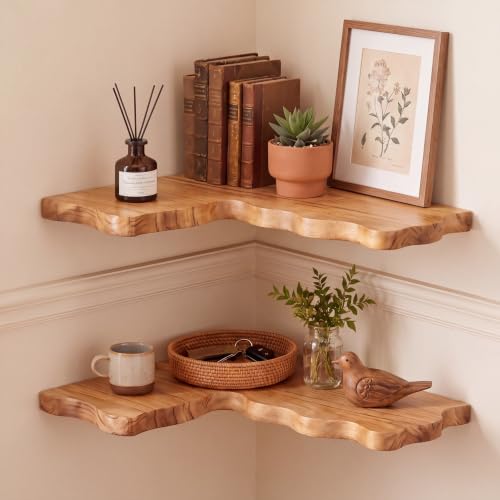
Solid Wood: made from paulownia wood, each corner floating shelf measures 15.75 inches long and 11.81 inches wide; These shelves are designed to be sturdy and moisture-resistant; Finished with a rustic burnt treatment, they showcase beautiful natural wood grain and add unique charm to any space while ensuring long-lasting use as wall shelves or storage shelves
4. Under-Bed Storage
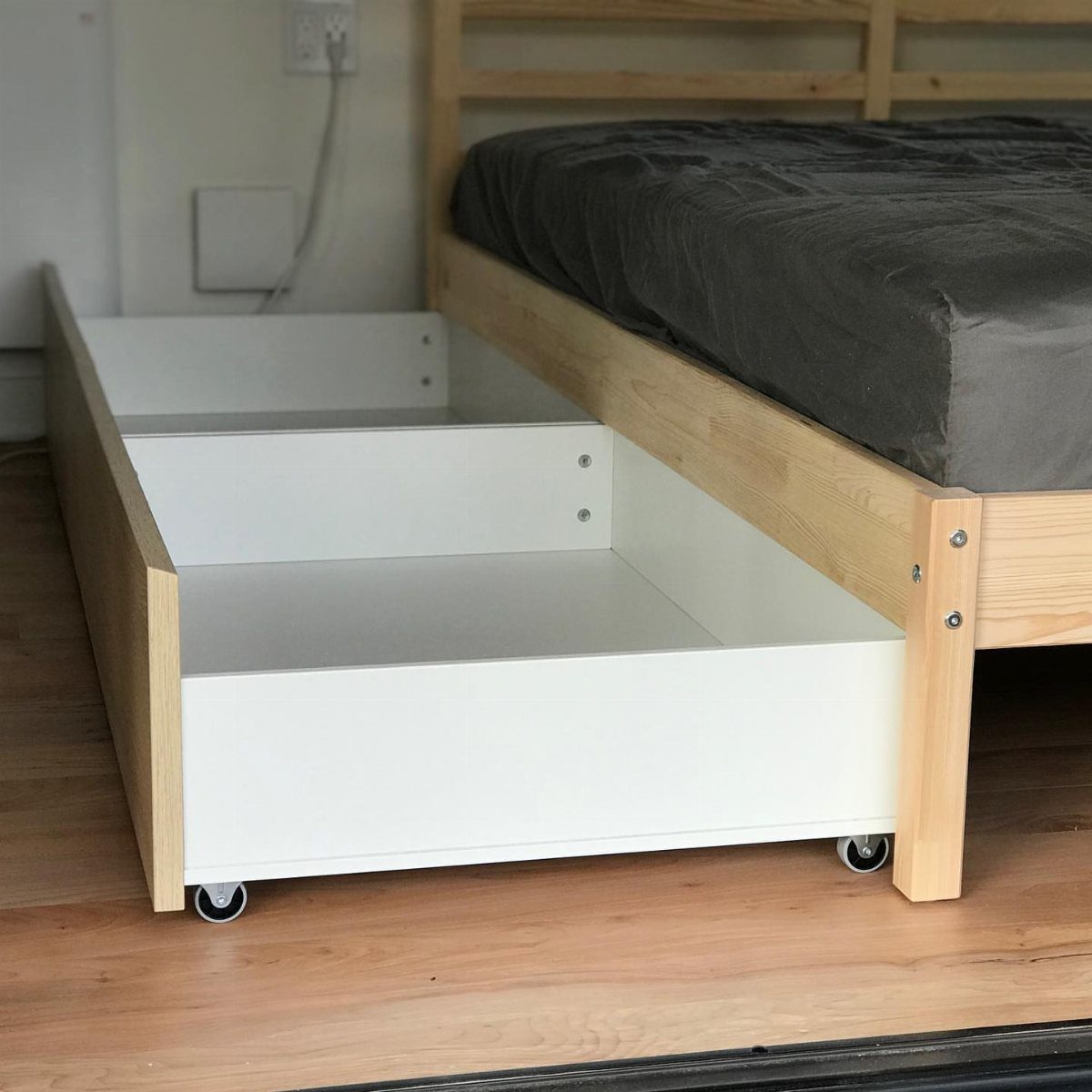
A rolling drawer on casters beneath a bed frame brings seasonal clothes or spare linens within reach without lifting the mattress.
A white unit matching a light wood frame pulls onto laminate flooring, which matters because carpet would fight the wheels.
Check your bed frame height first; low frames leave no room for drawers, and even shallow ones need more space than most people guess.
I prefer front-pull designs to side-access models unless the bed sits in the middle of the room, since against a wall the side drawer becomes half-useable.
Dust settles here no matter what; anything stored under a bed needs a closed container or accepts occasional vacuuming.

[Plenty of Storage] Keep your cooking essentials, such as spice jars, containers, cans, cutlery, and cookbooks organized, easily visible, and quick to find with these kitchen organizers and storage. They can also serve as a small food table for cats

【Adjustable Length and Height】: ---The package includes 2 pieces of kitchen counter shelf of size (12.6"-20.5")L * 8.26"W * 8.74"H. Both can expand length from 12.6" to 20.5" and adjust shelf height from 4.5 to 7.3 to fit your storage needs just about anywhere

【2 Pcs Spice Rack Organizer】These small racks made of premium PET material and stainless steel,each measures 11.8x 8.4 x 5.9 inches
5. Narrow Rolling Carts
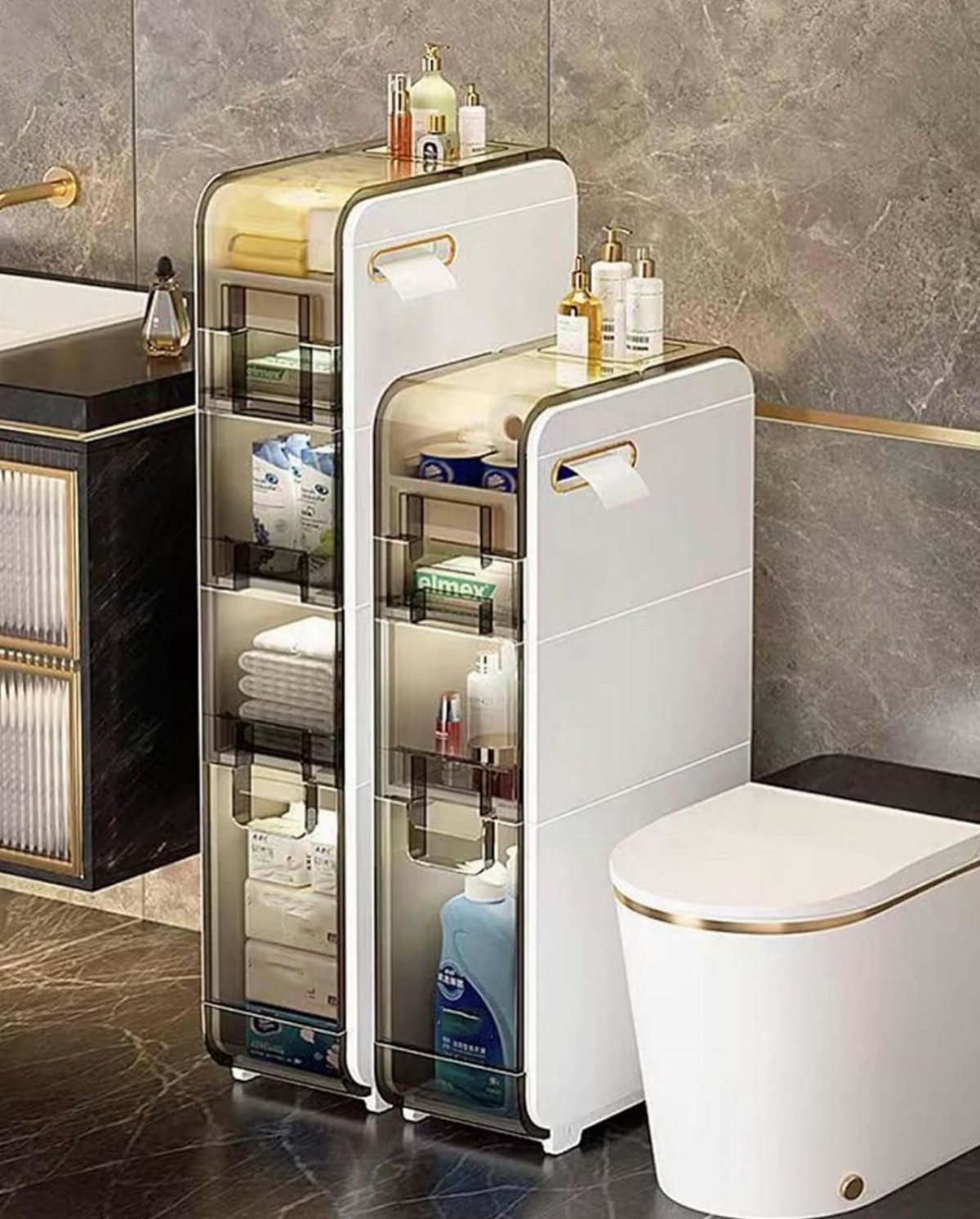
A slim cart slotted into the gap beside a toilet turns bathroom dead space into storage for toiletries, paper goods, and cleaning supplies.
Clear drawers let you see contents without pulling each one, which matters more in a bathroom where hands are often wet.
Measure the gap at floor level, not just the top; tile lips and baseboards steal width.
I would choose plastic over metal for this location, since humidity warps anything with a wood component over time. These read utilitarian, so I use them where function clearly matters more than display.

1.Gap Storage Expert: 4-Tier Intelligent Height Differential Design:(4.9"W x 38.7"H x 15.3"D)Engineered for modern compact living! With its slim 4.9-inch profile, this organizer fits perfectly into narrow gaps between furniture and appliances. Its core advantage lies in the innovative four-tier height differential design: the lower two tiers provide generous 12.5" , while the upper two tiers feature an optimal 9.2" height . One unit accommodates all sizes, maximizing vertical space utilization.

Flexible Slim Storage Cart: The bathroom rolling utility cart is equipped with 360°rotating wheels, the storage cart can be moved to any corner of the house to store items. You can flexibly use it for storage in office, bathroom, laundry room, kitchen, narrow places,etc

Maximize every inch of your space:Measuring 4.9" W × 15.3" D × 26.1" H, slides perfectly into narrow gaps between the toilet and sink, refrigerator and counter, or washer and wall. Its smart tiered design : the bottom layer accommodates taller items up to 12.5 inches in height, while the middle layer is perfect for daily essentials under 9.2 inches, ensuring a spot for items of all sizes. Combined with 360-degree swivel casters, it effortlessly tackles organization throughout your home.
6. Hooks and Hangers
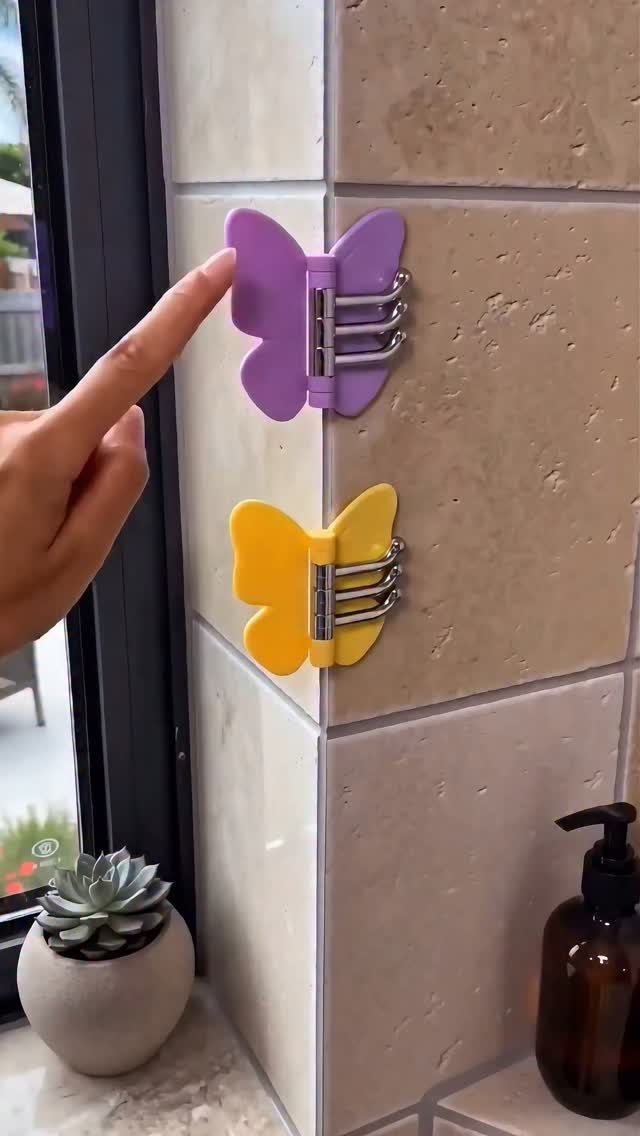
Butterfly-shaped hooks in tile corners hang washcloths, loofahs, or lightweight tools where no flat surface exists. Purple and yellow hooks add color to an otherwise neutral bath, though I would choose subtler tones in a shared or resale-minded space.
Tile installation means drilling with a masonry bit and using wall anchors, or accepting adhesive hooks that fail eventually in steam.
I prefer screws in grout lines, where a patch is easier than replacing a cracked tile. Check the hook projection; too deep and it catches elbows in a narrow shower.
【Pull Out Valet Rods】This closet valet rod glides smoothly on the track and features a special damping system, allowing you to effortlessly organize and access your clothing. Simply pull it out when needed, and it slides back smoothly and effortlessly.
【Pull Out Valet Rods】This closet valet rod glides smoothly on the track and features a special damping system, allowing you to effortlessly organize and access your clothing. Simply pull it out when needed, and it slides back smoothly and effortlessly.

【2026 Upgraded Light-Up Pull Out Valet Rods】The upgraded hanger rod features dual LED strips with 100 high-density LEDs for bright, energy-efficient lighting. It has a special damping system for smooth sliding, making it easy to organize and access clothes. Just pull it out and it slides back effortlessly.
7. Ceiling Hanging Racks
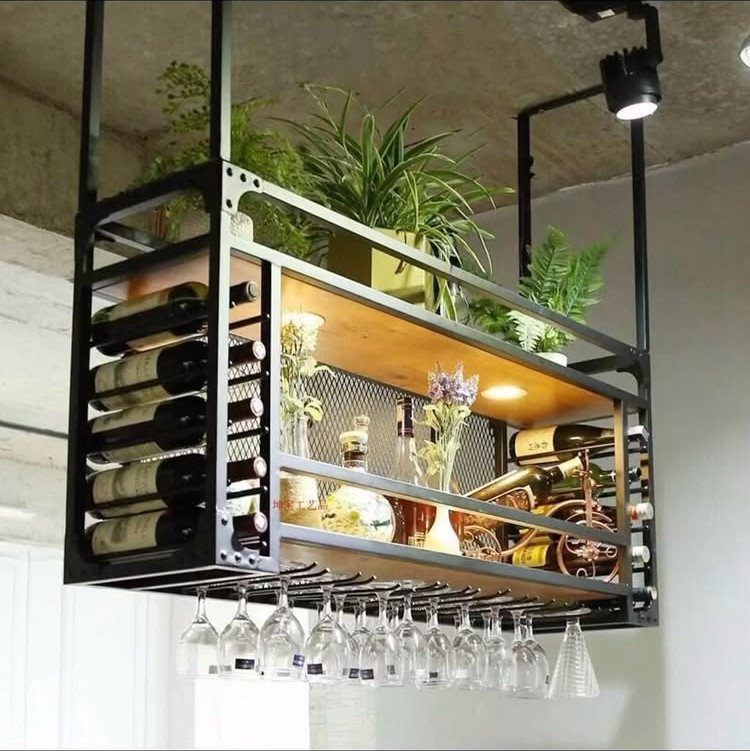
A ceiling-mounted bar turns overhead space into storage for bottles, glassware, or lightweight gear that would crowd counters below.
A black metal frame with a wood surface reads industrial, so I would keep the load light and the items functional rather than decorative.
Concrete ceilings need a hammer drill and expansion anchors rated for the total weight; drywall calls for toggles or a joist finder.
Either way, the chain or rod length decides whether you duck under it or walk clean through. I would hang this over an island or bar zone, never a main traffic path.

Hold Up to 66lbs: Yecaye under bed storage with wheels is made of high quality 300D PU fabric and sturdy metal frame, can hold up to 66 lbs, stronger than other fragile metal mesh, spacious capacity perfect for storing clothes, toys, books, shoes and other heavy items also won't compromise stability and durability

【Say Goodbye to Cluttered Space】– Tired of cluttered closets and wasted space? Our under bed storage containers measure 30" L x 16.2" W x 7.5" H, effortlessly turn unused under-bed areas into smart storage zones—perfect for apartments, dorms and living spaces where every square foot counts.
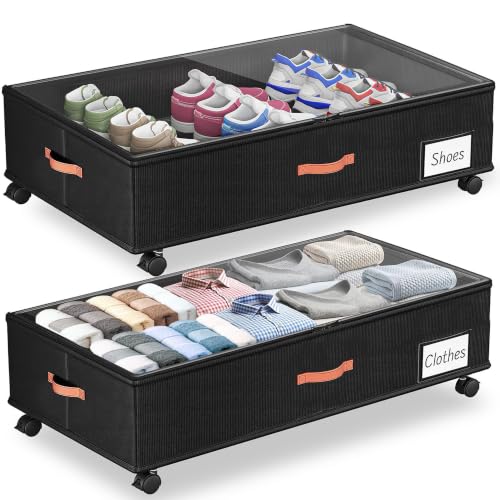
Large Capacity Construction: Engineered with 600D PU-coated fabric and reinforced metal frame, 30% stronger than standard mesh organizers. Two removable partition panels let you create compartments for clothes, shoes, books, or toys, getting the most storage space in the least space without compromising stability and durability
8. Over-the-Door Organizers
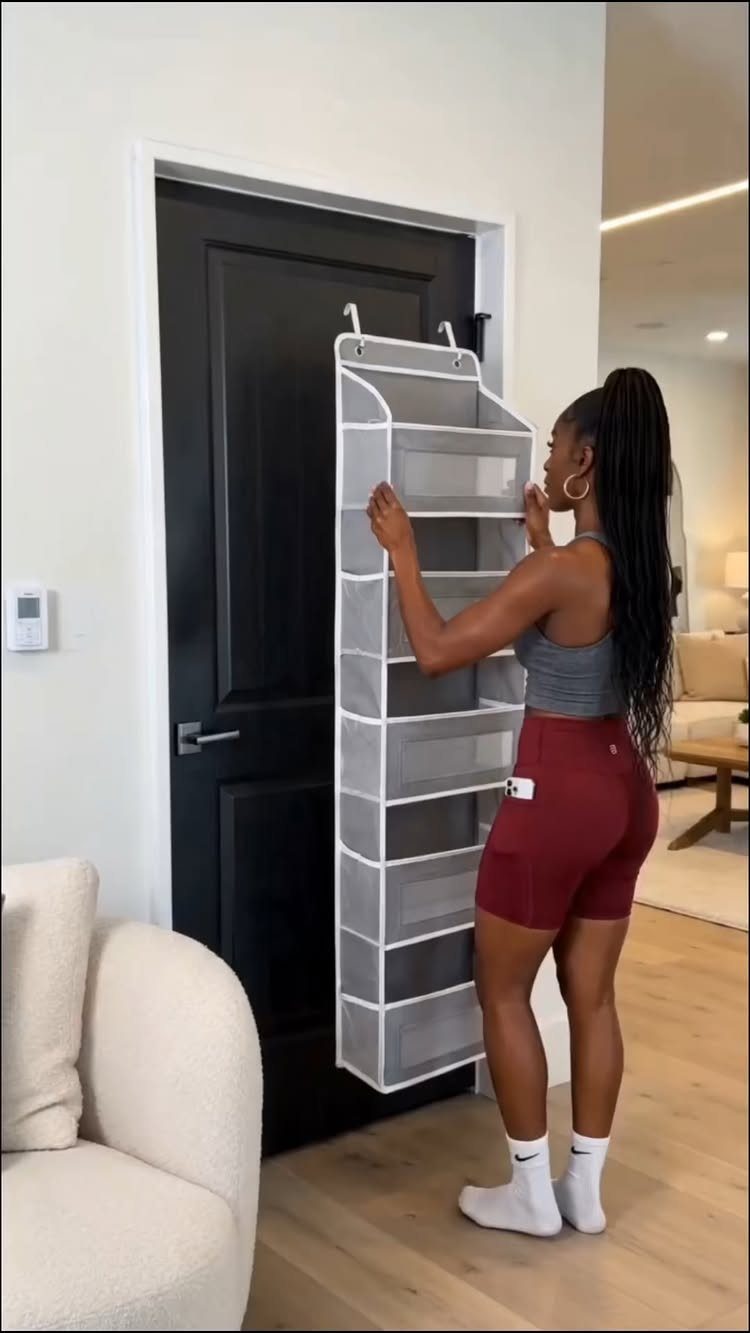
A fabric pocket organizer hung over a door back adds storage without drilling into rental walls.
A grey finish keeps the look neutral; mesh panels let air through for shoes or gym clothes that might otherwise sour in a closed bin.
Check that the door still closes fully with the organizer loaded; bulky items in deep pockets will bind against the jamb.
I prefer top-hook designs to over-the-rod styles, since the latter need a standard door thickness to grip and slip on thin modern slabs. Use this for light, frequent-access items, not heavy tools or glass.

2 Pack Unique Yoga Mat Hanger: This yoga mat rack comes with floating shelves and 4 hooks, larger capacity. It can save floor space, stylish and simple design is the first choice for home gym decor.

STYLISH & ELEGANT: Crafted from premium particleboard, the Set of 4 corner wall shelves create a rustic and clean look, match with any of your decor and perfect for organizing everything, enhance vintage aesthetic for your space.

Storage & Decoration Solution: Corner shelves for wall fit into the corner and increase storage space. The modern wall shelf complements any decorating style, providing a display space where you can decorate the room with whatever you like while making more space
9. Corner Shelves
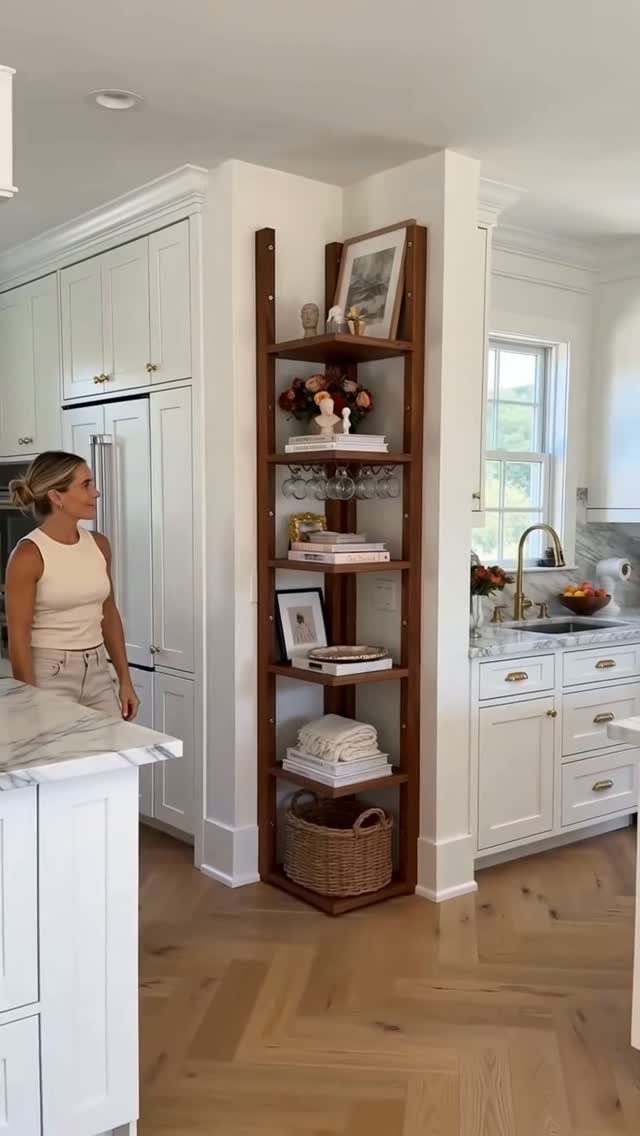
A tall wooden unit built to the angle of 2 walls turns a corner alcove into vertical storage without protruding into the room.
Natural wood finishes mix well with framed pictures, glassware, or a woven basket, so this works as display and function together.
Floor-standing models need only leveling; wall-mounted corner shelves call for studs on both planes, which rarely align.
I would buy the freestanding version unless the wall is solid masonry. Keep the footprint narrow on each face, or the piece starts reading as a bulkhead instead of a shelf.

[Maximize Your Storage] If you have a large cupboard but your items still have nowhere to go, try this set of 2 cabinet organizers—it takes full use of the vertical space and doubles your storage space

【𝗔𝗱𝗷𝘂𝘀𝘁𝗮𝗯𝗹𝗲 𝗟𝗲𝗻𝗴𝘁𝗵 𝗮𝗻𝗱 𝗛𝗲𝗶𝗴𝗵𝘁】: ---The package includes 2 pieces of kitchen cabinet organizer. Both can expand length from 15.5" to 25.5" and can adjust shelf height from 5.5" to 8.1" to fit your various storage needs at anywhere.

【𝗔𝗱𝗷𝘂𝘀𝘁𝗮𝗯𝗹𝗲 𝗟𝗲𝗻𝗴𝘁𝗵 𝗮𝗻𝗱 𝗛𝗲𝗶𝗴𝗵𝘁】: ---The package includes 2 pieces of kitchen cabinet organizer. Both can expand length from 13.8" to 21.6" and can adjust shelf height from 5.5" to 8.1" to fit your various storage needs at anywhere.
10. Use a Bathroom Organizer
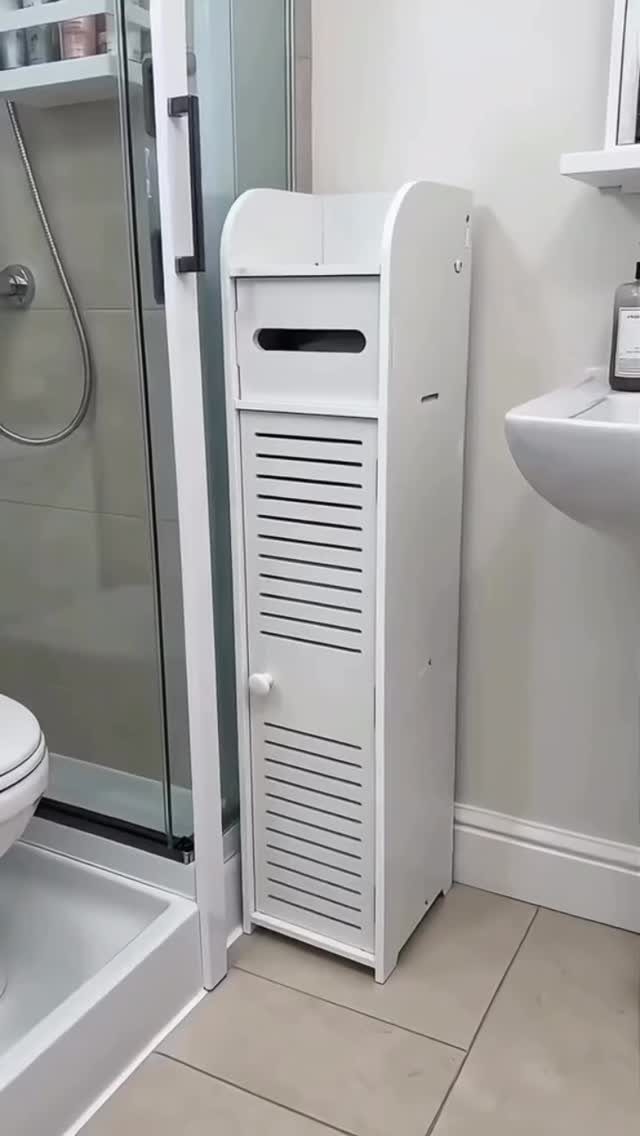
A slim cabinet slotted between shower glass and a pedestal sink adds closed storage where most bathrooms have none. A slatted white door lets air move, which matters for toilet paper or towels that would mildew in a sealed box.
I would anchor this to the wall if children use the bath, since a tall narrow piece tips easily when drawers pull unevenly.
The tissue slot on top is a nice touch, but only if it aligns with your roll size; standard and mega rolls differ by half an inch.

【Flexible 4 Tier Storage Cart】- The 4-tier slim storage cart is 4.75 in design which can be used in tight spaces in your home for storage. Suitable for closets, kitchens, bathrooms, garages, laundry rooms, offices or in-between your washer and dryer.

【Flexible 4 Tier Storage Cart】- The 4-tier slim storage cart is 4.75 in design which can be used in tight spaces in your home for storage. Suitable for closets, kitchens, bathrooms, garages, laundry rooms, offices or in-between your washer and dryer. Our entire storage cart is made of plastic. Please note that the wheels, hooks and rods are all made of plastic.
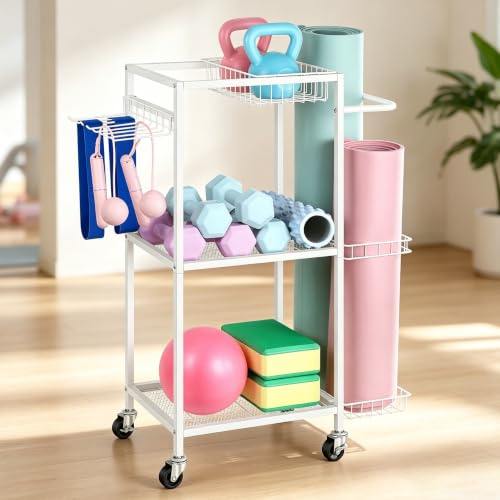
MULTI-FUNCTIONAL DUMBBELL RACK: Top basket + 2 wire shelves + side basket + 8 metal hooks to store different fitness epuipments. This small home gym storage cart reclaims your home gym from clutter and puts every piece of equipment in its own place.
11. Pull-Out Pantry Shelving
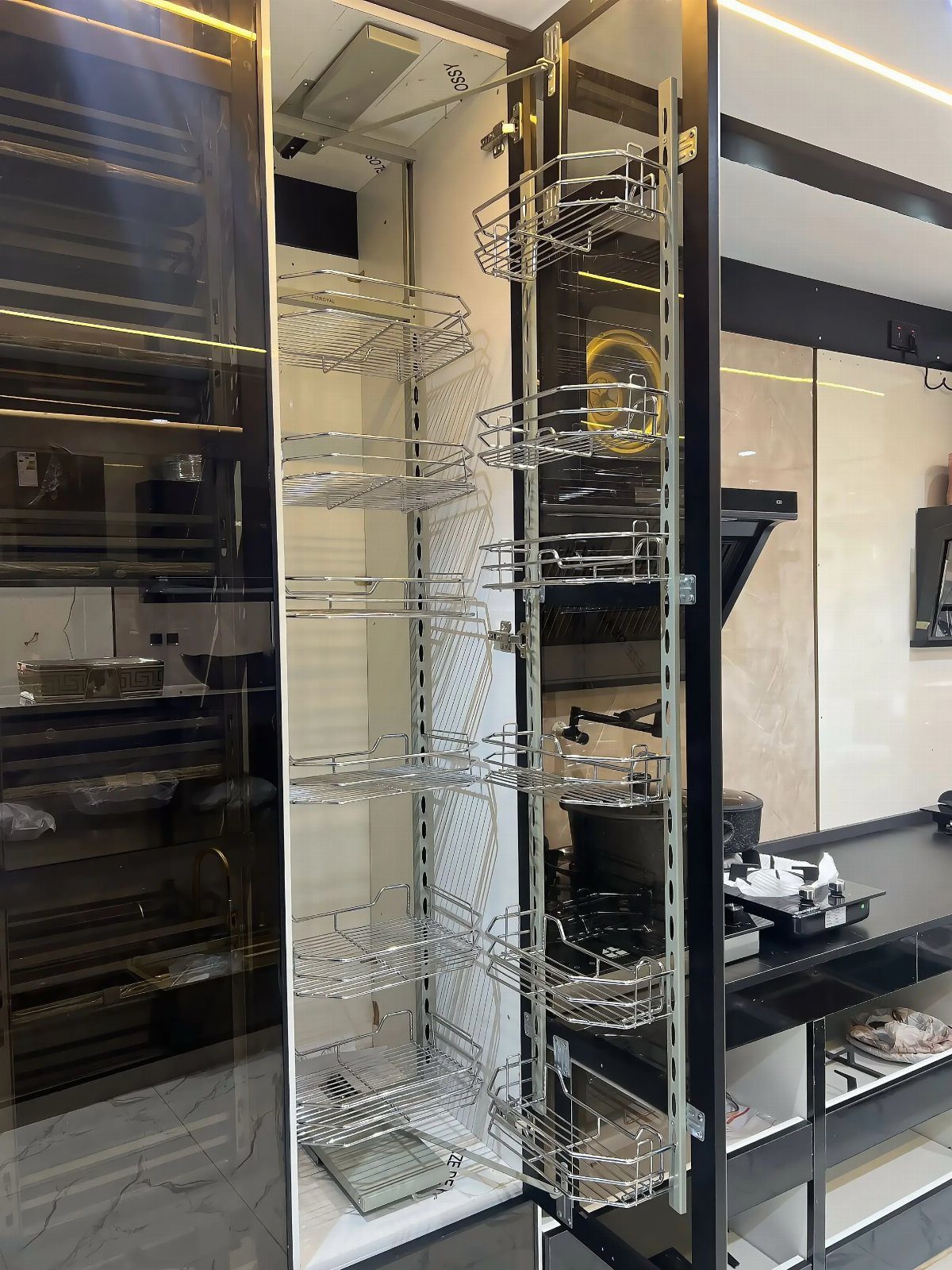
Chrome wire baskets on full-extension slides turn a narrow cabinet cavity into reachable pantry storage.
A dark frame hides the hardware; chrome reads clean against it, though I would choose white-coated wire in a lighter kitchen to cut the industrial note.
These install into existing cabinet boxes or replace a fixed shelf unit entirely.
Check the slide rating against your load; canned goods add up fast, and cheap slides sag within a year. I would reserve this for a narrow cabinet; wider spaces deserve proper swing-out shelves that use the depth better.
12. 4-Pair Boot Rack
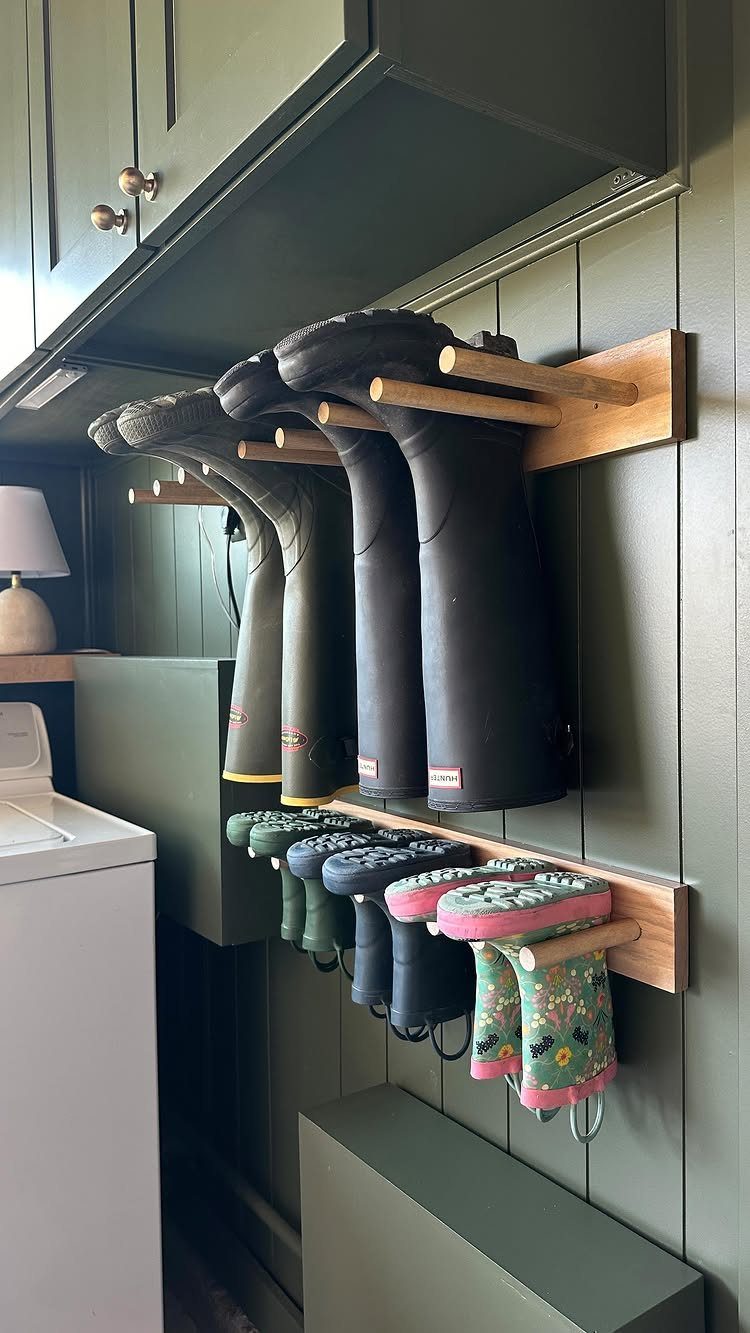
Wooden wall racks with dowel pegs hold boots upside down by the shafts, drying them faster and keeping mud off the floor.
Natural wood pops against a bold wall color; in my own space I would reverse that, keeping the wall neutral and letting the boots provide color.
Mount height depends on whose boots live there: children’s pairs sit lower, adult tall boots need clearance above the peg so the shaft hangs free.
I would set the center of the peg row at a height that works for a mixed household, with shorter and taller boots both in reach.
Rubber and neoprene dry fine this way; leather benefits most, since air circulation at the toe box prevents the rot that starts in damp creases.
Importance of Accessibility
The first mistake in small-space storage is buying the containers before you cut the collection. I have seen closets collapse under systems that were technically perfect for twice as many shoes as anyone needs.
Daily-use items need to live where you can reach them in one motion; if putting something away takes two hands and a stretch, it will end up on the counter instead.
A hair tool you have to unlatch, lift, and re-latch will live on the counter by Wednesday. I design for the return trip, not the Instagram shot.
Leave gaps.
Narrow storage packed to the frame looks efficient until one busy week drops a bag of groceries or a laundry basket into the only open square foot. A little empty space is what lets the system survive real life.
“Your space should dictate your inventory,” says Pamela Meluskey, cofounder of home organizing company Settled, along with Larisa Bright. “Aim to keep your space 80% full.”
Custom Solutions
Custom storage makes sense when standard widths waste inches you cannot afford.
That awkward gap beside a refrigerator or the slope where a wall meets the ceiling in an attic room is where off-the-shelf pieces give up and leave inches unused.
The cost lands where you expect: tailored dimensions, tailored install. I would not commission a full built-in for a rental or a first home unless the space is truly odd.
When an alcove is simple and rectangular, a freestanding unit you can take with you when you move usually beats built-in on cost and flexibility.
Where custom earns its keep is in the vertical and the awkward.
A floor-to-ceiling cabinet following a stair pitch, or drawers cut to clear a radiator, turns dead geometry into useful volume. The finish should match what is already in the room, not announce itself.
Frequently Asked Questions
How can I maximize storage in a small apartment without drilling holes?
Over-the-door organizers with top hooks, rolling under-bed drawers, and shelf risers inside existing cabinets all add storage without touching a wall.
I would skip adhesive hooks in bathrooms; steam breaks the bond eventually, and the fallen item usually takes finish with it. For rentals, I prefer pieces that move with you rather than damage-free hardware that fails at the wrong moment.
What is the best way to organize a small closet?
A slide-out pants rack mounted to the closet sides keeps trousers pressed and visible without eating rod space, while shelf risers double the usable surface above folded items.
Leave gaps between systems; a closet packed to the frame collapses the first week you are too busy to file everything back perfectly.
How do storage solutions impact home resale value?
Well-organized layouts attract higher buyer interest and present better during showings, which tends to speed sales and lift offers.
Where custom earns its keep is in awkward geometry, like a cabinet cut to follow a stair pitch, that off-the-shelf pieces cannot touch.
