
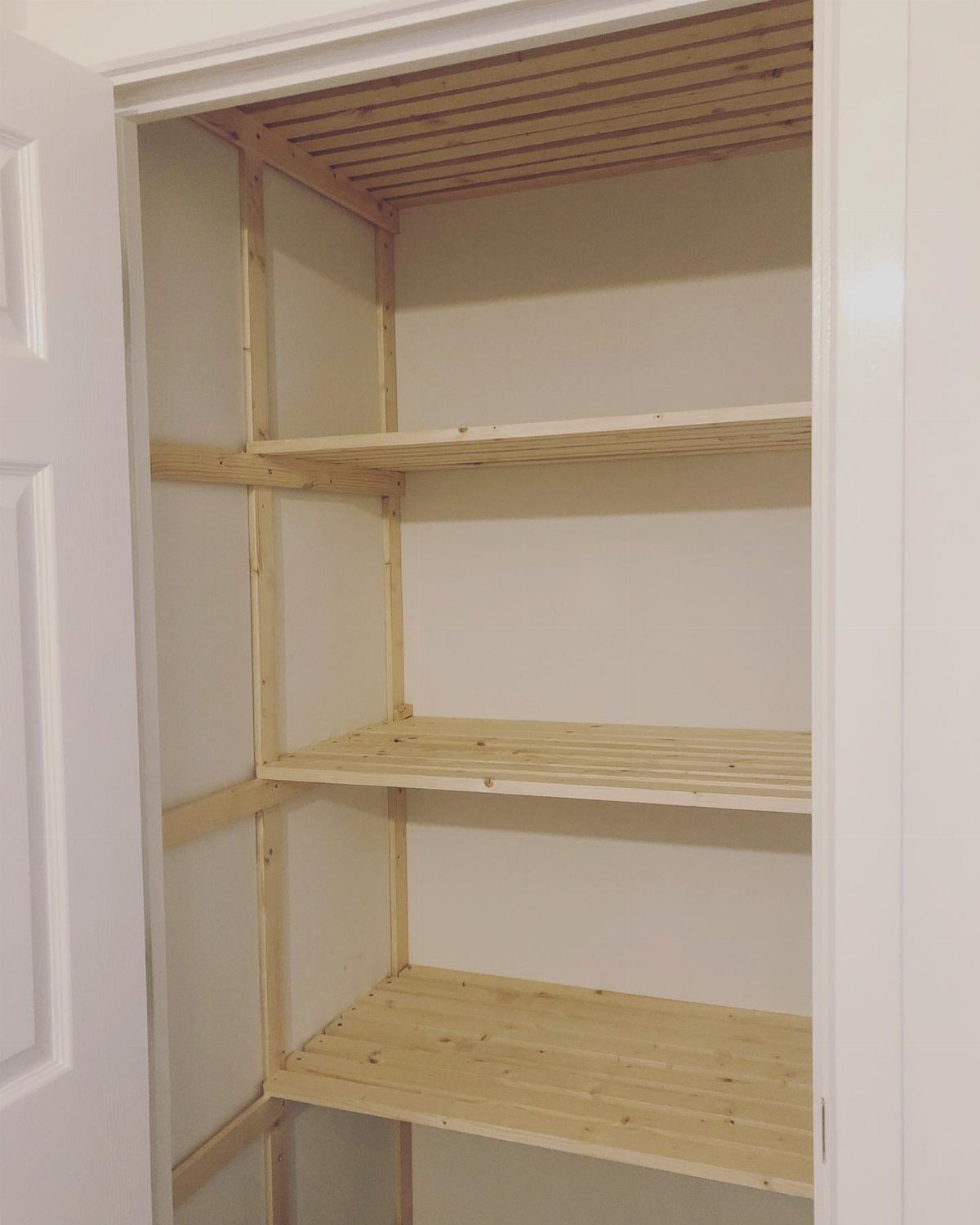
These 8 airing cupboard storage ideas run from a quick afternoon with a saw and brackets to a full made-to-measure slatted install, and the deciding factor is whether your cupboard still has its original hot water tank or has been converted to a combi boiler.
A converted cupboard loses the heat source and the pipe boxing, which changes every measurement and every material choice below.
1. Made-to-Measure Slatted Shelves
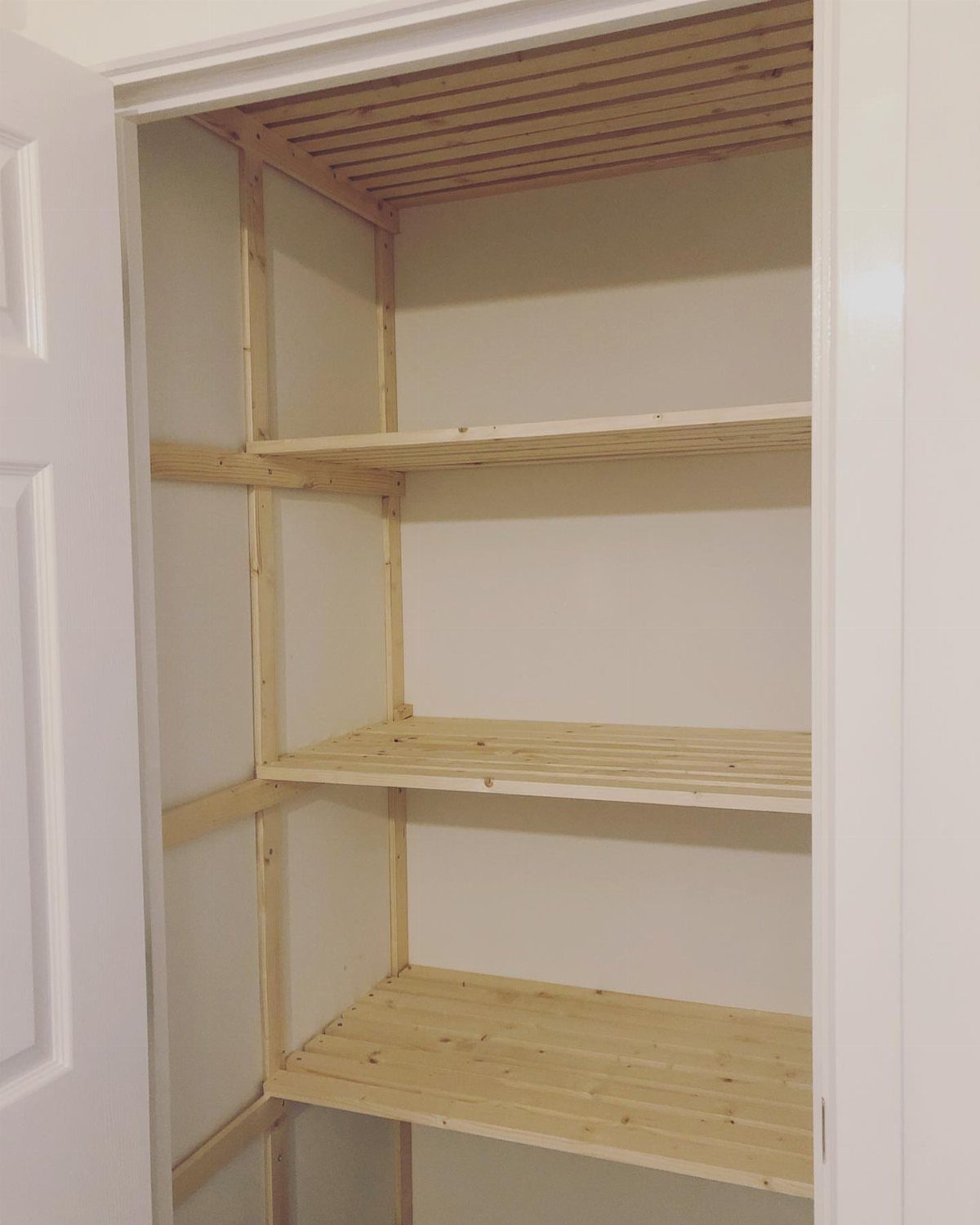
Slatted shelves built to the exact depth and width of your cupboard keep air moving while giving flat surfaces for folded linens.
The gaps matter more than most people think; without them, you trap moisture against whatever sits on the bottom.
Before you commit, measure the full interior, including any skirting or pipe boxing that narrows the walls.
I would check whether the slats run front-to-back or side-to-side, since that changes how small items behave and what kind of bracket you need underneath.

【2 Pcs Spice Rack Organizer】These small racks made of premium PET material and stainless steel,each measures 11.8x 8.4 x 5.9 inches

【Adjustable Length and Height】: ---The package includes 2 pieces of kitchen counter shelf of size (12.6"-20.5")L * 8.26"W * 8.74"H. Both can expand length from 12.6" to 20.5" and adjust shelf height from 4.5 to 7.3 to fit your storage needs just about anywhere
2. Add Baskets or Boxes
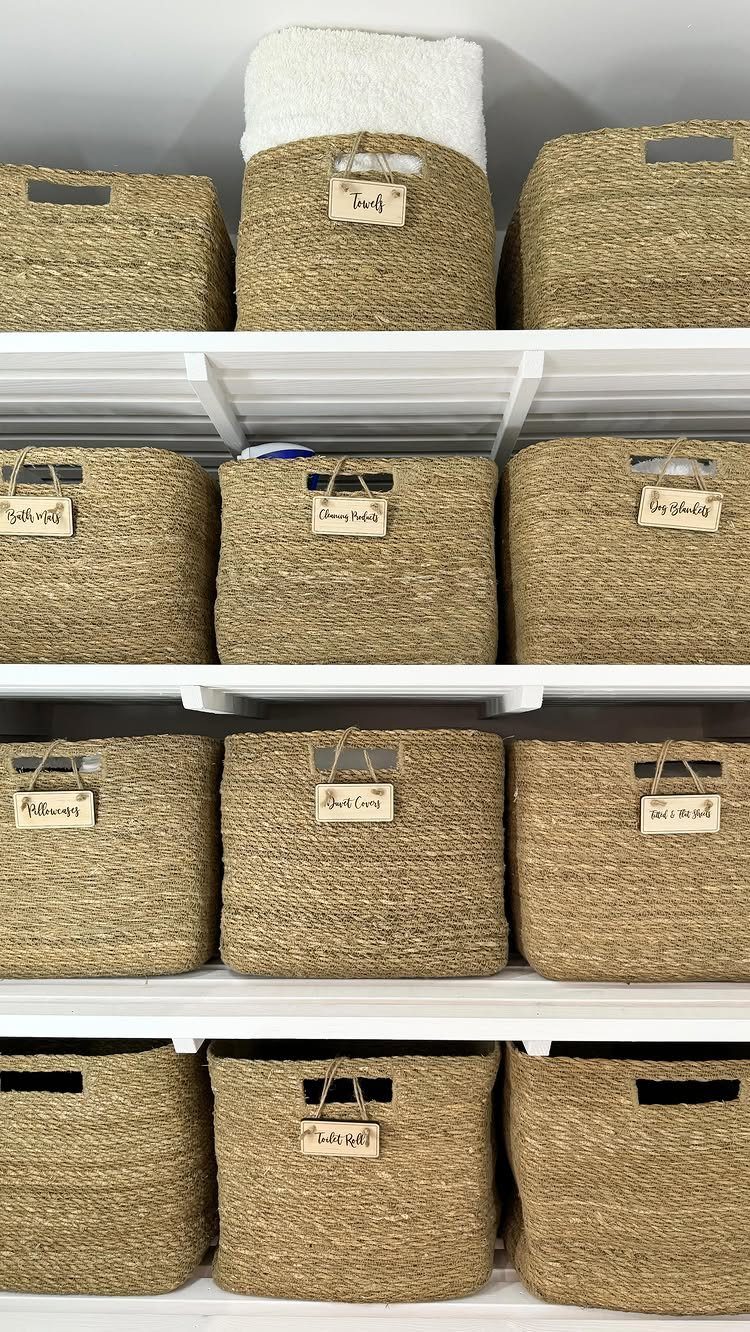
Woven baskets with simple labels turn a deep shelf into zones you can read at a glance. Seagrass holds up well in the warm, slightly humid air of an airing cupboard, though it will darken over time.
I like the wooden tags because they stay legible; paper labels soften and curl.
The real decision is how many categories you actually need. A few labels look tidy, but baskets with room to grow beat a crowded row where nothing fits back in neatly.

A set of 4PCS: The woven basket includes 1 large and 3 small organizer boxes that are perfect in the drawer. Measure about(L×W×H):11×11×3.9inches,10×5×3.7inches, 5×5×3.7inches
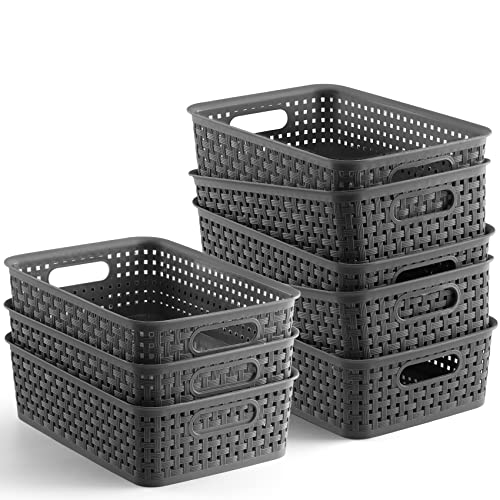
PRODUCT CONFIGURATION: 8 woven pattern plastic baskets, gray. Dimensions:10.6” L x 7.2” W x 3.2” H, basket use small holes design helping ventilation, better organization and storage items.

ULTRA-SOFT & TODDLER SAFE: Woven from 100% natural cotton rope, the baskets is entirely free of sharp edges and hard plastic components. They provide a worry-free storage solution for nurseries, ensuring your baby stays safe from bumps or scratches during playtime. You can confidently place them on low shelves where little hands can reach them safely. Designed with two sturdy handles, children can easily move it around
3. Add Shelving Around Hot Water Tank
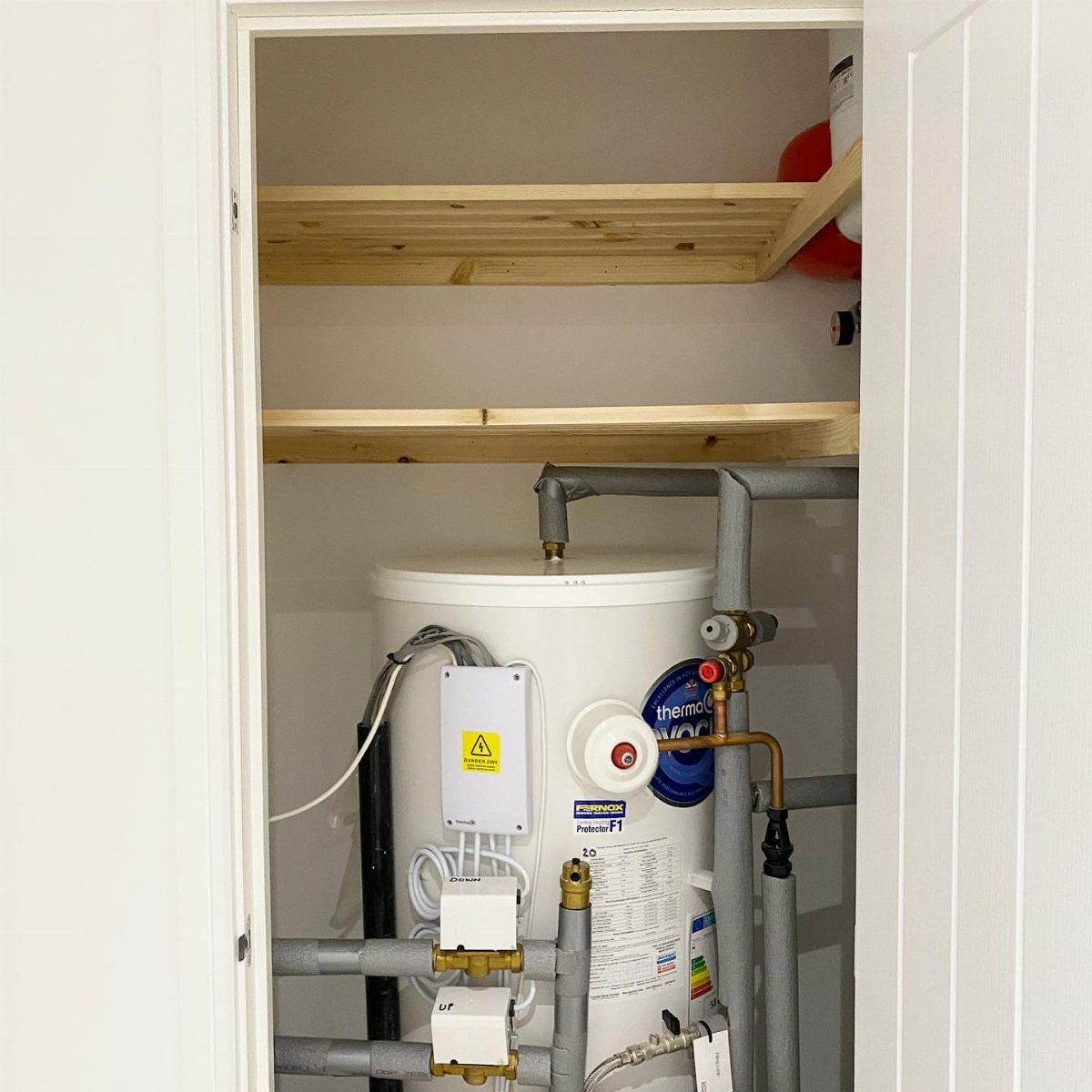
The heat coming off a hot water tank is free and steady, which makes the space above it worth using for drying or storing items that tolerate warmth.
Slatted shelves mounted on the side walls catch that rising air without blocking the tank itself.
What stops most people is the warning label and the pipes.
I would keep everything well clear of any electrical housing or valve you might need to reach, and use a bracket style that doesn’t require drilling near the cylinder jacket.
If your cupboard is tight, one shelf above the tank often gains more usable space than two cramped side shelves.

Versatile multi-purpose storage items with a coordinated look

PLASTIC ORGANIZATIONAL BINS WITH HANDLES – Multipurpose closet storage bins for bedroom, bathroom, laundry room, kitchen pantry, college dorm, and office. These small plastic baskets for organizing are the perfect solution for clutter and mess.
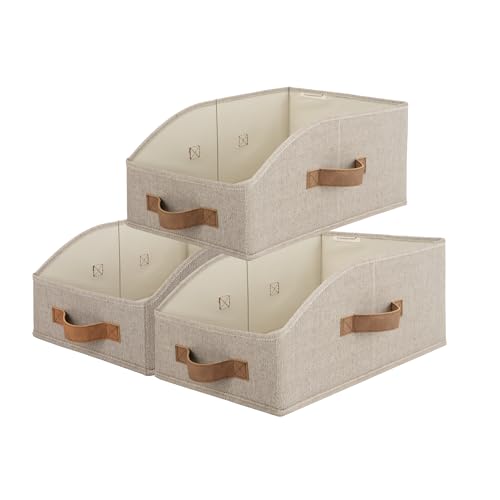
Open Access Design: Featuring a trapezoid open-front design, these closet bins keep contents visible and easy to reach, helping you find items faster.
4. Linen Cupboard Storage
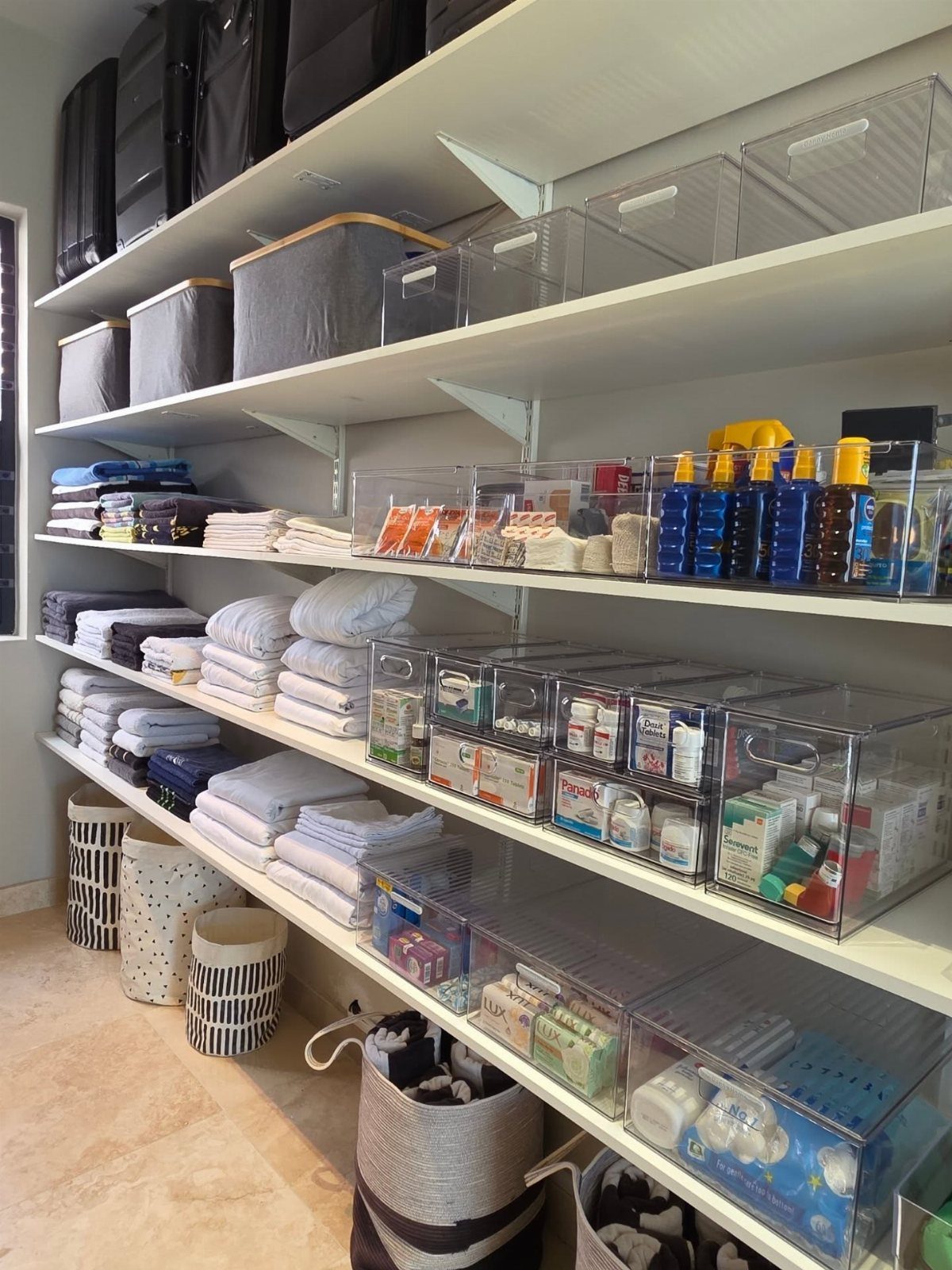
Open wall-mounted shelves in or near an airing cupboard give linens the ventilation they need while keeping them visible and reachable. Folded towels and sheets sit alongside clear bins for smaller items, with floor baskets below for bulk storage.
I would put the things I use most often at chest height and eye level, not on the floor or the top shelf where they become invisible.
The clear bins are a smart touch; opaque boxes hide what you own, which leads to buying duplicates. If the room is bright enough, this setup can stand alone without a closed cupboard at all.

【Durable Material】Pegs for shelves made of high quality zinc alloy and polished nickel,good quality and durable for long using life,surface is smooth without metal burrs,can meet your daily shelving needs.

[Package] 50 x shelf support pegs, 1 x plastic box.

【Package Content】You will receive 20 pcs self-locking shelf pegs. Accommodating 3/4" / 20mm.thick shelves; the pegs diameter is 6mm / 0.24", the pegs length is 0.26" / 6.6mm. Sufficient quantity can meet your daily use needs.
5. Pull-Out Drying Racks
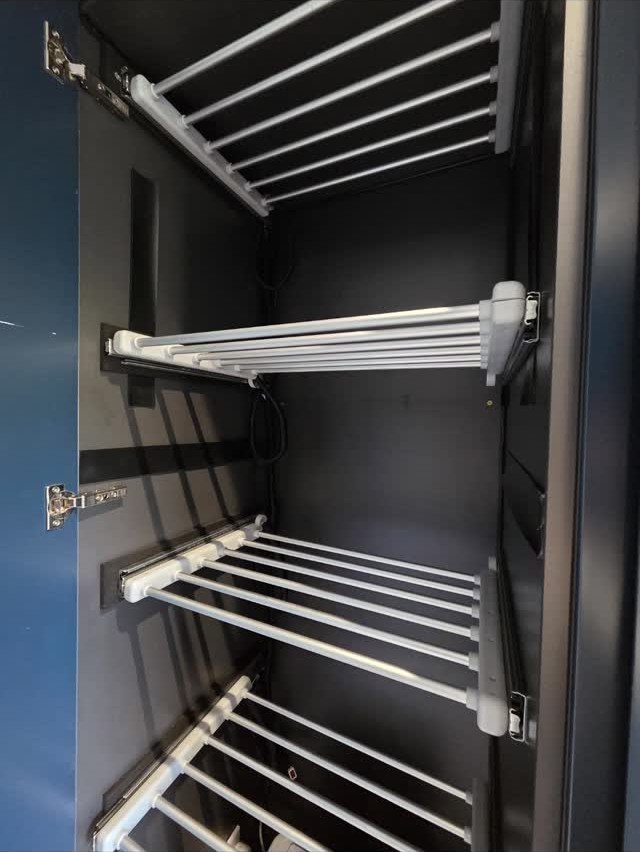
Slatted racks on drawer slides let you pull laundry out into the cupboard doorway to air, then push it back out of sight. Multiple tiers matter if you wash small loads often rather than running a full household cycle.
I would check the slide length before buying; a rack that pulls out only halfway is awkward to load. The slats need to be close enough that a sock or washcloth doesn’t sag through, but open enough that air passes.
Metal ball-bearing slides handle the weight of wet cotton better than plastic roller versions, and in my experience they are worth the small extra cost.

【𝗔𝗱𝗷𝘂𝘀𝘁𝗮𝗯𝗹𝗲 𝗟𝗲𝗻𝗴𝘁𝗵 𝗮𝗻𝗱 𝗛𝗲𝗶𝗴𝗵𝘁】: ---The package includes 1 kitchen counter shelf of size (15.5”-25.5”)L * 8.26"W * 8.74"H and CAN adjust shelf height from 4.5 to 7.3 to fit your storage needs just about anywhere.

【Adjustable Length and Height】: ---The package includes 2 pieces of kitchen counter shelf of size (12.6"-20.5")L * 8.26"W * 8.74"H. Both can expand length from 12.6" to 20.5" and adjust shelf height from 4.5 to 7.3 to fit your storage needs just about anywhere

【𝗔𝗱𝗷𝘂𝘀𝘁𝗮𝗯𝗹𝗲 𝗟𝗲𝗻𝗴𝘁𝗵 𝗮𝗻𝗱 𝗛𝗲𝗶𝗴𝗵𝘁】: ---The package includes 2 pieces of kitchen cabinet organizer. Both can expand length from 15.5" to 25.5" and can adjust shelf height from 5.5" to 8.1" to fit your various storage needs at anywhere.
6. Shelves with Hanging Rails
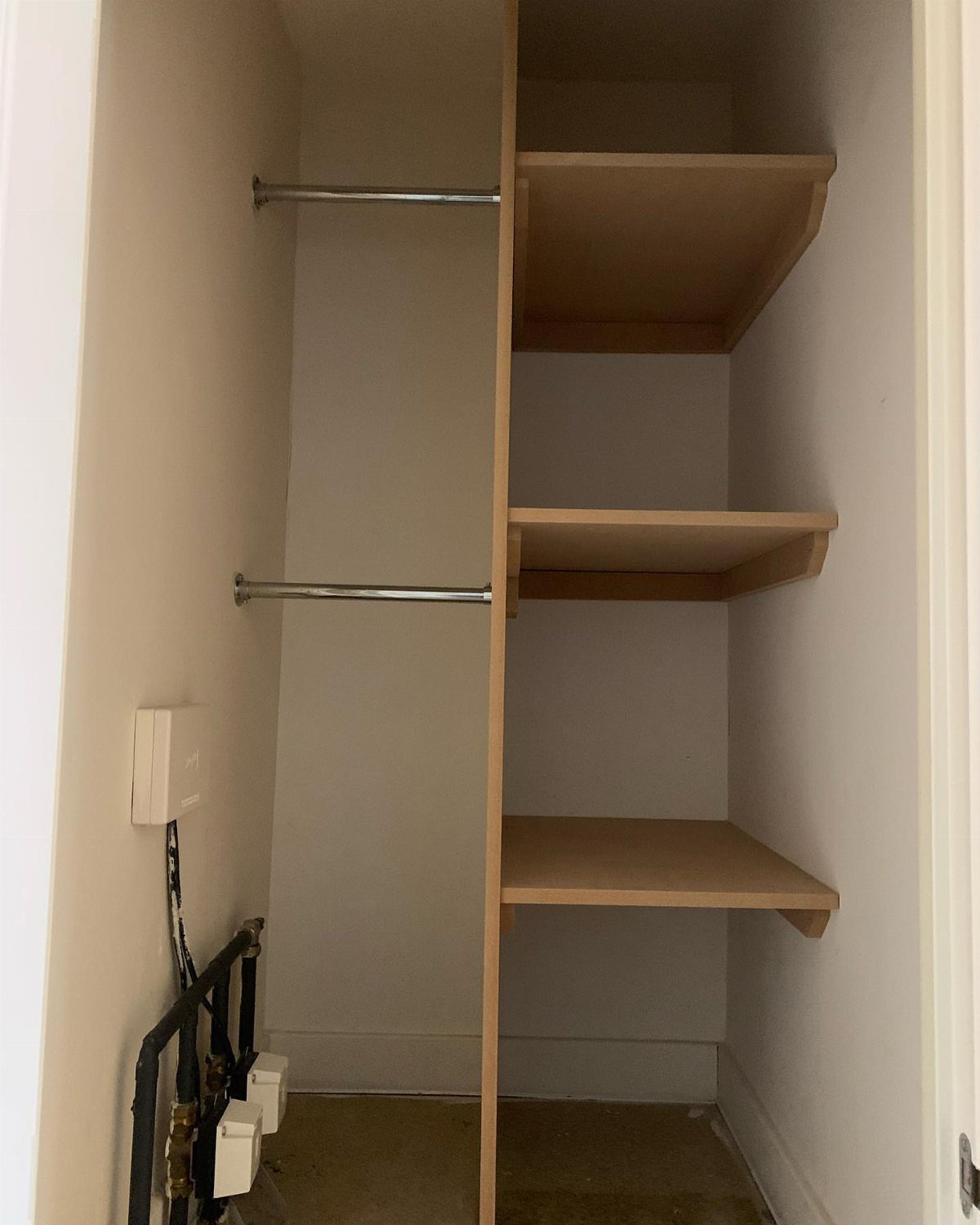
Splitting an airing cupboard between shelves and hanging rails gives you 2 storage systems in the same depth of wall.
Shelves on one side and double rails on the other suit a household that air-dresses shirts or hangs tablecloths straight from the iron.
I would think about what you actually hang. A single rail set high, with a shelf above it, often uses the height better than 2 rails crammed together with shirts bunching.
Leave access to any valve or stopcock; boxing in exposed piping for looks can cost you later if a washer fails.

6 pack plastic basket, weave wicker storage organizer basket, perfect to service for kitchen/ bathroom/ classroom and so on, outside dimensions: 10" length x 7.5" width x 4" height

【Basket Organizer】The size of woven rope basket is 11.81 * 7.87 * 5.12Inches.One basket can hold 7-8 books, 4 pairs of pants, 3 thin baby blankets, 10 baby diapers, wet wipes, and a certain number of baby toys, etc. We provide 3 baskets, enough capacity to store your items.

Handwoven Craftsmanship: Handwoven by skilled artisans with tight, even braiding, each pantry basket offers a neat, elegant look that showcases its high-quality craftsmanship.
7. Vacuum Storage Bags for Linens
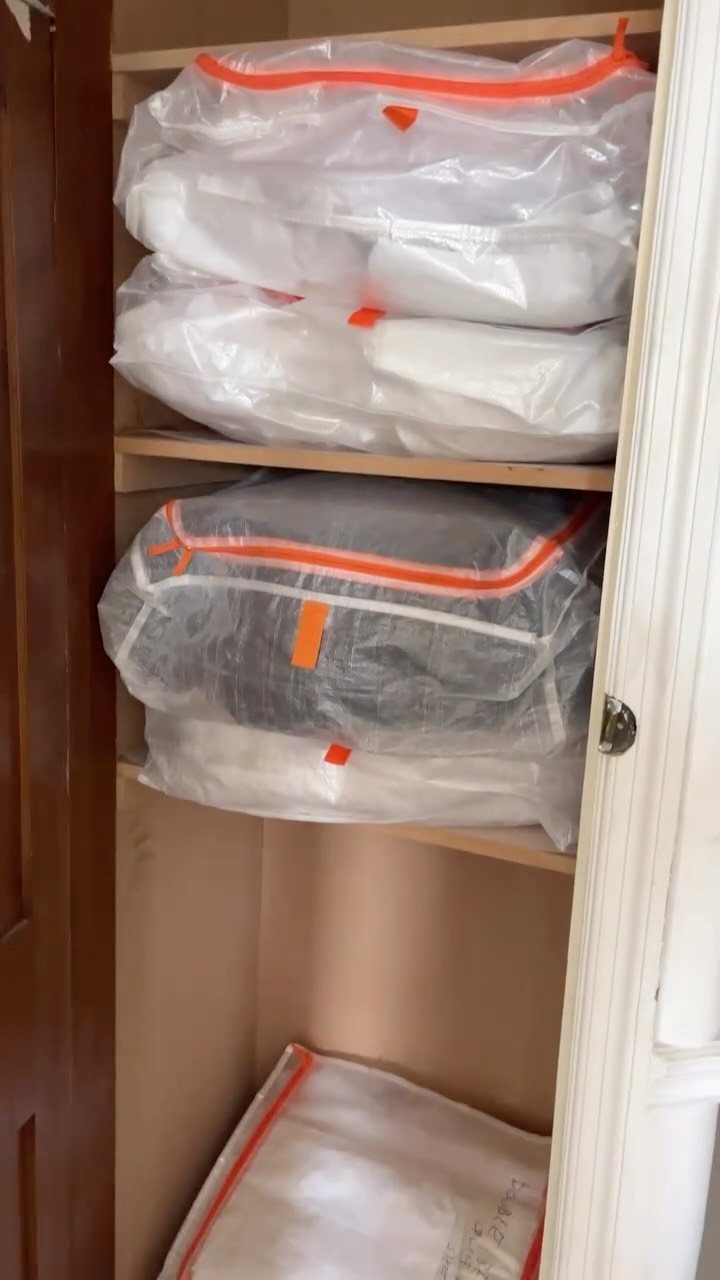
Vacuum storage bags flatten bulky duvets and spare pillows into flat packs that stack like files on a shelf.
Clear plastic lets you read the contents without opening, and the orange zip seal is typical of the better brands; cheap ones leak slowly and re-inflate over weeks.
I would write the contents on the bag itself, not trust memory.
The faint handwriting visible on the bottom bag is smarter than it looks; adhesive labels peel in warm cupboards. Check that your shelves can handle the shifted weight, compressed bedding is dense and heavy compared with loose fill.
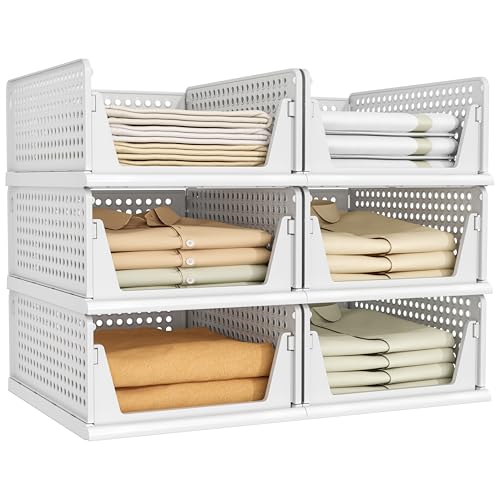
【Multi-Functional】: The closet shelves are convenient to store your lightweight items such as shoes, clothes, toys, snacks, file etc. Suitable for bathroom, kitchen, living room, office.

Open Access Design: Featuring a trapezoid open-front design, these closet bins keep contents visible and easy to reach, helping you find items faster.

PLASTIC ORGANIZATIONAL BINS WITH HANDLES – Multipurpose closet storage bins for bedroom, bathroom, laundry room, kitchen pantry, college dorm, and office. These small plastic baskets for organizing are the perfect solution for clutter and mess.
8. Corner Wooden Shelving
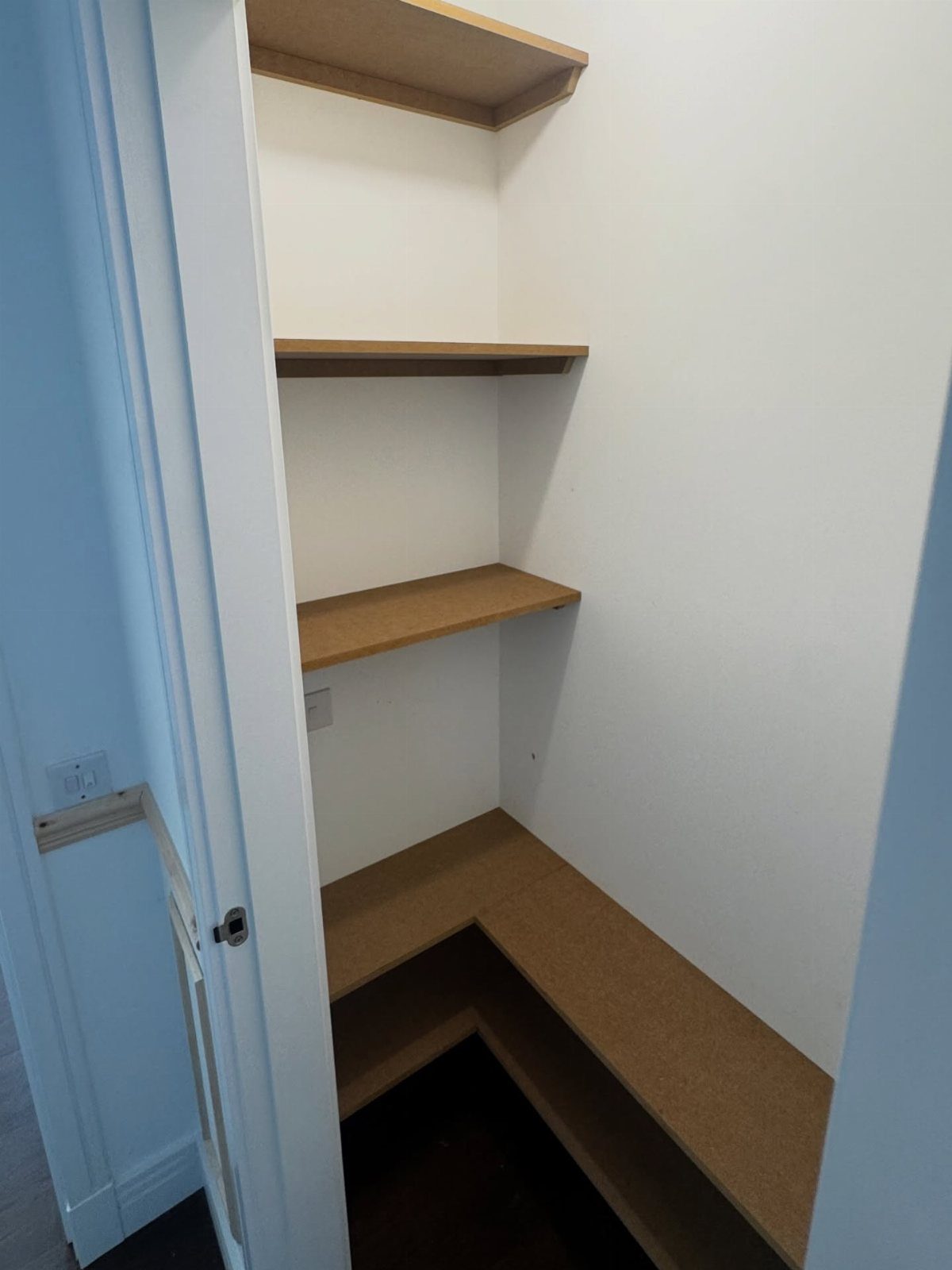
An L-shaped corner shelf run squeezes storage into the dead space where 2 walls meet, turning a cupboard’s awkward angle into its most useful zone.
Raw wood or MDF left unfinished keeps the cost low, though it will mark if damp linens sit directly on it.
I would seal the surface with a water-based polyurethane or line the shelves with a breathable mat before loading them.
The lower placement matters; this is weight-bearing storage, not display, and the height needs to stay practical for lifting folded items in and out.

Includes: You will receive 20 Ojeemii shelf support pegs, compatible with 3/4" (20mm) thick shelves. The pegs feature a diameter of 0.19" (5mm) and a length of 0.26" (6.6mm). The quantity provided ensures ample supply for daily use needs

Unique split design: flexible and convenient, higher strength.

Importance of Ventilation
The gaps let air pass through the stack, which matters in any cupboard that runs warm and humid for part of the year.
Without that passage, the bottom layer traps moisture against wood or MDF and the fabric above it sits in stale air.
Adjustable shelving from a hardware store rarely accounts for pipe boxing or skirting that narrows a cupboard wall.
A shelf that fits the opening but not the usable width leaves an inch or two of dead space on each side, or it rests on brackets too close to a cylinder jacket.
Made-to-measure slats solve both: the width matches the narrow point, and the bracket placement stays clear of hardware you might need to reach.
Breathable storage matters even when you are not using slats. Fabric bags beat plastic for anything stored long-term; canvas or cotton lets humidity equalize slowly instead of sealing it in.
I still use vacuum bags for spare bedding, but only for short-term seasonal swaps, not year-round storage. The seal fatigues, and when it fails the bag re-inflates into whatever gap you left.

【𝗔𝗱𝗷𝘂𝘀𝘁𝗮𝗯𝗹𝗲 𝗟𝗲𝗻𝗴𝘁𝗵 𝗮𝗻𝗱 𝗛𝗲𝗶𝗴𝗵𝘁】: ---The package includes 2 pieces of kitchen cabinet organizer. Both can expand length from 15.5" to 25.5" and can adjust shelf height from 5.5" to 8.1" to fit your various storage needs at anywhere.

BYE BYE CLUTTER: See contents at-a-glance, find just the right item without digging through a jumbled cabinet, grab and go! Great for organizing plates, cups, bottles, and cans in your cabinet, counter top or even refregiator.
【𝗔𝗱𝗷𝘂𝘀𝘁𝗮𝗯𝗹𝗲 𝗟𝗲𝗻𝗴𝘁𝗵 𝗮𝗻𝗱 𝗛𝗲𝗶𝗴𝗵𝘁】: ---The package includes 2 pieces of kitchen cabinet organizer. Both can expand length from 13.8" to 21.6" and can adjust shelf height from 5.5" to 8.1" to fit your various storage needs at anywhere.
Frequently Asked Questions
What are some clever storage ideas for cupboards?
Slatted wood cut to fit lets air pass through while still holding stacks of folded sheets, and a set of matching bins with handwritten tags breaks a deep shelf into sections you can scan in seconds.
Drawer-mounted drying racks that glide out into the doorway give you a place to hang damp items, then slide back flush so the door closes clean.
The key in any airing cupboard is working around the heat and humidity rather than fighting them.
What is the best storage rack for an airing cupboard?
A pull-out slatted rack on full-extension metal ball-bearing slides wins for drying, since it handles the weight of wet cotton and pulls clear of the cupboard so you can load it without reaching into a cramped space.
Custom slatted shelving sized to the actual wall width, minus pipe boxing and baseboards, uses the full cavity; off-the-shelf adjustable units usually leave a gap on one side or force you to cut legs short.
Check the slide travel before ordering; a rack that extends only twelve inches into a twenty-inch cupboard leaves you reaching and guessing.
What shouldn’t you put in an airing cupboard?
Anything that can’t tolerate warmth and humidity, or that blocks access to valves, stopcocks, or electrical housing on the hot water tank.
Leave the cylinder jacket and any shutoff valve fully exposed; a tidy plywood surround looks better in photos but turns a twenty-minute repair into a demolition job if a joint starts weeping. The warning labels are there for a reason.
What are some DIY, cheap storage ideas?
An L-shaped corner shelf in unfinished pine or MDF fills the void where walls meet and costs almost nothing, though damp towels left sitting will raise the grain or leave a watermark.
A couple of coats of water-based poly, or a woven liner cut to fit, fixes that without much spend. For labels, wooden tags beat paper, which softens and curls in warm, humid air.
What can I use to dry towels instead of an airing cupboard?
A heated airer, a small dehumidifier pulling in a ventilated room, or a hardwired towel rail on the bathroom wall all do the warming job without needing the cupboard at all.
Summer drying on a line outside is free; in winter a tumble cycle or a rack set near a radiator works, though I would hang towels on the rack, not draped across the heater itself.
An over-the-door drying rack also gives easy airflow without taking up floor space.
What is an airing cupboard?
A warm cupboard for drying clothes, towels, and bedding that are still slightly damp after washing, with the heat usually coming from a hot water tank housed inside.
The warmth finishes the drying process that the washing machine or line-drying started, and the enclosed space keeps dust off while the air circulates.
With more homes now using combination boilers, hot water tanks and the airing cupboards built around them are not always present in newer houses.
