
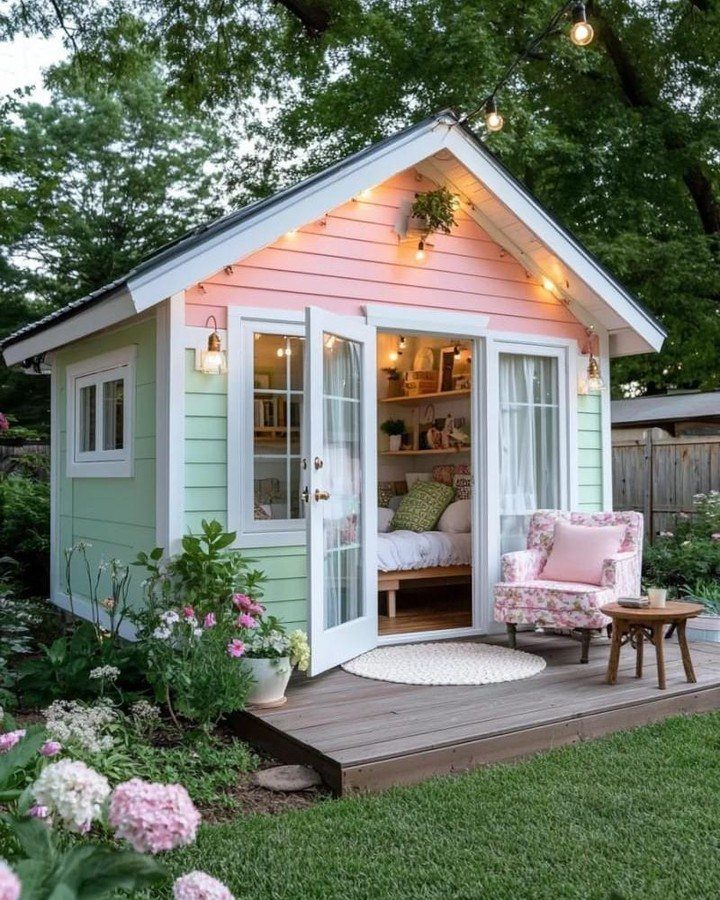
These decorative garden shed ideas run from a weekend paint job to a full garden office with permits and wiring, so the deciding factor is what the structure already is and how you actually use your yard.
A simple shed with decent headroom can become a reading nook or garden bar; a bare frame with no foundation is better suited to paint, trellis, and window boxes that ask nothing of the floor.
The 48-inch salvaged door I mention for the potting shed is one of those details that only works when you know the opening size before you shop, not after.
1. Fresh Coat of Paint
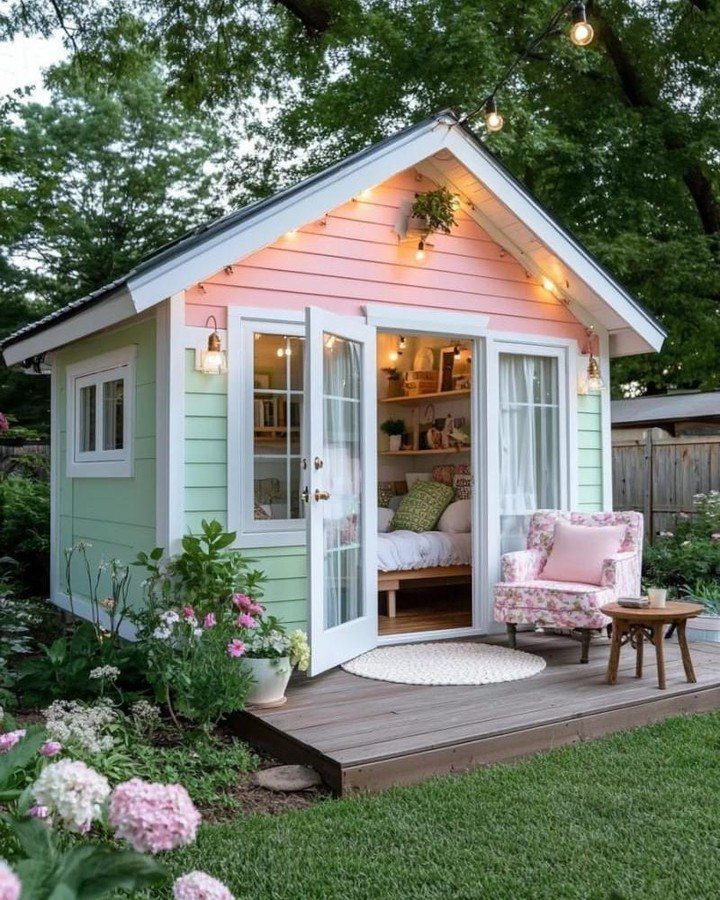
I like this approach for renters or anyone who wants change without structural work. Exterior paint meant for wood siding holds up; interior formulas peel within a season.
Check whether your shed already has paint or raw wood, because that decides if you need primer. 2 coats on a small shed takes a weekend and a couple cans of decent exterior paint.

ELEVATE OUTDOOR STRUCTURES: Refresh barns, fences, sheds, and exterior surfaces with durable paint that delivers long-lasting color and protection.
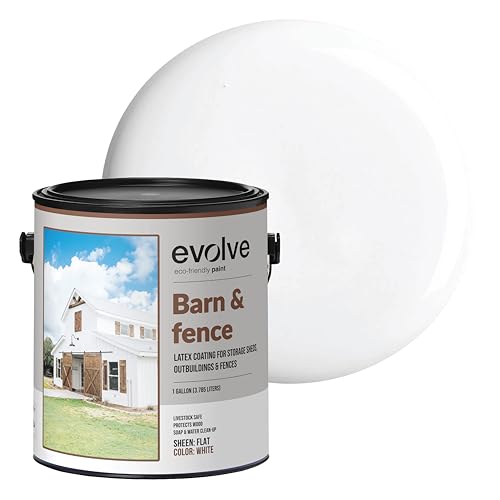
ELEVATE OUTDOOR STRUCTURES: Refresh barns, fences, sheds, and exterior surfaces with durable paint that delivers long-lasting color and protection.
2. Window Boxes Filled with Flowers
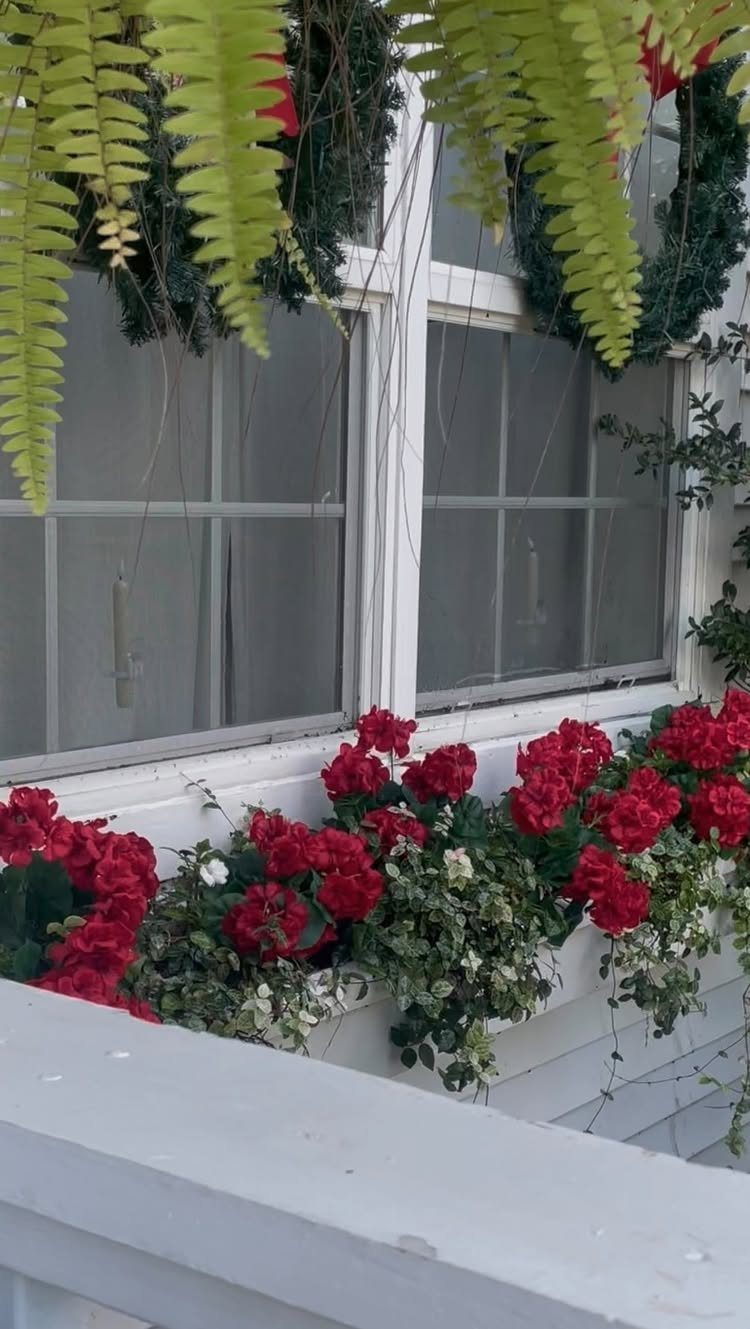
Red blooms against white trim is a combination that reads from a distance, which matters when the shed sits at the back of a yard.
I would pick trailing plants for the front edge and something upright behind, so the box looks full fast rather than waiting half a season.
The box itself needs brackets solid enough for wet soil weight; a full box gets surprisingly heavy after watering. Annuals let you change color each year without commitment.

Adjustable Base Design: Our planter box brackets features a versatile and adjustable design with minimum 6'' and the maximum 12'' depth (Front To Back), allowing you to customize the width to suit your preferences

Designed Exclusively for Mayne Window Boxes – Specially made to fit only the Mayne Fairfield and Cape Cod window box models; not compatible with other brands or styles.
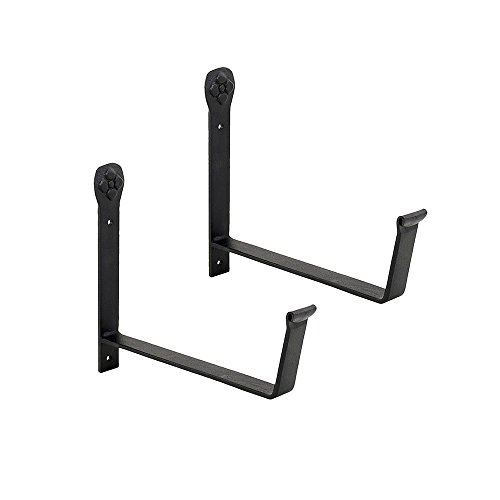
Pair of 8" Wall mount flower box brackets
3. 48Old Door Potting Shed
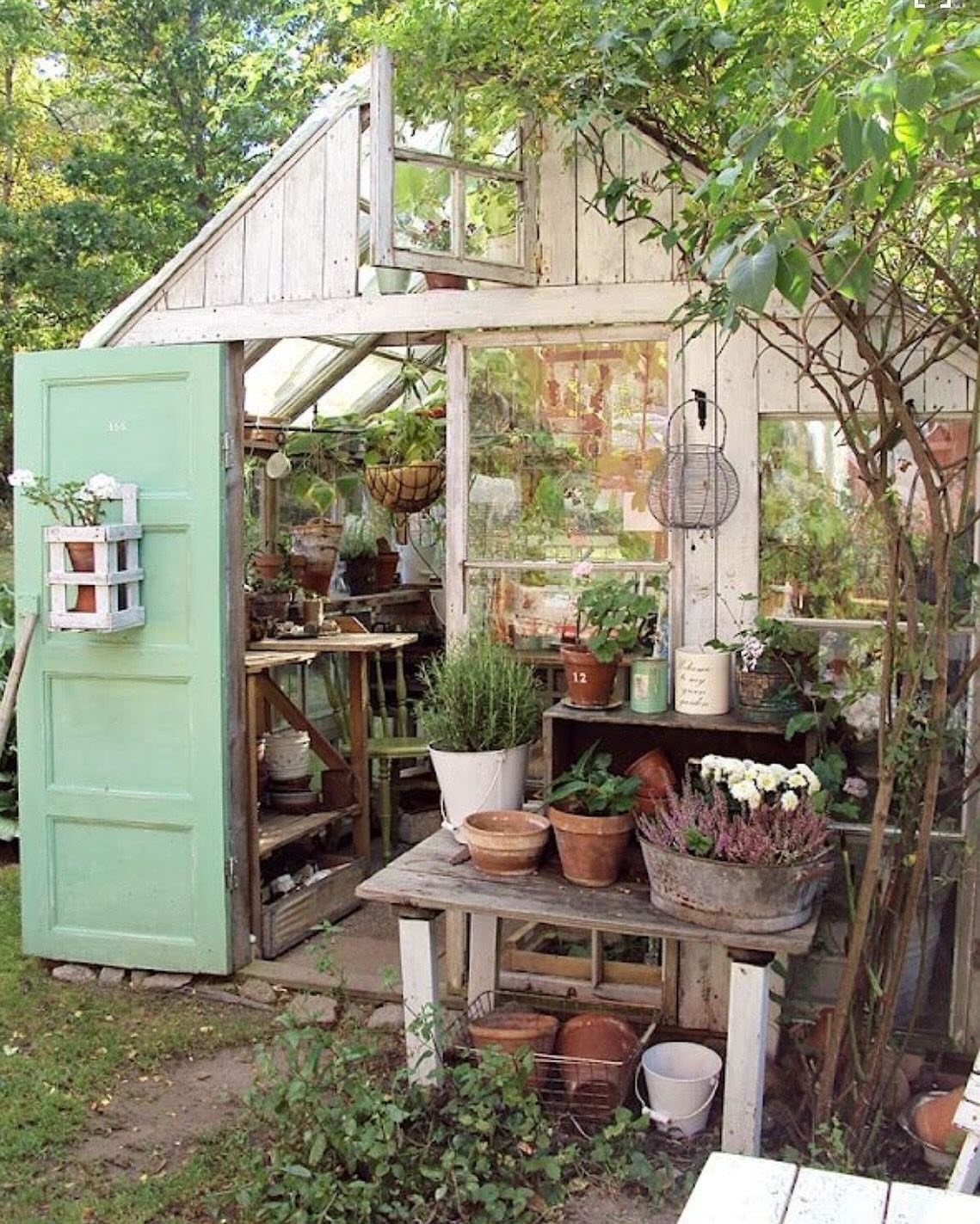
Reclaimed windows and a salvaged door give a potting shed the character that new materials rarely match.
A single accent door against weathered white siding keeps the eye moving; I would keep that ratio. For storage, shallow shelves behind the door beat deep cabinets where tools disappear.
A potting shed suits anyone who starts seeds or divides perennials, but moisture is the issue: wood breathes, yet gaps need flashing where rain gets in. Check the roof line before you store anything that rusts.

Spacious Layout: This wooden shed features 3-tier shelves, providing spacious storage space, and is perfectly designed for long-handled garden tools, small lawn care equipment, watering can, spades, pots, and more. Also, this garden shed equipped with 3 hooks on the side for hanging tools.

Spacious Storage Capacity: This large outdoor storage house measures 75.6 x 75.6 x 87.8 inches, providing plenty of room for gardening tools, lawn mowers, and backyard equipment. The rectangular design helps you keep your outdoor area organized and clutter-free.

Heavy‑Duty, Weather‑Resistant Construction Built from durable, weather‑resistant resin designed to withstand the elements, ensuring long‑lasting performance with minimal maintenance.
4. Use Decorative Lighting
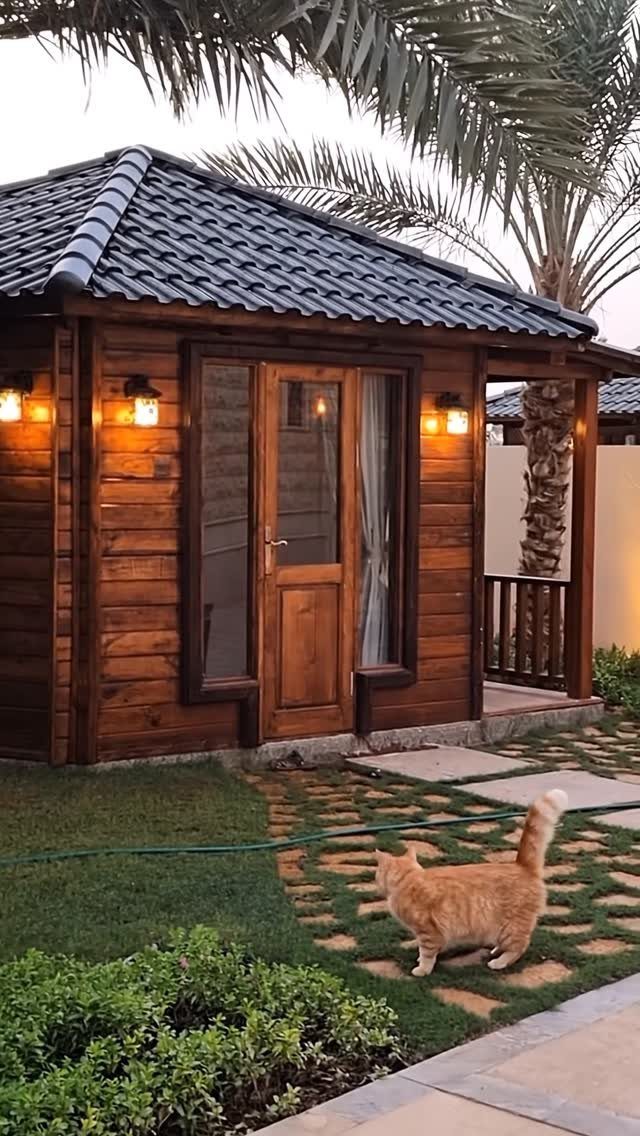
Wall lanterns on a shed extend usable hours without running cable across the lawn. I prefer hardwired fixtures only where the house circuit reaches easily; otherwise, solar lanterns with warm LEDs have improved enough to matter.
The test for decorative lighting is dusk glow; if it looks good when the sky is barely lit, it works.
Mount height matters more than wattage. I put mine above eye level for glare but low enough to cast actual light on the step.

🥇【Energy Saving&High-speed Charging】: This solar wall lights outdoor can be used as a wall sconce to stylize a porch, deck, patio, garage areas and more. Featured long lasting hanging wall lights rechargeable by built-in four solar panels, which can absorb more solar energy. The battery has a large 2000mAh capacity for extended illumination. Place the solar lamp in direct sunlight to charge the battery completely. Charging for 6-8 hours can illuminate for 8-12 hours. (Bad weather may affect lighting time.)

Solar Wall Lights 2 Pack: With 3 polycrystalline silicon solar panels, CYHKEE outdoor solar porch lights can fastly absorb more sunlight. The ultra-large 2200mAh Battery can keep the LED solar lights work all night. Auto turn on at night, and auto turn off at daytime. Kindly note: The actual working time and required charging time are affected by the intensity of the sunlight

【3 Lighting Modes with Motion Senser】This solar sconce lights outdoor have 3 lighting modes: MODE 1: Dim to Bright with motion at night. MODE 2: Off to Bright with motion at night. MODE 3: Constant ON at nighttime. You can press the "MODE" button to switch the lighting mode to easily select different modes to meet your different requirements. It is recommended to use Mode 1 and Mode 2 for maximum efficiency.
5. Living Roof
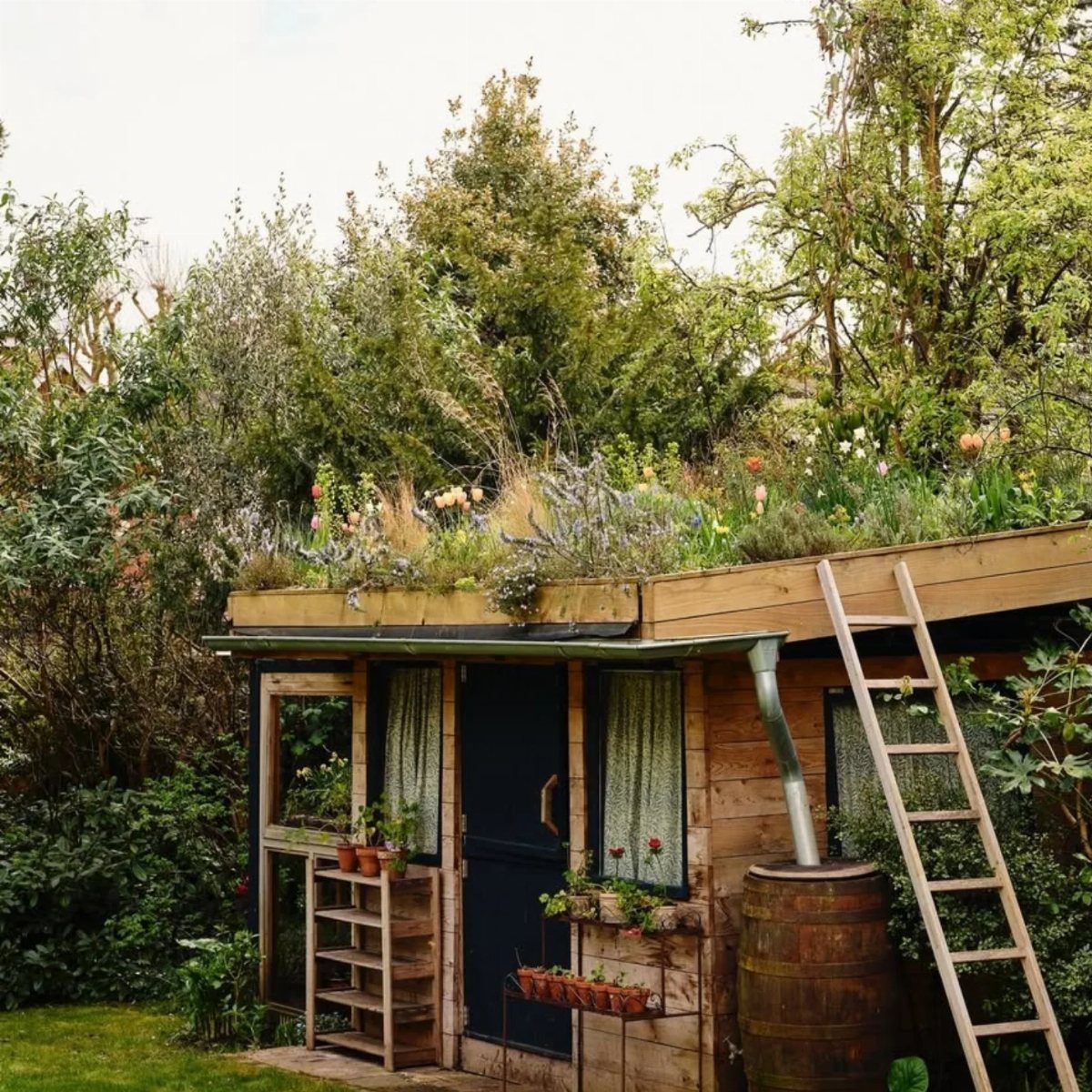
Grass and flowers on the roof turns a shed into a garden element that sits quietly in the landscape.
The load is the issue: saturated soil adds serious weight, so the structure needs checking before you plant. A living roof also insulates somewhat and slows runoff, which helps in yards where every hard surface adds to a drainage problem.
I would start with sedum mats rather than seed, because erosion before establishment is common. A rain barrel paired with the roof makes sense; collected water reaches the plants without dragging a hose up a ladder.


Pack of 5 Trays - 10" X 10" - 2" deep - No drain holes

Quantity 10 - Durable Plastic - WITH Drain Holes
6. Glass Garden Shed
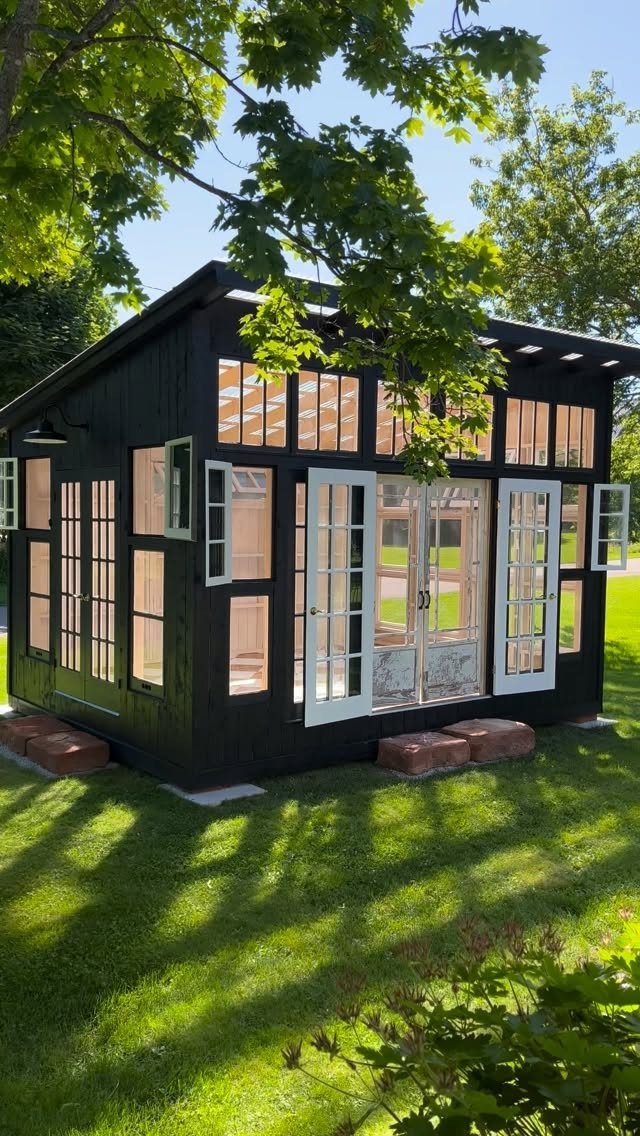
A black frame with large glass panels and white doors gives this shed a greenhouse function that a solid-wall version cannot match. I would use this idea for starting seedlings, overwintering tender plants, or just as a bright workspace.
Temperature is the issue with glass sheds: they overheat fast in full sun and lose heat fast at night, so roof vents and a small fan help in summer.
Position matters more than with opaque sheds. Morning sun and afternoon shade keeps the interior usable through the hottest weeks without extra gear.
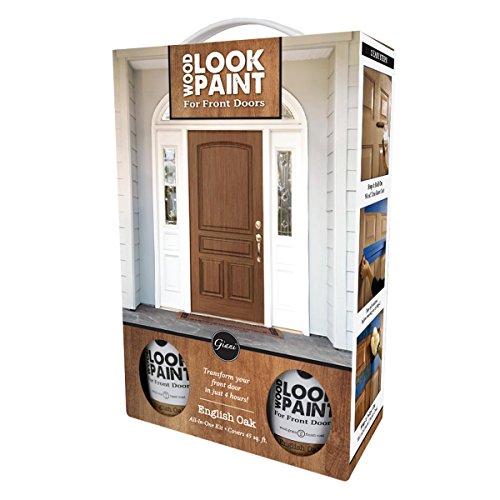
Add instant curb appeal to your home in just 4 hours

【Everything You Need】Our comprehensive wood paint kit comes with all the essential tools to revitalize your furniture paint projects with ease.

7. Garden Office Shed
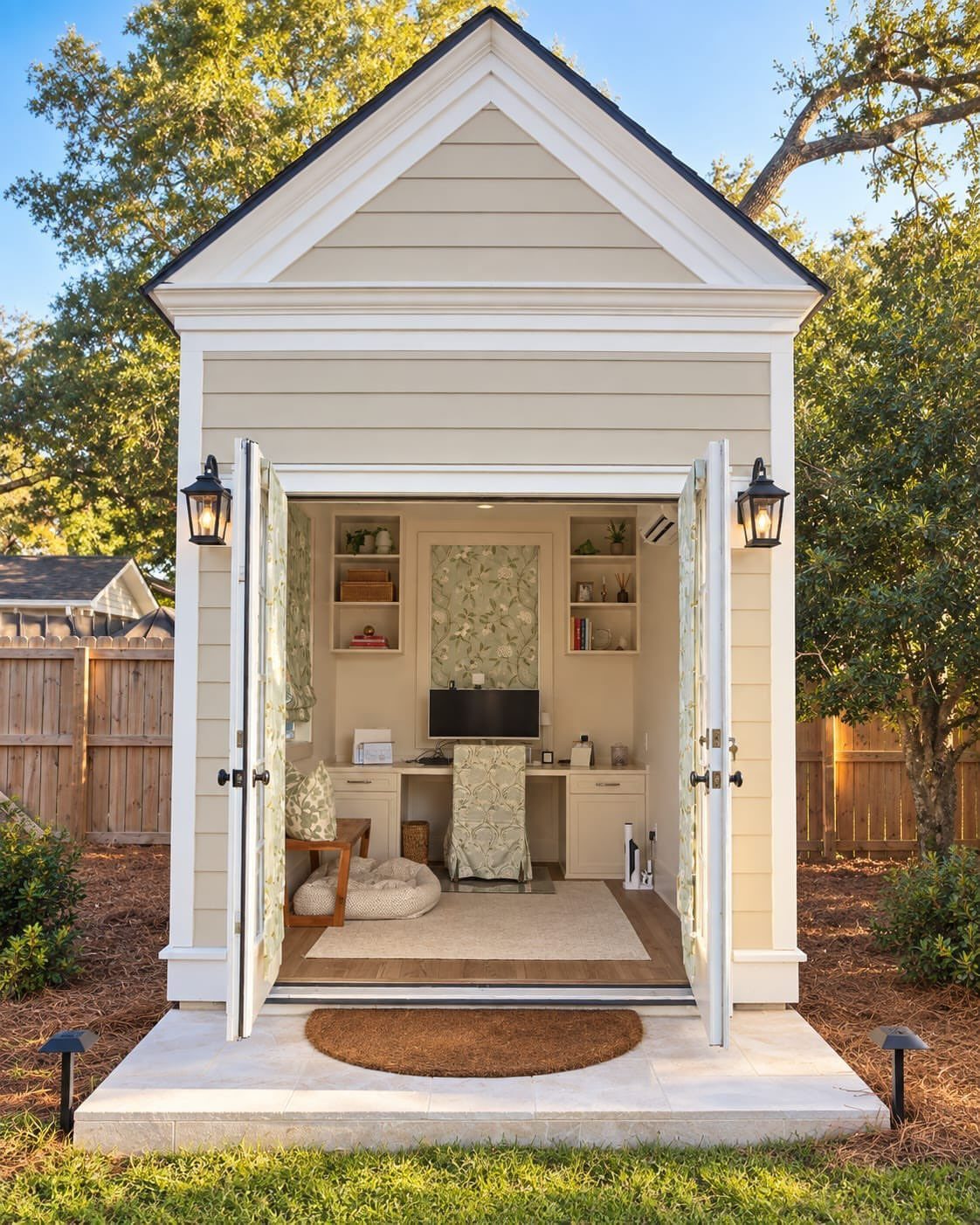
A shed office works when the structure already has enough headroom for a desk chair and space to roll back from the monitor.
Double doors are worth the upgrade in a garden office, because you can leave them open in summer for cross-breeze; a solid door would need a window unit or a mini-split to get the same comfort.
Built-in shelving keeps files off the floor where damp collects in uninsulated sheds. Check whether your local code treats this as an accessory structure or habitable space; that distinction decides permits, wiring, and whether you need a separate meter.

Size: 1.5 Inch

Durable and sturdy: The flower box bracket is made of high-quality iron material, with a long service life.

Adjustable Base Design: Our planter box brackets features a versatile and adjustable design with minimum 6'' and the maximum 12'' depth (Front To Back), allowing you to customize the width to suit your preferences
8. Cozy Reading Nook
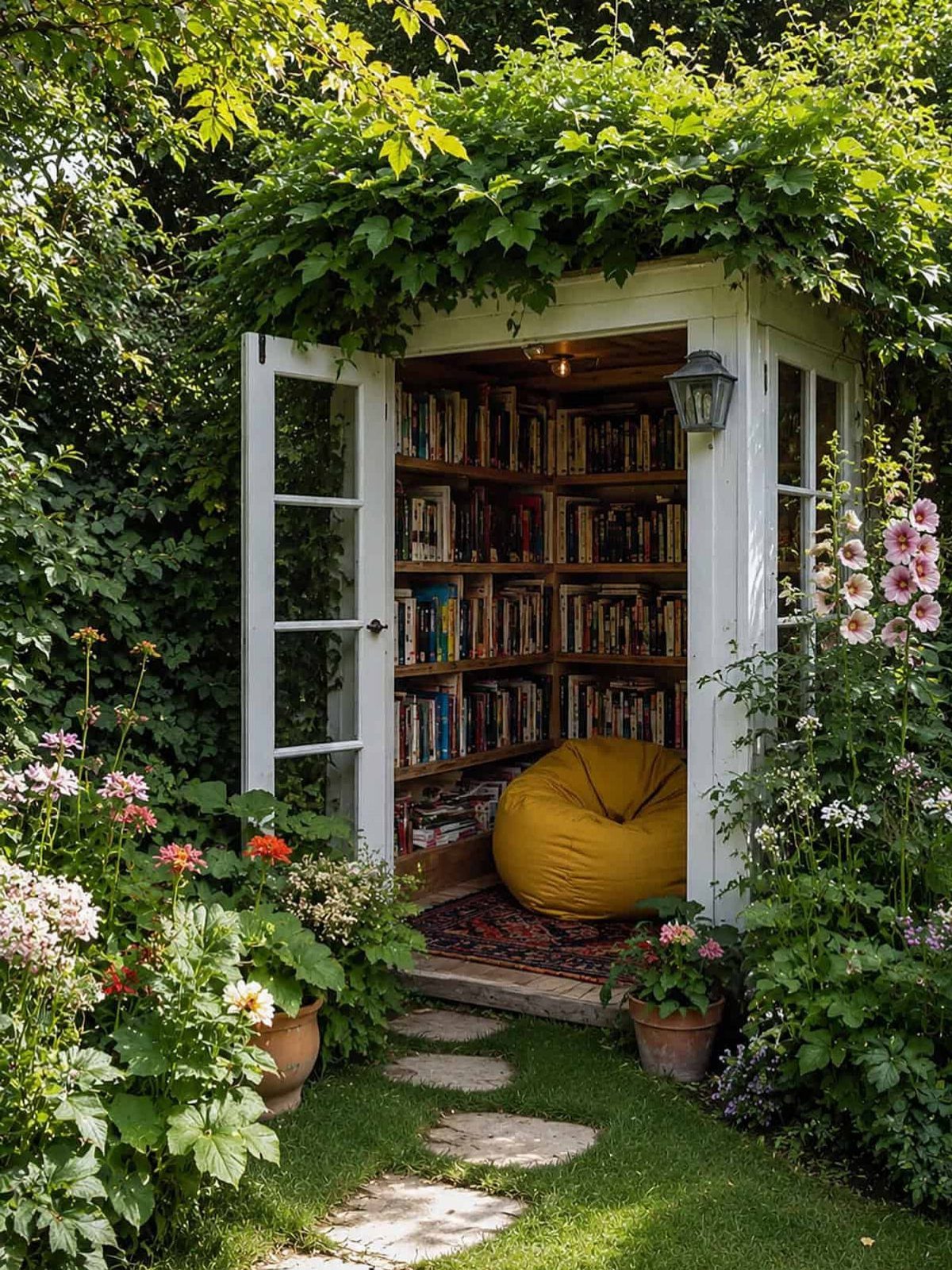
Built-in shelves and a rug turn a shed into a retreat that costs less than adding a room to the house.
French doors matter in a small reading nook, since light makes the space feel larger and you need enough of it to read by afternoon without switching on a lamp.
I would check the floor for level before laying a rug; sheds settle and a sloped surface tilts a beanbag toward the low corner.
Orient the door toward garden greenery rather than a blank fence; the view is half the point.
9. Add a Porch or Seating Area
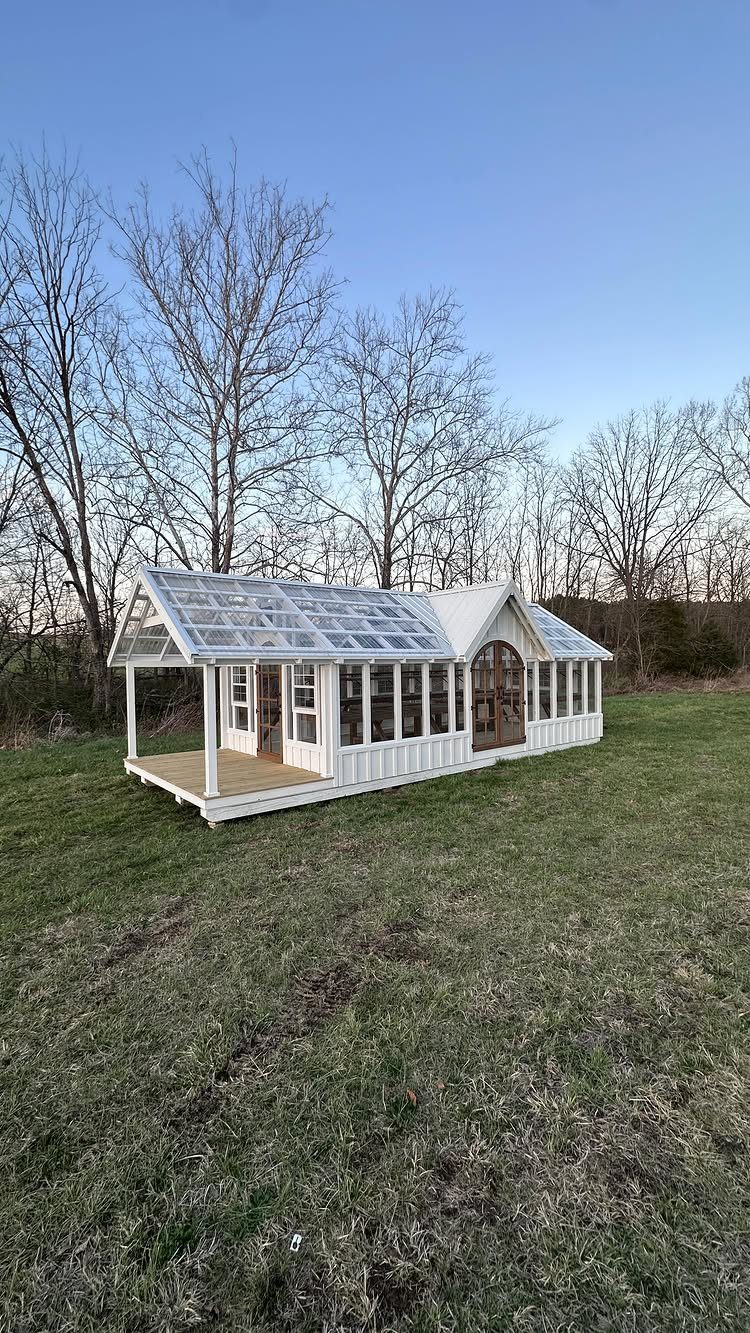
A covered porch extends the shed’s function without enlarging the structure itself. A porch works best when the roofline continues from the shed itself, which keeps rain off the step and gives the seating area actual shade.
I would build the deck level with the shed floor to avoid a trip hazard, and use decking rated for ground contact if the porch sits low.
The covered version costs more than open seating but lasts longer; cushions and books stay out, and you gain a workspace for potting or projects in light rain.

SOLAR PLASTIC WALL HANGING LIGHTS: 2 pack modern wall mount lights powered by solar, each with a large warm white LED Edison bulb, they are the ideal decorative outdoor lighting ensure a great effect when the light glows in the dark. Lantern Measurement - 4.9 x 4.9 x 6.2 inches

Solar porch lights outdoor equipped with an advanced LED light source. Mode 1 is Motion-Sensing High-Brightness, offering a bright view upon detecting motion for safety. Mode 2 combines Low Light with Motion Sensing High Brightness. It gives a soft glow at night and switches to 100 lumens when sensing motion, ensuring clear visibility. Mode 3 is the Low-Brightness Energy-Saving Mode, operating at 20 lumens all night, perfect for areas like corridors and balconies. It conserves energy and provides a gentle illumination without disruption, catering to diverse lighting needs and enhancing your outdoor experience with its versatility and functionality.

SOLAR PLASTIC WALL HANGING LIGHTS: 4 pack modern wall mount lights powered by solar, each with a large warm white LED Edison bulb, they are the ideal decorative outdoor lighting ensure a great effect when the light glows in the dark. Lantern Measurement - 4.9 x 4.9 x 6.2 inches
10. Garden Bar
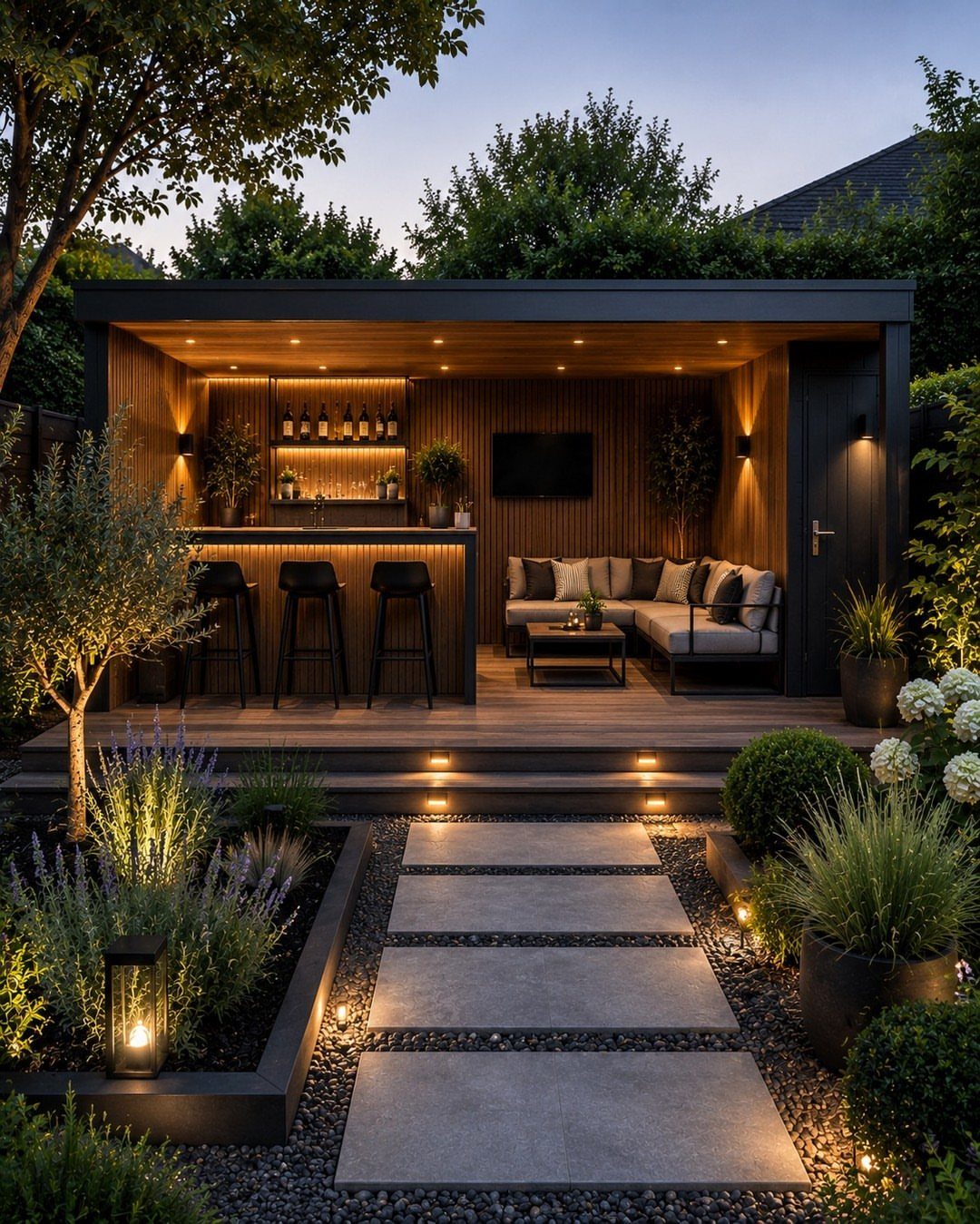
An open-front bar shed works for entertaining because the host faces guests while working, unlike a closed shed where everyone crowds inside.
A garden bar functions better with 2 zones, barstools at a counter and lounge seating set apart, so traffic keeps moving instead of bunching up.
I would run power for a small fridge and ambient lighting on its own circuit, not extension cords across the lawn.
Wood paneling inside needs sealing against humidity from ice buckets and spilled drinks. A bar shed suits yards large enough that noise does not carry straight to bedroom windows.


Quantity 10 - Durable Plastic - WITH Drain Holes

11. Trellis and Climbing Plants
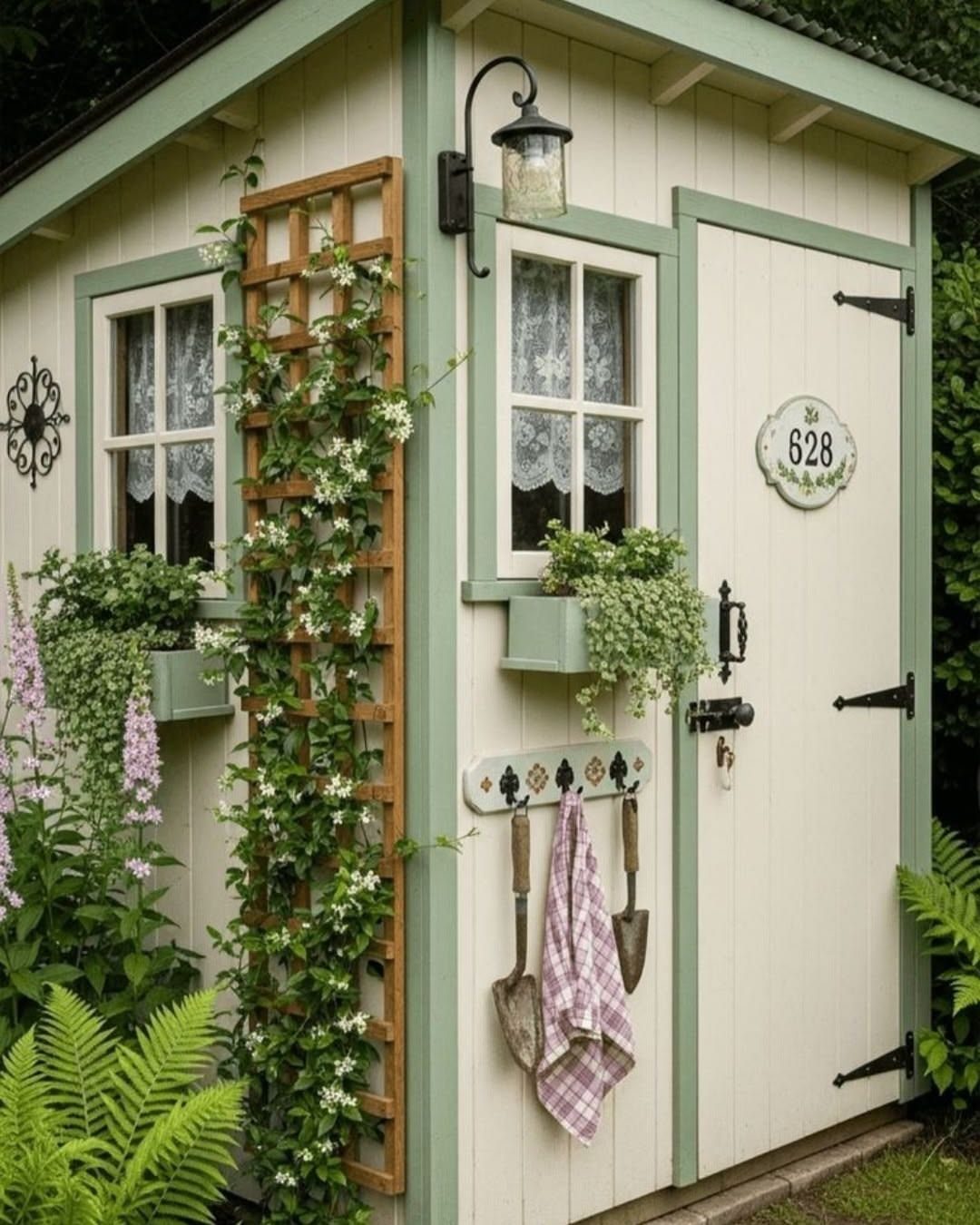
A trellis mounted to the shed wall trains climbers upward instead of letting them root in siding gaps. A trellis reads as intentional design when the structure contrasts against the plant, clean wood lines against whatever climbs them.
I would leave air space between trellis and wall, an inch or two, so moisture does not trap and rot the siding.
Annual climbers like sweet pea give fast coverage for one season; clematis or rose stay put but need pruning access you plan for from the start.
Tips for Choosing Colors
Light colors on a small shed push the walls outward visually; mossy green, charcoal, or navy do the opposite, sinking the structure back so the garden reads larger.
I would match the trim to the house rather than the shed body, since that tie matters more from the street than a perfect garden blend.
For interiors, soft pale green or light yellow bounces what little light a shed gets and keeps the space from feeling like a storage closet.
Bold exteriors, light blues or yellows, work when the shed sits against a plain wall or open lawn where contrast reads as intentional, not accidental.
Raw wood needs primer; painted wood does not. 2 coats of exterior formula, not interior, holds through freeze and thaw.
So while your own shed might not have walls painted with trompe l’oeil scenes, you can still nod to the garden-chic legend. Read on for the prettiest inspiration and design hints for your next backyard project.
Maintenance Advice
A shed lasts longer when the roof line is checked before each wet season, especially where stored tools can rust.
Exterior paint or stain needs reapplication on the cycle the manufacturer sets; peeling starts at edges and spreads fast once water gets behind.
Hanging baskets and window boxes soften the structure but trap moisture against siding; I would leave a gap or use brackets that hold them clear.
Hooks and pegboards on interior walls keep floor space open and tools visible; deep cabinets hide what you own and cost more room than they return.
String lights and solar lanterns need cleaning as much as fixtures do, since dirt on the panel or bulb cuts output before you notice.
Maximizing Small Spaces
Vertical storage on exterior walls, tools and pots hung flat, keeps floor area free for the work that needs it.
A green roof uses overhead space that otherwise does nothing; the load is the limit, and saturated soil runs heavy enough to matter.
Multi-functional pieces, a bench with storage below or a potting surface that folds flat, earn their footprint twice.
The outside wall is fair game for organization when the inside is tight; that shift, taking the inside out, is the first move I would make in any shed under about 50 square feet.
Frequently Asked Questions
What’s the biggest shed you can build without a permit?
That depends on your local code, which treats sheds as either accessory structures or habitable space. Size limits vary by city and county, and crossing them changes the permit path, the electrical rules, and sometimes the utility metering.
I would check with your city or county before you start, since rules vary block by block in some areas.
What are common shed design mistakes?
Glass walls look beautiful in photos but turn the interior into a greenhouse by noon and a freezer after dark if you face them south without overhangs or insulation.
Another mistake is building a porch deck above or below the shed floor level, which creates a trip hazard.
I would also count neglecting moisture gaps as a common error, whether that is trellises mounted flat against siding or window boxes trapping water against walls.
Can I build a shed in my garden?
Yes, but check local regulations first. Most garden sheds for storage or potting fall under simpler rules than a garden office with a desk and power.
