
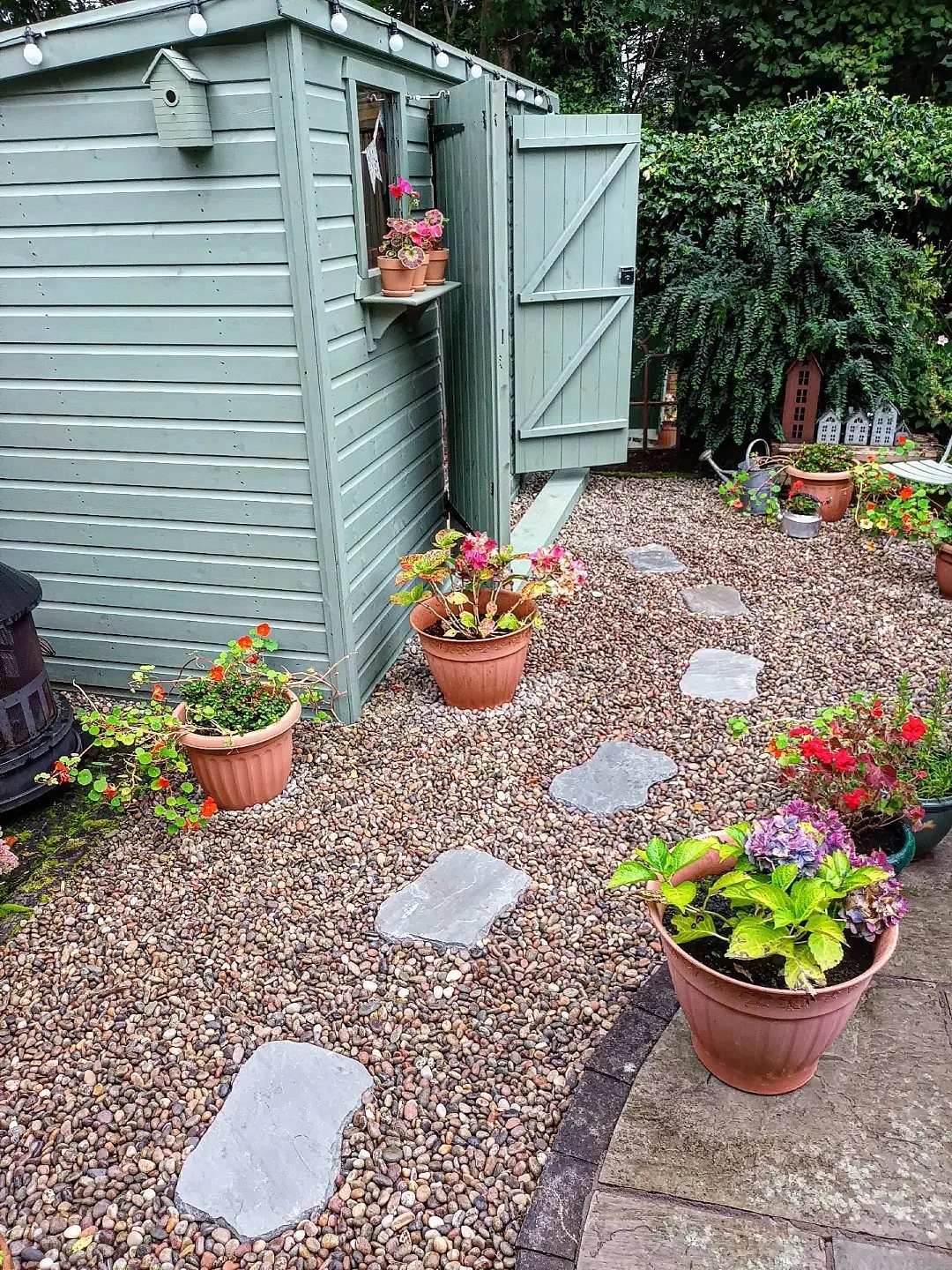
These ideas run from a few hours with resin panels to a full weekend framing plywood or pallet wood, and the right one depends on whether you need storage fast or a structure that earns its place in your garden.
A lean-to shed halves your lumber by borrowing an existing wall, while a green roof on a flat-topped shed asks you to first check if that roof can handle saturated soil at all.
1. Green Roof Garden Shed
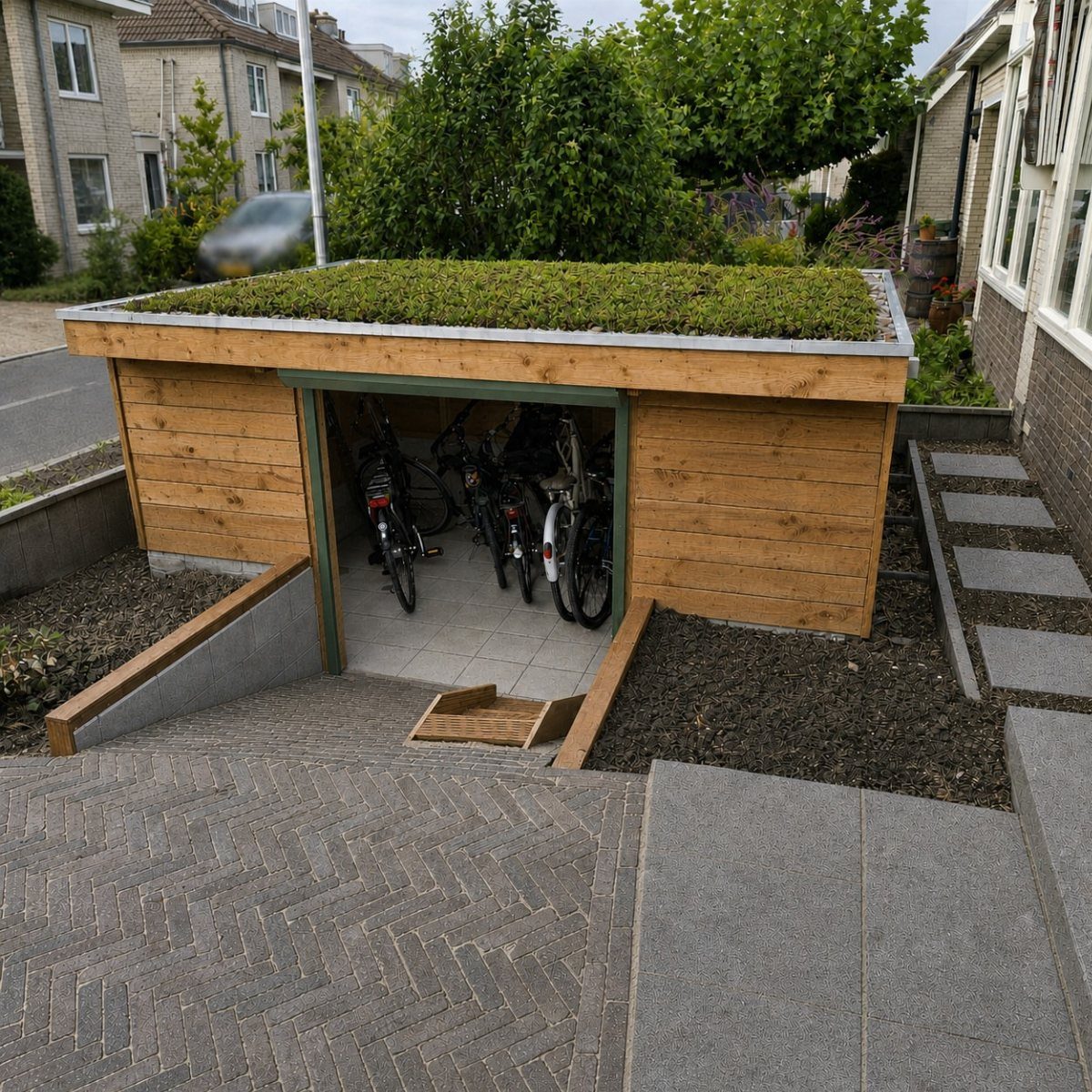
A green roof turns any flat-topped shed into something that reads as garden, not afterthought. A green roof at patio level hides bikes below from street view while low plants grow overhead.
Before you try this, check your roof load. Saturated soil and plants add serious load, and a standard shed roof built for shingles won’t carry that without reinforcement.
I would skip the irrigation system some guides suggest and use sedums or shallow-rooted herbs that tolerate drought. The payoff is visual, not square footage gained; if you need more storage, build a taller wall instead.

All-Weather Durability: Pro-Tect tested and proven to withstand up to 2,800 pounds or 30 inches of snow load, and winds up to 100 mph (product must be anchored as specified in the Backyard Discovery instruction manual)

Package Includes: you will receive 2 pieces of greenhouse automatic vent opener, enough quantity to meet your needs and replacements, and each opener comes with accessories for easy installation
2. Greenhouse-Shed Combo
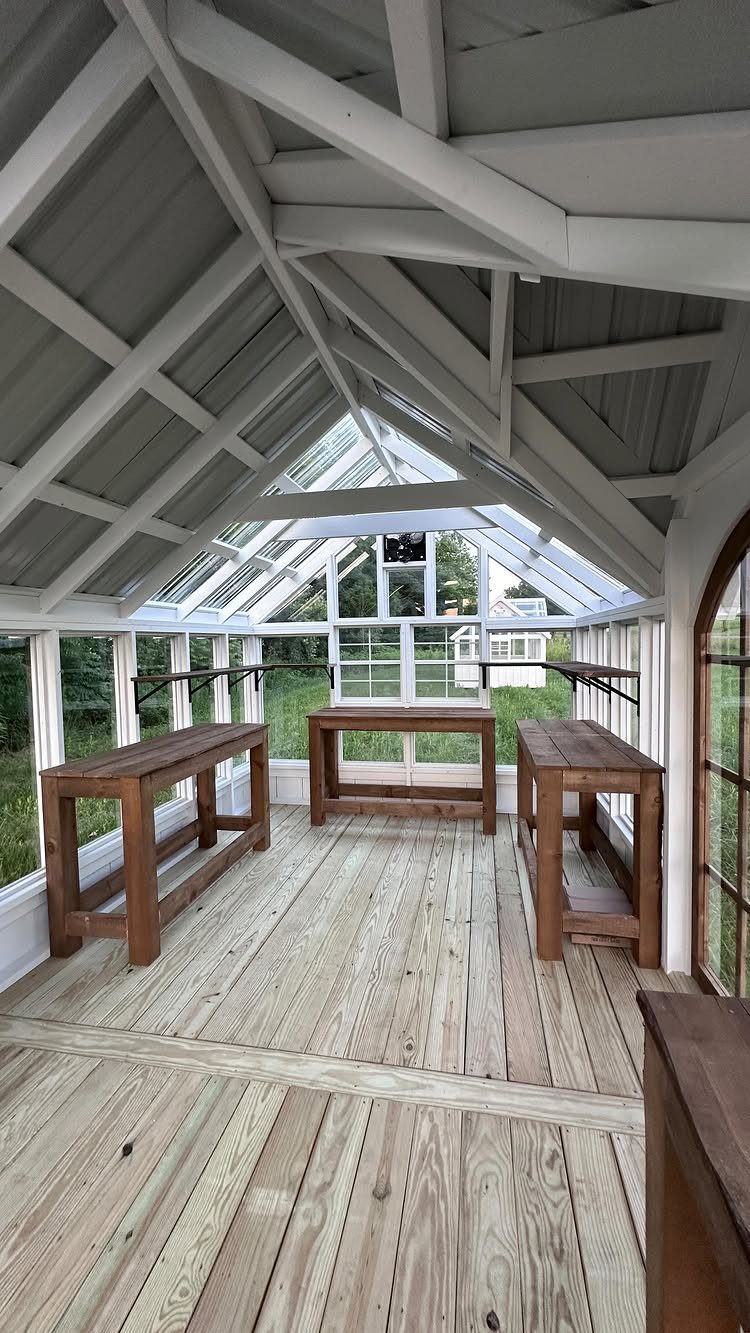
A greenhouse-shed combo splits one structure into two jobs: potting and storage, each with its own door and climate.
A pitched roof with a skylight section over the greenhouse side, white timber framing, and dark wood benches running the length keeps the growing area bright.
I like this setup for anyone who starts seeds in March but also owns a lawnmower that needs shelter. The glass section bleeds heat all winter, so don’t store chemicals or paint there.
If your growing season is short, put the greenhouse on the south wall and keep the shed entry on the north or east where cold matters less.

COMPATIBLE REPLACEMENT: Designed as a direct replacement skylight for Suncast storage sheds, compatible with part number 0462978.

【Shed Skylight Panel】Designed as a replacement component for compatible storage sheds, providing a practical part for shed maintenance projects

【Shed Skylight Replacement】Designed for replacing the skylight section on compatible storage sheds. Helps restore daylight access inside outdoor storage areas for easier item organization
3. Shed with Shelves and Hooks
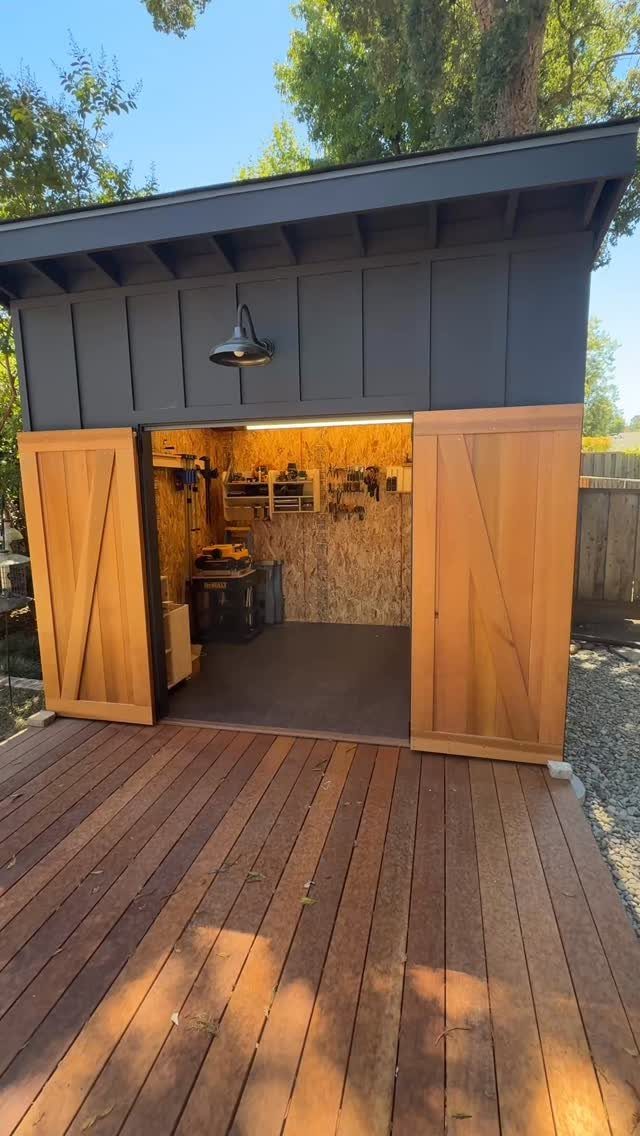
Open storage with shelves and hooks keeps tools visible and reachable, which sounds small until you have spent too long digging through a closed cabinet for pruning shears.
Dark siding and sliding wood doors that stay open while you work keep the shed practical; inside, wall-mounted shelves hold boxes and small gear while hooks carry long-handled tools.
I would mount the heaviest hooks on studs, not just siding, because a loaded shovel creates more pull than it looks. A simple lumber and hardware system beats any freestanding rack that tips when you bump it.

Versatile Functionality: The garage organizer is equipped with six double-layer hooks and three rails. Every rail is engineered to fit the standard 16-inch on-center stud spacing, well suited for garages, sheds, and workshops in need of robust organization

All Metal Material: Our garden tool organizer, both backboard and hooks are made of iron, which makes it more durable and solid.And its load-bearing capacity far exceeds other usual ABS material tool hooks. It is deal for various tools like shovel, rakes, bikes, broom, mop, trust that what you get is what you see,any dissatisfaction please contact our customer service team

Gardening Supplies Storage – The Afton Wall Organizer combines a rock-solid wall shelf and hanging hooks for storage of your outdoor tools and supplies. Perfect for your garden shed or garage.
4. Mini Garden Tool Shed
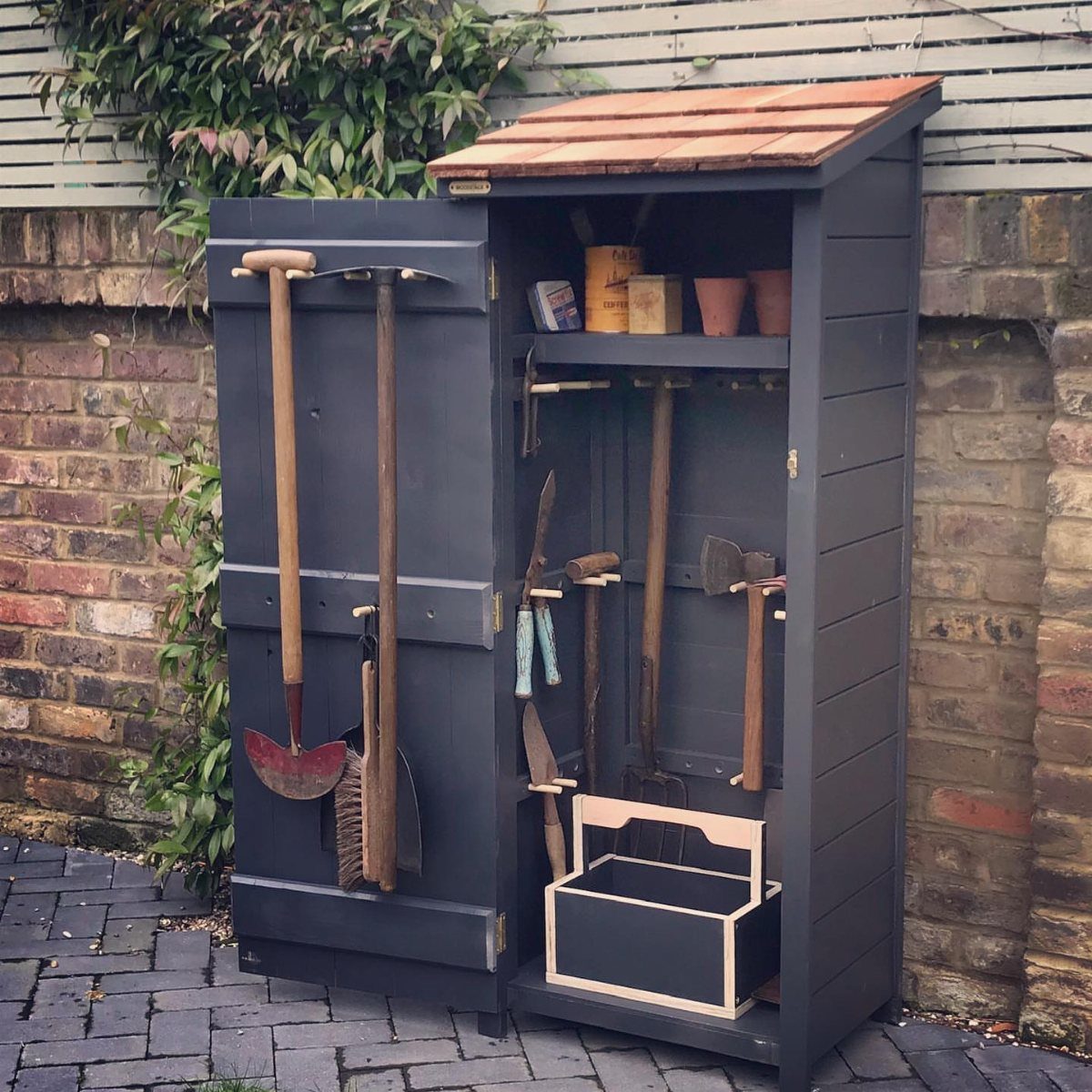
A mini tool shed makes sense when your collection is modest and your space is smaller still.
A shed barely wider than a doorframe, tall enough for long-handled forks and rakes, with pots stacked on a narrow shelf fits tight spots.
I would place this against a wall or fence; freestanding, it sways when you pull a heavy tool.
The brick backdrop here also stops moisture from wicking through the back panel, which matters more than people think. If you have only a patio or balcony garden, this footprint is probably your practical limit before tools start living indoors.

Seamless Installation: Our user-friendly instructions, comprehensive guides, and detailed video tutorials ensure a trouble-free setup. Additionally, our expert technical team offers remote assistance whenever you need it.

5. Pallet Wood Shed
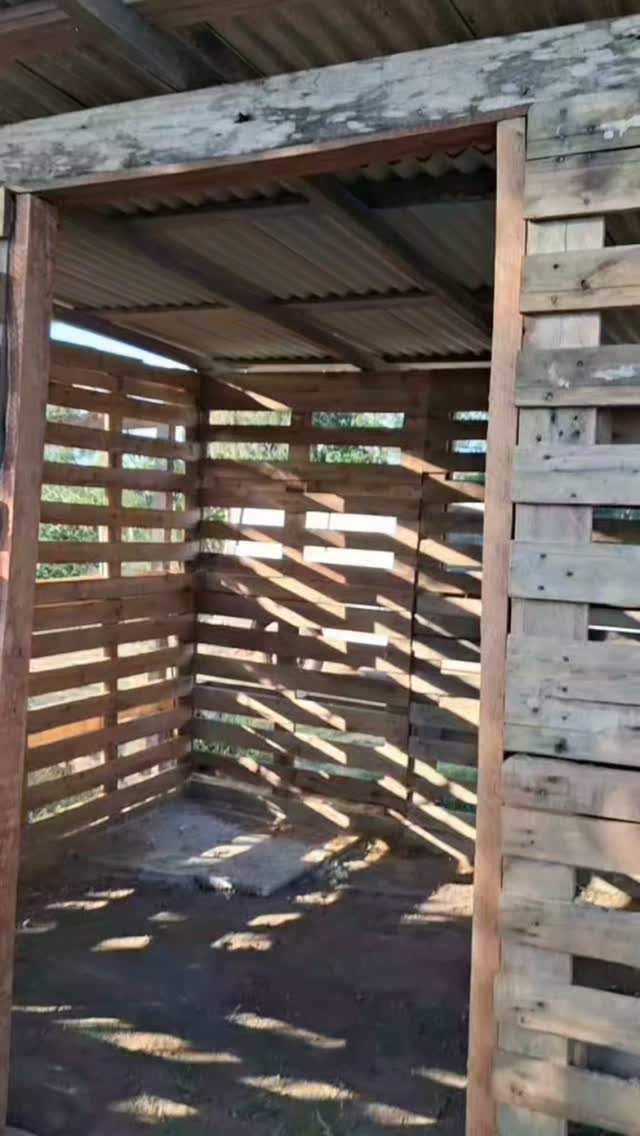
Pallet wood is free if you source carefully, but "reclaimed" does not mean ready to use. Pallet slats for walls and a corrugated tin roof over a dirt floor read rustic because the gaps are intentional, not sloppy.
I would brush every pallet first to check for chemical treatment; the "MB" stamp means methyl bromide, and that wood belongs nowhere near your garden or a fire pit.
Expect to spend a Saturday dismantling and denailing before you build. The savings on lumber are real for a structure this size, but the time cost is real too.

VERSATILE STORAGE OPTIONS: With external dimensions measuring 55.3 inches in length, 31.8 inches in width, and 74.4 inches in height, DWVO's garden tool storage comes in a multitude of sizes, colors, and shapes to choose from; Great for outdoor backyards, gardens, courtyards, and utility rooms; Additionally, DWVO's outdoor storage can serve as a cozy and secure shelter for pets

Seamless Installation: Our user-friendly guide, detailed manuals, and step-by-step video tutorials ensure a hassle-free setup. Plus, our outside storage sheds expert technical team offers remote assistance whenever you need it.Storage Shed Metal Shed Garden Shed with Lockable Doors Outdoor Waterproof Shed for Bike Storage, Tool Storage, Temporary Storage, Bike Shed.

【Enhanced Structural Integrity】Polar Aurora outdoor shed boasts a reinforced structure, methodically tested to facilitate a 29% easier and more stable assembly, aligning with practicality and durability.
6. Resin or Plastic Shed
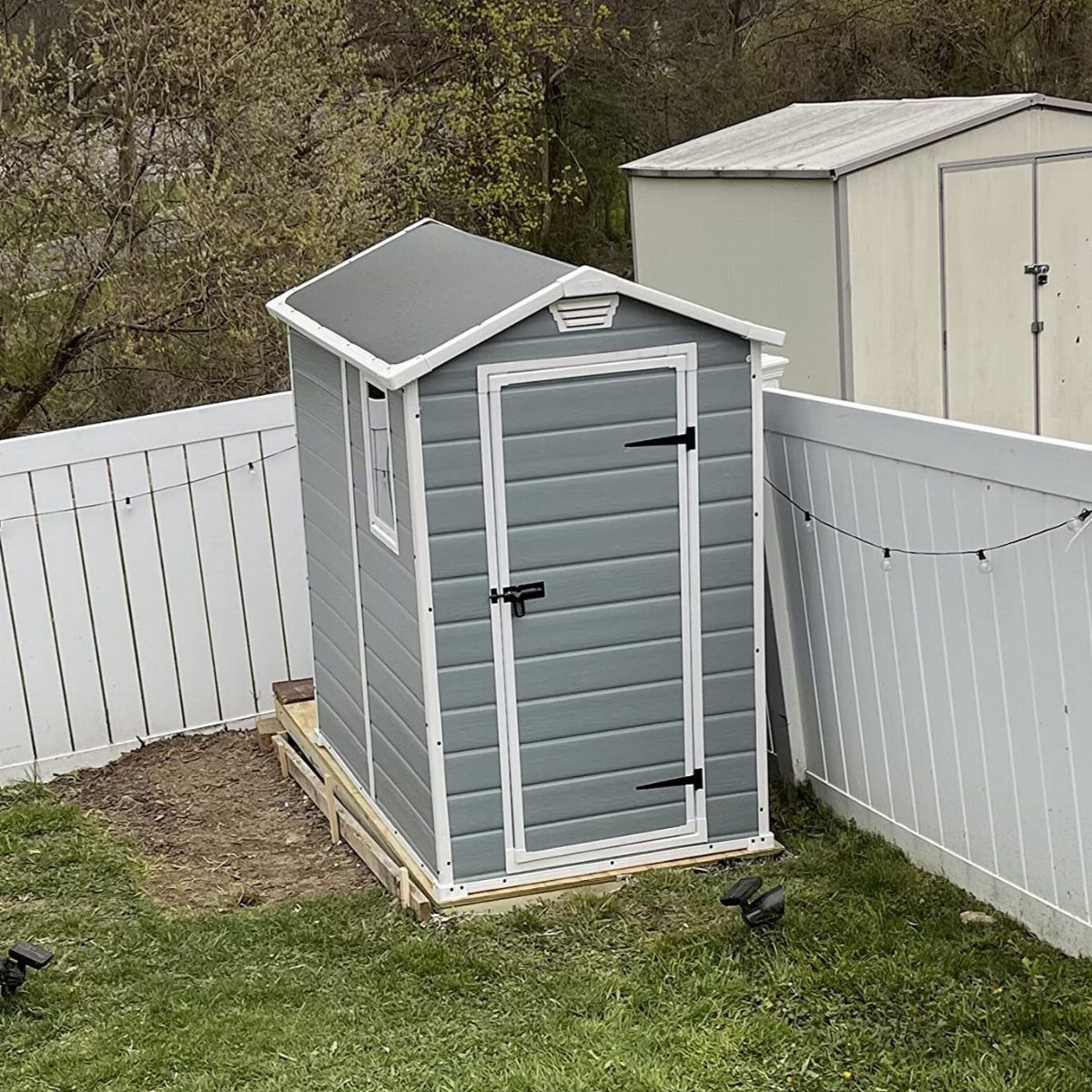
Resin sheds win on speed and upkeep; no paint, no rot, no carpenter bees. A gray shed with white trim on a wooden base in a fenced corner reads clean against the grass.
I would build that base first and level it precisely, because resin walls flex if the frame twists, and the doors jam.
Assembly takes a few hours with a helper, not a weekend, which is why I point renters and first-home owners here when they need storage before the rainy season starts.
This will never pass for garden architecture, and the walls are thin enough that a determined thief gets in fast.

✔️ Saltbox Roof Storage Shed Plans

Package Includes: you will receive 2 pieces of greenhouse automatic vent opener, enough quantity to meet your needs and replacements, and each opener comes with accessories for easy installation

6' x 4' Large Storage Shed:Maximize your outdoor space with our spacious 6' x 4' storage shed, measuring 75.6" L x 48.5" W x 71.3" H. Featuring a generous door size of 44.5" L x 62.5" H, this garden shed is ideal for storing your snow blower, lawnmower, outdoor furniture, bikes, grills, generators, and so much more
7. Lean-To Sheds
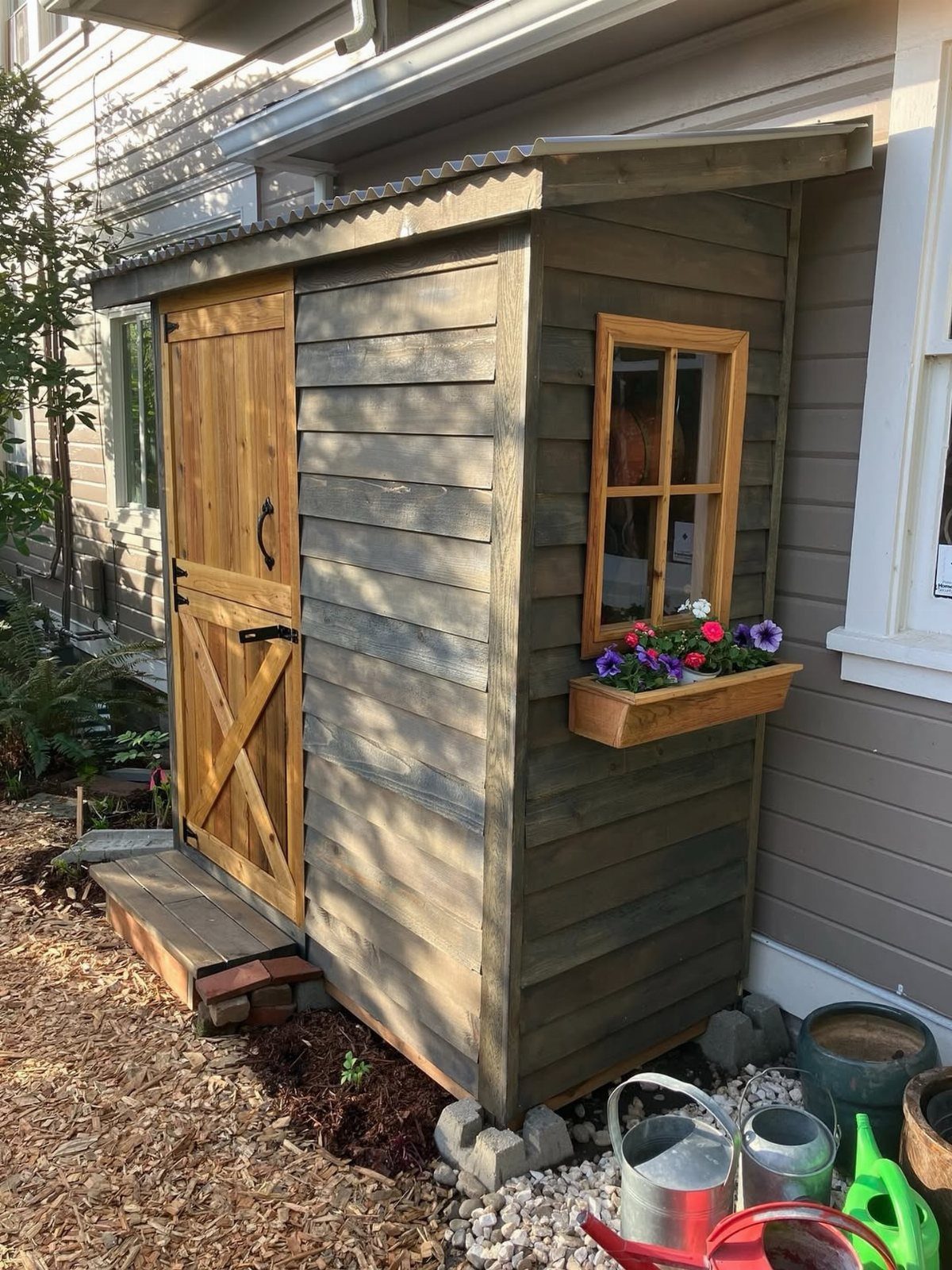
A lean-to shed borrows a wall you already paid for, which is why it fits tight budgets and tighter yards.
A lean-to shed saves one wall’s worth of lumber by sitting against your house siding, and that shared wall braces the whole frame.
I would check local code before attaching anything to your house exterior, and I would flash the joint where roof meets siding so water doesn’t find its way in.
A window box softens the edge, but the real win is the footprint: half the depth of a standalone shed for the same floor space.

【Shed Lighting Upgrade】Replace the skylight panel area on compatible storage sheds to help bring natural light into outdoor storage spaces. Suitable for gardens, yards, and utility areas

🏗️ Galvanized Steel Shed Base Frame Kit: Installed beneath your assembled shed, this heavy-duty steel floor system creates vital ground clearance to combat moisture. It features ventilation channels that resist humidity and delivers 250lb/sqft load capacity, providing reliable heavy-duty support for lawn equipment storage

【Skylight Replacement】Provides a replacement option for damaged or missing shed skylight components, helping restore the overhead light panel function in outdoor storage spaces
8. Shed with Potting Station
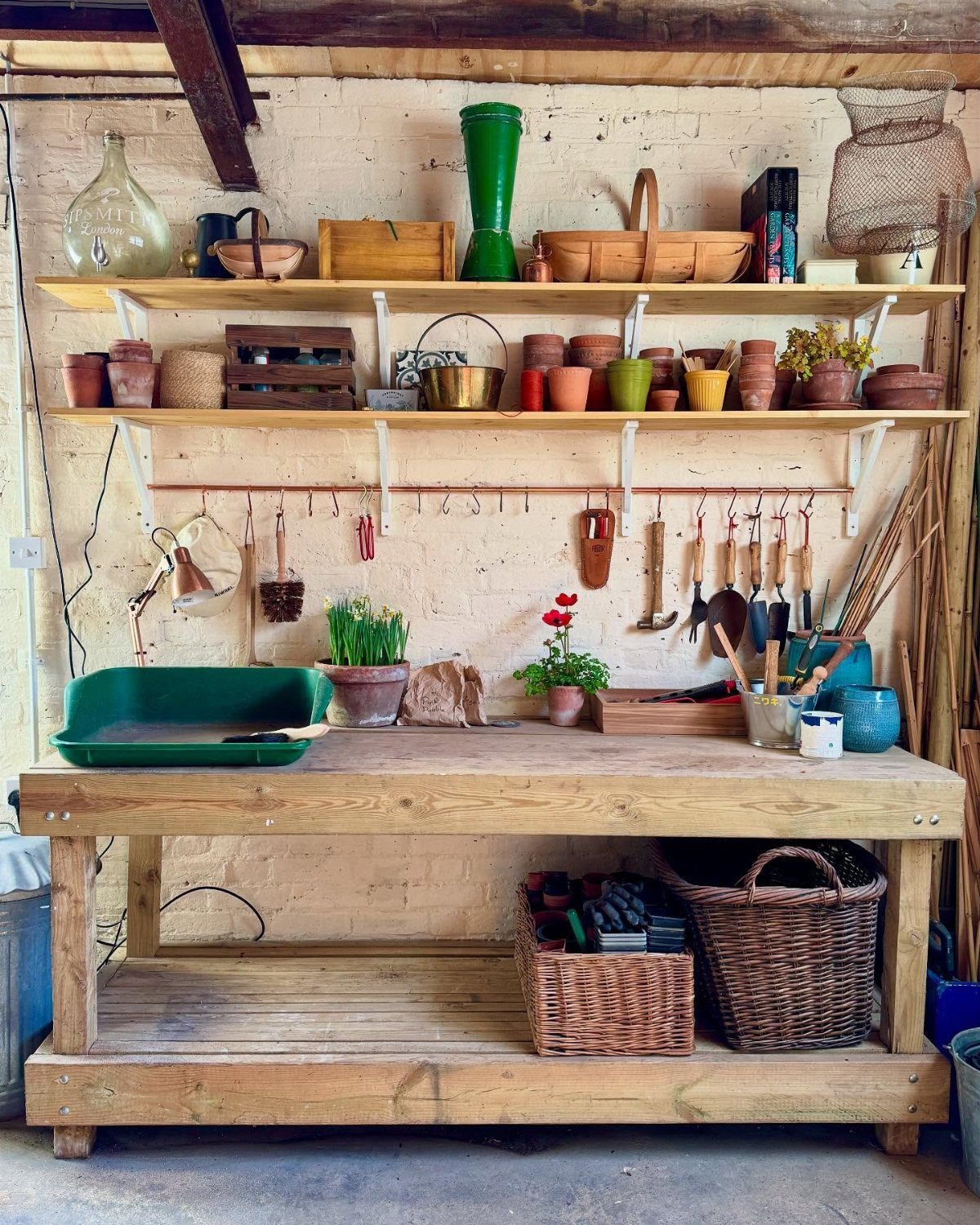
A potting bench inside the shed keeps soil, tools, and transplant mess out of your garage or kitchen.
A potting station needs light, elbow room, and a surface you can hose off; brick, open shelves, and hanging hooks get you there, not the cramped feel of a storage closet.
I would put the bench near the door or under a window, and I would use a slatted top so soil falls through instead of caking.
If you start seeds here, a small heater extends the season without heating the whole shed.

【Efficient Garden Tool Rack】High quality gardening tool holder with shelves, large tool slots, S hooks in one. The clever design allows the tool rack to store tools of various sizes with strong load bearing capacity, realizing comprehensive storage of gardening tools.

Flexible Storage with 5 Adjustable Hooks: Customize your storage to fit your needs. Equipped with 5 heavy-duty adjustable and removable hooks, the garage wall organizer storage system lets you easily slide each hook along the rail to create the perfect layout for tools and equipment of different sizes. The tool hooks are coated with rubber to prevent scratches while resisting water, rust, and everyday wear. Strong enough to securely hold ladders, shovels, rakes, hedge trimmers, leaf blowers, extension cords, folding chairs, sports gear, and more—keeping everything organized, protected, and within easy reach.

OPTIMIZE YOUR SPACE: garden tool organizer compact design helps you maximize space. Hang tools and equipment to free up valuable floor space in garages, sheds, gardens, and more
9. Dustbin Shed
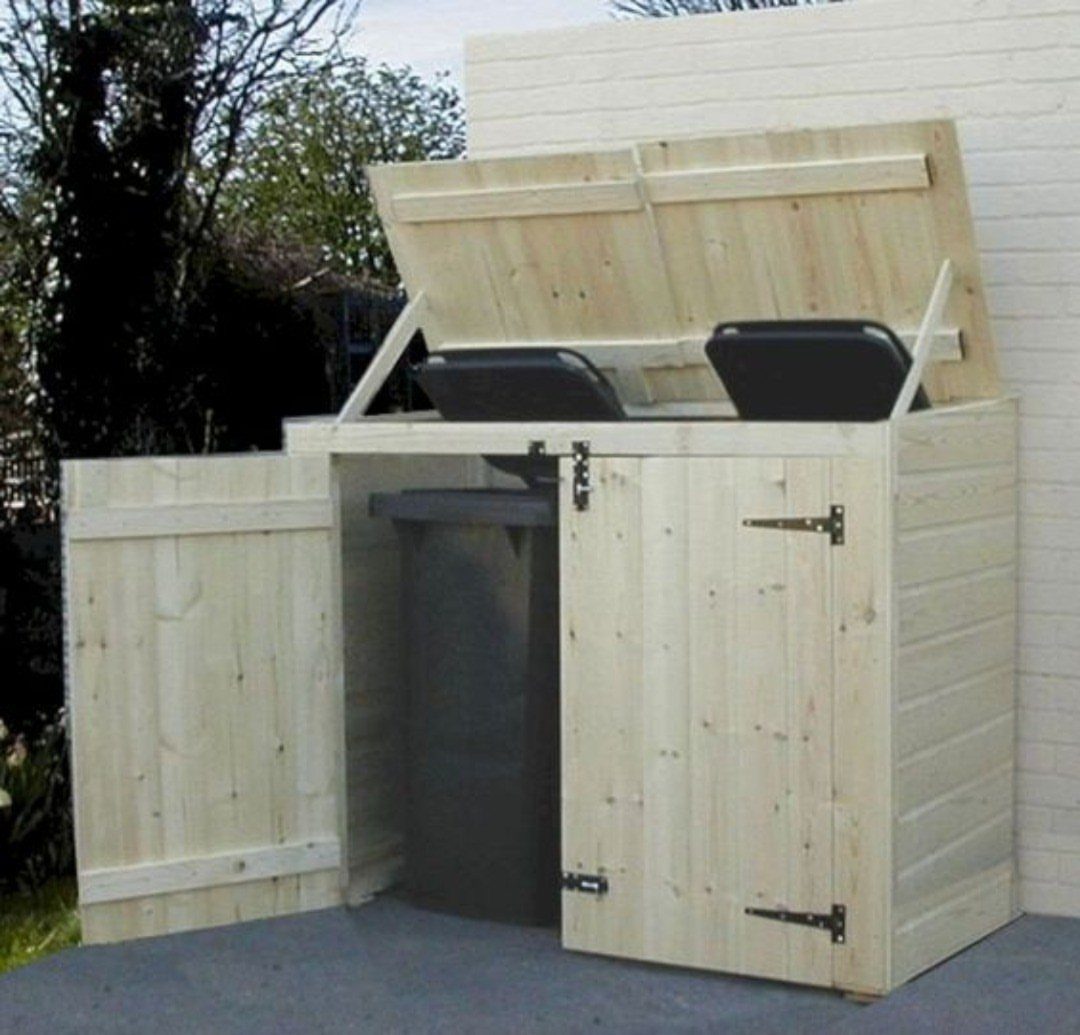
2 wheelie bins behind a light wood enclosure with a hinged lid turns the ugliest part of your yard into something you don’t have to look at.
A dustbin shed with hinged lids reads as small storage when closed; the function stays hidden until you need it.
I would hinge the top wide enough that bins slide straight out, not lift and angle, because a full bin is heavier than it looks.
Check your collection schedule before you build; some trucks need side access, and a fixed front panel blocks that. Pressure-treated lumber handles the moisture, but I would keep the base open or slatted so rain drains instead of pooling.
10. Plywood Storage Shed
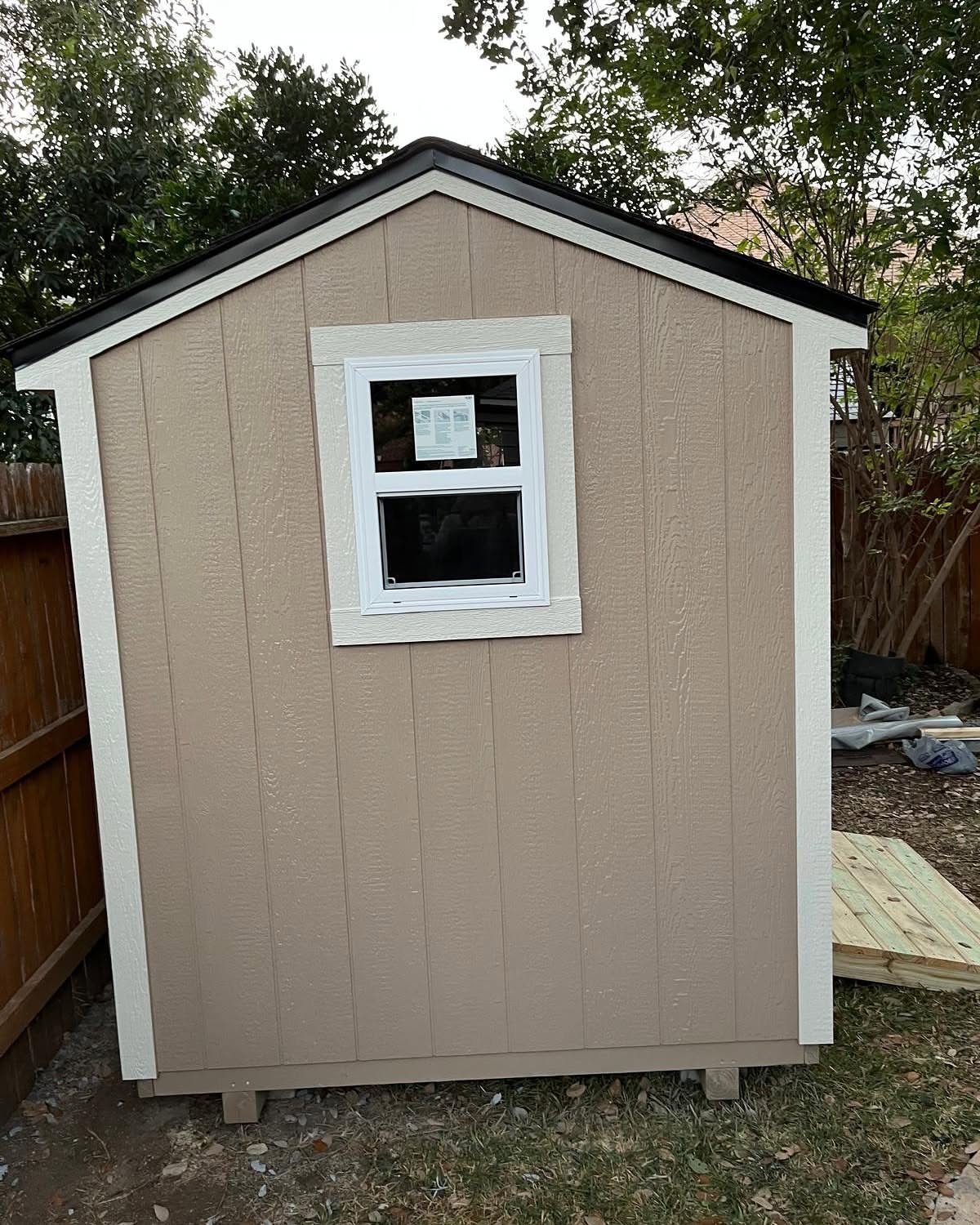
Plywood siding with white trim and a single window is the shed you build when you need square footage, not style points.
Paint-grade plywood keeps material cost low and lets you match the trim to your house later; cedar or vinyl would lock you into their color.
I would frame with standard stud spacing and sheath the whole thing before siding; plywood walls rattle less than board-and-batten and hold a shelf anywhere you drive a screw.
One window is enough for finding a rake, not enough for working inside; if you plan to spend time in there, add a second or accept that this is storage, not a shop.

Multifunctional Outdoor Storage Shed: The large-capacity metal shed has multiple uses. It can store most of the outdoor tools you would normally use, such as lawn mower, bikes, toolboxes, etc. If you have pets, it can also be used as a pet house to keep out the wind and rain and provide enough warmth. You can also use it as a garbage room to keep your yard clean and tidy.

Keep Items Off Damp Floors: These plastic pallets for basement storage feature a 4-inch elevated design that helps keep storage bins, moving boxes, tools, seasonal decorations and household supplies off damp concrete floors. Ideal for garages, crawl spaces, utility rooms and laundry areas. Each pallet measures 19.7 x 11.9 x 3.9 inches, with approximately 9.6 sq. ft. of combined surface area for the 6-pallet when arranged side by side

[Security and Durability] The whole storage shed is a steel frame structure, the metal garden storage shed adopts electro-galvanized steel process and paint treatment, which is suitable for various climates, without worrying about the metal rusting, the all-metal storage shed will not be deformed by the sun, and has excellent moisture-proof ,UV resistant performance.
Design Tips for Small Sheds
Windows or a skylight do more for a small shed than most additions; light makes the interior feel larger without touching the footprint.
I would place a window on the south or east wall where it catches morning light and skip the west side, where afternoon heat turns a small box into an oven.
Neutral colors keep a shed from dominating a yard. White, light gray, or natural wood reads as background, not statement.
I have seen a dark red shed make a narrow garden feel smaller than it is; the same structure in pale gray sat back and let the plants take the eye.
A sliding door or barn track buys back the floor area you’d lose to a door swing in a tight footprint.
In a tight passage between shed and fence, that clearance matters. A door that slides along the outside wall keeps the full floor area usable inside.
Built-ins suit small sheds because they fold away. A wall-mounted shelf stays put; a folding bench gives you a work surface when you need it and aisle space when you don’t.
Materials for Small Sheds
Wood, metal, and resin each carry a different cost in time and attention.
Wood takes paint or stain and needs reapplying every few years, but it is the only choice if you want to match your house trim or add a window later.
I would use treated pine or cedar in humid climates; both outlast untreated lumber where moisture lingers.
Metal sheds shrug off rot and carpenter bees. Metal sheds cost less and go up fast, but you will hear every raindrop and you will wipe condensation off the walls on cold mornings.
I would add a vapor barrier or leave an air gap if I stored anything that rusts.
Resin panels assemble fast and ask nothing afterward. I would not lean a ladder against those walls or expect them to stop a determined thief.
Dismantling, denailing, and checking stamps for methyl bromide treatment takes a full day before you cut a single board. Pressure-treated 2x4s from a lumber yard often cost less when you count hours.
Building Considerations
Your town’s setback rules and permit list should shape what you build, not the other way around.
Many municipalities allow sheds under 100 square feet without a permit, but the threshold varies, and some require setbacks from property lines or limit total height.
I would call the building department with my lot dimensions and a rough plan rather than guess from a neighbor’s experience. A forced removal costs more than the shed.
Foundation is not mandatory for a small storage shed, but bare ground invites moisture and tilting. Resin sheds need a level base more precisely than wood; their walls flex, and a twisted frame jams the doors.
Measure your yard twice, especially the path to the site. A shed that fits the corner may not fit through the gate in pieces.
I would mark the footprint with stakes and string, then live with the outline for a day to see how it affects lawn mowing and garden access before I commit.
Frequently Asked Questions
How to build a storage shed cheaply?
Pallet wood is free if you source carefully, though expect to spend a full day dismantling and denailing before you cut a board. Metal sheds cost less upfront than wood and go up fast, which saves on labor.
What are common shed design mistakes?
Poor planning tops the list: measuring the yard but not the path to the site, building on bare ground without checking for moisture, or skipping the call to the building department.
Another frequent error is overloading a small footprint with too many features instead of letting it do one job well.
Can a shed be a tiny home?
These structures work best for storage, potting, and tool shelter; living space brings insulation, ventilation, and code requirements that change the whole build.
A greenhouse-shed combo or a shed with a potting station could theoretically be adapted, but that is not what these designs address.
If you are considering a tiny home, you would need to look at insulation, plumbing, and code requirements that go well beyond any of these ideas.
What is the average size of a small shed?
Most small storage sheds I see land around 6 ft by 4 ft, enough for a mower and a few bins without swallowing the yard. Anything larger than 80 square feet starts to read as garage or storage unit rather than shed.
For a mini garden tool shed, I would go narrower still, barely wider than a doorframe, which fits tight spots against a wall or fence.
Do you need a foundation for a shed?
Foundation is not mandatory for a small storage shed, but bare ground invites moisture and tilting. I would at minimum build a wooden base and level it precisely before assembly.
