
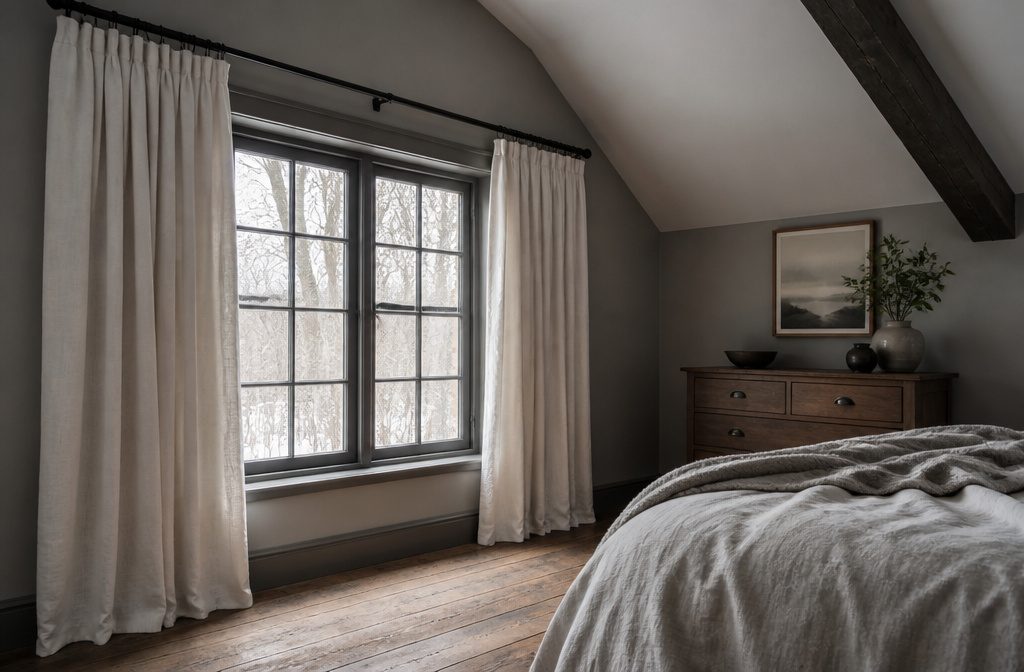
Hang your curtain rod 4 to 6 inches above the window trim, but that rule shifts with your ceiling height and the attachment style you choose.
A rod positioned too low visually shrinks the window; too high without enough curtain length leaves awkward gaps.
Grommet and tab-style curtains hang lower than rings or rod pockets do, so the same rod height delivers a different finished position depending on what you pick.
Hang the rod 4 to 6 inches above the window trim
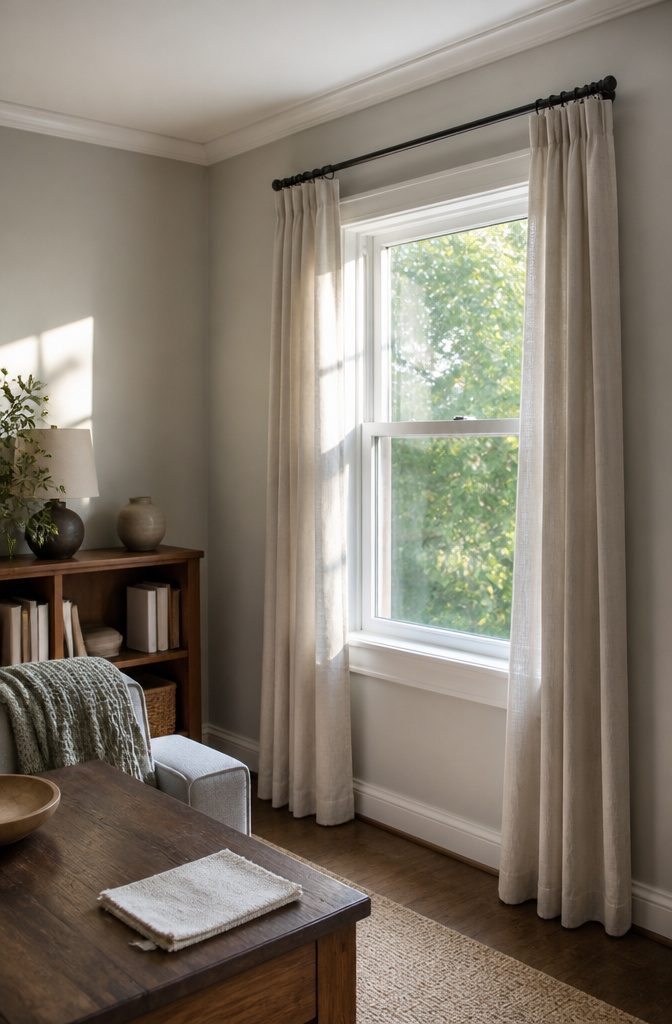
The practical starting point for most windows is 4–6 inches above the window trim, or 4–8 inches above the frame if that’s easier to measure.
This height works because it clears the trim itself, which keeps the rod from looking cramped, and it gives you room to adjust down if your ceiling or wall space demands it.
Higher placement does pull the eye upward and can make both the window and ceiling feel taller, but only if the rest of your setup cooperates.
Hanging the rod too high without enough curtain length leaves awkward gaps; hanging it high in a room with 8 feet of ceiling can feel off-balance.
If you have crown molding, hang the rod 1–3 inches below it rather than fighting for space above. For 9-foot ceilings, you can go 6–10 inches above the frame; for low ceilings, get as close to the ceiling as the hardware allows.
Before you drill, hold a curtain panel or a piece of fabric against the wall at your proposed height and check how it lands.
Grommet and tab-style attachments hang lower relative to the rod than rings or rod pockets do, so the same rod height will give you a different finished position depending on what you choose.

5/8 inch curtain rods for windows, adjustable size by splicing. The connection of the curtain rods is optimized for lengthening, which gives it a maximum weight capacity of 25 lbs, suitable for light or medium weight curtains.

100% Metal 50LB Heavy Duty: Built with a 1-inch diameter rod (0.7mm thick), multi-layer metal end brackets, and a strong middle bracket, the heavy duty curtain rods supports up to 50 lbs of heavyweight draperies in total. Made from 100% premium metal with a rust-resistant coating, the wrap around curtain rod passes salt spray, alcohol wipe, and adhesion tests for lasting strength and durability. (Note: Multi-jointed design for safe transit. Assembly required. Not 1-2 whole pieces. No middle bracket for 58" version.)

Easy to Install and Detachable: Just need to put the assembled curtain rod into the base. It is easy to take the curtains off when you need wash or change different curtains, just put the rod from the base. No need to disassemble the pole.
Adjust for your ceiling height
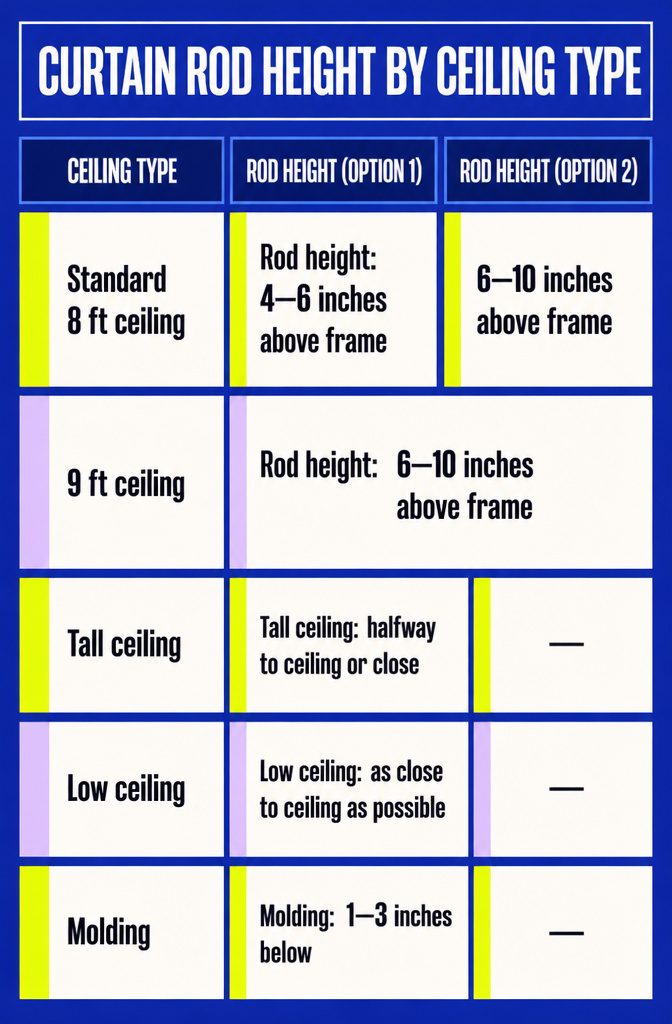
Ceiling height is the first thing to check before you settle on a rod placement.
The higher you hang a rod, the taller your windows and room will feel, so the real question is how much space you actually have to work with.
| Ceiling Type | Rod Height |
|---|---|
| Standard 8 ft ceiling | 4–6 inches above the window frame |
| 9 ft ceiling | 6–10 inches above the window frame |
| Tall ceiling | Halfway between frame and ceiling, or close to ceiling |
| Low ceiling | As close to ceiling as possible |
| Crown molding present | 1–3 inches below the molding |
Low ceilings need a different strategy than you might expect.
Rather than dropping the rod to save space, move it higher. As one source puts it:
In rooms with lower ceilings, mounting curtains higher can help create the appearance of more vertical space. If there’s limited room between the window and ceiling, consider positioning the rod closer to the ceiling while leaving enough clearance for the brackets, finials, and curtain hardware.
The clearance for hardware matters more than you’d think: brackets and finials need real room to function without hitting the ceiling or molding. Leave yourself at least an inch or two to work with.

3 INCH LOW PROFILE BRACKET – this short ceiling mount curtain rod brackets are only a bit over 3 inch long, feature a sleek design that enhances the appearance of your ceiling by creating the illusion of height while maintaining a stylish and modern aesthetic.

3 INCH LOW PROFILE BRACKET – this short ceiling mount curtain rod brackets are only a bit over 3 inch long, feature a sleek design that enhances the appearance of your ceiling by creating the illusion of height while maintaining a stylish and modern aesthetic.

!!!PLEASE CHECK SIZE BEFORE PURCHASE!!! --- FIT FOR 1-1/4in 32mm DIAMETER DRAPERY RODS
Match the rod height to your curtain length and header
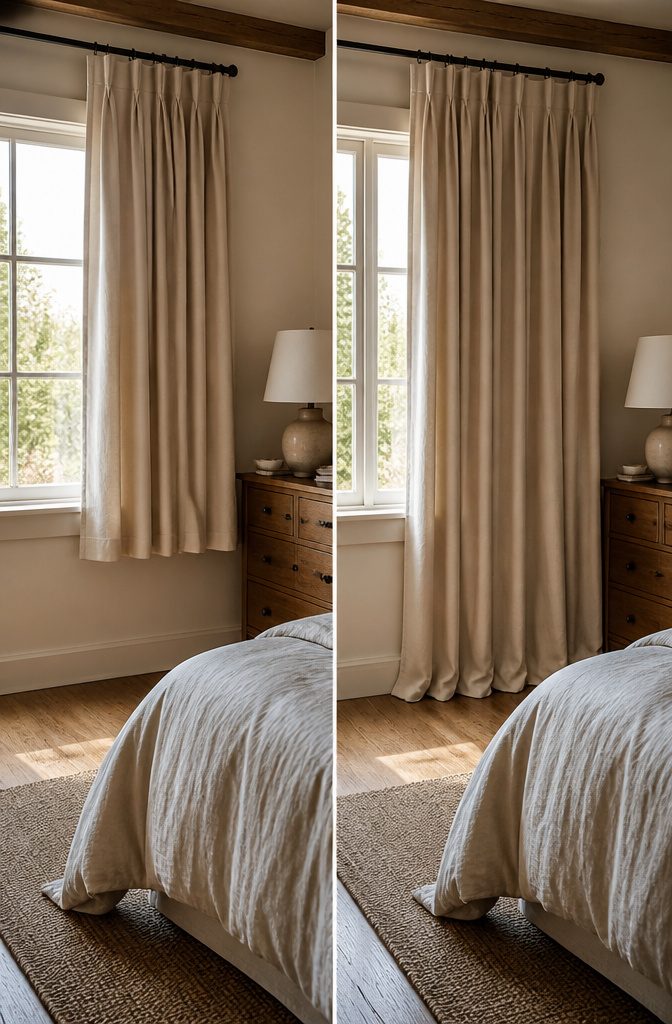
Different curtain headers sit at different distances from the rod, and that gap shifts where your panels land.
Pinch pleat curtains hang from rings or hooks clipped below the header, so you measure from the bottom of those rings to find the actual drop.
Grommet curtains run directly on the rod, which means you measure from the top of the rod and account for the fabric sitting above the eyelet.
Rod pocket curtains slide over the rod itself, placing the attachment point higher, so they need a taller rod placement to avoid looking bunched near the window.
Work backward from where you want the hem to finish. Standard ready-made lengths run 84, 96, and 108 inches, but the attachment style affects the final drop even when panel lengths match.
If floor-length curtains are your goal, you need to know three things: how far up from the floor your rod sits, how your chosen style attaches to the rod, and whether the panels will hover just above the floor, touch it, or puddle slightly.
Back tab and ripple fold styles, hanging from tabs or folds rather than rings, each create their own geometry.
Once you pick the attachment method and decide on hem placement, measure from that attachment point to where you want the hem, then check the manufacturer’s guidance before finalizing the rod height.
The panel length only works if the rod height cooperates with it.

Sold as 2 Panels: Each package includes 2 pieces white sheer curtains. Each sheer curtain measures 42 inch width, 84 inches long( The curtain length not include top 1.5 inch header,total length 85.5 inch) 2 pieces total width is 84 inches, Sheer curtains width is 1.5-2 times wider than your window to show a nice look. Multiple Length are available, please measure your window first for the right choose
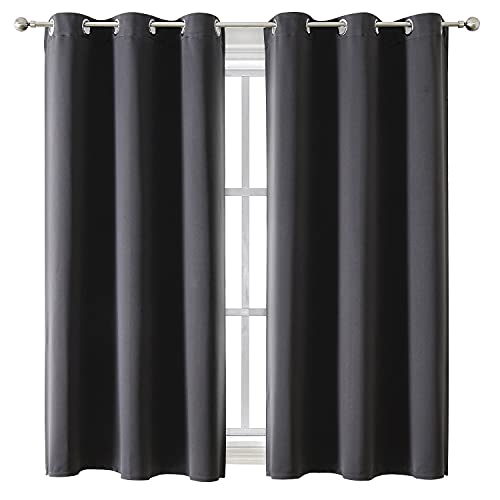
SET DETAILS: 2 charcoal gray curtains per package. Each panel measures 42 inch wide by 63 inch long with 6 silver metal grommets (1.6 inch inner diameter) on top, easy to install and slide.

SIZE & MATERIAL:Set includes 2 panels blackout curtains(52" Wide by 84" Long). Each panel has 8 grommets.The interior diameter of hole is 1.6 inch.It's easy to hang. Curtains are made by quality faux linen.
Decide where the hem should fall
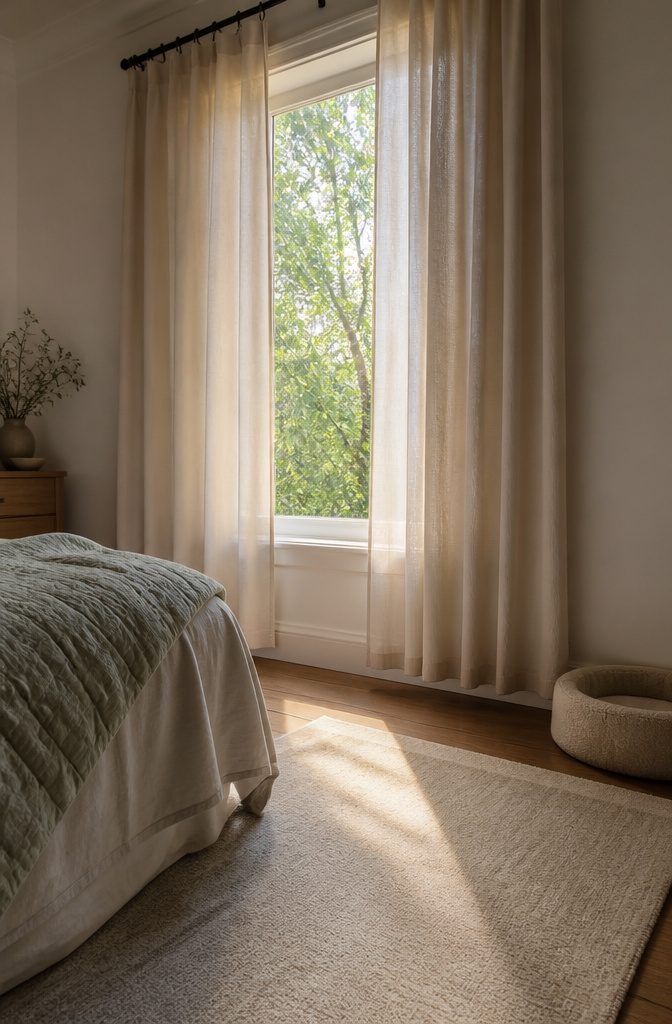
The hem position you choose shapes how the curtains read in the room and how practical they are to live with.
Floating curtains, which stop about ½ inch above the floor, offer the cleanest finish and work especially well in bedrooms, living rooms, and homes with pets or kids, since the fabric stays clear of dust and foot traffic.
If you want a more finished look, let the hem touch the floor; this reads tailored without the fussiness of extra fabric pooling underneath.
Puddled curtains gather 1–3 inches of fabric on the floor for a softer, more dramatic style, though they demand more upkeep and lose practicality in high-traffic spaces.
For windows where floor-length curtains don’t fit, sill-length options sit at or just below the windowsill. Ready-made curtains typically come in 84, 96, and 108 inch lengths, which covers most standard windows, but custom lengths serve tall walls or unusual window sizes better.
The hem choice matters more than you might think because it anchors the whole visual weight of the curtain in the room.
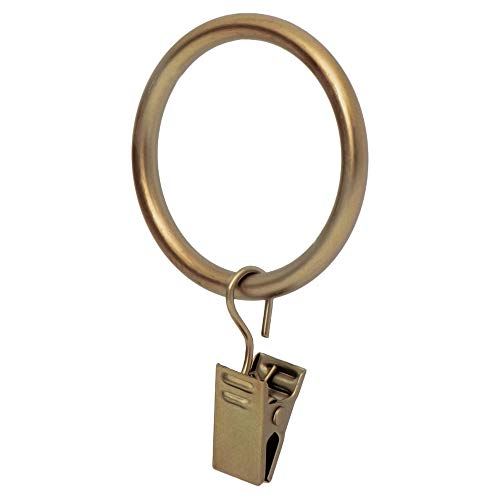
This set includes 14 small drapery curtain clip rings for fabric panels, curtains or draperies.

This set includes 14 drapery curtain clip rings for fabric panels, curtains or draperies.

MULTIPLE HANGING: Sold per pair, including 2 window panels - Panel measures: 52 x 84 - inches | Set measures: 104 x 84 - inches, with 3 curtain top hanging options (Back tab & Rod pocket & Pleated) for your personalized style. Each panel sewn with 4" rod pocket (7 back loops), 2" bottom hem and 0.8" side hem, specialized fitting the curtain rods up to 3
Extend the rod beyond the frame for panel fullness
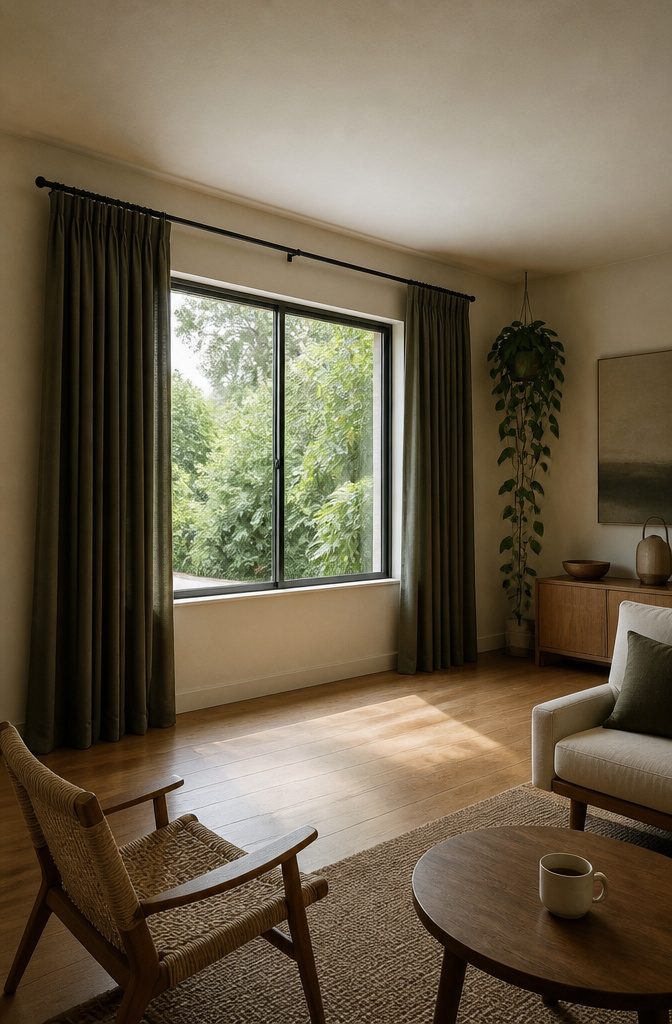
The width of your curtain rod matters as much as its height. When you hang the rod only as wide as the window frame, panels bunch up against the glass when open and block light.
Instead, extend the rod 6–12 inches past the window frame on each side so the panels can stack completely outside the opening. This simple shift admits far more natural light and makes the window itself look larger.
How full the curtains hang depends on the fabric width relative to the rod width. Panels need to be 1.5 to 2 times the rod width so they drape with body rather than lying flat.
Blackout and room-darkening fabrics especially benefit from this fullness. A thin panel of blackout material still lets light leak around the edges, but a full one seals the window.

【 Artisan Bird Design 】Hand-finished by skilled artisans, these bird finial curtain rods feature intricate, lifelike details in the eyes, beak, and feathers. This nature-inspired window hardware adds a vintage cottagecore charm to any nursery or farmhouse bedroom

[Sturdy]1 inch rod and 0.8mm pipe are thicker than most products, which makes curtain rods more sturdy, it will last a long time to use.Perfect painting present a smooth surface.

Adjustable Length: 32-144" curtain rod fits windows 24 to 136 inches wide. The telescoping rod featuring a flexible 1 to 9 feet extension range for precise customization, while the adjustable heavy-duty brackets offer a 2.5" to 3.5" wall clearance to prevent curtains from rubbing against the wall and improve light blocking. ( Important Note: To ensure safe shipping, this rod consists of 9 segments that require assembly. It is not a single or 2-piece pole.)
Avoid common hanging mistakes
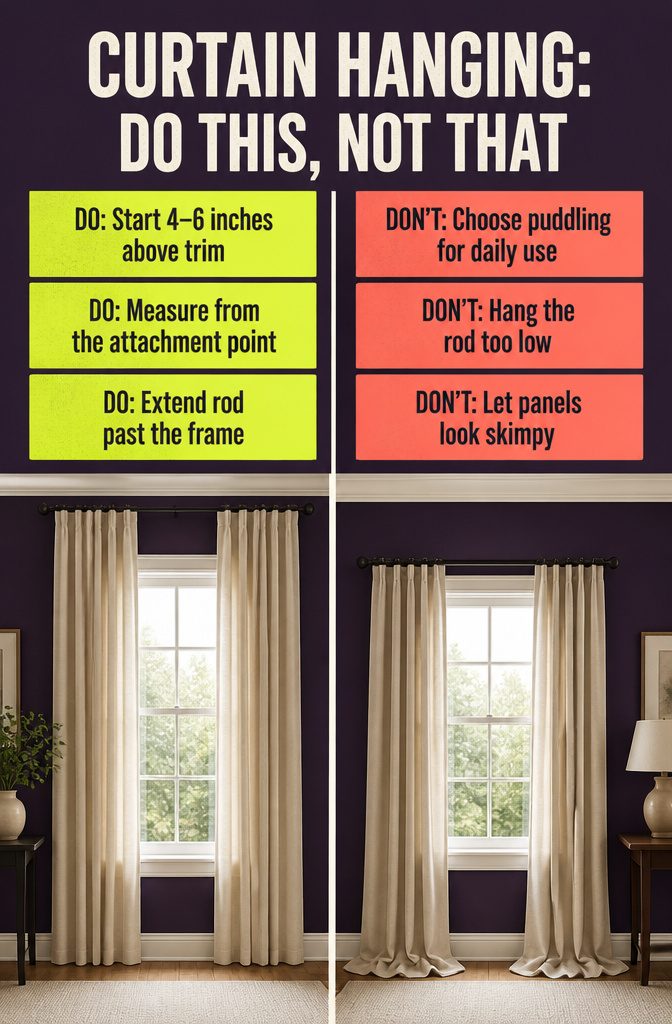
The most common mistake is hanging the rod too low, which can shrink the window visually and leave a gap between the curtain hem and floor.
Start 4–6 inches above the window trim to anchor the eye higher and give the room more presence. This single change often solves what looks like a length problem; the panels were fine all along, just positioned wrong.
Header style matters more than most people realize.
Rings, grommets, tabs, and rod pockets each drop the fabric a different distance below the rod itself, so a measurement that looks right on paper can land the hem several inches too high or too low.
Measure where your specific attachment will sit before you commit to the rod height.
Panels that are too short or a rod that doesn’t extend beyond the window frame both read as half-finished.
The rod should reach well past the frame on each side so the open curtains clear the glass entirely. Skimpy panels and a narrow rod make even a large window feel cramped.
One last trap: puddling works beautifully in formal spaces where curtains stay mostly closed, but pooled fabric collects dust and demands frequent cleaning in rooms where you open and close them daily.
Choose based on how you actually live in the space, not just how it photographs.

ADJUSTABLE LENGTH CURTAIN RODS: 16-144" curtain rod fits windows 20 to 138 inches wide. The telescoping rod featuring a flexible 1 to 12 feet extension range for precise customization, while the adjustable heavy-duty brackets offer a 2" to 3.5" wall clearance to prevent curtains from rubbing against the wall and improve light blocking. Comes with 9 rods that need to be screwed together, not 2 poles, Note: This is not a tension rod

Modern Design: 5/8 Curtain rod in rustic finish,simple yet modern look fits effortlessly with your place.Ideal as your kitchen curtain rods,bedroom curtain rods,sliding glass door curtain rods,outdoor patio curtain rods

【Check Your Wall Surface Before Installing】Designed for clean, smooth and stable surfaces. Works best on flat wall, tile, glass and wood with lightweight to medium curtains. Avoid textured, uneven, dusty, damp or peeling surfaces for better adhesion.
Work backward from your desired hem position
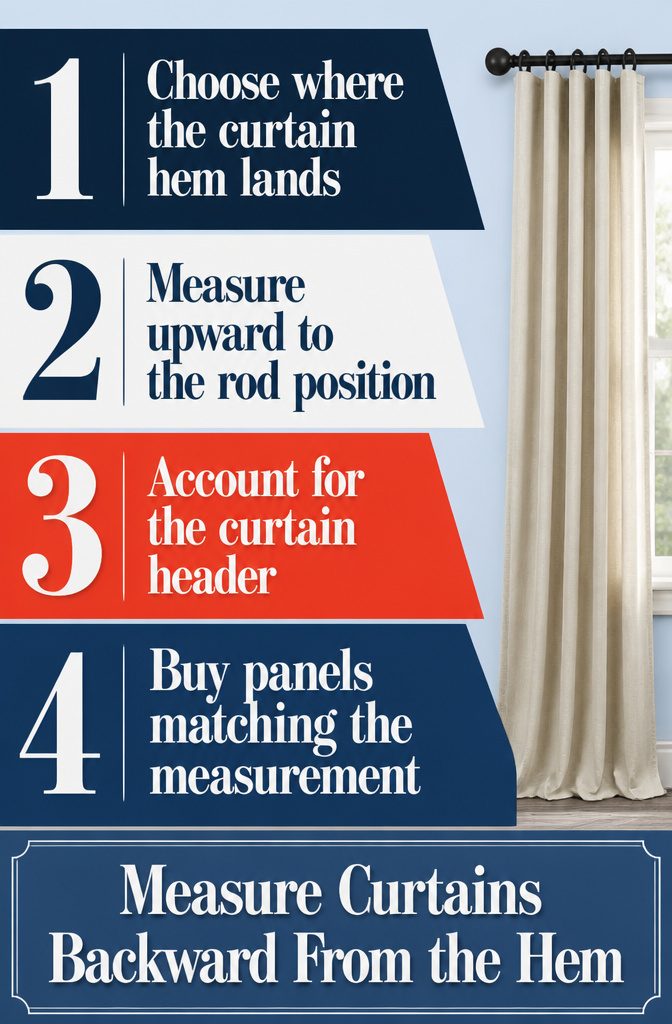
- Decide where you want the curtain hem to land. Floor-length, hovering above the floor, touching the sill, or puddled onto it by 1–3 inches all read differently and require different panel lengths. Sketch this out or stand at the window and visualize it.
- Measure from that point straight up to where the rod will hang. This is your total drop measurement. If you want floor-length curtains and the rod will sit 84 inches above the floor, that is the panel length you need.
- Account for the header. A grommet or rod pocket attaches at the top of the panel, so the finished drop runs from the very top of the curtain down. A ring-hung header or French pleat hangs from the ring or eyelet, which sits slightly below the rod itself, adding a few extra inches to the drop. Check the manufacturer’s guidance for your attachment style; the difference is real enough to matter.
- Order or buy panels in the length that matches your measurement. Standard ready-made lengths run 84, 96, and 108 inches, though availability varies. Working backward from the hem prevents the common trap of buying first and finding the panels either short or drowning in excess fabric on the floor.
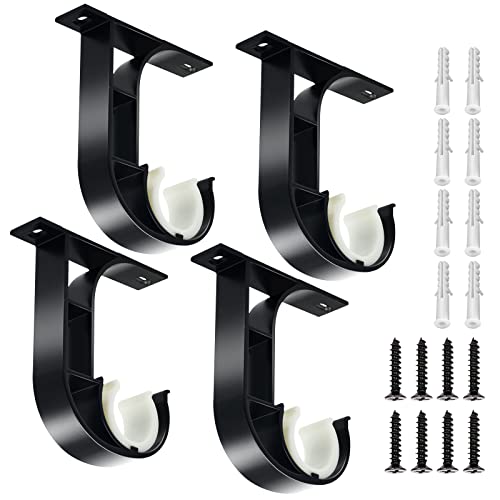
[Unique Buckle Design] -- Ceiling curtain rod bracket features a removable plastic clip to secure and protect rods from scratches. Fits 1 INCH diameter drapery rods; please measure before purchase.
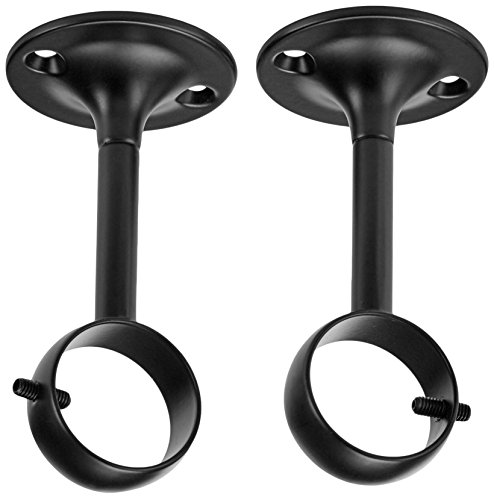
4-Pack (8 brackets total included)

Heavy Duty Curtain Rod Ceiling-Mount Brackets is made of High quality iron,strong hardness,sprayed with elegant paint on the exposed parts to provent rust.
Higher placement makes rooms feel taller
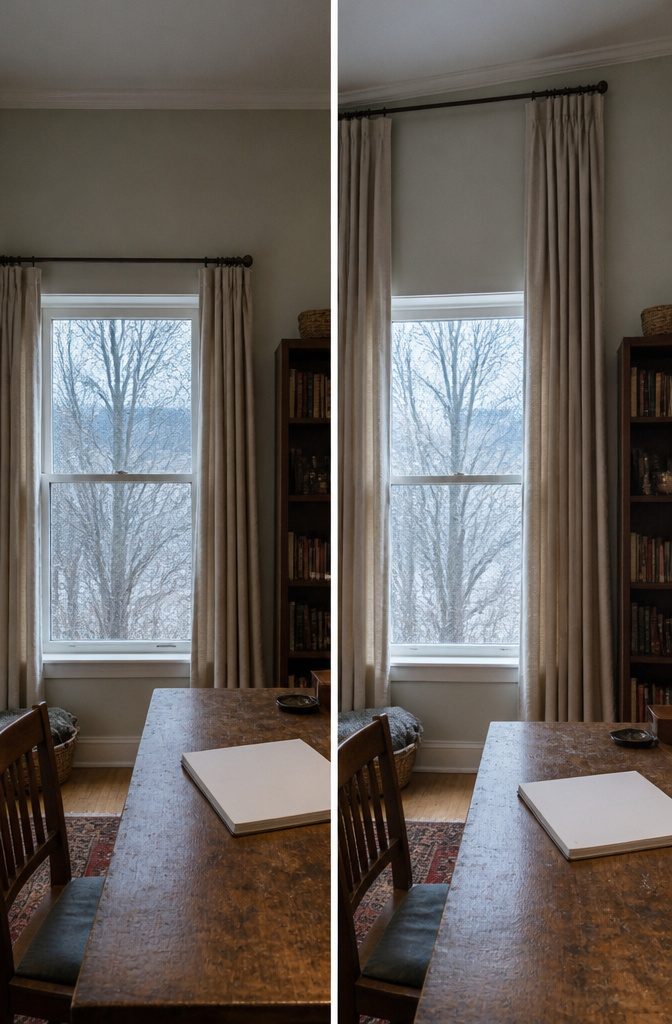
A curtain rod placed 4–6 inches above the window frame does more than follow convention; it changes how the room reads.
Your eye travels upward to reach the rod, and that upward pull makes the window itself appear taller and the ceiling seem higher.
A rod sitting directly on the frame stops the eye at the trim; one positioned well above it extends the visual line all the way up the wall.
Lower placement shrinks the window optically and compresses the room.
The higher you hang, the more open and elegant the space becomes. This works especially well in rooms where the ceiling sits at standard height or the windows are small, because the effect counteracts what you’re actually seeing.
Ceiling-mounted tracks or rods positioned 2–3 inches below crown molding take this further, giving the room a polished, custom finish that reads intentional rather than default.
With tall walls and high ceilings, you have more room to work.
A rod positioned higher emphasizes the room’s vertical proportions, but it still needs to coordinate with your curtain panels, they have to reach the floor or whatever hem point you’ve chosen.
The proportions of the wall and window matter as much as raw height. Higher placement wins when your curtains are long enough to make the math work.
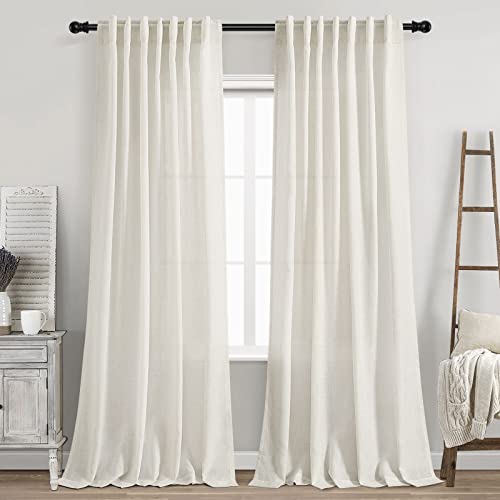
READY MADE: 2 Linen Curtain Panels per package.Each panel measures 52 inches wide by 84 inches long. Top design of Back tab & loop pocket provide 3 hanging options. <1> hanging from the back patch to create an elegant pleated look, <2> from the 3 inch rod pocket for a classic look <3> Hanging with clip rings for easy, slide open and closed (clip rings are not included)
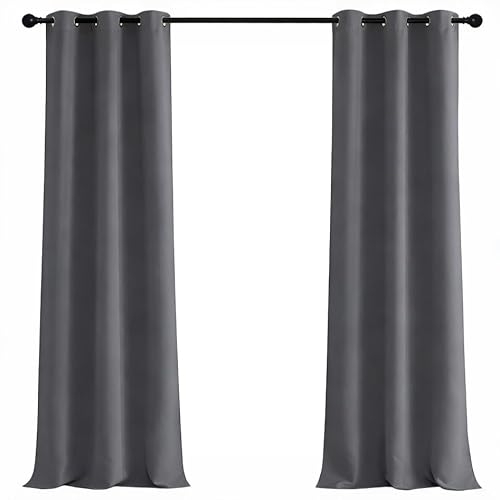
Size & Setup: 2 panels per set, each measuring 40" wide x 96" long. The sleek silver grommet top (1.6" inner diameter) delivers modern sophistication while enabling effortless glide and quick setup. Available in multiple sizes to fit various window dimensions. Perfect for kitchen, bathroom, living room, bedroom with a polished, contemporary look.

Pair Sold: Each package includes 2 panels of blackout curtains. Each panel measures 40"W x 63"L, with a pair measuring 80"W x 63"L. Each panel has 6 anti-rust silver grommets(1.6 inch inner diameter) which would fit most standard curtain rods
Special considerations for sheer and blackout curtains
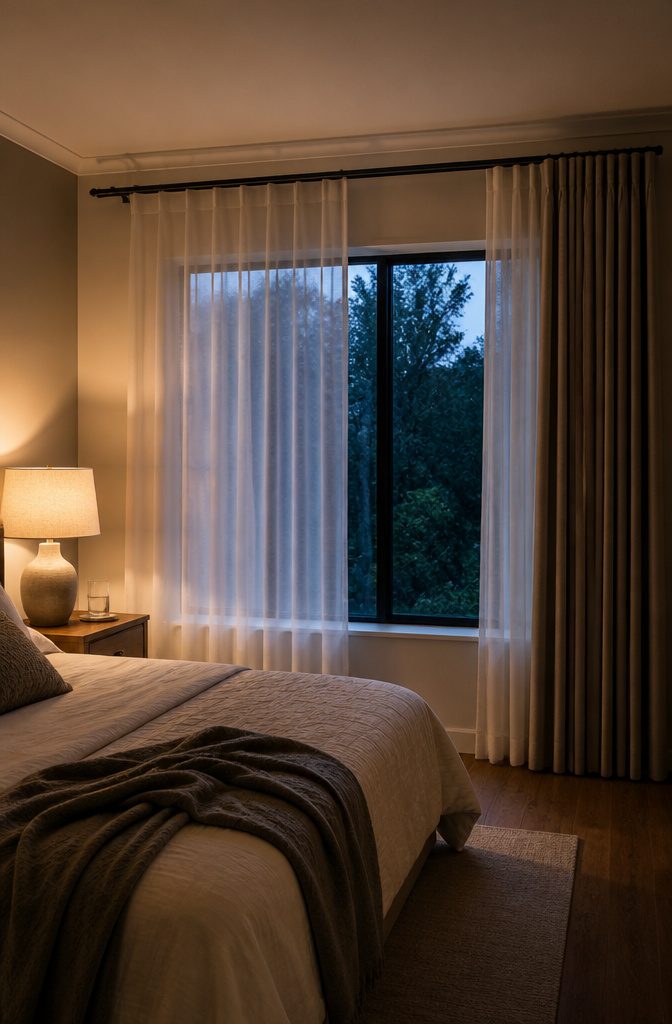
Sheer and blackout curtains need different treatment than standard panels, and the placement rules shift for each.
Sheer curtains hang high and wide for an airy effect, which means taking the rod all the way up near the ceiling and extending it past the frame.
When sheers sit lower, they crowd the window visually and block the airiness that makes them worth hanging in the first place.
Blackout and room-darkening curtains also go high and wide, but for a different reason: the gaps around the edges are where light leaks through.
In a bedroom especially, light creeping past the edges of a low-hung panel defeats the whole purpose.
Both styles benefit from extending your rod 6–12 inches past the window frame on each side, which lets the panels stack fully outside the window when open.
This pull-back exposes more of the glass and improves the light control that blackout curtains promise.

This set includes 14 small drapery curtain clip rings for fabric panels, curtains or draperies.
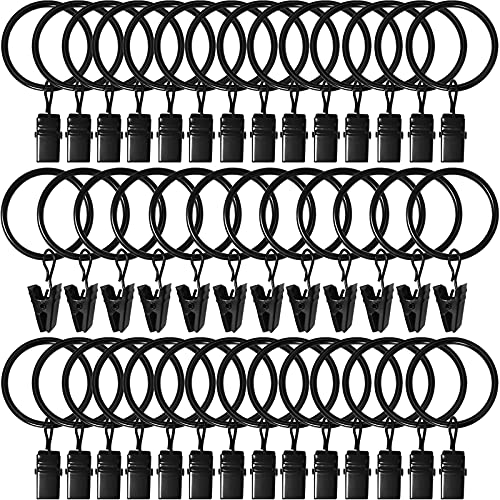
CURTAIN RINGS CLIPS PACKAGE: Set of 40 strong curtain rings with clips. Clip rings for curtains decorative drapery window.

This package includes 50 pieces curtain rod rings. The big ring inner diameter is 1.5 inch and the small ring inner diameter is 0.29", the thick is 0.14", this curtain rings are compatible with up to 1.25" drapery rod
Frequently Asked Questions
how high above the window should you hang curtains?
Start 4–6 inches above the window trim as a standard baseline, or 4–8 inches above the frame if that’s easier to measure.
This height clears the trim itself, prevents the rod from looking cramped, and makes the window appear taller by pulling the eye upward. Adjust based on ceiling height and available wall space.
should you hang curtains close to the ceiling?
Higher placement can make a room feel taller and more spacious, but it depends on your curtain length and ceiling height.
If you have crown molding, hang the rod 1–3 inches below it rather than fighting for space above. For standard 8-foot ceilings, 4–6 inches above the frame works well; for 9-foot ceilings, you can go 6–10 inches above the frame.
how high to hang curtains with low ceilings?
Move the rod closer to the ceiling rather than dropping it to save space.
Leave at least 1–2 inches of clearance for brackets and finials to function without hitting the ceiling or molding. This counterintuitive approach creates the visual appearance of more vertical space.
how high to hang curtains with high ceilings?
You have more room to work with, so you can hang the rod higher to emphasize the room’s vertical proportions.
Position it halfway between the frame and ceiling, or close to the ceiling itself. Make sure your curtain panels are long enough to reach your desired hem point so the proportions look intentional.
how far off the floor should curtains hang?
Your options are floating (about 1/2 inch above the floor for a clean finish), touching the floor for a tailored look, puddled (1–3 inches of fabric gathering on the floor for a softer style), or sill-length for windows where floor-length curtains don’t fit.
Choose based on how you actually live in the space, since puddled curtains collect dust in high-traffic rooms.
should curtains touch the floor?
Floor-length curtains that either touch or hover just above the floor usually look best and most finished.
Letting them touch the floor reads tailored without the fussiness of puddling, while floating them about 1/2 inch above keeps them out of dust and foot traffic. Puddled curtains work beautifully in formal spaces where curtains stay mostly closed.
how wide should curtains be hung?
Extend the rod 6–12 inches past the window frame on each side so the panels can stack completely outside the opening when drawn.
This admits far more natural light and makes the window itself look larger. Panels need to be 1.5 to 2 times the rod width for proper fullness and drape.
how high should bedroom curtains be hung?
Hang them 4–6 inches above the window frame as a standard starting point, and consider going higher and wider if you’re using blackout or room-darkening curtains.
Higher and wider placement helps reduce light gaps around the edges, which is especially important for bedrooms where light control matters for sleep.
do blackout curtains need to be hung differently?
Yes, hang them higher and wider than the frame to minimize light leaks.
A thin panel of blackout material still lets light creep around the edges, but full panels extending 6–12 inches past the frame on each side help seal the window.
This placement works best in bedrooms and other rooms where privacy and light control are priorities.
are custom curtains better for tall windows?
Custom curtains suit tall, wide, or unusually sized windows because they can be made to your exact dimensions. Standard ready-made lengths run 84, 96, and 108 inches, which covers most windows, but custom options serve windows that don’t fit those measurements better.
is it okay to hang curtains higher than the window frame?
It’s okay to hang curtains higher than the window frame, and it’s the standard approach that makes windows and ceilings appear taller.
A rod placed directly on the frame stops the eye at the trim and compresses the room visually. Hanging it well above extends the visual line upward, creating a more open and intentional-looking space.
how long should curtains be?
Work backward from where you want the hem to land.
Floor-length curtains typically run 84, 96, or 108 inches in ready-made sizes, but the right length depends on your rod height, attachment style (grommets, rings, rod pockets each drop the fabric differently), and whether you want the hem floating, touching, or puddled on the floor.
Measure from your rod height to your desired hem position, account for how your attachment style hangs, then order or buy panels in the matching length.