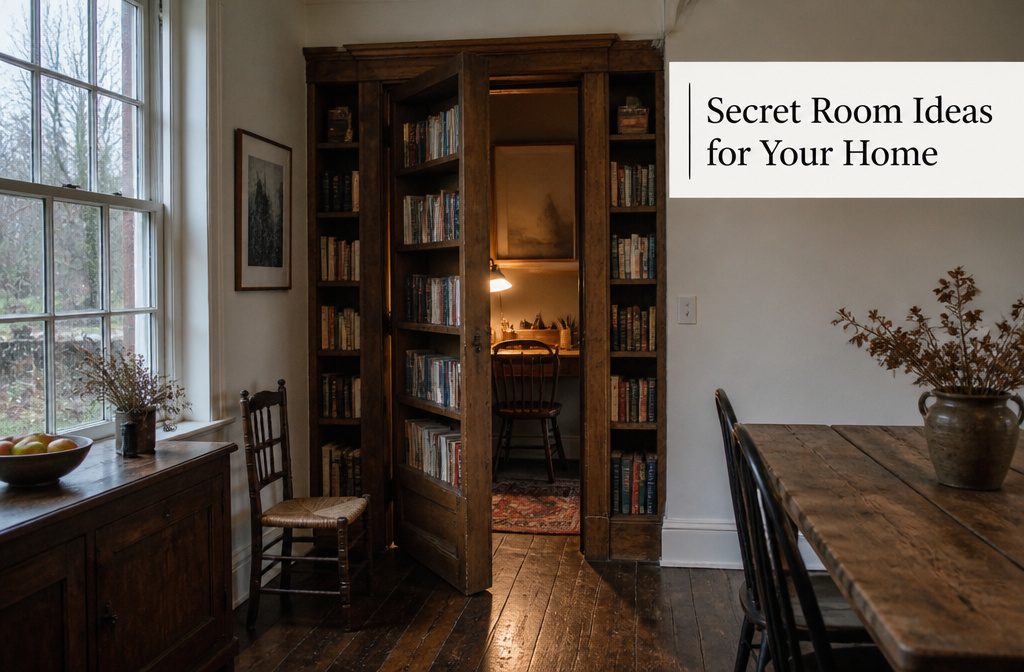
A hidden room works best when it solves a real problem: keeping clutter contained, creating privacy for a specific purpose, or claiming dead space that already exists.
The appeal lies in what you put there, not the novelty of the door itself.
A loaded bookcase door can weigh 200 to 400 pounds, which means the hinges have to anchor into doubled studs and the books themselves need splitting between the door and flanking shelves so nothing sags.
1. Hidden library or reading room
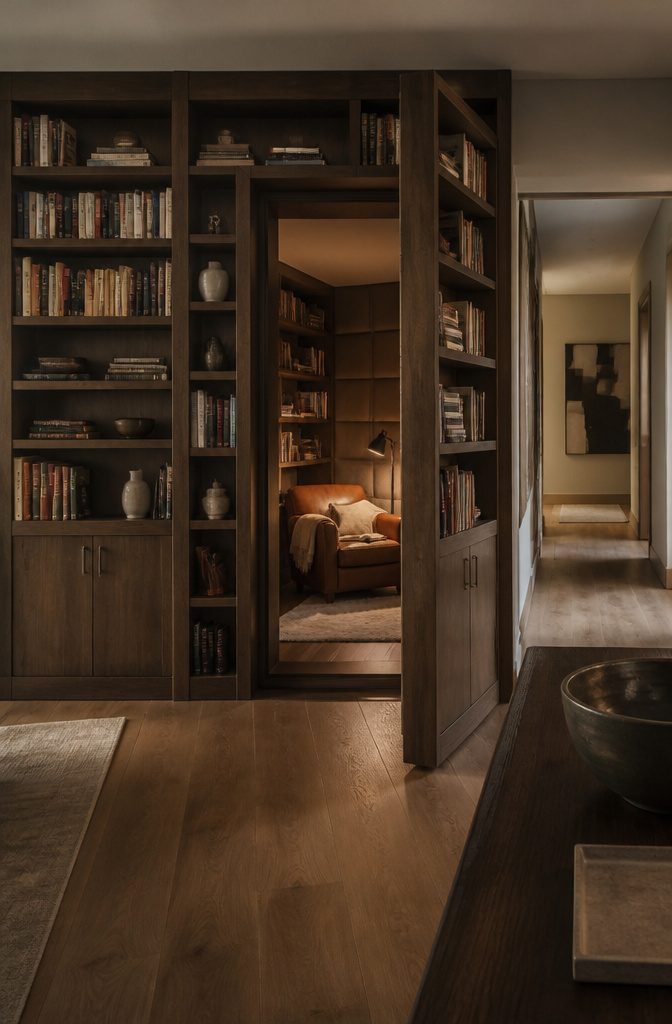
A private library tucked away offers what most homes lack: a room designed solely for quiet and books.
Floor-to-ceiling shelving holds your collection without competing with living space elsewhere, and the concealment itself reinforces the sense of retreat. A swinging bookcase door blends into the built-in unit without drawing attention from the hallway.
Comfort matters more than size. A cozy reading chair, soft cushions, and throws create warmth without needing square footage; a small, focused lamp handles the reading light you actually need.
Soundproofing makes the space truly private, cutting the ambient noise that pulls you back into the house around it.
This is where a hidden room earns its purpose: not as a novelty, but as the only corner in your home designed to keep the outside world out.

HEAVY DUTY 700LBS LOAD CAPACITY – Crafted from thickened solid alloy steel, this heavy duty pivot door hinge supports up to 700 lbs (320 kg). Whether you're building a hidden door bookcase, a secret door bookshelf, or a heavy wooden door for your hidden room, this sturdy door hinge kit delivers reliable, long-lasting performance without sagging or warping.

Heavy Duty and Durable Material: Crafted from solid 304 stainless steel, this hidden door pivot hinge is engineered to support up to 570 lbs. The high-quality construction ensures exceptional strength and longevity, effectively preventing rust and breakage. Whether you are building a heavy hidden door or a bookshelf door, this hidden door hinge provides the robust support needed for long-term reliability
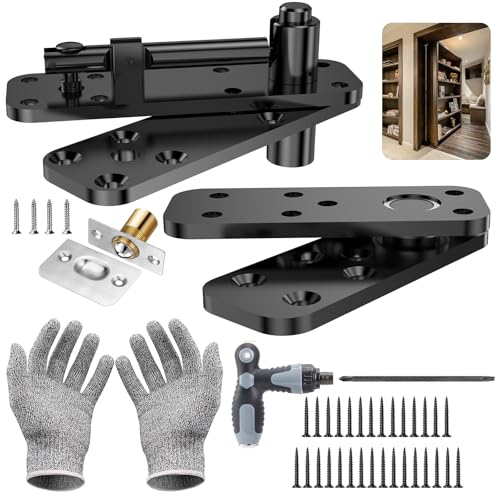
【Package Included】- The hidden door hinge set included 1 set heavy-duty pivot hinge with 30 screws, which with top and bottom hinge; 1 ball catch hardware with 4 screws; 1 screwdriver.
2. Playroom or children’s hideaway
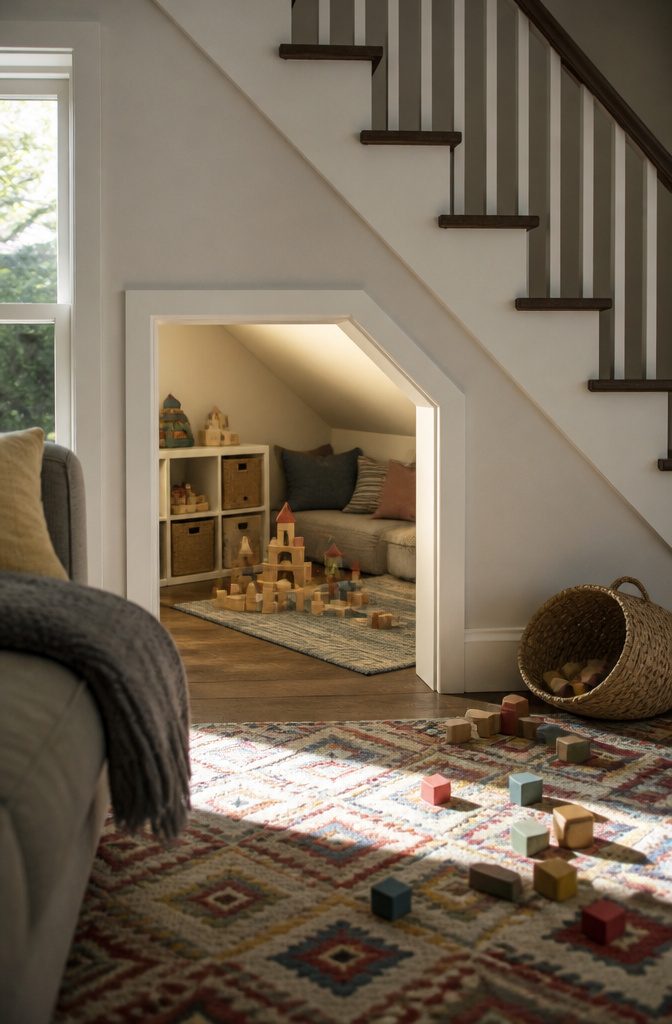
A hidden playroom taps into what kids already want: a world that belongs to them. The appeal runs deep because it combines novelty with control.
They choose when to enter, what stays inside, and who gets in. Under the stairs works especially well because the footprint already exists; you are not stealing usable square footage from the rest of the house.
A small crawl-through door disguised as a bookshelf or trimmed to blend in keeps the magic intact while storing toys out of the main living space.
Safety matters here. The space needs reliable access so a child can get out easily, and sloped-roof areas or cramped under-stair nooks require real headroom and ventilation.
If you are carving this from a closet or converting unused space next to a bedroom, make sure the path to the exit is clear and the room does not feel like a trap.
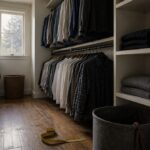
A large walk-in closet converts most easily into a child’s hideaway because it already has proper dimensions and air flow.
Kids get a contained place to build forts and imagine freely while you reclaim the living room from the toy scatter.

80L Expandable Larger Capacity : Under the bed storage with dimensions 31.5 x 15.75 x 9.45 inches (with wheels), height adjustable from 9.45" to 11.02" to fit most bed frames. Perfect for storing clothing, shoe, bedding, pillow, towel, and seasonal decor like wrapping paper, Christmas and Halloween supplies. Slides smoothly under bed, couch, closet and table to maximize unused space

Effortless Mobility with 360°Swivel Wheels: This under-bed shoe organizer features six universal wheels with 360° swivel casters for smooth, quiet movement in any direction. Wheels are lockable, offering both flexibility and stability when you need the shoe box to stay in place. Whether you're sliding it under the bed or rolling it across the room, this shoe storage solution makes it easy to access your footwear anytime.

7-CUBE STORAGE: Tight on space but big on everyday clutter? This compact white bookshelf features 7 cube spaces, a narrow rectangular profile, and a closed-back design that keeps books, decor, and daily items neatly framed
3. Secure storage or hidden stash
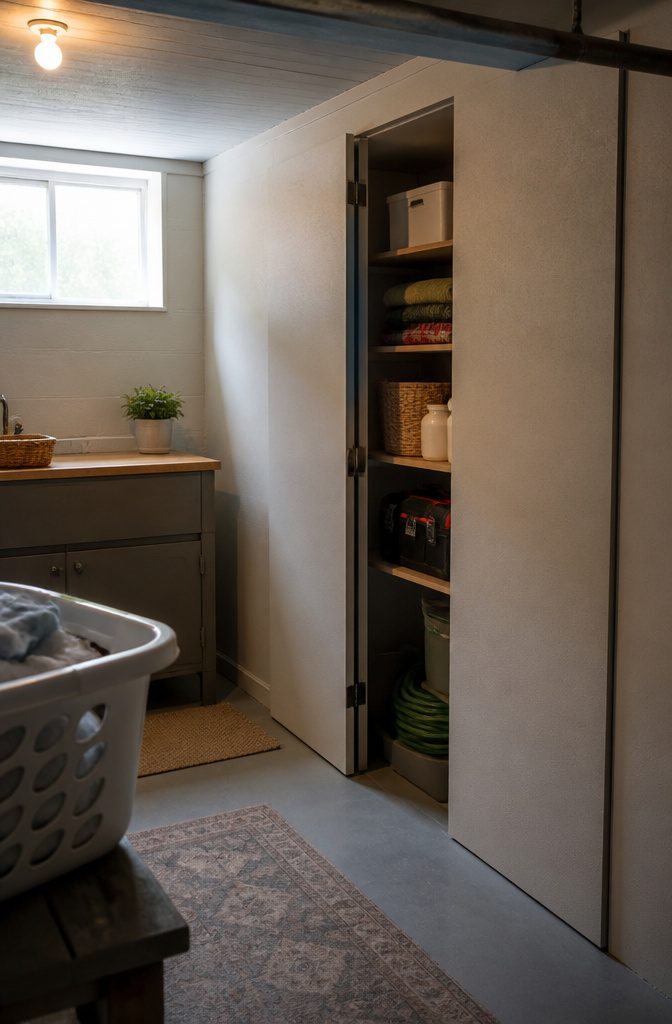
A hidden room tucked behind everyday elements like a bookshelf, mirror, or wall panel offers more than novelty. It solves a real problem: keeping valuables, important documents, and seasonal items out of sight and organized in one secure place.
The appeal lies partly in protection, theft and damage matter less when something is genuinely concealed, but also in reclaiming space. Household supplies, off-season décor, and tools that would otherwise clutter closets and cabinets live cleanly out of view.
The entry itself deserves care.
It should look ordinary from the outside, blending into the room’s natural architecture, while opening easily from inside. This balance between invisibility and accessibility defines the difference between a storage gimmick and a feature you’ll actually use.
In small homes especially, the space under a staircase or behind a false wall turns dead square footage into functioning storage that keeps your everyday spaces calmer and more intentional.

DRYWALL ACCESS PANEL FOR WALLS AND CEILINGS - The Premier 5000 Series 12x24 flush access door gives quick, clean access to plumbing, electrical, and HVAC lines behind drywall, plaster, tile, or masonry. Use it as a wall access panel or ceiling access panel for shut-off valves, tub and shower plumbing, junction boxes, low-voltage wiring, and dampers in commercial buildings. A sturdy metal access panel for drywall is the standard way to leave a service point open behind a finished wall, so a future repair never means cutting and patching drywall again. Clean edges and a flush frame make it look like part of the wall instead of an afterthought.
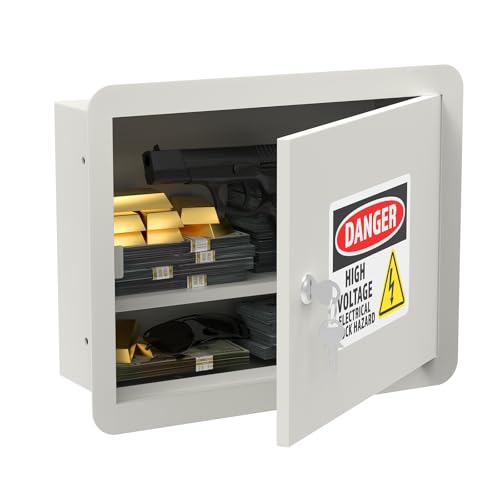
🔒 Private Storage: This hidden wall safe gives you a discreet place to store cash, jewelry, passports, birth certificates, and other important documents. It helps keep everyday valuables out of plain sight while staying easy for you to access when needed.

4. Home theater or private movie room
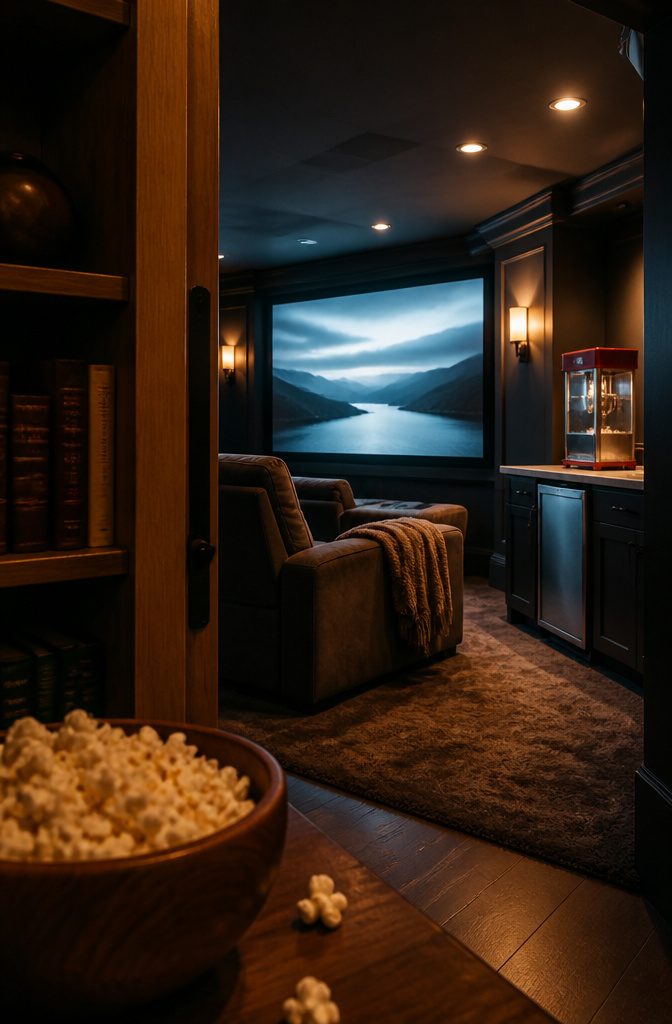
A hidden home theater tucks entertainment away from the rest of your house, which appeals to anyone who wants movie nights without the disruption to family life or the mess of snacks scattered through shared spaces.
Plush seating and dimmable lighting create the immersive experience you’d pay for at a commercial cinema, and a surround sound system handles the audio so the room actually feels like one.
A popcorn machine or mini fridge for snacks keeps you from leaving mid-film. The real appeal is control: you choose when the space exists, who enters it, and what happens inside.
For homeowners who entertain, a private screening room hidden behind a bookcase or wall becomes a conversation piece that functions exactly as intended.
Concealing it this way means your living room stays pristine, and guests find a dedicated space designed purely for that one purpose.

ONLY 1 Beige Lamp Shade Included: please noted that this version comes only one piece beige lampshade. Please check carefully before you place order.

Gold Floor Lamp:This Is A Mid Century Modern Green Lamp Shade With Beautiful Delicate Detail And A Gorgeous Exterior. This Unique And Elegant Design Will Bring A Comfortable Atmosphere To Your Room And Beauty Your Space

【Black Floor Lamp with Modern Design】 - Our floor lamp design style is simple and modern, and can match different styles of furniture you want. Tall lamp will transform your home decor into a rustic and farmhouse atmosphere. Black standing lamp fits perfectly in your living room, bedroom, corner or office and takes up very little room and has a classy, retro look to it. Floor lamps for living room bright lighting both blends in and provides unassuming accent to the space.
5. Office or study
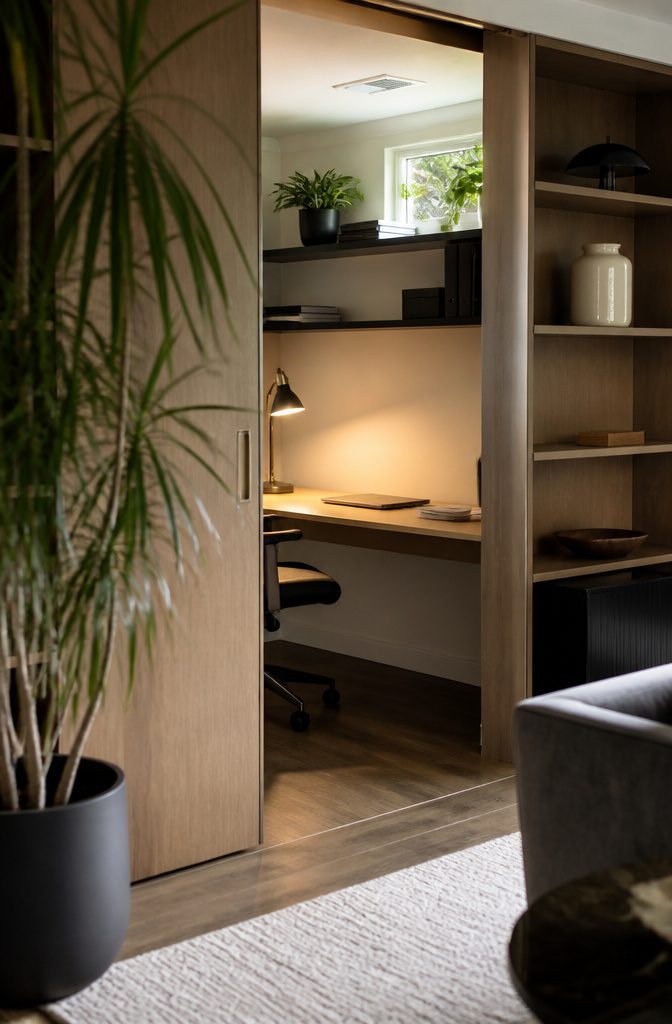
A concealed office behind a sliding panel or bookshelf solves the remote work problem: once the door closes, your desk, cables, and paperwork vanish. Shared living spaces stay calm and tidy instead of broadcasting that someone is working.
The separation matters more than square footage. Even a compact hidden office works if it has ample lighting and ventilation, because productivity drops fast in a dim, stale corner.
The entrance shapes how livable the space feels. A bookcase that swings open looks built in as part of shelving rather than added on top.
A wardrobe door works the same way. What counts is that the room functions as an actual office, not just a closet.
Foldaway desks and wall-mounted shelving keep the footprint minimal. The constraint is accepting that hidden doesn’t mean sprawling, and a tight, well-lit room beats a half-finished sprawl behind a false wall.

Exceptional Sound Absorption:These pyramid acoustic panels are engineered to effectively absorb sound waves, reducing echo and reverberation. With a high NRC (Noise Reduction Coefficient), they create a quieter, more acoustically balanced environment, ideal for recording studios, home theaters, and offices.

【Excellent Quality】: This wall soundproofing foam board is made of high-quality 100% polyester, odorless and flame retardant. There are no risks associated with spending long periods of time in a room with acoustic foam panels. And compared with traditional sound-absorbing panels, our products have higher thickness (25% thicker) and density (35% denser),which means better durability and sound absorption.
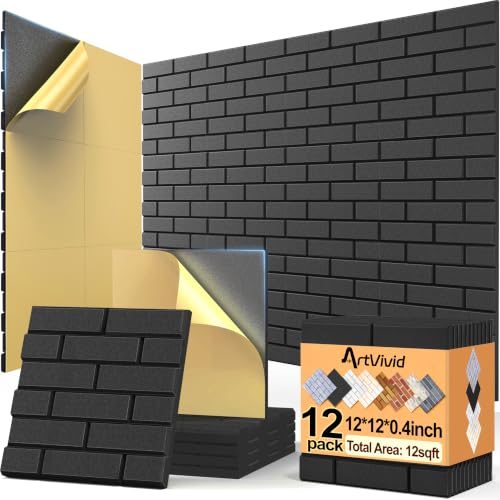
【Ultimate Audio Clarity Enhancer】 Crafted from high-density 100% polyester fiber (14.36 lb/ft³), these acoustic panels deliver powerful sound absorption with NRC > 0.95 — effectively reducing keyboard noise by about 60% and conversation noise by about 40%. They minimize echoes and reverberations for crystal-clear audio recording, while maintaining a pleasant acoustic environment. All patterns offer identical absorption, so mixing designs doesn't affect performance
6. Wine cellar, tasting room, or private bar
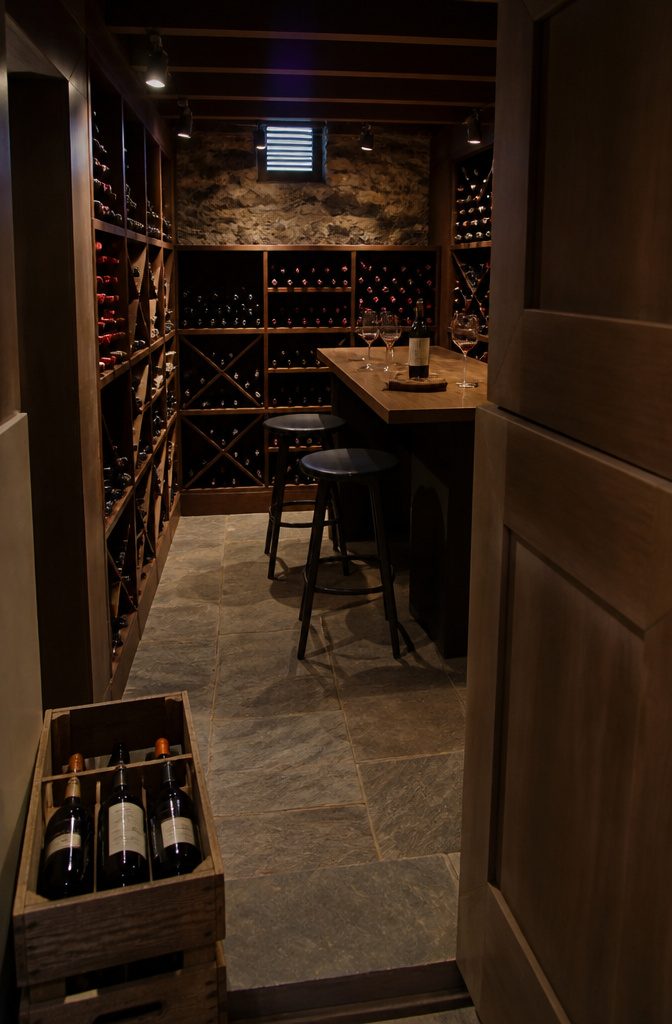
A dedicated wine storage and serving space capitalizes on what a secret room does best: create a retreat for a specific passion.
Wine needs consistent temperature to age properly, so climate control becomes your foundation rather than a luxury. The ideal setup includes custom shelving that lets you display bottles while keeping them accessible, turning storage into part of the décor.
Behind a paneled wall or underneath the staircase, this kind of hidden space feels separate enough that it functions as its own intimate tasting area, distinct from the main house and suited to entertaining guests who appreciate the collection.
A basement works especially well for this purpose since it already sits apart from living areas and naturally maintains cooler temperatures year-round.
The appeal lies partly in the rarity of it: a private bar or tasting room elevates wine collecting from something you do at home to something you experience there.

Hidden Door Hinges for Secret Door: Upgrade your woodworking projects with our premium pivot hinge. Designed for seamless integration into Invisible door bookcase and bookshelf door setups, these heavy-duty hinges ensure smooth, quiet operation when rotated, Ideal for DIY enthusiasts seeking durable hidden door bookcase

DESIGN PATENT No: D920075 - TamBee design patent product, please purchase with TamBee brand

DIY - The Murphy Door Hidden Door Hinges are for experienced carpenters who would like to DIY their door project! These pins allow a single door to hold up to 300 pounds and function with ease.
7. Meditation, yoga, exercise, or fitness room
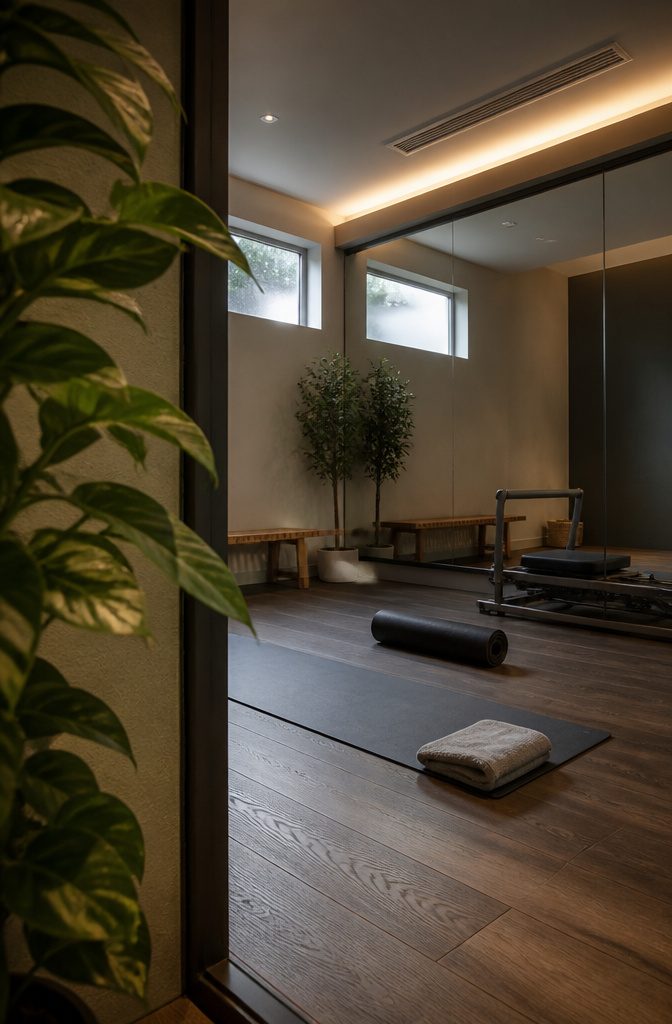
A private space dedicated to movement, exercise, or quiet practice appeals to anyone who wants to step away from household distractions.
The appeal is simple: a hidden fitness or wellness room removes the self-consciousness of working out in view and creates uninterrupted time for yoga, meditation, or focused training.
The functional basics matter more than the décor.
Wall mirrors let you monitor your form and make the space feel larger, which matters in a compact area. Ventilation and cooling systems keep the room comfortable during exercise, so you’re not choosing between fitness and fresh air.
For the equipment itself, space-saving gym machines or foldable pieces mean you’re not locked into a layout; you can adjust as your routine changes.
If meditation is the draw, soundproofing and minimal furnishings support that goal. Soft lighting and calming decor promote relaxation, but the real win is the clutter-free environment.
Fewer objects mean fewer things pulling your attention away from the practice itself. The hidden aspect does the heavy lifting here: the room’s privacy is the feature.

600D PU Fabric. Applicable under-bed height 7in.

STORAGE FOR MULTIPURPOSE - This underbed storage bag fits perfectly under your bed. And ideal for storing clothes, comforters, blankets, off season duvets, beddings, pillows, garments, sweaters, and so on. Keep your closet tidy and clean.

WELL BUILT AND NON-DEFORMING: The underbed storage containers are made from high-quality metal material, compared with traditional fragile plastics and non-woven materials that are easily deformed and torn, our under bed storage drawer on wheels is more durable and has better load-bearing capacity, which will meet your long term storage needs.
8. Safe room or panic room
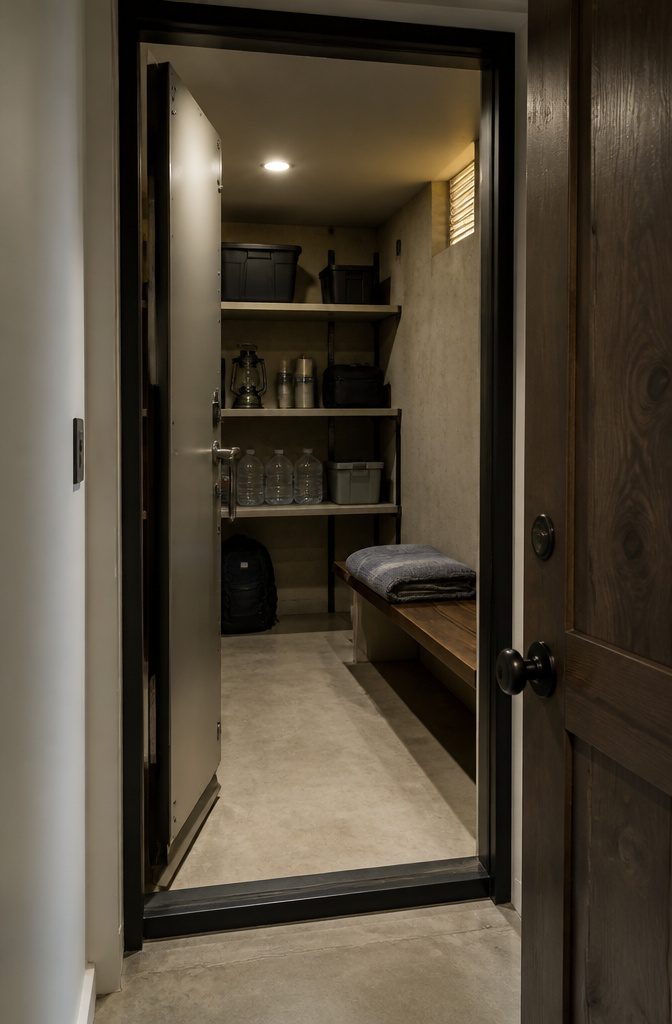
A safe room or panic room built behind a disguised door serves a different purpose than a hidden closet or pantry.
The space itself has to function as a shelter, which means it carries real building code requirements that a plain door wouldn’t trigger but a disguised one doesn’t escape.
The entry should look ordinary from the outside and still open easily from inside, so the disguise never traps you when you need to leave fast.
Fresh air and adequate lighting matter more here than in storage-only spaces, so plan ventilation and safe electrical routing before you seal the walls.
The distinction between what a hidden room is used for and how its door is hidden decides whether the project is a weekend hinge kit or a permitted renovation with an engineer, because the codes care about the space behind the door, not the door itself.

★ 【PICTURA FRAME DIVERSION SAFE + EXTRA FIREPROOF MONEY BAG - MORE SAFETY】: Anzaky picture frame diversion safe designed to protect your valuables, like passports, cash, money, licenses, USBs disks and CDs deeds, certificates, coins, letters, precious photos, marriage certificate and more. With the EXTRA Fireproof & Waterproof Money Bag, All to offer more protection for your valuables.

【3 DIY Installation Modes】 This in Wall Cable Management Kit comes with 3 sets of socket panels to support 3 installation options, perfect for living rooms, bedrooms, home theaters, offices and rental homes. Featuring plug-and-play recessed power, no hard wiring or professional electrician is needed. Finish your DIY installation within 30 minutes. Pre-installed screws enable fast and simple assembly.

Magnetic Vent Cover for Hidden Concealment: This hidden wall safe features a vent-style cover with 6 strong magnets, keeping the panel securely in place while allowing quick access. Designed for magnetic concealment, it keeps your valuables hidden in plain sight
9. Guest room
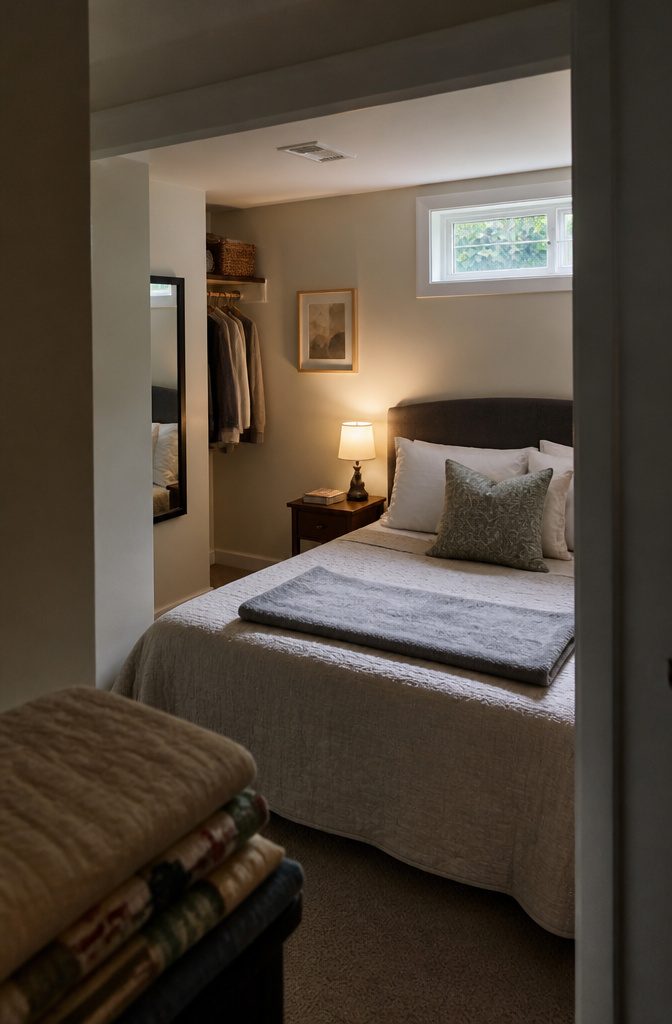
A hidden guest room solves a real problem: hosting overnight visitors without dedicating a full bedroom to sit empty most of the year.
The space works best when it’s comfortable enough that guests don’t feel relegated to a closet, but compact enough to tuck behind a wall or under a staircase without eating up your living area.
The essentials are straightforward.
A quality twin or full bed takes priority, along with a small nightstand and basic lighting within arm’s reach of the bed. Guests need a hook or narrow rod for their clothes and a mirror, even a small one.
Ventilation matters more than you’d think in a space without a window; a ceiling vent or portable fan keeps the air from going stale.
Paint the walls a neutral tone and keep the palette simple so the room doesn’t feel cramped, then add one personal touch: a small piece of art or a bedside lamp with some character so it reads as intentional rather than an afterthought.
A hidden guest room only works if someone can actually sleep there without claustrophobia setting in.
If your hidden space is genuinely tiny or has a very low ceiling, it’s better used for storage or a reading nook than for overnight guests.

Classic Pharmacy Design, Modern Versatility - Inspired by timeless pharmacy lighting, the Arcadia brings both elegance and practicality to your home. Its adjustable height (47”-55”), 360° swing arm, rotatable shade, and 90° tiltable head let you direct light precisely where you need it - perfect for reading corners, workspaces, or relaxing evenings.

White Modern Floor Lamp: This floor light fits in any room from industrial to modern or traditional décor. Its simple and elegant design can make it easy to place in any room of the house.

10. Music room
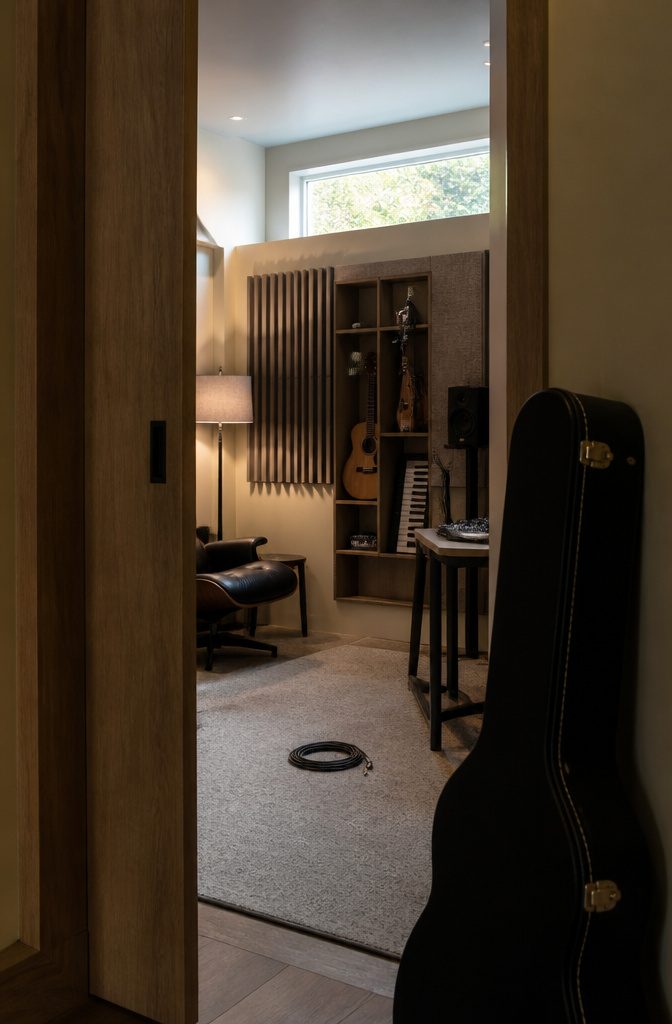
A secret music room offers something most homes cannot: a soundproofed space where you can play, record, or listen without bothering anyone else. For musicians, that privacy is the whole appeal.
You can practice at full volume at any hour. If you record, you avoid neighbor complaints and street noise bleeding into your takes.
The basic setup needs acoustic panels to control how sound behaves in the room.
Beyond that, add built-in storage for your instruments so they stay protected and within reach. A comfortable seating area lets you have jam sessions with other musicians or just sit and listen the way you actually want to.
The space works best when you treat it as a working room first and a retreat second. Keep the focus on what the music needs, not on making it look like something else.

★ 【PROFESSIONAL SOUND ABSORPTION】:Our high-density wedge acoustic foam panels provide exceptional sound absorption, effectively reducing echoes, reverb, and background noise. These soundproof wall panels are ideal for recording studios, home theaters, offices, and podcast rooms, eliminating standing waves and flutter echoes to create a professional acoustic environment. Unlike traditional sound proof panels for walls, these acoustic wall panels absorb sound waves instead of blocking them, ensuring superior soundproofing.

Professional studio level acoustic treatment, create a beautiful recording environment!
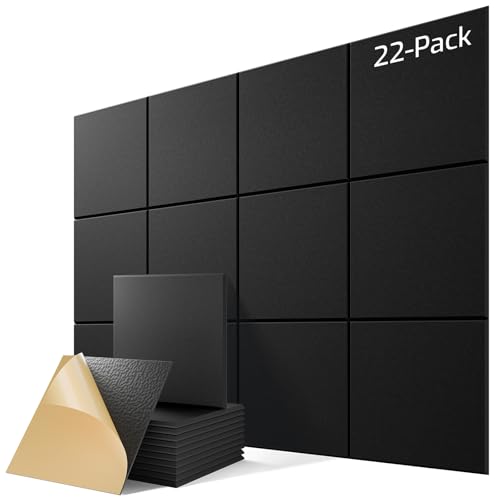
Superior Noise Reduction & Echo Cancellation - Tired of background noise and poor acoustics? Our soundproof wall panels are engineered with high-density acoustic foam that effectively absorbs noise, reduces echo and reverberation (RT60), and minimizes standing waves. Perfect for home office video calls, podcast studio recordings, or creating a quiet media room. Experience clearer speech intelligibility and a significant noise reduction for a more focused environment
11. Pet room
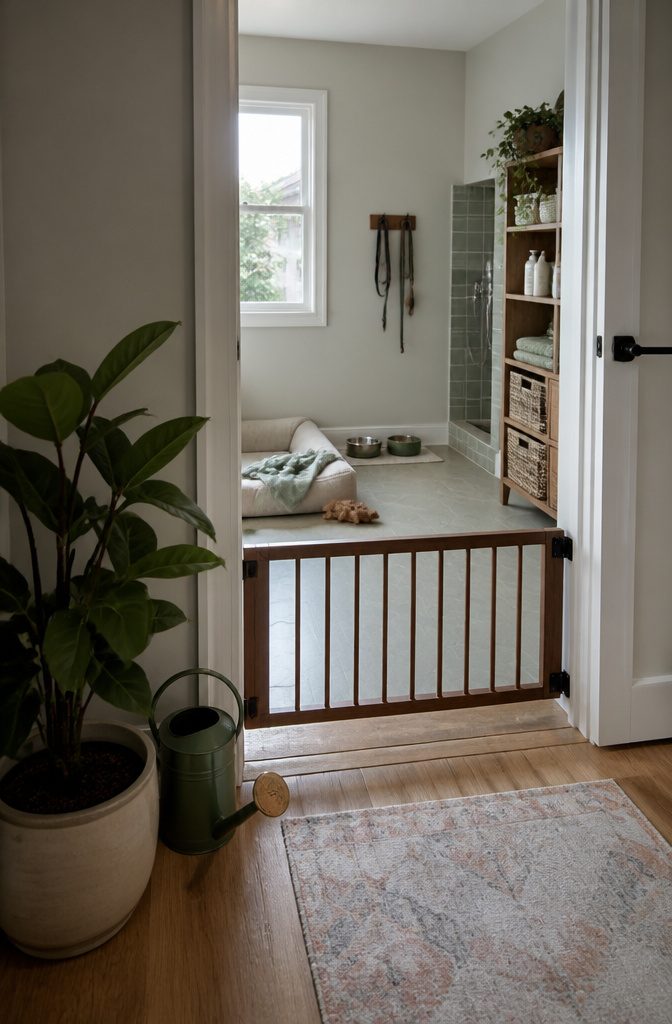
A hidden pet room gives your animals a quiet retreat while keeping supplies and mess confined to one space.
Sleeping areas, toys, and grooming supplies stay organized and out of your main living areas, which matters if you share your home with people who have allergies.
The room also lets you control odors and shedding without affecting the rest of the house.
The space works best when it’s accessible but separate, so pets can move between their retreat and common areas without constant supervision.
A dedicated pet room keeps everything they need in one place: food, water, bedding, toys, which simplifies daily care and makes cleaning faster.
If the space is large enough, you can include a bathing area to contain the wet and mess that comes with grooming.
Even a small closet or corner room serves the purpose if it has enough room for a bed and a food bowl.
12. Laundry room
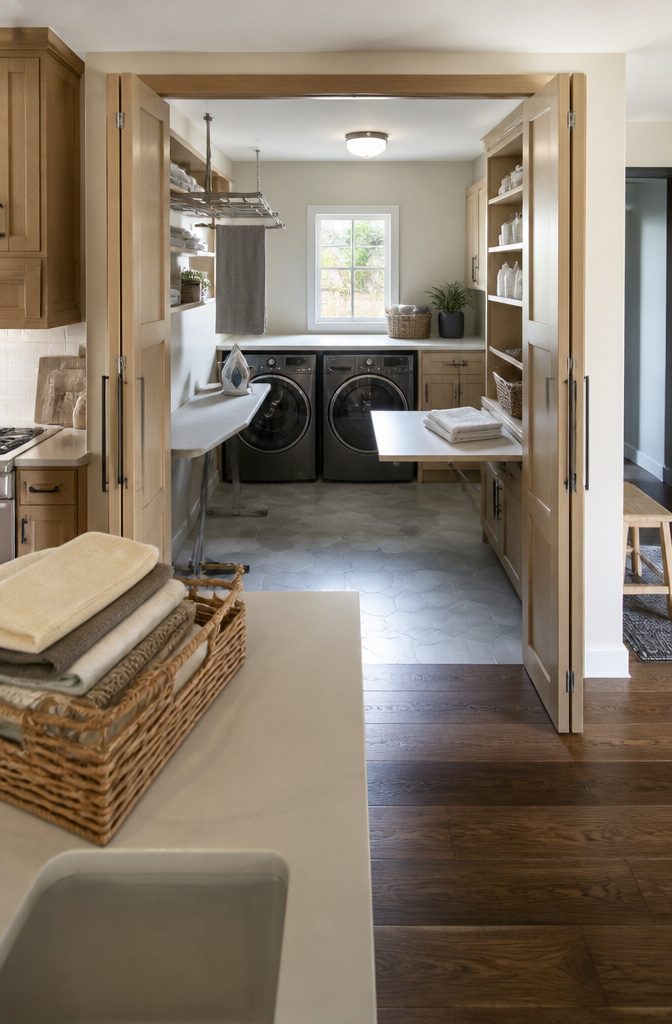
A laundry room hidden behind a wall or cabinet doors keeps the mess and smell of cleaning supplies out of the living space, which matters if you work from home or spend time in an open floor plan.
The functional appeal is straightforward: a dedicated spot for sorting, folding, and storing detergents stays contained instead of spreading across bedrooms or bathrooms.
The setup itself is simple. Use foldable tables for sorting and folding, which tuck away when laundry day ends.
Install shelves or cabinets to corral detergents and cleaning products together, keeping them off counters. A drying rack or iron station tucked into the same room handles pressing and air-drying without taking over a bedroom corner.
The real advantage is that everything laundry-related lives in one place, hidden from view but easy to reach when you need it.
13. Garden room
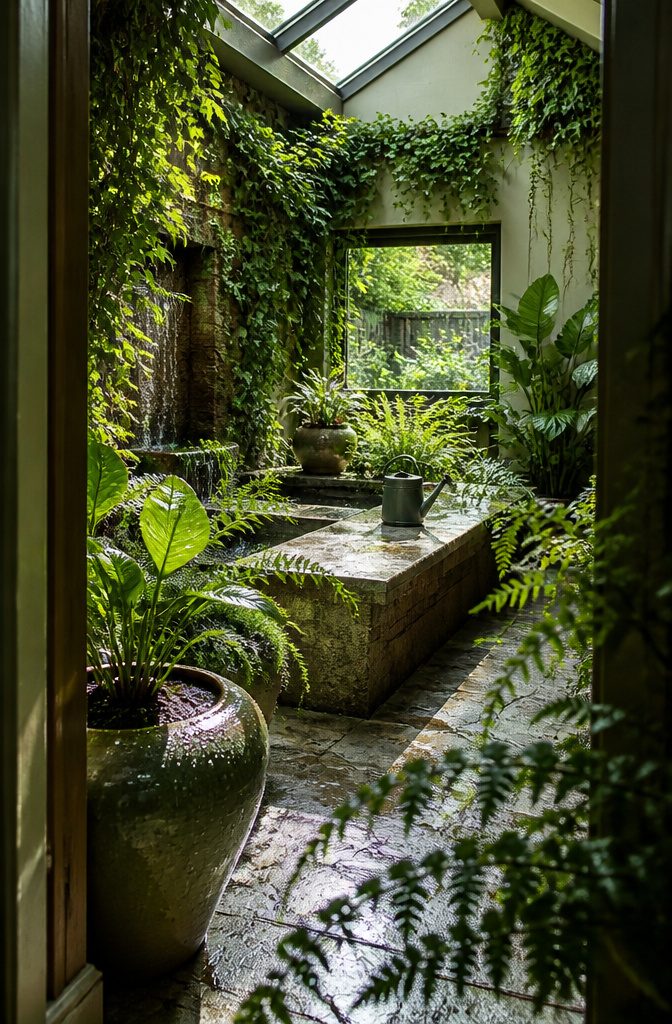
A hidden garden room brings the outdoors inside, creating a personal retreat filled with plants and natural light.
The appeal lies in stepping away from daily noise into a space where greenery dominates the view and air feels fresher than the rest of the house.
Large windows or skylights are the backbone of this room, pulling in as much daylight as possible so plants thrive without constantly relying on grow lights.
Indoor plants and living walls turn the space into something closer to a greenhouse than a bedroom or office, and the density matters.
Sparse plants on shelves feel like a collection, but layered greenery across walls and corners reads as an actual environment.
Water features or small fountains add sound and humidity that most indoor plants prefer, and the background noise gives the space a sense of calm that silence alone cannot match.
The room works best when you accept it as temporary shelter rather than permanent living space; the moisture and plant care demand mean it functions better as a destination you visit than a room you occupy for hours at a time.
14. Man cave or private lounge
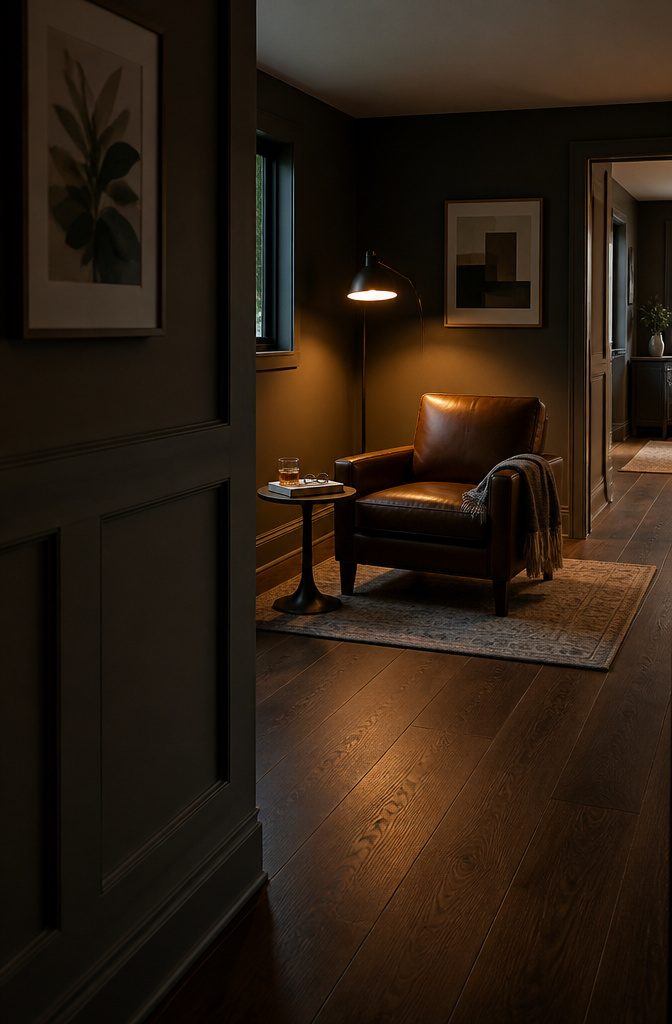
A hidden lounge works best when it feels purposeful rather than like a leftover closet. The appeal is straightforward: a place where you can close a door and step away from the rest of the house.
That might mean a comfortable chair and good light for reading without interruption, or a small seating area where a couple can talk without background noise.
The setup depends on what draws you there: silence, privacy, a break from family traffic, or simply a room that feels like yours alone.
Comfort matters more in a concealed space than it does elsewhere. Soft seating, good ventilation, and enough headroom to sit upright without ducking are non-negotiable.
If the space is tight, a single quality chair beats a cramped sofa. Lighting should be adjustable; a switch by the door and a dimmable lamp let you set the mood without fumbling.
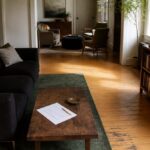
A side table for a drink or a book and a small rug to anchor the space are often all that stands between a room that works and one you avoid.
15. Hidden room under stairs
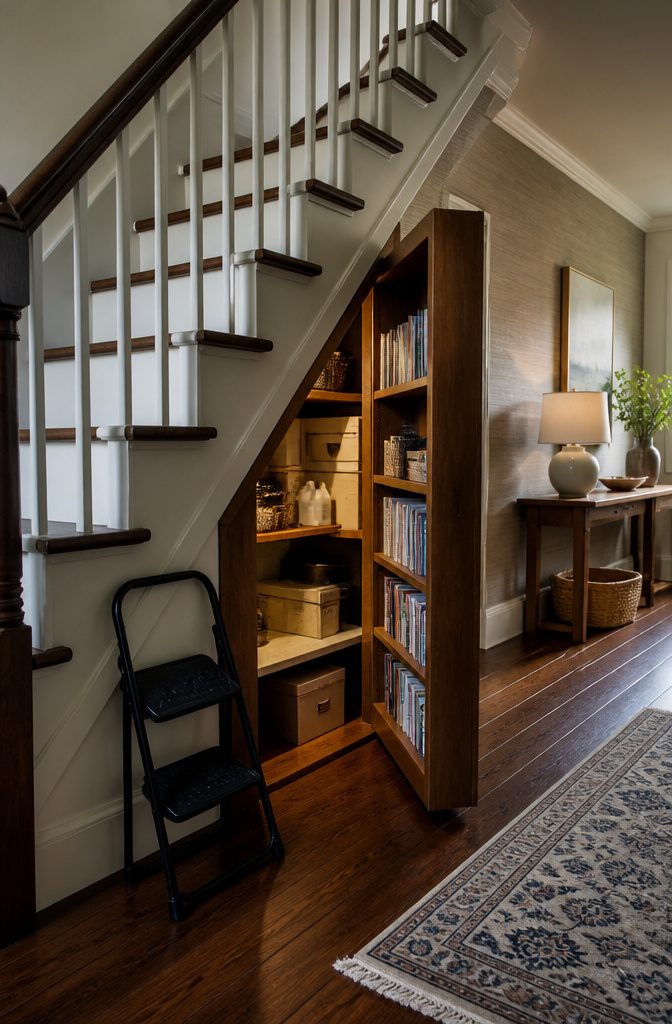
The space beneath a staircase is already there, waiting.
Most homes have it, and most leave it empty, which makes it one of the easiest secret room ideas to start with. The footprint exists whether you use it or not.
What works best depends on how much headroom you actually have. A crawl-through opening works fine for a kids’ play spot or a reading nook where someone can sit cross-legged.
You can disguise the entrance as a bookshelf or hide it with trim details, which keeps the space genuinely hidden rather than just out of the way.
Seasonal storage, household supplies, or overflow from a pantry all fit here too: things you need but don’t need to see every day.
The real win is that you’re not adding square footage or building anything from scratch.
You’re just claiming space that’s already part of your home’s structure and keeping clutter out of sight at the same time. For a small home, that matters.
16. Hidden room in a basement
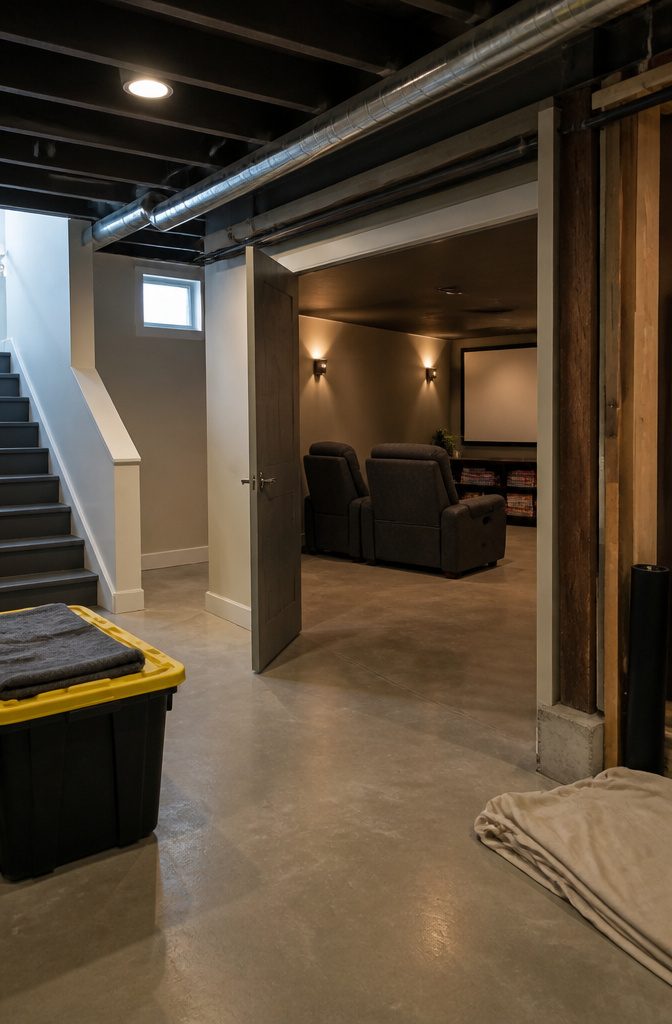
Basements work well for hidden rooms because they already sit apart from the main living areas, which means a concealed entertainment zone there won’t interrupt daily traffic through the house.
You can build a gaming room, home theatre, or private bar behind a disguised door and section off the existing space to make the room look smaller than it actually is from the outside.
The main cost consideration is whether you’re working with a space that’s already framed.
If you have an existing closet or neighboring room to convert, construction costs run similar to a standard renovation. Major structural work or an elaborate hidden entrance can cost as much as buying a new car.
Before you start, talk with an architect or home engineer to make sure your plans won’t damage the house’s structural integrity. They can suggest ways to carve out secret space safely without expensive complications down the line.
17. Hidden room in an attic or sloped-roof area
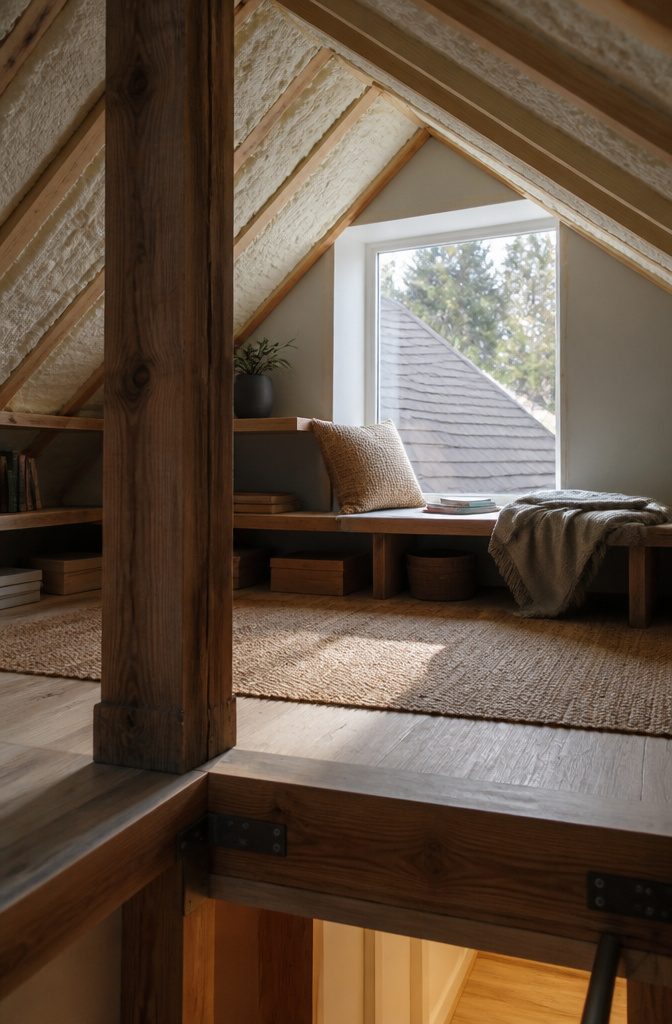
Attic and sloped-ceiling spaces work well for a hidden room because they’re already set apart from main living areas, and the odd angles become an asset rather than a constraint.
Anything under 5 feet tall works best: a reading nook, a child’s hideaway, or storage. The low ceiling makes full-size furniture awkward anyway, so build around what fits the space instead of fighting it.
Dormer windows, if present, let you add natural light and a seat.
Wall-mounted shelving and low benches take up far less footprint than freestanding pieces. If you’re concealing the entrance, a hinged panel or pull-down attic stairs already built into many homes do the job without added construction.
Insulation and ventilation matter more in attics than other spaces; check what’s already there before you move in furniture or plan extended time in the room. Moisture and temperature swings can damage both the space and anything stored there.
18. Room behind a bookcase
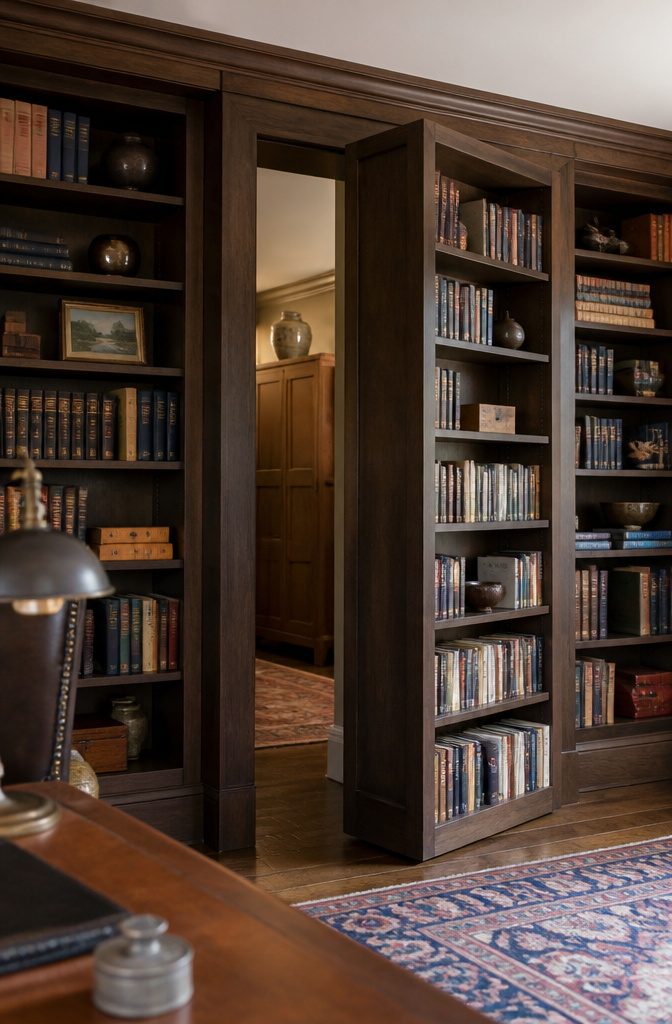
A bookcase that swings open as a door works best where built-in shelving already belongs: a home office, den, or library wall.
Flank it with fixed bookcases matching the same depth, shelf spacing, and trim so the door reads as one bay among several rather than a suspicious lone unit. The real problem is weight.
A loaded bookcase door can weigh 200 to 400 pounds, far more than the 50 to 80 pounds standard interior doors carry. With six shelves at roughly 29 inches wide, you get about 14.5 linear feet of shelf.
Books run 15 to 30 pounds per linear foot depending on type, meaning the books alone could weigh anywhere from 218 to 435 pounds before the carcass itself adds another 75 to 100.
Load the door light and the neighboring fixed bookcases heavy. Put paperbacks and decor objects on the swinging door, and move the encyclopedias to the flanking shelves.
This split load lets the door blend in visually and keeps hinges from sagging. Choose hardware rated well above your loaded weight, anchor hinges into doubled studs rather than drywall, and make sure the jamb is perfectly plumb.
19. Room behind a wardrobe or closet
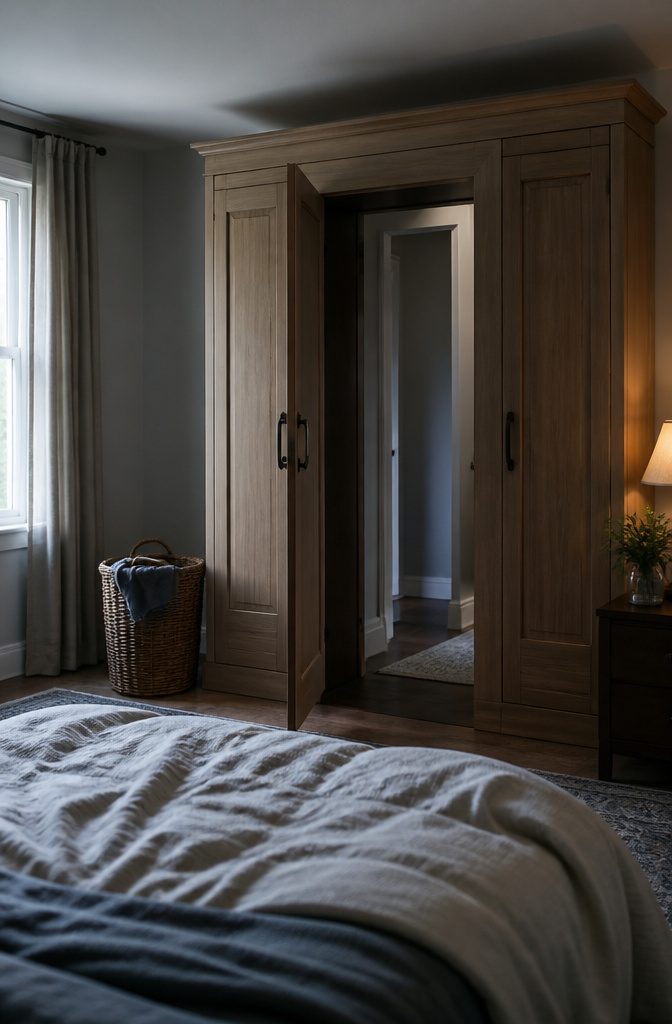
A tall wardrobe or armoire in front of a doorway becomes a functional door itself when its back panel opens. The piece sits against an existing doorway, so no construction is required; you’re using furniture to disguise what’s already there.
Anchor it properly with hardware rated for its weight, especially if children will open it often, because a tall cabinet that gets pulled open repeatedly can tip.
Keep the passage opening itself reasonable, wide enough to move through without squeezing past hanging clothes. Match the wardrobe’s finish, handles, and front panels to your bedroom so nothing reads as added or temporary.
This approach works well for master bedrooms, guest rooms, and secure spaces because the concealment stays convincing as long as the furniture blends in.
The real advantage over built-in solutions is reversibility: if you move or change your mind, the wardrobe lifts away and the door stays behind.
20. Room behind a mirror
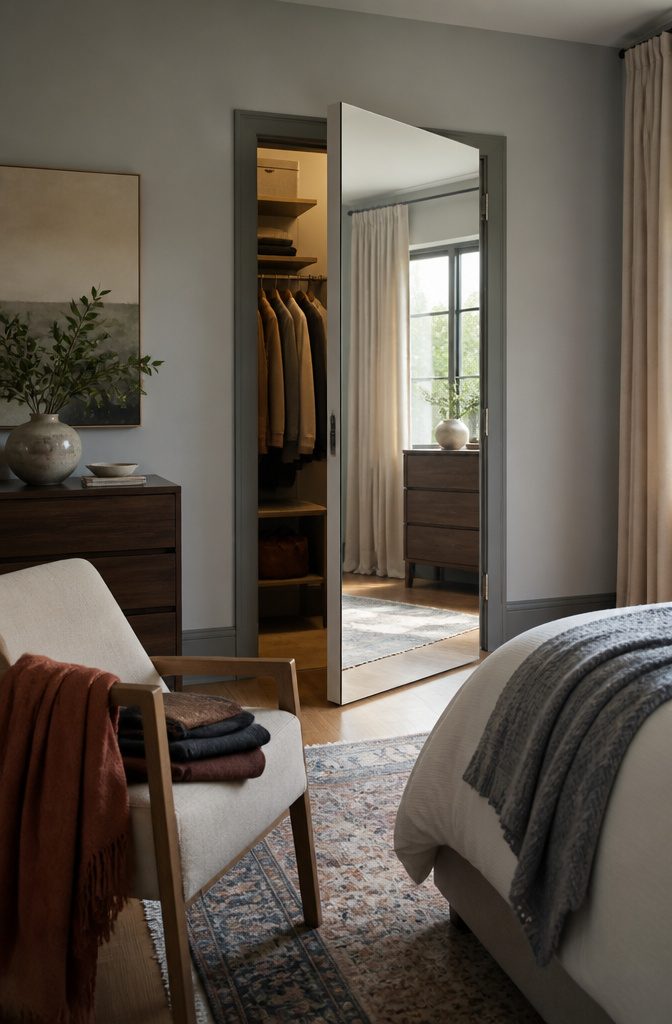
A full-length mirror mounted to a solid door panel hides a walk-in closet, dressing room, or small bathroom without raising suspicion in a bedroom. The disguise works because a large mirror on a bedroom wall looks intentional, not concealing anything.
Mirrors are heavier than they appear. Ordinary glass weighs about 13 pounds per square foot for each inch of thickness, so a 1/4-inch mirror runs a little over 3 pounds per square foot.
A 30-by-72-inch mirror is 15 square feet, roughly 50 pounds of glass alone before the panel it mounts to.
Back the mirror to a solid door rather than hanging framed glass on hinges, and specify safety-backed or tempered glass to the supplier for anything that moves.
Make sure nothing on the inside gets struck by the glass edge as it closes.
The mirror solves a lighting problem too. The outside face bounces light back into the bedroom, and you can mount a second mirror on the inside for the dressing area, so both sides work for their purpose.
21. Room behind a wall panel or false wall
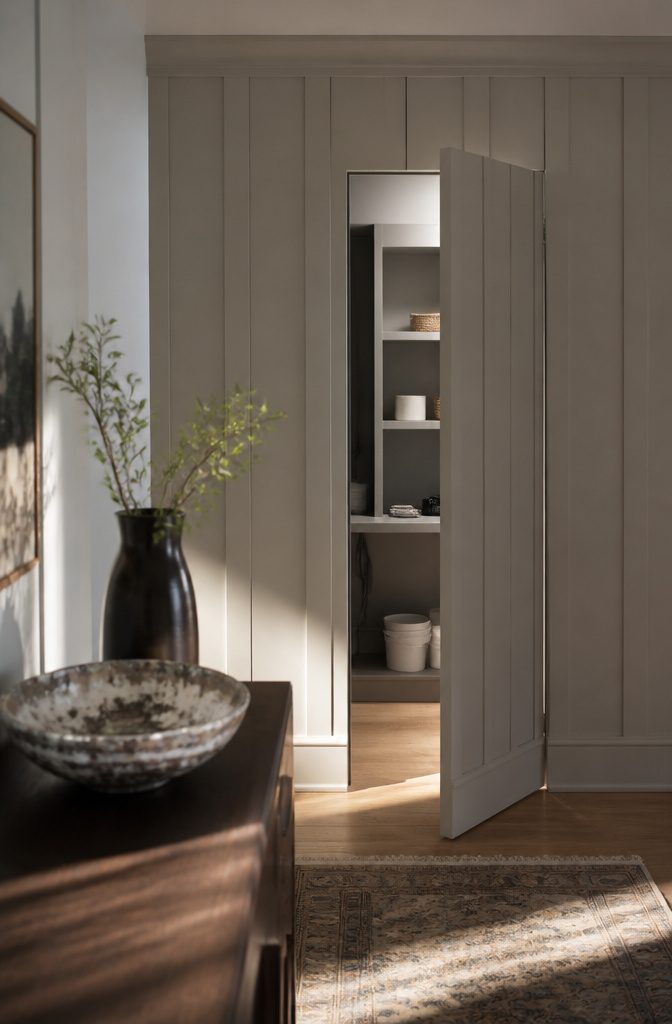
A flush panel door set flush with the surrounding wall works because it has no object to distract the eye from the seams, which is why the easiest walls to hide it in already have visual breaks.
Board-and-batten, wainscoting, slatted wood, or paneling turn the door edges into two more panel lines and let the disguise disappear.
In a plain painted wall, the work gets real: the reveal width and baseboard cut have to be clean enough that the door clears the floor when it swings.
Hardware kits convert an ordinary slab into a hidden panel door for around $259, and a push-to-open latch removes the need for a visible handle on the outside. A plain lever on the inside satisfies the release rule.
False walls exact a price, and it’s steep. Every seam shows, so sloppy work reads as sloppy.
A false wall behind the panel gives you more options.
The concept is simple: conceal a functional space behind everyday elements such as matching wall paint, paneling, and hardware. With the doorway carrying the same finish as the wall around it, the entrance can disappear into a feature wall entirely.
This approach costs more and takes up floor space, but it lets you hide thicker insulation, wiring, or plumbing that a flush panel cannot accommodate.
22. Room behind a painting, tapestry, or artwork
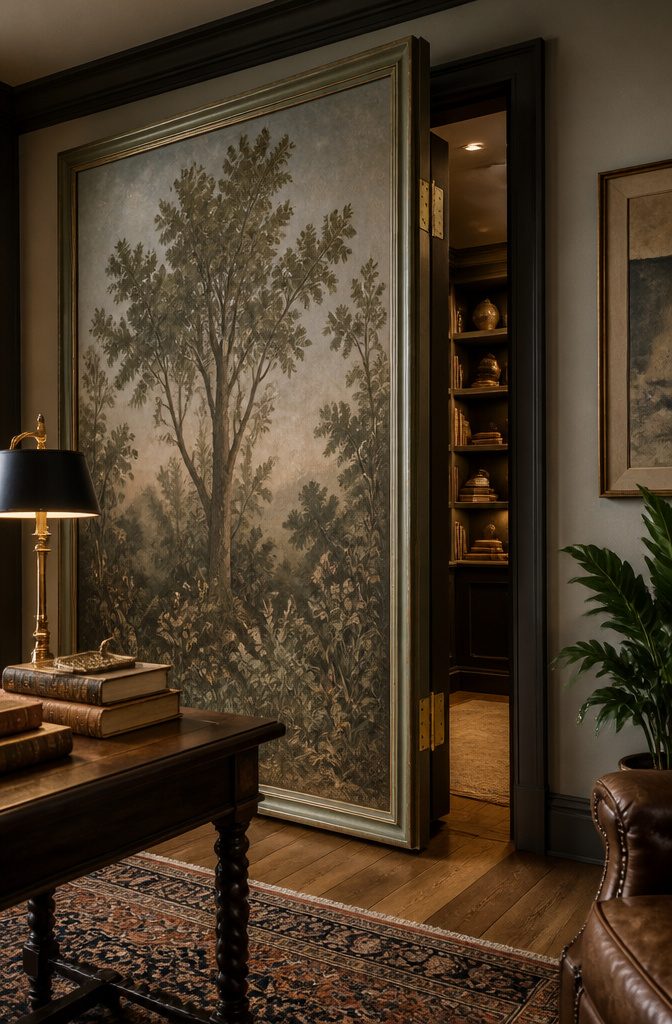
A painting or tapestry mounted on a pivot hinge lets you swing it open like a door, revealing the entrance behind it.
The appeal is simple: the entry stays invisible in plain sight, disguised as decoration rather than concealed by a lock or a hidden panel that might draw attention.
The setup works best when the artwork is large enough to cover the opening completely, and when the wall behind it can support the weight. A heavy oil painting or large tapestry needs a sturdy frame and solid mounting.
The hinge itself carries most of the load, so it has to be rated for the piece. Once hung, the pivot makes opening smooth, and the artwork settles back flush against the wall when closed.
One trade-off: the painting stays visible from inside the hidden room, so you lose privacy if someone enters. If the room needs to stay concealed from the inside as well, a mirror, bookcase, or wall panel works better.
For a room that just needs a subtle entry point and you’re comfortable with the art visible from both sides, a well-mounted painting is the most elegant option and the hardest to spot at first glance.
Choosing a purpose for your space
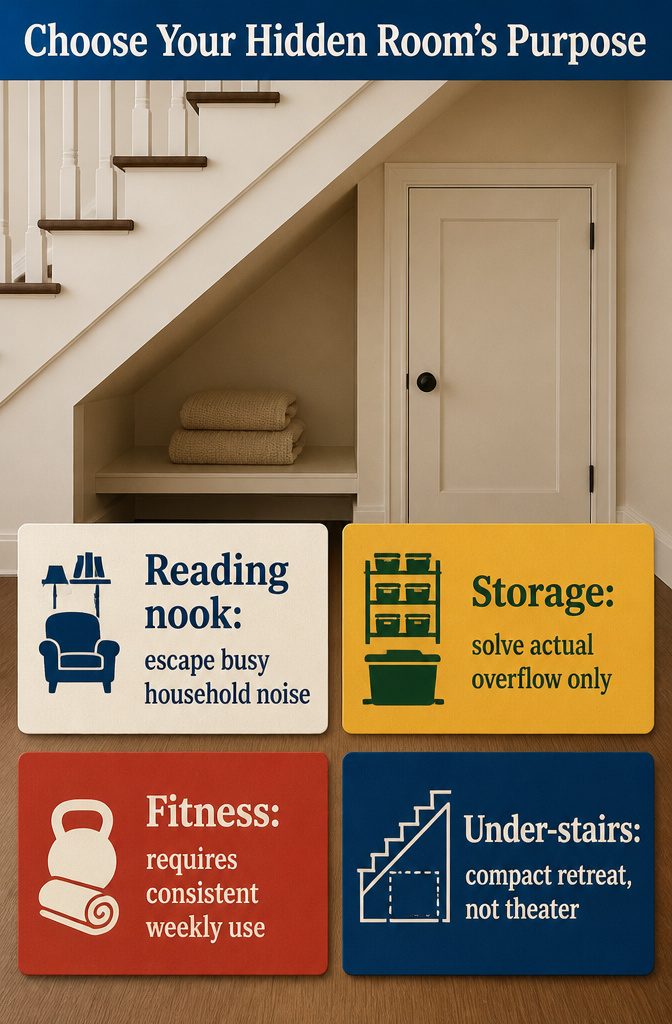
The purpose you choose for your hidden room shapes everything that follows: the location you’ll pick, how you’ll furnish it, and how often you’ll actually use it.
Start by listing what would bring you the most value in your daily life.
A quiet reading nook works best if you have young children or a busy household and need escape from noise. A playroom makes sense if you have kids and lack a dedicated space for toys.
Storage solves the problem only if you have actual overflow: seasonal items, household supplies, or things you need accessible but out of sight. A fitness room or meditation space requires consistent use or it becomes wasted square footage.
Your available space narrows the field quickly. A walk-in closet or the area under stairs works for compact storage or a reading retreat, not a home theater.
A bedroom with an adjoining unused room or linen closet gives you room to build something more ambitious. Sloped-roof areas with limited headroom suit playrooms better than exercise spaces where you need clearance.
Think about how often you’ll enter the space.
If it’s occasional, something decorative and low-maintenance wins. If it’s daily or several times a week, you’ll need proper ventilation, comfortable access, and the kind of lighting and temperature control you’d want in any room you use regularly.
A space you enter once a month doesn’t justify the cost of those systems; a space you use five days a week does.
Concealing the entrance
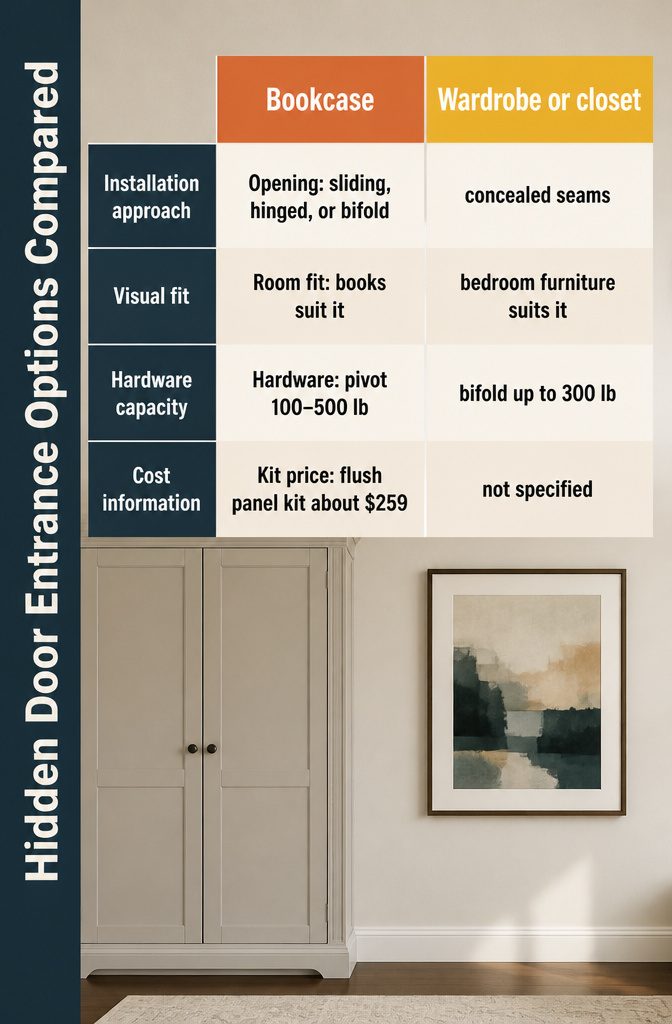
The easiest disguise is the one that fits the room. A bookcase works if your space calls for books; a wardrobe if your entrance sits in a bedroom; a mirror or artwork if the wall already holds them.
The trick is making the door blend so completely that nobody stops to look twice.
Bookcases slide on barn-door track, swing inward on hidden hinges, or open as bifold doors down the middle. A wardrobe or closet front hides the seams of the actual door, especially when handles and finishes match the surrounding pieces.
Wall panels disguised with wainscoting take more work to repeat the pattern, but disappear into the room’s architecture. Simpler: hang a large piece of art or a textile over a standard door and add an antique-inspired lock for extra intrigue.
The hardware determines what the entrance can do. Pivot hinges rate from roughly 100 to 500 pounds depending on grade; a bifold kit handles up to 300 pounds.
A flush panel-door kit runs around $259. Budget also for carpentry, finishing, wall paint, and touch-ups so the seams vanish into the surrounding surface.
The cost scales with how much of the work you DIY versus contract out, but the payoff is an entrance that stops people cold because they don’t realize it’s there.
Safety, access, and habitable space requirements
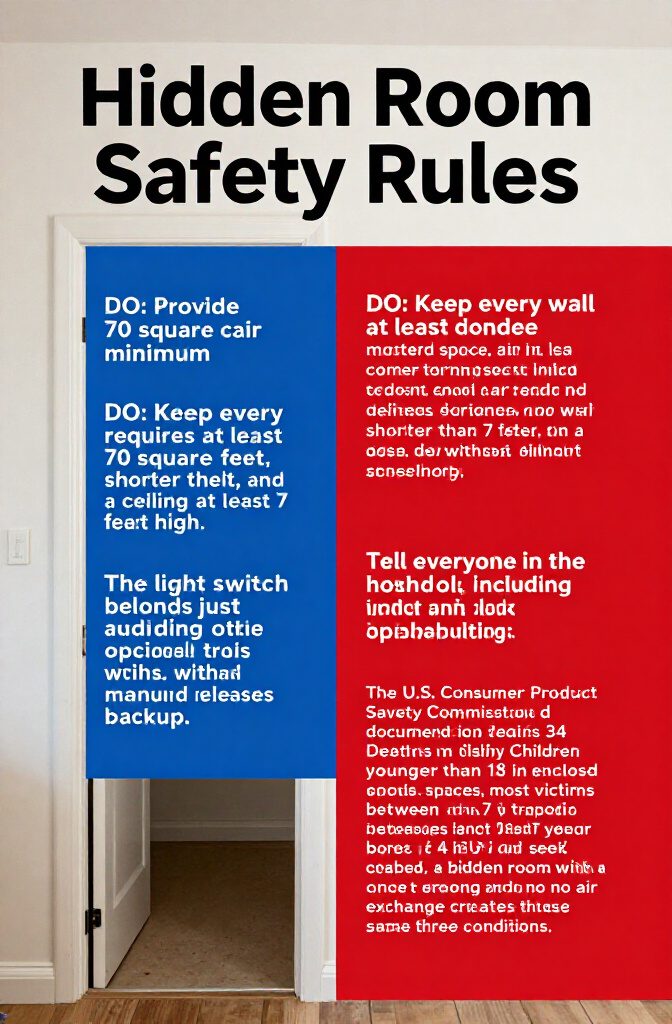
A hidden room needs to work as a regular room first.
The International Residential Code sets the floor: habitable space requires at least 70 square feet, no wall shorter than 7 feet, and a ceiling at least 7 feet high. These minimums keep the room functional and buildable within standard framing.
The door itself carries the weight of safety.
It must open easily from inside without a key, tool, or special knowledge. This is where hidden rooms run into building code because a concealed latch on the outside has to pair with a plain, obvious release on the inside.
A lever or pull plate at normal switch height, positioned so a small child can find it in the dark, is not optional.
The outside can be a puzzle; the inside cannot. Never use a latch that locks someone in, and if the mechanism is motorized, it must default to openable when power fails, with a manual release as backup.
Ventilation and electrical routing matter more in a sealed space.
Air supply and return prevent staleness during long periods with the door closed. The light switch belongs just inside the jamb so a hand finds it without searching.
Tell everyone in the household, including older children and regular babysitters. The U.S. Consumer Product Safety Commission documented 34 deaths since 1996 involving children younger than 18 in enclosed spaces, most victims between 4 and 7 years old, trapped in airtight boxes during hide-and-seek.
A hidden room with a concealed latch and no air exchange creates those same three conditions.