
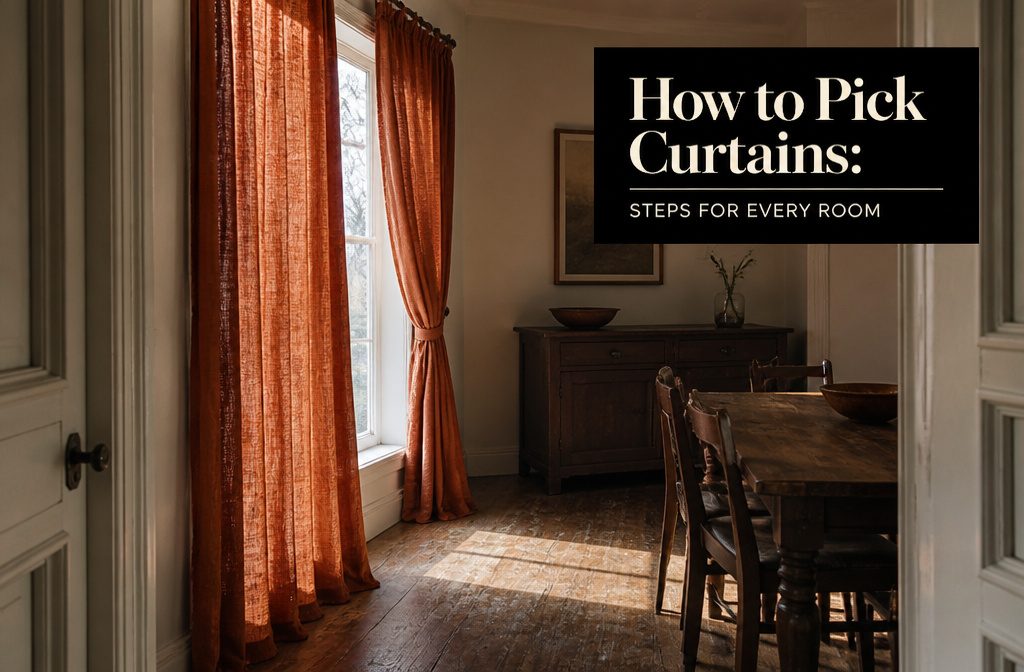
You picked curtains that looked perfect in the store, hung them, and realized they’re the wrong length or too thin to close properly.
Most people measure wrong or skip the functional questions altogether, and what the room actually needs from its curtains shapes every choice after.
If your windows face east and you want bold color, plan on fading; if you need blackout lining for a bedroom, that decision changes which fabrics work and what you’ll pay to maintain them.
1. Define the room’s purpose first
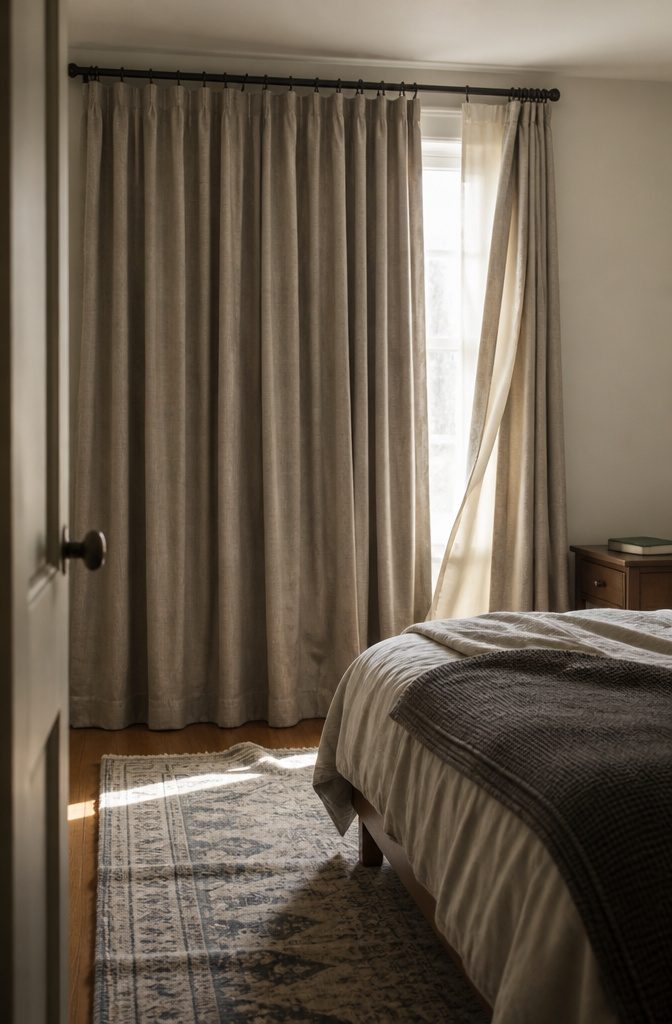
Different rooms ask different things of their curtains.
A bedroom needs light control so you can sleep, while a living room might prioritize privacy from the street or just want a decorative frame for the window. A nursery has to block direct morning sun.
A bathroom needs privacy without much else. Start there: what does this room actually require from its window treatment?
Light control and privacy are the two workhorses. If blocking light or view matters, that decision shapes everything else: the fabric weight, the lining, even whether you need curtains at all or could use shades instead.
A room where you want to keep things cozy at night has different demands than one where you simply want the curtains to look finished.
The functional needs come before the color comes before the style, because choosing a beautiful fabric that can’t do the job means buying again.
Some rooms want atmosphere more than they want function. If you’re mainly after a polished look or trying to make the windows appear larger or the ceiling taller, you have more freedom with weight and opacity.
That’s when color and pattern move to the front. But even then, start with the question: what does this room need curtains to do?

SIZE & MATERIAL:Set includes 2 panels blackout curtains(52" Wide by 84" Long). Each panel has 8 grommets.The interior diameter of hole is 1.6 inch.It's easy to hang. Curtains are made by quality faux linen.

Pair Sold: Each package includes 2 panels of blackout curtains. Each panel measures 40"W x 63"L, with a pair measuring 80"W x 63"L. Each panel has 6 anti-rust silver grommets(1.6 inch inner diameter) which would fit most standard curtain rods

2 PANELS SET: Sold pair(set) of 100% blackout curtains, each window panels measuring 52 inches wide and 84 inches long with 8 grommets. The unique design of silvery grommet (1.6 inch inner diameter) creates fashion for your house, which makes the curtains easy to install and slide.
2. Choose whether curtains blend or contrast
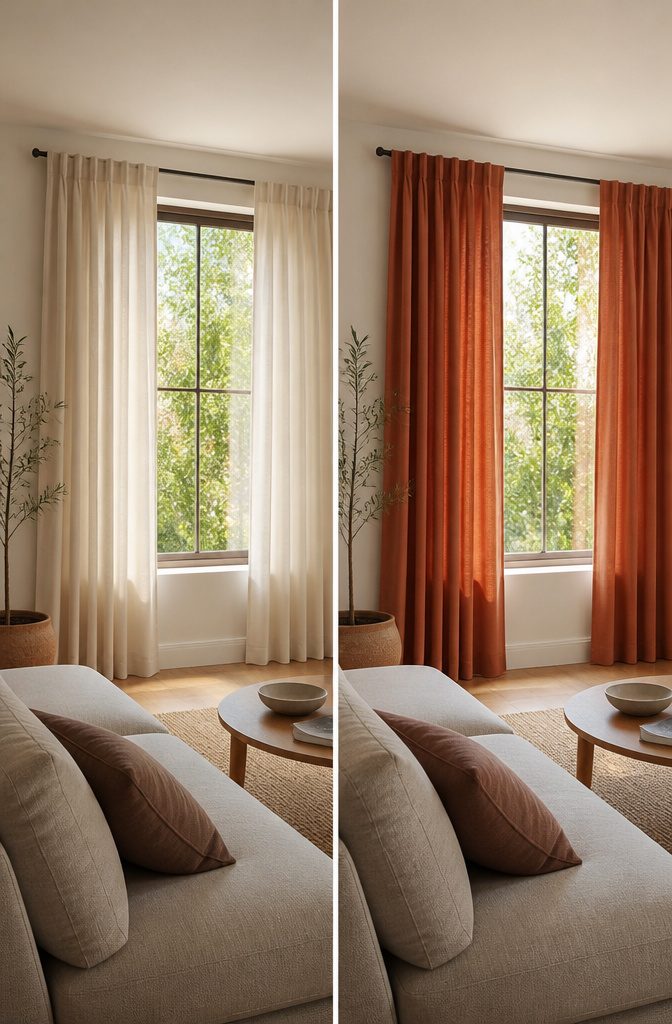
Curtains anchor a room’s color scheme, and the choice between blending and contrasting shapes everything that follows.
Blending curtains with your walls and existing décor creates a unified, soothing space, while contrasting colors make the curtains themselves the focal point.
The right call depends on what else is happening in the room and what you want to emphasize.
A blended approach works especially well if your walls and furniture already carry the look you want.
Matching curtain color to wall shade brings consistency without drawing the eye away from other design elements. This matters in rentals or if you plan to sell, since neutral curtains in a solid color feel safe to most buyers.
Contrast is the move if you want your curtains to command attention.
Bright patterns or colors that pull away from your walls will make the window treatment the room’s centerpiece, so choose a fabric you genuinely love living with every day.
If your furniture and bedding are already patterned, a solid contrasting curtain keeps the room from feeling too busy. If your furniture is solid, patterned curtains can work the same way.
The 60–30–10 interior design rule offers a steady hand here.
Curtains typically land in the secondary or accent color range depending on their size and how much wall they cover. Using this framework helps you pick curtains that complement the room instead of overwhelming it.
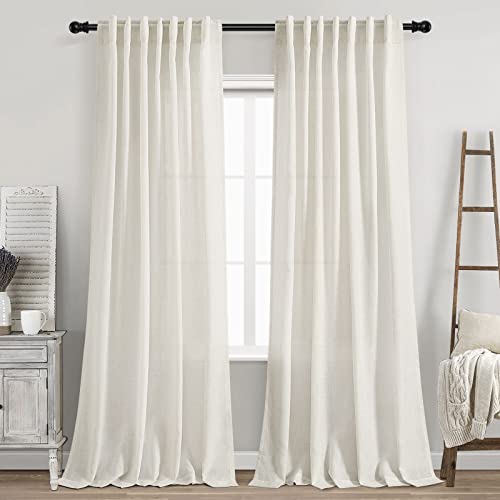
READY MADE: 2 Linen Curtain Panels per package.Each panel measures 52 inches wide by 84 inches long. Top design of Back tab & loop pocket provide 3 hanging options. <1> hanging from the back patch to create an elegant pleated look, <2> from the 3 inch rod pocket for a classic look <3> Hanging with clip rings for easy, slide open and closed (clip rings are not included)

Basic Information: Includes 2 curtain panels, each measuring 50 inches wide for a total of 100 inches. Easy care for machine washable in cold water, do not bleach, tumble dry low, iron on low heat if needed.

【Exquisite Details】Joydeco Blackout Sliding Door Curtains are crafted from high-density polyester fabric—durable, wrinkle-resistant, smooth, and soft to the touch. With a sleek, modern design, they exude elegance. The top features multiple silver rust-proof grommets: not only stylish but also making installation a breeze. Neatly stitched edges add a premium, sophisticated look to elevate any room.
3. Match curtains to your wall color
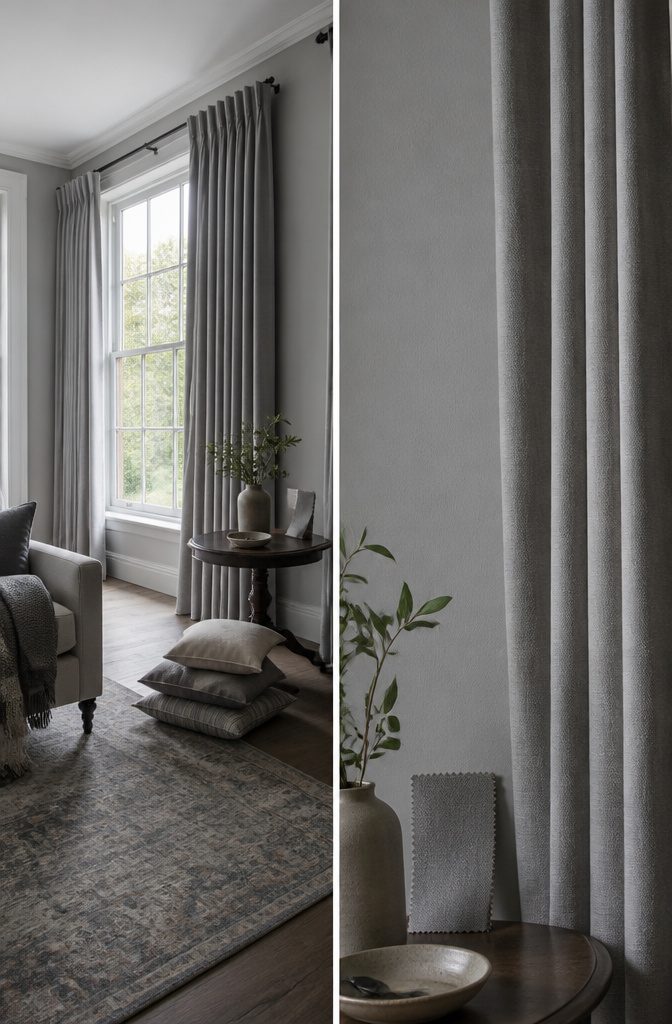
The wall color sets the mood for your whole room, and the curtains either reinforce that mood or break it. Tone-on-tone pairing, where curtains are a shade lighter or darker than the walls, is the most reliable approach.
Light grey walls work with mid-grey curtains; soft beige pairs with taupe; pale blue takes deeper navy. This creates a subtle layered effect without harsh visual breaks, and the curtains still stand out enough to matter.
Dark or saturated walls need a different strategy. Deep green walls with warm beige curtains, charcoal with off-white: lighter curtains here balance the room and keep it from feeling boxed in.
They also reflect more natural light around the space. The opposite works too: light walls with dark curtains make the window treatment a focal point rather than just a boundary.
Before you commit, hold fabric samples against the wall in both daylight and evening light. The room looks different at each hour, and what reads as sophisticated at noon might feel heavy when the sun drops.
Natural light shifts how the eye reads the relationship between wall and fabric, so a choice that feels right in the store may surprise you at home.
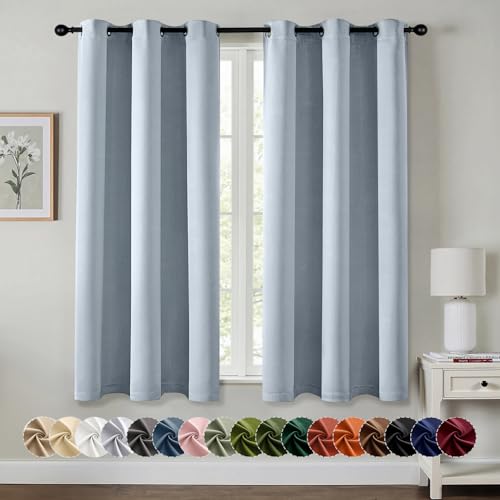
Pair Sold: Each package includes 2 panels of blackout curtains. Each panel measures 40"W x 63"L, with a pair measuring 80"W x 63"L. Each panel has 6 anti-rust silver grommets(1.6 inch inner diameter) which would fit most standard curtain rods

SET DETAILS: Set of 2 light gray total blackout curtain panels per package. Each lined curtain measures 42 inch wide by 63 inch long with 6 silver metal grommets (1.6 inch inner diameter) on top, easy to install and slide.

Premium Triple-Weave Fabric: Sold as 4 panels (W37" x L63" each, 148" total). Crafted from 225 GSM triple-layer weave with black yarn interlayer – ensuring excellent light-blocking, durability, and same color on both sides. The classic rod pocket design allows for quick, tool-free installation and provides a clean, full-coverage drape that minimizes edge gaps.
4. Account for natural light and window direction
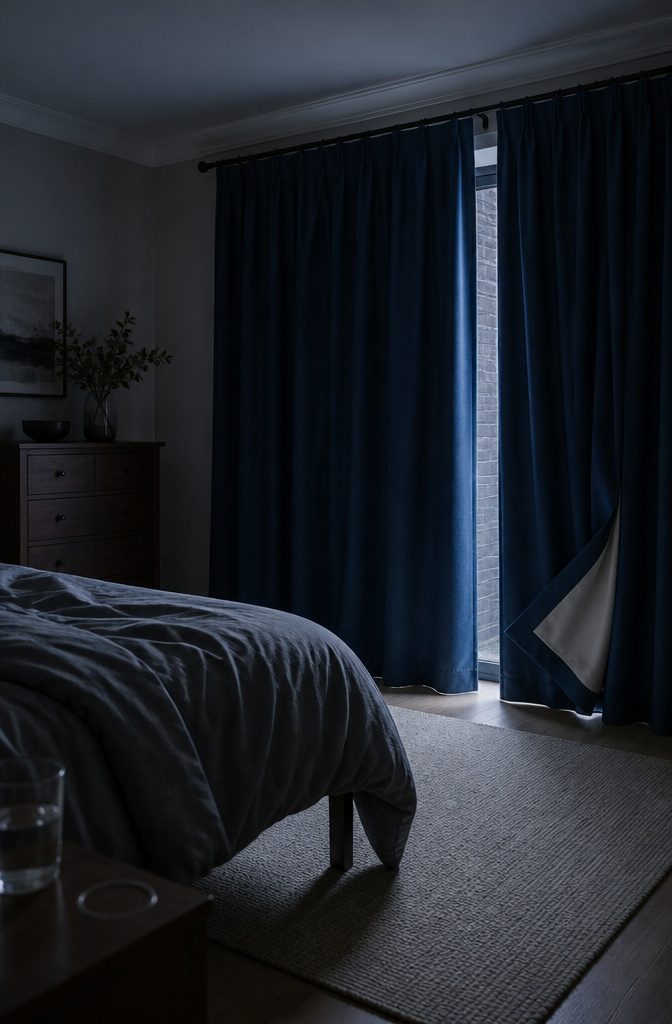
The color you pick for curtains doesn’t live in a vacuum. How a fabric appears depends entirely on the light entering the room and which direction your window faces.
A shade that looks balanced in the store can read noticeably warmer, cooler, or darker once it’s hung, simply because of the light hitting it all day.
The same blue looks different in an east-facing bedroom flooded with morning sun than it does in a north-facing living room.
Strong natural light fades bold colors over time, so if you love saturated hues, plan to replace them sooner or accept gradual fading.
Lining can slow this wear. Blackout lining does double duty: it blocks early morning light and prevents fabrics from fading, which makes it especially worthwhile in east-facing rooms or spaces with strong street lighting at night.
This matters most in bedrooms, where blocking light supports better sleep.
Ready-made curtains often come with standard lining, but made-to-measure options let you add blackout lining, thermal lining for insulation, or interlining for extra body. Choosing the right lining means your curtains will perform as hard as they look.

Grommet Design: Tired of those shower-hook foding door curtain? You've found the right one! Our designers have pioneered a grommet design paired with 100% blackout faux linen fabric—sophisticated and far from cheap-looking

Double Layered Curtains: Crafted with a sheer lace layer, our boho kitchen curtains boast a smooth, delicate handfeel, while the linen layer is soft and durable. With one-piece cutting and neatly sewn edges, our linen curtains with lace overlay strike a balance between beauty and practicality. They are suitable for kitchen, bathroom window, living room, cafe, camper, basement and other places

Ready-Made: The package includes 2 panels of thick flax semi-sheer linen curtains, and each measures 55"W (110"W for pair), with a rod pocket and back tab design which is 2" inner Diam to fit most of the curtain rods.
5. Select fabric weight and texture
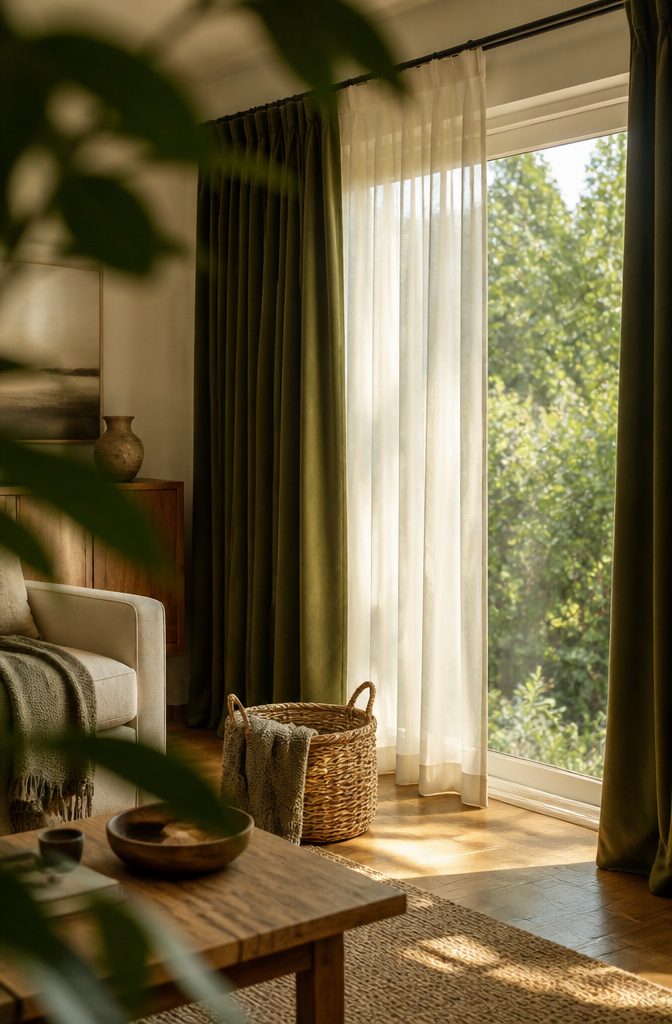
Fabric weight and texture shape how curtains function and look. Sheer fabrics let diffused light through while maintaining daytime privacy, so they work well layered with heavier panels for adjustable light control.
Linen, silk, faux silk, velvet, and suede are popular choices; heavier fabrics like suedes, velvets, and woven wool block out more light and temperature swings.
Silk reads elegant but can be slightly transparent, so add a lining if privacy matters to you.
Lining changes everything.
A standard lining adds weight and formality; blackout lining blocks light completely, making it ideal for bedrooms. Thermal lining is a thick coated cotton that acts as a draft excluder and provides extra insulation in a cold room.
Interlining, an additional fabric layer between your main fabric and the lining, strengthens lighter materials and improves temperature control. Skip silk in moist environments like bathrooms, where it can rot.
For pure decoration in a room where you rarely close the curtains, any fabric works, but if you’re after light blocking or temperature regulation, heavier fabrics and linings earn their weight.
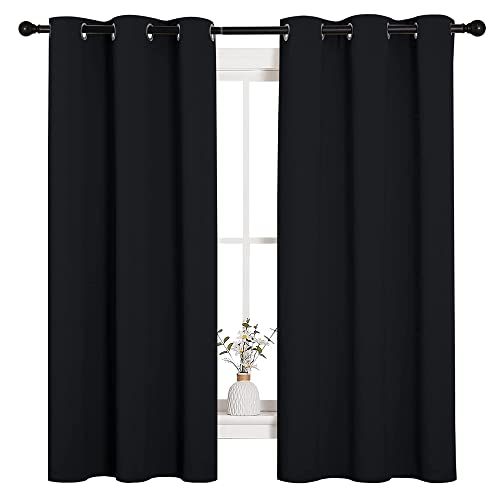
READY MADE: Set includes 2 BLACKOUT CURTAINS PANELS of 42" wide x 63" length with 6 grommets top each. Quality fabric without liner feels soft and heavy.

MULTIPLE HANGING: Sold per pair, including 2 window panels - Panel measures: 52 x 84 - inches | Set measures: 104 x 84 - inches, with 3 curtain top hanging options (Back tab & Rod pocket & Pleated) for your personalized style. Each panel sewn with 4" rod pocket (7 back loops), 2" bottom hem and 0.8" side hem, specialized fitting the curtain rods up to 3
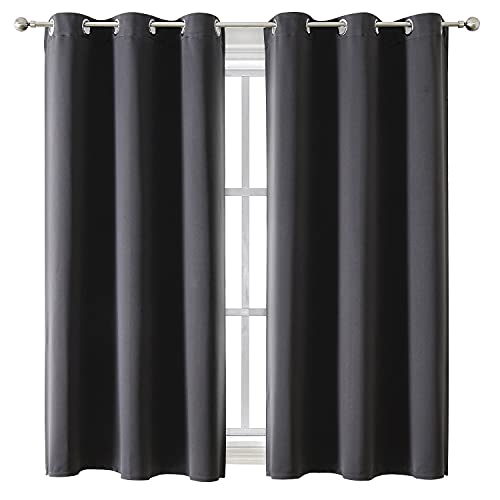
SET DETAILS: 2 charcoal gray curtains per package. Each panel measures 42 inch wide by 63 inch long with 6 silver metal grommets (1.6 inch inner diameter) on top, easy to install and slide.
6. Decide on solid color or pattern
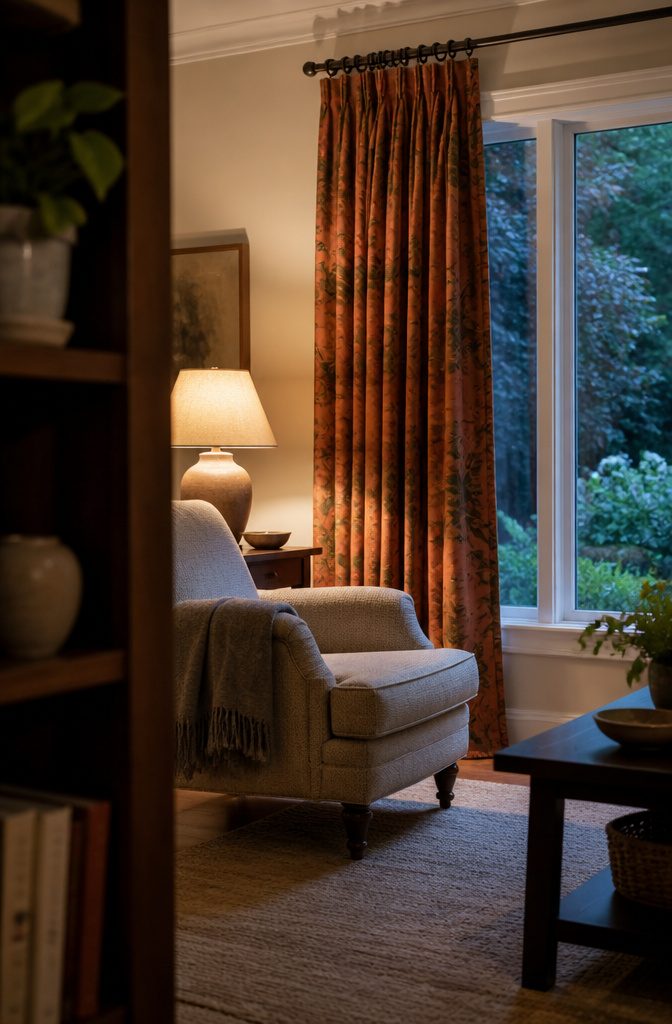
Solid colors offer versatility across seasons and decor changes, while patterns add immediate personality to a space.
Neutral tones like gray, black, taupe, beige, ivory, and white are safe choices that work with most interiors, though they demand contrast with your walls to avoid disappearing entirely.
Pick curtains at least one shade lighter or darker than the wall color to keep them from blending in.
Deeper, warmer tones make stronger statements.
Forest green, burgundy, warm taupe, mustard, terracotta, and deep teal create richer atmospheres, especially in rooms where artificial light dominates the evening hours. These colors anchor a room and work particularly well when your walls and furniture are relatively neutral.
The trade-off with bold colors and patterns is fading. Strong light will gradually fade even expensive fabrics over time, and if you love really bold choices, you may need to replace them sooner than neutral curtains.
Lining can help overcome this; it protects the front fabric while improving privacy with lighter colors, which tend to be less opaque than dark ones.

100% Total Blackout & UV Blocking: Achieve perfect darkness with these blackout curtains! The dedicated liner blocks 100% sunlight and UV rays, ideal for any bedroom or living room. This blackout curtain protects furniture from fading and helps regulate room temperature year-round.

100% BLACKOUT: These 100% blackout curtains utilize advanced technology to completely block out natural light and effectively filter out UV rays, plunging your room into total darkness so you can enjoy a restful sleep day or night. Combined with excellent thermal and sound insulation, they help maintain a stable room temperature and dampen outside noise, making them ideal for bedrooms, living rooms, and nurseries—creating a peaceful, private space for relaxation.

100% BLACKOUT: These 100% blackout curtains utilize advanced technology to completely block out natural light and effectively filter out UV rays, plunging your room into total darkness so you can enjoy a restful sleep day or night. Combined with excellent thermal and sound insulation, they help maintain a stable room temperature and dampen outside noise, making them ideal for bedrooms, living rooms, and nurseries—creating a peaceful, private space for relaxation.
7. Pick a heading style that fits your look
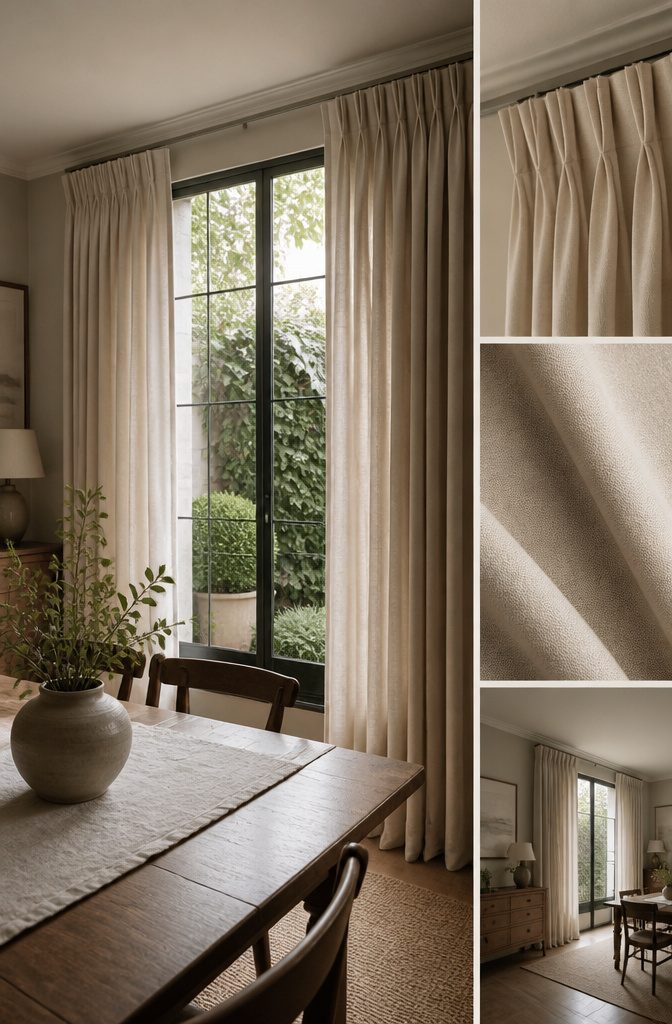
The heading you choose shapes how the curtains hang and how formal or relaxed the whole window feels.
Pencil pleat and pinch pleat headings create richly gathered fabric that reads as traditional and elegant, with the gathered header adjustable to fit your rod or track.
For a more informal look, tie-top and tab-top styles work better; tie-tops have a pretty, appealing informality that suits kitchens and bathrooms especially.
Tab-top curtains can appear shorter than other styles because the tabs sit higher on the fabric rather than at the very top. Rings and eyelet headings make curtains hang longer and create a more contemporary appearance.
If you want a formal finish with traditional flair, a valance heading lets a section of fabric lie over the front top edge, which is great for featuring a coordinating design on the reverse.
The heading is both decoration and function: it determines how the curtains drape, how much they gather when open, and whether the window feels period or modern.

WELL MADE: Sold as 2 panels, each panel is W52" x L84", and W104" x L84" in total. Each curtain panel has 2-in-1 top style design: rod pocket and back tab. With 3-inch inner diameter fit most standard rod. Curtains also can be hung with clip rings. 3 ways meet your various needs.

PINCH PLEATED DESIGN: Curtains top features 1.5 times length fabric design for an elegant pleated effect. Perfectly presenting a sense of stereoscopic and layering. Whether in living room, bedroom, dining room or sliding door etc, it fit perfectly into a variety of room decor style

Packing Detail: The package includes 2 natural ivory linen curtains and each linen textured curtain measures 52 inch wide and 84 inch length(104" wide total). The top style of the curtains is bronze grommets with 1.5 inch inner diameter, fit well with most rods.
8. Get the height and width right
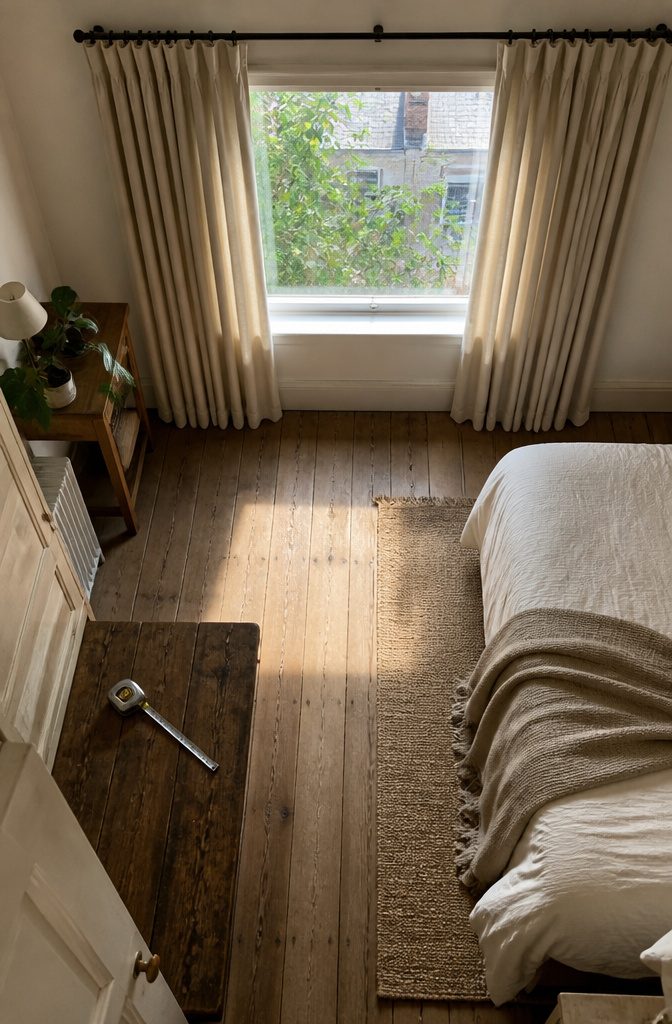
A steel tape measure is the only tool that matters here. Measure your window width and the distance from where you want the rod to the floor, and write both numbers down before you buy anything.
Curtains need 1.5 to 2 times the window width to hang with proper fullness and close completely without gaps.
A single panel beside a wide window will look skimpy no matter what; add panels if the ready-made width falls short. When the curtains are open, they should sit outside the window frame so they don’t block daylight.
For height, hang them at ceiling level if your ceilings are 9 feet or lower. This makes the room feel taller and the windows look grander.
Measure from where you’ll mount the rod to the floor, then decide the length you want: curtains that kiss the floor give a neat, contemporary look, or you can let them pool slightly for a more dramatic effect.
Pooling also hides uneven floors in older homes.
The hardware matters more than you’d think. Check the rod and curtains together before hanging, since rings and tab tops can shift how the length reads.
Mark where the rod goes by holding the curtains up, or lay them flat on a table and calculate. This step catches surprises that a measurement alone won’t.

" All over burnout bird on branches window curtain panel Silver grommet top that fits up to 1.25 inches in diameter rod Lightweight sheer and see through fabric Great for layering curtain as the second panel "

Pair Sold: Each package includes 2 panels of short blackout curtains. Each panel measures 40"W x 63"L, with a pair measuring 80"W x 63"L. The curtains blackout have 2 hanging options (Rod pocket & Clip Style) with a 3-inch rod pocket to fit standard or decorative curtain rods. Don't worry if this blackout curtain is a few inches shorter than your window. Hang with rings & hooks for easy 3-4" height adjustment.

Pair Sold: Each package includes 2 panels of blackout curtains. Each panel measures 40"W x 63"L, with a pair measuring 80"W x 63"L. Each panel has 6 anti-rust silver grommets(1.6 inch inner diameter) which would fit most standard curtain rods
Consider maintenance and cleaning
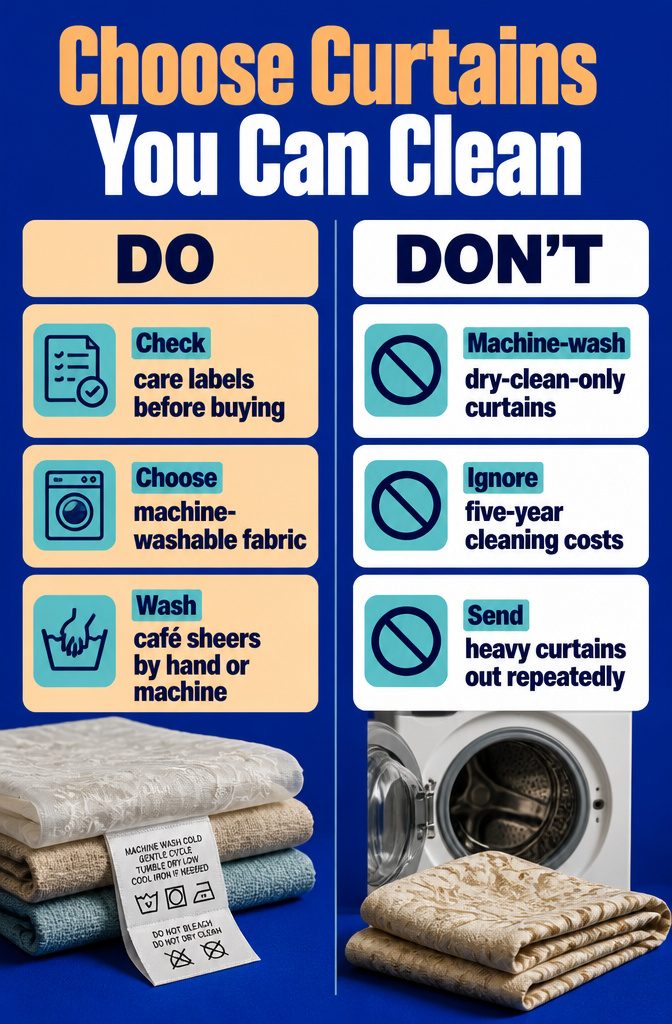
Fabric choice determines what cleaning costs you down the line, and that expense should factor into your decision before you buy.
Some curtains can go straight into the washing machine on a gentle cycle, while others require dry cleaning, which adds significantly to the cost over time.
Café sheers, for example, handle hand-washing or machine washing without trouble. A long length of heavy material sent to the dry cleaner multiple times a year will add up fast, especially compared to curtains you can wash at home.
Before committing to a fabric, check the care label.
You don’t want expensive curtains ruined by washing them yourself when they’re labeled dry clean only. If maintenance matters to you, either because of your budget or because you’d rather not deal with it, start by looking at machine-washable options.
The upfront price might be the same, but the total cost of ownership tells a different story over five years of cleaning.

PREMIUM QUALITY: Our shower curtains are made of carefully selected high-quality 100% polyester fabric that is skin-friendly and wrinkle-free.130gsm high weight fabric ensures the shower curtain has a great drape. The waffle weave pattern can match any bathroom style, adding an elegant atmosphere to your bathroom.

Easy and Damage-Free Installation: Our adhesive blackout curtains offer a no-drill, no rod solution for a quick and easy installation. Simply peel and stick these stick on curtains to your windows, making them ideal for renters or those looking to avoid wall damage.

SET DETAILS: Pack of single panel charcoal gray doorway curtain, measures 34 inch wide by 80 inch long with 6 silver metal grommets (1.6 inch inner diameter) on top, easy to install and slide smoothly. Pets have no problem to pass.
Select hardware that matches your style
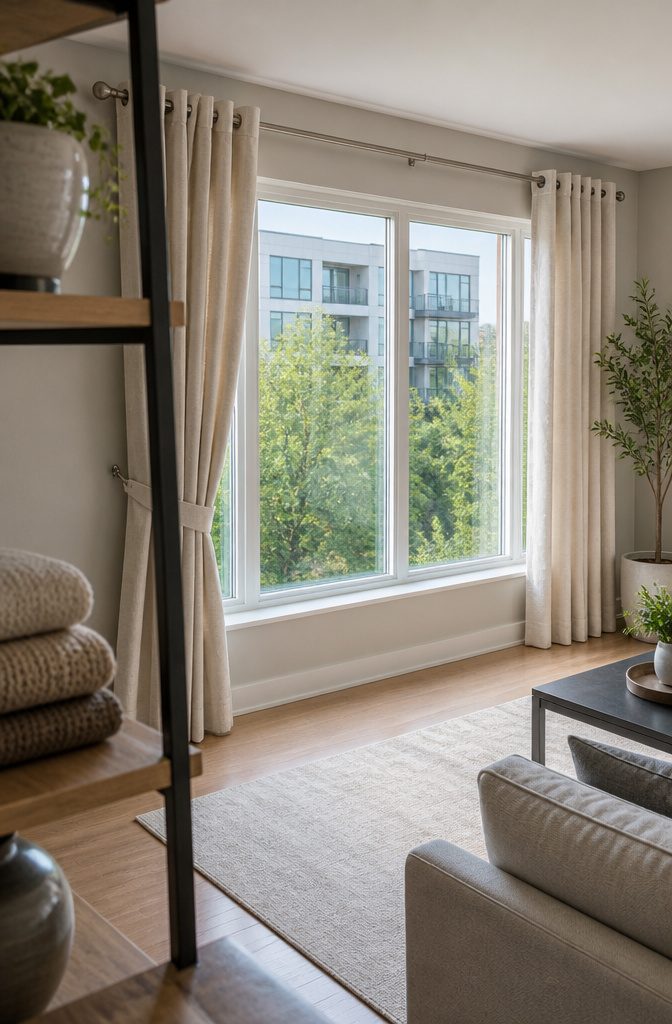
Hardware is where curtains shift from functional to finished. A simple rod in matte black or brushed nickel can ground a room, while decorative finials and ornate brackets signal a more formal aesthetic.
The bracket width you choose, 1-inch or 5/8-inch, matters less for holding the curtain than for how it reads against your wall. Thinner brackets recede; wider ones become part of the visual weight.
Match the metal tone to your room’s existing finishes: brass hardware suits warm, layered spaces; chrome and nickel work better in modern or minimalist rooms.
If you’re hanging heavy fabric, make sure the brackets and rod can handle the load without flexing.
For rooms where curtains stay drawn most of the time, the hardware barely matters. For rooms where they’re part of the daytime look, it deserves the same attention you’d give to a picture frame.
Tiebacks and holdbacks let you shape how the curtain sits when open.
They’re practical for clearing window light during the day and decorative enough to become part of your color story if you match them to the fabric or let them contrast.
Skip them if your windows are narrow or if your style runs spare; they’re one of the first things to feel fussy when a room doesn’t need them.

Package Includes & Material: Each package includes 4 black blackout curtains, each measuring 63 inches in length and 40 inches in width, with a total width of 160 inches for the 4 curtains. The 4-piece set provides fuller pleats and wider coverage, which is usually more cost-effective than purchasing two separate 2-piece sets. These curtains are the same colour on both sides. Made from thick 225 GSM matte single-layer fabric, these curtains drape neatly, creating a clean, modern look

WELL MADE: Sold per pair, including 2 grommet curtain panels - Panel measures: 42"W x 63"L|Set measures: 84"W x 63"L. Each panel has 6 elegant metal grommets, inner diameter of grommet is 1.6", fit well with standard or decorative curtain rods
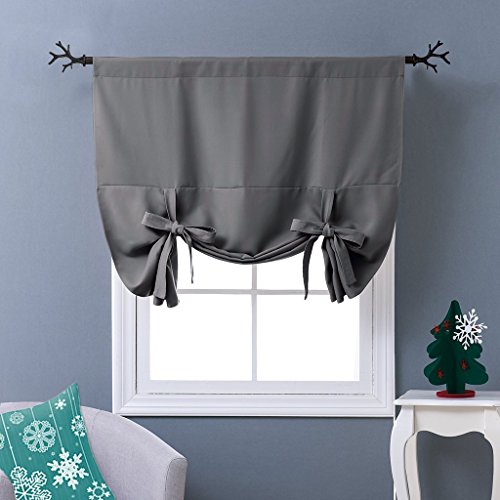
READY MADE: Package includes 1 panel Tie Up Shade with 46" width x 63" length (117cm x 161cm), same color as front. 3" pocket fits various standard or decorative curtain rod/pole.
Check HOA rules if they apply
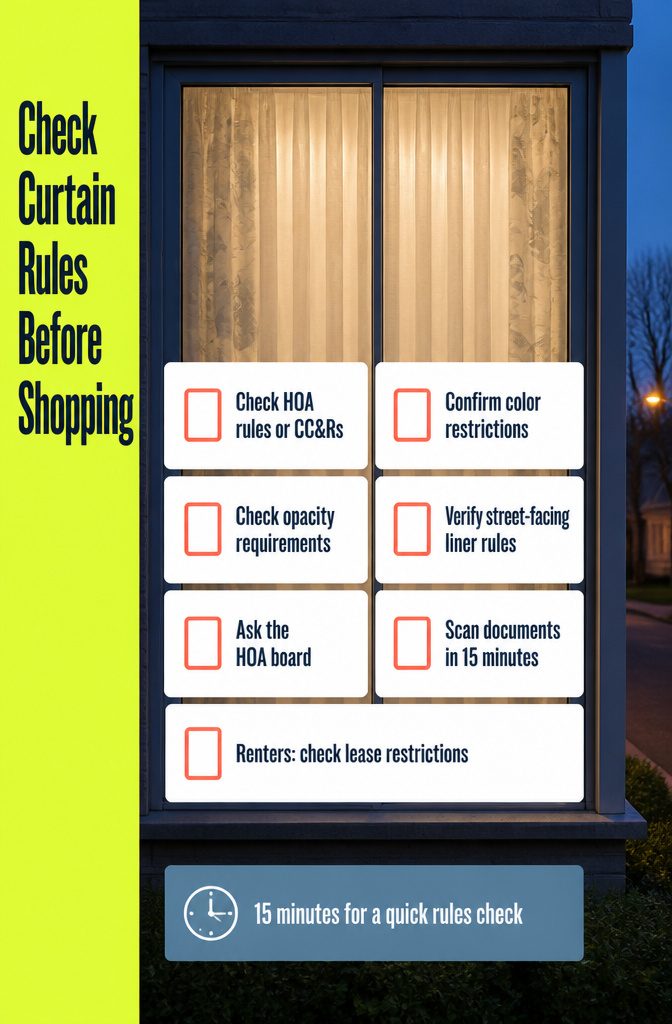
Homeowner associations often restrict what’s visible from the street, and curtains fall squarely into that territory. Before you shop, check your HOA rules or CC&Rs to see whether they specify color, opacity, or lining requirements.
Many associations require a neutral curtain liner on the street-facing side, which means your bold interior pattern stays private but the outside reads as uniform. This isn’t a suggestion.
Violating the rule can cost you fines or a forced replacement. A quick call to your HOA board or a scan of the documentation takes 15 minutes and saves you from buying curtains you’ll have to return or cover.
If you rent, check your lease the same way; some landlords have their own restrictions. Knowing the limits before you measure means you buy once instead of twice.
Ensure child safety with corded hardware
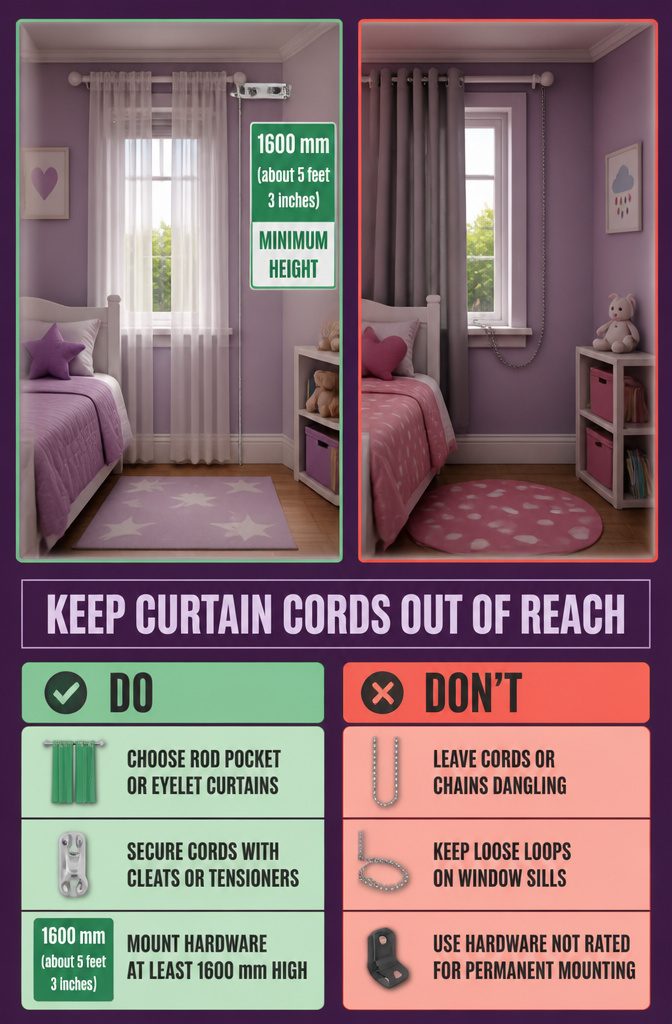
Corded curtains and chains pose a strangulation risk in children’s bedrooms, so skip them when you can. Rod pocket sheers and eyelet blockout curtains work safely without any hardware that dangles.
If you do choose curtains with cords or chains, they must be secured permanently with cleats or tensioners mounted at least 1600 mm (about 5 feet 3 inches) above the floor, high enough that a child cannot reach them.
This keeps the loops and excess cord out of reach entirely.
The cleat holds the cord taut against the wall rather than coiled on a sill where small hands can grab it. Check that whatever hardware you select is rated for permanent mounting and won’t shift over time.
Safety hardware is inexpensive compared to the alternative, and the difference between a loose cord and a secured one is the only difference that matters in a child’s room.
Weigh ready-made versus custom curtains
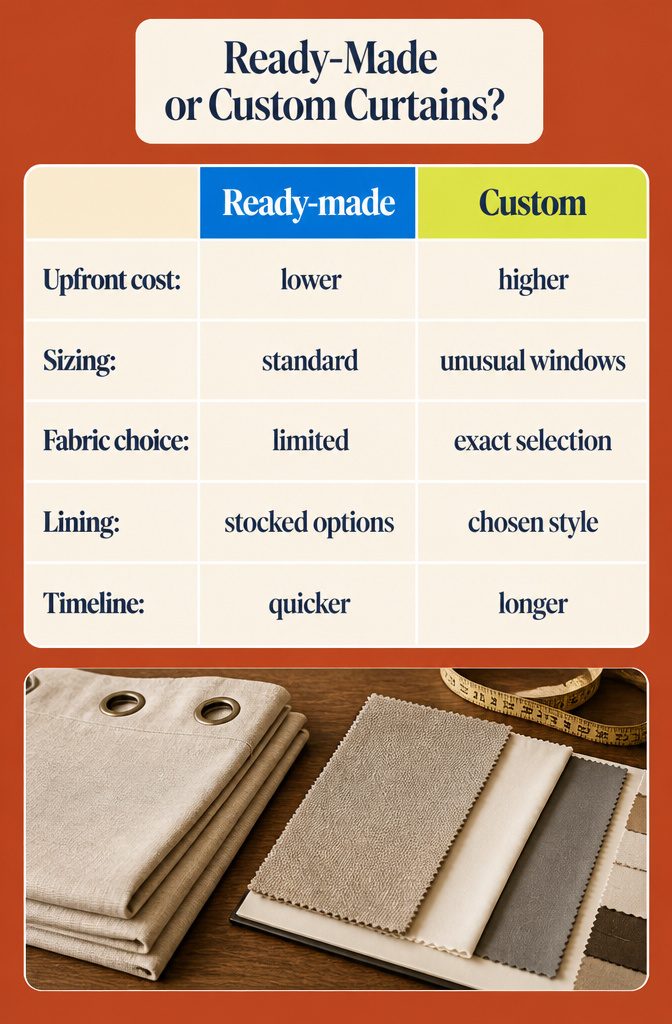
Ready-made curtains arrive in standard lengths and widths that work for most windows, but the color and pattern choices are limited to what manufacturers stock.
You’ll spend less upfront, and finding a match takes mainly time spent hunting through options, often online or across stores.
If your windows fall outside the typical range, or if you want a specific fabric or lining style, ready-made curtains won’t work for you.
Custom or made-to-measure curtains cost more but solve the sizing problem for unusual windows and let you pick the exact fabric, lining, and finish you want.
Blackout lining works well for bedrooms since it blocks light and prevents fabrics from fading, while thermal lining with a thick coated cotton acts as a draft excluder in a draughty room.
You can combine linings if the room needs both functions. The timeline stretches too: custom orders take longer than walking out with a ready-made panel.
Budget decides which path makes sense. If you’re renting or furnishing a temporary space, ready-made usually wins on cost and speed.
If you own the place and the windows are oddly sized, custom pays back in fit and durability. Etsy often carries custom options at better prices than high-end workrooms, so check there before assuming custom means expensive.
Frequently Asked Questions
why do you want curtains?
Start by deciding whether you need light control, privacy, or mainly a decorative accent.
A bedroom might prioritize blocking light for sleep, while a living room could focus on framing the window or adding polish to the space. Your functional needs shape every choice that follows, from fabric weight to color.
what’s the best width for curtains?
Curtains need 1.5 to 2 times your window width to hang with proper fullness and close without gaps.
Measure the full window width before buying, and add multiple panels if ready-made options fall short. When open, the panels should sit outside the frame so they don’t block daylight.
how high should you hang curtains?
Mount the rod at ceiling level if your ceilings are 9 feet or lower, which makes the room feel taller and windows look grander.
Measure from where the rod will go to the floor, then choose your length: curtains that kiss the floor give a neat look, or let them pool slightly for drama.
Check the rod and curtains together before hanging, since rings and tabs can shift how the length reads.
how should curtains match your wall color?
Tone-on-tone pairing, where curtains are a shade lighter or darker than the walls, creates subtle layering without harsh breaks.
Light walls pair well with dark curtains for contrast and visual depth, while dark walls need lighter curtains to balance the room and reflect natural light.
Hold fabric samples against the wall in both daylight and evening to see how light affects the pairing.
what color curtains should you get?
Neutral tones like gray, taupe, beige, and white work with most interiors but need to be at least one shade different from your walls to stand out.
Deeper tones like forest green, burgundy, and teal anchor a room and work well in spaces lit mainly by artificial light at night.
Bold colors and patterns fade faster in strong light, so plan for replacement sooner or add lining to protect the fabric.
how do you clean curtains?
Check the care label before buying, since cleaning costs add up over time.
Some curtains handle machine washing or hand washing without trouble, while others require dry cleaning, which gets expensive quickly. If maintenance is a concern, look for machine-washable options upfront rather than discovering later that your curtains need professional care.
what are standard curtain sizes?
Ready-made curtains come in standard lengths and widths that fit most windows, typically ranging from 63 to 96 inches long and 28 to 118 inches wide.
If your windows fall outside these ranges or you want specific fabric and lining options, made-to-measure curtains solve the sizing problem, though they cost more and take longer to arrive.
do HOA rules affect curtain choices?
Check your HOA rules or CC&Rs before shopping, since many associations restrict what’s visible from the street and can require neutral liners on street-facing sides.
Violating these rules can result in fines or forced replacement, so a quick call to your board takes 15 minutes and prevents buying curtains you’ll have to swap out.
Renters should check their lease the same way, as some landlords have their own restrictions.
are corded curtains safe for children?
Corded curtains and chains pose a strangulation risk in children’s rooms, so choose rod pocket sheers or eyelet curtains without dangling hardware.
If you do use corded curtains, secure the cords permanently with cleats or tensioners mounted at least 5 feet 3 inches above the floor, high enough that a child cannot reach them.
The cleat holds the cord taut against the wall rather than coiled on a sill.
should you buy ready-made or custom curtains?
Ready-made curtains cost less upfront and arrive quickly but offer limited color and pattern choices, and may not fit unusual window sizes.
Custom or made-to-measure curtains let you pick the exact fabric, lining, and finish you want and solve sizing problems, but cost more and take longer.
If you rent or furnish temporarily, ready-made usually wins; if you own and have oddly sized windows, custom pays back in fit and durability.