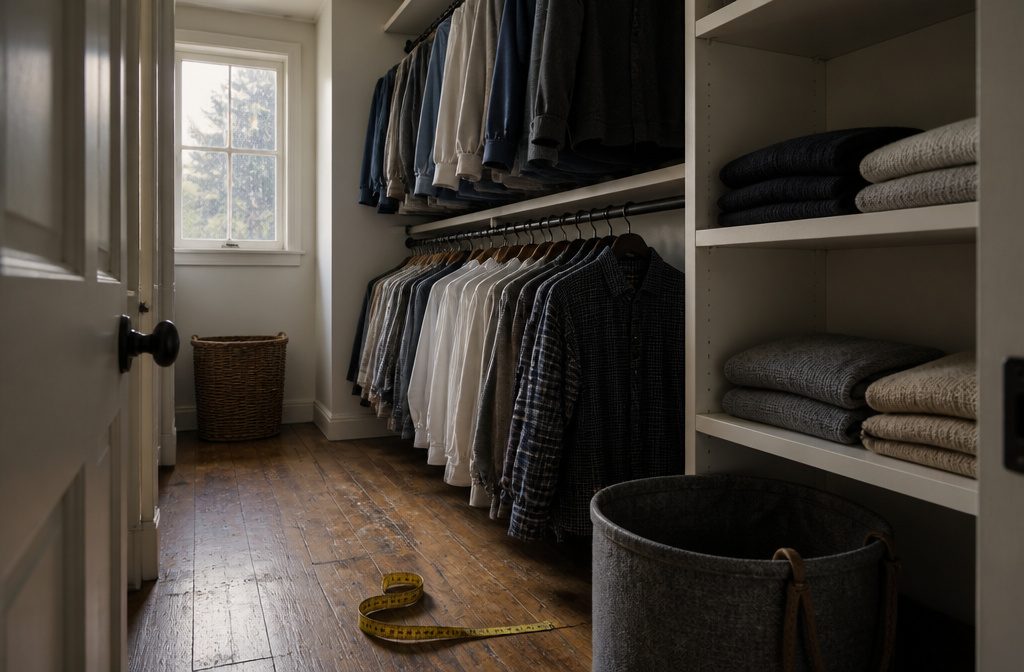
A finished walk-in closet costs $250 to $20,000 depending on whether you build it yourself or hire a designer, takes a weekend to several weeks, and most people skip the inventory step that determines whether their layout actually fits what they own.
Measure your space first, then count what hangs versus what folds: that split decides whether you need double rods at 84 and 42 inches or more shelf depth for sweaters and folded basics.
1. Measure your space and inventory your clothes
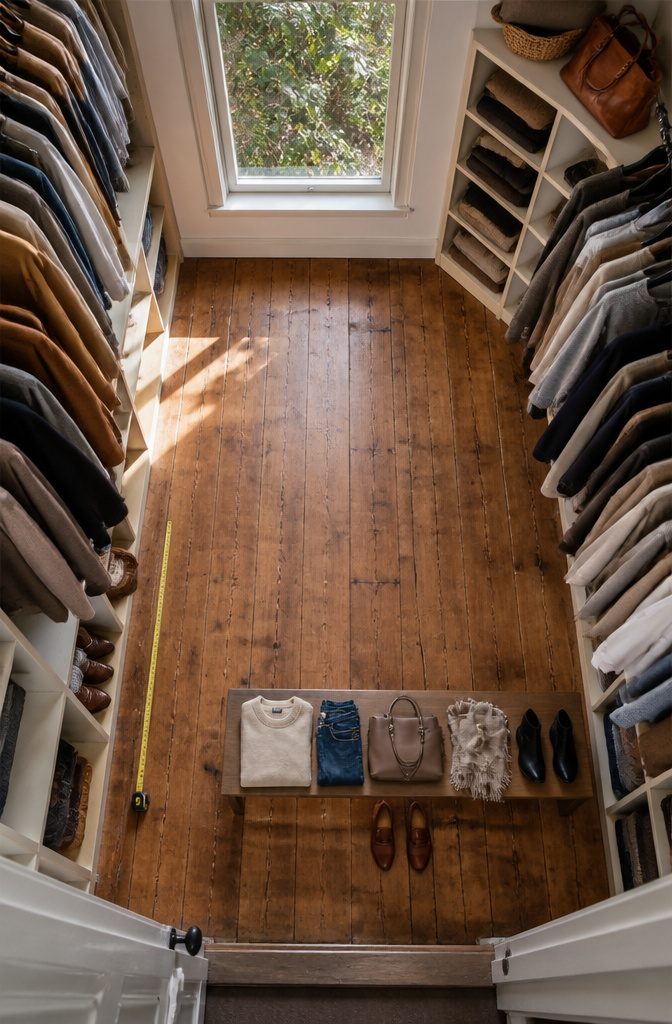
Start by measuring the room itself. Note the dimensions of each wall, and mark where doors, windows, and any architectural quirks sit.
You’ll need at least 3 feet of clear walkway down the center for comfortable movement, 4 feet if you’re planning a bench or ottoman, and 5 feet if wheelchair access matters.
Door clearance takes 30–36 inches of space, or 60 inches if both doors swing open at once.
Next, pull everything from your closet and sort it by storage type. Hanging items need 24 inches of depth to fit hangers properly; add 4 inches more if you want sliding doors or pull-out racks.
Shoes take 12–15 inches of shelf depth for standard pairs, 18 inches for boots. Drawers require 24 inches of depth plus 30 inches of clearance in front so they can extend fully.
Make a list of what you own: longer pieces versus shorter ones, shoes versus bags, anything that needs to stay hidden or visible. This inventory is what drives every other choice you make.
If your space is tight, you’re prioritizing. Owners on Reddit mention that customizable systems like Elfa let you add exactly what you need without waste.
A small closet might hold hanging space on one wall with cubbies or shelving below; a generous one opens up room for an island or dressing zone.
Either way, corners that seem dead can hold rotating racks or angled shelving if you claim them back intentionally.

Expandable Width Closet Organizer: The overall width adjusts from 72.8" to 95.28" to fit different wall spaces. The two side hanging rods offer adjustable extension ranges of 17.32"-27.56" and 31.50"-41.73", and can be installed on either side for a more flexible layout in bedrooms and walk-in closets.

Simply Modern, Seamless Fit: The CUSTOS Collection pairs crisp right‑angled lines with handy open storage to create a minimalist look that fits easily into your home. Complete your space with matching storage furniture for a cohesive look

【Spacious Storage Capacity Closet Set】This modular closet system combines 1 closet cabinet with 4 sturdy rods and 2 tall storage towers. It offers generous space for hanging long or short garments, organizing folded clothes, bags, and shoes—keeping everything neat and within reach. It functions as a wardrobe, garment rack, or open storage system, meeting the demands of various lifestyles.
2. Decide what functions matter most to you
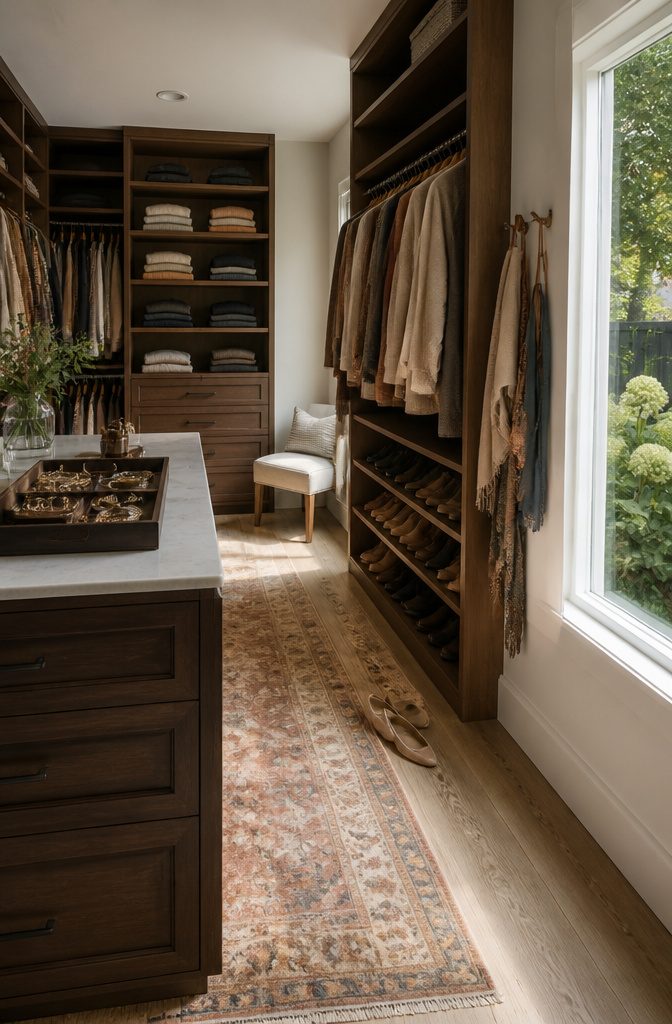
Start by listing what you actually use.
How many shirts hang in your closet now? How many pairs of shoes?
Be honest about the scarves you bought but never wear. This count becomes the foundation for every choice that follows.
Next, name what matters most for your daily routine.
Do you need a place to try on outfits, or just a way to see what you own without digging? Are built-in shoe racks non-negotiable, or would pull-out storage work?
Do you want accessories visible on hooks, or hidden away? Do you have enough long dresses to justify hanging rods at full height, or do you have mostly shorter pieces?
Connect these priorities to your actual space. A room 6 to 7 feet wide works well with storage on two parallel walls and a comfortable aisle between them.
Smaller spaces might need everything on one wall, which means choosing between hanging room and drawer depth. Larger rooms open up possibilities: a central island for jewelry, a dressing area with seating, a vanity if you have the wall space.
The layout that makes sense is the one where your morning routine flows without reaching or squeezing past obstacles.

Stepless Adjustment Closet Rod: The upgraded Supforce closet rod features the stepless adjustment design, allows you to precisely adjust according to your closet's specific size; Without any size gaps, No manual cutting is required.

18-Level Push-Button Adjustment: 18 preset positions with 0.6-inch increments provide precise sizing for this closet rod. The button-lock mechanism stays secure over time and provides added stability compared to traditional twist-lock closet poles

Stepless Adjustment Closet Rod: The upgraded Supforce closet rod features the stepless adjustment design, allows you to precisely adjust according to your closet's specific size; Without any size gaps, No manual cutting is required.
3. Plan your storage zones
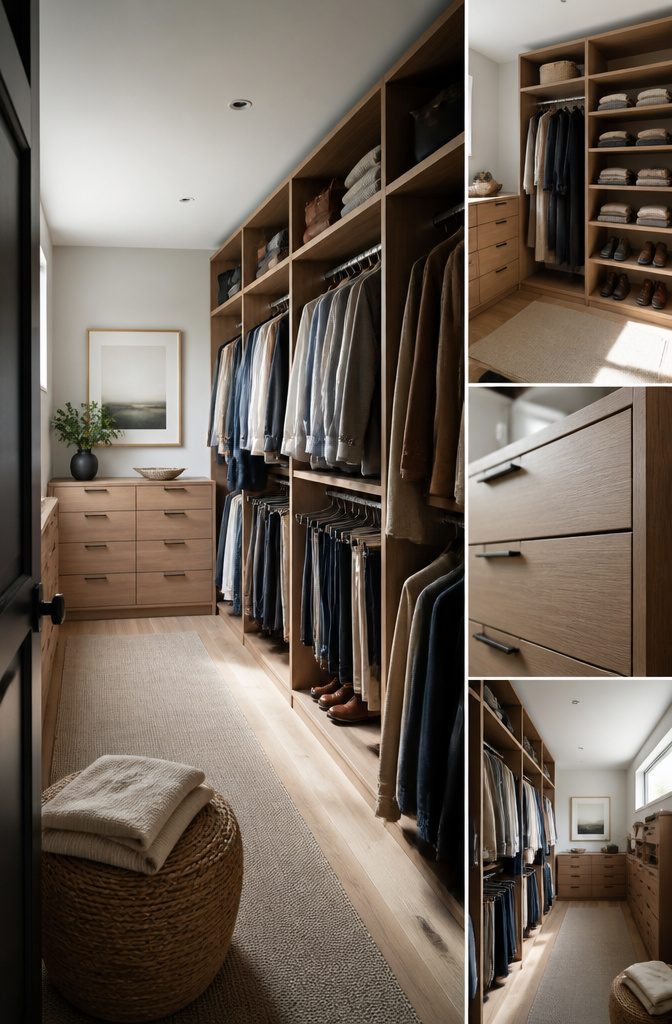
The layout you choose determines how easily you’ll find and reach what you wear. Divide your closet into zones based on garment type and frequency of use.
For hanging clothes, install double rods at 84 inches and 42 inches to fit shirts, jackets, and trousers side by side without crowding.
Reserve a full 72 inches of clearance for long items like dresses and coats. Hanging space needs 24 inches of depth on each side to fit hangers properly, plus 4 inches more if you’re adding sliding doors.
Everyday clothes belong at arm’s reach.
Move seasonal items and pieces you wear less often to upper shelves or the back wall. Store sweaters on shelves spaced 14 inches apart to avoid creasing, accessories on 10-inch shelves, and bags on 16-inch shelves.
Shoe storage depends on what you own. Standard shoes need shelves 12–15 inches deep; boots require 18 inches.
Drawers should be 24 inches deep with 30 inches of clearance in front so they open fully. Keep your main walkway at least 3 feet wide, wider if you want room to move freely while getting dressed.
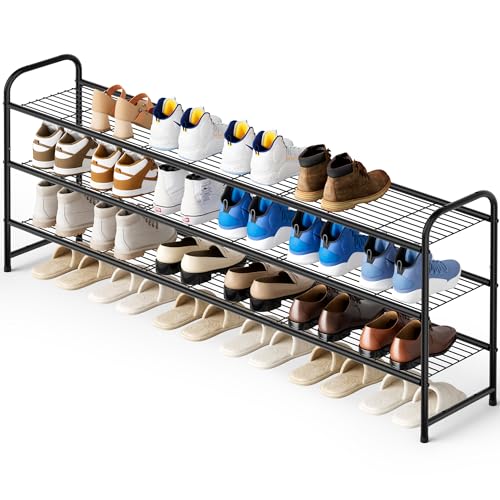
3 Tier: 【Holds 24 Pairs of Shoes】 Longer 3 tiers shoe organizer for closet, can store 24 pairs of shoes, easy to hold up men's tennis shoes, sneakers, women boots, etc. The extra bottom space is enough to place daily wear flats, slippers. The large capacity shoe rack for entryway size is: 43"W x 11.4"D x 24.4"H

SPACIOUS STORAGE: This shoe rack offers plenty of space to accommodate your everyday footwear, including sneakers, heels, and slippers. It's designed to meet all your storage needs efficiently.

SPACIOUS STORAGE: Measuring 39.0" x 11.8" x 23.2", this extended 3-tier shoes rack provides extra-wide storage space to hold more shoes. Its bottom tier offers additional room to accommodate flat shoes or slippers, enabling you to utilize every inch of the rack.This shoe rack can hold 4 pairs of men's or 5 pairs of women's shoes per tier.
4. Add lighting, mirrors, and dressing features
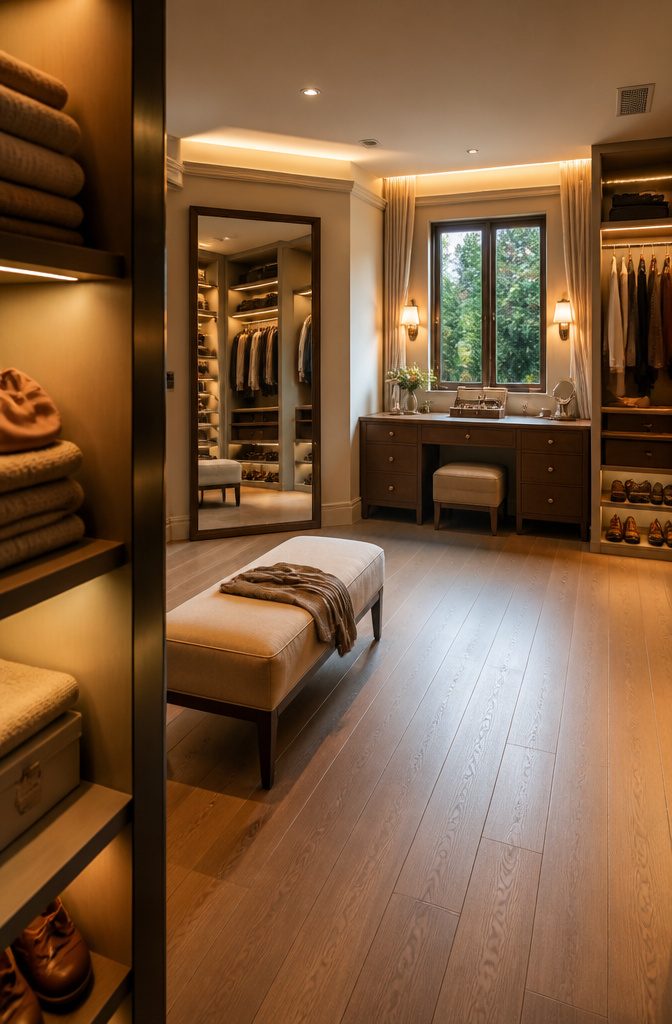
Lighting sets the tone and function of your walk-in closet more than most people realize.
Without it, you’re hunting for clothes in shadows. LED strips along hanging rods highlight your wardrobe without casting harsh shadows, and motion-activated lights mean you’ll never fumble in the dark.
Overhead ambient lighting brightens the whole space; task lighting focused on a jewelry display or accessory area keeps those details sharp and organized.
If you’re adding a dressing table, adjustable LED sconces give you control over the light while you get ready.
A full-length mirror is non-negotiable.
It lets you see outfits head-to-toe and reflects available light around the room. If your closet is large enough, a dedicated dressing area makes the space genuinely useful.
You’ll need at least 4 by 6 feet to try on clothes comfortably. Add a small bench or ottoman if you can spare the room; allow 36 inches of clearance on all sides so you’re not squeezing past furniture.
A vanity with seating requires 30 by 48 inches minimum and pairs well with task lighting, creating a grooming zone you’ll actually use instead of standing at a bathroom counter.

Stackable Storage Drawers: These storage containers are stackable, vertical storage will save a lot of space,just use the rubber pads which coming with the box
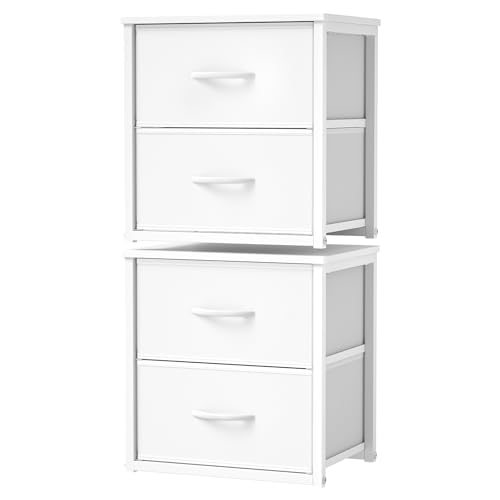
Stackable Design for Space Saving - Stack vertically to save space or combine freely as needed. 4 drawers offer ample storage for underwear, socks, pajamas, and small accessories, keeping your closet tidy and maximizing space.

【Wardrobe Island】This walk-in closet / closet island with drawers glass top features a glass tabletop and brown panels, plus two transparent top drawers for easy access to jewelry, watches, bags, and accessories—turning your armoire wardrobe closet into the perfect jewelry armoire.
5. Choose materials and finishes
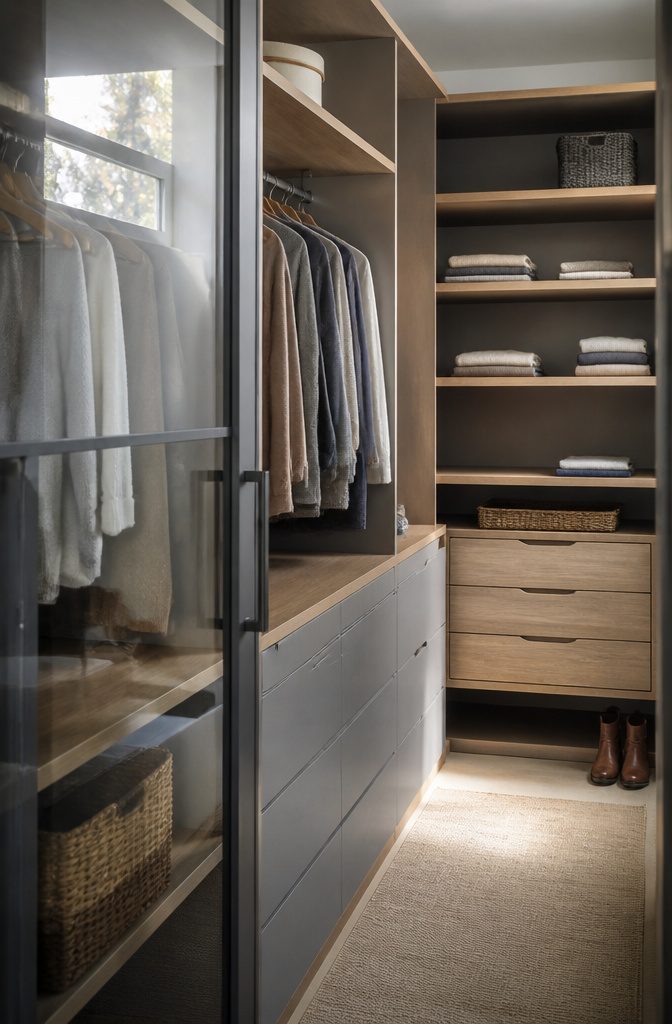
The materials you choose will determine whether your closet stands up to daily use and adapts as your needs change.
Matt lacquered wood, solid wood, glass, melamine, and lacquered metal each offer different durability and feel, so match them to both your style and how you actually live.
Solid wood ages well and maintains its strength over time, while melamine and laminate can chip or swell; if longevity matters to you, wood is worth the difference.
Glass paired with aluminum keeps things feeling open and lightweight, a smart choice if your closet lacks natural light.
The system itself matters as much as the material.
Wire shelves are fixed once installed and leave wall damage if you move them, but adjustable shelving lets you shift your layout as your wardrobe changes: more hanging space one year, more folded storage the next, or drawers added later without replacing the whole system.
Think about where your needs might be in four or five years.
Your career might shift, your style might change, your family might grow. A closet designed around today’s wardrobe alone becomes a problem when tomorrow’s does not fit the same way.

【Modern Bedroom Island】Say goodbye to cluttered closet spaces. LIVAUVEAD armoires island combines white panels with transparent glass, creates a stylish and functional space. The glass panels and easy-to-reach display shelves, perfect for displaying and organizing your accessories or cosmetics, making it easy to match your everyday outfit.

Classic Style - This armoire island with bench is in classic style. With carved rectangular patterns on pure white surface, it looks stylish and graceful. Matching with matte black handles, our storage island features timeless elegance, adding a touch of aesthetic to the room. (Color of cushion cover may vary slightly in different lights and angles.)
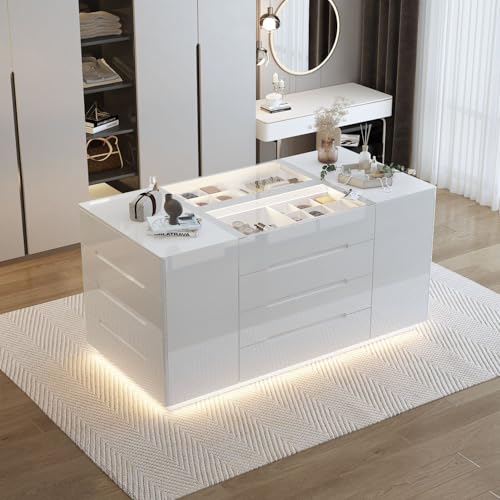
Modern Style - This armoire island is designed in modern style. With clean glass and pure white surface, it looks exquisite and elegant. Matching with no-handle design, our storage island features minimalist sense, adding a touch of stylish aesthetic to the room. Features warm lights on the bottom to create stunning atomsphere
6. Build or install your storage system
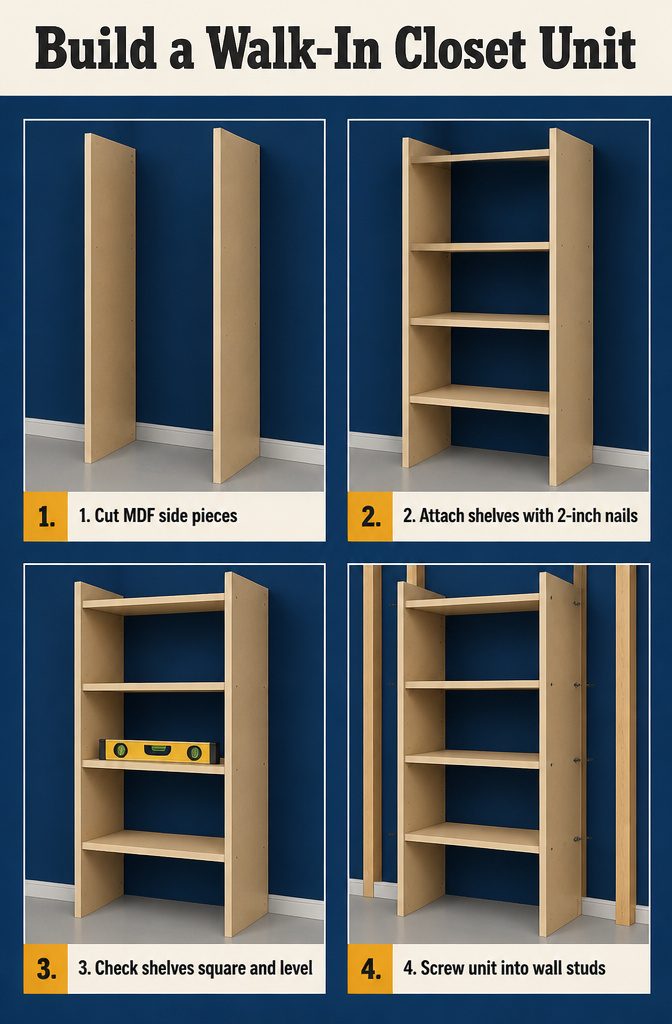
- Cut your side pieces from 4-by-8-by-3/4-inch MDF sheets to the height of your ceiling minus 4 inches, making them about 24 inches wide so clothes hang freely without crowding.
- Cut shelves to match the width of your side pieces and whatever length you want the unit to be, then attach them with 2-inch nails driven in from the outside of the long sides.
- Check that each shelf sits square and level as you fasten it, using a level to catch any drift before the nails set.
- Screw the entire unit into wall studs for stability so it can bear the weight of a full closet without pulling away.
A basic built-in using this method runs around $450 in materials.
If you’d rather order a professional system, submit your dimensions and storage wish list to a closet designer; they’ll send back components ready to install, typically arriving in 31 or more boxes.
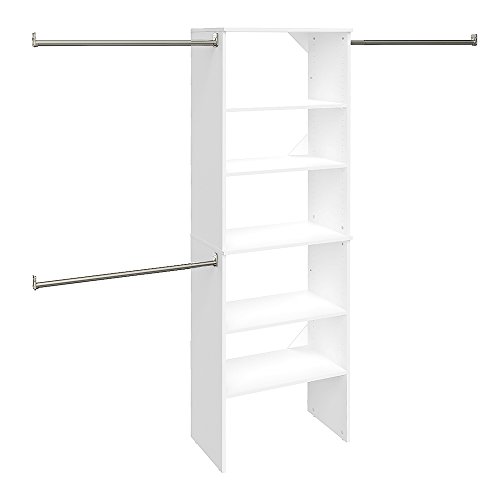
ALL-IN-ONE CLOSET ORGANIZER: Wood closet organizer system kit includes tower, (3) expandable rods, (5) interior closet shelving (2 shelves are adjustable)

【Closet System with 4 Drawers】This wooden closet system includes 4 durable wooden drawers for maximizing private storage. Unlike flimsy fabric drawers, ours are easy to clean and built to last. Ideal for personal belongings, underwear or socks.. Smooth-gliding metal sliders and sleek handles make opening effortless. Ideal for reach-in closets, walk-in closets, office & more.

7. Finish and organize your closet
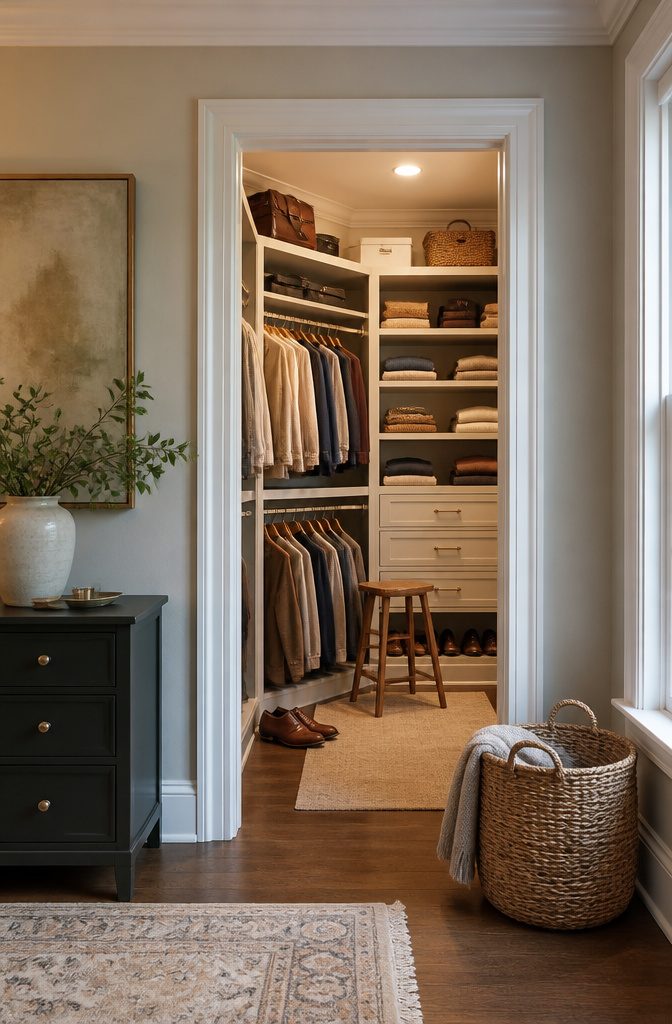
Paint, trim, and lighting set the stage; organization and style make it functional.
Start with the bones: baseboards, crown molding, and trim around the doorway create a finished room rather than a storage space. Paint the walls and shelving a single color for cohesion, or use wallpaper to add visual interest.
Install lighting that reaches every corner with overhead fixtures plus task lighting on rods or shelves, so no dark zones swallow your clothes. Add a mirror if space allows; it doubles the sense of openness and helps with outfit planning.
Organize by category first: keep shirts together, sweaters together, jackets in their own section. Within each category, sort by color for visual calm and faster mornings.
Keep your everyday essentials at eye level and arm’s reach. This is your active zone for the clothes you wear now.
Pull harder-to-reach areas and the floor for shoes, seasonal pieces, and items you wear less often. High shelves hold suitcases and storage bins; labeled containers keep off-season decor and special-occasion clothes tidy and easy to find.
Finish with touches that match your style. Soft-close drawers and quality hardware make the whole space feel finished, whether you choose brass for timeless appeal or matte black for modern edge.
Pretty baskets and coordinated bins keep smaller items organized while adding visual charm. A vintage stool serves double duty: reaching high shelves and completing a dressing room feel rather than a utility closet.

18-Level Push-Button Adjustment: 18 preset positions with 0.6-inch increments provide precise sizing for this closet rod. The button-lock mechanism stays secure over time and provides added stability compared to traditional twist-lock closet poles

This closet rod makes full use of the unused space beneath the hangers.
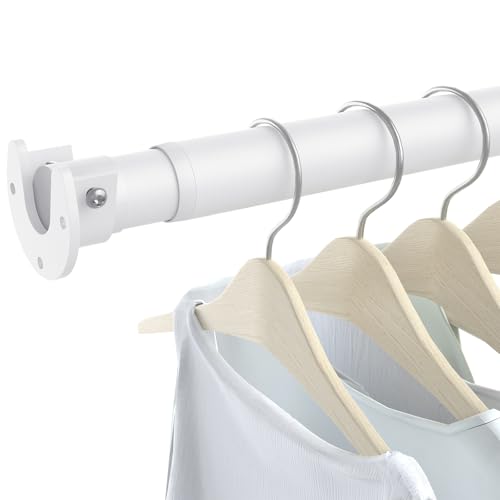
Stepless Adjustable Closet Rod: Closet rods feature a stepless design for precise adjustments without cutting. The stepless design means you won't be stuck with preset holes, and you can absolutely adjust the length of the closet hanging rod to fit your space.
Dimensions for common features
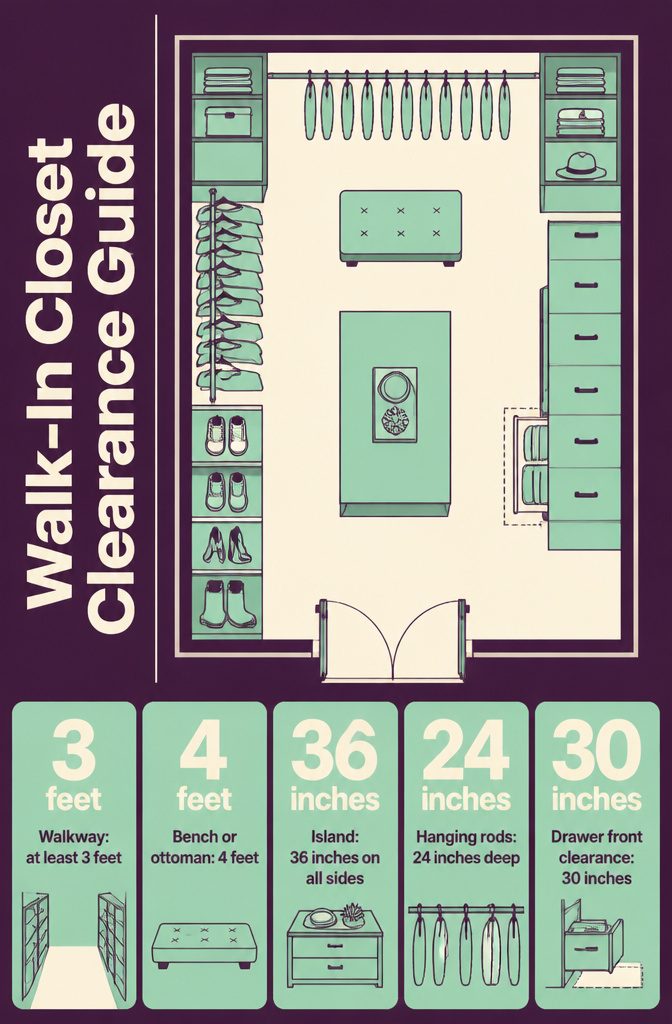
A comfortable walk-in starts with clearances that let you move without bumping elbows or doors. The central pathway needs at least 3 feet of walkway, or 4 feet if you’re adding a bench or ottoman.
Double doors require 60 inches when both swing open; single doors take 30–36 inches. If you’re planning an island for folding or display, leave 36 inches of clearance on all sides so it doesn’t become an obstacle.
Hanging rods need 24 inches of depth to accommodate standard hangers.
Drawers run 24 inches deep as well, but you’ll need 30 inches of clear space in front so they open fully without jamming your clothes. A dressing area to try on outfits comfortably takes a 4 by 6 foot zone.
| Feature | Depth | Notes |
|---|---|---|
| Hanging space | 24 inches | Standard hangers require this minimum |
| Shoe shelves (standard) | 12–15 inches | Boots need 18 inches |
| Vanity with seating | 30 by 48 inches | Tight quarters for makeup and accessories |
| Drawer extension | 30 inches in front | Plus 24-inch drawer depth |
Corners often go unused. Rotating racks or angled shelving claim that dead space back instead of leaving it empty.

【FLEXIBLE & VERSATILE】The shelf can be used flexibly—stand it upright; flip it over to gain additional storage space under the shelf; stack 2 shelves on top of each other to make use of vertical space

ORGANIZED AND BEAUTIFUL - Make your shoes neat and organized with this rotating shoe rack tower lazy susan; The space saving design can hold up many shoes or bags in a compact space; SIZE: 23.2"W x 23.2"D x 63"H

Expandable to Fit Your Space - This expandable shoe rack extends from 33.3" to 47.5" (8.8"D x 16.9"H) to fit various spaces while holding 12–18 pairs of shoes. Have limited space? Choose our shorter version (ASIN: B0C7TRWVN4), adjustable from 17.7" to 32.3".
DIY versus professional design
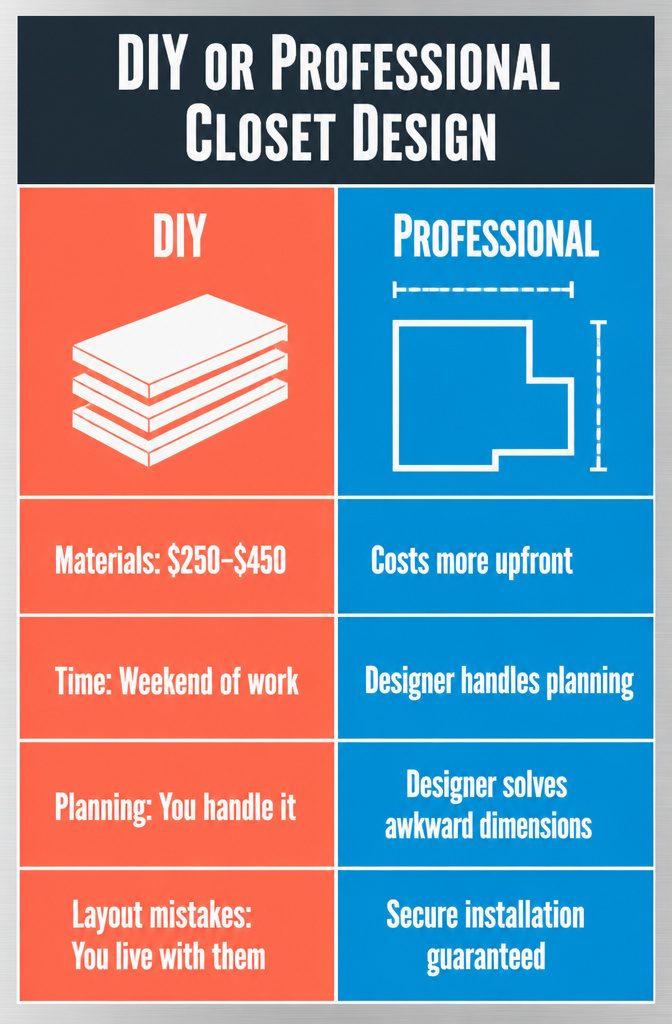
Building a walk-in closet yourself with MDF shelving and basic framing costs $250–$450 in materials and takes a weekend of work. This route works well for renters willing to take the time or owners who enjoy construction.
The result looks polished if you take care with measurements and finishes, though you’ll handle all the planning yourself and live with any layout mistakes you make.
Professional systems cost more upfront but handle the thinking for you. A designer can solve awkward dimensions or unusual angles that throw off standard builds.
Many services let you use their design tool alone or hand the layout to a professional at no extra charge. You get secure installations guaranteed, which matters; poor framing leads to sagging rods and shelving that won’t hold weight.
The full range runs from $250 for basic upgrades to over $20,000 for high-end customization. Average cost hovers around $2,063.
For most renters and first-time owners, DIY built-ins hit the right spot between cost and polish. Professional design makes sense if your space is tight or shaped in a way that defeats standard sizing.

【Reinforced Storage That Builds Up, Not Out】Create more room without taking over your floor space. These closet organizers and storage baskets stack vertically to turn unused shelf height into practical closet storage. The reinforced structure helps each closet organizer stay neatly in shape while organizing shirts, pants, towels, accessories and lightweight daily essentials.
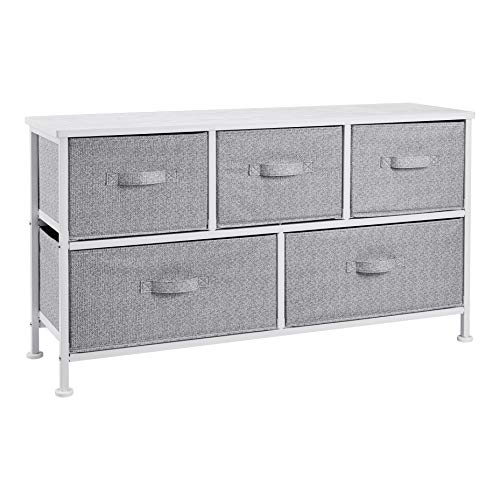
STURDY CONSTRUCTION: Amazon Basics storage drawer unit features a sturdy steel frame with laminated wood top & adjustable-height plastic feet to reduce wobbling & floor damage

CLOSET ORGANIZERS AND STORAGE: This 21.3-inch closet system pairs 4 smooth-gliding wood drawers with 3 open shelves for folded clothes, bags, and daily essentials in narrow spaces.
Storage types and what they hold
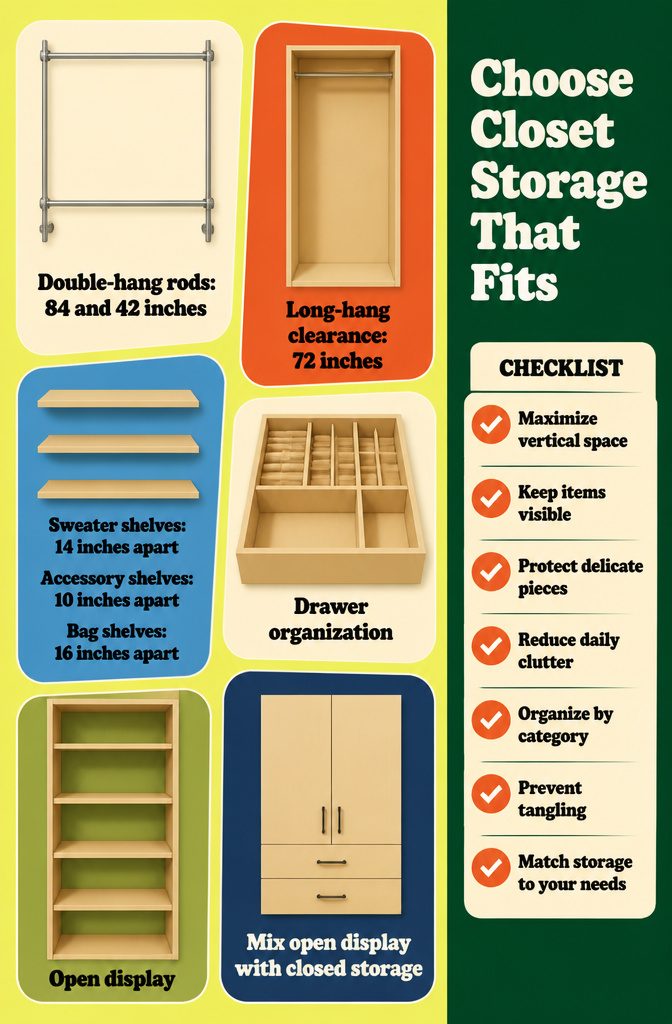
Each storage type holds a specific category well. Double-hang rods at 84 inches and lower rods at 42 inches work for shirts, jackets, and trousers; long-hang sections need 72 inches of clearance for dresses and coats.
Adjustable shelves let you set spacing to match what you own: 14 inches apart for folded sweaters, 10 inches for accessories, 16 inches for bags.
Drawers keep small items from scattering:
- Velvet-lined jewelry drawers protect necklaces, earrings, and rings while preventing tangles
- Dividers in sock and undergarment drawers save time on busy mornings
- Compartments for watches, sunglasses, and wallets group items you reach for daily
Open shelves display shoes, bags, and accessories at a glance and let you see what you own, but they show every wrinkle and dust.
Closed storage hides clutter and protects delicate pieces. The most useful closets mix both: open display for pieces you wear constantly or want visible, closed cabinets for seasonal clothes and items that benefit from protection.
For accessories like ties, belts, and scarves, dedicated racks or hooks prevent tangling better than stuffing them into drawers.

[Closet Island with 12 Drawers] - With 12 drawers and a storage compartment providing you with ample storage space, this closet island allows you to storage your clothes, cosmetics and jewelry. Product dimensions: 27.6"D x 61.9"W x 32.6"H. Drawer size: 11.8"D x 21"W x 4.6/7.7"H

[Durable & Sturdy] Crafted from high-quality MDF, particle board and thick tempered glass, this island is built to last. Its sturdy construction ensures long-term durability and reliable support for daily use.This multifunctional island is designed to fit seamlessly into a variety of settings — from walk-in closets and fitting rooms to living rooms, offices, and even retail spaces as a stylish display unit. Its versatile design brings both function and elegance wherever it's placed.

【Modern Bedroom Island】Say goodbye to cluttered closet spaces. LIVAUVEAD armoires island combines white panels with transparent glass, creates a stylish and functional space. The glass panels and easy-to-reach display shelves, perfect for displaying and organizing your accessories or cosmetics, making it easy to match your everyday outfit.
Make your closet work for your space and wardrobe
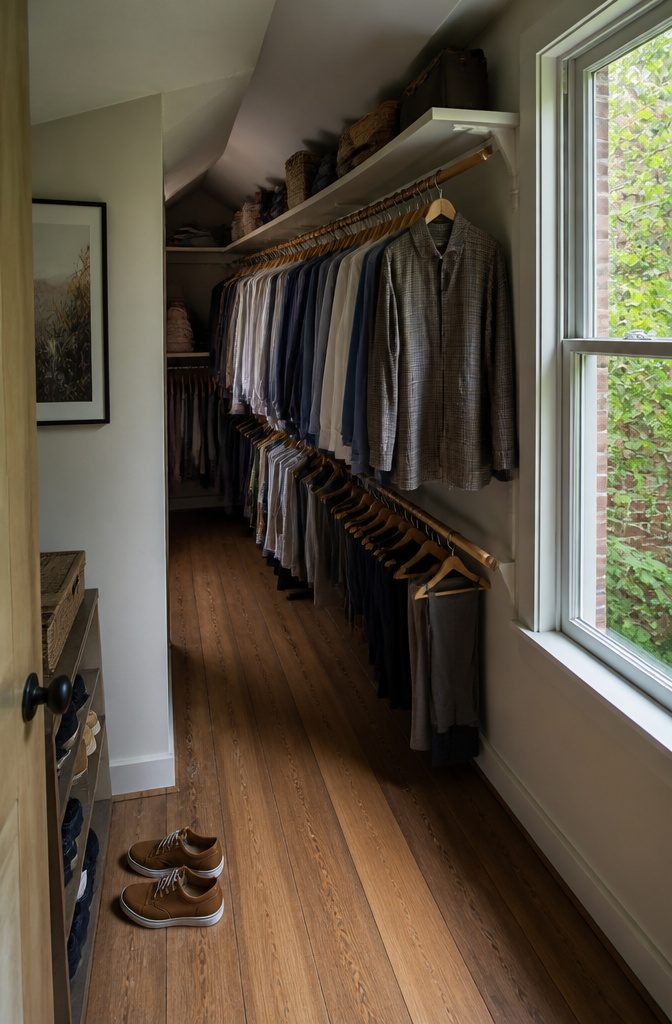
Start by measuring your space and noting any obstacles: windows, doors, angled ceilings, and how much floor space the door swing will claim.
A narrow room with a window on one side calls for a different layout than a square space with open walls.
Once you know what you’re working with, match your storage types to what actually hangs in your closet versus what you fold.
Someone with mostly hanging pieces needs more rod length and fewer shelves, while someone who folds everything needs the opposite equation.
Organize by frequency of use. Keep everyday items like business attire and casual wear within arm’s reach near the entrance, where you can grab them without hunting.
Rotate seasonal pieces and formal wear into a secondary zone in the middle section, and push rarely worn items to the back or high shelves where they take up minimal daily real estate.
Double rods for shirts and skirts let you squeeze more into the vertical space without making things hard to see or reach.
Built-in shelves that hold folded everyday clothes can use as little as 12 inches of floor space while still storing a full rotation of jeans, sweaters, and t-shirts, leaving the rest of your walkway clear.
Frequently Asked Questions
what is the smallest size for a walk-in closet?
A 4-foot-wide square is the practical minimum, giving you roughly 2 feet for a hanging rod and enough standing room to move through the space.
Anything narrower makes it hard to hang clothes and function as an actual closet rather than a storage slot.
how much does a walk-in closet design typically cost?
The average runs around $2,063, but the range spans from $250 for basic upgrades to over $20,000 for high-end custom work.
DIY built-ins with MDF shelving fall on the lower end; professional systems cost more upfront but handle the design thinking and installation guarantees.
how often should you declutter your walk-in closet?
Aim for twice a year.
Pull pieces you no longer wear or that no longer fit, and recycle anything too damaged to donate. A closet that stays clutter-free keeps everything visible and functional instead of becoming a pile of clothes you’ve outgrown.
what are the must-have features in a walk-in closet?
Hanging rods, shelves, and a mirror form the core, with task lighting to see what you own.
Add shoe storage, drawers for small items, and hooks for accessories based on what actually fills your wardrobe. The specific mix depends on whether you hang most of your clothes or fold them.
how can you make the most of a small walk-in closet?
Use every inch of vertical space up to the ceiling with double-hang rods and tall shelving.
Add wall hooks and floating shelves for bags and scarves, store off-season items in under-bed containers elsewhere, and keep everyday pieces at arm’s reach so you’re not hunting through layers. Declutter twice a year so nothing wastes valuable real estate.