
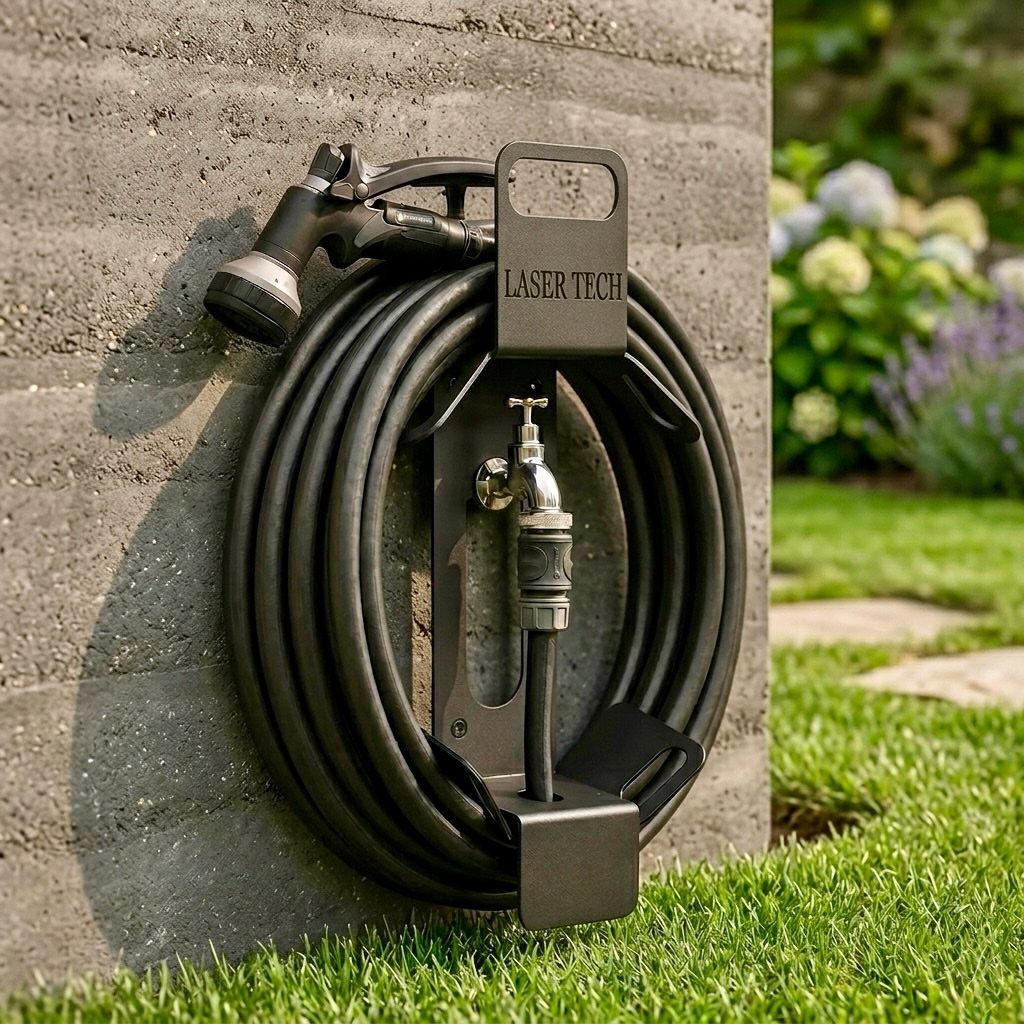
These 8 ideas run from a zip-tied plastic bottle to a freestanding steel reel, and the one that fits your yard comes down to whether your spigot sits right where you water or halfway across the property.
1. Wall-Mounted Hose Holder
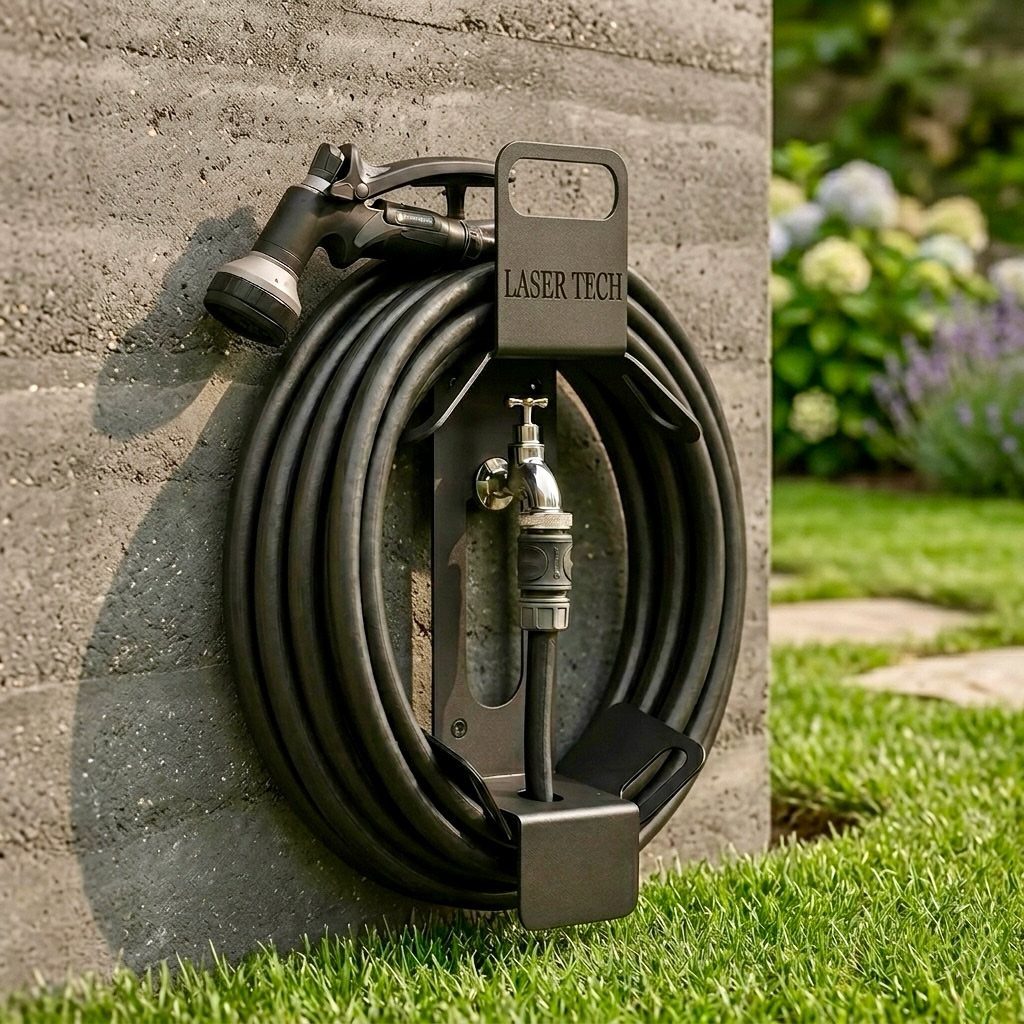
A wall-mounted bracket keeps the hose off the ground and right where you need it, which matters more than it sounds when you are walking through with a full watering can.
I look for solid anchors if the wall is concrete or brick, since a full hose gets heavy fast once it is coiled.
I would place the bracket beside the spigot: coil, connect, and move on without dragging hose across the lawn.
Check that the bracket depth matches your hose diameter when coiled. Too shallow and the coil slides; too deep and you are reaching awkwardly every time.

Star-Designed Hose Holder Durability- Gauge steel construction with rust-resistant powder coating endures harsh weather. Built to last through sun, rain, and snow without fading or corrosion.

【WALL MOUNT HOSE HOLDER】Durable powder coat finish is smooth and weather resistant. This well made hose holder is durable for years of use. Perfect for outdoor use. It helps keep your yard more cleaner and neater.
2. Decorative Planter Hose Storage
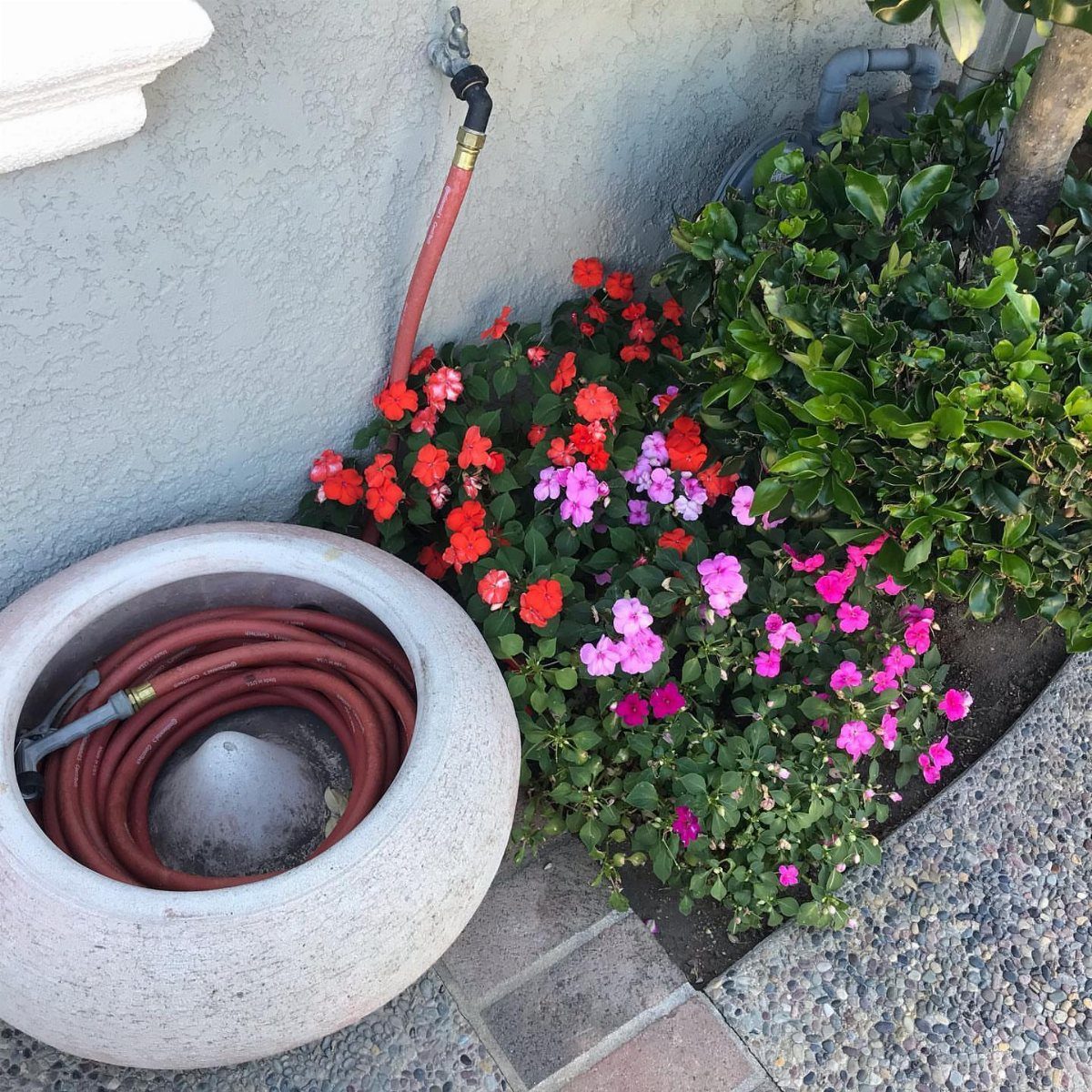
A planter that hides the hose in plain sight suits a small yard where every object is visible from the patio. I like this best when the pot is already part of the bed, not shoehorned in as an afterthought.
The stone finish reads garden feature rather than storage solution, which is exactly what I want when the hose has to live in view.
Size matters more than style here.
A pot too small for the coil fights you every time you put the hose away; go larger than you think. Drainage holes at the bottom keep water from pooling where the hose sits.

Strategically placed side hole is a convenient feature that allows you to effortlessly connect your hose to an outdoor faucet ensuring a hassle-free watering experience

Attractive 5-gallon pot which keeps your expandable garden hose out of sight; Features a subtle elegant exterior design that can blend seamlessly into your garden

Garden Storage Box with Dual Function Design: this garden storage box combines planting space with hose storage in one unit; The lower section features a compartment designed to organize your garden hose neatly; This dual purpose design saves outdoor space by eliminating separate storage solutions; The structure provides decorative planting area and concealed storage together
3. Hose Storage Box
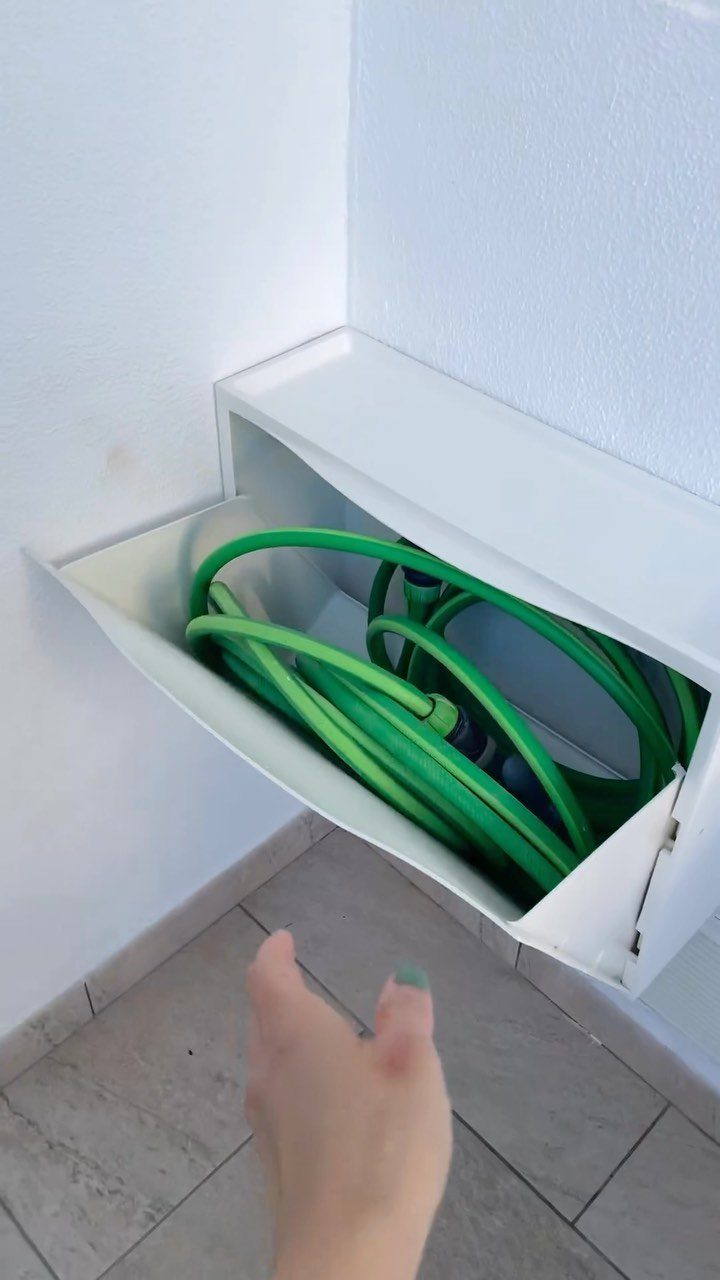
A tilt-out cabinet protects the hose from sun and weather, which extends its life more than most people realize.
UV breaks down rubber and vinyl over a season or two of direct exposure, and a cracked hose costs more to replace than a simple box.
The wall-mounted version keeps the floor clear, which I would pick for a narrow side yard or anywhere the hose lives near a doorway.
Check the interior depth against your coil.

[Durable Construction]: AQUAZILLA Water Metal hose reel is made with heavy duty Galvanized steel sheet, which make unit suit for tough outdoor using without any rust issue. The super durable structure allow one person sit on its top

150ft 5/8" Large Capacity & Effortless Crank Operation - Designed to hold up to 150ft of 5/8" garden hose (hose not included, 6ft lead-in hose included), this water hose reel box offers 20% more capacity than standard models. The smooth crank handle and automatic hose guide system prevent tangling, making hose retraction quick and hassle-free.

100FT CAPACITY: Designed to neatly store and conceal up to 100 feet of standard 5/8-inch garden hose. Check Your Hose Diameter Before Buying (Product Dimensions: 15.5 x 22 x 16 inches)
4. Hose Management Cart
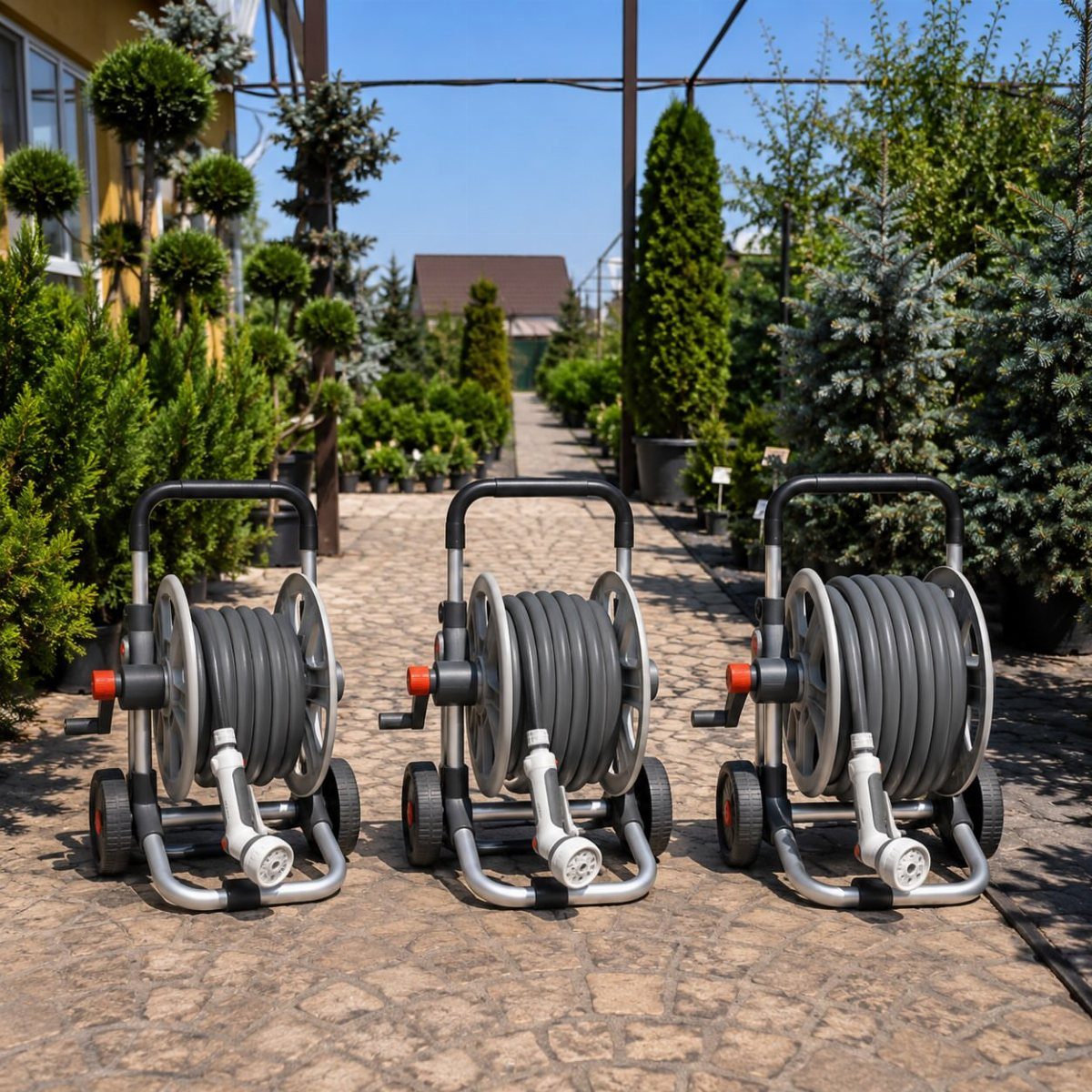
A wheeled cart is what I suggest when the hose has to travel.
3 identical units lined up tells me these see daily use in a commercial setting, but the same logic holds at home if your spigot is far from the beds that need water.
The handle height matters for comfort on longer pulls; I would test that before buying, since a low grip wears on your back over a season.
Weight empty is the figure to check. A heavy cart stays where you put it, but you are pushing that weight every time you move it.

【Zero-Leak Sealed System】Pre-installed integrated brass connector with precision seals, providing a long-lasting solution to leaks and ensuring stability and longevity. T piece extension bar can prevent the hose from turning randomly. Whether you're watering, car-washing, or pet-bathing, enjoy steady, splash-free flow every time

125 ft Hose Large Capacity: Tame your unruly garden hose with our easy-to-use hose storage cart. Holding up to 125 Feet of 5/8 inch hose (Hose Not Included), it keeps everything neatly organized. With durable brass fitting and a 3.9ft leader hose extends your reach, and the handy storage basket keeps essential gardening tools close by. Watering is now a breeze!

【125 Ft Hose Large Capacity】 This garden hose reel cart stores a full 125 feet of standard 5/8-inch hose(Hose Not Included), providing extensive reach for watering distant garden beds, washing vehicles, or cleaning patios. Its high capacity eliminates the need for multiple hose connections and reduces time spent moving water sources. The organized storage prevents tangles and kinks, ensuring smooth deployment and retraction for efficient yard maintenance across medium to large properties.
5. DIY Fence Post Hose Holder
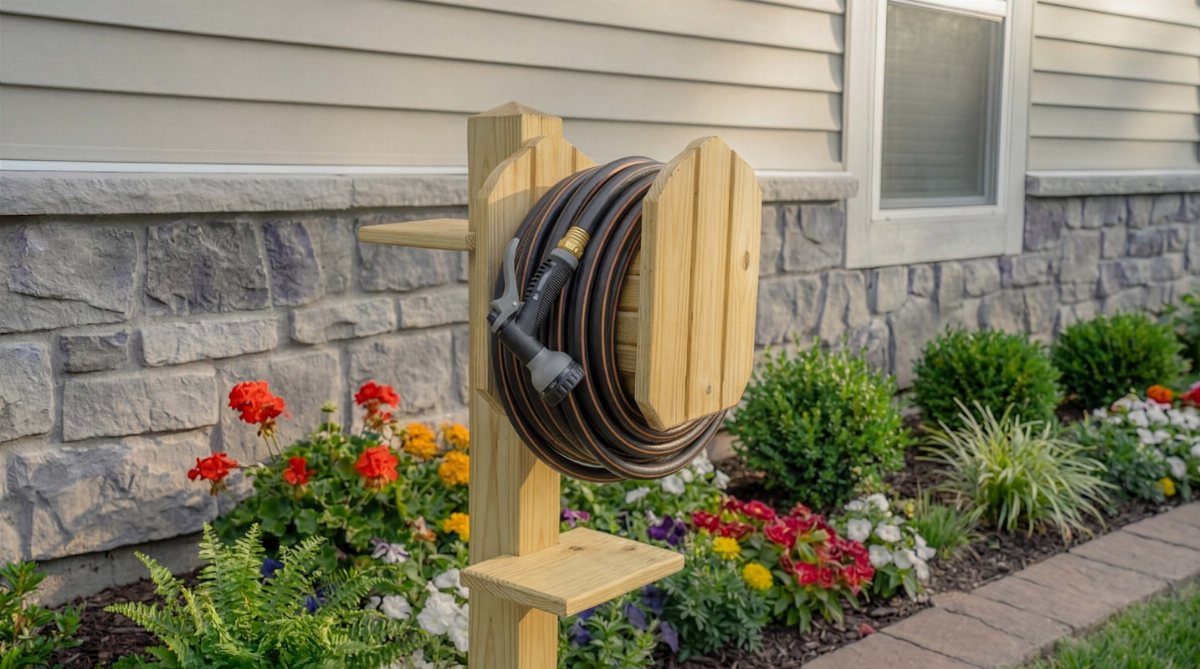
Building a holder around an existing fence post uses structure you already have, which keeps cost and footprint both low.
Shelves above and below the coil are a detail I would copy for gloves and nozzles that otherwise wander off. Cedar or pressure-treated 4×4 stock handles weather without fuss; I would avoid pine unless you are painting it.
The post itself carries the load, so the bracketry can stay simple. Check plumb before you attach anything, since a tilted coil slides downhill and looks wrong from across the yard.

【Premium Materials】Garden hose holder wall mount made of tough metal, rustproof and thickened, durability and last long. Ideal choice for outdoor hose storage.

No Damage to The Wall: Traditional retractable garden hose reel requires installation on the wall, it will cause a lot of damage to the wall surface. This freestanding holder is a nice way to replace the wall, completely isolating it from the wall, without worrying about damage to the wall due to the installation

PROTECT YOUR HOME SIDING & WALLS: Say goodbye to drilling holes into your expensive stucco, vinyl siding, or brick walls. This freestanding solution allows you to move your water source away from the house, protecting your home's exterior from potential water damage, mold, and structural stress caused by heavy wall-mounted reels
6. Garden Shelving with Hose Reel
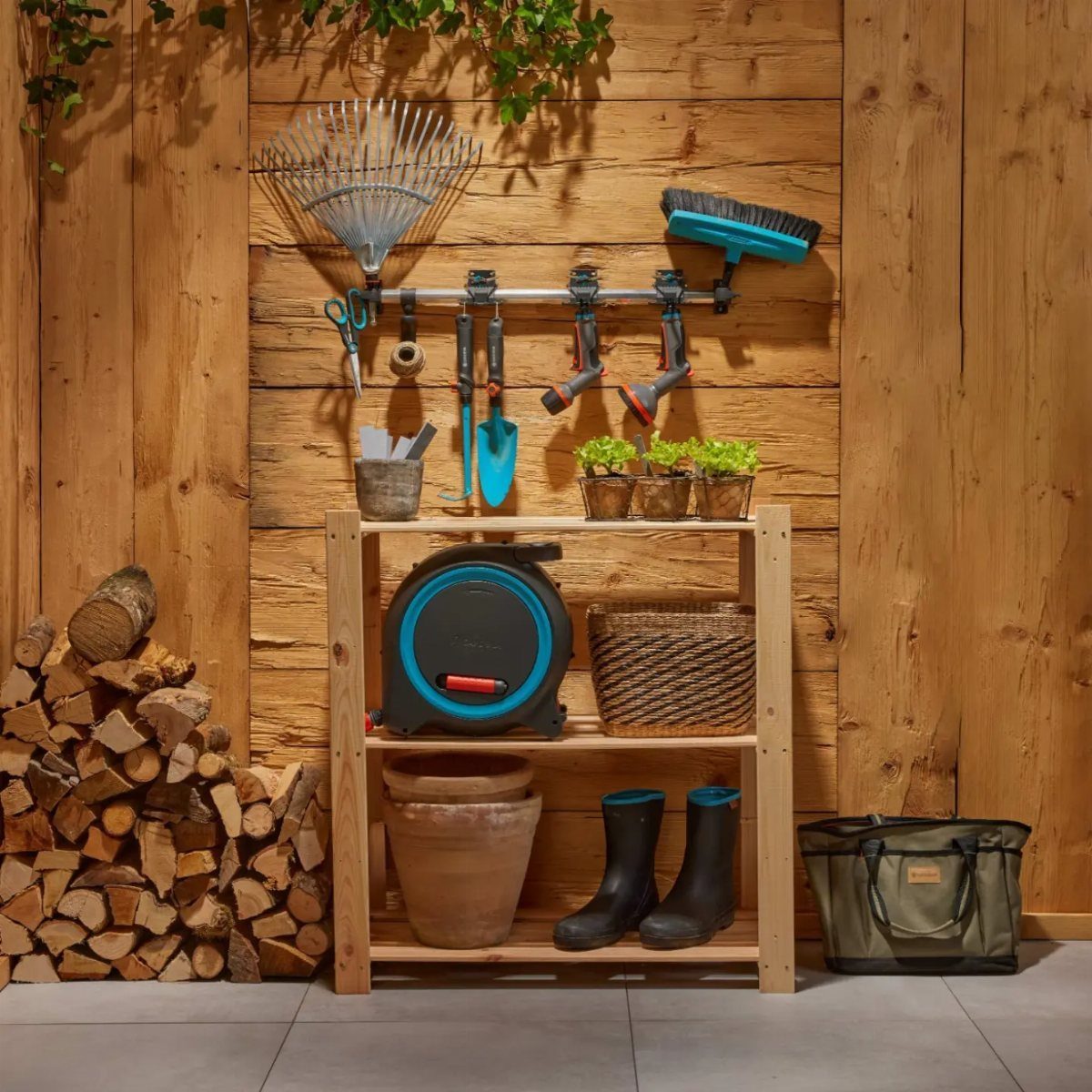
A hose reel on open shelving keeps garden gear in one zone rather than scattered between garage, shed, and patio. Sharing space with boots, baskets, and hand tools works when the wall faces a covered area.
The plank wall is structural, not backing board, so lag bolts into studs are an option. In my experience, that beats toggle anchors for a reel that gets tension every time you pull hose out.

Premium Aluminum Alloy Construction: Made from robust aluminum alloy, this garden hose holder is waterproof, rust-resistant, and designed with extra-thick material for enhanced durability, with screws specially upgraded to stainless steel to ensure long-term use

NO MORE HUNTING FOR YOUR NOZZLE. More than a water hose hanger, this wall mount water hose holder for outside adds an enclosed storage compartment, so nozzles, garden gloves, and small watering accessories stay right with your hose.

NO MORE HUNTING FOR YOUR NOZZLE. More than a water hose hanger, this wall mount water hose holder for outside adds an enclosed storage compartment, so nozzles, garden gloves, and small watering accessories stay right with your hose.
7. Repurposed Plastic Bottle Hose Hook
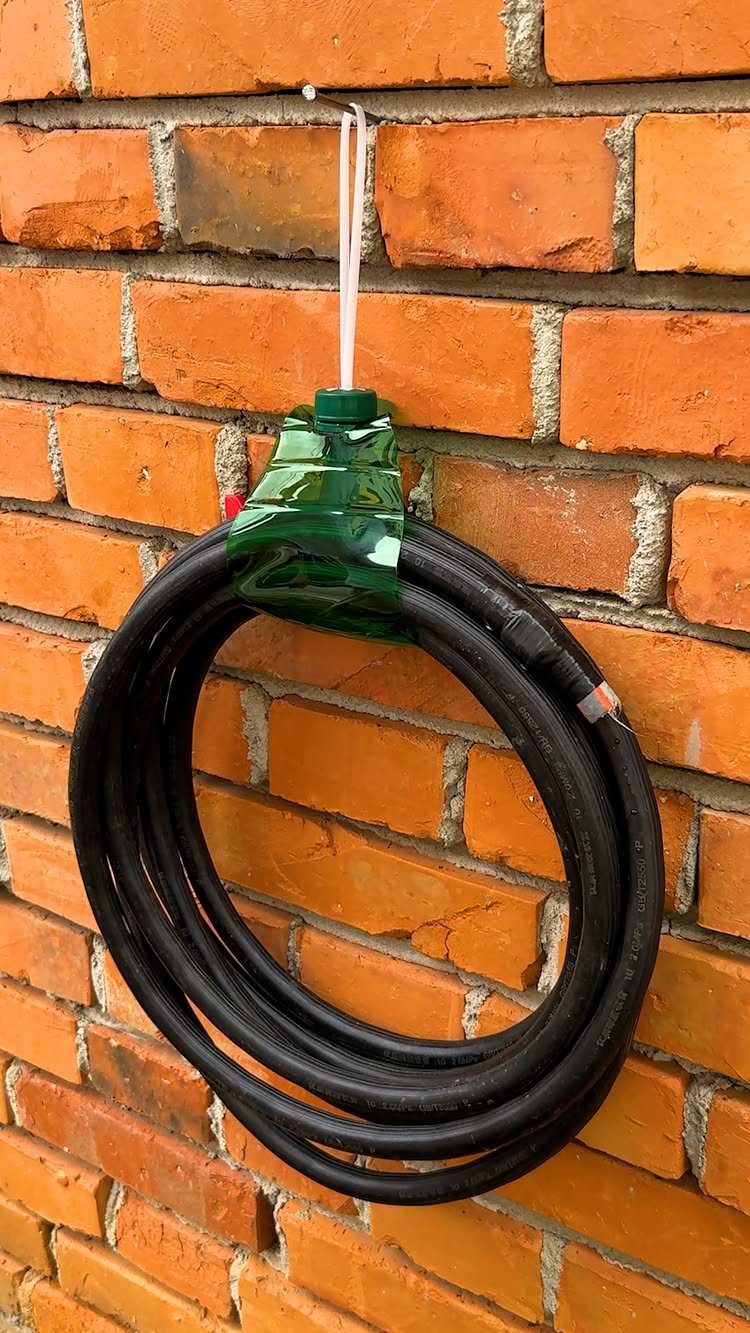
A cut plastic bottle hung by a zip tie is the kind of hack that works in a pinch and sometimes stays for years.
I would use a 2-liter or larger so the coil does not wedge against the neck, and I would cut the bottom, not the top, so the bottle acts as a sleeve rather than a basket.
The wall carries the load, not the plastic, so the nail or screw needs to bite into something solid.
Brick takes a masonry bit and a plastic anchor; wood is simpler. Sun will weaken the plastic over a season or two, so I would expect to replace it eventually.
For a rental or a temporary fix, that is fine. For a permanent install, a metal bracket costs little more and lasts longer.

LIGHT & DURABLE: Designed to be stylish and functional, this hose box is crafted from premium, lightweight UV-resistant plastic and measures 18 x 18 x 12 inches. It features a side hole with a plug which makes for an easy connection to the water faucet.

Elegant Garden Storage: Stylishly conceal and store your home garden hose with the decorative Suncast lattice garden pot for hose, perfect for enhancing any outdoor space

DECORATIVE AND FUNCTIONAL: This 19.5 x 19.5 x 17.25 inches water hose holder adds an attractive touch to your backyard, patio, or deck while keeping your hose neatly hidden and protected from dirt and dust.
8. Freestanding Hose Reel Stand
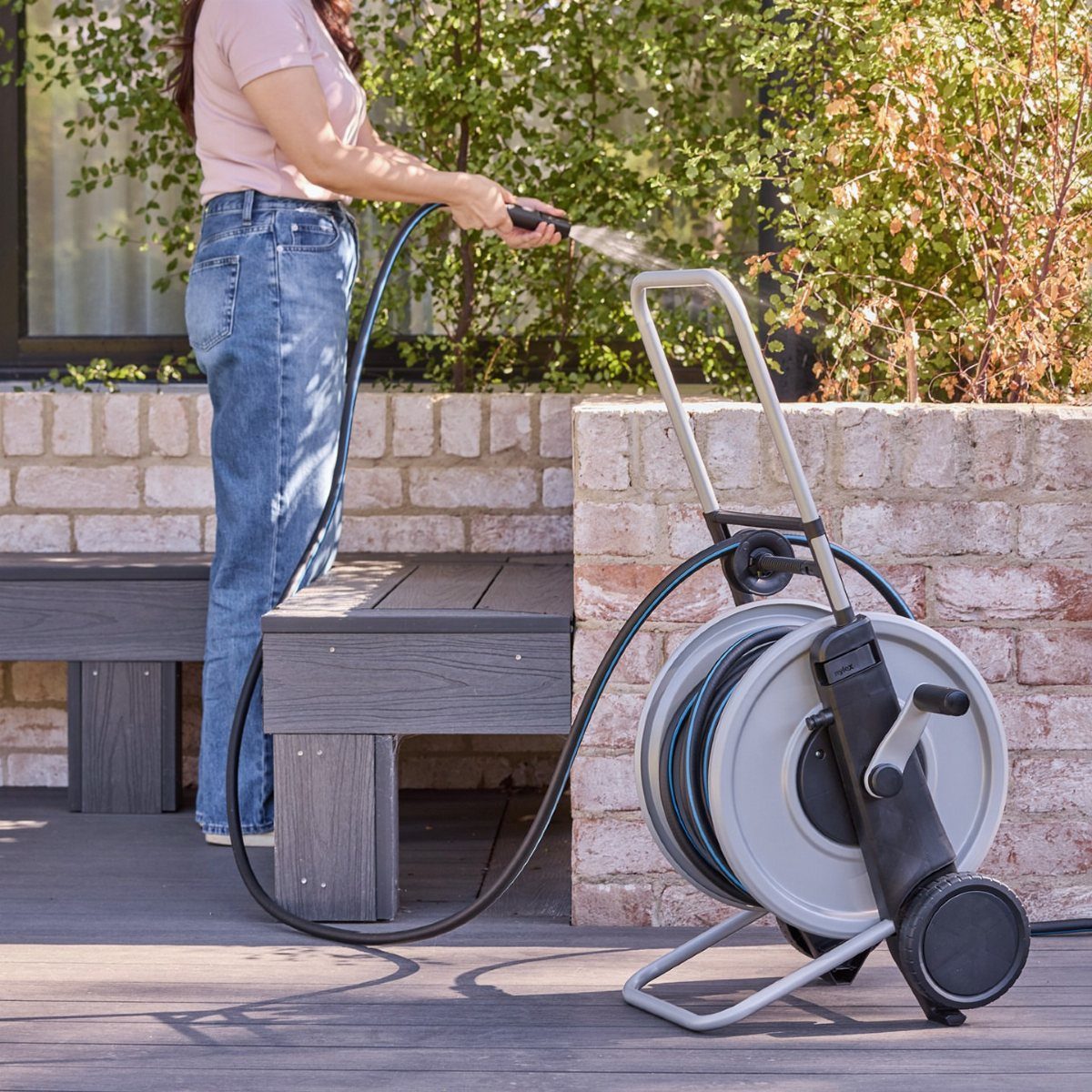
Metal freestanding reels suit a deck or patio where wall mounting is not an option, or where the spigot sits far from where the hose actually gets used.
A freestanding reel works best when you park it right where you actually water, not where it is easiest to store.
Weight and stability matter more here than on a wall mount.
Steel stays put better; aluminum is easier to move into the garage before frost. The handle on the side is for rewinding, not for pulling the whole unit around, so placement still matters.
I would set it close enough to the spigot that the leader hose is short, or add a longer leader if the reel has to sit at a distance.
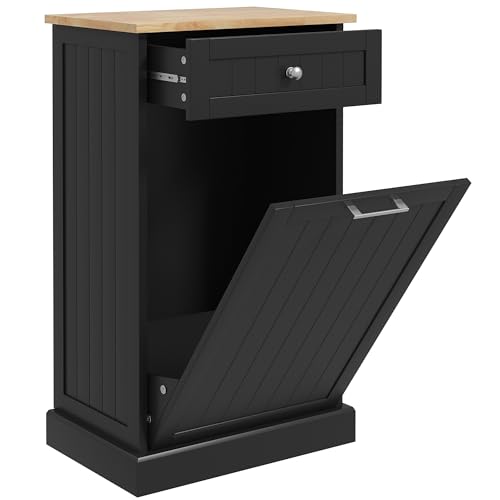
Multifunctional: The kitchen trash cabinet is great for keeping pets away from the trash to keep the kitchen exquisite and to keep the floor clean and can also serve as a laundry hamper to hide dirty dog food storage, etc.

Heavy-Duty Galvanized Steel Construction: Crafted from premium galvanized steel with a weather-resistant powder-coated finish, this hose reel is built for long-lasting outdoor use while helping resist rust, corrosion, and everyday wear

High Capacity: The pot make sures easy usability by maintaining hose shape and preventing tangles, ample room for long hoses in an organized manner
Placement Considerations
Distance from the spigot is the detail that decides whether a storage solution actually saves time or just creates a new chore.
I would measure the leader hose length against the real path you walk, not the straight line on a plan.
An A/C unit, a hedge, or a narrow side yard can turn a short reach into a daily frustration if the holder sits on the wrong side of it.
A post-mounted holder past an obstruction solves this without drilling into siding, which matters in a rental or where the wall is stucco or brick you do not want to disturb.
The footing is the real choice: a post set in concrete carries weight but commits the spot; a surface-mounted plate lets you move it, yet wobbles under a full coil.
Ground-level storage boxes need clearance from door swings and foot traffic. I would keep clear of any threshold so the lid opens fully and you are not stepping around it with a load of soil or a flat of plants.

[250FT Large Capacity]-This hose reel cart holds up to 250 ft of 5/8" hose (hose not included), giving you enough reach to water every corner of your garden, yard, or lawn. With overall dimensions of 33.27"L x 23.62"W x 36.22"H, it keeps your hose neatly stored and tangle-free. Ideal for daily gardening or commercial use.

Large Reel Design: This hose cart with wheel fits up to 300 ft(9144cm) of 1/2"(12.7mm) or 200 ft(6096cm) of 5/8"(15.88mm) hose. Its widened reel allows faster loading and easy storage, eliminating reach issues and letting you move around yards or patios smoothly without constantly repositioning the hose

HOSE MAX CAPACITY: This portable plastic small hose reel cart can hold up to 65-100 feet of 5/8 inch hose and 85-120 feet of 1/2 inch hose
Materials for Durability
UV exposure is the enemy that does not show damage until the hose cracks mid-season.
A storage box with a lid or a cabinet with a tilt-out front blocks sun directly; open reels and wall brackets leave the hose exposed, so I would place those under an eave or a pergola when possible.
Metal brackets and reels come down to a choice between steel and aluminum.
Steel stays put in wind and resists denting, but it rusts if the finish chips; aluminum is lighter to move and does not corrode, yet it flexes under a heavy coil and can tip if the base is narrow.
For a freestanding reel on a deck, I would check that the feet have pre-drilled holes so I can anchor it if needed.
Wood holders need pressure-treated or cedar stock to survive ground contact and rot cycles. Pine saves money upfront and works fine painted, but the paint film is what keeps moisture out; once it checks or peels, the decay starts fast.
I would rather spend the small difference on cedar and skip the maintenance cycle entirely.
A cut bottle or a resin box looks fine at first; I would expect to replace it, and I would not bury a plastic box in a planting bed where swapping it means digging.

High Quality: Garden hose holder made of tough metal,, rustproof and thickened, sturdy and durable, ideal for indoor and outdoor garden hose storage.

【High Quality】Water hose reel made of tough metal, durability and last long. The anti-slip rubber coating provides additional safety and grip. Can withstand harsh environments and is ideal for indoor and outdoor garden hose storage.

【Premium Materials】Garden hose holder wall mount made of tough metal, rustproof and thickened, durability and last long. Ideal choice for outdoor hose storage.
Frequently Asked Questions
How can I safely store garden hoses in the winter?
Drain the hose completely and store it in a dry place, ideally a garage or shed, to prevent freeze damage and cracking.
I would coil the hose loosely rather than tight, since a stressed coil in freezing weather can set permanently and kink come spring.
What are some quirky and funky storage ideas?
A repurposed plastic bottle hung by a zip tie is the kind of hack that starts temporary and sometimes stays for years.
A planter that hides the hose in plain sight also reads garden feature rather than storage solution, which is exactly what I want when the hose has to live in view.
How to organize RV hoses?
A wheeled hose management cart is what I suggest when the hose has to travel, and that same logic holds for an RV where the spigot is rarely where you actually need water.
For an RV, I would look for a compact cart that stows in a bay rather than a full-size garden model.
How to store stretchy hose?
A wall-mounted bracket with the right depth for the coil diameter keeps a stretchy hose from sagging or sliding, which it will do more than a standard rubber hose.
I would place the bracket beside the spigot so you are not dragging the expanded length across the yard.
