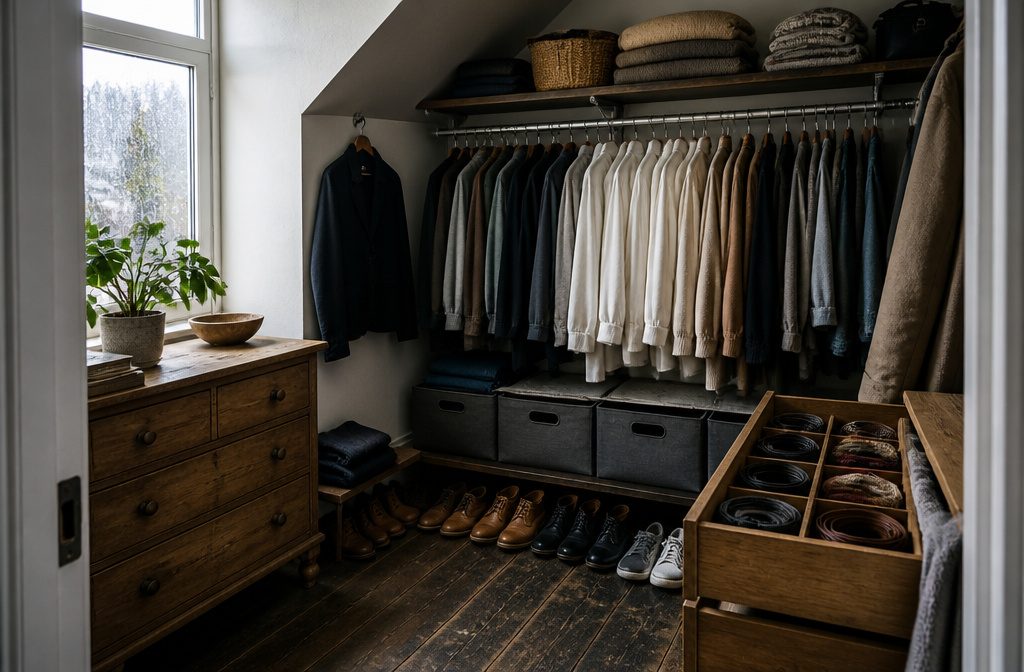
You’ll end up with a closet where you can see everything and grab what you wear most in seconds, but the work takes a full day and demands hard decisions about what stays.
Most people fail at the sorting stage because they hang items back up instead of pulling everything out at once, which makes it too easy to keep things you don’t actually wear.
The real shift happens when you stop organizing by someone else’s system and instead arrange pieces by how you actually reach for them: daily wear at eye level, seasonal items higher up, and everything grouped so you see your full options without hunting.
1. Prepare your space and set goals
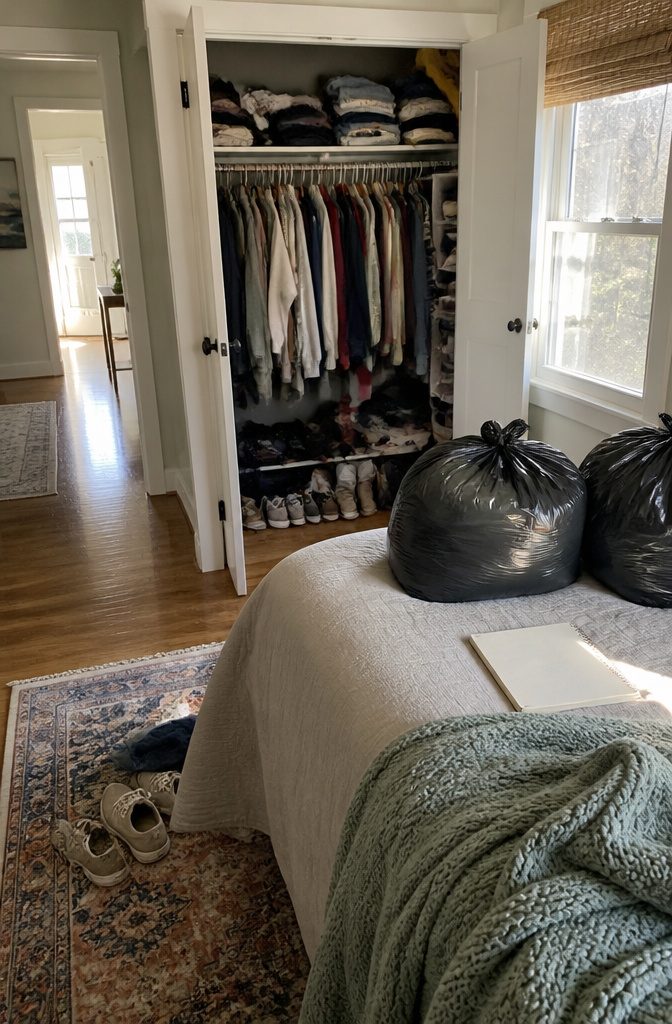
Start by walking through your normal routine of getting dressed. Open the closet, pick an outfit, and notice what slows you down.
Are you reaching too high or bending too low? Does it take longer than it should to find something?
Note the spots where your setup isn’t working: insufficient space for certain items, poor visibility, things too crowded to see clearly, clutter that belongs in the trash. This friction map becomes your guide when you choose organizers later.
Clear a staging area before you start, whether that’s your bed or a spare room.
You’ll need space to sort everything and see what you own. Grab sturdy trash bags for donations and set a realistic timeline for the work.
Pick a time when you’re genuinely ready to make decisions about what stays and what goes. The mental work of deciding is the heaviest part of organizing, so start when you have the focus for it.

Unique Trapezoid Design: Our closet bins feature a unique trapezoid design with a lower front for easier visibility and access. The Homsorout shelf organizers now come in 10 new colours, offering more options for your space

[Adjustable Spacers]: The clear shelf divider package includes 2 sets of shelf dividers. Each set is equipped with 4 dividers on each shelf, you can adjust the spacing of the dividers according to your needs to insert the dividers into the slots. It is suitable to organize handbags, purses, wallets, gift bags, and files of different sizes.

Product Size: To ensure a perfect fit for your wardrobe, please pay close attention to the product dimensions before making a purchase. Each storage box layer measures 16.73 inches in length, 13.11 inches in width, and 7.28 inches in height (equivalent to 42.5 cm x 33.3 cm x 18.5 cm). Double-checking these measurements will help you avoid any compatibility issues.
2. Empty and sort everything
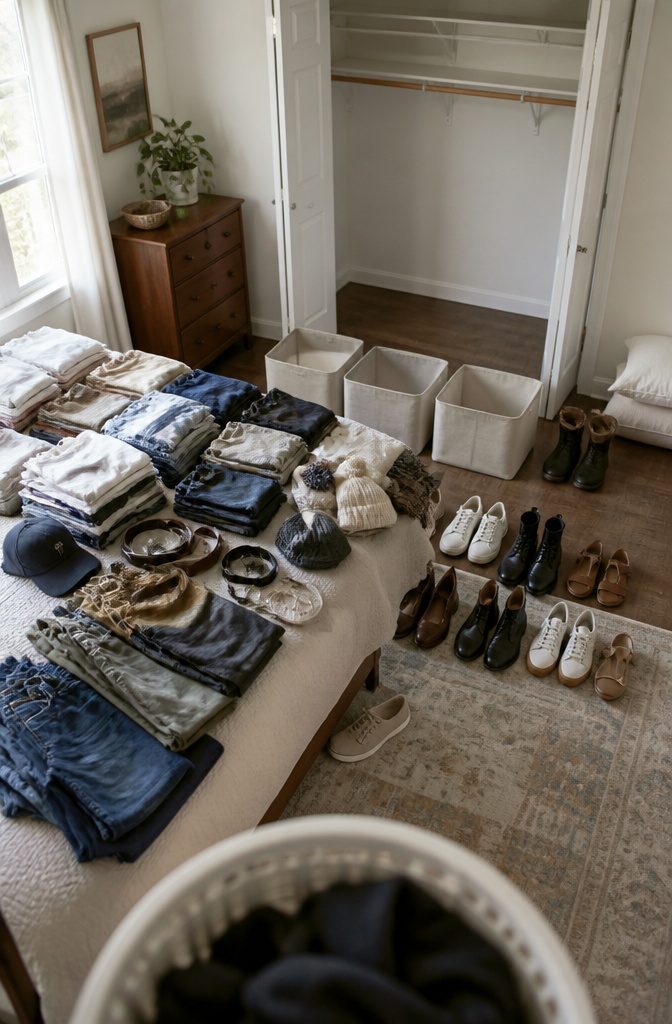
Pull everything out of your closet at once. Leaving items hanging makes you more likely to keep things than to purge them, and the whole process takes longer.
Spread the pile across a bed or clean surface and sort by category: shirts, pants, shoes, accessories. Seeing how much you own in each group makes the next decision harder to avoid.
Now ask yourself about each piece. Does it fit well?
Does it make you feel confident? Will you wear it in the near future?
Anything that hasn’t been worn in over a year should go. If something doesn’t serve you anymore but is still valuable or one-of-a-kind, consider selling it on Poshmark or ThredUp instead of tossing it.
Set up three bins as you sort: one for donation, one for items to sell, and one for pieces that need repair. While you’re at it, move non-clothing items out of your closet altogether.
Winter boots, wrapping paper, extra bed pillows all belong in storage elsewhere. Your closet should hold only what you actually wear and what makes sense to keep there.
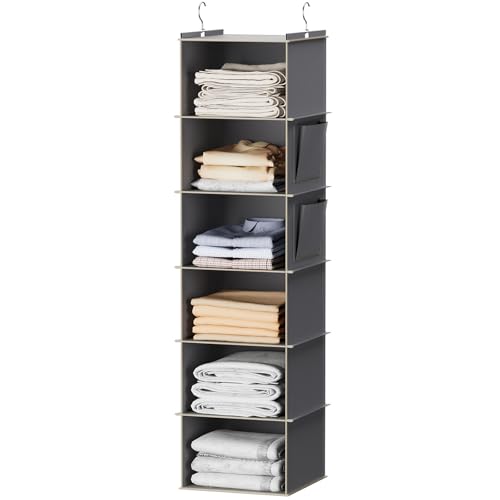
HIGH QUALITY: This hanging closet organizer is made of sturdy and thick non-woven, built to last. Unlike some similar product, this one has 2 pcs sturdy bamboo inserts at each shelf and MDF board at top & bottom, which can avoid the compartments bending.

Maximized Storage: This 5-tier hanging closet organizer provides ample storage space for clothes, accessories, and more.

The hanging organizer measures 23 ½" H X 12 ¼" W X 12 ¼" D, each shelf is 7 ½ "H X 12 ¼" W X 12 ¼" D. In addition, the hook is 6" H.
3. Choose storage and plan your layout
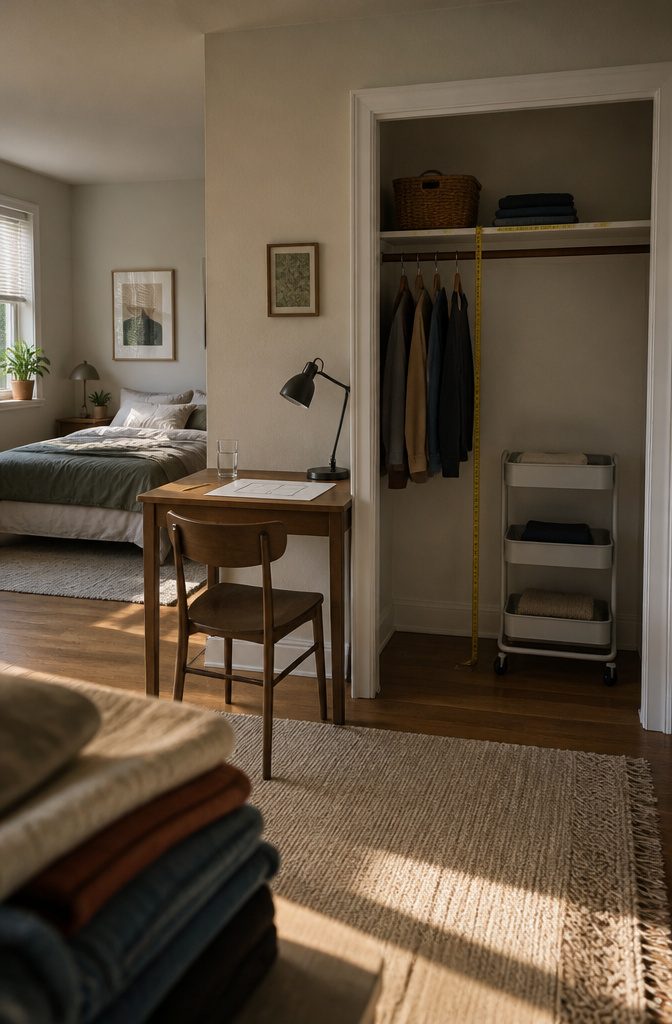
Before you buy anything, walk through your closet and measure the space.
Note the width of your shelves, the distance from rod to wall, and how much vertical room you have above hanging clothes. That measurement decides what fits.
Think about what you actually store: work clothes need quick access, seasonal items can go higher or deeper, shoes take up floor space or wall space depending on how you stack them.
A closet with a single rod wastes the space above it; adding a second rod cuts hanging space in half but doubles capacity.
Adjustable shelves beat fixed ones because you can shift them as your needs change. Freestanding solutions like rolling carts or leaning shelves work for renters since they don’t require drilling.
Sketch a rough layout before you buy, marking where each category will live.
This catches the mismatch between what you want to store and what the space will hold. A closet organized by someone else’s system fails fast; one built around how you actually dress and reach for things lasts.
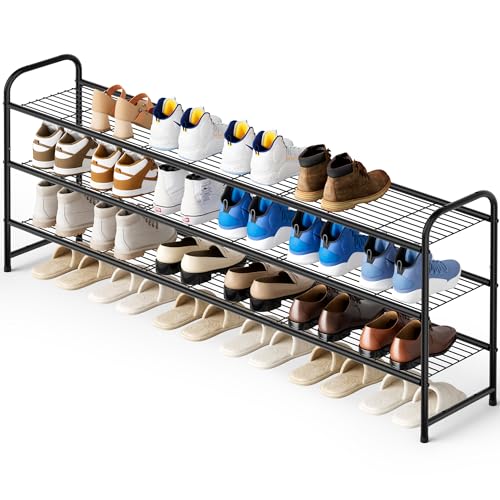
3 Tier: 【Holds 24 Pairs of Shoes】 Longer 3 tiers shoe organizer for closet, can store 24 pairs of shoes, easy to hold up men's tennis shoes, sneakers, women boots, etc. The extra bottom space is enough to place daily wear flats, slippers. The large capacity shoe rack for entryway size is: 43"W x 11.4"D x 24.4"H

SPACIOUS STORAGE: This shoe rack offers plenty of space to accommodate your everyday footwear, including sneakers, heels, and slippers. It's designed to meet all your storage needs efficiently.

【Item Dimension】: Overall Assembled Size: 13.1(L) x 9.8(W) x 7.5(H) inches/34(L) x 25(W) x 19(H)cm, suitable for men's shoes in size 12 and women's shoes in size 13. Facing the messy shoe storage space, this stackable plastic shoe box can be the best choice.
4. Arrange items by category and access
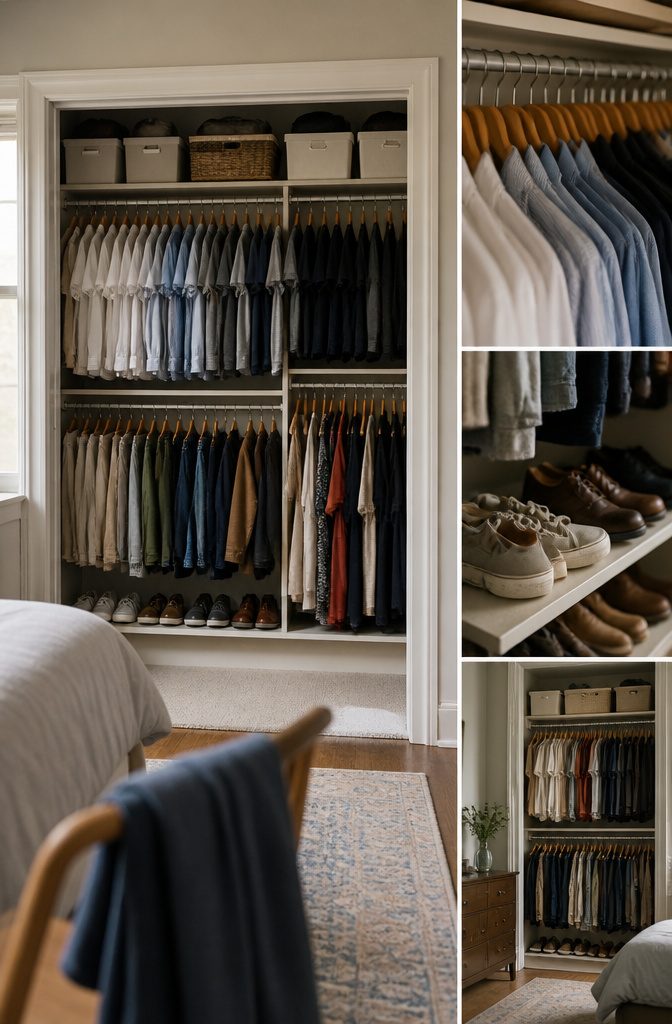
Group similar items together so you can see what you have and reach what you use most.
Shirts, pants, dresses, accessories, and shoes each get their own section. Within those groups, arrange by type: all short-sleeved shirts together, then long-sleeved, then sweaters.
If your climate shifts with the seasons, rotate off-season pieces into labeled bins on upper shelves or under the bed, then swap them out when the weather changes.
Place your most-worn pieces at eye level so they’re the first things you grab.
Formalwear and seasonal gear can live higher or lower. You can also organize by color within each category, which makes the closet calmer to look at and faster to search through when you’re getting dressed.
The arrangement that works depends on your climate, your job, and what makes sense to you; there’s no single right way.

11 Inch Cube Fit: Each set includes 6 collapsible storage bins, measuring 10.75 x 10.75 x 10.75 inches each. Fits standard 11 inch cube storage organizers and most cubbies, wardrobes and closet shelves.

【Versatile & Stylish】The folding closet organizers are a comprehensive storage and categorization solution that is perfect for organizing your lightweight items like clothes, toys, files and more. With its stylish neutral design, it effortlessly fits into any home, bedroom, bathroom, kitchen, office or study area.

Clear Window: All storage cubes feature a front window, making it easier to see and find items inside. Our storage boxes with lids save time and effort, making storage more convenient and efficient
5. Use vertical space and containment
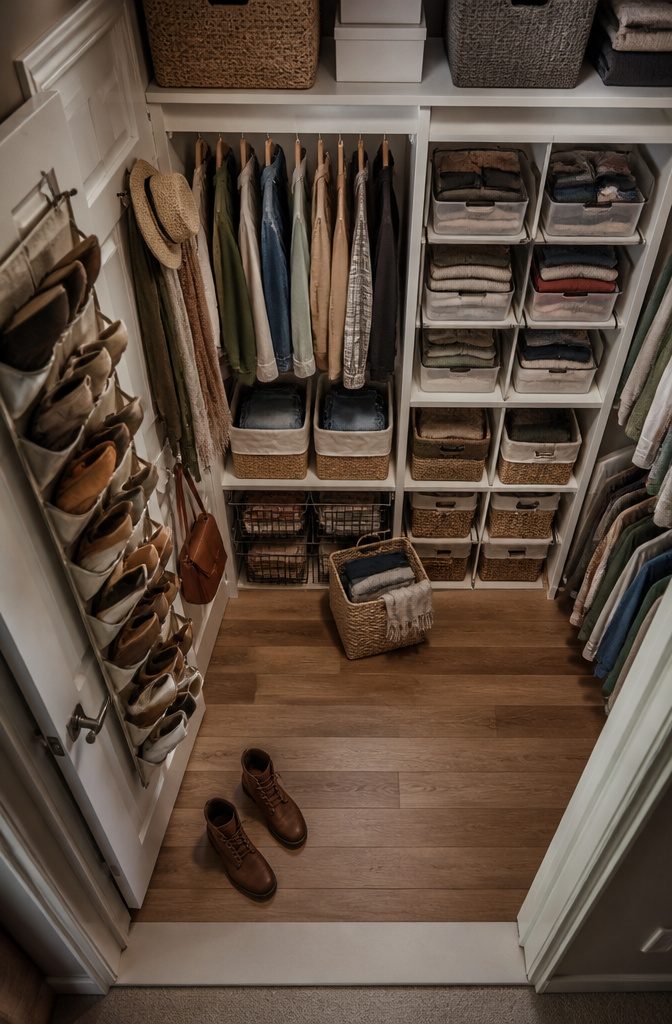
The space above your head and below eye level holds the key to a closet that actually functions. Hanging rods take the prime real estate, but shelves and the areas they create deserve equal thought.
Store items you reach for daily at arm height, reserve top shelves for things you use seasonally or rarely, and fill the floor or lower shelves with heavier pieces that would topple if stacked higher.
How you contain what sits on those shelves matters as much as where you put it. Stacking folded clothes directly on a shelf creates towers that collapse the moment you pull one piece out.
File fold instead: fold items, then stand them upright side by side like folders in a filing cabinet so you see every option without disturbing the stack.
Baskets, bins, and shelf dividers keep grouped items from bleeding into one another and make it simple to grab what you need.
Clear or translucent containers let you spot what’s inside without opening them, which saves time when you’re getting dressed.
The back of your door and the wall space between floor and hanging rod are working real estate too.
Hooks hold scarves, hats, and bags; an over-the-door shoe rack stores shoes and accessories without eating into shelf or floor space. That vertical thinking pays off once you see how much more room you actually have.

Large 92Qt Stackable Storage Bins:Each tier measures 15.35" x 11" x 8.27", total 92Qt capacity. Ideal for organizing toys, snacks, crafts, clothes, and more in closets, bedrooms, garages, or offices.

[Create Extra Space]]: Tired of overstuffed closets and cluttered drawers? Our drawer organizer clothes are ideal for every corner of your home, from bedrooms and nurseries to laundry rooms and bathrooms. Use them as drawer dividers or on shelves to make the most of your space and create a calm, tidy setting

Expandable & Adjustable: These drawer dividers are 4 inches (10 cm) high and 0.8 inches wide, adjustable in length to fit most drawers with an inner width of 11 to 17 inches (28 to 43 cm), providing the ideal solution for keeping your items organized and your drawers tidy. Note: Please carefully Measure your drawer’s inner dimensions before purchasing
6. Maintain your system
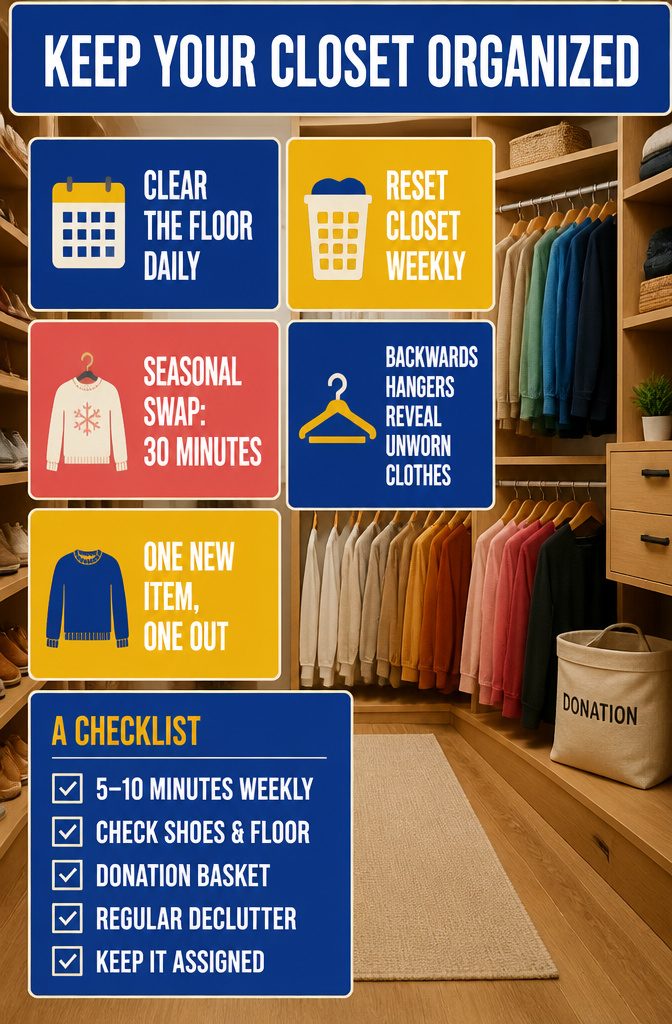
A well-organized closet only stays that way with regular upkeep. Spend 5–10 minutes each week putting things back in their assigned spots, checking that shoes are put away and the floor is clear.
Keep a small donation basket or bag in your closet so items you’ve reconsidered can leave circulation immediately instead of getting rehanged.
- Pick up everything off the floor daily: rehang what belongs, put other items in a hamper or on hooks.
- Each week, rehome anything that doesn’t belong, fold and put away clean laundry, and move unused pieces directly into the donation bin.
- At the start of each season, set aside 30 minutes to swap out-of-season clothing for what you’ll actually wear, and take stock of last season’s items that never left the closet.
- Try the backwards-hanger trick when you first finish organizing: hang everything backwards, then flip hangers forward as you wear and launder each piece. After a year, backwards hangers show what you never touched.
- Adopt a one-in-one-out rule so new purchases don’t trigger creep. A new sweater means an old one goes.
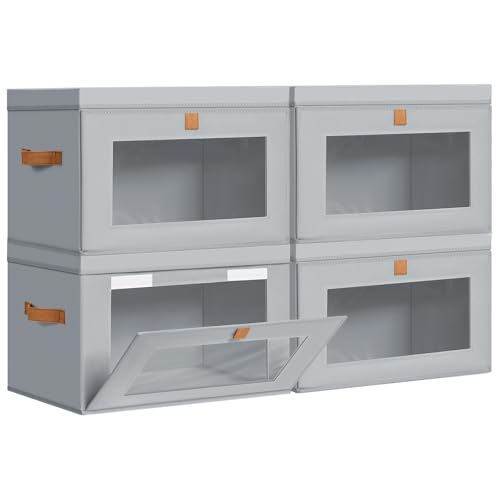
Front Opening:Even if the storage bins is placed high, you can quickly access items by simply opening the front cover without moving it.Suitable for living room, bedroom, closet, utility room, under bed, office
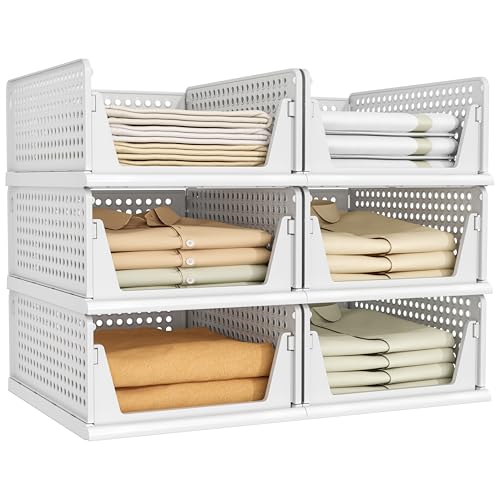
【Multi-Functional】: The closet shelves are convenient to store your lightweight items such as shoes, clothes, toys, snacks, file etc. Suitable for bathroom, kitchen, living room, office.

【4PACK LINEN CLOSET STORAGE with SEE-THROUGH WINDOW】Each linen closet organizers and storage box features a clear window, allowing you to see the contents at a glance, making it super convenient to find what you need in no time.
Renter-friendly storage options
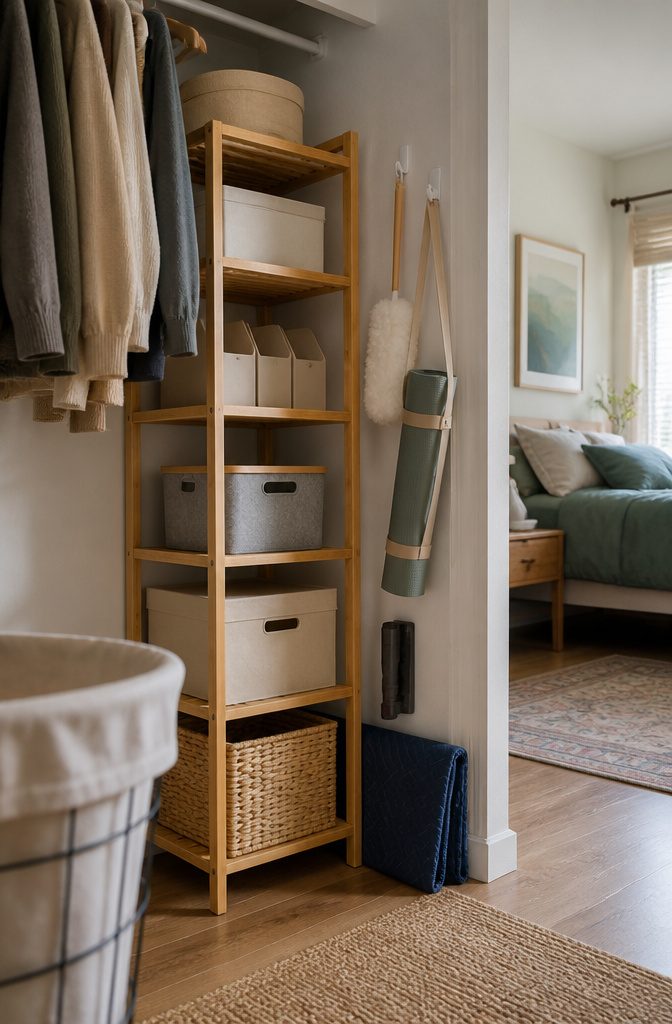
Freestanding shelves and removable hooks let you build storage without drilling or damaging walls. A bamboo shelf sized to fit your empty space slides right in and can move with you later.
Measure the dimensions you need, then look for a shelf that fits those exact measurements rather than forcing an oversized one into the gap.
- Command strips and removable hooks handle everything from cleaning tools to yoga mats, and they come off without marks. Make sure you use the right weight rating for what you’re hanging.
- Dividers on existing shelves stack items vertically and multiply your usable space without permanent installation.
- Storage boxes and bins corral items into categories so you know exactly where things live. Label them so you find what you need fast.
- For items with a flat back, like vacuum attachment holders, command strips let you mount them the same way screws would, then remove them cleanly whenever you move.
You get flexibility but lose the built-in look a fully customized closet delivers. For renters, that flexibility matters most, and it stays just as valuable if you might repurpose the space later or simply prefer to keep your options open.

Capacity & Storage: This closet hanging organizer has five shared 11" x 11" x 7.9" compartments (total 11" x 11" x 39.3") store sweaters , towels, pants , and shorts. Total 7.5kg capacity (1.5kg/compartment) organizes diverse items efficiently
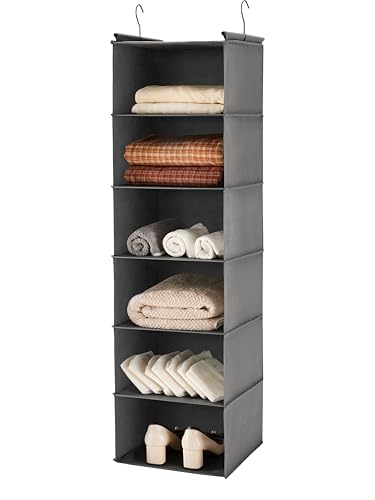
HANGING CLOSET ORGANIZER - Improve your closet organization with open shelving that provides great accessibility and visibility, organizer maximizes utilization of vertical space, makes it perfect for small closets.
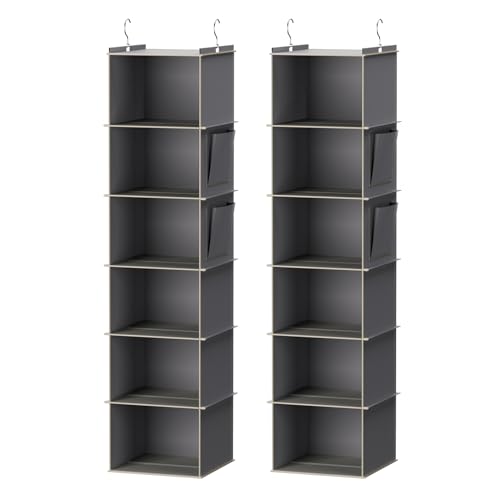
HIGH QUALITY: This hanging closet organizer is made of sturdy and thick non-woven, built to last. Unlike some similar product, this one has 2 pcs sturdy bamboo inserts at each shelf and MDF board at top & bottom, which can avoid the compartments bending.
Lighting and visibility
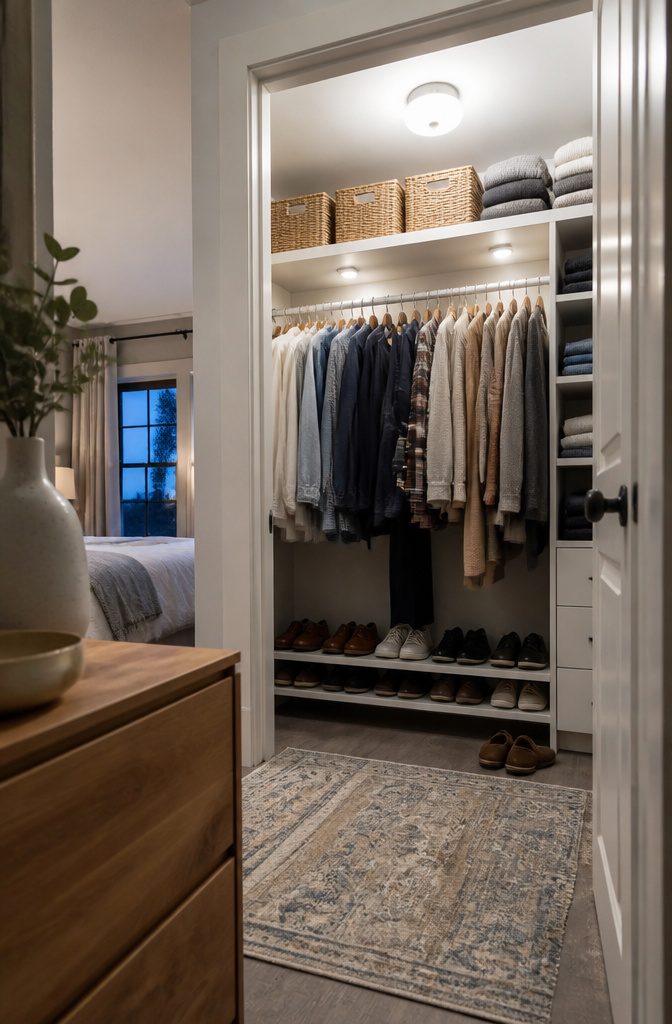
A closet without proper lighting makes even an organized space feel cramped and unwelcoming. You can’t see what you’re reaching for, colors look wrong, and the whole setup discourages you from keeping it tidy.
If your closet relies on a single bare bulb, swap it for a 4000K LED flush mount, which takes about 20 minutes to install and costs under $50.
The cooler, whiter light lets you see everything at once and stays functional for a decade.
If rewiring isn’t an option or you rent, battery-powered tap lights work just as well: they attach to shelves without any permanent changes, and you can take them with you when you move.
A well-lit closet isn’t just more practical; it’s one that actually makes you want to maintain it.

【Large Capacity 10 Tier Narrow Shoe Rack】The 10 tier shoe organizer can store up to 20-25 pairs of adult shoes, and you can remove one layer to fit long boots. This shoe organizer is not only suitable for shoes, but also for bags, toys, towels, sundries, books, plants and small accessories. Shoe storage with 5 hooks, you can hang keys, umbrellas, bags, etc., very practical design.

LARGE SPACE 8 TIERS SHOE RACK: With dimensions of 33.4" W *12"D*57" H, the large shoe shelf can accommodate 26-32 pairs of shoes with ease. Taking a different height design, the shoe rack organizer perfectly fits boots, high heels, shoe boxes, bags, or other larger accessories, meeting your various storage demands. Comes with 15 versatile hooks, it is convenient for you to hang your keys, umbrellas, bags, hats, etc.

【Larger Storage Capacity & 42% Wider Design】 This 10-tier over-the-door shoe organizer holds 20-30 pairs of shoes, making it the ultimate space-saver for the whole family. Measuring 73"H x 22.5"W x 10"D, it’ s wider than 99% of door shoe racks, offering 42% more storage capacity. Easily stores up to 20 pairs of men’ s shoes (up to size 15) or 30 pairs of women’ s shoes, effortlessly accommodating sneakers, boots, heels, and kids’ shoes
Storage for accessories and jewelry
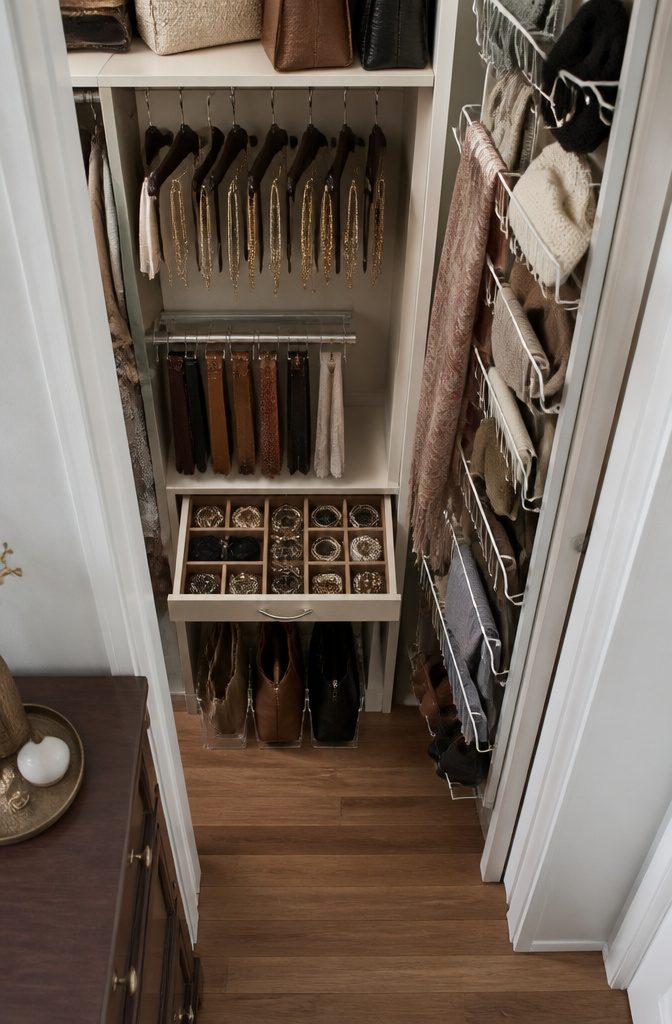
Small items get lost in a closet unless you give them a home where you can see them. A few targeted tools make the difference between jewelry and accessories that disappear and ones you actually wear.
- Velvet hangers hold delicate items without slipping and look more refined than plastic. They’re especially useful for scarves, tank tops, and bras.
- Boot and handbag shapers keep these pieces from collapsing and protect the investment you’ve made in them.
- An over-the-door shoe rack saves floor space and works just as well for scarves, hats, and other accessories you reach for often.
- Sliding storage bars or pull-out hangers work for ties, belts, and jewelry if your closet has them; if not, wall hooks do the same job without taking up shelf or rod space.
- Drawer inserts and trays corral jewelry and small accessories so nothing rolls to the back and gets forgotten.

【MULTI-PURPOSE】 Our 4 pcs closet storage bins are home essentials to save storage space and keep everything organized. Large enough baskets for organizing clothes, kid’s toys, nursery room items, extra linens, laundry, towels, sheets, pantry and more.

Natural Cotton Material – The 5-pack cotton rope storage baskets are made from 100% premium cotton rope. These soft woven baskets have no sharp edges, making them safe for kids and pets. Perfect for families, parents, and pet owners who value a clean, cozy, and well-organized home.

Perfect Fit for Cube Organizers: These cube storage bins (10.5 x 10.5 x 11") fit most standard cube organizer shelves, making them ideal storage bins for cube organizers while maximizing your storage space and keeping everything neatly organized.
Questions to ask before you buy organizers
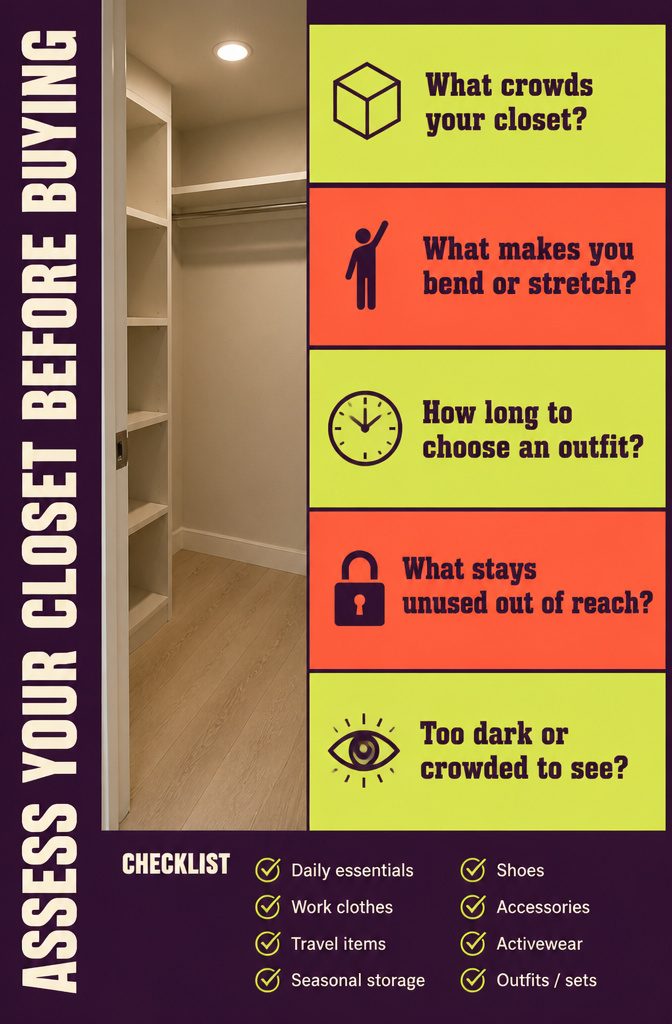
Before you pick out organizers, spend time in your closet the way you actually use it.
Walk through your routine of selecting an outfit and note what slows you down or frustrates you. This tells you what your setup is missing before you buy a single basket.
- What takes up too much space? Identify items that crowd the closet or leave no room for what you reach for often.
- What forces you to bend or stretch constantly? Storage that puts daily-wear items out of reach costs you time every morning.
- How long does outfit selection take, and why? If you can’t see what you own or pieces are scattered across the closet, you’re wasting steps.
- What doesn’t get used because it’s hard to access? This shows you where zones need to go.
- Is the closet too dark or too crowded to see what’s there?
Zone planning before you buy anything ensures each organizer solves a real problem in your space.
A work zone keeps your office clothes together. A travel zone holds packing cubes and cosmetic bags so you grab them in one spot instead of hunting through drawers.
Grouping items by how you actually use them cuts the steps you take each day, saving time and effort every morning.

High-Quality Metal Construction: This fabric dresser is crafted with durable iron, ensuring stability and a long lifespan. The top wooden shelf offers excellent load-bearing capacity, accommodating various items with ease.

MAXIMIZE YOUR DRAWER SPACE: If you are tired of messy and disorganized drawers, Fabsome dividers are a game-changer. These separators let you quickly transform cluttered dressers into tidy and functional storage spaces. Compared to cloth cube bins, they allow you to utilize more space in your dresser and leave no dead space
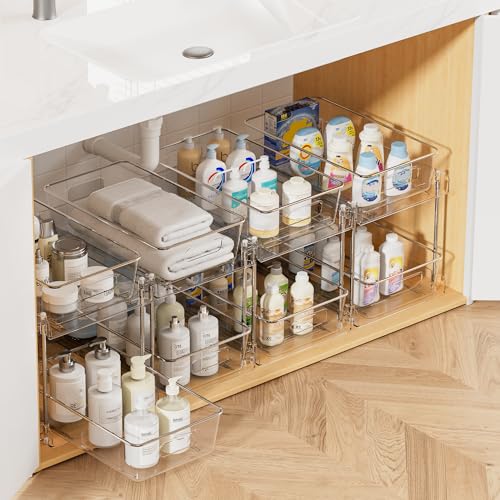
ESSENTIALS STORAGE PREFERRED: The multi-purpose organizer storage is a good helper to keep your vanity or bathroom countertop tidy. It can also be used as under sink organizer, kitchen organization, pantry organizer, refrigerator storage, cabinet storage. Perfect for storing cosmetics, toiletries, perfumes, cleaning supplies, snacks, bottles, spice jars.
Frequently Asked Questions
how do you declutter a closet?
Empty everything onto a bed or clean surface and sort by category.
Anything you haven’t worn in over a year should go, along with pieces that don’t fit well or make you feel confident. Set up separate bins for donations, items to sell, and pieces needing repair.
in what order should you hang clothes in a closet?
Group similar items together: all shirts, then pants, then dresses. Within each group, arrange by type (short-sleeved, then long-sleeved, then sweaters).
Place your most-worn pieces at eye level for quick access, and hang everything facing the same direction. You can also organize by color for a calmer look.
what’s the best way to maximize space in small closets?
Use vertical storage by adding a second hanging rod above the first, adjustable shelves that shift as your needs change, and over-the-door shoe racks.
File fold items on shelves instead of stacking them flat so they don’t topple when you pull one piece out. Hooks on walls and doors hold scarves, hats, and bags without taking up shelf space.
what clothes go on shelves versus hangers?
Hang items you wear frequently and pieces that wrinkle easily. File fold thicker items like sweaters and knitted pieces on shelves instead, since they do better when stored flat.
Shoes, accessories, and seasonal pieces can live on shelves or in bins, while everyday work clothes and outfits belong on hanging rods at arm height.
how often should you maintain an organized closet?
Spend 5 to 10 minutes each week putting things back in their spots and clearing the floor.
Each day, rehang what belongs or put items in a hamper. At the start of each season, swap out-of-season clothing for what you’ll wear and move pieces you never wore into the donation bin.
what’s the best way to organize accessories and jewelry?
Give each item a home where you can see it.
Velvet hangers hold delicate scarves and bras without slipping. Over-the-door shoe racks work for accessories you reach for often.
Drawer inserts and trays corral jewelry and small items so nothing rolls to the back and gets forgotten. Boot and handbag shapers keep these pieces from collapsing.
how do you keep a closet organized as a renter?
Use freestanding shelves and removable Command strips and hooks so you don’t damage walls. Bamboo shelves slide into gaps and move with you later.
Storage boxes and bins corral items into categories without permanent installation. Battery-powered tap lights attach to shelves and come off cleanly when you move.