
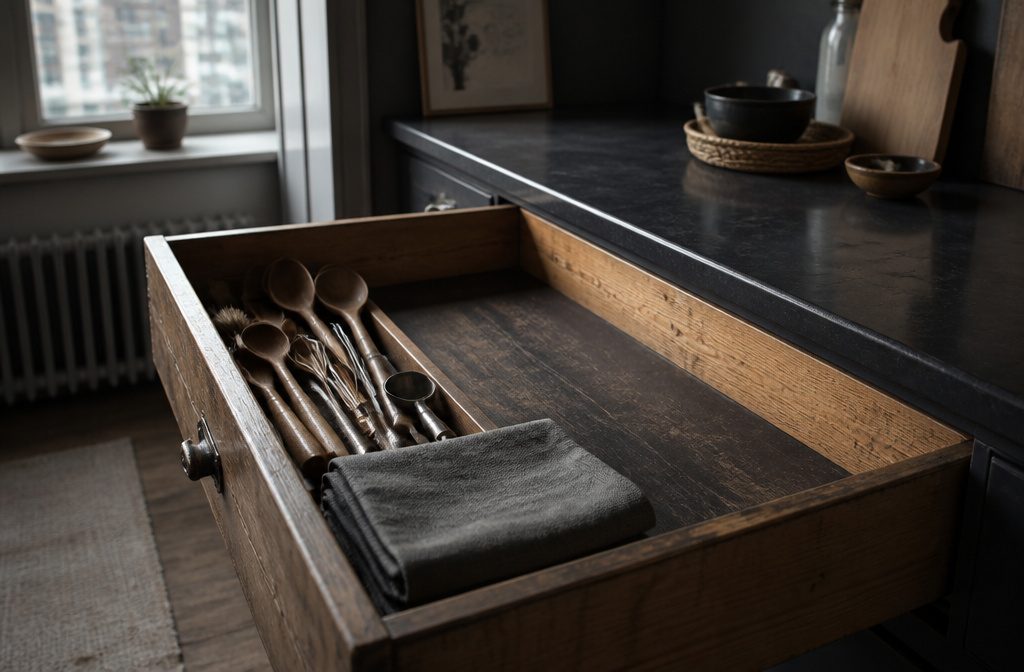
A cleared home takes a weekend or two of focused work, not months of gradual sorting. Most people fail at the start: they pick too big a space and freeze before beginning.
Start with one drawer or shelf you can finish in 10 minutes, then move forward. The 90/90 rule, if you haven’t used it in 90 days and won’t in the next 90, it goes, cuts through the guilt that usually stops people cold.
1. Set a goal and pick where to start
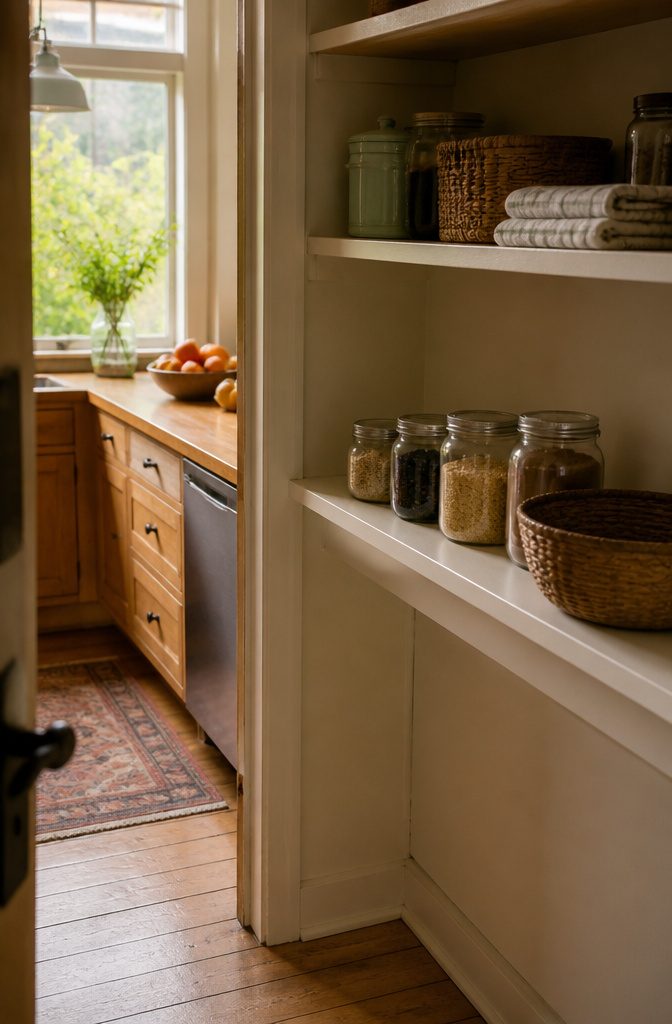
Pick one small area you can finish in 10 minutes or less.
A single drawer, one shelf, or even a windowsill works. The point is to complete it quickly and feel what a cleared space actually does for you.
That momentum matters more than the size of the task. If you start with your garage or a walk-in closet, the scale alone can freeze you before you begin.
Once you’ve chosen where to start, decide on a realistic timeline.
Don’t plan to declutter your entire home in a weekend. Instead, allot a few hours per room and spread the sessions over several weeks.
If even a few hours feels like too much, set a timer for 15 minutes and focus on just one area, drawer, or shelf. You’ll see progress quickly and won’t burn out.
Some people work better starting with their most disorganized space, the one that bothers them most.
Others prefer to build confidence with an easy win first, a pantry where you toss expired food without guilt, then move to harder territory later.
Both paths work. The common thread is starting somewhere specific and finishing that spot completely before moving on.

Black desk drawer tray organizer with 7 compartments is designed to keep your drawer neat and organized, eliminating clutter and saving time.


【Package content】8-piece desk drawer organizer trays, high-quality premium felt gray colors storage bins, outer gray, inner high premium charcoal color. Elevate your everyday organization, decluttering, and sorting your home office in clean, tidy, quiet, joyful surroundings, with a relaxed, sleek, minimal lifestyle.
2. Gather sorting supplies and label destinations
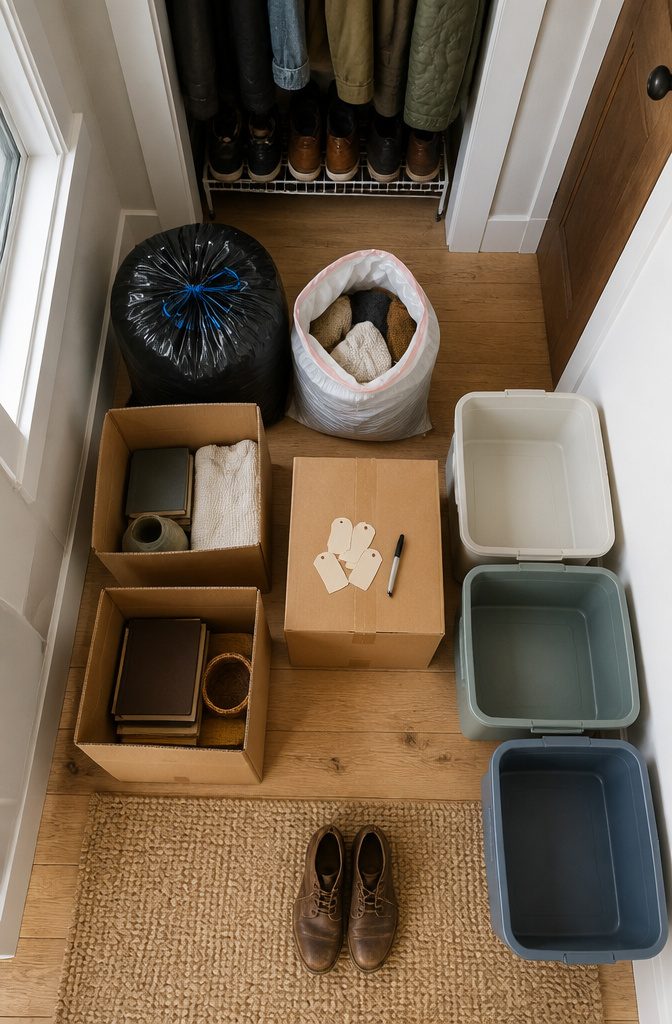
Before you start sorting, gather your supplies so items don’t get handled twice and the process stays organized.
You need trash bags, boxes or bins for each category, and labels or markers to identify where everything goes. The specific categories depend on what works for your situation.
Some people use three bins: Keep, Get Rid Of, and Put In Storage. Others prefer four or five: Donate, Recycle, Toss, Relocate, and sometimes Gift or Sell.
Items in good condition go to donation centers like Goodwill or Buy Nothing groups; Facebook Marketplace or consignment stores work for selling; Earth911.com helps locate proper recycling centers for items beyond repair.
Different colored trash bags make sorting faster, black for trash, white for donations, for example. After you’ve sorted through each space, store items in labeled containers or note what’s inside so you know what you have.
Don’t buy new storage containers yet; use what you already have around the house, since you might not need them after decluttering is done.

Effortless Office Organization: Talented Kitchen's White Office & Crafts Storage Labels streamline the organization of office and craft spaces. These preprinted organization labels transform clutter into a sleek, efficient setup in minutes

LAUNDRY LABELS FOR JARS - 144 laundry room labels set includes 26 laundry room essentials labels, 18 linen labels, 24 cleaning essentials labels, 47 home essentials labels, 6 kitchen & bathroom essentials labels, 11 number labels and 12 blank labels. Come with a reference sheet for quick and easy label name lookup.
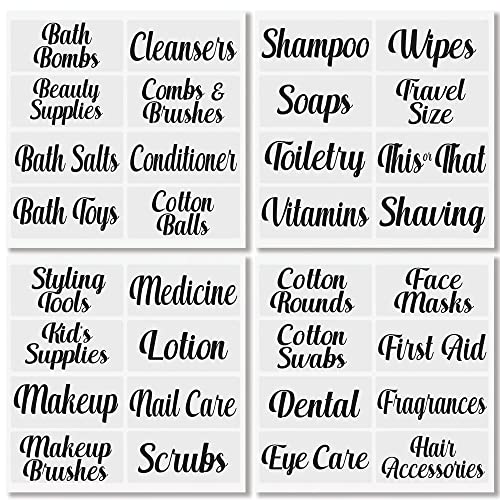
3. Work through one area completely
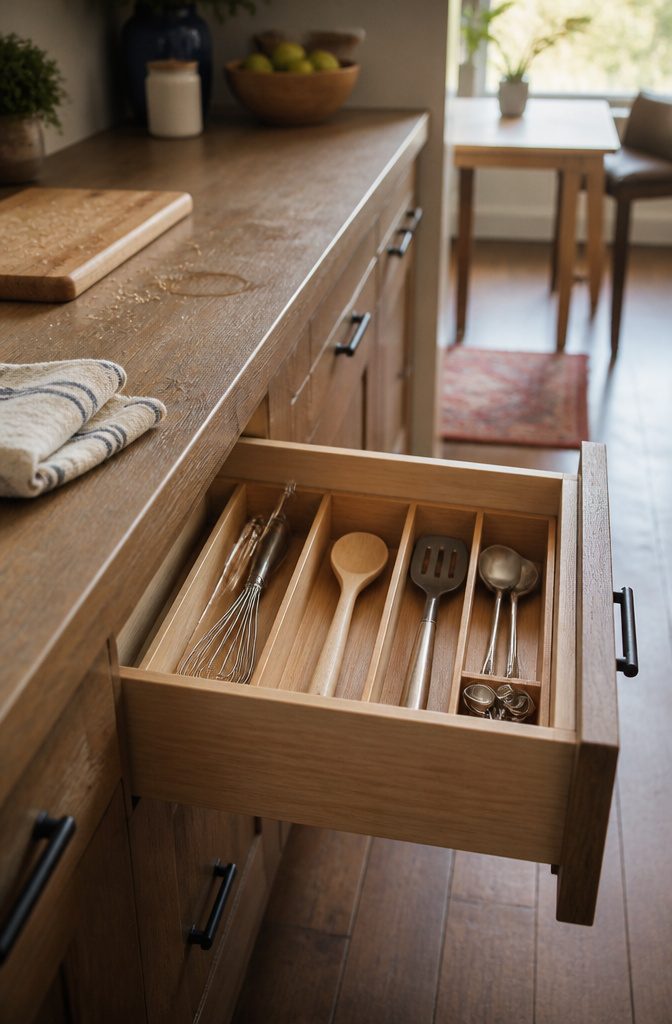
Pull everything out of the drawer, shelf, or cabinet so you can see exactly what’s there. This is the step that changes the whole process, because you can’t sort what stays hidden.
As you empty each section, wipe down the surface before you put anything back. That cleaning break keeps your momentum going instead of letting you stall halfway through.
Start with one specific room, closet or shelf to prevent getting overwhelmed — and continue to the next area or space only after you’ve fully completed the current one.
— Fox News
Finish one area completely before moving to the next. Set a timer for 15 to 30 minutes if you’re working in short bursts, or block off a few hours for a bigger zone.
The point is closure: when you close that drawer, the job there is done. You see the progress, you feel it, and you’re ready to move forward instead of bouncing between half-finished spots.
One small win, one cleared drawer or shelf, shows you what a decluttered space actually feels like, and that matters more than speed.
Custom Fit Design: Perfectly tailored for our 20 liter dual recycling trash can liners; allowing for swift and easy bag replacements

Custom Fit Design: Perfectly tailored for our 30 liter dual recycling trash can liners; allowing for swift and easy bag replacements

Made with 20% post-consumer recycled material; from garbage or waste that's been used by a consumer, disposed of, and diverted from landfills
4. Decide what to keep
The hardest part of decluttering is deciding what stays.
Most people keep things out of guilt, sunk cost, or the vague idea that someday they might need them. Those are the reasons clutter stays.
Start with the 90/90 rule: if you haven’t used something in 90 days and won’t use it in the next 90, it goes.
The exact timeframe is flexible, you might work with 6 months or a year instead, but the principle holds. If an item isn’t serving you now, the space it takes up is worth more than the object itself.
For the what-if items, ask if you could replace it for under $20 within 20 minutes. If yes, let it go.
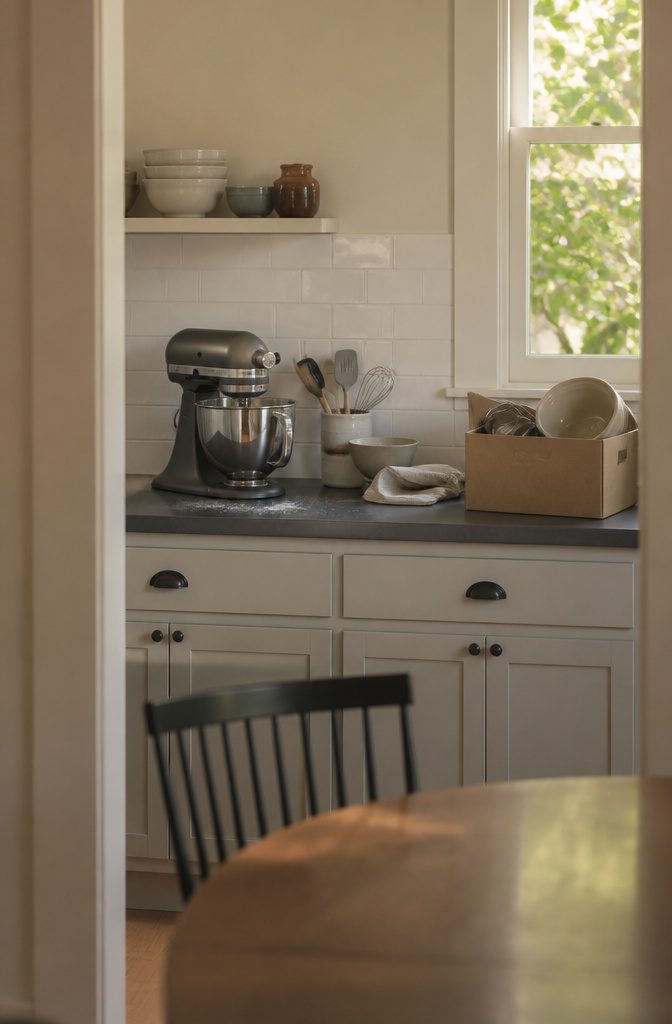
You won’t need it. That expensive KitchenAid mixer collecting dust on your counter cost money once, but you can’t recover that.
What matters now is whether it actually improves your life. If it doesn’t, it’s just taking up room where something useful could be.
Get rid of duplicates and anything broken that isn’t worth fixing.
Don’t keep items because you already spent money on them. Toss the guilt keepers too, the gifts you never loved, the clothes in your size from five years ago, the things you’re hanging onto because you feel like you should.

【Package Contents】 Donation Box, 2 Keys, Sign Sticker Template Dimensions: 4.75"D x 6.29"W x 8"H (with sign holder); 4.72"D x 6.2"W x 3.93"H (without sign holder).

Multipurpose: Size: 6.5" L x 4.5" W x 4.5" H. Work great as ballot boxes, suggestion boxes, donation boxes, raffle boxes and so on. Excellent for various occasions such as voting, fundraising, school activities, charity parties, family reunions, etc.

【Package Include】You will receive 1 pack acrylic donation boxes with 1 pack Detachable Sign Holder, suggestion box measure 6.2x4.6x3.9inch, The removable sign holder on the top of the ballot box has dimensions of 6.2x4inch,enough to meet your daily needs.Tips: To prevent the key from scratching the surface of the plastic lottery box, we put the key inside the box. When you receive the product, open the box first to get the key.
5. Find a home for everything you keep
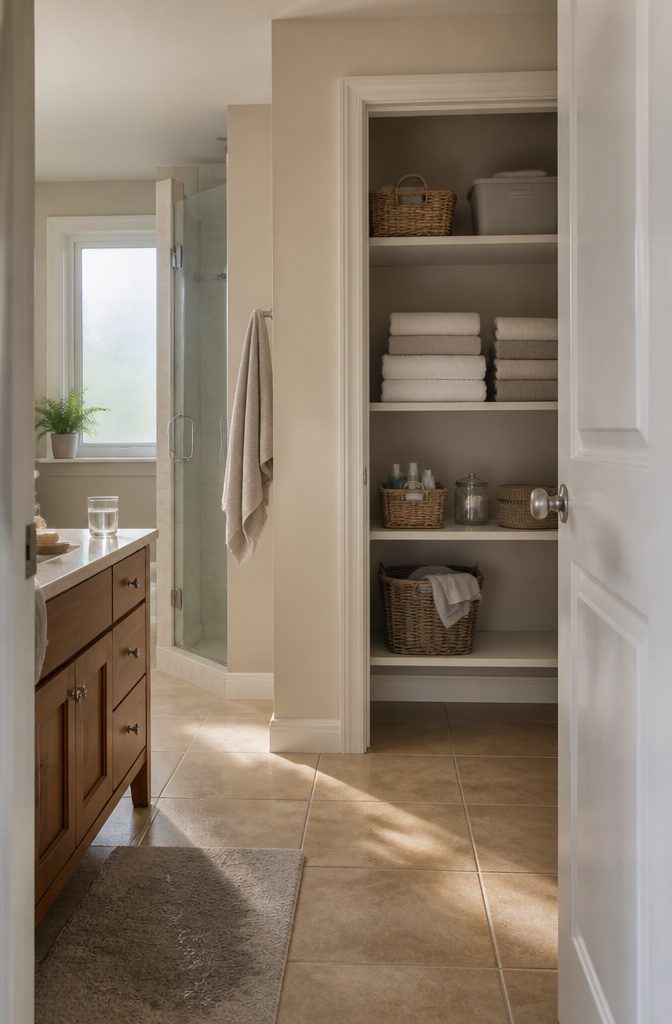
Once you’ve decided what stays, each item needs a designated spot near where you’ll actually use it.
Keep similar things together, so you know exactly where to find them when you need them. If you can’t assign something a home, that’s a signal to get rid of it or remove something else to make room.
Before you buy any organizers or storage containers, wait until you’ve finished decluttering the whole space. It’s easy to get excited about new bins and labels, but buying them first means you’ll end up storing items you’re about to discard.
Once you know what you’re keeping, label your containers or add an inventory sheet so you can find things later. Store seasonal items like decorations up high or under beds, behind things you use more often.
Put frequently used items in the most accessible spots so they stay easy to grab. Stack labeled containers neatly in a designated storage area, and the system stays functional instead of becoming clutter itself.
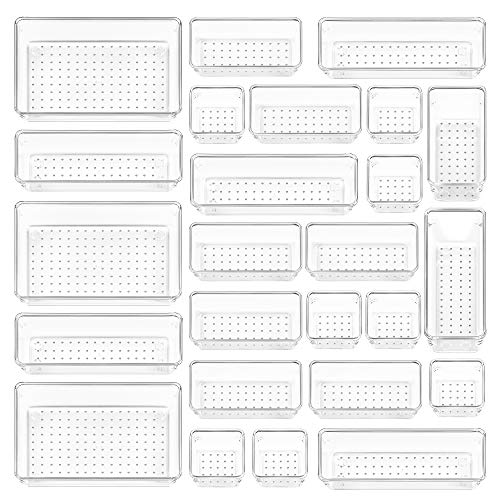
✔Make Everything Organized -- These clear versatile drawer dividers trays are perfect for any place in your home. Fit all kinds of drawers, such as vanity / bathroom / kitchen / office drawers/ craft room, ideal for organizing cosmetics, makeup tools, hair accessories, jewelry, pins, office supply, craft supplies, utensils, etc.

Premium Material:The drawer organizer is made of non-toxic plastic which may be safely used. The transparent design makes it easy to find what you need quickly

SET OF 2: The set includes 2 trays,12 Compartment Tray(1 pc) and 24 Compartment Tray(1 pc),Each tray measures 12.5x8.5x1.2,Convenient and roomy enough for you to store and wear your different jewelry.
6. Remove unwanted items promptly
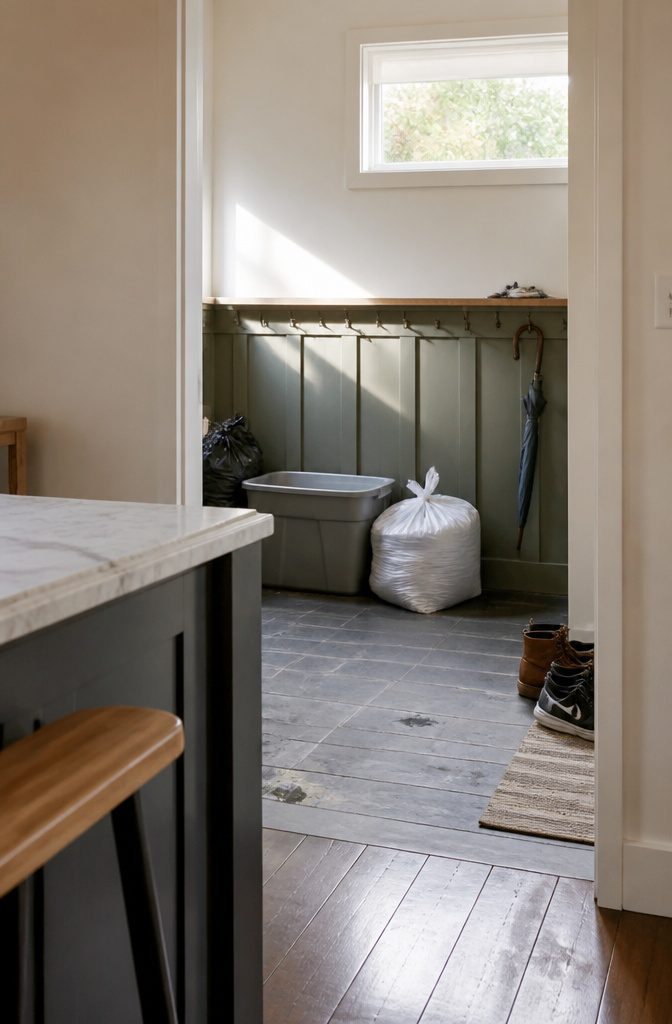
The items you’ve decided to remove need to leave your home quickly.
Set a drop-off date before you finish sorting, so the decision to let something go doesn’t reverse itself while a donation bag sits in your bedroom for three weeks.
An opaque container keeps you from taking a second look, which matters more than it sounds, out of sight shifts the psychological weight.
If you can’t reach a donation center immediately, move the pile to a less visible spot and schedule the drop-off for the near future rather than holding onto it indefinitely.
Check what each place accepts before you go.
Local charities take clothes and household items in good condition, but guidelines vary. Recyclables like glass and plastic go to curbside pickup if your area offers it, or to a drop-off center otherwise.
For items beyond repair, Earth911.com can locate proper recycling centers near you. Anything that won’t sell or donate gets thrown away, a dumpster rental is worth the cost if you have a lot or large items to move.
Make dropping off donations a regular habit so decluttering becomes routine rather than a one-time push.

【Simple & Chic & Fun】high premium 2 tones of Maroon and gray felt storage bins, simple sleek & chic style , add an elegant touch to your office or home , turn chaos into things of beauty and efficiency. help you declutter your every day, obsessed with organizing fun to have different layout with various size combination . you know where things are without searching, this feels safe

36 Pack of Small Storage Containers: Each clear plastic box is 7 5/8 inches long, 6 1/2 inches wide and 4 1/2 inches tall, a handy size for small items around the house, office or classroom

Durable and Safe for Everyday Use:our book bins for classroom are made of high quality PP material, which is safe, odorless, durable, reusable and impact resistant to ensure that they stand up to daily play, so you can use them with confidence.
7. Keep clutter from coming back
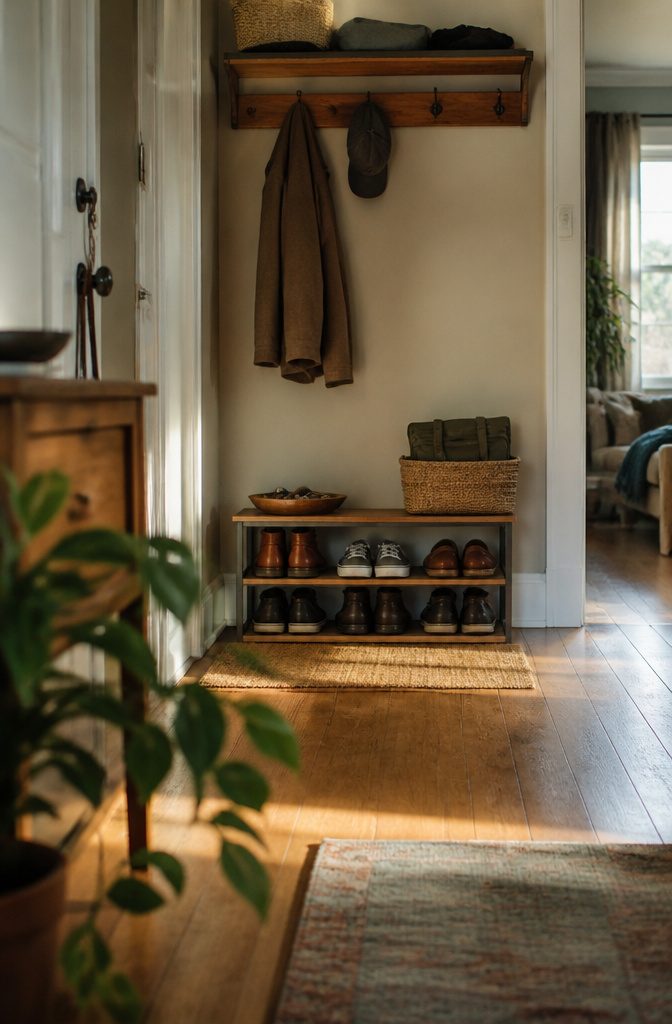
Decluttering stays gone when you stop letting it pile up again. Schedule regular sessions to review your things, but keep them short: tackle one category or one corner per day rather than waiting until spring and facing weeks of work.
This approach takes far less time because the clutter never gets ahead of you.
The daily habit that matters most is returning items to their designated places as soon as you’re done using them.
Store what you use often where you use it most. Seasonal items, decorations, holiday gear, can live up high, under beds, or behind things you reach for regularly, since you won’t need them as much.
When something new comes in, let something old go out. This one-in-one-out rule stops accumulation before it starts and keeps the space you just cleared from filling back up with habits that brought it there.
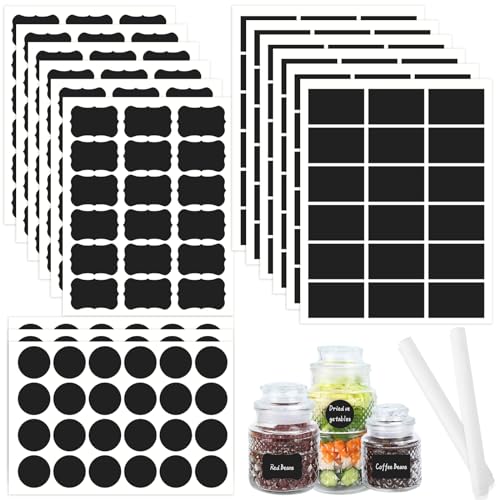
【Ample Quantity】You will receive 288 blackboard labels stickers 2 sizes and 3 shapes labels with 2 White Chalk Marker for your all-in-one package,Reasonable size let you can cut these blackboard labels into different shapes

Organizing Files: Label stickers are commonly used in office settings to organize files and folders. By attaching label stickers to the folders, individuals can easily identify and locate specific documents

Get Organized: Clothes organizer can make your closet a lot neater. Suitable for all sorts of clothing, they can be used at home or in fashion retail stores to keep your closet as organized as you want it to be
Make the task manageable with time limits and breaks
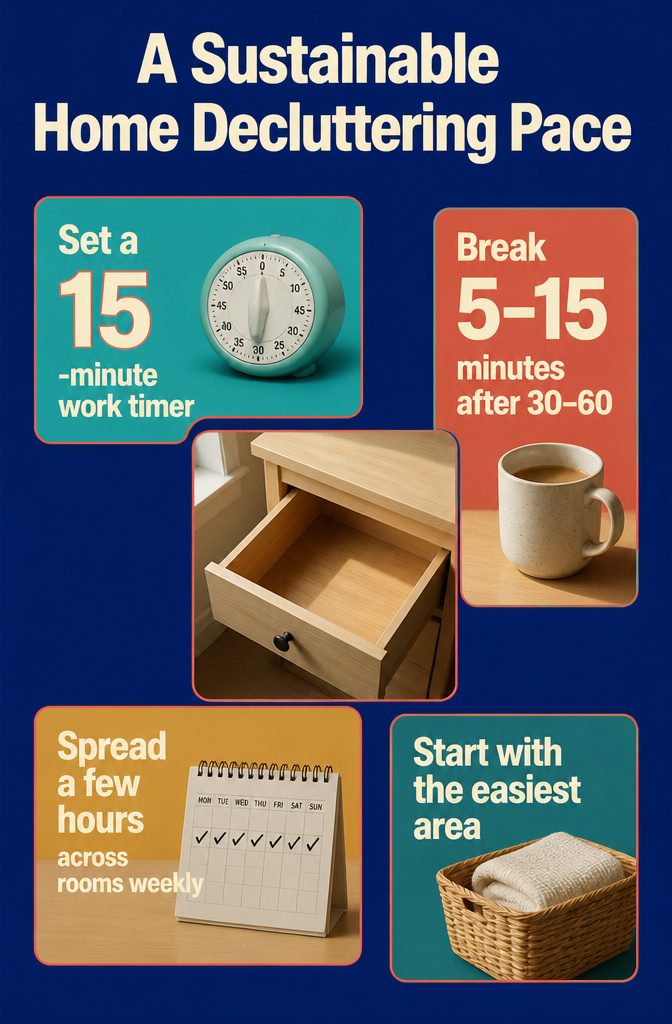
Decluttering a whole house in one day leads to burnout. The fix is simple: set a timer for 15 minutes, work on just one drawer or shelf, then stop and take a break.
This keeps the task from feeling overwhelming and lets you see progress, even if it’s small. After 30 minutes to an hour of work, step away for 5–15 minutes before starting again.
You can also spread the work across weeks by allotting a few hours per room rather than tackling everything at once.
If a few hours still sounds like too much, break each session into smaller chunks: one drawer in your bathroom each night, or one zone at a time.
Starting with the easiest area first builds momentum and gives you the confidence to keep going.
The goal is consistency over speed. Decluttering isn’t a race, and how long it takes matters far less than actually finishing without getting discouraged and giving up halfway through.

LARGE LAWN & LEAF GARBAGE BAGS-This package contains 38 Hefty Strong large, black, unscented, 39 gallon lawn & leaf bags

13 Gallon Tall Kitchen Garbage Bags-This package contains 40 Hefty Ultra Strong 13 Gallon Kitchen Trash Bags in White, Unscented

FORCEFLEX TECHNOLOGY: Patented dual layer design expands around sharp edges and heavy loads, resisting punctures, rips, and tears for our strongest kitchen bag; Package May Vary
Rules of thumb for deciding what stays
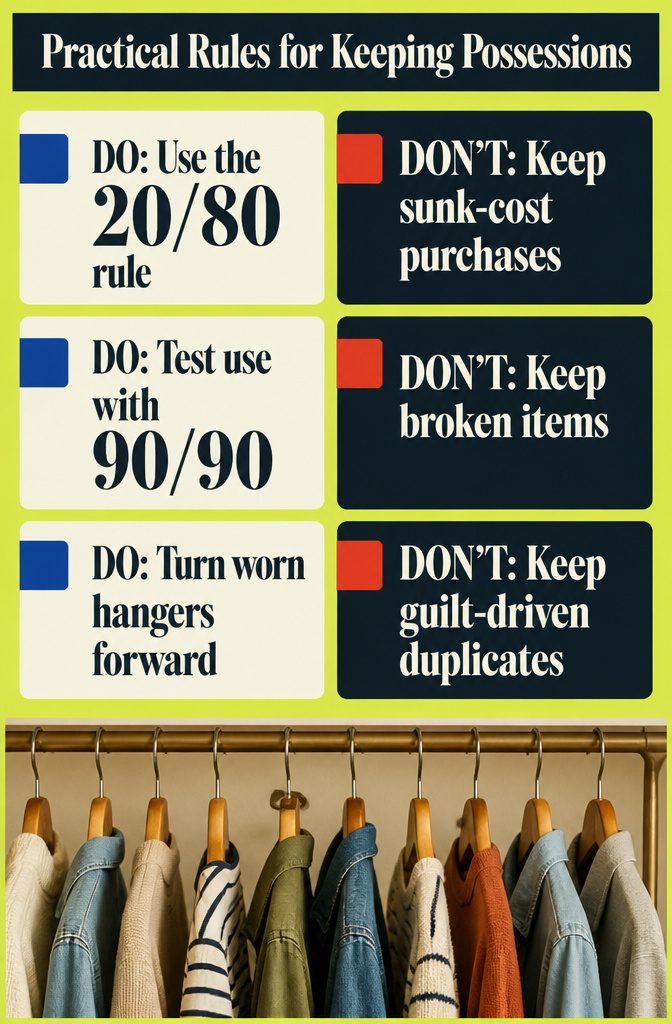
You’ll use roughly 20% of what you own 80% of the time, which means most of your other possessions are candidates for removal. This ratio holds across clothing, books, electronics, and toys, so it’s a reliable starting point for any category.
The 90/90 rule tests whether you’ve actually used something in the past 90 days or expect to use it in the next 90 days.
If neither is true, it goes. This works well for seasonal items and things you keep "just in case", the rule forces you to be honest about actual use versus theoretical use.
For clothes specifically, the hanger test reveals what you reach for: turn all hangers backward, then after wearing something, turn its hanger forward.
After a month or two, anything still backward hasn’t been worn. A one-year version works for less-frequent items: if you haven’t used something in a year, you likely won’t miss it.
Don’t keep something just because you spent money on it.
That sunk cost stays sunk whether the item stays or goes. The real question is whether you’d buy it again today at its current price and condition.
If the answer is no, remove it. Toss anything broken beyond repair, and get rid of guilt-driven duplicates, you need only one of most things.


This money drop box is made of high quality steel, which is not easy to rust and deform, ensuring durability and longevity

Quality Material: NutroLab locked mailbox is made of quality metal with 100% rustproof surface coated, thick strong metal can prevent deforming for long term usage
Handle emotional barriers
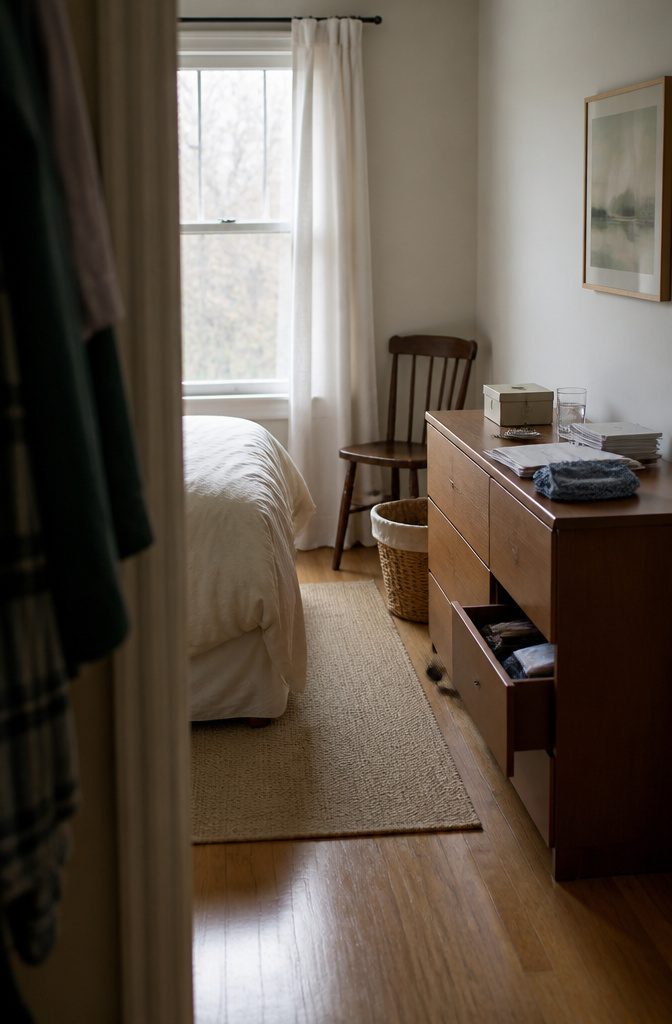
Guilt and sentimental attachment are the real obstacles in decluttering, not the stuff itself.
You’re holding onto a wedding gift you never use, your kids’ school papers, items "just in case", these feel impossible to release because they’re bound to obligation or memory, not because they’re useful.
The fix is to separate the emotional decision from the physical one.
Set sentimental items aside temporarily and sort through everything else first. Once you’ve cleared the easier categories and feel the space you’ve created, the harder choices become lighter.
Sunk cost is another trap. An expensive appliance you never touch, clothes you overpaid for, you keep them because of what you spent, not what they do for you now.
That money is already gone. What matters is whether the object adds value to your life today, and how much space it takes up while it sits unused.
If you live with others, don’t force the process on them. Start with your own items.
Watching the space you reclaim often moves people to join in, but resistance is real and pushing harder usually backfires. Take breaks when you hit fatigue; decluttering is emotional work, and sprinting through it leaves you exhausted.
Skip a day or two to recover. This is not a race.

4 Drawer Dividers with 9 Inserts: Customize your drawer with our bamboo dividers and inserts; You can organize everything from silverware to utensils. The mini dividers can be easily inserted to make smaller or larger storage parts; LENGTH SIZE: Expandable from 17" to 22" Long

Perfect Drawer Organizer: This is a simple and easy way to organize kitchen utensils or clothes; Keep everything neat, organized and access convenience

Various Storage Options: These multi-functional drawer divider tool trays are suitable for use at home or in the office; suitable for all drawers, such as vanity/bathroom/kitchen/office, for organizing cosmetics, jewelry, accessories, office supplies, etc
Room-by-room guidance
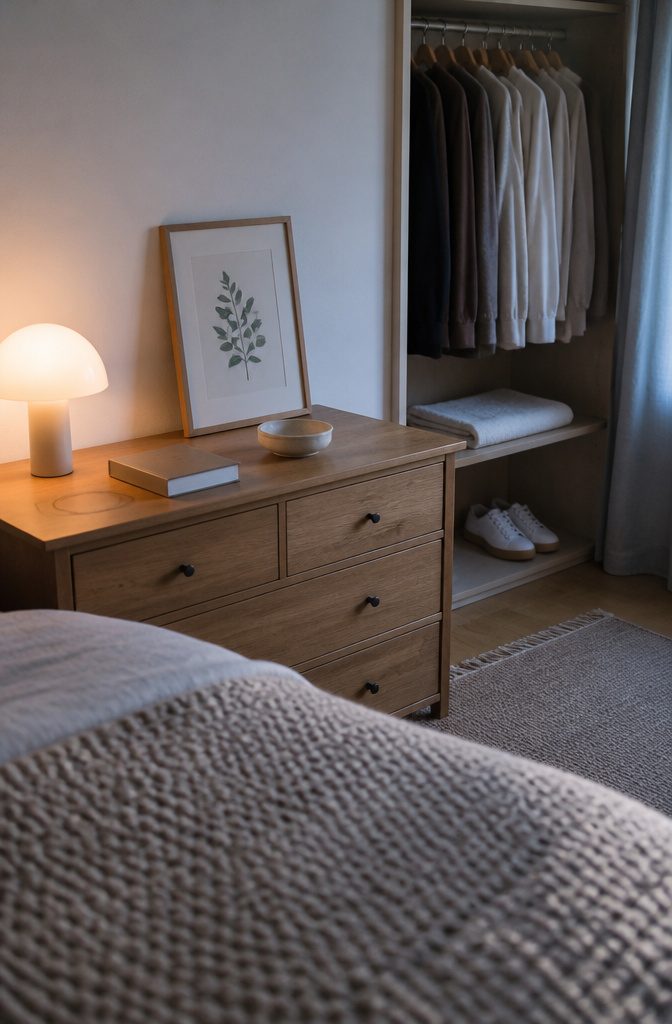
Start with the bedroom. Keep flat surfaces like dressers and nightstands to fewer than five items each; a lamp, a few pictures, and maybe a dish for jewelry is enough.
A calm bedroom depends on visual quiet, and empty surfaces deliver it faster than anything else.
Gather all your clothes in one place, then sort through. Remove anything worn out, mismatched, or unworn in months.
For daily wear, seven days of daytime outfits handles most weeks without laundry; add five pajama sets, ten underwear and sock pairs, and three shoe types for variety. This scale fits most people’s actual needs.
Nightstands get only essentials: a lamp, a book, water. Everything else moves elsewhere.
Towels follow the same principle. Keep 1–2 bath towels per person plus 3–5 washrags.
More than that crowds the linen closet and the bathroom floor. Most bedrooms take an afternoon to a weekend to finish if you stay focused.
Benefits of decluttering
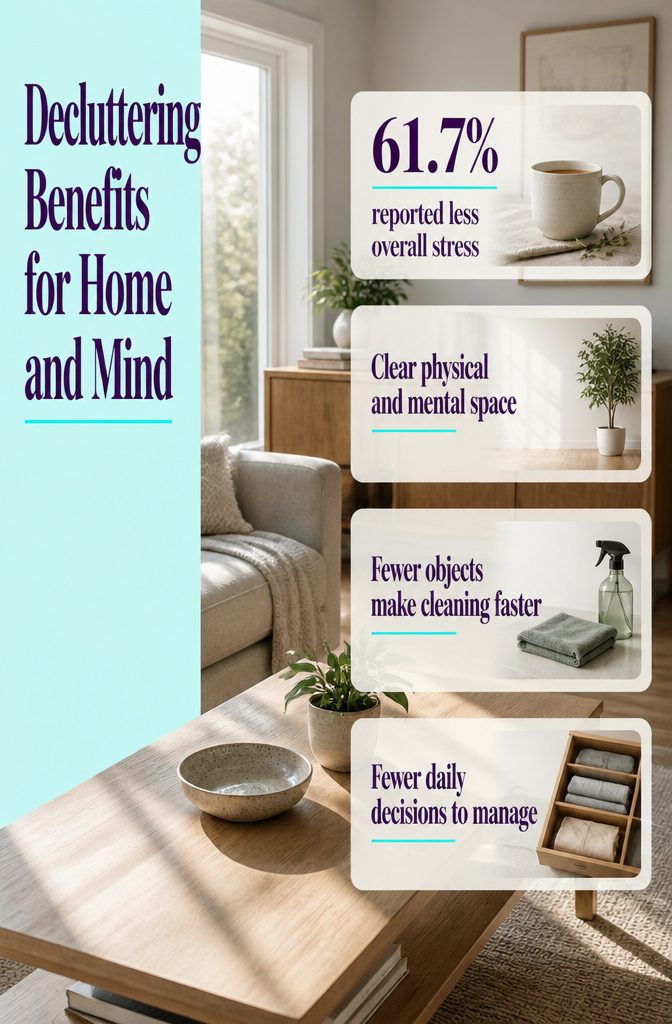
When clutter piles up, stress follows. In a survey of Americans who decluttered in the past year, 61.7% said it reduced their overall stress level.
Removing items you don’t use or need clears physical space in your home, but it also clears mental space. You stop spending energy maintaining things that don’t matter to you.
A decluttered home is faster to clean. Think about the time you spend dusting around objects, moving things to wipe surfaces, or searching through drawers for what you actually want.
Half those items gone means half the time spent on upkeep. That freed-up time and mental energy go toward the people and activities that fill your life instead of toward unnecessary maintenance.
Beyond stress relief and easier cleaning, a simpler home helps you focus and move through your day with fewer decisions pulling at you. The result is a space that serves you rather than one you serve.
Frequently Asked Questions
How do you declutter when you don’t know where to start?
Pick one small area you can finish in 15 minutes or less, like a single drawer or shelf.
The goal is to complete something quickly and feel what cleared space actually does for you rather than overwhelming yourself with a huge project. Once you see that first win, the momentum carries you forward to the next area.
What are some good rules of thumb to follow when decluttering?
Use the 90/90 rule: if you haven’t used something in 90 days and won’t use it in the next 90, it goes. For items you’re unsure about, ask if you could replace it for under $20 within 20 minutes.
If yes, let it go. Remove duplicates and anything broken beyond repair, and stop keeping things out of guilt or sunk cost.
What happens when you clear clutter from your life?
Decluttering reduces stress, speeds up cleaning, and frees up mental energy for people and activities that matter to you.
In one survey, 61.7% of people who decluttered reported lower stress levels. A simpler home means fewer decisions pulling at you throughout your day and more time spent on what actually fills your life.
Are people really happier with less stuff?
Yes. A clutter-free home improves focus, reduces anxiety, and creates a calmer space where you can think clearly.
You also spend less time maintaining things you don’t use, which leaves more energy for activities and people you care about instead of unnecessary upkeep.
How often should you declutter your home?
Schedule short, regular sessions rather than waiting for spring cleaning to tackle everything at once.
One drawer or corner per day keeps clutter from piling up and makes the work far less stressful than facing weeks of sorting when it’s gotten ahead of you.
How many clothes and towels do you actually need?
For daily wear, 7 days of daytime outfits plus 5 pajama sets, 10 underwear and sock pairs, and 3 shoe types covers most weeks without laundry.
For towels, keep 1 to 2 bath towels per person plus 3 to 5 washrags. More than that crowds your space without adding real utility.