
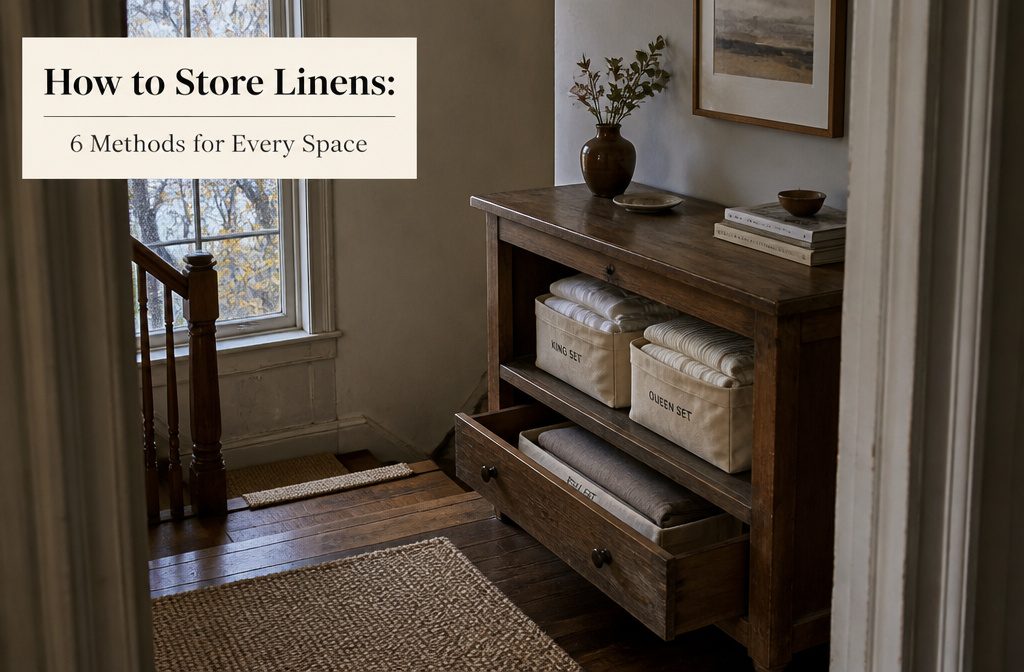
Two sheet sets per bed is the practical standard, but most linen closets collapse into chaos before you can rotate them.
The problem is not the storing. It’s that linens scatter across shelves and drawers the moment you stop actively hunting for matching pieces.
Without a system to keep sets together and containers to protect them from dust, you lose an hour searching for what you need and end up rewashing things that sat too long in the wrong spot.
1. Choose a suitable storage space
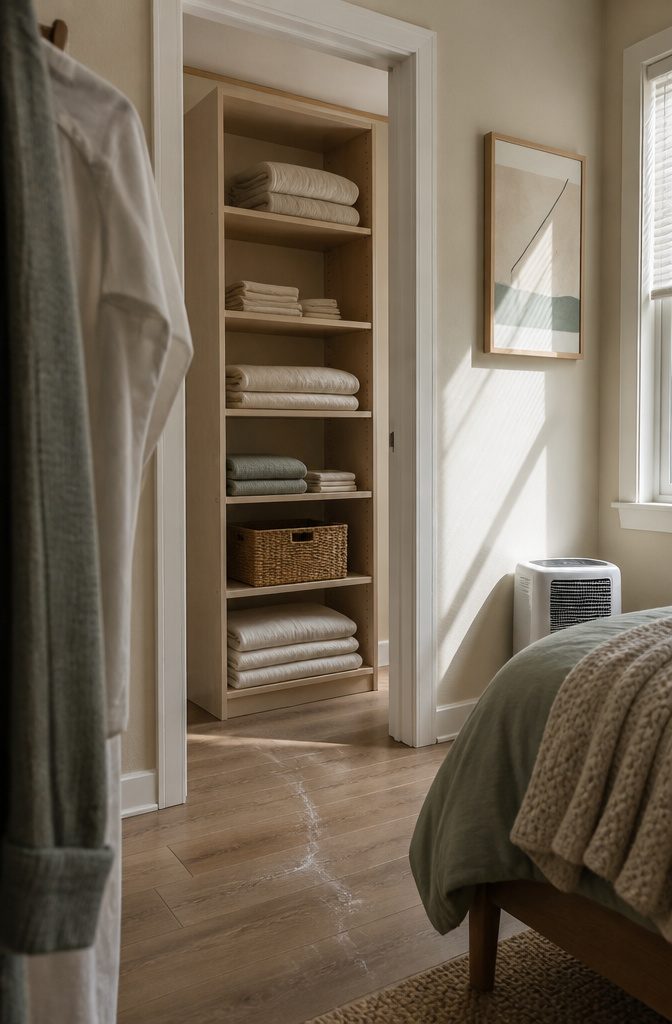
A dedicated linen closet works best, but most homes don’t have one.
A dresser drawer stores sheets and pillowcases well and keeps them within arm’s reach. Shelving units give you flexible, custom storage that you can adjust as your collection grows.
Under-bed storage containers and rolling carts reclaim dead space beneath the bed, which is smart for homes short on square footage. Trunks at the end of the bed double as furniture and storage.
Hanging organizers or decorative baskets work if you’re tight on space. Multi-purpose furniture like ottomans with storage compartments serve double duty.
Whatever space you choose, keep it clean and dry.
Avoid direct sunlight and humidity, which fade and yellow fabric over time. Good airflow keeps linens fresh.
If your chosen spot tends toward dampness, that’s a signal to move your storage elsewhere or add a dehumidifier. Dust and pests damage linens too, so make sure the space actually protects them rather than just hiding them away.

Premium Material : The under bed storage containers are made from high-quality, odorless, three-ply composite non-woven thick fabric, foldable and breathable, keep clothing fresh from long-term storage. NO cardboard NOR metal supports insert, arrive to you collapsed and packaged in a clear storage bag.

Under-the-bed storage bag (2-pack) helps keep items safely stored, freeing up extra closet and drawer space

Large Capacity: This under bed storage bag measures 39.4"(100cm) x 19.7"(50cm) x 7.1"(18cm) and has a capacity of 95L which can easily hold 20 sweaters, 4 thick blankets and 14 sheets. Ideal for under-bed storage, closet or shelves.
2. Keep matching sheet sets together
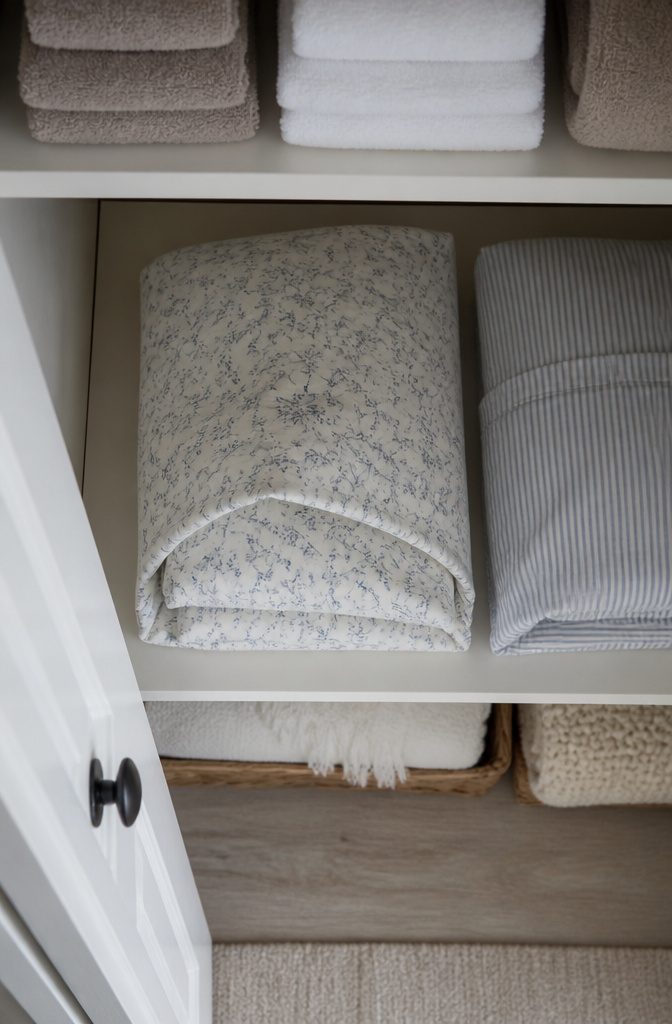
Storing your sheet set as a single unit prevents pieces from scattering across the linen closet and saves you time when you need them.
The simplest method is to tuck the entire folded set inside one of its own pillowcases. This way the fitted sheet, flat sheet, and both pillowcases stay together without any extra supplies or folding tricks.
If you prefer not to use a pillowcase as a container, fold the pillowcases separately and then nest them inside the last folded pillowcase along with both sheets.
When you reach for the set, everything comes out as one bundle. The pillowcases can then be removed individually if you don’t need all of them for your bed.
Keep matching sets stacked together on the same shelf or in the same section of your storage space so you’re not hunting through unrelated linens just to find what goes with what.
The moment sets get split across different shelves or containers, the whole system falls apart.

【Reinforced Storage That Builds Up, Not Out】Create more room without taking over your floor space. These closet organizers and storage baskets stack vertically to turn unused shelf height into practical closet storage. The reinforced structure helps each closet organizer stay neatly in shape while organizing shirts, pants, towels, accessories and lightweight daily essentials.

【4PACK LINEN CLOSET STORAGE with SEE-THROUGH WINDOW】Each linen closet organizers and storage box features a clear window, allowing you to see the contents at a glance, making it super convenient to find what you need in no time.

SIX MATCHING BAGS FOR SORTED STORAGE: Includes 6 clear storage bags with zipper closures, each 15.7 x 13.8 x 3.9 inches (40 x 35 x 10 cm). Group folded clothing and lightweight linens by type, season or family member.
3. Organize linens into categories
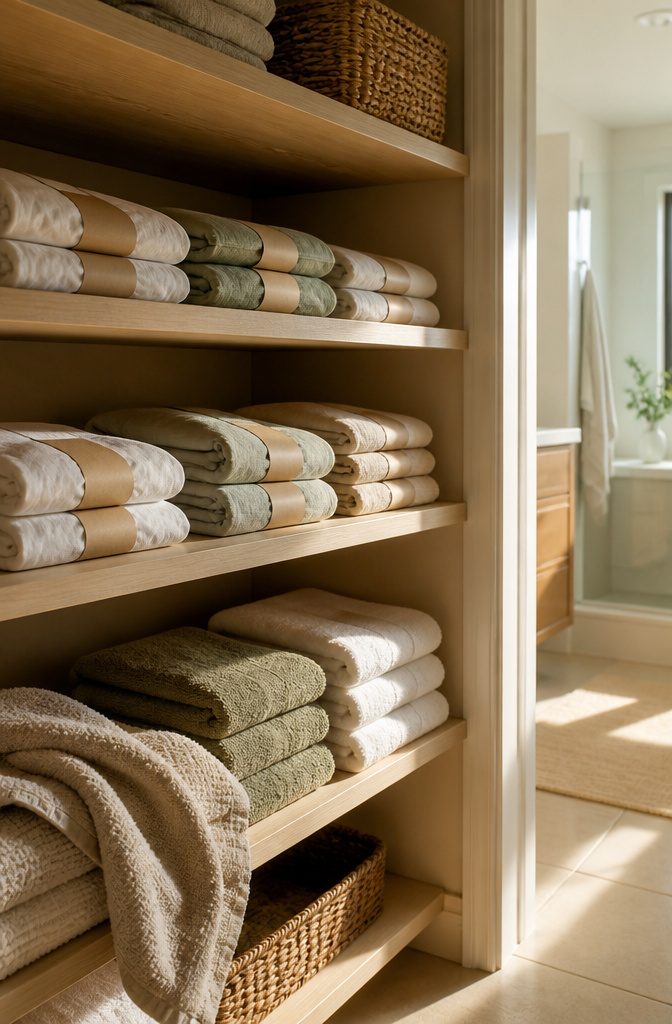
Sorting linens by type, room, bed size, or user keeps them easy to find and prevents the scramble of mixing everything together.
Start by pulling out what you have and grouping sheets by size, then separate towels by purpose: hand towels, bath towels, kids’ towels, beach towels. Each category gets its own designated shelf or bin.
Group sheets for the same bed together and wrap them with a band labeled by size, so you grab the right set without unwrapping every bundle.
If your house has multiple bed sizes, store each size’s linens separately, either in its own bin or in a section of your closet.
This boundary keeps you from overstocking one size while running short on another. Kids’ towels belong near their bathroom; beach towels near the laundry room where they’re used.
Removing towels that drift into the main linen closet frees space and makes finding what you need obvious. When someone needs fresh sheets at midnight, they grab the right bundle instead of rooting through piles.

[ LUXURIOUS DURABILITY: Upgraded 1200D Linen Type Cloth ] - Skip the flimsy, short-lived Non-Woven Fabric sheet organizer. Our product features a substantial 1200D density Linen Type Cloth Fabric, providing extreme tear resistance and longevity, while the Linen Type Cloth finish ensures a premium, elegant texture that complements any room decor.

[ LUXURIOUS DURABILITY: Upgraded 1200D Linen Type Cloth ] - Skip the flimsy, short-lived Non-Woven Fabric sheet organizer. Our product features a substantial 1200D density Linen Type Cloth Fabric, providing extreme tear resistance and longevity, while the Linen Type Cloth finish ensures a premium, elegant texture that complements any room decor.

Heavy-Duty Protection with 360° Clarity: Crafted from thickened, reinforced PVC, these transparent bags offer tear-resistant protection against dust, humidity, and impacts. The clear material provides instant visibility to your items without unzipping—so you can effortlessly find what you need while keeping contents sealed
4. Use containers, baskets, or bins
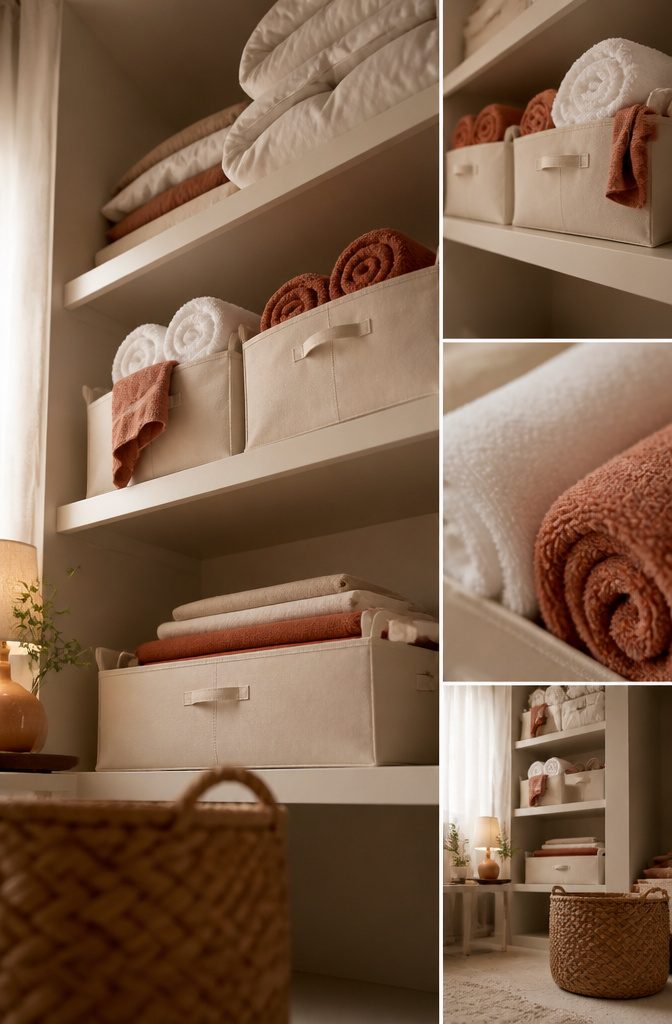
Grouping linens in containers protects them from dust and keeps everything easy to find.
Fabric containers are the better choice for regular storage because they breathe, which stops moisture from building up and prevents mildew on natural fibers like cotton and linen. Plastic containers work too.
They’re sturdier against pests and damage, and vacuum-sealed bags save space, but they trap air. Reserve vacuum bags for bedding you store seasonally or pull out rarely; they compress things down but aren’t meant for linens you rotate through regularly.
Label each container so you know what’s inside without opening it. Smaller bins work especially well for grouping similar items: one for washcloths, one for hand towels, one for kitchen towels.
This prevents the confusion that comes from stacked piles where you can’t tell one from another. Roll towels instead of folding to fit more in the same space.
For specific options, the Jucoan Shelf Dividers at $22 help separate containers on open shelves, and Oxford Grey Storage Boxes running $30–$40 keep things organized in closets or under beds while staying accessible.

Elegant Focal Point for Your Home: With its chic linen-look fabric and tufted design, this shoe storage bench enhances any living room or bedroom decor, working beautifully as an end of bed bench or a cozy window seat

Robust Sturdy Construction: Crafted from robust thick‑gauge MDF boards, this storage ottoman delivers outstanding weight‑bearing performance up to 660 lbs. Padded with high‑density foam and wrapped in soft breathable linen fabric, it offers plush comfortable sitting for everyday resting moments

【QUICK ASSEMBLY, EASY FOLDAWAY】This storage ottoman from the SONGMICS MAZIE Collection has a foldable design that allows quick setup in seconds by simply inserting the bottom panel. Easily fold and store it under the bed or in a closet when not in use
5. Label shelves and containers
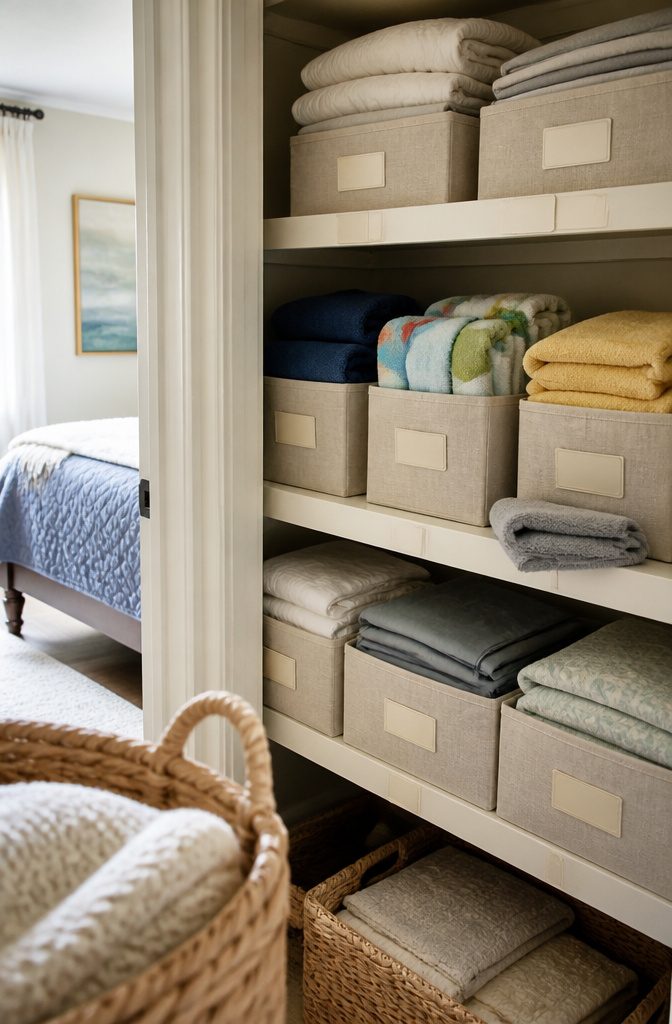
A label system turns a closet into something you can actually use. Without one, you waste time hunting for the right size, and linens end up back in the wrong spot.
The simplest approach is to label bins by bed size: King, Queen, Full, Liners, and Crib covers most households. Some people separate liners by size, but many work across different beds, so keeping them together saves space without the hunt.
Labeling also matters for purpose. Guest room towels, kids’ towels, hand towels.
When everything lives in its own labeled spot, putting items back takes no thought. Adhesive labels on bins work fine; a Sharpie and some tape do the job just as well.
The label itself doesn’t have to be fancy or permanent. Anyone in the house should know where a fitted sheet belongs when they need to put one away, and where to look when they need to find one.

【High Quality】: Our hanging closet organizer is crafted from sturdy and thick non-woven fabric, ensuring long-lasting use. Unlike similar products, it features 2 sturdy bamboo sticks at each shelf and MDF board at the top and bottom, effectively preventing the compartments from bending.
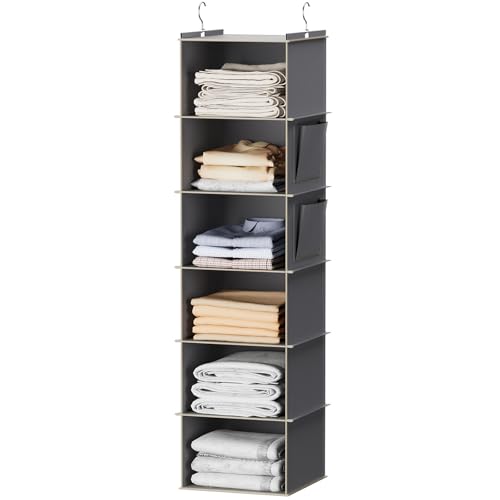
HIGH QUALITY: This hanging closet organizer is made of sturdy and thick non-woven, built to last. Unlike some similar product, this one has 2 pcs sturdy bamboo inserts at each shelf and MDF board at top & bottom, which can avoid the compartments bending.
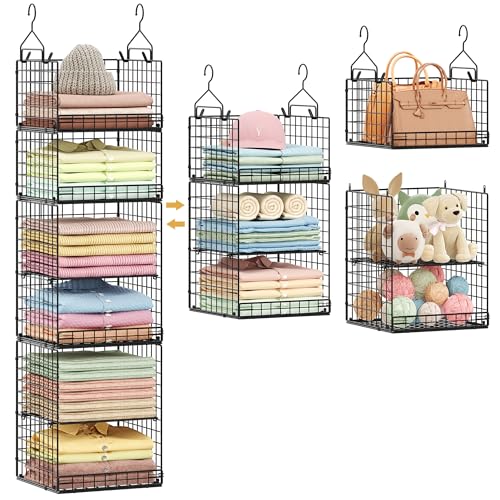
【4-in-1 or Use Alone】This metal hanging closet organizer features 4 baskets (2 large + 2 small), two pairs of hooks, and two dividers. Use them independently or mix and match freely based on your space length. Perfectly stores shirts, dresses, sweaters, hats, purses, shoes, socks, and more. Meet your different needs!
6. Roll towels and hang bulky linens
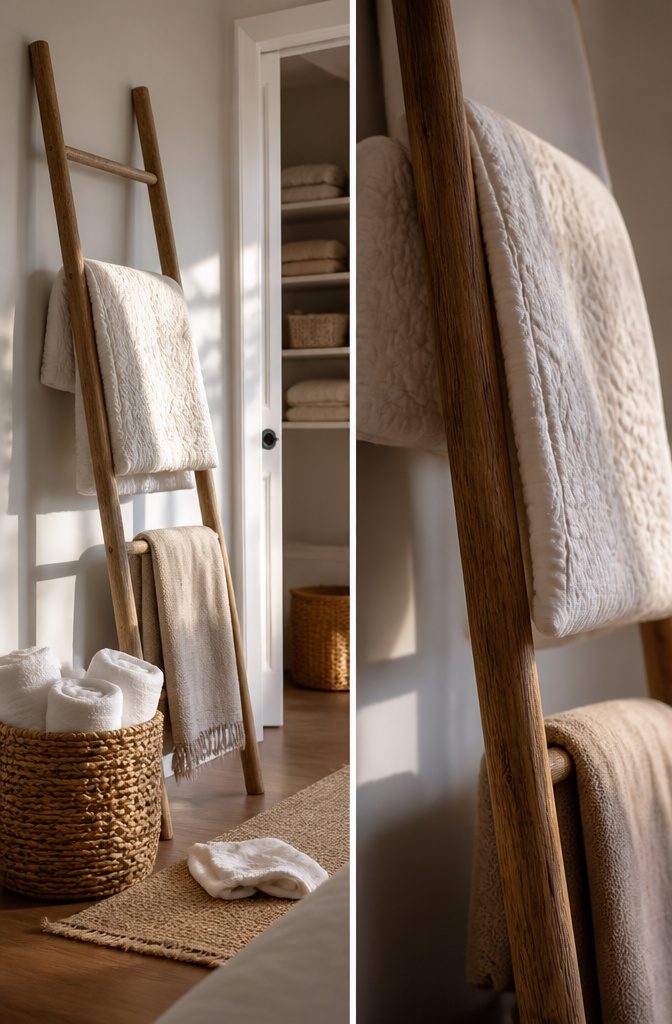
Rolled towels take up less space than folded ones, so if your linen closet runs tight, rolling becomes your first move.
Fold each towel in half lengthwise, then roll it from one end. The rolled form stacks neatly in baskets or bins, and you can fit more into the same shelf depth than folding allows.
Bulky items like blankets and quilts belong on hangers or display racks rather than stacked flat, which frees up shelf real estate for everyday linens.
A decorative ladder works well for this, or hang pieces on towel bars and clothing racks inside the closet.
Table linens and placemats can hang from a multiple-pant hanger on the back of a closet door. These vertical solutions trade some visual presence for functional space, which saves real square footage when storage is limited.

【Large Capacity】Underbed storage containers has 95 Liter / 24.5 Gallon load capacity, dimensions: 39 "(L) x 20"(W) x 7 "(H), 7inch height designed for most underbed space, the storage bags works well for storing items like gift wrap, plush toys, blankets, towels, clothing, bedding, linens sheets, pillows, comforters, seasonal clothes, shoes, holiday decorations, Christmas wrapping papers and stuffed animal storage. Ideal dorm room essentials storage for girls guys

MAXIMIZES STORAGE SPACE: These bags are ideal for under-bed storage, making use of hard-to-reach areas. They hold an impressive volume of items, such as seasonal clothing, blankets, shoes, and even outdoor cushions, while saving significant space compared to bulky plastic bins
Keep linens clean and fresh
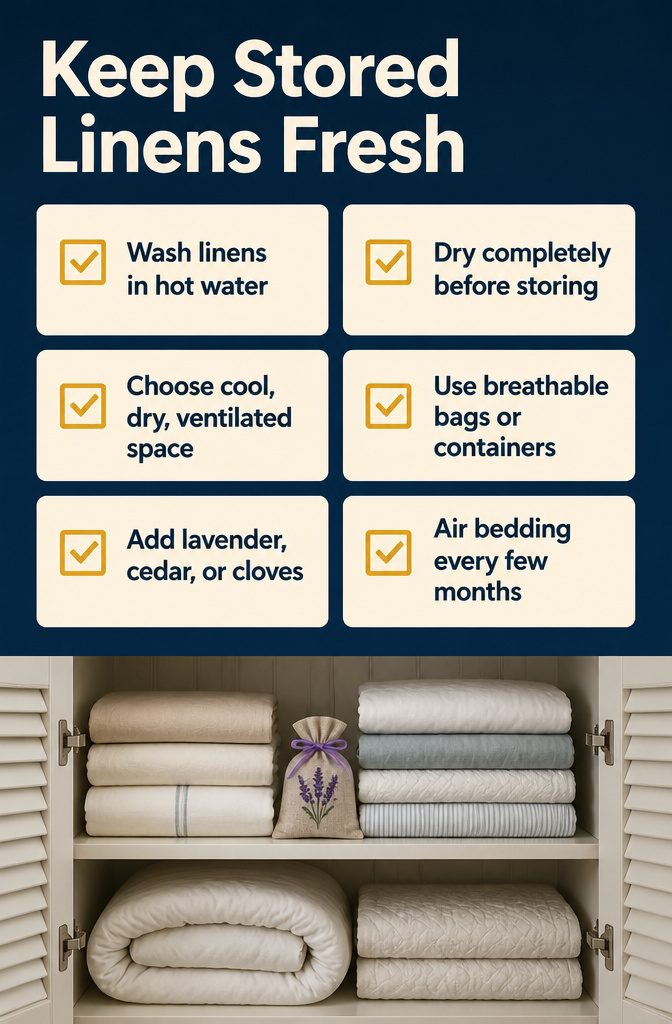
Wash all linens in hot water before storing them so you’re not packing away dust, oil, and skin cells from previous use.
Make sure everything is completely dry before it goes into storage, since moisture invites mold and mildew. A cool, dry, well-ventilated space protects linens from the conditions that break them down.
Once stored, linens need protection from dust and pests. Keep them in breathable containers or bags rather than sealed plastic, which traps moisture.
Use natural deodorizers like lavender sachets, cedar chips, or cloves to keep linens smelling fresh and to repel moths. Avoid mothballs; they damage fabric, smell unpleasant, and pose a safety risk around children and pets.
Rotation keeps linens in better condition. Every few months, take your bedding out and hang it outside in fresh air, or swap seasonal pieces in and out of regular use.
When storing quilts or duvets after cleaning, wrap them in a cotton sheet first so the filling can breathe and any lingering moisture has room to move rather than settling into the batting.

Unique Trapezoid Design: Our closet bins feature a unique trapezoid design with a lower front for easier visibility and access. The Homsorout shelf organizers now come in 10 new colours, offering more options for your space

KEEP YOUR CLOSET ORGANIZED: Great way to separate clothes or purses, our shelf dividers can keep them in place. Definitely, it can free up more space to make your house look better. The fly in the ointment is that please don't mount it on a board longer than 0.95 inches, it will cause it to break.
Declutter and keep only what you need
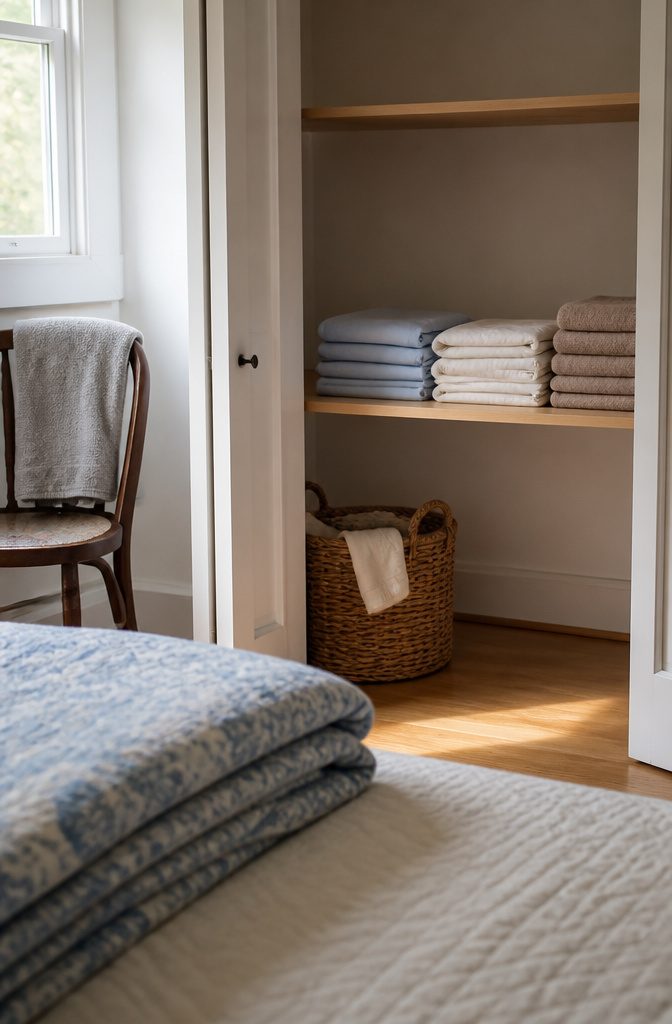
Before you start using linens regularly, sort through what you own.
Pull out sheets, towels, and other pieces, and be honest about which ones you actually use. Worn fabrics, stains that won’t come out, and duplicates you never reach for take up real space without earning it.
Keep only what fits your life: two sheet sets per bed is the practical standard, leaving one in use while the other dries after washing.
For towels, a dozen is plenty for most households; beyond that, they sit idle and create clutter.
Decluttering first makes everything that comes next simpler. You organize less, store less, and spend less time hunting for the piece you want.
When you know every item you own actually gets used, labeling works, bins stay manageable, and you notice immediately if something needs replacing. Start there before you worry about containers or rotation systems.
Protect delicate and seasonal linens
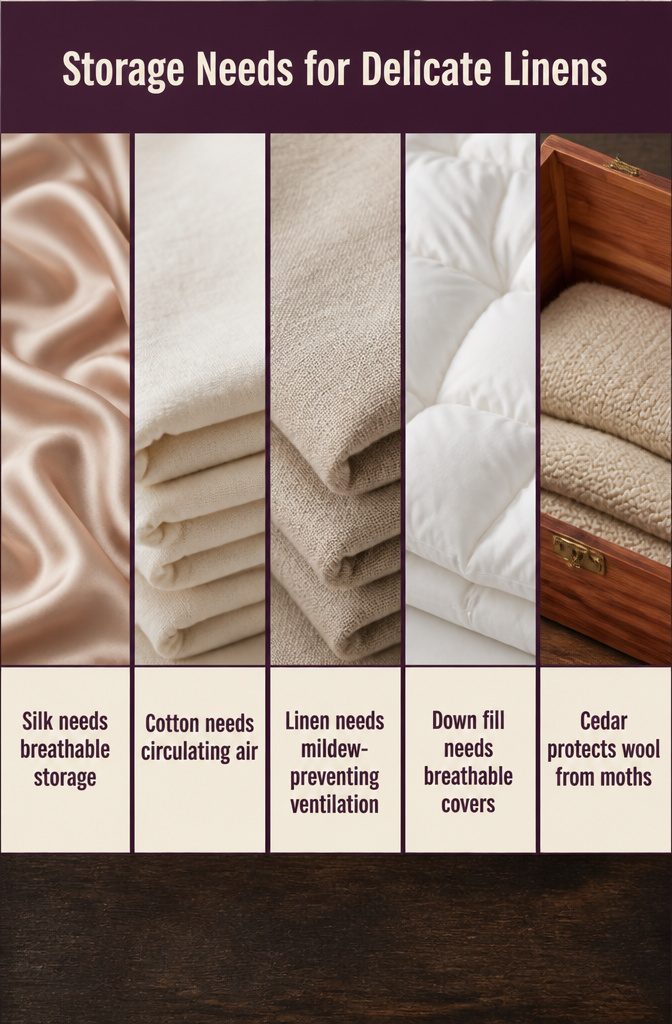
Silk and other delicate fabrics need breathable storage to prevent moisture buildup that can damage fibers. A breathable fabric bag or basket works better than plastic, which traps humidity and can cause discoloration.
Cotton linens also require air circulation; plastic bags trap moisture and musty odors, so store them where they can breathe. Linen needs ventilation to prevent mildew and wrinkles that set in when moisture gets trapped.
Down and down-alternative bedding has its own requirement: breathable covers protect the fill’s loft from compression damage.
Wool takes a different approach entirely. Cedar chests or bags with cedar lining prevent moth damage, which is the real threat to natural fibers in long-term storage.
After cleaning seasonal quilts or heavy winter duvets, make sure they’re completely dry, then wrap them in a cotton sheet before storing. The cotton sheet lets the quilt breathe while protecting it from dust and yellowing.
Frequently Asked Questions
How do you store linens without a linen closet?
Use bedroom drawers, under-bed storage containers, dresser shelves, hanging organizers, decorative baskets, or rolling carts to keep linens accessible and protected from dust and moisture.
Choose a cool, dry spot with good airflow, then group items so you can find what you need without hunting through unrelated pieces.
What is the best way to organize a linen closet?
Start by decluttering and keeping only what you actually use, typically 2 sheet sets per bed and about a dozen towels for most households.
Then separate linens by category (sheets by size, towels by purpose), use labeled bins or baskets to keep groups together, and assign each category its own shelf or section so anyone in the house knows where to find and return items.
How many sheet sets per bed do you need?
Two sets per bed is the practical standard, leaving one in use while the other dries after washing.
Some people prefer a third set, especially for flannel sheets, but beyond that most households find extras take up real space without earning their place.
How should you store towels to save space?
Rolling towels instead of folding them takes up less space and stacks neatly in baskets or bins. This method lets you fit more into the same shelf depth, which makes it especially useful if your linen storage runs tight.
What materials work best for linen storage containers?
Fabric containers are better for regular storage because they breathe and prevent moisture from building up, which stops mildew on natural fibers like cotton and linen.
Plastic containers work too and offer better protection against pests, but they trap air, so save vacuum-sealed bags for bedding you store seasonally or pull out rarely.
How do you keep stored linens fresh and protected?
Wash all linens in hot water and dry them completely before storing to prevent mold and mildew.
Use natural deodorizers like lavender sachets, cedar chips, or cloves to keep linens smelling fresh and repel moths, and rotate stored bedding every few months by hanging it outside or swapping seasonal pieces in and out of regular use.
Should you store linens in an attic or basement?
Attics and basements are generally not advised because they tend to be damp, attract pests, and experience temperature swings that all damage bedding.
A closet, drawer, dresser, or space under the bed in a living area offers a more stable environment that keeps linens in better condition.