
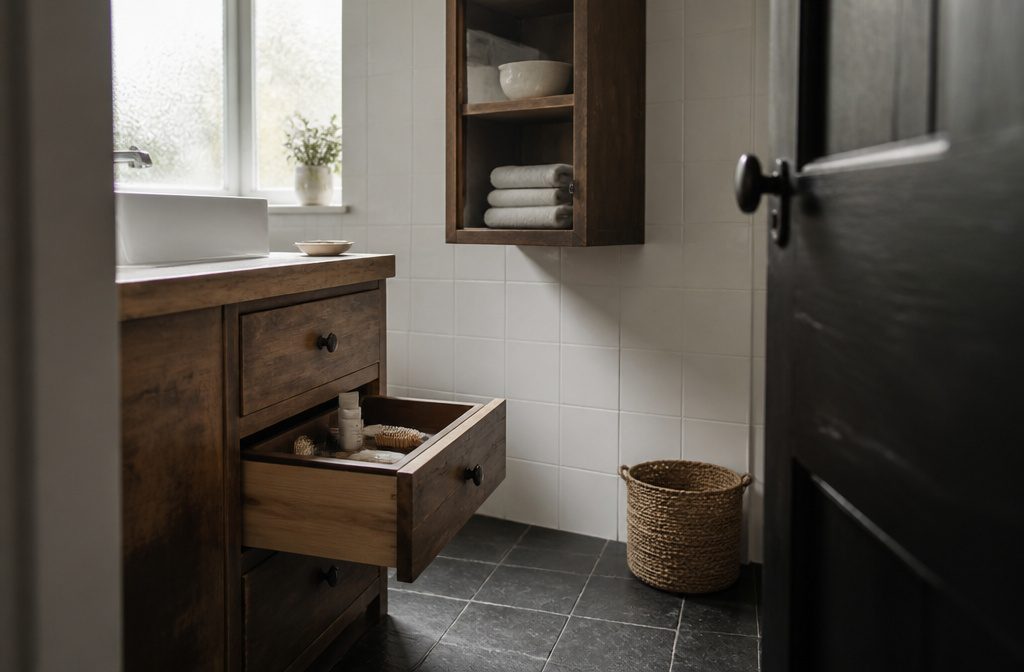
Small bathrooms have little margin for waste. Everything you store has to earn its spot, which means most people end up keeping items they stopped using months ago simply because they never bothered to sort through what’s actually there.
Start by removing anything expired, unused, or relocated there temporarily and never reclaimed; the Brother P-touch label maker that prints 24mm tape works only if you’ve already cleared the clutter it’s meant to organize.
1. Declutter and Move Occasional-Use Items
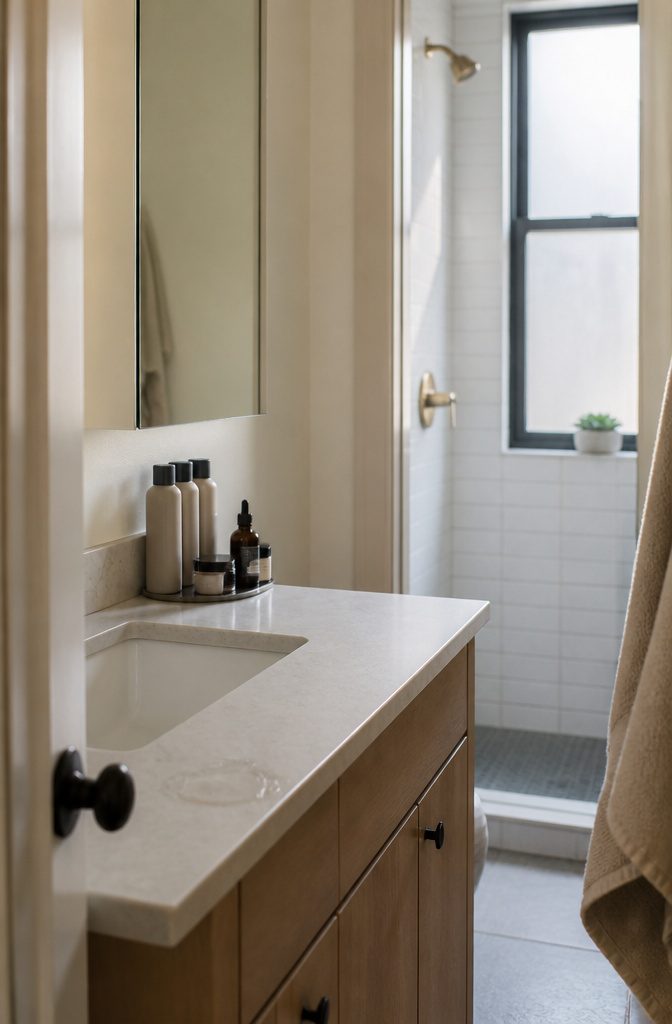
The bathroom you’re organizing probably holds items you haven’t touched in months.
Start there. Toss anything expired, checking the dates on makeup, skincare, and medicine.
Donate or sell products still in good condition that you don’t actually use. Consolidate duplicates: most of us have three half-used bottles of the same shampoo taking up real estate.
Relocate anything that doesn’t belong in the bathroom at all, like the hair dryer you moved there temporarily three years ago. The goal isn’t rearranging what’s already there; it’s removing what shouldn’t be.
Once you’ve pared down to what you genuinely use, you’ll see what storage solutions actually fit your needs instead of trying to force organizers around clutter that should have left already.

【Perfect for Makeup Drawer Storage】Versatile 10pcs drawer organizer can be combined in 9*12 and 9*18 inch drawer in vanity, they are perfect for organizing cosmetics like lipstick, hair accessories, eye shadow, makeup brush, beauty products, jewelry and more, keep your vanity drawer well organized.

Premium Material:The drawer organizer is made of non-toxic plastic which may be safely used. The transparent design makes it easy to find what you need quickly
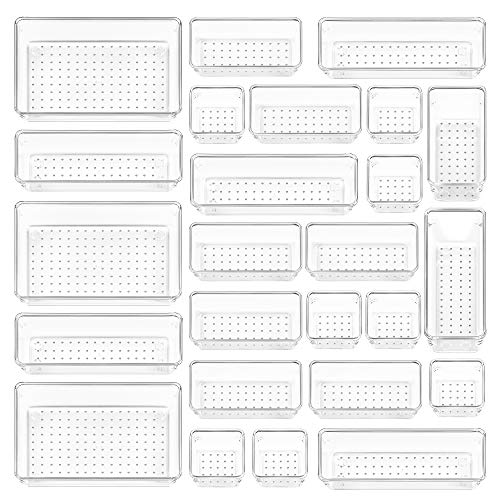
✔Make Everything Organized -- These clear versatile drawer dividers trays are perfect for any place in your home. Fit all kinds of drawers, such as vanity / bathroom / kitchen / office drawers/ craft room, ideal for organizing cosmetics, makeup tools, hair accessories, jewelry, pins, office supply, craft supplies, utensils, etc.
2. Sort by Category and Frequency of Use
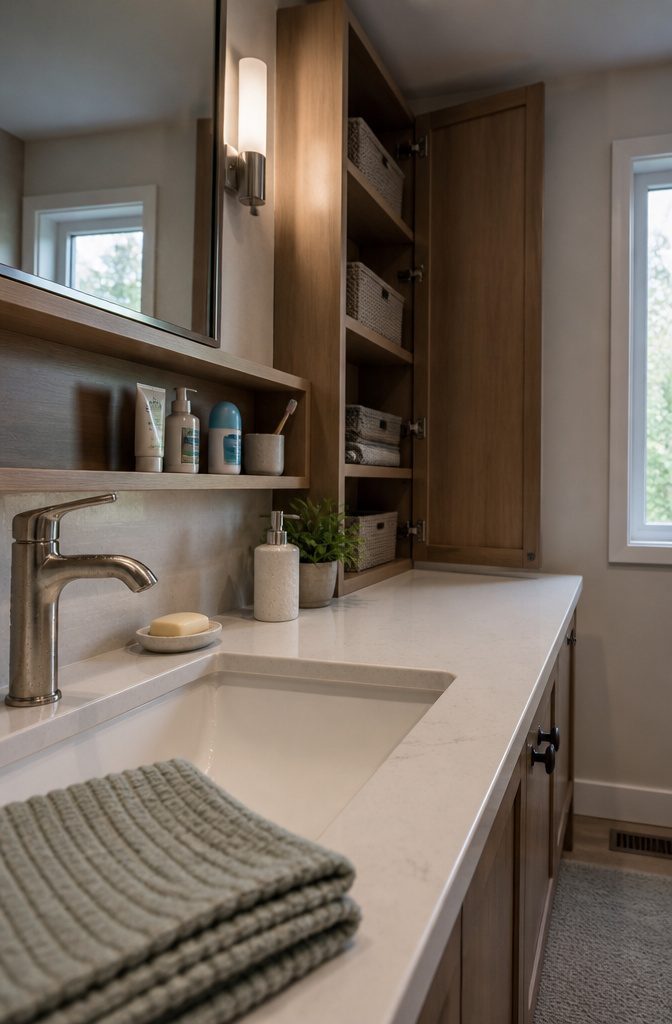
Separate your daily essentials from everything else first. Items you reach for every morning (toothpaste, face wash, deodorant) belong at eye level or within arm’s reach of where you stand.
This is prime real estate, and wasting it on backups or occasional products costs you convenience every single day.
Next, sort what’s left into categories: hair care, skincare, medications, first aid, cleaning products, and backup supplies. Items you use weekly can move to cabinet shelves or higher spots where bending or reaching is part of the routine.
Anything seasonal (sunscreen in summer, heavy moisturizer in winter) or rarely needed belongs in a hall closet or bedroom storage instead of taking up bathroom space.
Give each category its own labeled basket or bin. This makes it obvious what belongs where and keeps related items together so you’re not hunting through everything to find nail polish remover or a specific medication.
The system works only if it stays organized, and labels are what make it stick.

[Multi-Purpose Organizers] Small storage drawers help you to organize everywhere in your home. They can be used as organizers and storage for makeup, bathroom countertop, kitchen or laundry under sink, medicine cabinet, pantry, vanity. You can flexibly use our storage organizer for house organization and storage according to your needs.

Stackable Storage Bins: The top of the drawer has groove design ensures stacking. Use these stackable drawers to save space, which is also keep organized

[Stackable Design] Come with 5 storage drawers, included 12.1" W and 4.4''H&7.6‘’H storage containers. The storage containers are stackable, vertical storage will save a lot of space. Put your small objects in clear drawers to make your countertop space more tidy.
3. Divide Drawers and Cabinets with Organizers
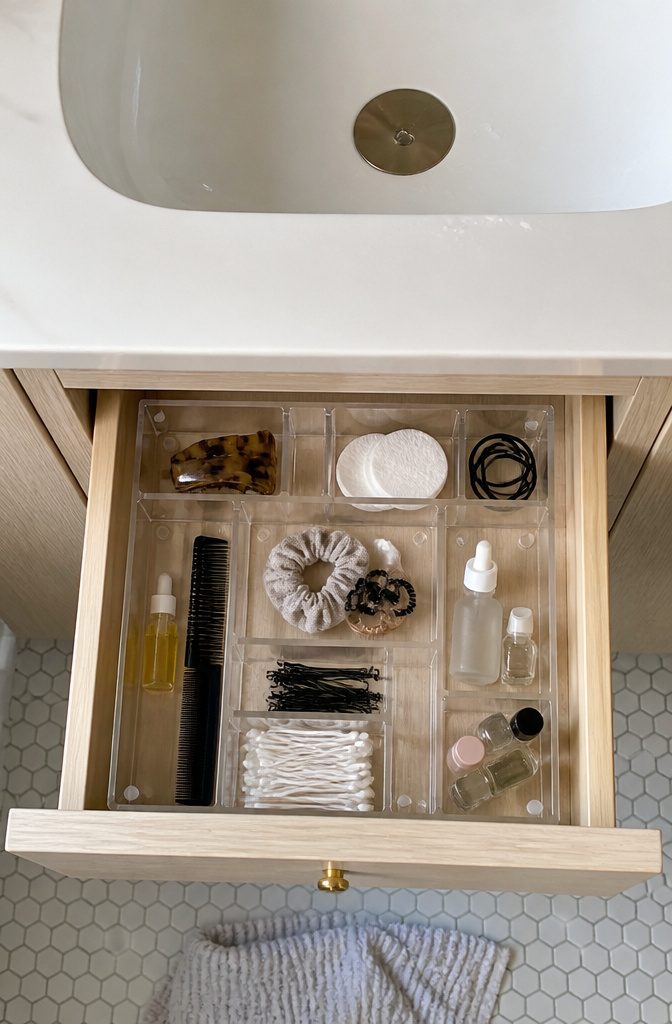
Narrow drawers turn into junk drawers the moment you stop looking.
A 2-inch-deep organizer with compartments sized around 6-by-6, 3.3-by-9.6, and 3-by-3 inches fits most bathroom vanities without wasting depth, and the non-skid feet keep things from sliding when you yank open a drawer in a hurry.
For deeper drawers, step up to organizers in 4-inch increments, which give you room for hair tools, styling products, and the small bottles that multiply faster than you can count them.
Everything Organizer makes modular boxes in 3-inch increments with rubber feet and clear sides so you see what’s inside and wipe up spills before they set.
They cost money and add up fast, but they won’t shift around or let items tip over into each other.
Clear acrylic containers in assorted heights work too if you mix and match sizes to the actual width of your drawer rather than forcing one standard box to fit everything.

CREATE VERTICAL STORAGE SPACE: Say goodbye to cluttered countertops and limited floor space! This over-the-toilet bathroom cabinet utilizes the unused area above your toilet, offering generous storage capacity without taking up additional room. Featuring 3 mesh shelves, a toilet paper holder, and 5 versatile hooks, it's ideal for organizing bathroom accessories, towels, bathrobes, or small baskets, keeping essentials neatly arranged and easily accessible.

【Over Toilet Storage】The bottom shelf can easily fits into space behind your toilet. Featuring three mesh shelves, it provides ample storage for bathroom accessories, shampoo, shower gels, towels, and hair dryers. Keep daily necessities organized and easily accessible.

This bathroom storage shelf is designed to solve your bathroom clutter woes without creating new problems. Its space-saving design maximizes your bathroom's potential, providing ample storage for towels, toilet paper, and other essentials while keeping everything organized and within reach. Perfect for small spaces, it seamlessly integrates into your bathroom without taking up extra room, ensuring a clean and tidy environment.
4. Add Pull-Out and Stackable Drawers Under the Sink
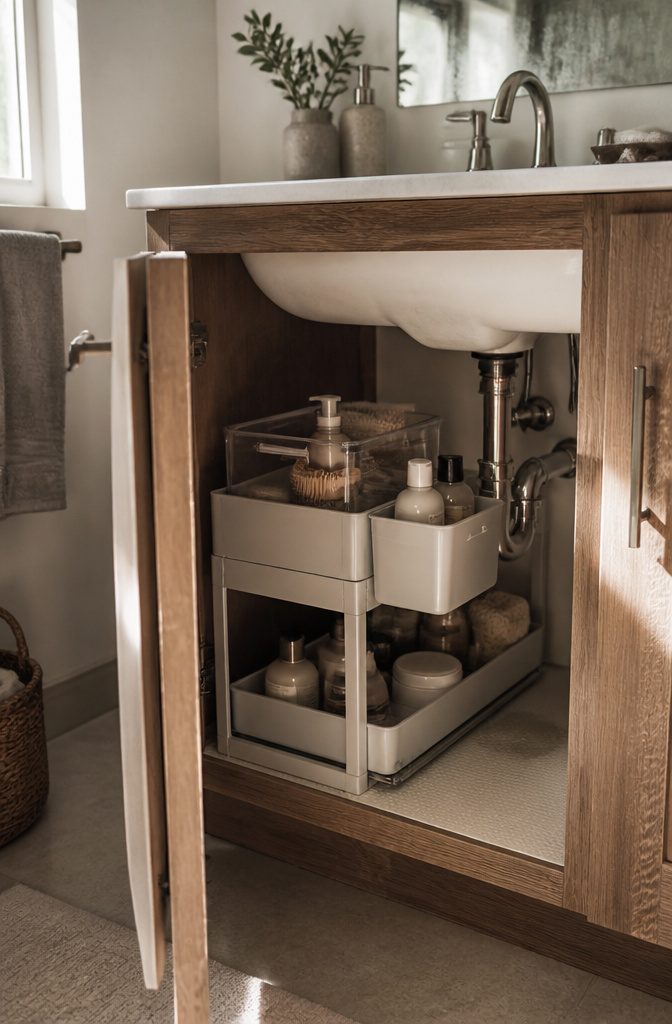
The cabinet under the sink is split by pipes, which means everything ends up stacked at the front where it’s hardest to reach.
Pull-out drawers and sliding baskets bring the back of the cabinet forward, so you can grab what you need without fishing around.
U-shaped versions fit around the drain pipe without wasting space. Stackable clear bins let you see what’s inside and use the full height of the cabinet without lifting lids to hunt for something buried three containers down.
A silicone mat on the cabinet floor protects the wood from leaks and drips, which matters in a damp bathroom where moisture settles fast.
Group related items in labeled containers (hair products, cleaning supplies, first aid, spare toiletries) so the organization actually holds when others in the house use it too.
Washable bins are easier to wipe clean than cloth-lined ones, and they won’t trap mildew in a space this tight and wet.
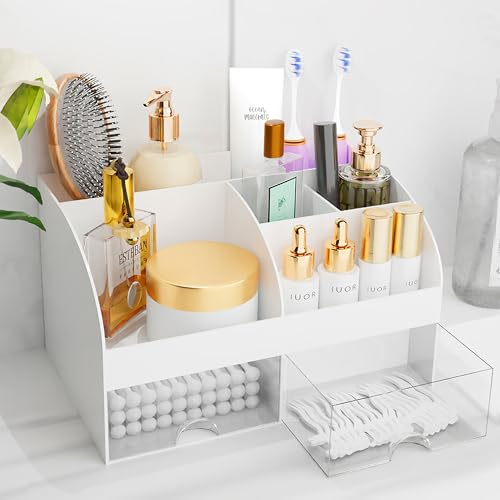
Multiple Storage Spaces: 8.3in*5.6in*4.8in Small body with large capacity, great cosmetic storage countertop assistant contains 6 Sections and 2 drawers, different compartments allow you to place items according to your needs, transparent drawers allow you to quickly find what you need, easy to place and take, the perfect match can let you all the makeup accessories are neatly stored

Open Compartments & 360 Rotating Design: This makeup organizer spins on a ball-bearing mechanism, so the tray rotates smoothly without wobbling, while the open compartments offer instant access to your daily essentials. With makeup neatly displayed, you'll save 15-30 minutes every morning finding what you need, starting your day with a beautifully organized counter

Note: Please double-check the size before purchase. Our organizer measures 10 × 10 × 11.6 inches (25.4 × 25.4 × 29.5 cm) . The ends measure 4 inches (10.2 cm) wide — please ensure there is enough space on both sides before buying.
5. Use a Turntable to Reach Back Corners
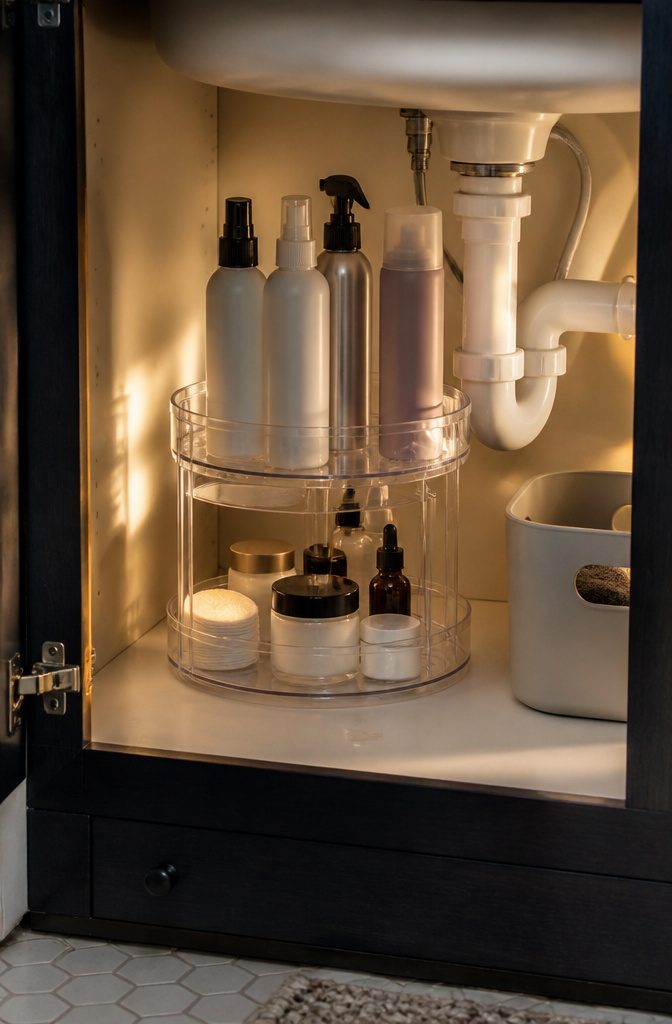
A shelf or cabinet under the sink is wasted space if you can’t reach what’s in it. The pipes create dead zones, and bottles slide to the back where they disappear.
A turntable solves this in one move: set it on the shelf, load your bottles and containers onto it, and spin to grab what you need without unloading everything in front.
The Amazon Basics 2-Tier Lazy Susan is made for this exact problem.
The two levels let you stack items vertically and still spin them forward. A single turntable in a corner stops tall bottles from getting lost at the back while keeping the cabinet floor free for bins.
U-shaped versions are available if the drain pipe splits your under-sink space and blocks a standard round turntable.
This works best when you group similar items together: hair products on one section of the turntable, cleaning supplies on another.
That way, whoever needs something can find it fast and spin it back without moving three other things first. It costs almost nothing and takes seconds to install.

Available in 2 Different Sizes: The smaller size (S) measures 8.27" x 13.19" x 9.06", and the larger size (L) measures 8.27" x 13.19" x 10.63". High-Low combos make this bathroom organizer versatile for multi-purpose storage and organization, such as kitchen organization, cabinet organizer and storage, bathroom organizer countertop, pantry organizer, under sink organizer, etc
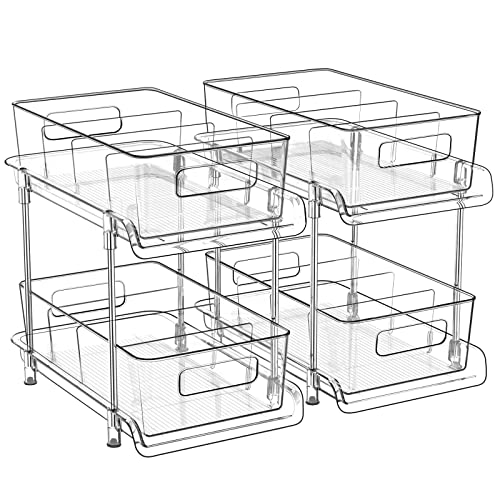
[Upgraded Version]: The pull out cabinet organizer is made of sturdy high-hardness abs plastic and securely linked by four thickened stainless steel support tubes to ensure a stable structure also achieve water-proof and rust-proof. The see-through sides design helps to find your stuff with a glance. The bottom is equipped with four anti-slip feet pads to increase stability, make it non-slip and stable when pull out the organizer bin.
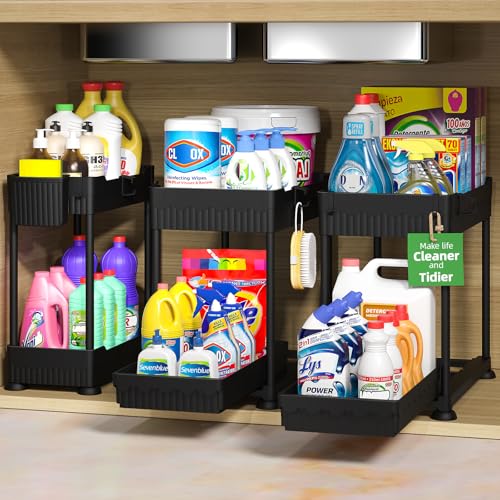
[Extra Accessories, Endless Uses]: Say goodbye to messy cabinets and cluttered counters. Sevenblue under-sink organizers are a fan favorite—and for good reason. We’ve taken your feedback and made them even better with handy add-ons like hanging cup, C-hooks, and non-slip feet. And they’re not just for under the sink! Use them in the kitchen, bathroom, laundry room, cabinets—you name it. Wherever you need a little extra organization, these shelves have your back
6. Add Wall Shelves Above the Toilet
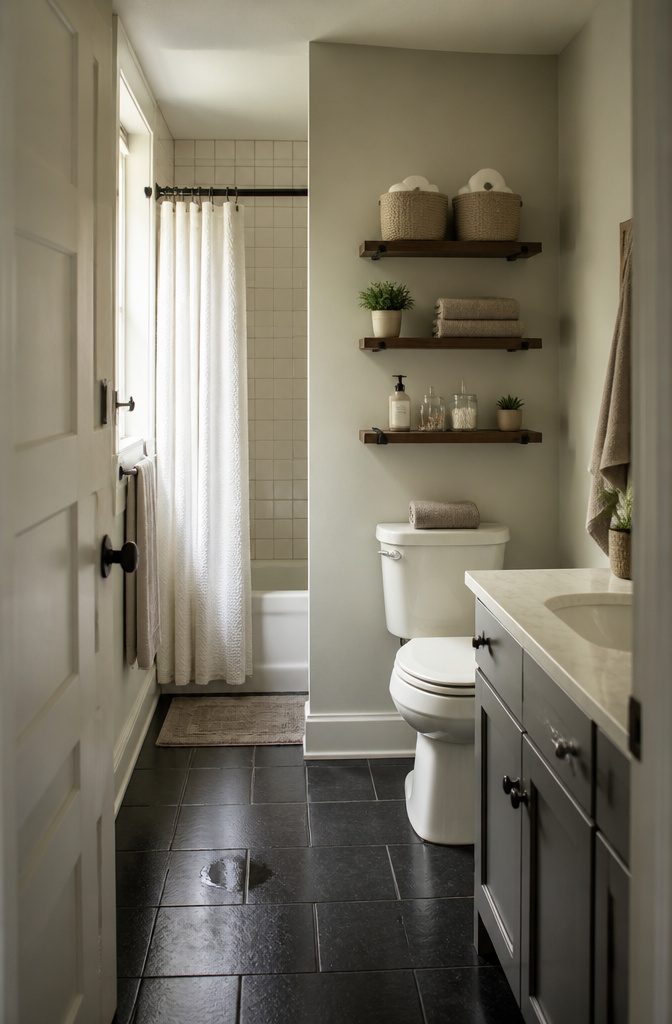
The wall above the toilet is usually the biggest empty space in a small bathroom, and it’s the smartest place to gain storage without eating into floor room.
Floating shelves, a wall cabinet, or a freestanding over-the-toilet unit all work; the choice depends on whether you can drill and how much you want to spend.
The West Elm Modern Leaning Over-the-Toilet Cubby holds three shelves and takes about an hour to build, but it needs no wall anchors if you don’t want them.
IKEA Rågrund shelves assemble in five minutes and run about 20 inches high. Wall cabinets and over-the-toilet units from retailers like Pottery Barn and West Elm range from $399 to $599.
If drilling into walls isn’t an option, a freestanding etagere stands on the floor behind the toilet and gives you the same shelves without fasteners.
The critical detail: hang the lowest shelf high enough to lift the tank lid, since you’ll need access into the tank if it keeps running. Keep everyday items on lower shelves and backstock or decorative pieces higher up.
Lidded baskets on the top shelf hide spare toilet paper rolls and refills, and shelves that match your existing hardware make the whole wall look intentional rather than improvised.

【Holds 177 Items】 ---- Organize up to 177 everyday items in one set! These Clear plastic drawer organizers fit effortlessly into bathroom drawer organizer, vanity organizer, office drawer organizer, bedroom, closet, or garage desk drawers.

【Make Everything Organized】These versatile drawer dividers trays are perfect for home organization. Fit all kinds of drawers, such as vanity/ bathroom /kitchen /office drawers/craft room, ideal for organizing cosmetics, makeup tools, hair accessories, jewelry, pins, office supply, craft supplies, utensils, etc.

Multiple Sizes - 5 different sizes and 13 pieces trays offer you customize combinations to store stuff and organize drawer for your specific needs. Size: 8.9 x 5.9 x 2.2 inches (2 pack), 8.9 x 3.0 x 2.2 inches(3 pack), 5.9 x 5.9 x 2.2 inches(1 pack), 5.9 x 3.0 x 2.2 inches(4 pack), 3.0 x 3.0 x 2.2 inches(3 pack).
7. Use Hooks and Racks on Doors and Walls
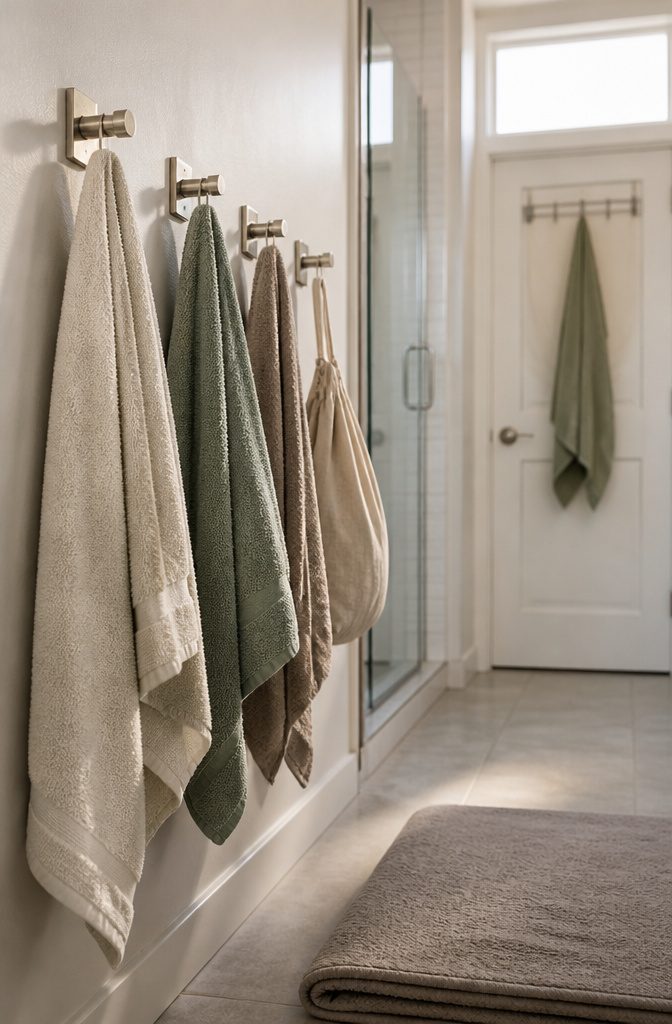
Hooks and racks are the most efficient use of door and wall space in a small bathroom.
A row of hooks holds four times what a towel bar can manage, so swap the bar for hooks whenever you have the wall space.
Hewi Wall Hooks extend about 2 inches from the wall and hold 25 pounds, making them strong enough for towels, robes, and heavier items like laundry bags. They fasten with three screws and anchors, so they need drilling.
For renters, adhesive hooks and over-the-door racks avoid holes. Adhesive holds less well in a steamy bathroom, so check the weight rating and keep anything heavy on a door rack instead.
Hanging baskets on a rail with S hooks add storage for cotton swabs and hand towels without permanent installation.
The back of your door, the cabinet interior, even the top edge of the shower door all become usable real estate once you stop thinking of them as wasted space.

Comes with two containers for brushes, medicine, makeup and more.

【Total 93 Qt Capacity Multipurpose】Each storage box measures 15.35in*11in*8.27in (LxWxH). These storage boxes can be used to store personal items such as office supplies, art supplies and more. A good storage organizer for bedroom, living room, kitchen, study or office, classroom, etc.
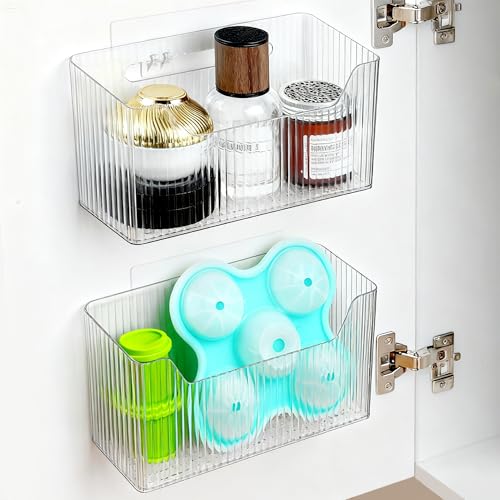
Designed for Inside Cabinet Door Storage: This cabinet door organizer is specially designed to hang inside cabinet doors, creating instant storage for bathroom or kitchen essentials. Keep items hidden yet easily accessible.
8. Add Shower Storage with a Caddy or Hanging Shelves
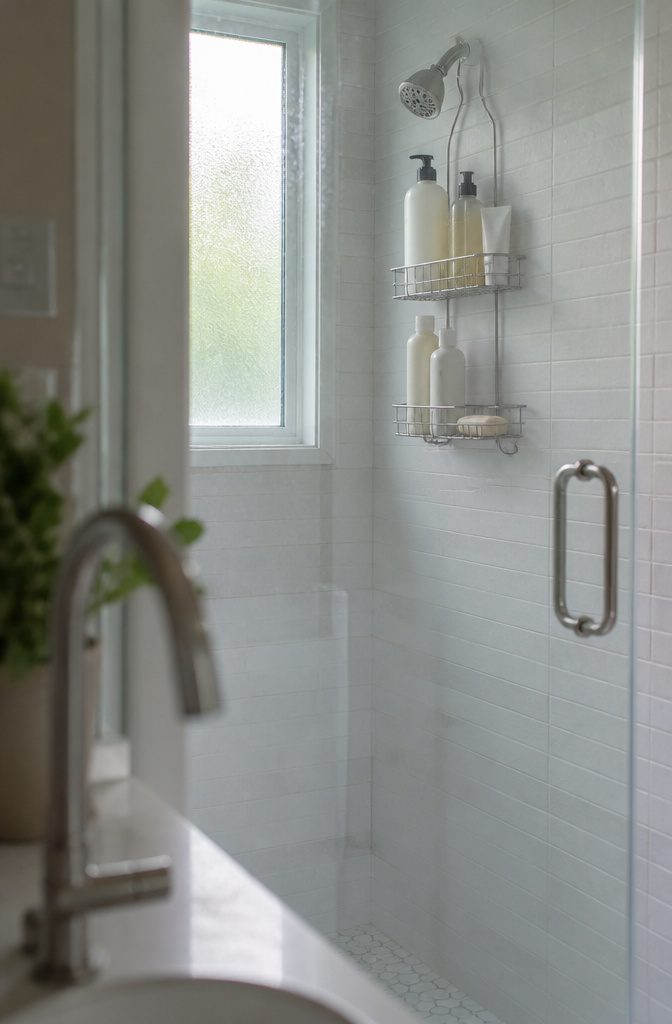
A corner shower caddy or hanging shelves let you store bottles and soaps without eating into shower floor space, which matters when every inch counts.
Tension rods can create four extra shelves by running them diagonally corner to corner, turning dead space into storage.
If a corner caddy feels too permanent, wall-mounted baskets or shelves that don’t jut far into the shower work just as well, as do caddies that hang from the shower head or suction to tiles.
Wall-mounted pump dispensers can replace a row of loose bottles entirely. Every few months, clear out the half-empty bottles nobody is actually using; a small shower stays functional only when you keep the clutter moving out.

Material: Medium Density Fiberboard, outlasts wood in damp bathroom environments
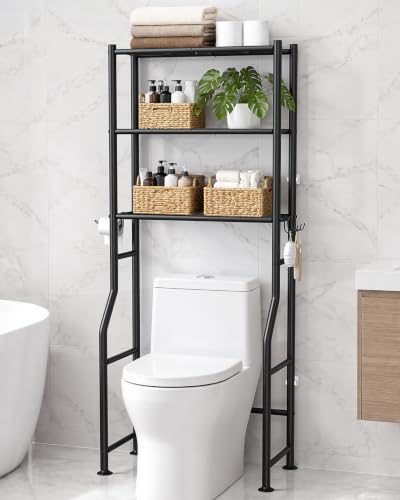
FITS TALL & BIDET TOILETS - Bottom shelf sits 39 inches off the floor, clearing standard, elongated, comfort-height and bidet toilets with the lid free to lift fully.

Modern Form, Lasting Appeal: Clean lines and balanced simplicity define this BARNET Collection over the toilet storage, combining a steel frame with rustic panels to create visual depth and pair with matching storage units for a cohesive, modern interior
9. Use a Rolling Cart When Fixed Storage Is Limited
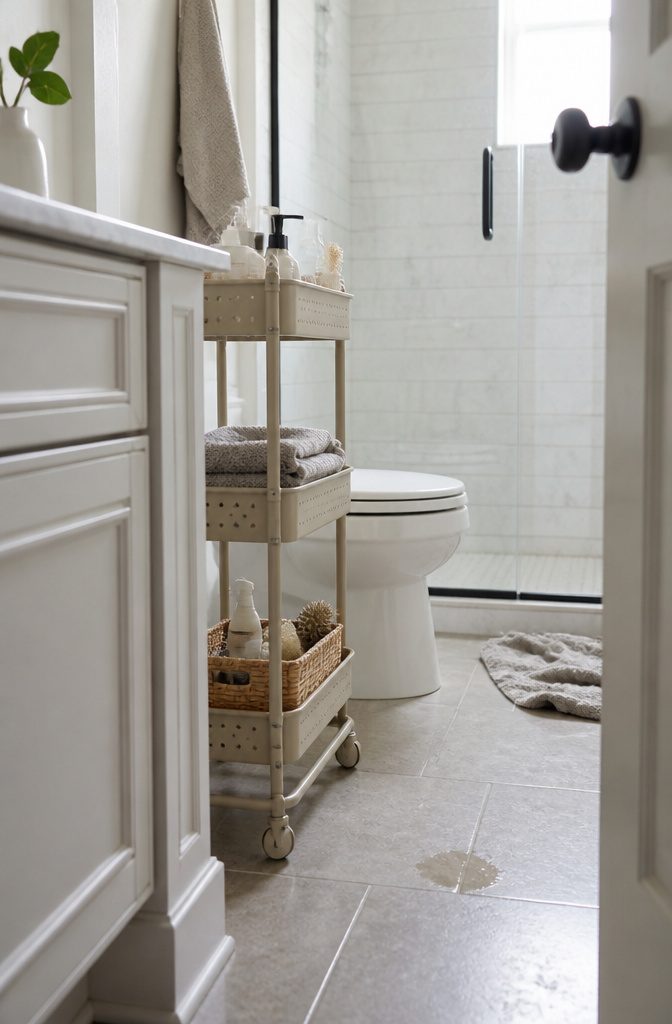
A rolling cart fills the gap when your bathroom has no room for built-in storage and every inch of wall is already claimed.
The IKEA Råskog takes 15 minutes to build and costs far less than most alternatives, with three 11-by-15-inch trays that hold towels, cleaning supplies, and bath items.
Its slotted shelves let water drain through, which matters if you’re storing wet things; mildew won’t collect between uses. The lockable wheels keep it steady until you need to roll it aside.
If your space is genuinely tight, a narrower cart works better.
The Yamazaki Tower Rolling Storage Cart runs only about 5 inches deep and fits into the sliver beside a toilet or against a blank wall without blocking access to the sink.
That depth is its real strength; most carts labeled slim won’t fit into gaps tighter than a few inches, so measure before you buy.
Yamazaki carts run $178 to $699 depending on size, and the cart isn’t built for heavy items or constant splashing. The wood-veneer top can discolor if shower water hits it regularly.
Position whichever cart you choose against a wall or in dead space, never blocking the door swing or the area in front of the toilet. Even a slim cart gains you real storage without eating into your floor or counter.

Bathroom Organizer:This bathroom toothbrush and toothpaste organizer is made of durable PP material and marble powder to fit home marble countertop style, Size:6.88"L x 3.3"W x 3.93"H

Easy to Clean: This divider toothbrush holder is removable, Simply remove the dividers and wash easily with water or soapy water, very convenient

2-Tier Bathroom Counter Organizer with Drawers:This bathroom shelf provides 2 layers of storage space for shampoo, shower gel, skin care products, etc. In order to conveniently place smaller items, this bathroom countertop organizer is also equipped with drawers, side storage boxes and hooks, which perfectly meet your daily needs.
10. Corral Counter Items with a Tray or Move Them to the Wall
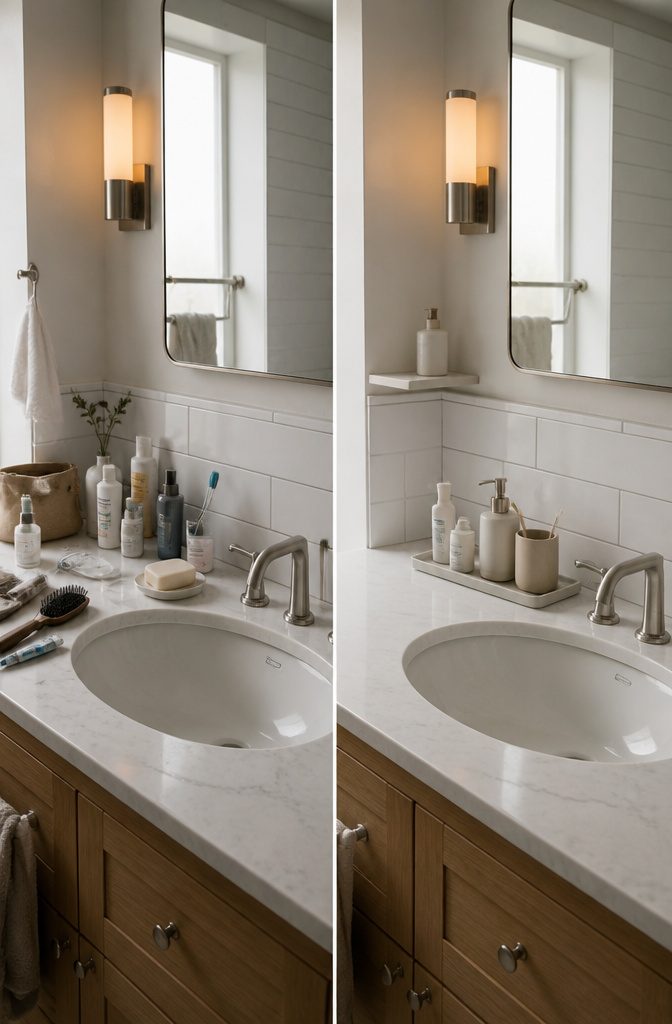
A cluttered counter shrinks a bathroom, so grouping daily items on a single tray keeps them contained and the surface clear.
Toothbrush holders, soap dispensers, and small bottles belong together rather than scattered. The tray itself becomes visual order instead of visual noise, and you can move the whole thing aside when you need counter space.
If even a tray takes up room you don’t have, move those items to the wall. Adhesive shelves, holders, and caddies stay put without screws, which suits renters.
A narrow shelf between the faucet and mirror holds bottles you reach for daily. For more storage, swap a plain mirror for a mirrored medicine cabinet at eye level; it adds storage without claiming any floor space in the room.
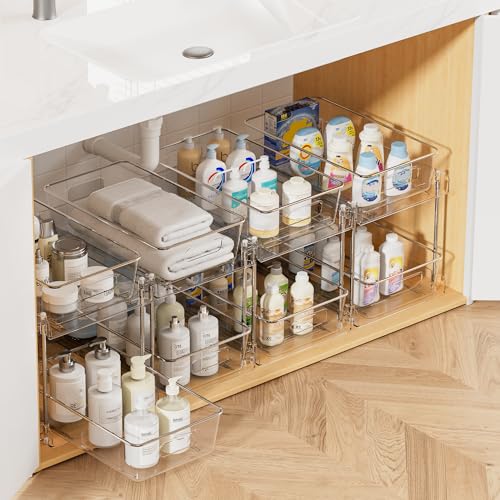
ESSENTIALS STORAGE PREFERRED: The multi-purpose organizer storage is a good helper to keep your vanity or bathroom countertop tidy. It can also be used as under sink organizer, kitchen organization, pantry organizer, refrigerator storage, cabinet storage. Perfect for storing cosmetics, toiletries, perfumes, cleaning supplies, snacks, bottles, spice jars.

𝐌𝐚𝐱𝐢𝐦𝐢𝐳𝐞 𝐔𝐧𝐝𝐞𝐫 𝐒𝐢𝐧𝐤 𝐒𝐩𝐚𝐜𝐞 - Designed with a custom-fit silicone mat and L-shaped structure, this under sink organizer fits perfectly around plumbing while protecting cabinets from water, spills, and leaks. Measuring approximately 11.8"W x 15.9"D x 13.8-16.9"H, it’s ideal for most kitchen and bathroom cabinets.

Stackable Design for Space Optimization: The stackable design allows for maximizing space by creating vertical storage. It can be used individually or stacked together to save space on a vanity or bathroom cabinet, keeping items contained and organized
11. Use Clear Containers for Visibility and Easy Cleaning
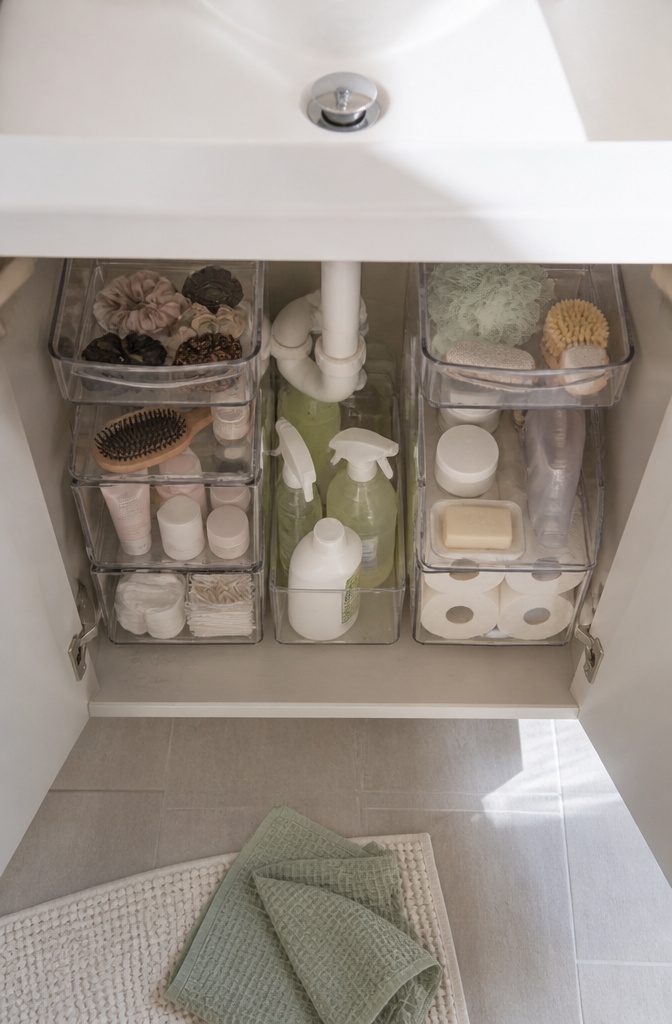
Clear containers are the working choice for a small bathroom because you spot what you need without opening anything, and you see when something needs restocking or cleaning.
Acrylic drawers under the sink let you use the full depth of the cabinet, and U-shaped versions fit around the drain pipe if the plumbing splits the space.
Stackable clear bins stack vertically to use the height you have, and you can see inside them without lifting lids.
Glass or acrylic also wipes down fast. Dust and debris show up right away instead of hiding until you pull everything out.
Grouping items by type (hair, cleaning, first aid, spare toiletries) inside labeled containers keeps the system working for everyone in the house and makes cleanup easier when moisture and spills happen.
12. Label Containers and Storage Spots
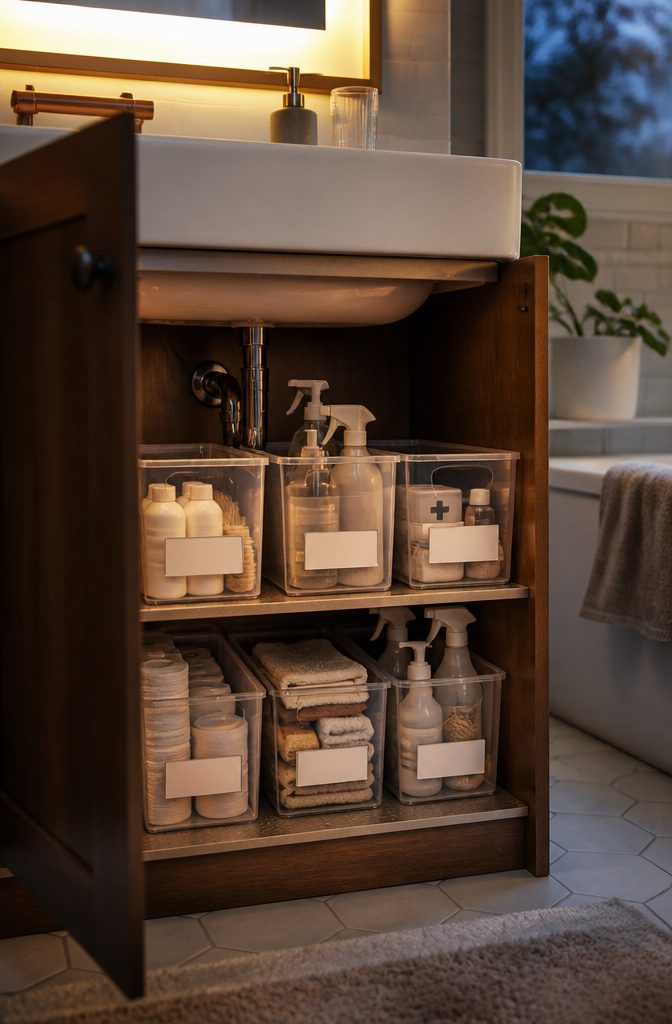
A label maker turns a container system into something that actually holds. The Brother Ptouch Cube Plus costs $99 and connects to your phone to print 24mm tape, which reads easily and sticks well in a damp bathroom.
If that feels like overkill, the keyboard model runs $35 and prints 12mm tape; it’s simpler but the narrower label works fine for smaller bins.
Either way, labels keep the system from drifting once you stop thinking about it. Without them, the organizing work you’ve done gets loose after a few weeks, and household members can’t maintain what they don’t understand.
Where to put them matters in a small bathroom. Under-sink bins deserve labels first; that’s the zone where people hunt and forget.
For drawers, a label on the back of an organizer or the drawer lip keeps the visual clear without crowding a tight space. How specific you go is your call.
You might label only the main categories, or you might tag every container. The system might shift a little once you’re living with it, and that’s fine.
Adjust the labels when it does. Once they’re in place, everything has a home, and a small bathroom stops feeling like a guessing game.
13. Make Maximum Use of Vertical and Overlooked Space
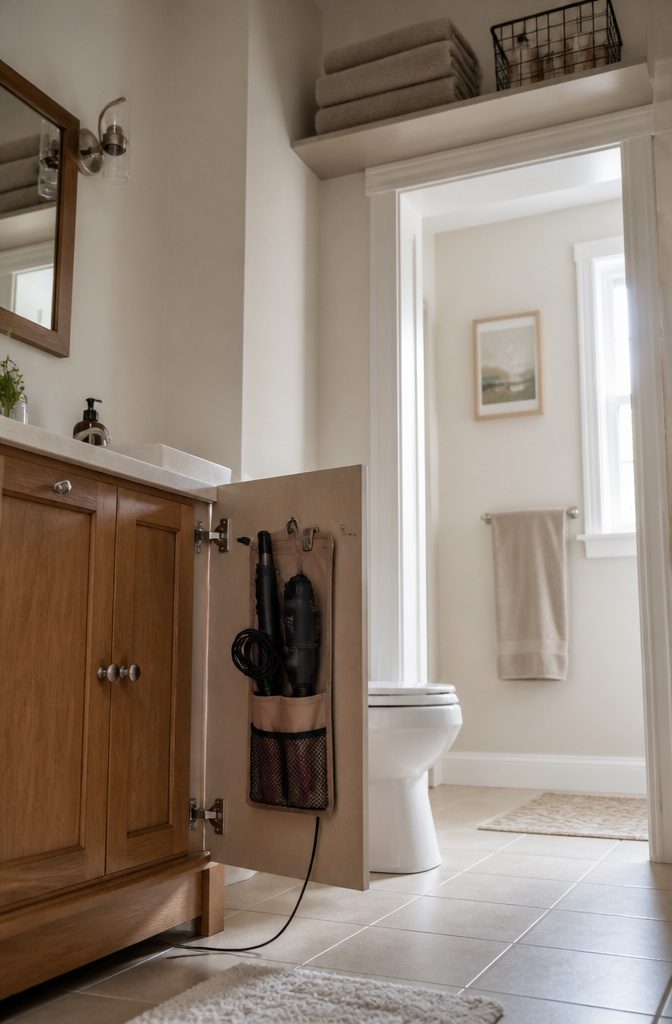
The wall above the toilet is usually the biggest empty space in a small bathroom. Two or three floating shelves there will hold towels and spare toilet paper, with lower shelves for daily use and upper ones for backstock.
If drilling into tile feels risky, an over-the-toilet unit (sometimes sold as an etagere) stands on the floor behind the toilet and gives you the same shelves without installation.
Inside cabinet doors and above door frames, unused space turns into storage.
A shelf above the bathroom door works like the space above the toilet: one shelf is enough for extra towels or cleaning supplies you reach for once a month.
Cabinet doors are equally useful: hanging organizers inside them keep hair tools and their cords out of the way and off your counters.
Stacking drawers inside cabinets maximize vertical space better than lidded bins because you can pull out what you need without unstacking everything above it.
The same goes for stacking pantry bins, which hold items like toilet paper or refills and stay instantly accessible. Matching shelves to your taps and towel bar makes the arrangement feel intentional rather than makeshift.
Consider Renter-Friendly Storage Options
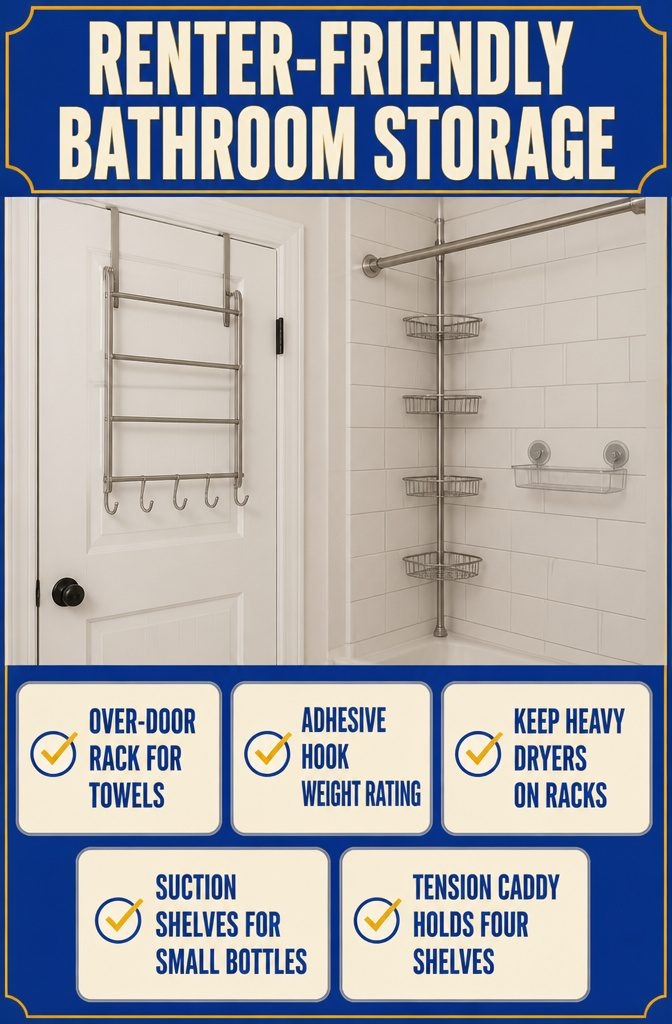
Renter-friendly storage works best when you skip permanent installation altogether. Consider these no-drill options:
- Over-the-door racks and hooks hold towels, robes, and hand towels without touching your walls or the landlord’s good graces. They claim valuable wall space without leaving a mark.
- Adhesive hooks stick inside cabinet doors for brushes, loofahs, or razors. Check the weight rating on the pack; adhesive grips less reliably in steamy bathrooms, so keep heavy items like hair dryers on a door rack instead.
- Suction-cup hooks and shelves attach to bathroom tile or mirror glass. They work well for toothbrush holders or small bottles and come in multiple colors.
- Tension rods fit corner shower caddies in place and create extra shelving without drilling. A corner caddy typically holds 4 shelves for toiletry bottles and shower supplies.
All of these pack away cleanly when you move. Over-the-door organizers and tension rods take minutes to install and remove, making them ideal for anyone renting month to month or building storage that travels with you.
Keep Humidity and Mildew in Check
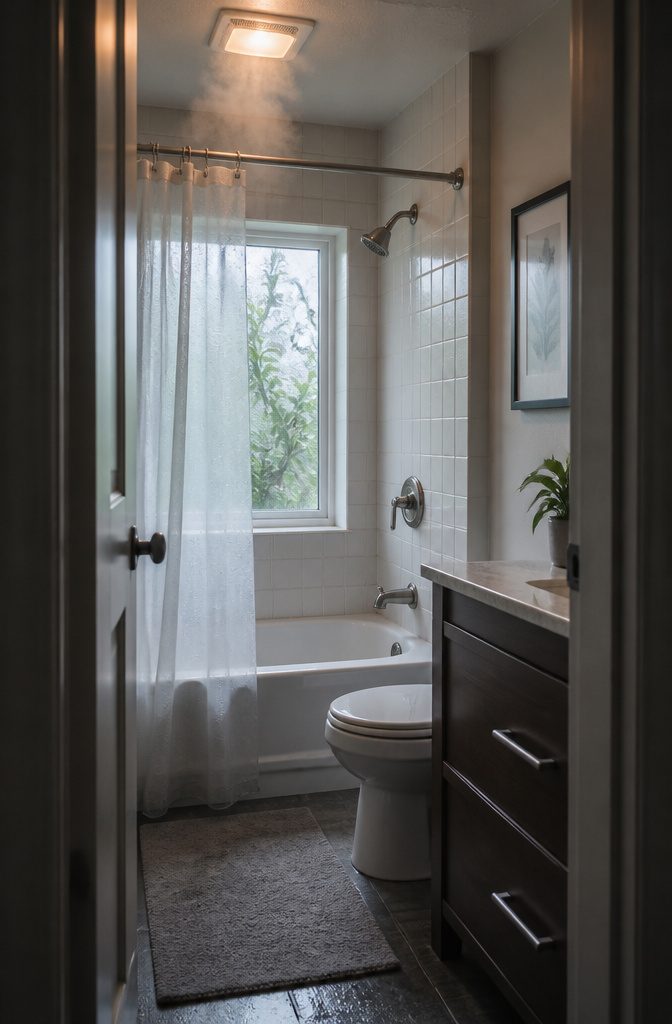
Moisture is what ruins a small bathroom. Steam from showers clings to surfaces and sits there, breeding mold and mildew in corners and on metal fixtures.
Run the exhaust fan while you shower and for a few minutes after, crack a window if one exists, or leave the door propped open so the air can move.
Pick one of these, all three if you can manage it. Let steam leave the room instead of settling into it.
Metal items like shaving cans, razors, and canisters corrode fast in humid air and leave rust stains that are stubborn to clean. Keep them off the shower floor and walls.
Shower curtains and liners trap moisture and become breeding grounds themselves, so wash both every 1 to 3 months. A quick machine wash keeps mold from taking hold before it spreads to the rest of your small space.
Refresh Your System Every Few Months
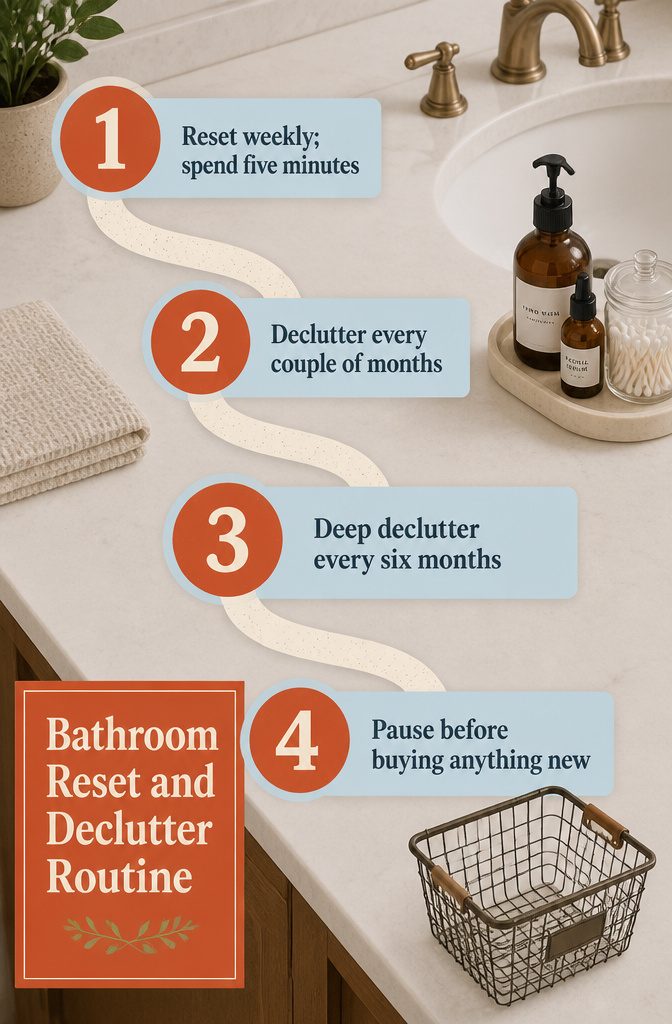
- Do a quick reset each week by spending five minutes putting things back in their spots and wiping down surfaces. This habit keeps your system from sliding backward and makes it much easier to maintain.
- Every couple of months, do a more thorough declutter. Clear out the half-empty bottles nobody is using, check expiration dates on medicines and skincare, and move items that have migrated to the wrong spots back where they belong.
- Do a deep declutter every six months. This is when you step back and ask whether each item still serves you. If something has sat unused for months, it’s taking up space that a daily-use item could fill.
- Before you buy anything new, pause and ask yourself whether you really need it and whether you have a place for it. This one question stops clutter from creeping back in after you’ve worked hard to clear it out.
Frequently Asked Questions
how do I organize a small bathroom with limited space?
Start by removing expired items, duplicates, and anything that doesn’t belong, then sort what remains by how often you use it.
Items you reach for daily belong at eye level or within arm’s reach; everything else can move to cabinets, higher shelves, or storage outside the bathroom.
This paring-down step reveals what storage solutions you actually need instead of forcing organizers around clutter.
what are the best storage solutions for a tiny bathroom?
Use walls, doors, and the space beside the toilet, leaving the floor clear. Floating shelves above the toilet, over-the-door racks, pull-out drawers under the sink, and rolling carts in narrow gaps all add storage without eating into floor space.
Measure tight spots before buying a slim cart, since many labeled slim won’t fit into spaces narrower than a few inches.
how can I add storage to a small bathroom without drilling?
Over-the-toilet units, over-the-door racks, adhesive hooks, and tension rods all require no drilling.
Check weight ratings on adhesive hooks since they grip less reliably in steamy bathrooms, so keep heavy items like hair dryers on a door rack instead. Tension rods also work under the sink to create stackable shelves.
what should I store above the toilet?
Floating shelves, wall cabinets, or freestanding over-the-toilet units all work above the toilet.
Keep the lowest shelf high enough to lift the tank lid so you can access the tank if needed. Store everyday items like hand towels and cotton swabs on lower shelves and backstock or decorative pieces higher up.
how often should I declutter my bathroom?
Spend 5 minutes weekly putting things back in their spots, do a deeper declutter every couple of months to clear half-empty bottles and check expiration dates, and tackle a full reset every 6 months.
Asking yourself whether new items truly have a home before you buy them stops clutter from creeping back in after you’ve cleared it out.
what bathroom storage works for renters?
Over-the-door racks, adhesive hooks, suction-cup shelves, and tension rods all install without drilling and pack away cleanly when you move.
These options take minutes to install and remove, making them ideal for anyone renting or building storage that travels with you to a new place.
how do I keep my bathroom from getting cluttered again?
Be intentional before bringing anything new into the space by asking whether you actually need it and where it will live.
Weekly maintenance keeps the system from drifting; every couple of months, remove items that have stopped working for you or migrated to the wrong spots.
what are good ways to organize under the sink?
Pull-out drawers and sliding baskets bring the back of the cabinet forward so you can reach items without fishing around, and U-shaped versions fit around the drain pipe.
Use stackable clear bins so you see what’s inside, label them by category (hair products, cleaning supplies, first aid), and line the floor with a silicone mat to protect it from leaks and drips.
how do I organize bathroom items without visible clutter?
Group daily items on a single tray to contain them and keep counters clear, or move frequently used items to wall-mounted holders and shelves instead.
For everything else, use labeled containers grouped by category so household members know where things belong and can maintain the system themselves.
what storage works in a bathroom without cabinets?
Bring in freestanding furniture like rolling carts, étagères, or small cabinets, or add floating shelves, wall cabinets, or over-the-toilet units.
Even a stool stacked with towels uses floor space efficiently when you have no vanity, and these options let you build storage wherever it fits your layout.
how do I use vertical space in a small bathroom?
Install shelves or cabinets above the toilet, hang hooks and baskets on walls, add over-the-toilet storage units, and mount organizers on doors and inside cabinet doors.
The wall between your sink and mirror, the space above door frames, and even the inside of cabinet doors all become functional storage that keeps floors and counters clear.
should I use clear or opaque containers for bathroom storage?
Clear containers work best because you spot what you need without opening anything and see immediately when something needs restocking or cleaning.
Glass or acrylic also wipes down fast so dust and debris don’t hide inside, which matters in a damp bathroom where moisture and mildew settle quickly.