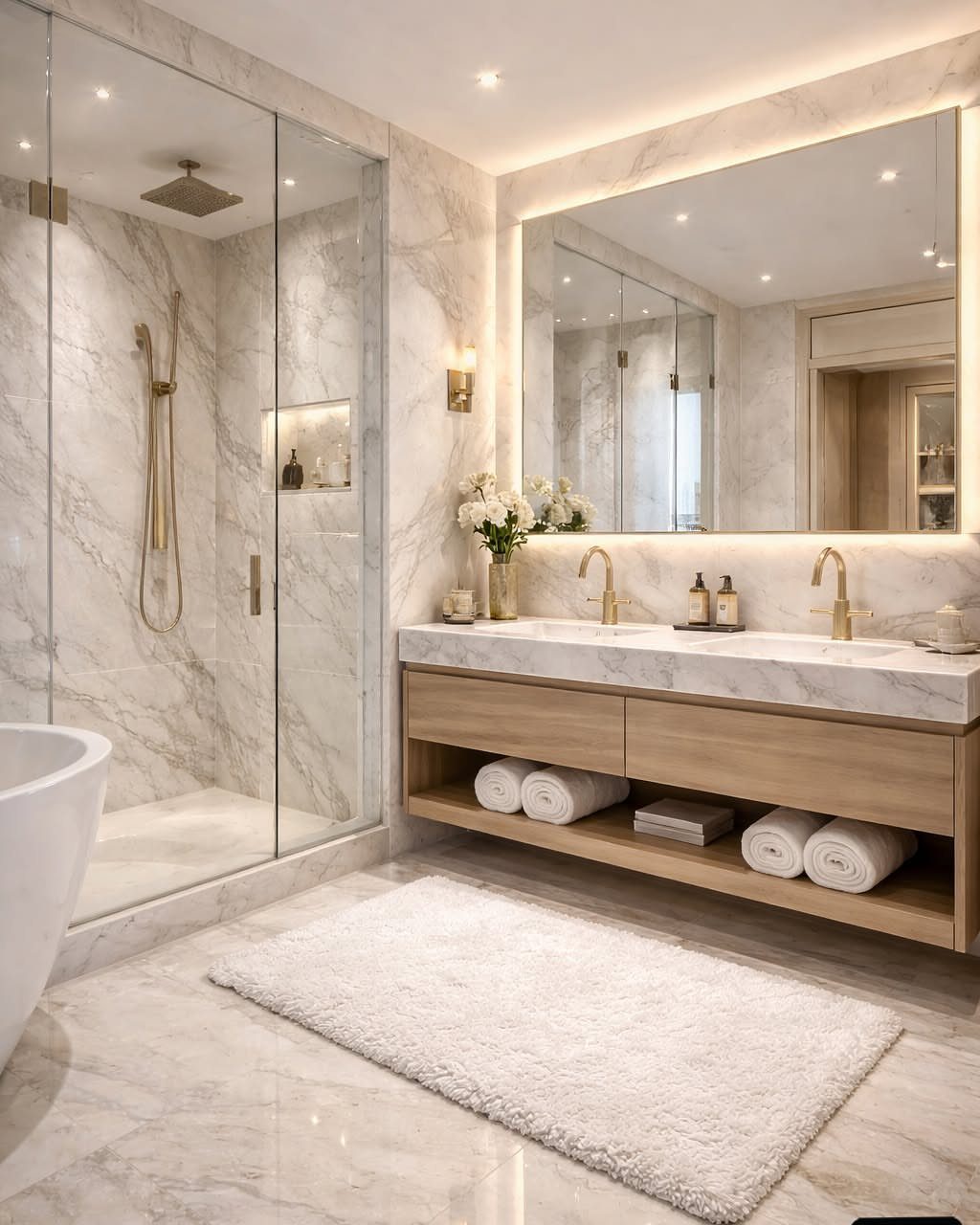
Bathroom countertops run from budget laminate to poured concrete that needs a structural check on your wall framing, and the only thing that sorts one from another is how much maintenance you are willing to calendar.
I would not put marble in a bathroom my kids use, and I would not waste a high-end surface on a powder room that sees guests twice a month.
The one detail that stays with me from every install: water beading on stone tells you the seal is alive, and when it stops beading, the countdown starts.
1. Marble Countertops
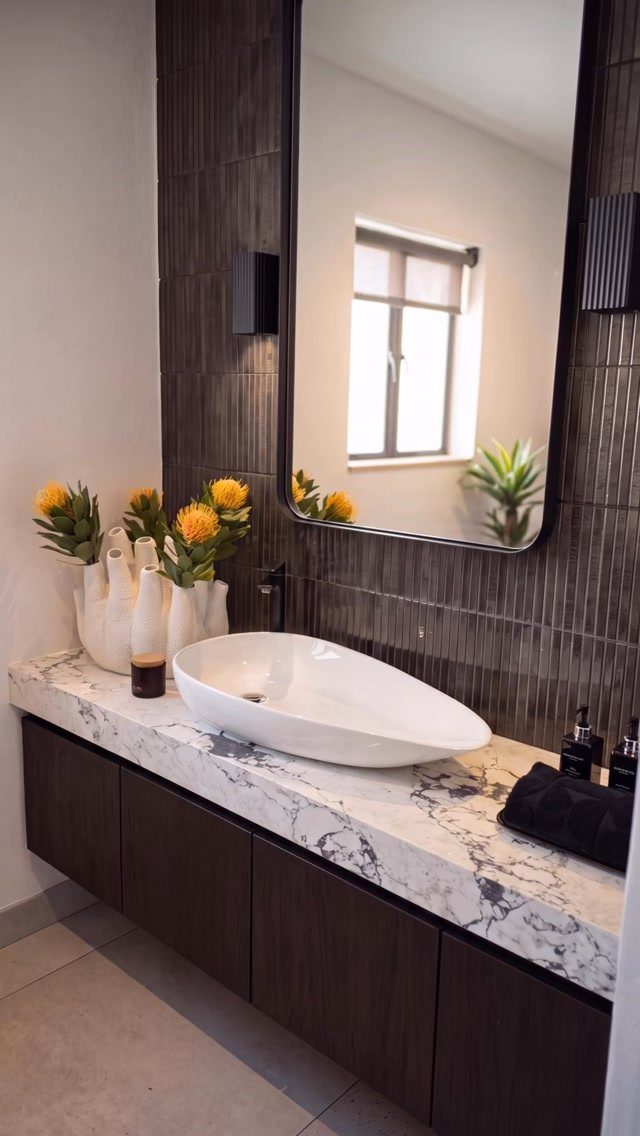
A marble countertop brings natural veining that no factory can replicate, which is exactly why it still commands attention in bathrooms where everything else reads flat.
Engineered marble gives you that sculptural presence without the same sealing headaches as quarried stone, though both need periodic resealing in a bathroom’s wet environment.
I would check the slab in person before ordering. Veining that looks dramatic on a screen can turn busy across a full counter, and the contrast with your cabinet color changes everything.
Dark wood soaks up some of that visual energy; painted cabinets would need more restraint in the stone pattern.
Budget for professional install. Marble cracks under its own weight if handled wrong, and the cutouts for sinks and faucets are not forgiving.

Transform the look of outdated countertops with a faux marble kit

Versatile Porcelain Repair Kit - It’s not only great for porcelain tile repair, also use it for granite countertops repair, Quartz Countertops repair, ceramic sink repair, marble repair, acrylic bathtub repair, fiberglass shower, porcelain dinnerware, travertine, limestone, slate, sandstone etc.
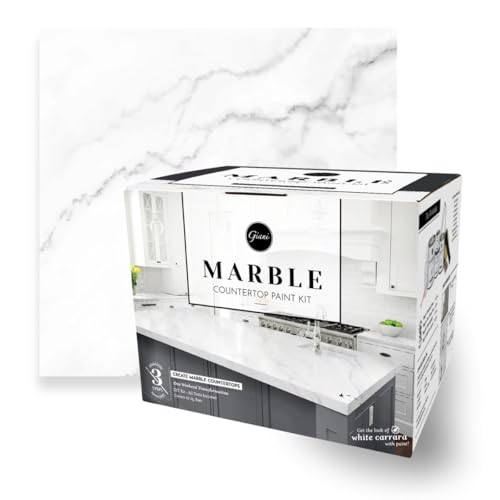
Giani Countertop Paint is a simple, three-step application that will transform Formica, laminate, Corian, ceramic tile, butcher block, cultured marble, and traditional granite in a single weekend.
2. Granite Countertops
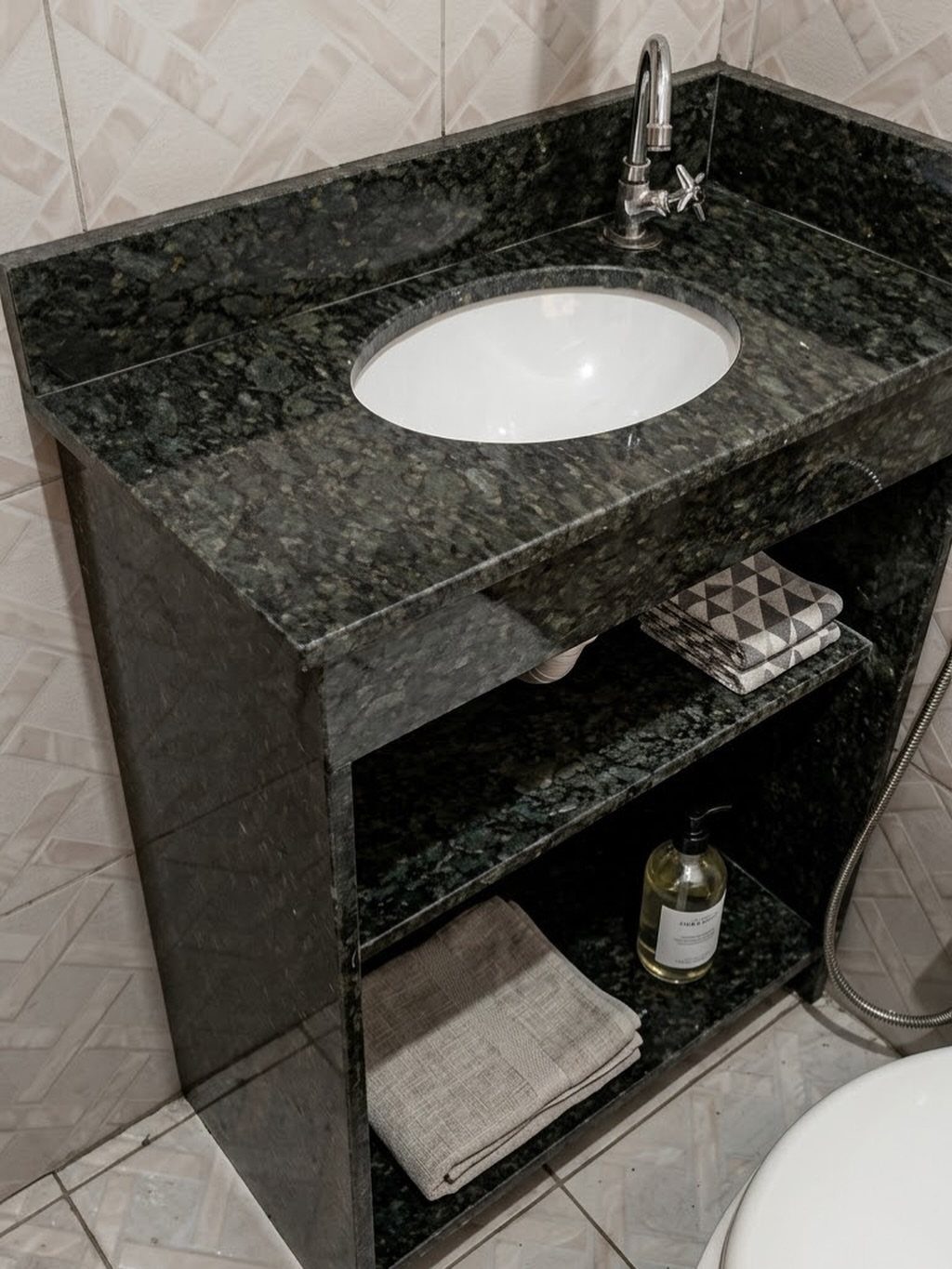
Granite earns its keep in bathrooms that see real use, not just guest-level hand-washing.
Dark green polish hides water spots and toothpaste splatter better than lighter stones, and granite’s heat resistance matters more than people think, straighteners left on and hair dryers set down hot.
Granite shelves hold weight fine; the problem is visual clutter in a small room. Closed storage keeps the stone looking intentional rather than like a display stage for your pharmacy.
Sealing matters.
Polished granite resists stains better than honed, but neither likes acidic cleaners. I use pH-neutral spray and reseal when water stops beading on the surface, usually every year or two depending on the sealer.

SAFE ON GRANITE, MARBLE, QUARTZ & NATURAL STONE: Includes one 32oz spray bottle; pH-balanced formula cleans granite, limestone, marble, slate, travertine, quartz, and all other natural-stone countertops without the harsh chemicals in everyday cleaners that can dull or etch your stone

Cleans and shines natural and engineered stone in one easy step.

❥【SIZE & DETAILS】 The size of this marble contact paper is 15.8 x 78.7 inches. This green marble wallpaper can cover an area of 8.6 square feet each roll, which can meet your needs for daily home decoration renovation. Made of high quality vinyl, glossy and flat marble design.
3. Solid Surface Countertops
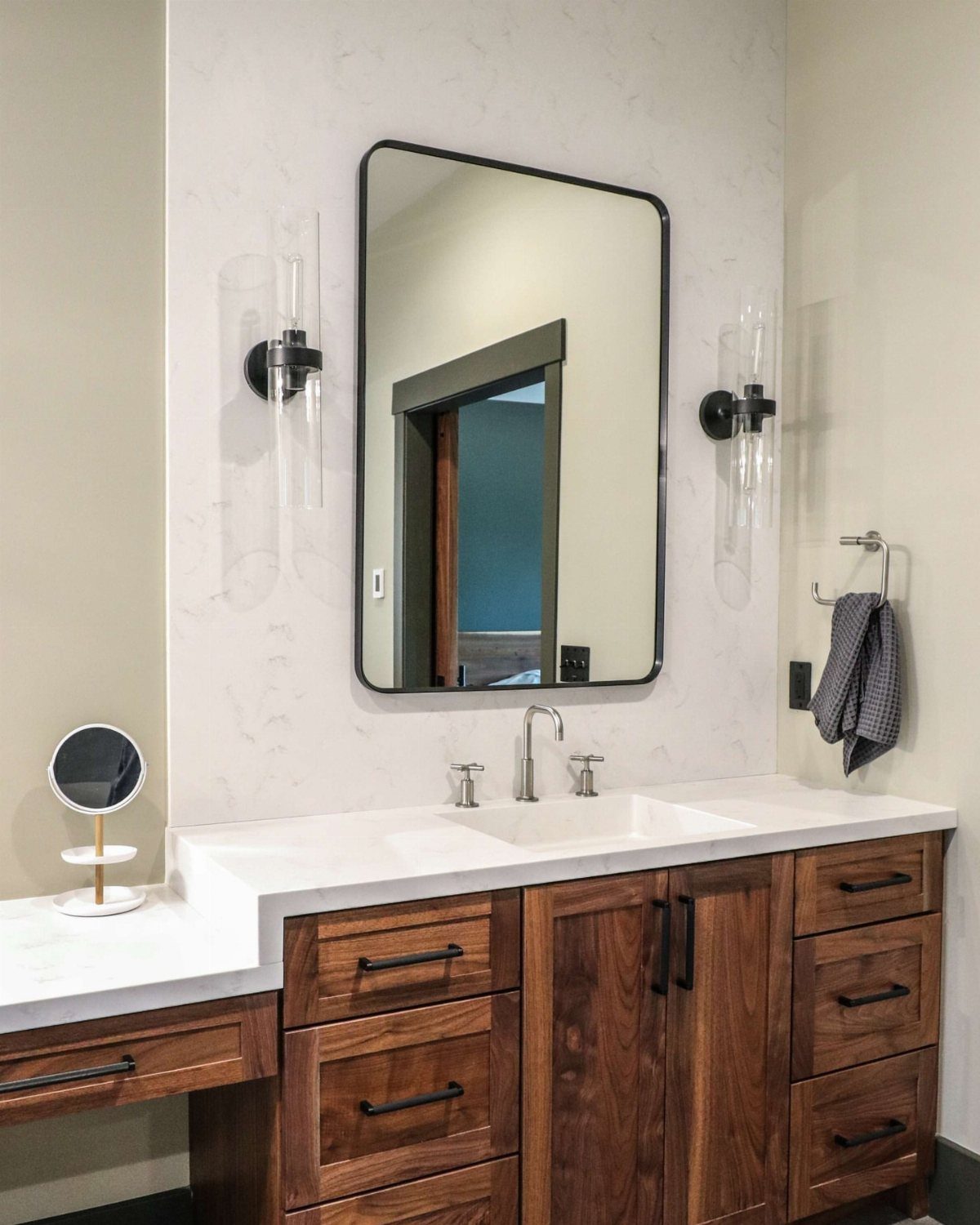
Solid surface means no seam between counter and sink, which eliminates the grime line that defeats so many bathroom cleaning routines. An integrated sink flows straight into the backsplash panel, the same material wrapping all 3 surfaces.
I like this option for rental updates and first bathrooms because the repair is straightforward. Scratch it with a dropped hairbrush, sand it out with fine grit and the matte finish returns.
You cannot do that with stone. Heat sensitivity is the weakness here; hot tools left directly on the surface will leave marks, so I always add a trivet or ceramic tray nearby.
Color choice steers the result.
Bright white reads cleanest but shows every speck; warmer tones forgive daily life. Match the backsplash height to your mirror placement, too tall and it competes, too short and it looks like an afterthought.
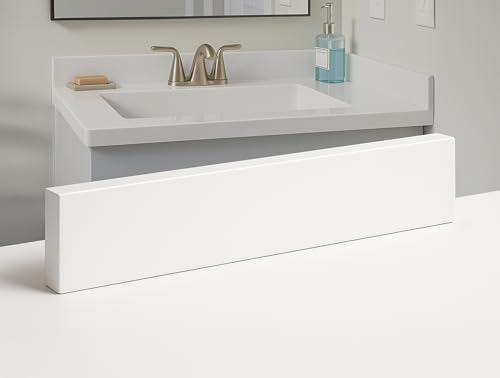
VERSATILE DESIGN: Perfect addition to protect your bathroom walls from water damage, designed to complement standard vanity sinks and countertops.

✅DIMENSIONS: Bathroom vanity top Exterior Dimension 31 wide x 22 deep Fits Most Standard 30-in W x 21-in D vanity cabinet single center faucet holes

VERSATILE DESIGN: Perfect addition to protect your bathroom walls from water damage, designed to complement standard vanity sinks and countertops.
4. Concrete Countertops
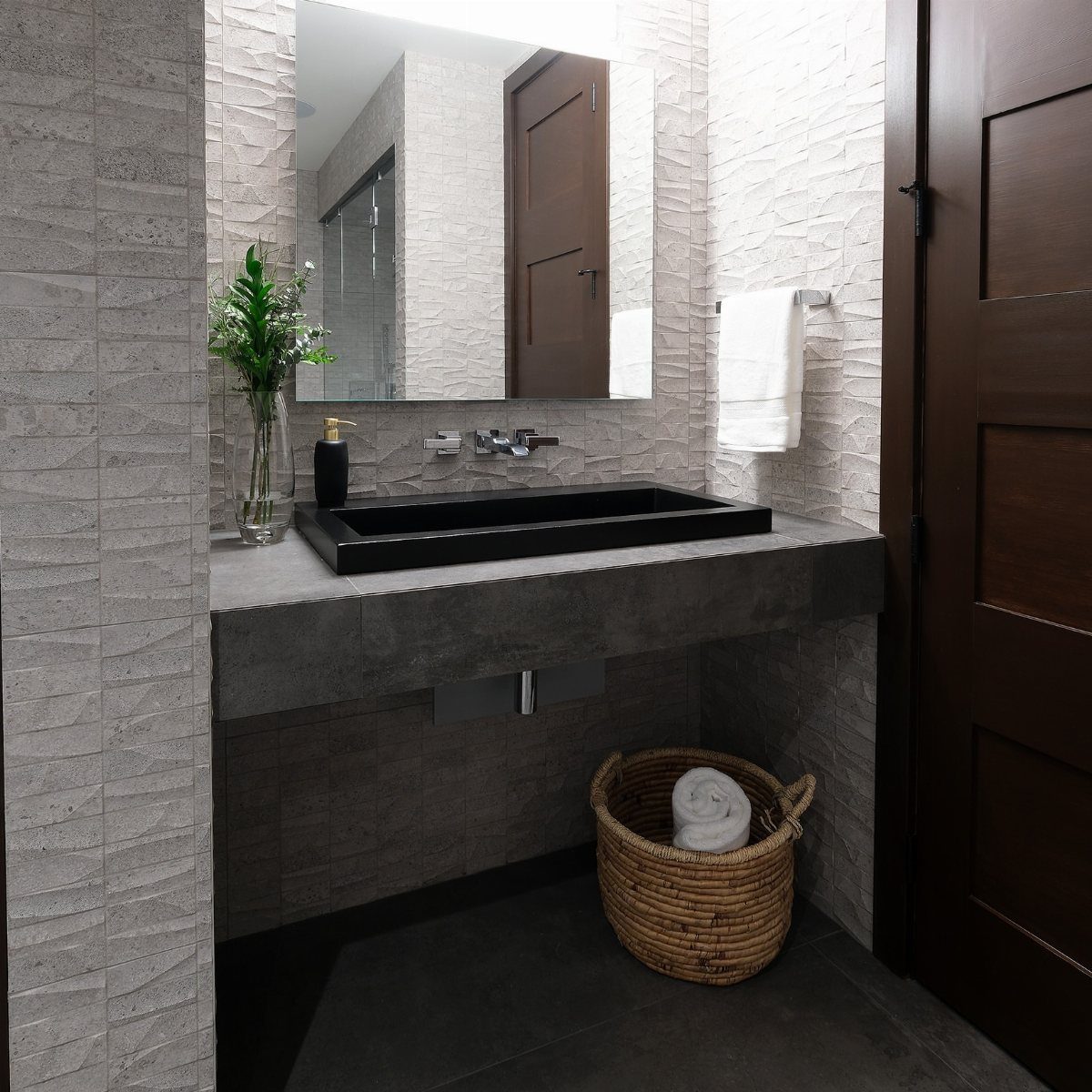
Concrete in a bathroom reads industrial in a way that concrete in a kitchen rarely commits to. A thick grey slab paired with a shallow black trough sink makes the statement deliberate rather than apologetic.
This is a custom pour or a very good precast, and the difference in cost and quality is substantial.
Site-poured concrete allows integral sinks and exact dimensions; precast ships with the risk of hairline cracks from transit. Either way, the surface needs sealing with a product rated for bathrooms, not the same treatment as outdoor concrete.
Wall-mounted faucets make sense here because the countertop thickness fights standard faucet reach.
I would budget for a template and professional install unless you have formed concrete before. The weight alone demands cabinetry that will not flex.

Modern Bathroom Sink Design: Elevate your bathroom with this sleek and contemporary vessel sink, perfect for modern bathrooms. Its stylish aesthetic enhances any vanity or countertop setup.

Modern Bathroom Sink Design: Elevate your bathroom with this sleek and contemporary vessel sink, perfect for modern bathrooms. Its stylish aesthetic enhances any vanity or countertop setup.
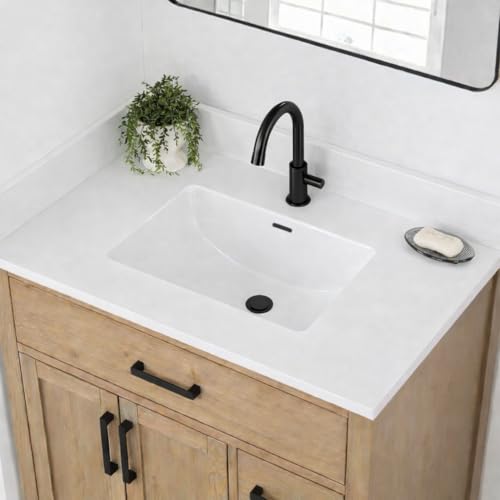
SEAMLESS VANITY TOP WITH INTEGRATED SINK – One-piece solid surface vanity top and sink design creates a clean, modern look while reducing seams for easier everyday maintenance.
5. Integrated Sink and Countertop
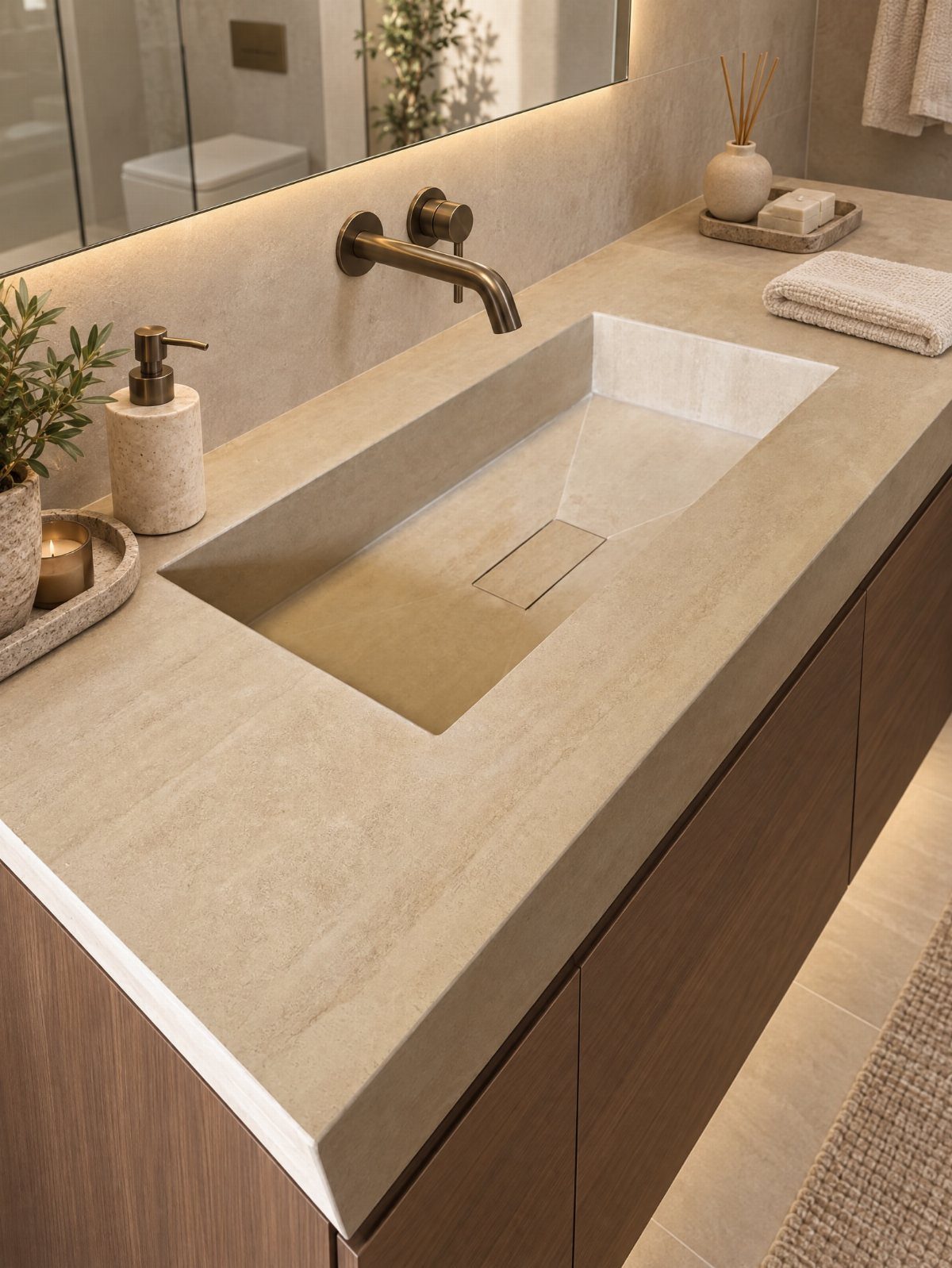
A single surface from counter to sink bowl removes every seam where mold collects and where the caulk line eventually discolors. Beige stone texture carries that continuous plane through to the wall-mounted faucet, so nothing breaks the horizontal line.
Material choice determines whether this feels luxurious or like a gas station restroom.
Stone composite or solid surface work; laminate with an molded basin does not age well. I would verify the slope of the integrated bowl before committing.
Too shallow and water pools; too steep and it drains loudly. A ramp sink at middle pitch works for hand-washing without splash.
Wall-mounted faucets pair best with this setup because deck-mounted ones need precise drilling through the integrated surface, a repair you cannot make if the hole is wrong.

FOOD GRADE SILICONE AND NON SLIP: Walfos trivets for hot dishes are made of food grade silicone, BPA-Free, won't absorb odor, stain, rust, crack or chip. Non-slip design of these silicone trivets make nothing slide off

NON-SLIP AND HIGH HEAT RESISTANT: These trivets for hot dishes are heat-resistant from -104℉ to 446℉, Protect your countertop or table from hot pots, hot pans coming out from the microwave or stove. Silicone trivet is non-slip to make nothing slide off

【1022℉ Fireproof & Heat Resistant】Different from other felt material mats, our air fryer mat is made of fiberglass, heat resistant silicone resin coated on both sides, which can provide heat resistance up to 550℃/1022℉. Our heat resistant mats have finely stitched edges. It won't stick, tear, curl or crack from heat
6. Dark Cabinets with Light Countertops
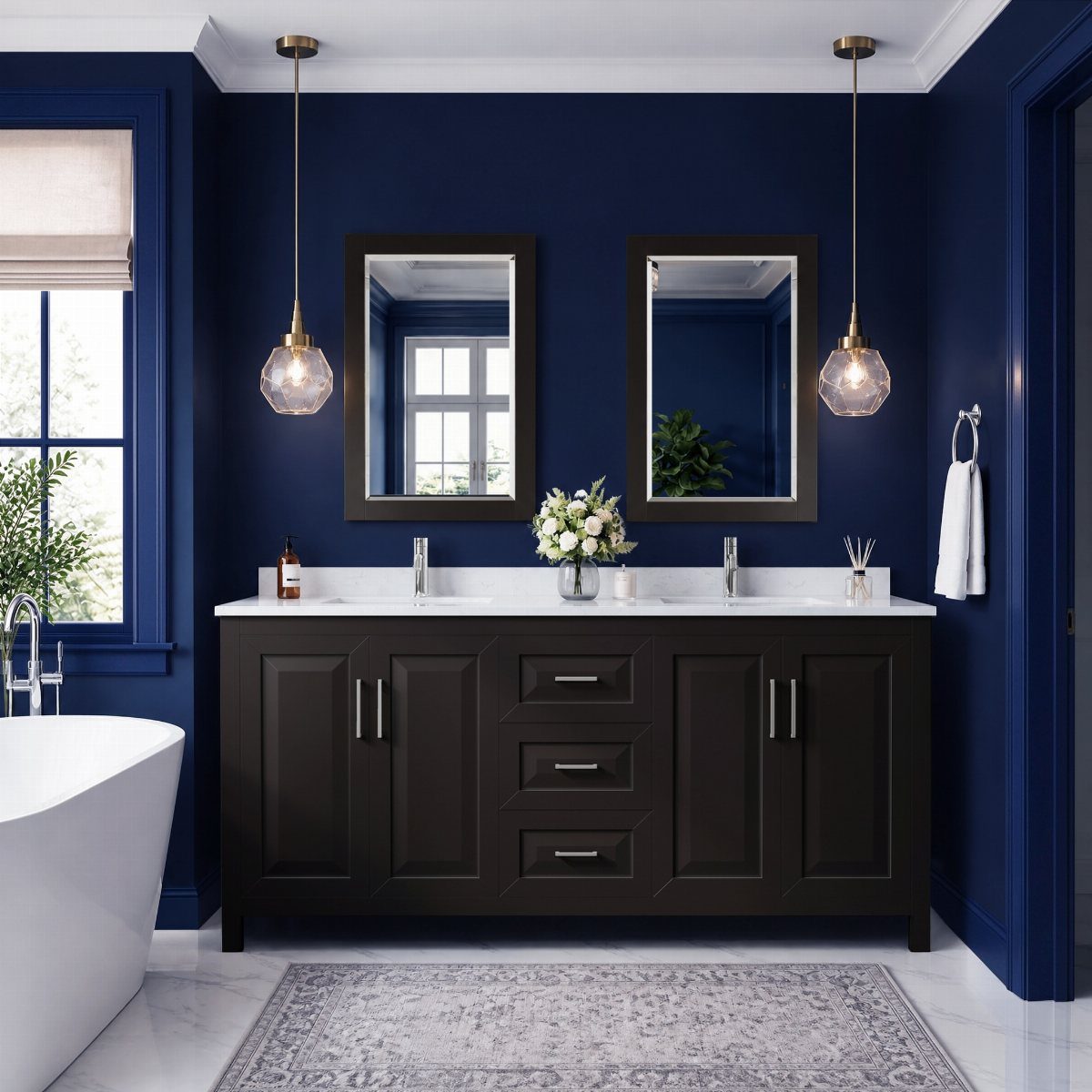
Dark brown cabinets against bright white counters with navy walls behind works because each element holds its own weight without competing. This is a color strategy more than a material one, and it succeeds or fails in the proportions.
I would keep the countertop truly light, not mid-tone, when the cabinets are genuinely dark. The eye needs somewhere to rest, and in a bathroom that rest should be the horizontal plane you face at the sink.
2 dark masses, cabinets and countertop, compress the room visually. A double vanity avoids crowding by letting the white counter breathe between the dark cabinets and the deep blue wall.
Hardware finish matters more than people expect. No visible pulls keeps the cabinet faces quiet; if you add them, brass or black against dark wood reads intentional, chrome can look like an accident.

CLEAR FILL FOR PATTERNED STONE: Transparent filler lets existing stone color, speckles and veining show through, helping small repairs blend with multitone surfaces. A clear choice for patterned countertops where a solid-color filler may stand out.
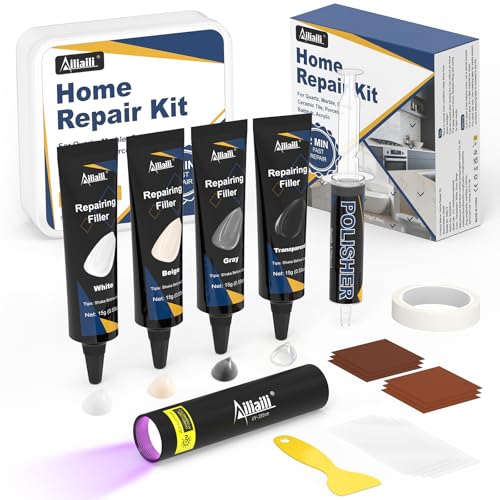
【Ailiaili Quartz Repair Kit】 - Ailiaili quartz repair kit is designed to repair the small scratches, cracks, chips, holes on quartz, granite, marble, porcelain, fiberglass and other hard surfaces. This quartz countertop repair kit will be the must-have tool kit for your kitchen, bathroom, countertop.

【Superior Adhesion & Permanent Repair】: This professional quartz granite marble countertop repair kit is tailored for US homeowners, DIY enthusiasts, and beginners, delivering permanent fixes for edge chips, cracks, gouges, and surface blemishes on artificial stone. Boasting high bond strength, it won’t crack or peel over time, while UV stability ensures resistance to yellowing—keeping repairs looking seamless and new. The waterproof formula cures to a rock-hard finish, enduring daily wear, and requires no extra sealing, making it ideal for kitchens, bathrooms, and high-use commercial spaces.
7. Floating Vanities with Quartz Countertops
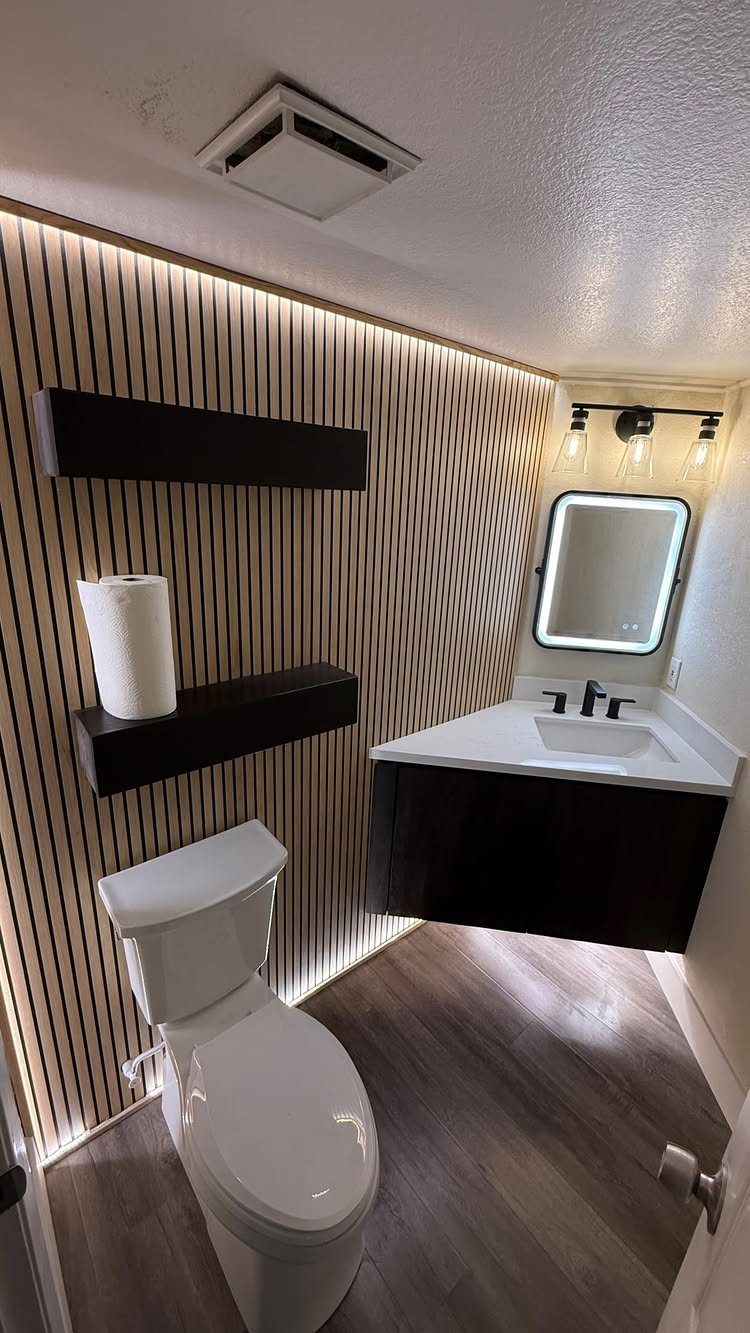
A floating vanity buys back floor space in a small bathroom, and quartz on top gives you the clean white surface that bounces light around without the sealing schedule of natural stone.
A floating vanity tucked into a corner frees up floor space where a full wall run would crowd the toilet.
A hand-built red oak plywood base, stained and finished, keeps the vanity from reading like a catalog piece.
I would check that the wall framing can take the weight before ordering; floating vanities torque differently than leg-supported ones, and a corner mount needs blocking in 2 directions.
Quartz thickness around an inch and a half looks proportional without overhanging awkwardly. An integrated sink in the same material removes the seam question entirely.

⭐𝐌𝐚𝐫𝐛𝐥𝐞 𝐂𝐨𝐧𝐭𝐚𝐜𝐭 𝐏𝐚𝐩𝐞𝐫: Peel and stick marble contact paper, self adhesive, removable, bubble free, repositionable. Not sticky residue left, not damage the surface.

【Elegant & Luxury】Koville Natural marble tray is made of high-quality marble from Namibia. Each granite tray has its own unique texture, revealing the wonders of nature. This solid decorative tray ensures durability and long-lasting enjoyment, adding a touch of sophistication and luxury to your home decoration

PRODUCT DETAILS: Green granite contact paper for countertops, made of waterproof vinyl material, glossy and smooth finish, realistic and clear granite pattern. Size is 12" W x 80" L = 6.66 square feet per roll
8. Backsplash Integration
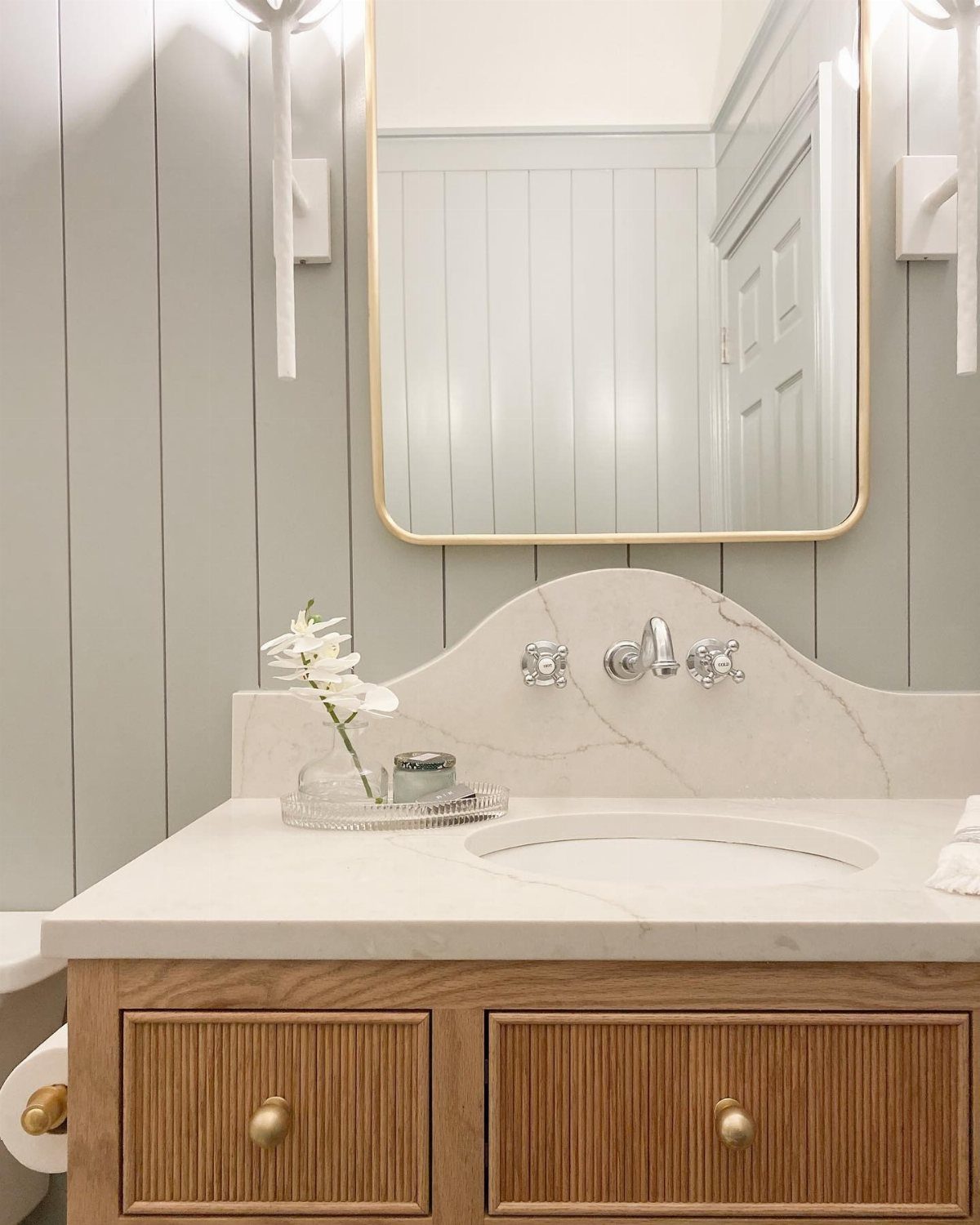
A backsplash cut from the same stone as the countertop turns two pieces into one continuous surface; a curved profile softens the geometry that straight edges would impose.
The fluted wood base and arched backsplash share a rounded language, but the stone needs to be thick enough to carry that curve without looking laminated.
I would verify the radius before fabrication; a tight curve in brittle stone risks cracking, and a shallow one reads as a manufacturing detail rather than a design choice.
Wall-mounted faucets are almost required here because deck-mounted ones would interrupt the stone plane. A silver finish keeps the palette cool; brass would warm it but needs to repeat elsewhere or it floats alone.
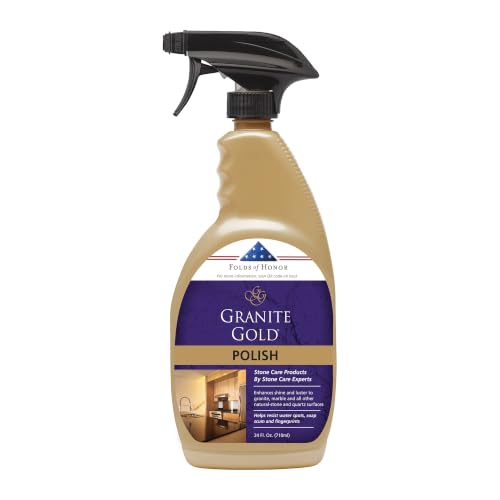
Granite Gold Polish quickly and easily enhances the shine and luster on granite, marble, travertine and all other natural-stone and quartz surfaces, and provides ongoing protection against water spots and fingerprints
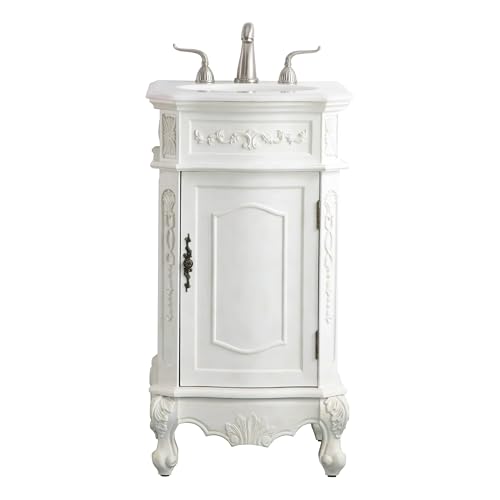
[Stylish Countertop]: Features an Ivory white engineered marble countertop with an elegant ogee edge cut for a sophisticated look.

WHITE ENGINEERED MARBLE: Designed for bathroom vanity countertops, this white engineered marble backsplash/sidesplash adds a clean, finished look to the sink area and complements many modern white vanity tops.
9. White Countertop with Vessel Sink
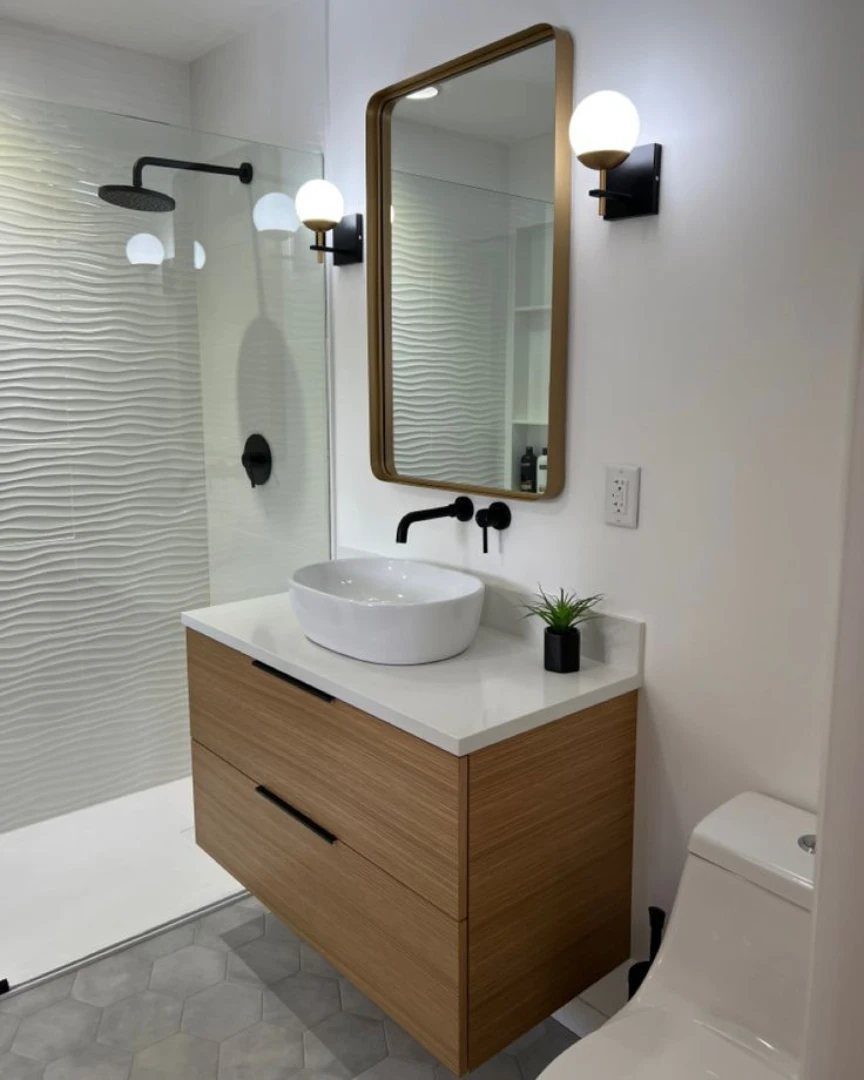
A vessel sink sitting on a white counter keeps the bowl visible as an object, which is the whole reason to choose one.
An oval vessel reads softer than a perfect circle, and a light wood base below keeps the composition from feeling sterile.
Faucet placement is the detail that decides this. Wall-mounted faucets center the water over the bowl without drilling through the counter; deck-mounted would need a tall spout to clear the rim, and those collect splash.
I would check the bowl depth before buying. Too shallow and water leaves the basin; too deep and you lean forward more than comfortable.
The counter needs to be sized for the sink footprint plus working room. A vessel sink on a narrow counter looks like a hat on a small head.

Modern Bathroom Sink Design: Elevate your bathroom with this sleek and contemporary vessel sink, perfect for modern bathrooms. Its stylish aesthetic enhances any vanity or countertop setup.

✔️ ELEGANT MARBLE-LOOK DESIGN (GOLDEN VEIL) - White surface with subtle gold veining delivers a refined marble aesthetic—perfect for elevating small bathrooms, powder rooms, and modern spaces.
SEAMLESS VANITY TOP WITH INTEGRATED SINK – One-piece solid surface vanity top and sink design creates a clean, modern look while reducing seams for easier everyday maintenance.
10. Live-Edge Wood Countertop
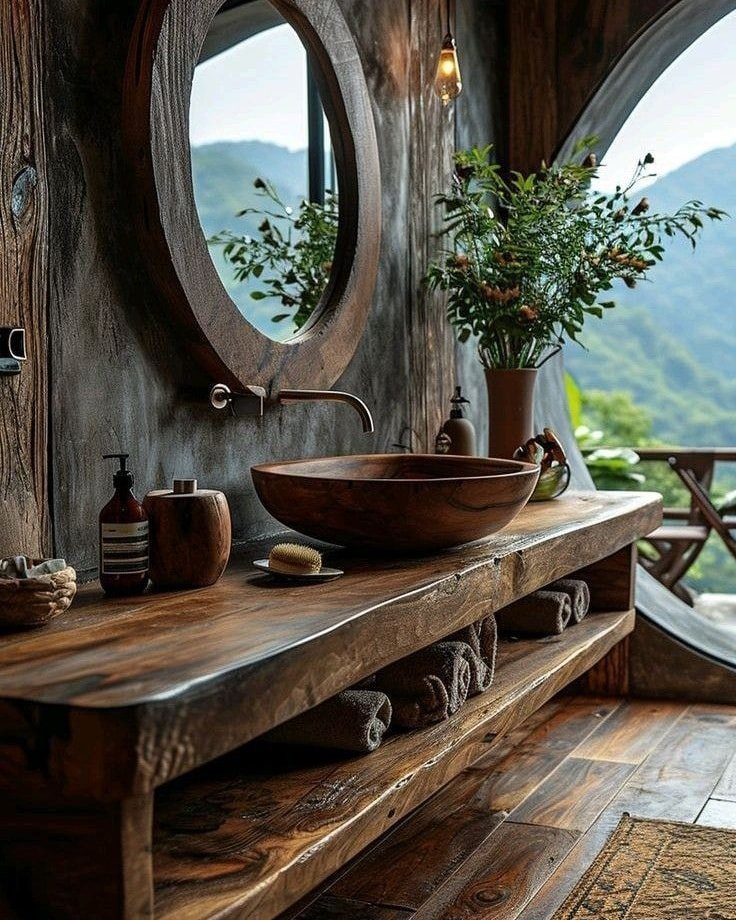
A live-edge slab carries the tree’s original contour into the room, and in a bathroom that rustic note works when everything else is disciplined. A thick cut gives the counter physical presence that thinner stock would lose.
Wood in a bathroom is a maintenance conversation.
Red oak plywood works for the build, but for the counter itself I would choose a harder species, white oak or black walnut, and finish with a marine-grade oil or a conversion varnish rated for wet environments.
A wooden bowl sink doubles the exposure to moisture, so the finish has to hold up everywhere, not just the flat surfaces.
The open shelf below is honest about this vanity’s purpose. Towels and spare rolls belong there; clutter does not.

HIGH-QUALITY SILICONE TRIVET MAT: The Trivets are made of food grade, BPA-Free, and heat-resistant silicone material that is absolutely safe for your health. The flexible & durable hot pad won't rust, crack or chip.
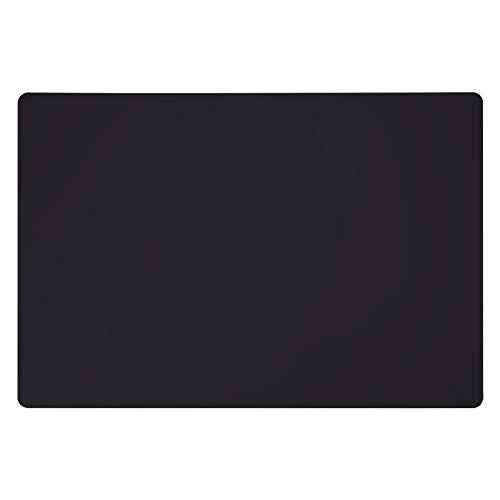
Size :Sized at 25"x 17"x 0.03"(Length x Width x Thickness), large enough to protect your counter top, it can be placed under the microwave, air fryer, induction stove, toaster oven, coffee maker etc.
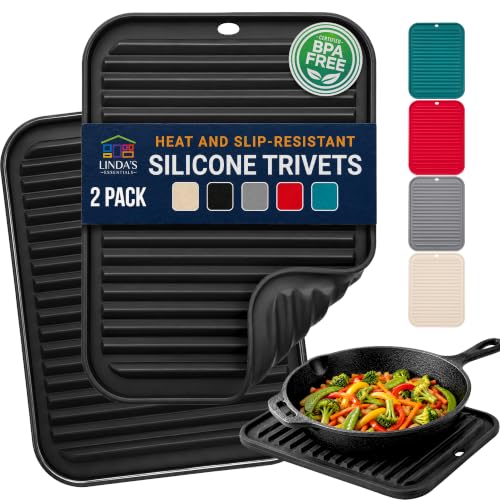
HEAT RESISTANT PROTECTION: Our trivets for hot pots and pans are designed to withstand temperatures up to 446°F, providing a safe and reliable surface to rest your hot pots, pans, and baking dishes. Avoid damaging your countertops or tables with our premium and durable silicone pot holders. They also serve as hot pads for kitchen countertops, giving you extra protection from scorching heat
11. Textured Stone Countertop
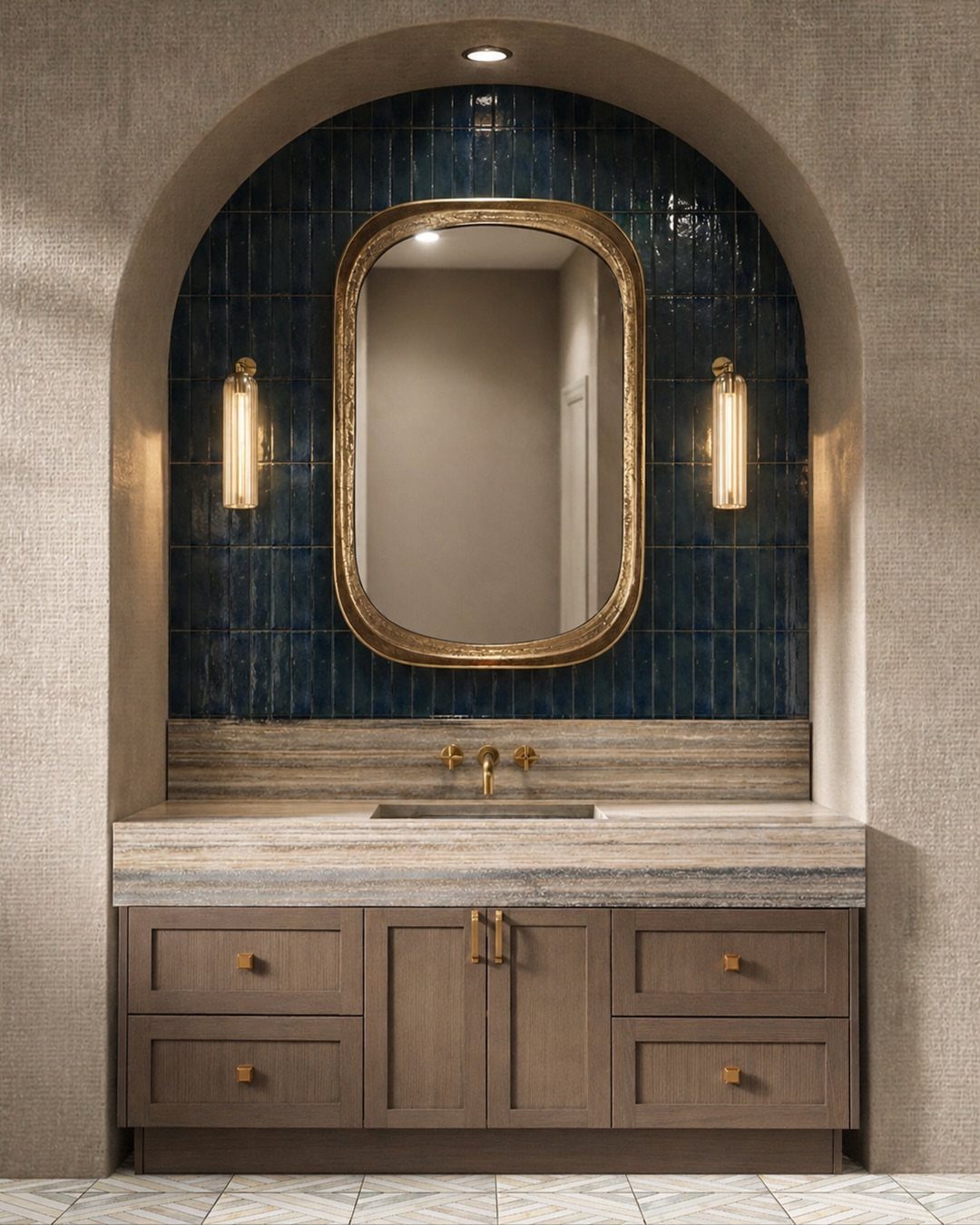
A textured stone counter in an arched alcove reads as built-in, not installed, and the visible thickness suggests a slab selected for heft rather than economy.
The veining carries the eye across the surface while the texture catches light unevenly, which hides water spots better than polish would.
Blue tile and brass fixtures set a mood that the stone needs to support without matching.
I would bring a tile sample to the stone yard; the warm-cool tension between brass and blue only works if the stone veining does not fight one or the other.
Arched architecture limits the vanity depth.
A counter that projects too far breaks the alcove’s embrace; one too shallow loses function. I would template the space before cutting, not after.
Countertop Material Durability
Granite resists heat and scratching through hardness, though it still needs sealing against moisture in a humid room.
Quartz skips the sealing entirely; the resin binder makes it non-porous, so stains from toothpaste, makeup, or cleaning products sit on the surface instead of soaking in.
Marble demands more attention than either.
Acidic products etch the finish, and the care routine is ongoing, not occasional. I would reserve it for bathrooms where the counter sees light use and where someone is willing to wipe spills promptly.
Solid surface belongs in the same low-maintenance camp as quartz.
Choosing Cambria quartz surfaces for your bathroom countertop will ensure that the focal point of your space is durable, easy to clean, and hygienic (no moisture or bacteria will seep through the nonabsorbent quartz surface).
— Cambria
Maintenance Requirements
Natural stone sealing is the maintenance task most owners underestimate. I check whether the seal is still doing its job by flicking a few drops of water onto the surface.
If they spread instead of beading up, it is time to reseal. Most quality sealers hold for a year, sometimes two in a guest bath that sees lighter use.
Marble needs more attentive care, not just sealing but prompt wiping of anything acidic. Skip that routine and the surface deteriorates faster than the material price would suggest.
Quartz and solid surface remove sealing from the calendar entirely. That is the practical appeal for a busy bathroom or a rental where tenant care is unpredictable.
Laminate sits at the budget end with its own rules.
Wipe standing water quickly or seams swell; clean with mild detergent only; harsh solvents strip the printed layer. For a primary bath you use daily, the time spent adds up.
Visual Design Considerations
Light colors expand a small bathroom visually; dark tones compress it but add deliberate drama.
The contrast between them does the real work. A white vanity against a black herringbone backsplash reads designed, not decorated, because the eye moves between the two instead of settling on one.
In tight spaces, I would use a slim countertop edge and a large mirror to stretch sightlines.
I like a backsplash that runs straight into the counter with no seam line at the change of plane. The eye reads it as one surface, and the bathroom feels larger for it.
That continuity matters most in a small powder room where every visual break chops the space into smaller pieces. Under-vanity LEDs paired with a focused task light add perceived value without raising material costs.
Mixing materials works when each one has a job.
Frequently Asked Questions
What’s the best countertop to put in a bathroom?
Quartz and granite are the two I steer people toward most often. Solid surface is worth a look for rentals or tight budgets; you can sand out scratches yourself, though hot tools will mark it.
What is trending for bathroom countertops?
Quartz still dominates because it reads polished without the upkeep schedule of natural stone.
I am also seeing more concrete and live-edge wood in bathrooms where the rest of the design is disciplined enough to carry that rustic or industrial note without looking accidental.
What makes a bathroom look tacky?
Clutter is the fastest route. A countertop that becomes a display stage for every product you own reads chaotic, especially in a small room.
I would keep daily items in drawers or a cabinet and leave out one good soap dispenser, a hand towel, and maybe a small tray.
Chrome hardware on dark wood can look like an accident unless the finish repeats elsewhere; brass or black reads more intentional.
Do bathroom countertops need to be sealed?
Natural stone does; quartz and solid surface do not. If the water spreads rather than beading up, the seal has failed and the surface needs attention; granite tends to hold up longer between treatments, while marble demands more frequent care.
