
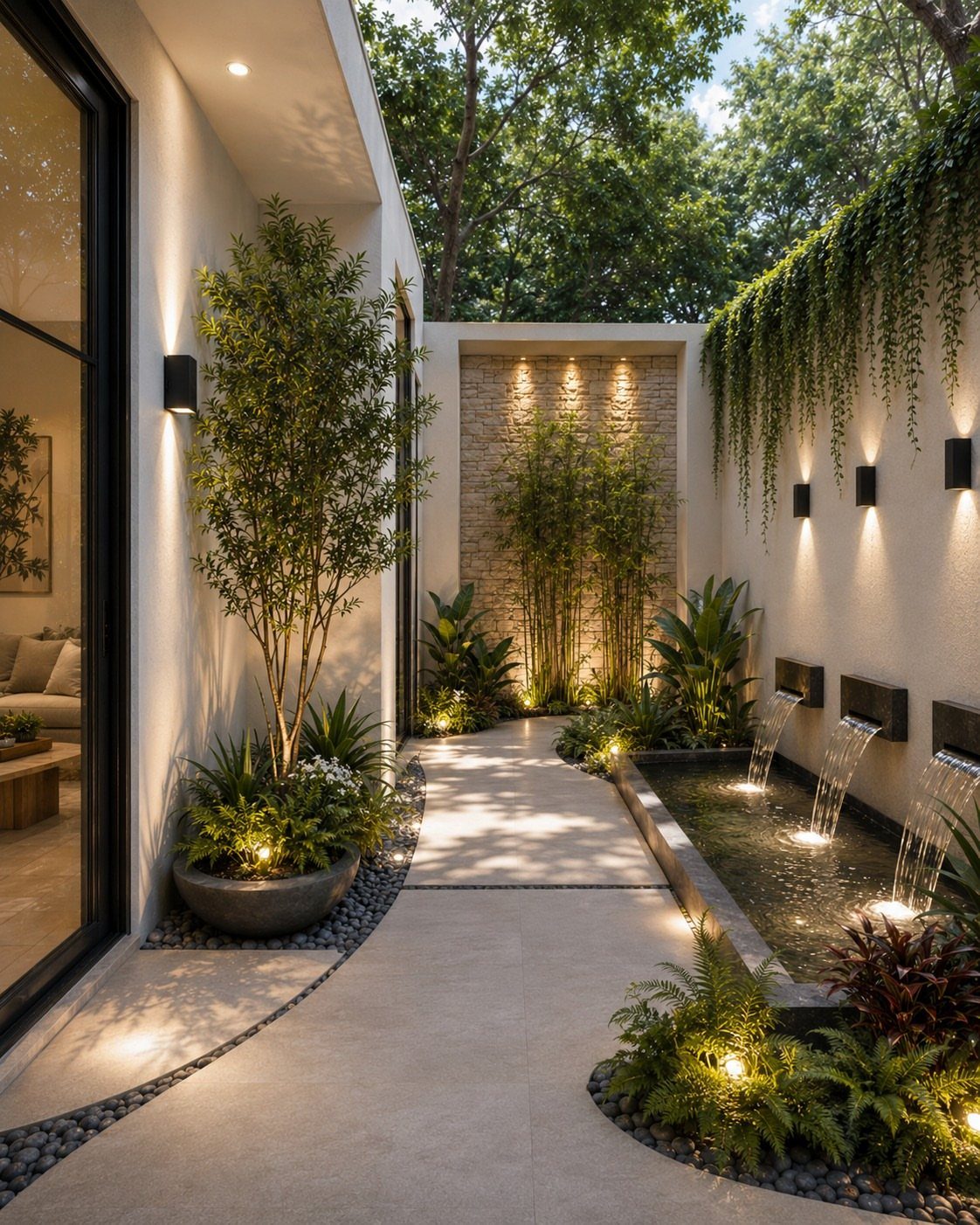
These ideas run from a simple string light strand to a permitted stone fireplace, and the one that fits your yard depends on whether you own the place or answer to a landlord.
Renters lean toward fabric sails and wall-mounted planters they can take with them; first-home owners can justify built-in seating and pergolas that stay.
1. Wall-Mounted Planters
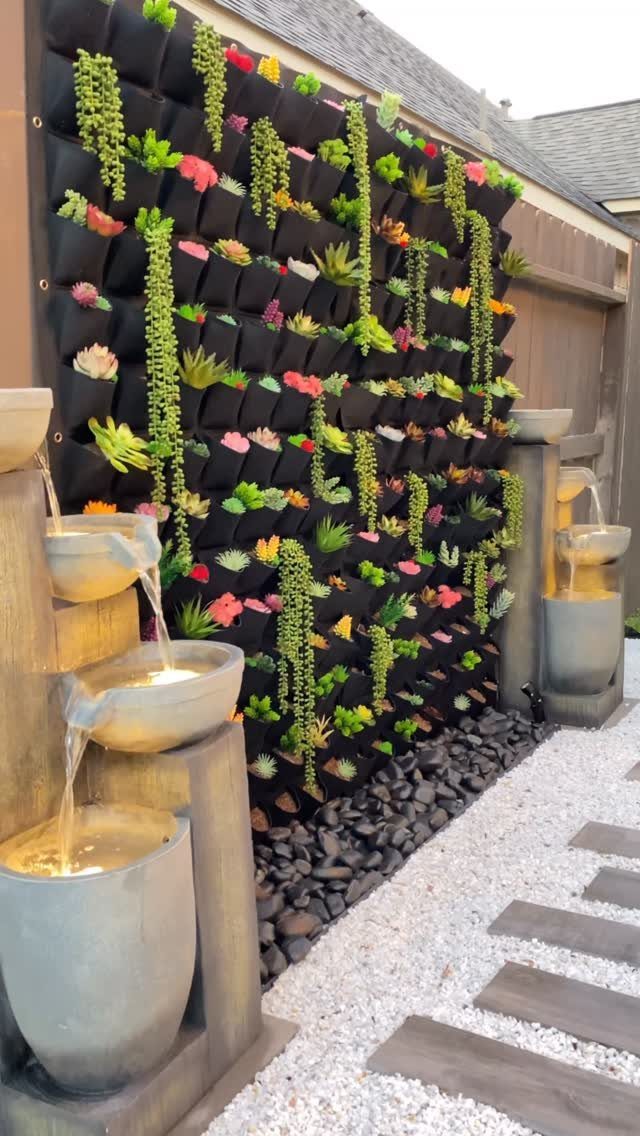
Wall-mounted planters turn a bare fence or exterior wall into growing space without eating up floor area.
The fabric pocket style visible here, filled with succulents, works because those plants need little soil depth and tolerate the drying that comes with vertical placement.
Before buying, check that your wall material can take the mounting hardware and that pockets drain; standing water rots both the planter and the surface behind it.
I would skip the integrated irrigation kits and water by hand; succulents want dry spells between drinks, and automatic systems tend to keep them too wet.

【36 Pocket Vertical Garden】Features 36 individual planting pockets, allowing you to grow herbs, flowers, succulents, strawberries, vegetables, and other plants while maximizing vertical space.

Pack of 2 semi circular wall hanging planters. Rustic Indoor and outdoor decoration.

Innovative Space-saving Design: maximize your gardening potential with our stackable wall planter system; Each piece measures 9.45" x 5.71" x 5.51" and features two pockets, The overall dimensions are 47.5"x33"x5.5" offering ample growth space for a variety of plants; Nice for Fence Balcony Wall Decor, these vertical wall planters change limited spaces into gardens effortlessly
2. String Lights
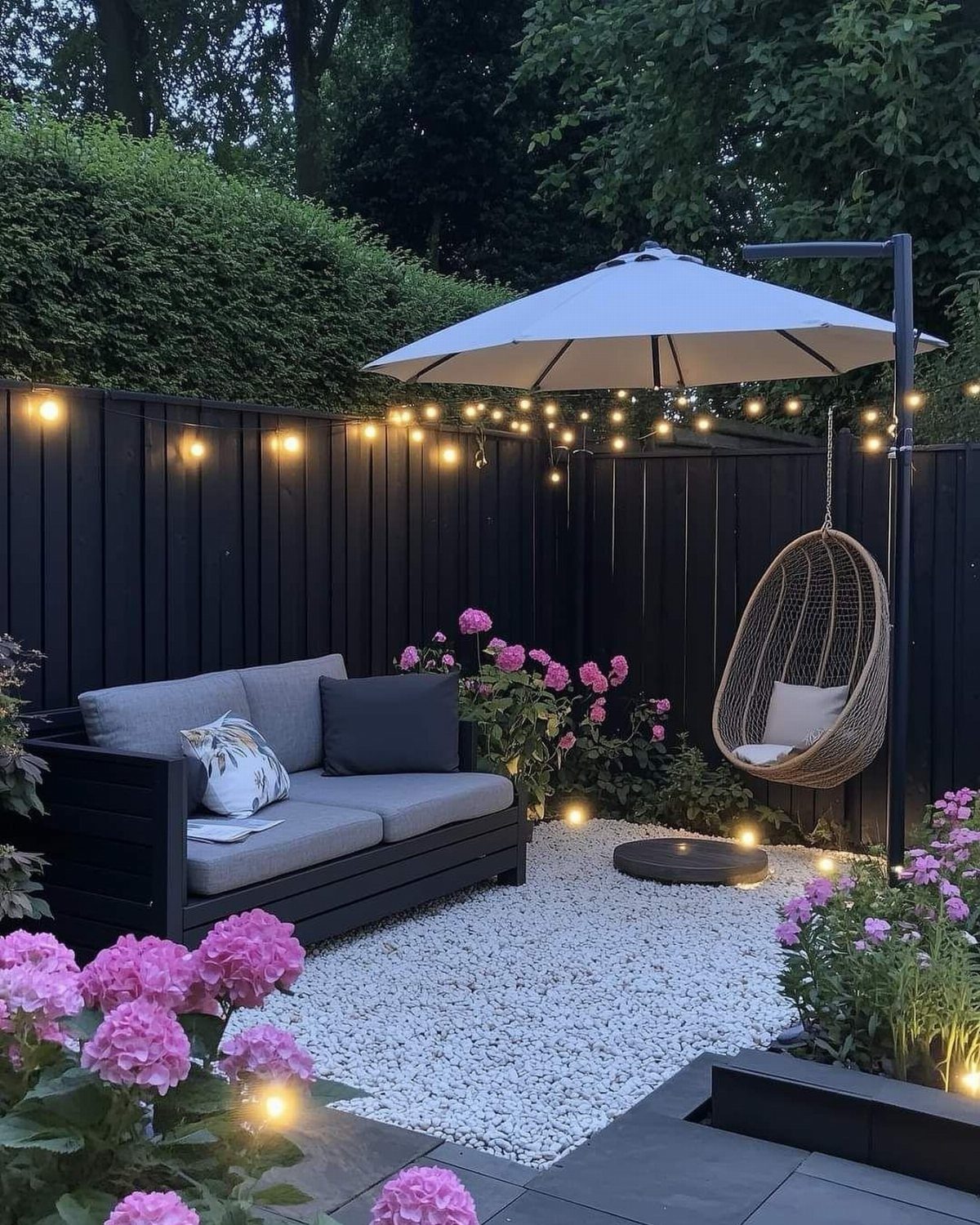
A small backyard after dark can feel either boxed in or intentionally cozy, and string lights are the cheapest way I know to push it toward the second.
Draping string lights along a fence line works better in a narrow yard than hanging them overhead; it keeps the ceiling low and intimate without requiring tall posts or trees.
White gravel below bounces some light back up, a pairing I would repeat. Check that your outlet or extension cord is outdoor-rated and that the strand length matches your fence run; splicing 2 short strings rarely looks as clean.

PREMIUM MATERIAL & WATER-PRESERVING REAR DESIGN - The hanging garden growth bag is made of high-quality and environmentally friendly felt. Practically, this growing bag retain a moderate water level for perfect growing conditions for your plants, such as herbs, strawberries, flowers, vegetables and so on. The rear water-preserving layer of the growing bag effectively protects the wall without stains, and the leakproof design of the bottom does not make your floor dirty.
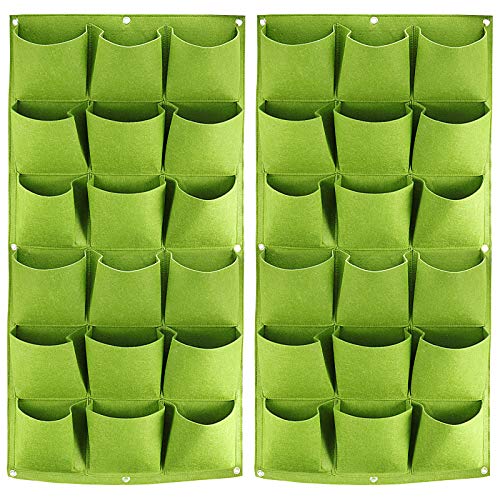
PREMIUM MATERIAL & WATER-PRESERVING REAR DESIGN - The hanging garden growth bag is made of high-quality and environmentally friendly felt. Practically, this growing bag retain a moderate water level for perfect growing conditions for your plants, such as herbs, strawberries, flowers, vegetables and so on. The rear water-preserving layer of the growing bag effectively protects the wall without stains, and the leakproof design of the bottom does not make your floor dirty.

【18 Pocket Vertical Garden】Features 18 individual planting pockets, allowing you to grow herbs, flowers, succulents, strawberries, vegetables, and other plants while maximizing vertical space.
3. Fire Pit
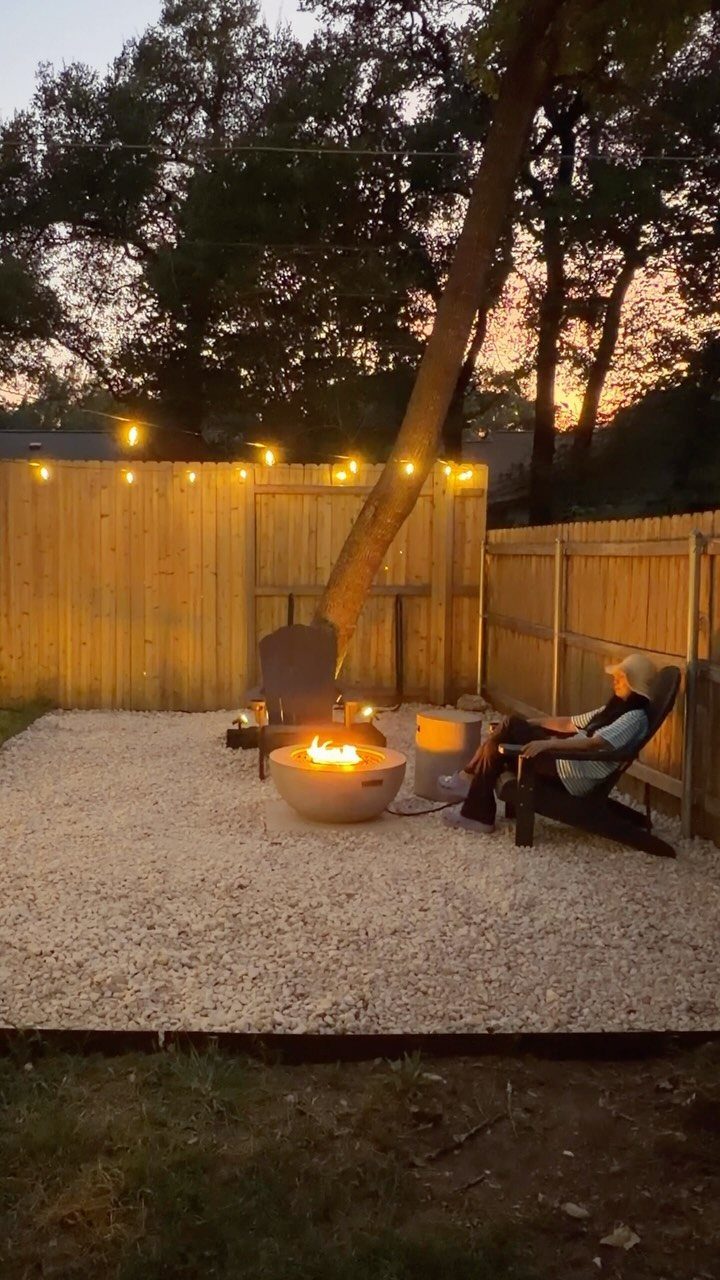
A fire pit in a gravel bed gives you a gathering spot without the permanence or code complications of built-in masonry.
The concrete bowl style here sits loose on the stone, which means you can shift it if the wind changes or you need the space back.
I would keep the gravel ring generous on all sides; sparks travel farther on hard surfaces than people assume.
For a small yard, a compact pit is enough for a few chairs without dominating the whole patio. Propane starts faster and leaves no ash, but wood smoke is what most guests remember.
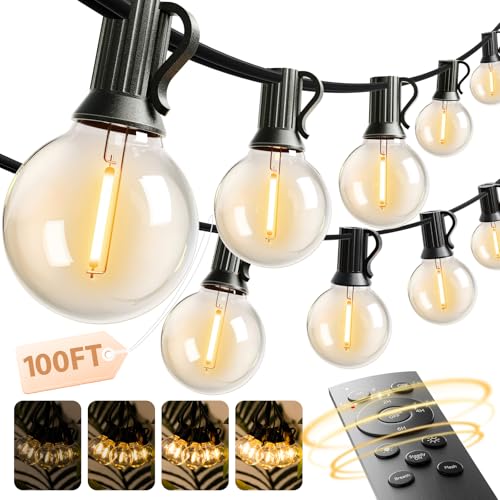
【One Remote, Four Brightness Levels】Sit back and relax while you control your outdoor lights with a simple remote. Tap to switch the brightness between 25%, 50%, 75% and 100%, making it easy to go from a soft, cozy glow to bright lighting for grilling, games or family gatherings.

【Solar Powered & USB Charging】52FT solar string lights with 15+1 shatterproof st38 LED bulbs (E12 base) – harness solar energy for friendly lighting, no outlet needed! Equipped with dual solar/USB charging, fully charged in just 4 hours. Provides up to 30+ hours of lasting illumination on a full charge, rain or shine. Ideal for outdoor decor in patio, garden, and backyard. These solar lights outdoor waterproof help cut electricity bills while going green

Safety and Energy saving Led Halloween Lights: Bring classic Halloween colors to your decorating space with these 10FT ST40 Halloween Orange Purple String Lights. Featuring 10 vibrant orange and purple LED bulbs with C9/E17 intermediate base, against a black wire, halloween porch lights add a festive glow to your Halloween display, haunted houses, or adding a touch of festive spirit to your home decor.
4. Hanging Planters
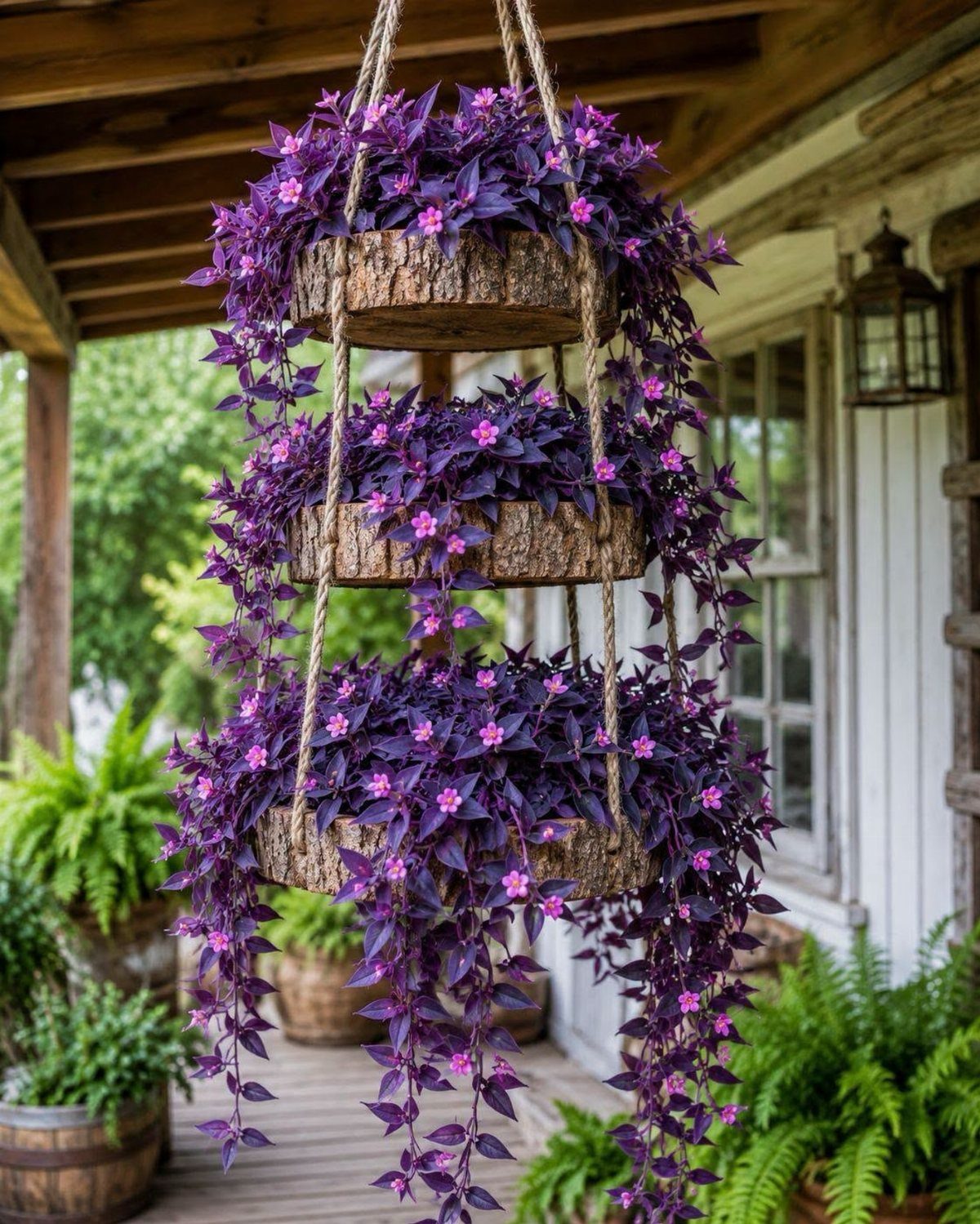
Hanging planters use the vertical space a small porch or patio already has, which matters when every square foot of floor counts.
The rope-and-wood-slice construction is light enough that a standard porch hook or beam bracket handles the load, but I would check the hardware anyway; wet soil gets heavy fast, and 3 tiers of it adds up.
Cascading plants like the trailing purple blooms here hide the container edges and draw the eye downward, which makes a low porch feel taller. I would space hangers with room for growth so plants don’t tangle by midsummer.

WHAT'S INCLUDED: Mini Fire Pit, Butane Adapter, Metal Mesh Screen, Lava Stones

50,000 BTU Powerful Heat Output: Create the perfect ambiance to hone in on the conversation. Our 28-inch propane fire pit can reach up to 50,000 BTU, ensures your patio and deck stays warm and inviting. The modern design and smokeless flame make it the perfect centerpiece for any occasion.

Pure Natural Lava Rocks: Lava stone comes in a variety of sizes from 0.2" to 0.3". Volcanic rock is truly natural, available in black and red. No fillers, chemicals or colors added
5. Layered Planting
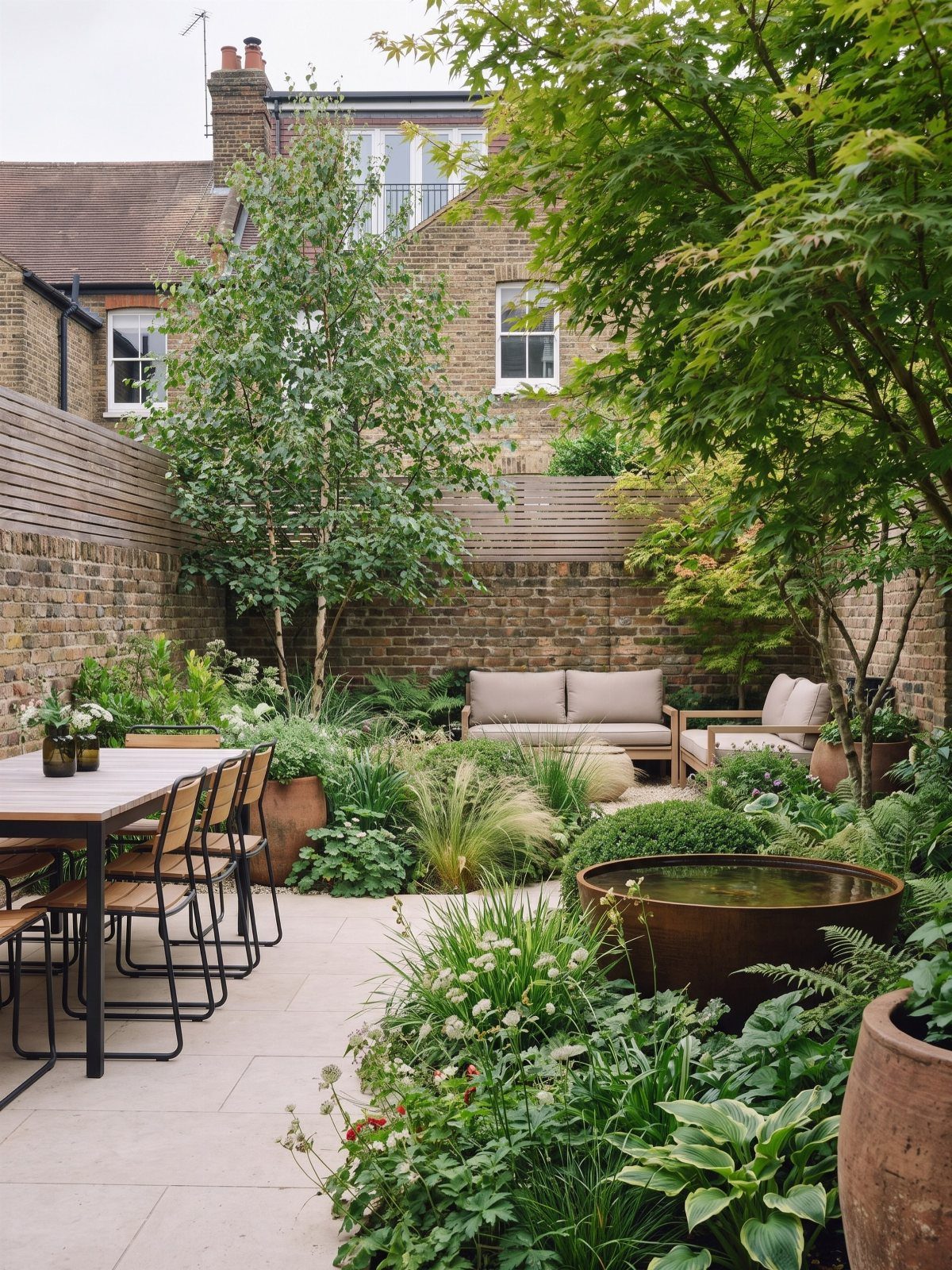
Layered planting is how a small courtyard avoids the flat look of a single flower bed pushed against a fence.
Grasses lowest, shrubs at mid-height, and a small tree at the back corner lets the eye read the yard as deeper than the wall actually sits.
In a space this enclosed, I would choose plants that tolerate reflected heat off brick and compete politely for light, since the walls cut down direct sun hours.
A round water basin at center level interrupts the layers and gives the composition a place to rest; without that pause, the planting reads as busy rather than designed.

This macrame plant hanger supports two flower pots. Show your plants some love with this elegant, vintage-inspired macrame double plant hanger. Simple, yet meticulously handcrafted, this beauty would be gracing your home or balcony garden, or brightening up an office

❤Handmade Weave:Show your plants some love with this elegant, vintage-inspired macrame plant hanger. Simple, yet meticulously handcrafted, this hanging planter basket would be add a touch of elegance and beauty to your home, balcony or your patio.

Stylish Bohemian Plant Shelf: This 3-tier hanging plant shelf features natural pine wood and sturdy hemp rope, combining rustic charm with bohemian elegance. Perfect for displaying your plants, flowers, or decorative items, it adds a warm, inviting atmosphere to any space.
6. Small Fountains
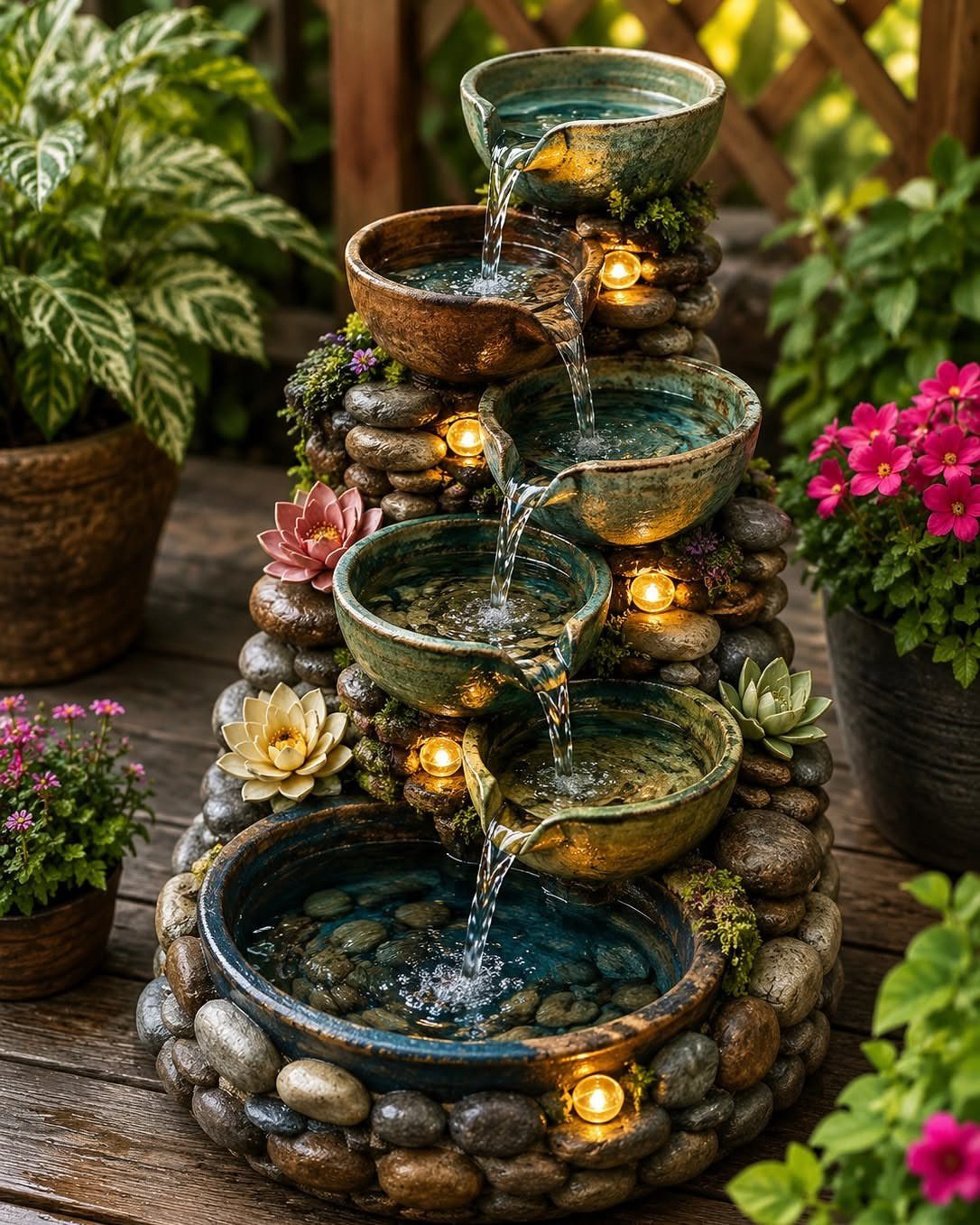
A tabletop fountain brings sound and movement to a deck or patio without the digging, wiring, or permits a built-in water feature needs.
The ceramic-and-stacked-stone version here runs on a small recirculating pump, usually 120V plugged into an outdoor outlet or a low-voltage transformer; check your access before you buy, since extension cords across walking areas are a trip hazard I would not accept.
I like the scale of this one, low enough to sit among potted plants without commanding the whole surface. The small lights are a nice touch after dusk, though I would treat them as bonus rather than reason to choose.

Transform your living space with our 2 Pcs Hanging Planters, designed for both indoor and outdoor use. These modern wall and ceiling planters are perfect for showcasing your favorite plants while adding a touch of elegance to your home décor. Ideal for small spaces, they allow you to create a lush indoor garden effortlessly.

【Eco-friendly Material】This hanging plant bag is made of high quality felt cloth, which is non-toxic, eco-friendly, but sturdy and durable. Felt cloth is breathable and with good drainage ability, which can retain water and release them slowly, creating the perfect soil conditions. This can reduce the risk of corrupt plant roots, which is good for the growth of plants.

【Timeless Vintage French Country Design】Boasts a distressed forest green finish with intentional white distressing, intricate embossed leaf scrolls, and a decorative teardrop finial — infuses entryways, fences, and patios with classic cottagecore charm.
7. Built-In Seating
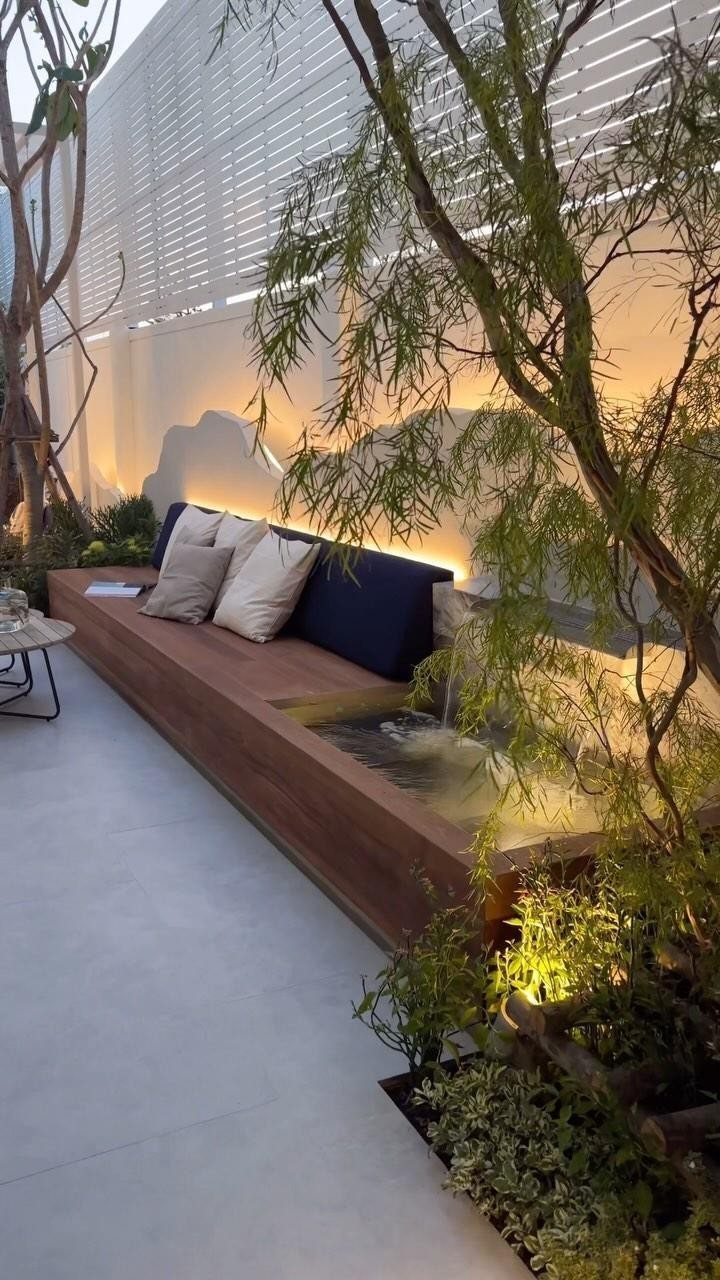
Built-in seating along a fence line turns structure you already need into furniture you do not have to store. A bench built flush against the privacy fence saves the clearance a freestanding piece would need on all sides for circulation.
I would check the wood species before committing; cedar or ipe handle ground contact and splashing from the nearby basin, but pressure-treated pine will check and split within a few seasons unless you keep up with sealing.
The low backlighting is a detail I would repeat; it extends usable hours without a fixture that blocks the seat itself.

These special metal bucket pot with an attached hook,can be hung on the railing, balcony, window, anti-theft net, trellis,fence,indoor or outdoor anywhere,also can be used as desktop.

1.【Size】: 16*8*6.5cm/6.3*3.15*2.55 inch, mini size.

{Premium Material}: Our garden wall planters bags choosing high-quality felt materials with good air permeability can better store and release water to promote healthy plant growth. It is lightweight, sturdy, convenient, foldable, durable and anti-aging.
8. // Create Walkways
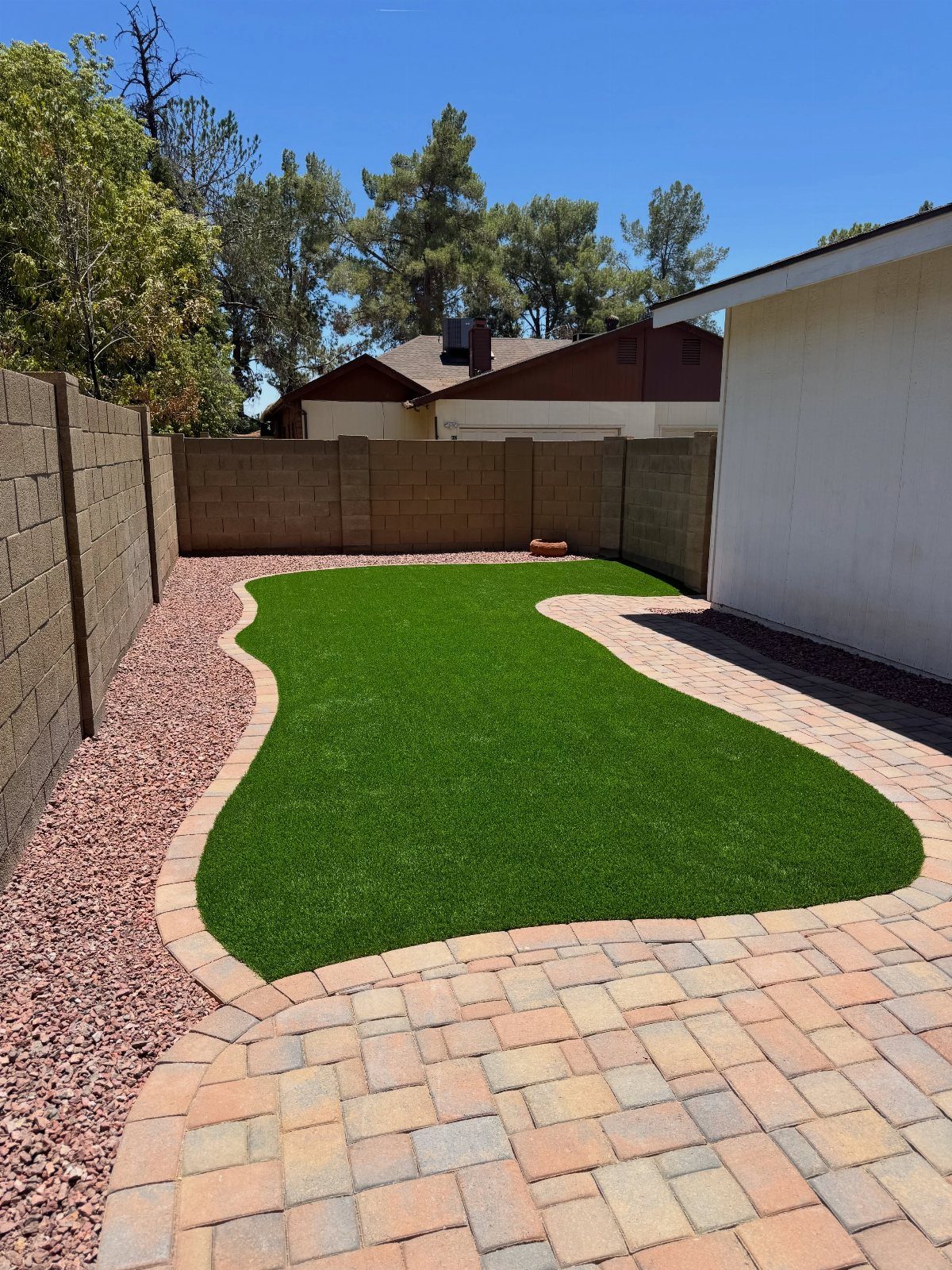
A curved paver walk through turf does what a straight concrete slab cannot: it makes a narrow yard read as a sequence of rooms rather than a corridor.
Artificial grass stays green without the mowing strip a real lawn would need along the stone edge, which keeps the joint clean.
I would set the pavers on a compacted base, not just sand; in freeze-thaw zones, anything less heaves within 2 winters.
The pink gravel against the block wall is a color choice I would skip; it competes with the green and reads as decoration rather than ground.
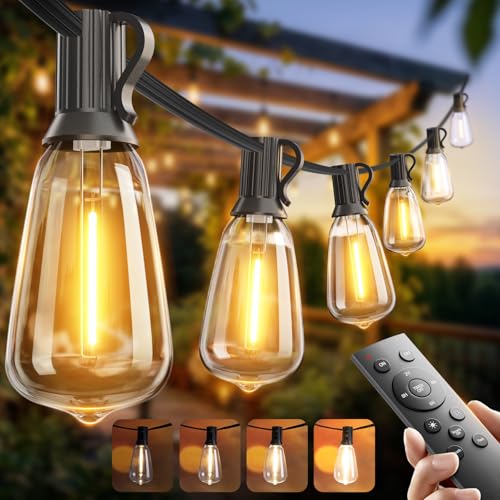
【Remote Control – Adjust Lights Without Getting Up】Sit back and use the remote to turn your lights on/off and fine-tune the brightness. Easily move from a gentle evening glow to bright lighting for cooking, gatherings, or game night, all without walking over to the outlet. The maximum remote control range is 50 feet.

[ STRONG ADHESIVE ] Our newly upgraded adhesive features ultra-high adhesion waterproof adhesive strips, solving the problem of falling decorations. It is easy to remove without leaving unsightly marks on walls

Ideal Solar Outdoor Lights: 27 ft long durable Chistmas string lights with 12 LED lights and detachable solar panel with on/off switch located on the back. 20" between bulbs, 6' from solar panel to the first bulb. The lighted portion is 20 feet. LED bulbs last 20,000 hours and solar panel is rated at 1,000 charge lifespan (can last approximately 2.5 years). Direct sunlight is best for a full charge, though you can get some use from charging in indirect light.
9. Outdoor Showers
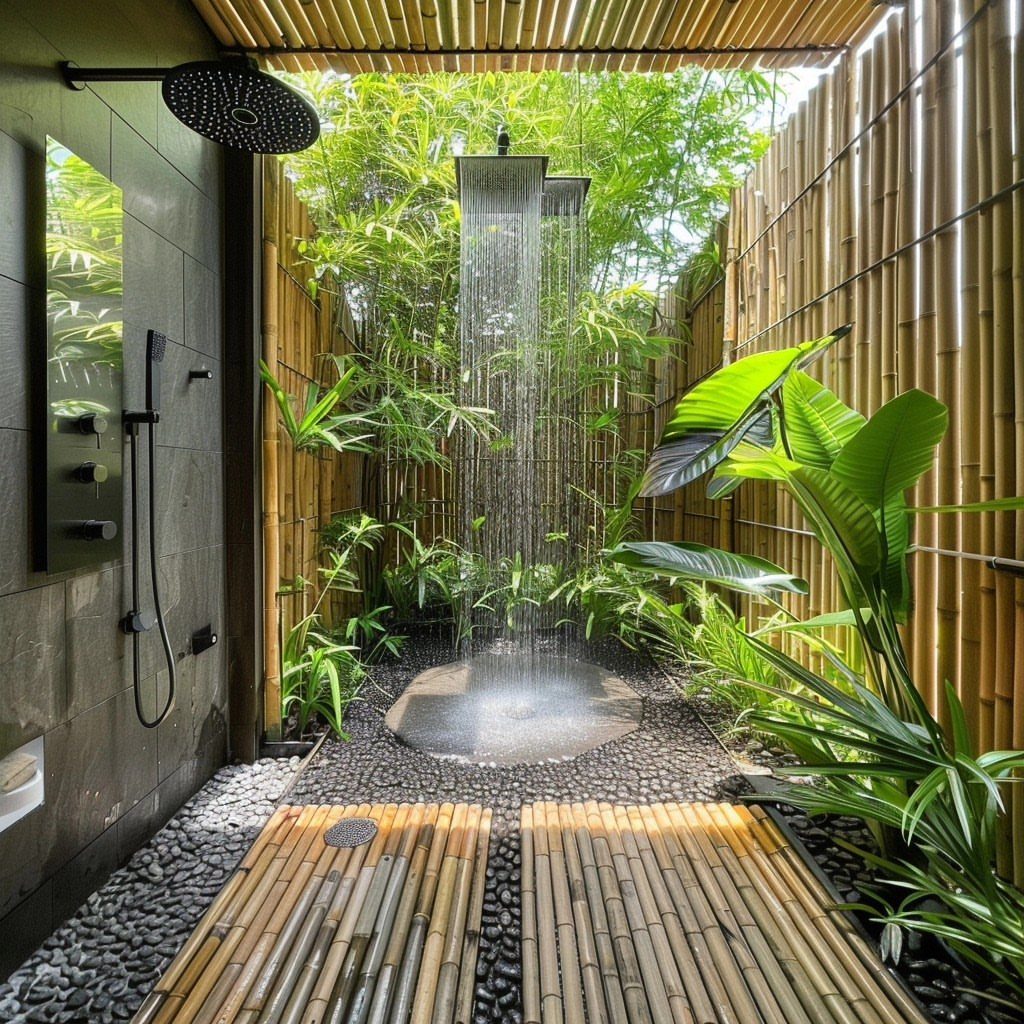
An outdoor shower against a fence turns a corner you already have into something worth walking to.
Bamboo is the right material for an outdoor shower screen; it handles wet cycles without rotting and gives enough opacity that you are not on display.
Pebble flooring drains fast and stays cool underfoot, but I would check the sub-base; without slope to a drain, the stones hold mildew and smell within a season.
A rainfall head is generous in a space this enclosed, though I would add a shutoff at the fixture so you are not running back to the house valve.

【Natural Fire Pit rocks】 -These black lava rocks have natural a porous surface, which can help spread the gas dispersion in all directions to improve the flame performance. It works great as a firebase underneath fire glass for fire pit or fireplace. While, it requires very little maintenance.

【Increase Heat】Adding Fire glass in fire pit can increase heat radiation up to 4 times. Keep your backyard welcoming and warm on chilly evenings by a fire glass pit. luminescent glow of the fire glass is both enchanting and inviting.

Concord's Dragon's Breath portable firepit is built like a rock. Heavy duty full powder coated steel frame is built for the rugged outdoors.
10. Build a Pergola
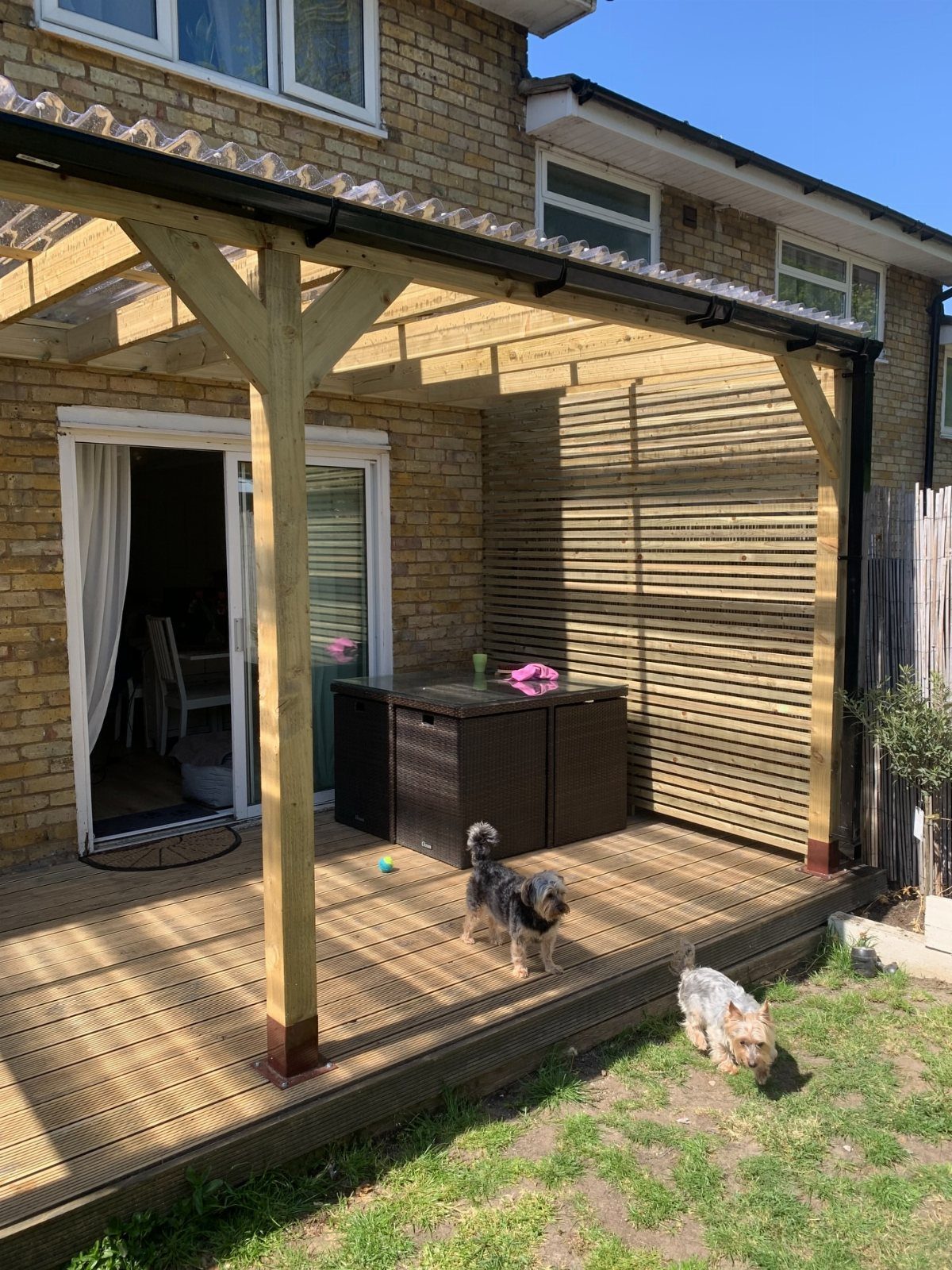
A pergola over a raised deck gives you a ceiling without enclosing the space, which matters when the yard is small enough that a roofed structure would darken the house windows too.
The translucent panel here is the detail I would copy; it sheds rain enough to keep furniture dry but still reads as open.
I would check the attachment to the brick wall; a ledger board into mortar joints is not enough, you want embedment or a freestanding frame.
The slatted privacy wall blocks the neighbor’s view without the bulk of a solid fence, a tradeoff I would use on the side that needs it most.

DISPLAY PLANTS IN YOUR WINDOW: By hanging planters on a metal rod, Triflora makes it easy to water and display plants in your window, without taking up space on the window will or counter

3-Tier Vertical Growing Space: Three planter boxes create separate growing areas for herbs, flowers, vegetables and fruits while taking advantage of vertical space. The 21" x 10" footprint makes this tiered railing planter especially practical for decks, balconies, porches and other compact areas.

Space-Saving Tiered Design: Elevate your greenery with this tiered plant stand indoor; its multiple staggered shelves create a gorgeous display for three pots; functions as a space-saving hanging planter for indoor plants in apartments or sunrooms
11. Shade Structures
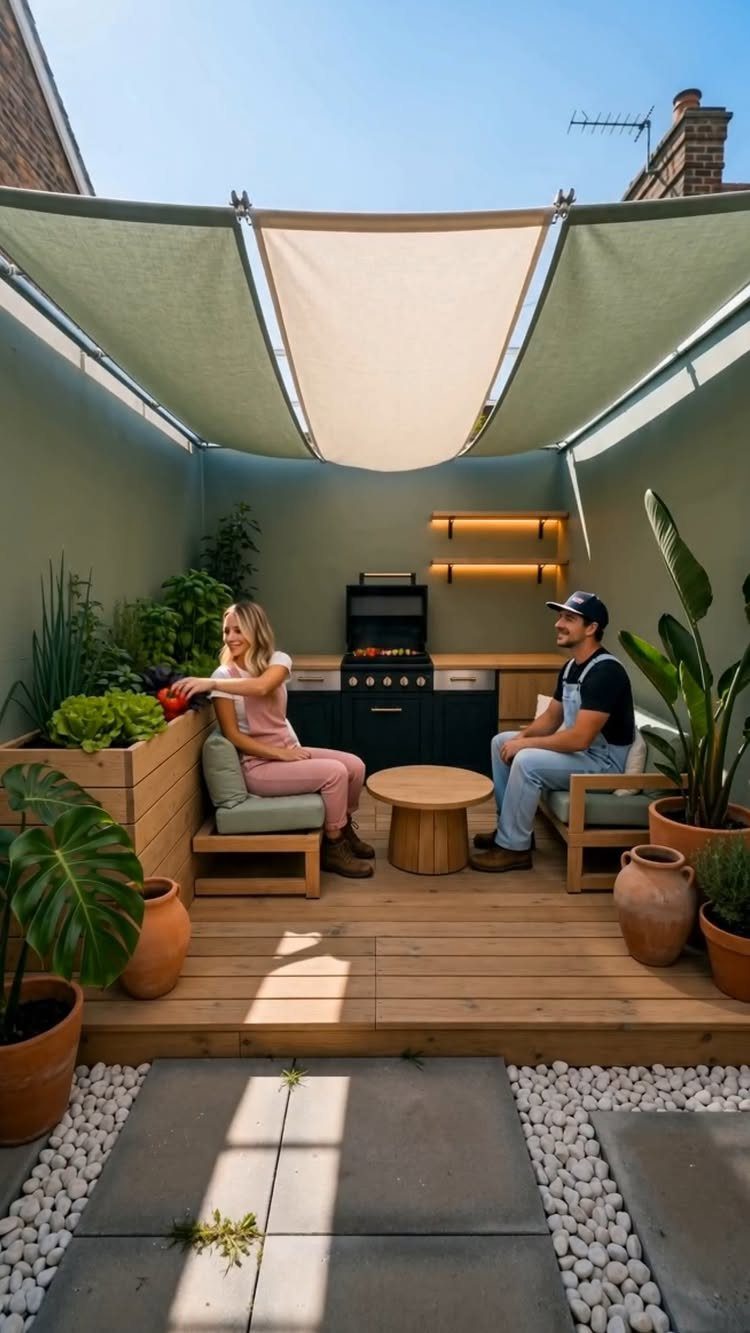
Fabric sails beat permanent roofs on cost and permits, and they suit a renter or first-home owner who may not stay long enough to amortize built-in work.
The deck here runs 2 sails at different heights, which gives better coverage than a single flat sheet and handles wind by letting it pass through the gap.
I would check the anchor points; a sail pulling loose in a gust does damage fast, and the hardware is not the place to save money.
The outdoor kitchen beneath is compact enough that the sail covers it without turning the whole deck into a kitchen annex.
12. Create a Focal Point
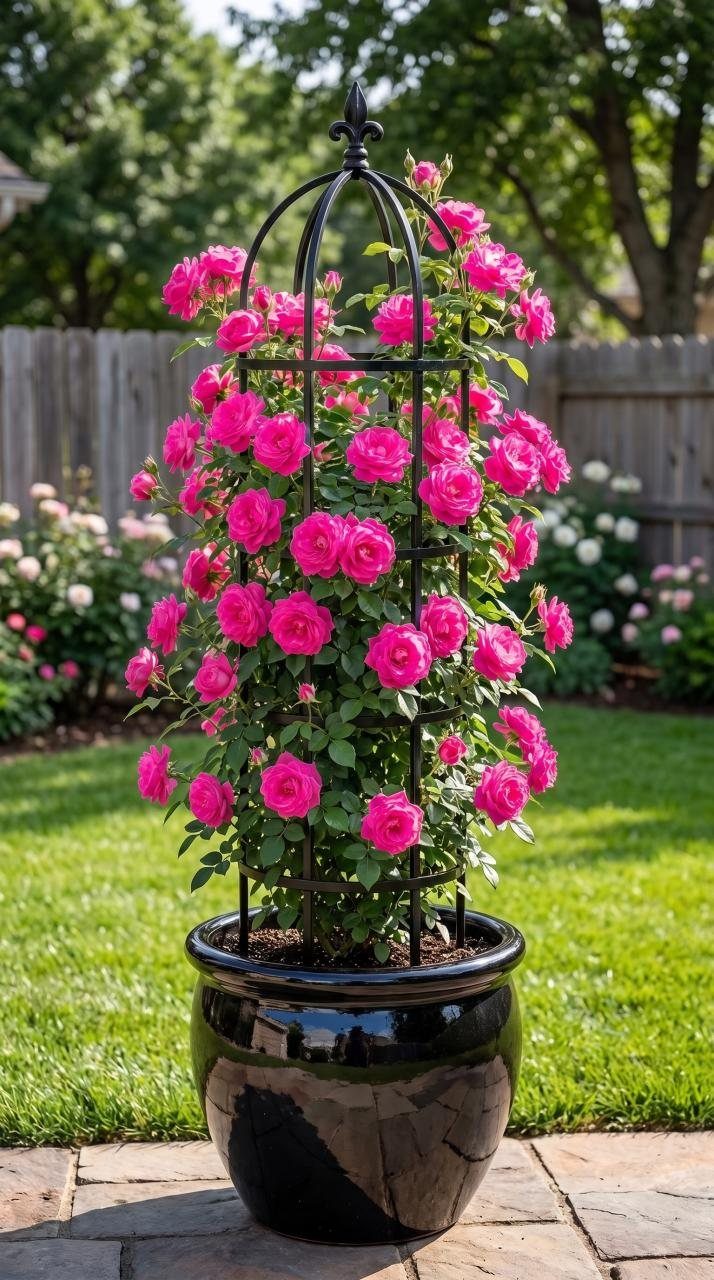
A single strong vertical in a small yard stops the eye and gives the rest of the space permission to stay simple.
Painting an obelisk the same color as its planter reads as one object rather than plant-plus-support; mismatching materials turns a trellis into clutter.
I would choose a climbing rose that stays in scale; a rambler meant for a barn wall will outgrow this setup in 2 seasons and need constant hacking back.
The stone patio beneath is neutral enough that the pink blooms register as the event, not the floor.
13. Defined Zones
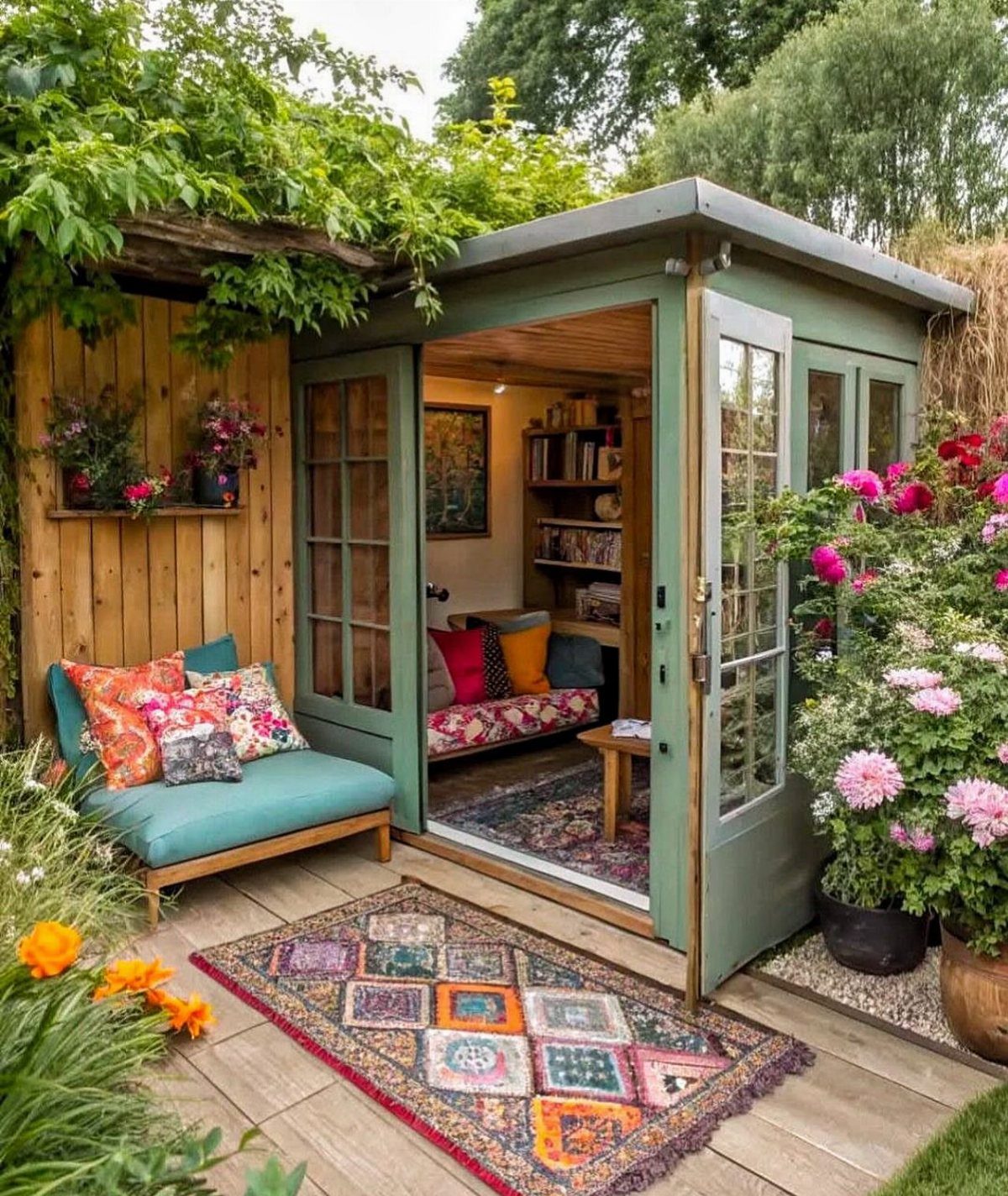
A chaise and rug on the patio, a daybed inside the garden shed; two uses, one small footprint, separated by nothing more than the threshold.
That is the trick in a yard this size: let the architecture do the dividing so you do not need screens or hedges that eat space.
I would check the shed’s weatherproofing before putting cushions inside; damp bookshelves turn musty fast.
The open door is doing real work here, framing the view and drawing air through, so I would keep the path between zones clear rather than planting across it.
14. Color Palette Limitation
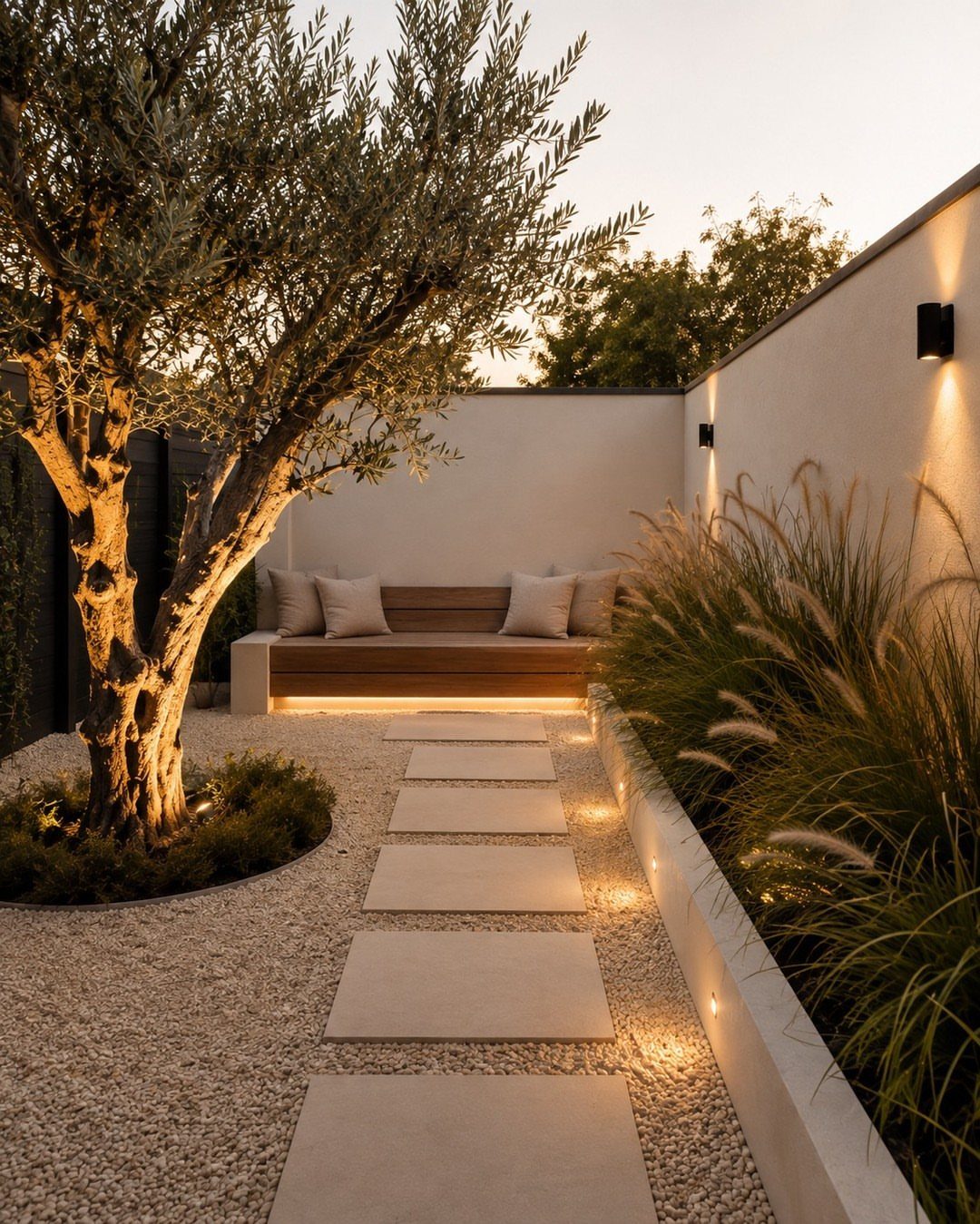
Gravel, stone, weathered wood, and the green of one olive tree: the whole yard reads as one thought because nothing interrupts it.
Limiting a palette is not about being timid; it is about letting texture do the work that color otherwise would.
Warm wall lighting helps, but I would check the color temperature; anything above 2700K fights the wood tone and turns the gravel cold.
The bench pillows add the only note of contrast, which keeps the space from feeling designed to death. I would stop there; more color would fracture the calm this setup earns.
15. Fireplace
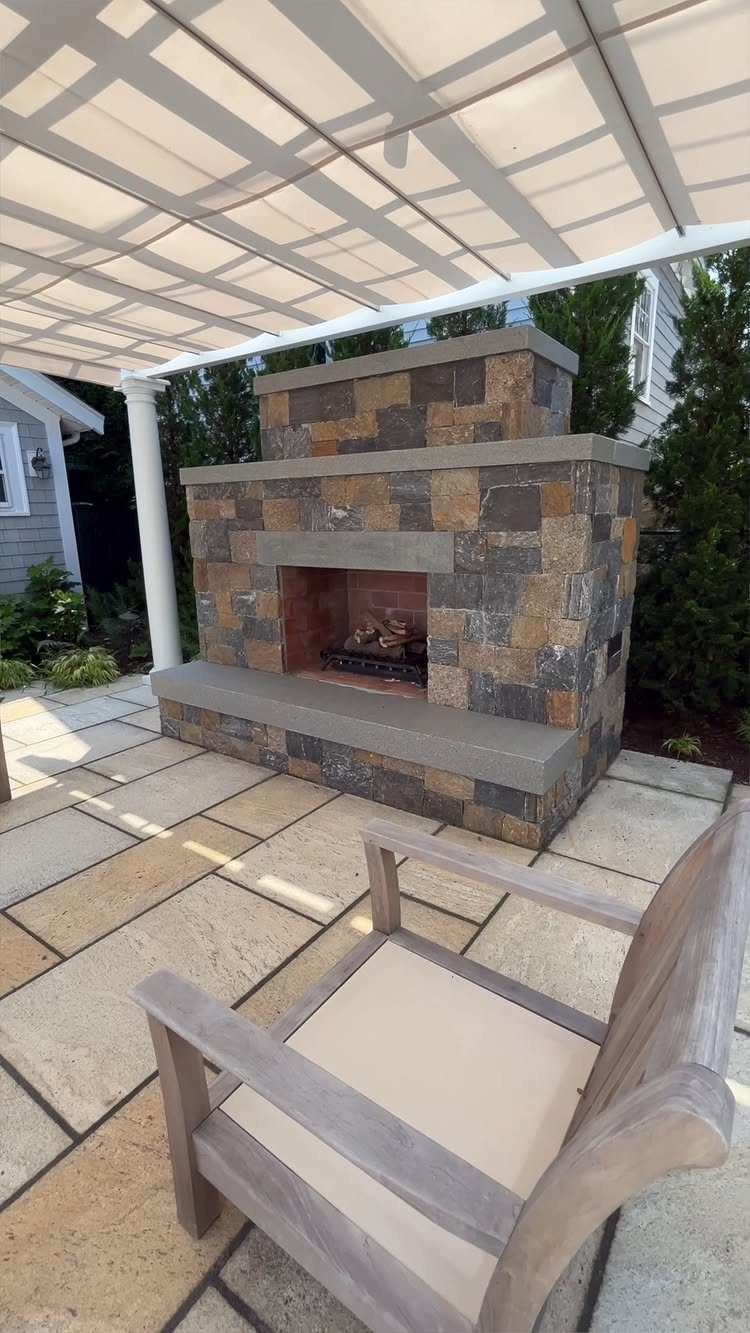
A built-in stone fireplace is the most permanent choice on this list, and the only one that needs a permit in most jurisdictions.
Multi-colored block under a shade canopy is smart; without it, the stone soaks up afternoon sun and radiates heat back at you for hours.
I would check local setback rules before sketching anything; those distances from property lines or combustible structures often dictate placement more than aesthetics.
The raised hearth is a detail I would keep; it lifts the firebox to a comfortable height for tending and keeps sparks off the paving.
A wooden chair this close is fine for occasional use, but I would store it under cover; embers find dry grain fast.
Creating a Cohesive Look
I would pick either curves or straight lines and stay with them; mixing gentle arcs with sharp angles turns the space into a patchwork.
Soft curves on a garden border read traditional without feeling stiff, and in a small yard that detail matters more than you’d think. For modern, keep edges straight and corners square.
Color works the same way. One or two strong notes, a rug or a bright basin, do more than scattered accents everywhere.
I would place that color against a quiet ground of gravel, weathered wood, or stone so it registers as intentional, not leftover. Repeating a single material, tile to planter to pool edge, ties separate areas into one yard.
Utilizing Vertical Space
A tall wall with real texture gives a small backyard its height back when the sky is cut off by fences or neighboring roofs; the eye travels up instead of stopping at the property line.
Columnar trees, a vine-covered lattice, or a planted living wall all work; I would balance whatever I chose with lower, layered planting in front so the vertical does not read as a barrier.
When a wall or overhang throws too much shade for plants to take hold, I run black star gravel or crushed granite right to the edge; it stays neat and doesn’t fight the conditions.
It is not a placeholder; it is a deliberate ground that lets the planted areas read as designed.
Deep, saturated color in flowers and foliage helps too.
Bright material against a tall feature catches light and pushes the wall back visually. I would keep the palette controlled, though; too many saturated hues at once turn depth into noise.
Importance of Planning
A small backyard needs editing, not fewer ideas. Every choice matters more because mistakes sit in plain sight and successes carry the whole space.
Before buying anything, I would decide what the yard actually needs to do daily: seating for two, a path to the shed, a spot for a grill.
Then I would map structure, season by season, with evergreen shapes that hold the winter and repeating forms that keep the eye from bouncing.
Scale is the hard part; I would measure twice and buy once, since an oversized element in 200 square feet cannot hide.
Maintenance belongs in the plan from the start, not as an afterthought.
A realistic schedule beats a planting that looks good in May and exhausted by August. In compact ground, plant spacing is unforgiving; crowding for instant fullness costs you replacement in year three.
You should also consider scale. “It’s not intuitive, but large-scale furnishings can make small spaces feel bigger,” advises designer Liz Williams, whose outdoor Atlanta-based projects often require savvy resourcefulness.
Frequently Asked Questions
What to do with small backyard space?
I would start by deciding what the yard needs to do daily: seating for two, a path to the shed, a spot for a grill. Dividing a small yard into zones works better when the layout itself does the work.
A change in level, a corner bench, or a shift from pavers to gravel tells the eye where one area ends and another starts. Wall-mounted planters and hanging baskets keep the floor open without giving up greenery.
How do I make my backyard look nice for cheap?
String lights are the cheapest way I know to make a small backyard feel intentionally cozy after dark, especially draped along a fence line in a narrow yard. Fresh mulch covers weeds and tidies a bed fast.
For paths or seating areas, pea gravel is one of the cheapest surfaces you can walk on and still get a clean look. It shifts underfoot a little, so I only use it where that does not matter.
I would also check what I already have that could serve double duty: a fence line that becomes built-in seating, or a corner that takes an outdoor shower.
What are some new backyard ideas for 2026?
Fabric shade sails at staggered heights are showing up more; they handle wind better than a single flat sheet and suit renters or first-home owners who may not stay long enough to amortize built-in work.
Compact outdoor kitchens tucked beneath those sails, and translucent pergola panels that shed rain without darkening nearby house windows, are details I would watch.
