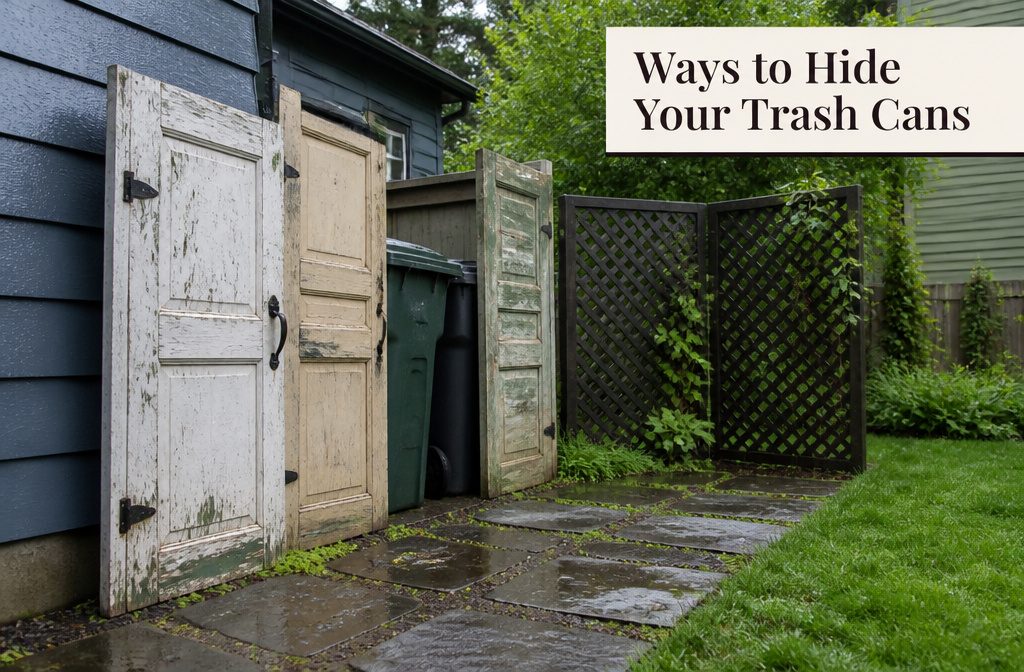
Trash cans cost nothing to hide if you build a screen from scrap doors or stake vinyl panels into grass, but an enclosed shed runs $110 to $1,500 depending on what you find.
The choice comes down to your budget and whether you have space.
A wooden privacy screen takes half a morning to assemble with 2×4s and cedar boards, while a lattice paired with climbing vines works just as well for renters who need something they can move.
1. Wooden or Pre-Made Outdoor Enclosure
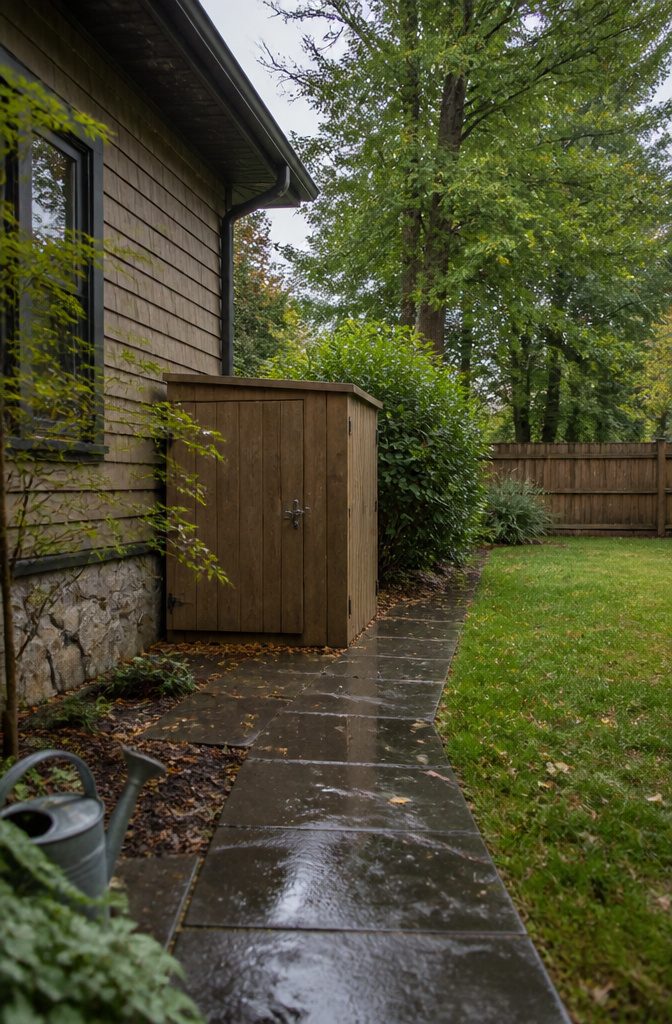
A fully enclosed shed hides your bins from every angle and shields them from weather, wildlife, and odor.
Solid wood construction keeps rain and wind out while a lockable door deters curious animals. These structures run anywhere from $160 to over $1,500 depending on materials and size, so you’ll need to balance cost against the space they occupy.
The Hanover Solid Wood Garbage Shed sits at the lower end around $299, while premium options like the Secret Potter 2-Door Wooden Enclosure land in the $1,375–$1,528 range.
If your budget is tighter, Facebook Marketplace and resale sites often have used sheds for less, or Amazon occasionally stocks budget models at under $110.
An enclosed shed works best when you have the square footage to spare and want the bins completely out of sight, since it functions as both a storage unit and an odor barrier rather than just a visual screen.

Multi-Functional Horizontal Storage Cabinet: This outdoor storage cabinet offers a large storage space of 31 cu. ft. capacity (47.6"D x 26.8"W x 42.13"H). Easily holds bulky items like lawn mowers, trash cans, and garden tool sets. Double doors make it simple to grab seasonal gear such as patio cushions or sports equipment

Effortless Installation: Our intuitive guide and comprehensive manual ensure an effortless setup of your bike storage shed. Furthermore, our team of expert technicians is readily available to provide remote assistance
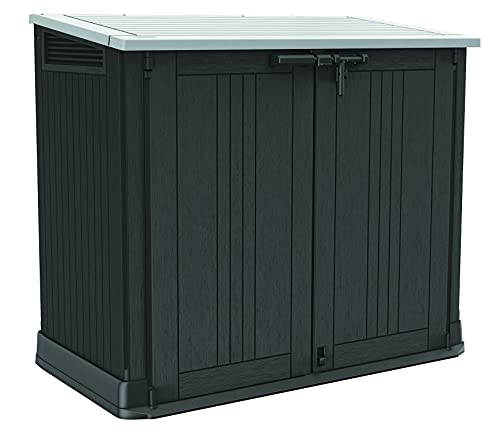
COMPACT OUTDOOR STORAGE SOLUTION – Holds up to two 32-gallon trash cans while organizing garden tools, pool floats, patio accessories, and backyard essentials.
2. Freestanding Wood Privacy Screen or Fence
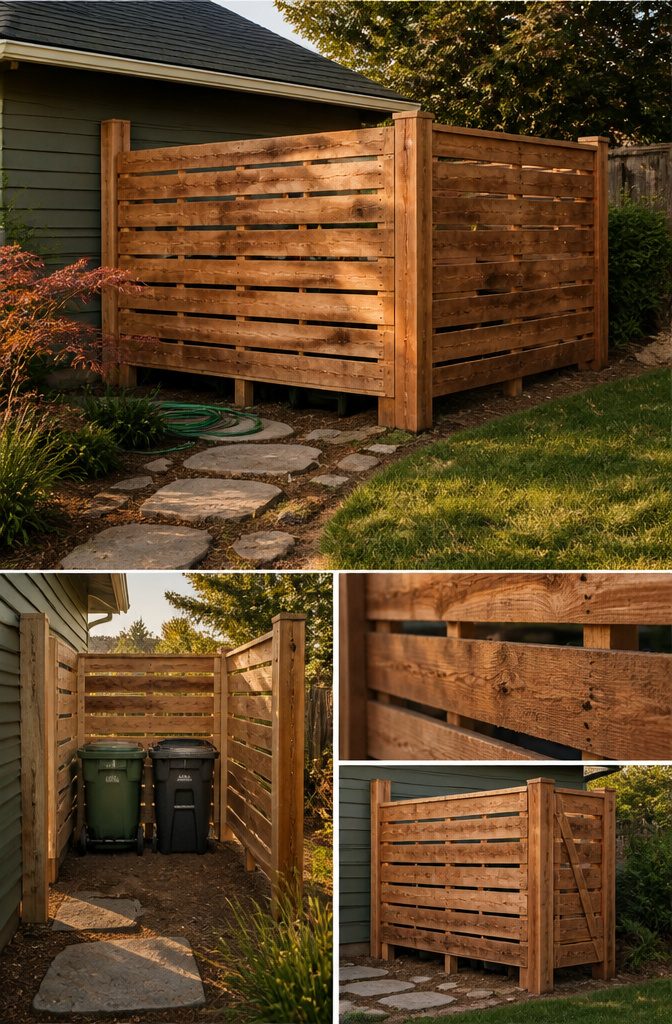
A freestanding L-shaped screen is the simplest DIY approach because it needs no digging, no permanent installation, and no tools beyond what most people own.
Build one with 36-inch posts and an 8-foot side, using 2×4s for the frame and rough cedar boards cut to 48 inches.
The screen takes about half a morning to assemble: lay out two posts per side, attach your boards with wood screws spaced evenly from top to bottom, and brace the corner post for stability when you move it around.
Position the boards 5 inches up from the ground rather than flush to the base; the gap lets air flow underneath so odors don’t get trapped behind the screen.
A budget alternative uses pre-primed boards 6 inches tall by three-quarters inch wide. Twelve boards run along each side with six across the front, sized to hide four trash cans.
Both setups work because they’re movable; you can slide the fence out of the way whenever you need to access what’s behind it, and you’re not committed to a fixed location if your storage needs shift.

STYLISH NATURAL WOOD: This FSC certified wood screen is made with real wood meaning no two boards have the same grain color, finish, or wood knots differing it from vinyl outdoor privacy fence screen panels.
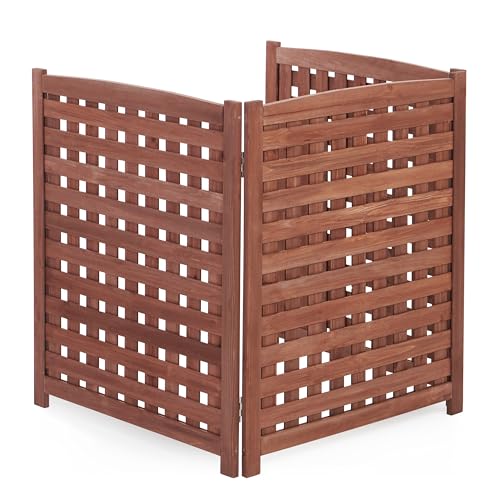
HIDE OUTDOOR EQUIPMENT: Conceal air conditioners, trash cans, pool equipment, and other outdoor utilities for a cleaner, more organized backyard while enhancing the appearance of your outdoor space

【Premium Wood Material】Crafted from high-quality Chinese fir, this product is sturdy, resistant to cracking and deformation, and ideal for outdoor use
3. Lattice Screen
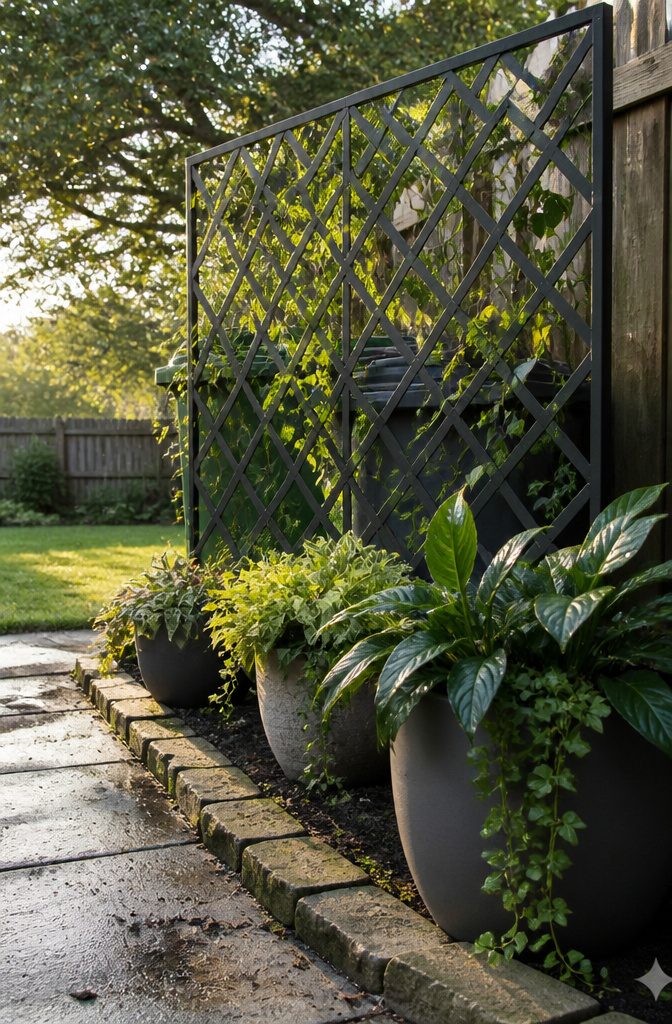
A lattice screen lets you conceal bins without blocking your view entirely.
The open pattern and spaces between slats mean you can layer it with climbing plants or vines to soften the look while keeping the structure lightweight and affordable compared to solid panels.
The height and width matter. Your lattice needs to be at least as tall and as wide as the bin itself so nothing shows from the street or neighboring yards.
Metal garden trellises around 50 inches tall come in pairs for under $65 and stake directly into the ground without requiring a frame or foundation work.
You have two timing options. If you want a finished look right away, drape artificial vines across the lattice.
If you prefer real growth, plant climbing vines at the base and let them take a season or two to fill in. Either way, the semi-transparent quality keeps the screening from feeling like a solid wall in your yard.
If hiding the outdoor trash is only a concern when the weather is warm enough to be out in the yard, you can repurpose large indoor floor plants as trash bin hiders and then bring them in when the temps drop. Be sure to weight down the pots so they don’t tip over when it’s windy.
For renters or those wanting reversible solutions, large potted plants positioned in front of the lattice work just as well. Weighting the pots keeps wind from knocking them over during the seasons you actually use your yard.

No Dig Installation with Ground Sakes: Features sturdy angled ground stakes (inserted 11.8" deep) for instant stability without concrete or digging—simply press into soil/grass. Freestanding panel design creates flexible L-shape, U-shape, or straight-line configurations to fit your space perfectly

Designed for Trash Bins & Outdoor Organization This 6x3 FT outdoor trash can storage shed keeps garbage bins neatly hidden while maintaining easy access. Ideal for backyard, patio, garden, driveway, or side yard to improve curb appeal and reduce clutter.

【Hide Trash Cans, AC Units & Outdoor Clutter】Create a cleaner, more organized outdoor space by screening exposed trash cans, recycling bins, garden supplies, storage boxes, pool equipment and selected outdoor utility areas. This ADDOK outdoor privacy screen is ideal for patios, backyards, gardens, side yards and other areas where unattractive items need a more finished appearance
4. Trellis with Plants or Artificial Vines
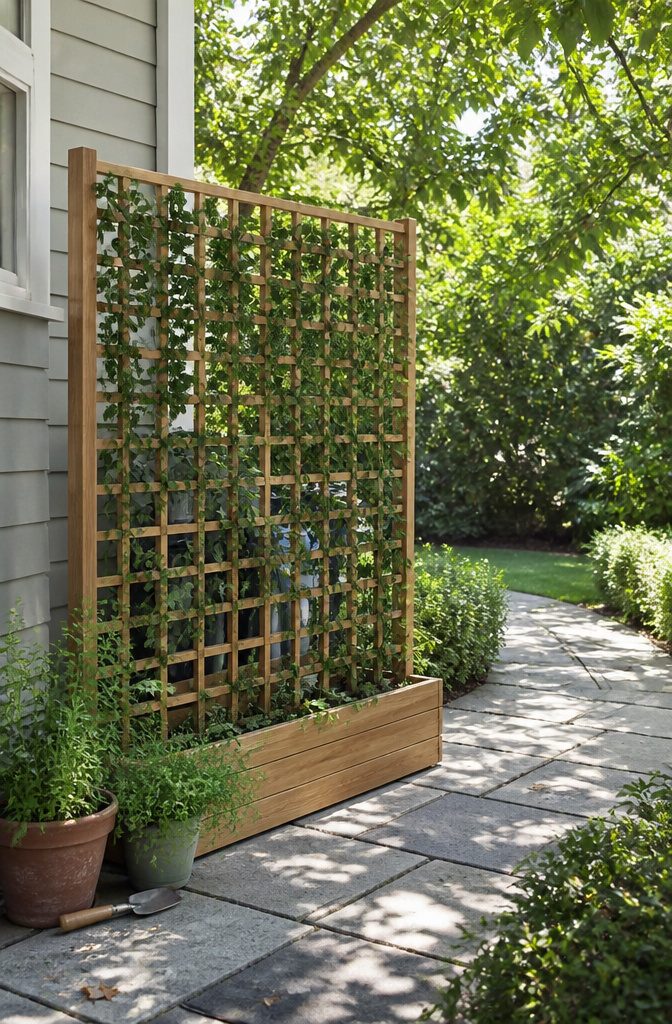
A trellis works because it creates a vertical wall of greenery that screens without feeling like a barrier.
The simplest option is a standalone trellis staked directly into the ground; the Zhongma 2 Pack Metal Garden Trellises run over 50 inches tall and cost $64.99 for both pieces, tall enough to hide most standard bins without digging footings or prepping the ground.
If you want planter space along with the screen, the Vivohome Wood Planter Raised Garden Bed with Trellis combines the two for $114.74: natural fir construction with a square-patterned trellis where climbing vines can grow.
Real plants take time, so many people use UV-resistant artificial vines instead, which mask the bin immediately and need no watering or pruning.
The appeal here is that the screening becomes part of your landscaping rather than looking like a temporary fix bolted to the side of the house.
Either way, the trellis needs to be at least as tall and wide as the bin itself, or the top or sides will still be visible from the street.

DIMENSIONS: Each panel measures 45"H x 36" W

Privacy Panels for Outside Sizes: Each unit measures 22.7 in W x 43.6 in H with a 1.2 in profile, and the set holds four hinged sections that fold into a U shape. Two panels span 45.4 in, enough to screen a pool equipment enclosure, a garbage can enclosure or a trash can fence instead of a fixed wall

【Excellent Stability & Wind Resistance】: Unlike traditional plastic ground stakes, this outdoor privacy screen boasts upgraded galvanized metal stakes, which are designed for superior stability and direct insertion without digging. It is suitable for different types of ground, such as soft soil, gravel, sand, etc.
5. Living-Roof Shelter
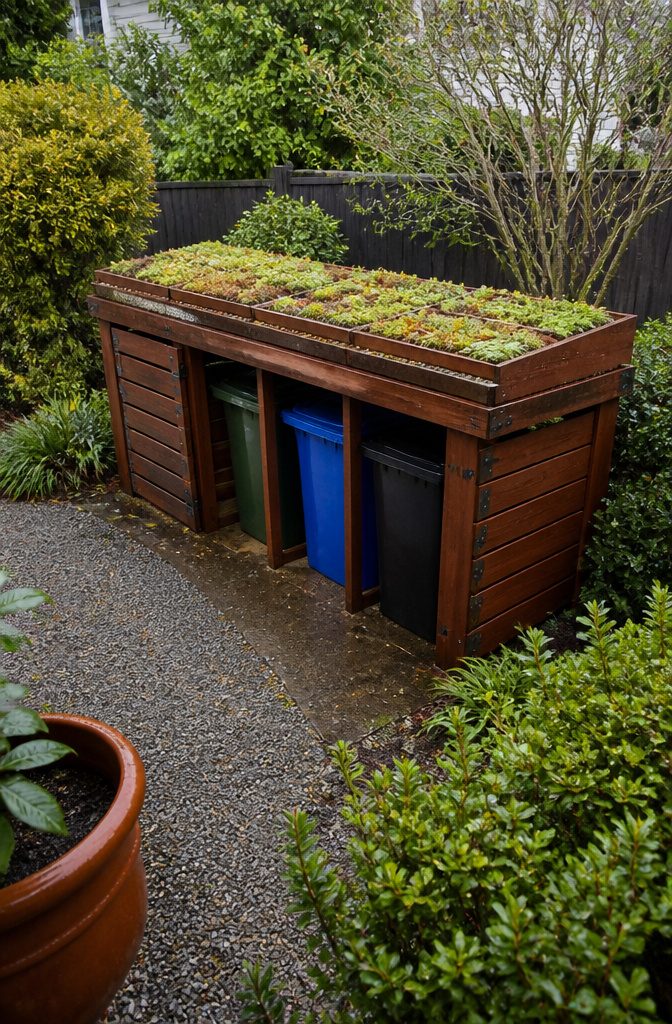
Melissa Ritchie’s shelter for Little Terraced House shows what happens when you stop treating a trash enclosure like a utility and build it like a garden feature instead.
A simple timber frame connected by flat steel strips holds the weight of the bins while allowing them to roll in and out easily.
Three openings keep access flexible, and the closed sides use boards with small gaps between them so air moves through and odors don’t linger.
The living roof is where the work pays off. Ritchie topped the structure with custom planter boxes filled with a root barrier (pond liner or heavy-duty trash bag), soil, and hardy sedum cuttings.
Plants sit on a gravel base underneath so water drains away from the boxes instead of pooling.
The sedum takes root, spreads, and within a season or two the whole thing reads as a planted garden feature rather than what it actually is. The result looks intentional enough that visitors don’t think about the bins at all.

Backyard Privacy Enclosure: Our vinyl fence panel set includes 2 panels measuring 50 x 50 in, ideal for concealing outdoor items like trash bins, pool equipment, and air conditioners, keeping your backyard neat and attractive while meeting HOA guidelines

Backyard Privacy Enclosure: Our vinyl fence panel set includes 3 panels measuring 50 x 50 in, ideal for concealing outdoor items like trash bins, pool equipment, and air conditioners, keeping your backyard neat and attractive while meeting HOA guidelines

Reinforced and Thickened Material: Qikdesign vinyl privacy screen is made of high-quality and thickened PVC material, posts on both sides are thickened and reinforced (0.2 in wall thickness), making it more durable than materials used in similar products on the market, and able to remain stable in strong winds. We can provide a 10-year warranty on our vinyl fence.
6. Woven Outdoor Divider
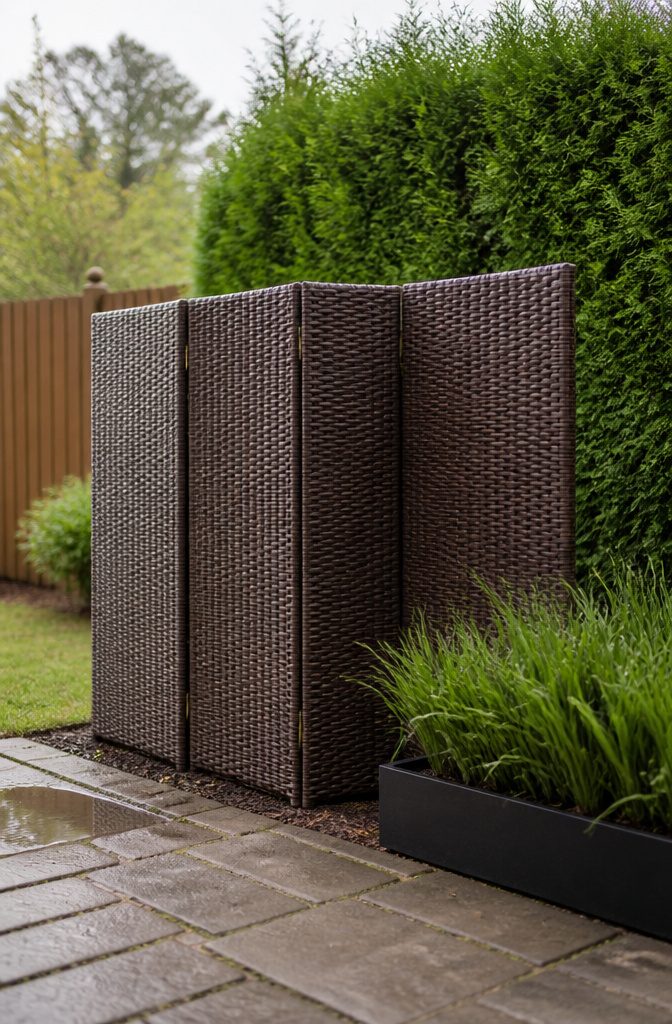
A woven outdoor divider works well as a freestanding screen that doesn’t require installation or permanent placement.
Look for one at least 42 inches tall and 32 inches wide to reliably conceal a standard trash bin. Make sure it’s labeled for outdoor use and waterproof so it holds up against weather and moisture without rotting or fading.
The PayLessHere divider comes in four, six, or eight-panel models ranging from $51.99 to $87.99. More panels give you flexibility on uneven ground and easier positioning, though they take up more yard space.
Only the four-panel version comes in all three colors (black, brown, or beige), so if you want a specific shade, the four-panel model is your only choice.
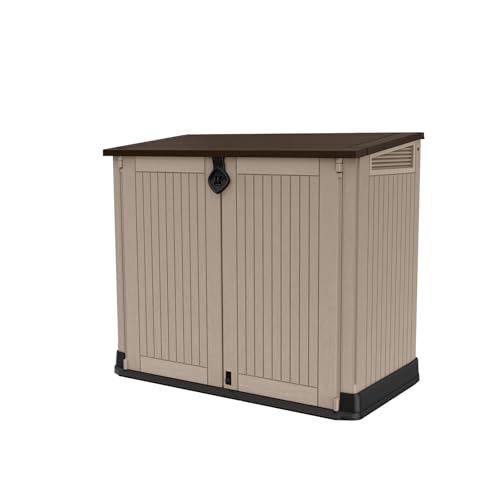
VERSATILE 30 CU. FT. OUTDOOR STORAGE – Spacious interior accommodates up to two 32-gallon trash cans, gardening tools, pool supplies, patio accessories, pet gear, and other outdoor essentials.

Effortless Installation: Our intuitive guide and comprehensive manual ensure an effortless setup of your bike storage shed. Furthermore, our team of expert technicians is readily available to provide remote assistance
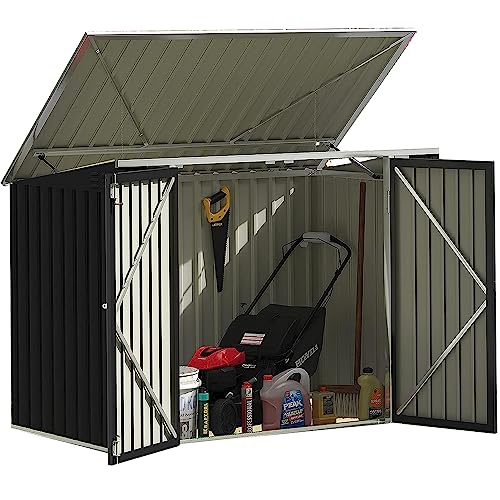
[Reinforced Structure] The storage shed is constructed with a steel frame and is reinforced with additional metal inside the product to ensure stability regardless of wind or rain.In addition, an anti-rust coating is added to the surface
7. Repurposed Doors as a Barrier
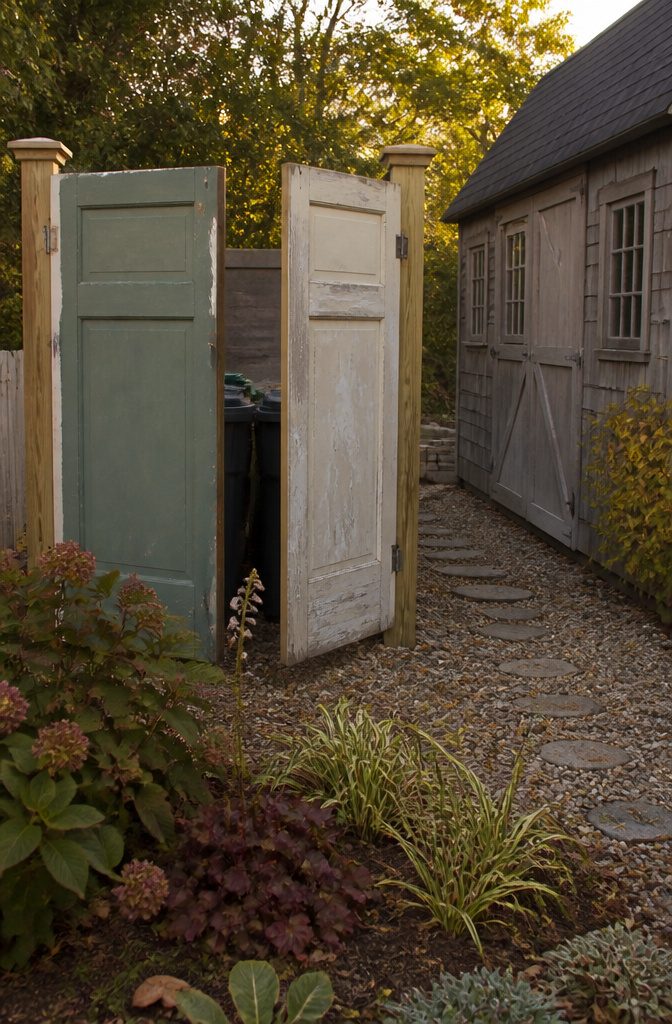
Old doors are cheap to find and easy to mount into a functional screen.
Habitat for Humanity’s ReStore and local online listing sites stock them constantly, and a pair costs almost nothing. Mount them to four pressure-treated wood posts set into the ground, then add basic hardware and wood sealant to weatherproof the assembly.
A drill is the only specialized tool you need. This whole project runs under $100 if you scavenge the doors themselves, which most people can do by browsing ReStore or Facebook Marketplace for an hour.
The doors don’t need to match, and their existing finishes add character. Set the posts far enough apart to screen the cans completely, then hinge the doors together so you can swing them open when collection day comes around.
The pressure-treated posts handle the weather without rotting, and the sealant keeps the door wood from splintering over time.

Privacy Decoration & Animal Separation: Fence panels conceal trash bins, air conditioner units and pool equipment to beautify spaces, while separating pets and wildlife from bins and machinery to avoid mess and injuries

STYLISH NATURAL WOOD: This FSC certified wood screen is made with real wood meaning no two boards have the same grain color, finish, or wood knots differing it from vinyl outdoor privacy fence screen panels.

STYLISH NATURAL WOOD: This FSC certified wood screen is made with real wood meaning no two boards have the same grain color, finish, or wood knots differing it from vinyl outdoor privacy fence screen panels.
8. Retractable Privacy Screen or Awning
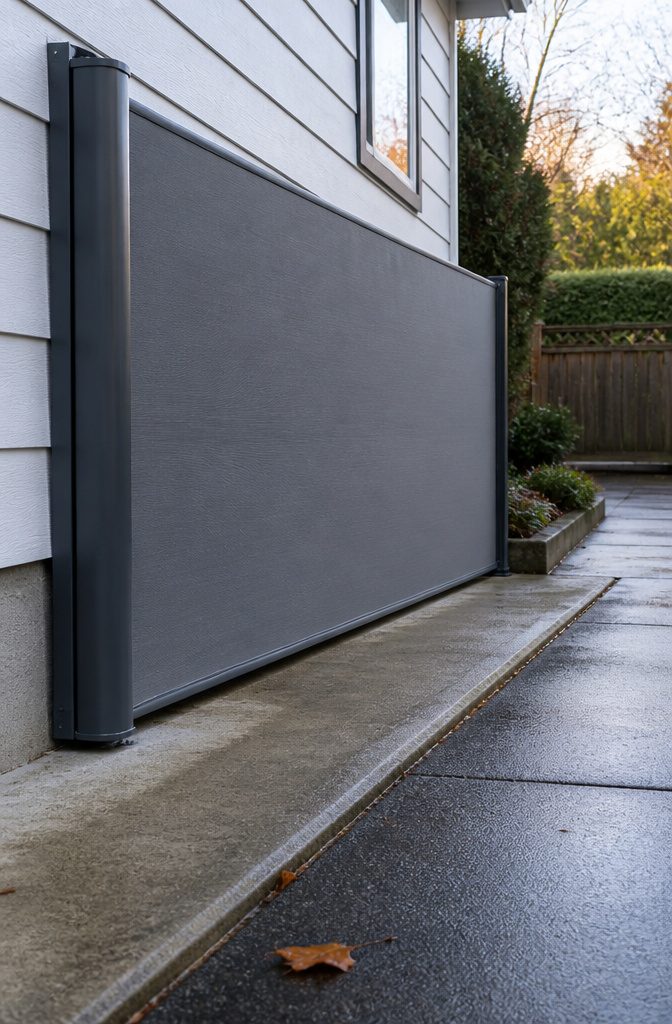
A retractable awning slides out of the way on days you don’t have pickup, so your bins stay hidden most of the week.
The Kanagawa Retractable Side Awning comes in polyester or aluminum in three sizes, with the gray polyester option running $105.99.
All three heights are tall enough to conceal a standard garbage can. Installation requires a solid base of cement, concrete, or wood.
If your setup is natural earth, this option won’t work. The polyester version is lighter and easier on the budget, while aluminum lasts longer but costs more.
Slide the bin behind the awning on non-pickup days, then retract the screen when the truck arrives. It’s a clean solution for a house with a walkway, driveway, or porch where you have room to mount it.

High-Quality Material: Our outdoor privacy screens are crafted with aluminum posts and HDPE panels, designed with a wood-like appearance that is more resistant to water and corrosion than cast iron. The 3/16-inch gaps between the boards provide ventilation while maintaining privacy.

Versatile 60 Cu.Ft. Storage: Declutter your patio or backyard with ample room for lawn equipment, bikes, gardening tools, and standard trash bins. Important Note: This shed is specifically designed for standard-sized bins and is not compatible with 65-gallon trash cans.

PRIVACY AND CHARM: Our no dig air conditioner fence is perfect for hiding unattractive backyard items such as AC units, trash cans, pool equipment, children's toys, and more.
9. Vinyl Picket-Style Privacy Screen
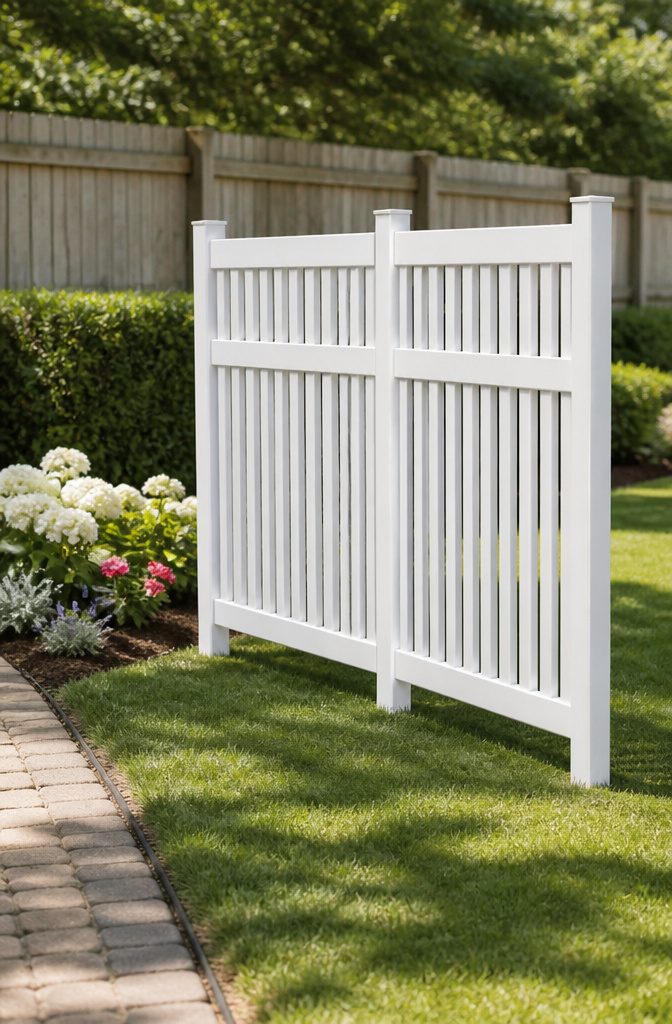
A vinyl privacy screen with a picket-fence look handles the job without digging or permanent installation.
The Enclo Privacy Screens No Dig White Vinyl Privacy Screen comes in a two-panel pack for $89.99 and stands tall enough to block your bins from multiple angles.
The panels stake directly into dirt, grass, or mulch, which keeps setup straightforward since no concrete footers or ground prep is required.
The stakes won’t hold on concrete or wood surfaces, so this option works only if your trash lives on bare ground or lawn. If your yard sits on a patio or deck, you’ll need a different approach.
For renters and anyone who wants to move the screen later, that stake-in design is the main advantage; you get the classic picket aesthetic without the commitment of a built fence.

ALL WEATHER SECURITY: Our air conditioner fence screen panels are made of thickened PVC material with high heat resistance and strong durability for long-term outdoor use. 4...
10. Trees or Large Potted Plants
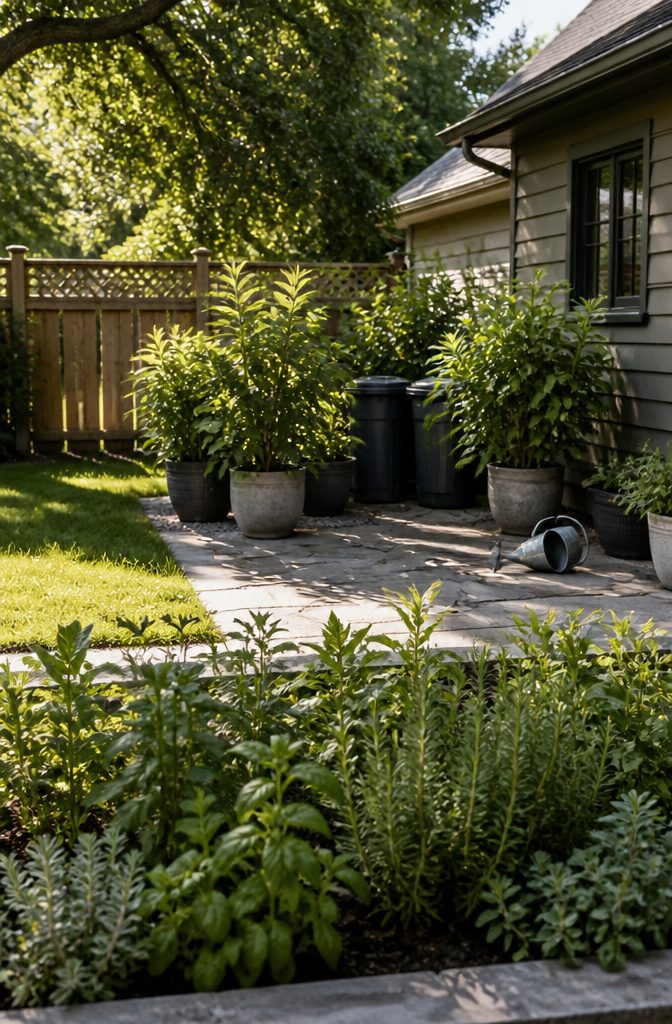
Planting trees or large potted plants around your trash bin lets you screen it from view while keeping it accessible for weekly pickups.
Landscaping with several trees creates a natural barrier that blends the bins into your yard’s design rather than making them a focal point.
The screen works especially well if the concern is mostly seasonal, when you’re spending time in the backyard during warm months and the trash matters visually.
If permanent landscaping isn’t an option, large indoor floor plants moved outside work just as well and give you flexibility. Bring them out when you’re using the yard, then move them indoors when temperatures drop.
Potted plants tip easily in wind without weight to anchor them. Weighting down the pots solves this, keeping your plants upright through gusts and freeing you from staking or bracing them to the ground.
This flexibility is worth the extra step, since a weighted pot system takes minutes to set up and costs nothing beyond the plants themselves.
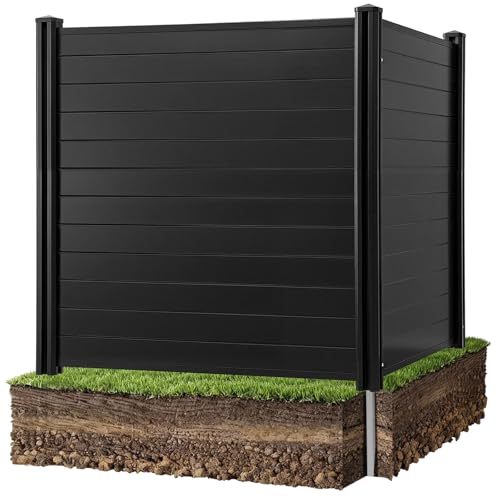
Backyard Privacy Enclosure: Our vinyl fence panel set includes 2 panels measuring 48 x 48 in, ideal for concealing outdoor items like trash bins, pool equipment, and air conditioners, keeping your backyard neat and attractive while meeting HOA guidelines
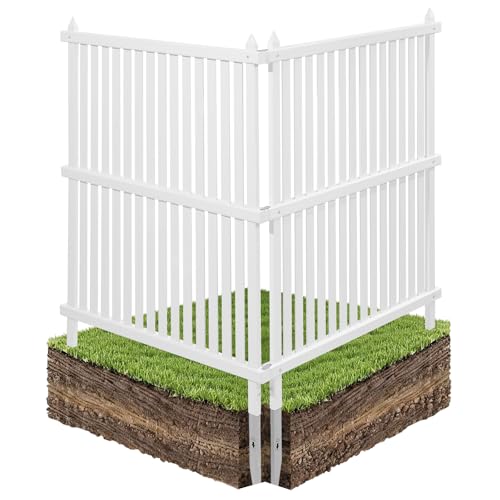
Backyard Privacy Enclosure: Our vinyl fence panel set includes 2 panels measuring 36 x 45 in, ideal for concealing outdoor items like trash bins, pool equipment, and air conditioners, keeping your backyard neat and attractive while meeting HOA guidelines

Backyard Privacy Enclosure: Our vinyl fence panel set includes 4 panels measuring 50 x 50 in, ideal for concealing outdoor items like trash bins, pool equipment, and air conditioners, keeping your backyard neat and attractive while meeting HOA guidelines
11. Indoor Pull-Out or Tilt-Out Cabinet
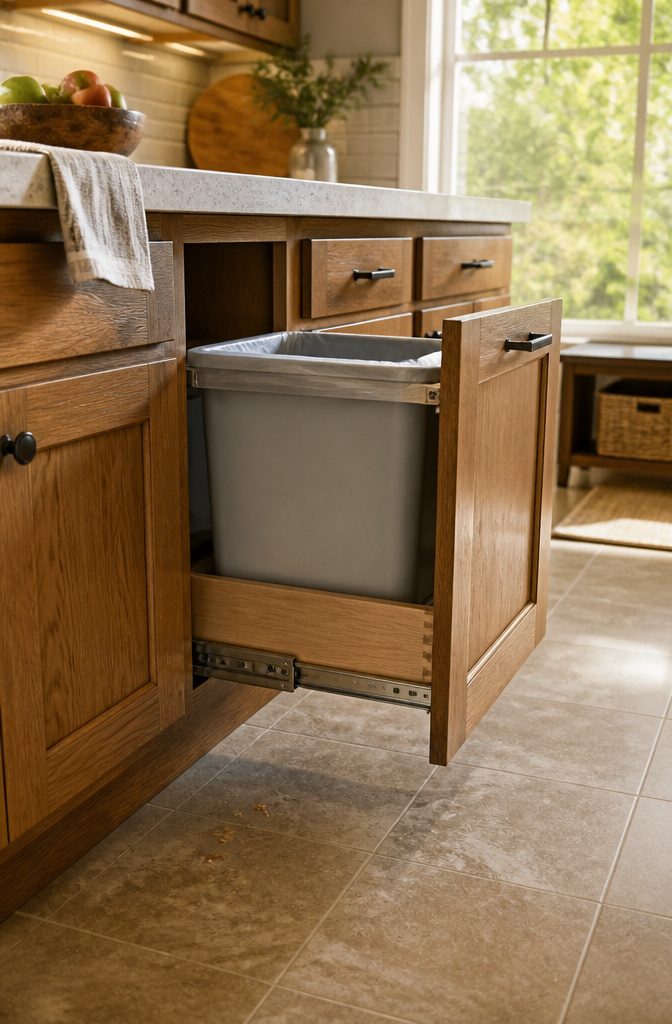
A kitchen cabinet that hides your trash works best when the mechanism matches how you actually use it.
Pull-out drawers and tilt-out doors are the two main options, and they work differently enough to matter. Pull-out bins slide toward you on tracks, which takes up floor space in front of the cabinet when open.
Tilt-out doors swing down from the inside, so they demand less clearance but work only if the cabinet sits low enough that bending isn’t awkward.
Either way, look for thick-frame construction and heavy-duty ball bearings. Most mount directly to the cabinet floor using screws, which means installation is straightforward if you’re comfortable with basic tools and drilling pilot holes.
The frame strength matters because trash cans are heavy when full, and cheap hardware will sag or jam within a few years.
A sturdy setup will open and close smoothly for years without feeling loose or grinding. These aren’t cheap, but they’re cheaper than replacing cabinetry when a flimsy mechanism fails.
12. Indoor Curtain, Hamper, or Wine Barrel
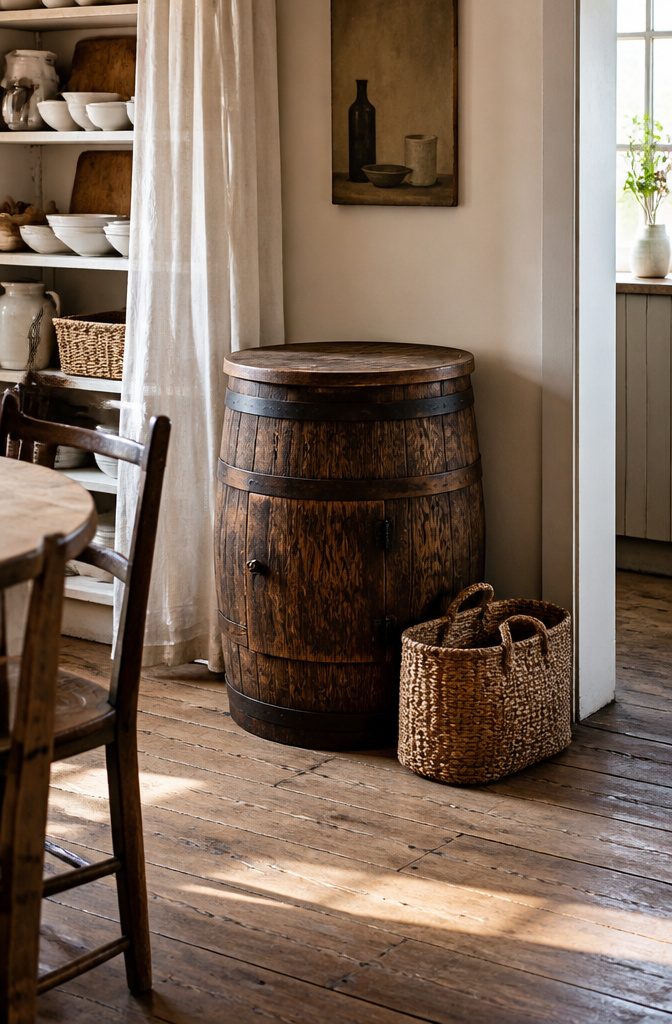
An old oak wine barrel brings rustic character to a kitchen while concealing a trash bin inside.
If you want to go further, keep the barrel’s top and install a small hinged door to contain odors and keep the bin fully hidden from view.
This works best in farmhouse or cottage-style spaces where the barrel itself becomes part of the décor rather than looking like storage.
A curtain offers a simpler option for kitchens with exposed closet space. Hang a breezy panel in front of your trash bin, cleaning supplies, and pantry items to tuck everything out of sight at once.
The curtain adds a finished look to what would otherwise be an awkward corner, and you can swap it out seasonally or swap fabrics to match a remodel.
This approach costs far less than a barrel and takes an afternoon to install, though a curtain does nothing to contain smells or keep pets away from the bin itself.
Either method works indoors because you control the environment. Neither blocks weather or wildlife, so they suit kitchens and pantries much better than outdoor spaces.
Why Hide Your Trash Cans
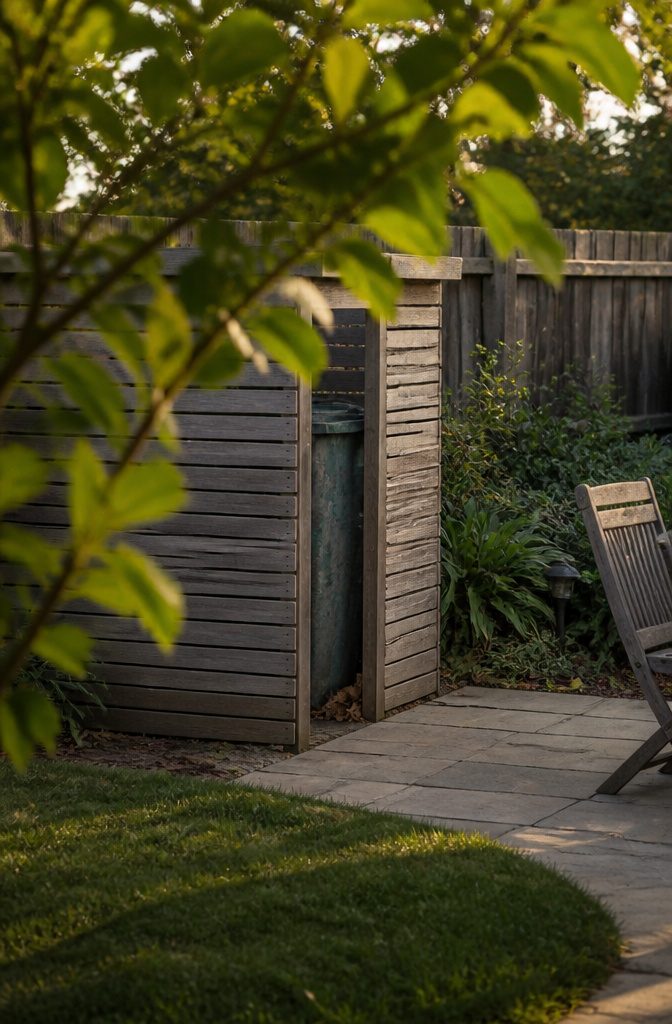
Trash cans are a practical necessity, but they’re also among the most visible and unattractive elements of a yard. A worn bin, faded from years of use and weather, can drag down your entire curb appeal in seconds.
Most homeowners leave them out in the open because they’re convenient and easy to forget about, but that visibility comes at a cost to how intentional and polished your outdoor space looks.
Beyond aesthetics, there’s the wildlife problem. Raccoons, bears, and other animals will work past obstacles like bungee cords to get at garbage, turning your bins into an all-you-can-eat buffet and your yard into a mess.
The smell that comes off exposed trash in warm weather also drifts through your backyard and your neighbors’, making the space less pleasant to spend time in.
Concealing your bins doesn’t have to mean an expensive overhaul. Budget-friendly solutions can be done in less than a weekend with basic tools and materials.
You get a cleaner-looking yard, fewer midnight visits from wildlife, and an outdoor space that feels more intentional and finished rather than like a holding area for garbage.
Match Your Solution to Your Space
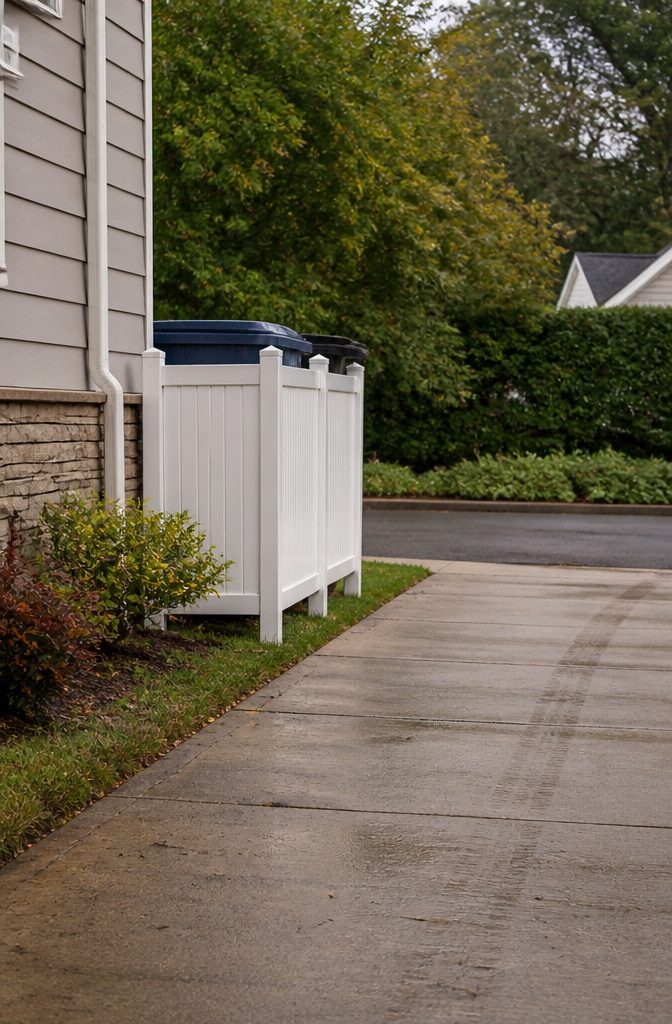
The spot you choose shapes everything: whether a retractable screen works, whether stakes will hold, and how your trash service collects the bins.
Start by looking at what’s under your feet. Retractable screens need a hard base like concrete, wood, or a driveway to mount properly, while vinyl screens that stake into soil work on grass, dirt, or mulch instead.
If your pickup happens curbside, you can tuck bins behind a screen on non-collection days and wheel them out when the truck arrives.
Bins that stay in one spot because your service collects at that location need a permanent solution, not something you move back and forth.
Measure your space too: a compact side yard calls for something slim and movable, while a larger yard gives you room for a more substantial barrier. The size of your bin collection matters as well.
A single household can or two hides easily behind a narrow two-panel vinyl screen, but if you’re storing multiple cans or larger commercial bins, you may need a wider enclosure or two screens placed together.
Protect Against Weather, Wildlife, and Odor
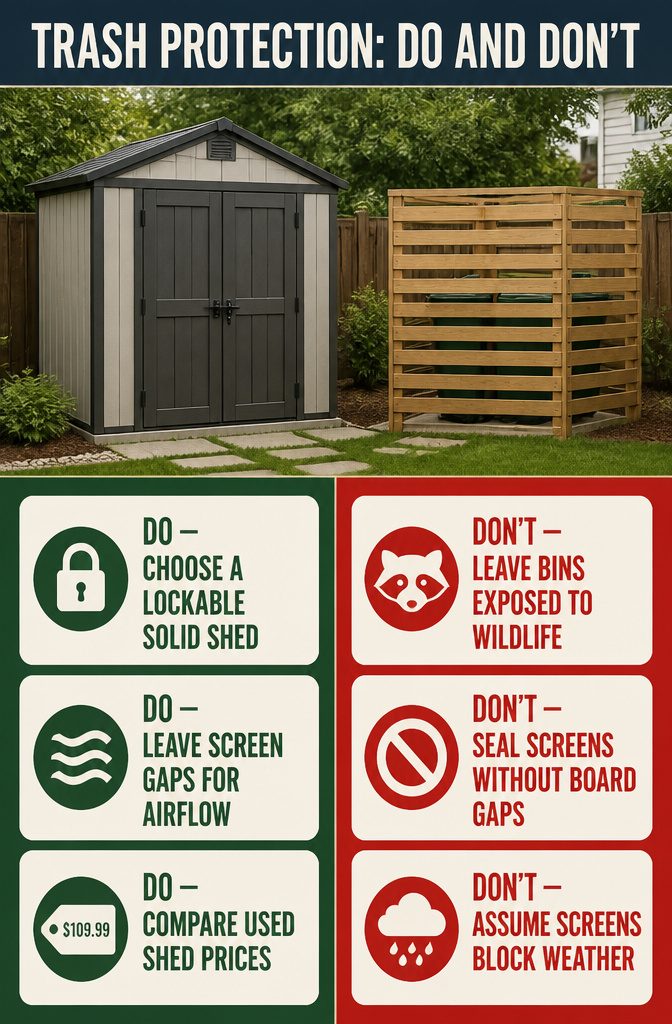
An enclosed structure keeps your bins shielded from rain, wind, and the animals drawn to garbage.
A lockable shed made of solid materials stops raccoons and other wildlife from tipping bins or scattering trash across your yard. The smell stays contained instead of drifting across your property or your neighbors’ yards.
Open screens help too, but with a catch: they hide the bins from view while leaving them exposed to weather and wildlife.
Gaps between boards allow air to circulate and prevent odor from getting trapped, which matters more than it sounds. A screen without those gaps turns into a smell locker.
If you go the shed route, used models on resale sites cost less than new ones.
A lockable storage shed runs around $109.99 at the lower end, though prices vary widely depending on size and material. A full enclosure takes up more space than a screen, but it handles weather, wildlife, and odor all at once.
An open screen is cheaper and takes less room. Pick based on what matters most in your yard and what space you have to work with.
Frequently Asked Questions
how much does it cost to hide trash cans?
Budget options start under $65 for metal garden trellises or vinyl screens that stake into the ground, while mid-range solutions like wooden privacy screens or lattice enclosures run $89 to $300.
Full enclosed sheds cost $299 to $1,500 depending on materials, though used models on resale sites often go for $110 or less. DIY wood screens built from pallets or reclaimed materials can cost almost nothing if you source free materials locally.
can i make a trash can hide out from pallets?
Yes, pallets are one of the cheapest options since you can often find them free on Craigslist or Facebook Marketplace. Stack and attach them to create an enclosure, or use them as a base to keep cans off wet ground.
Paint the pallets to match your house or yard, and you have a custom screen for minimal cost beyond the effort to assemble it.
what’s the easiest diy trash can screen to build?
A freestanding wood privacy screen is the simplest DIY project because it needs no digging, permanent installation, or special tools.
Build an L-shaped screen using 36-inch posts, 2×4 frame lumber, and cedar boards cut to 48 inches, then secure everything with wood screws.
The whole assembly takes about half a morning and sits wherever you need it without any commitment to a fixed location.
will a lattice screen hide trash cans completely?
Lattice screens work best when at least as tall and wide as the bin itself, so nothing shows from the street or neighboring yards.
Metal trellises 50 inches tall pair well with climbing vines or artificial greenery to fill in the open pattern and block the view.
If you want a finished look right away, drape artificial vines across it; real plants take a season or two to fill in completely.
what plants hide trash cans best?
Climbing vines on a trellis or lattice screen provide fast, natural coverage when trained to grow across the structure. Hardy sedum works especially well on living roofs because it spreads quickly and needs minimal maintenance once established.
For renters or those wanting flexibility, large potted plants positioned in front of a screen work just as well if weighted down to prevent tipping in wind.