
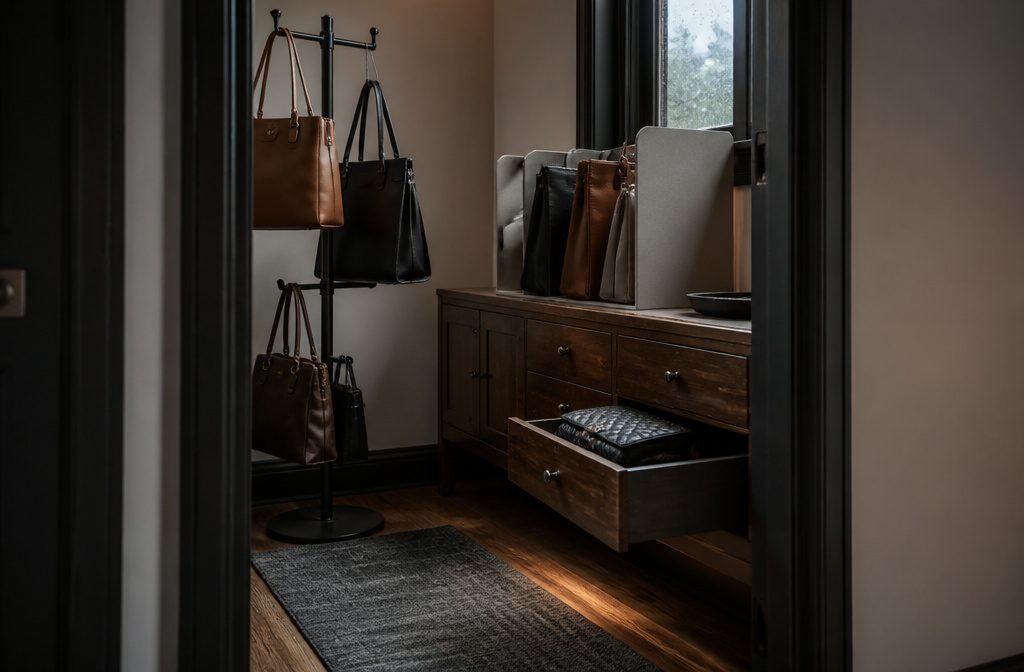
A well-organized collection takes an afternoon to set up but keeps bags accessible without the daily hunt through a tangled pile.
Most people underestimate how much space vertical storage reclaims: a purse tree or shelf dividers turn what would scatter across a closet into something you can actually see and reach.
The catch arrives with soft bags, which crease under their own weight on hooks, so structured satchels and totes work better hung while quilted styles need to lie flat in drawers or bins instead.
1. Hanging bags on hooks, hangers, or rings
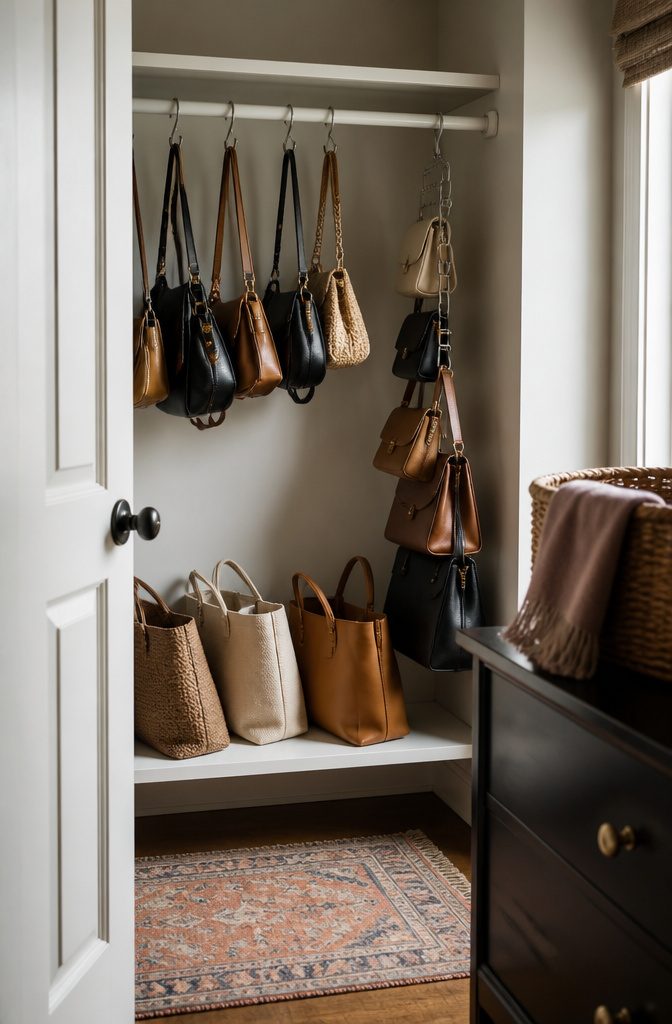
Hanging bags is the most straightforward method and prevents the creases that develop when they sit folded on a shelf.
The setup itself is flexible: a standard closet rod works, or you can add tension rods, wall hooks, purse hangers with vertical positioning, or shower curtain rings threaded onto existing rods.
Structured bags hold their shape best when hung, while soft totes and quilted styles compress less if laid flat elsewhere.
The trade-off arrives with weight and materials.
Thin straps under tension for weeks can stretch or damage, so heavy bags shouldn’t hang long-term. If your bags are too heavy for shower curtain rings, window curtain rings or heavier-duty hooks distribute the load better.
Vertical purse hangers come in various sizes and styles, so you can match your closet aesthetic while keeping multiple bags visible and within reach at once.

🏡【Upgraded Purse Organizer for Closet】- This upgraded purse organizer has ten hooks, and each can hold more than ten kinds of purses or bags, such as long or short, wide widths, or narrow. This purse organizer for closet can make your closet clean and organized

Heavy Duty Purse Organizer for Closet - Set of 2, Holds up to 12 Purses: Crafted from solid heavy-duty metal, this purse hanger is built to last through years of daily use. Each hanger features 3 tiers with 6 large hooks, holding up to 6 purses per unit — store a total of 12 purses with just one set. Holds up to 20 lbs per hanger, so even your bulkiest bags are secure.
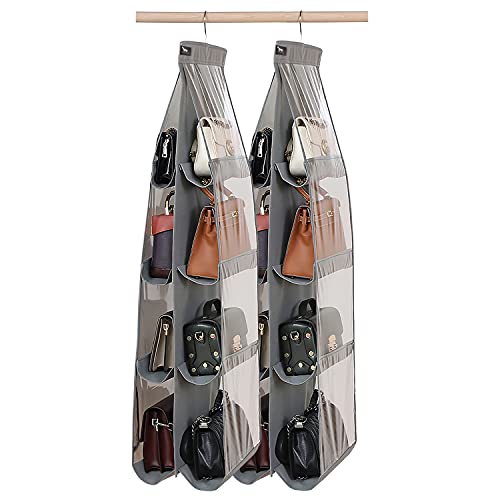
Patented Product - Zebricolo Purse Organizer for Closet Patent number - US 29899; EU 015031259-0001. UK 6303753
2. Over-door storage
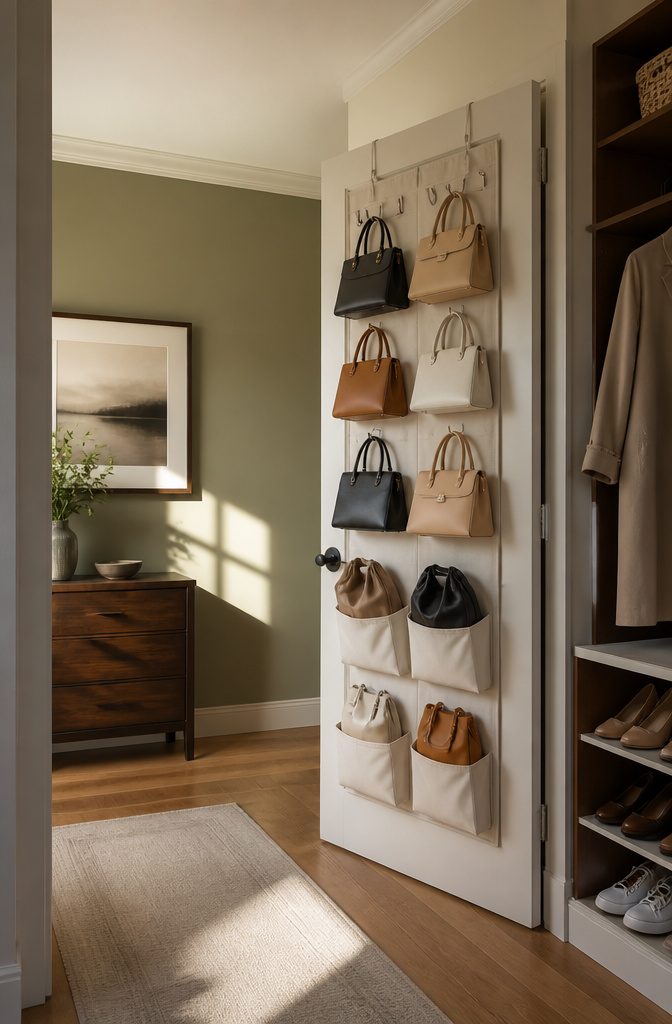
An over-door organizer solves the visibility problem that keeps most people from wearing half their collection.
Hooks or pocket holders hung on a closet or bedroom door put every bag in view, so you grab what matches your outfit instead of reaching for the same three favorites.
The arrangement also keeps bags accessible without taking up valuable shelf or floor space.
Two styles work here. Hooks suit structured handbags that hold their shape; a bag draped over a hook won’t crease as it sits.
Pocket organizers work better for softer styles, since each bag gets its own compartment and sits undisturbed between wearings. Choose the style that fits your bag types, not the other way around.
The real advantage is using space that sits empty in most closets. That back-of-door real estate stays overlooked because it does not feel like storage, but a single organizer can hold what would otherwise scatter across a shelf.
If one organizer fills quickly, a second one fits on the opposite side of the door without blocking your swing.
The one trade-off: bags hang visible to anyone who opens that door, so this works best if your closet is private rather than a pass-through.

[Vertical Space Saver]: Maximize unused door or wall space with this sleek purse organizer, perfect for small rooms or apartments. With 16 hooks, it holds handbags, totes, or clutches with ease. This all-in-one purse organizer for closet helps you declutter while displaying your favorites, acting as a stylish and practical purse hanger for everyday use

【Stability & Door Protection】Our over the door hanger comes with adhesive hooks designed to securely attach to the door when used with our products, ensuring they stay in place without moving. We also provide EVA pads to protect your door from any damage.

[Installation in Seconds] The Oslora Foldable Door-Hanging Handbag Organizer requires no tools for setup. Hang the purse hanger on any standard door in seconds to instantly create versatile purse storage. Offering a hassle-free installation experience for purse lovers
3. Shelf dividers
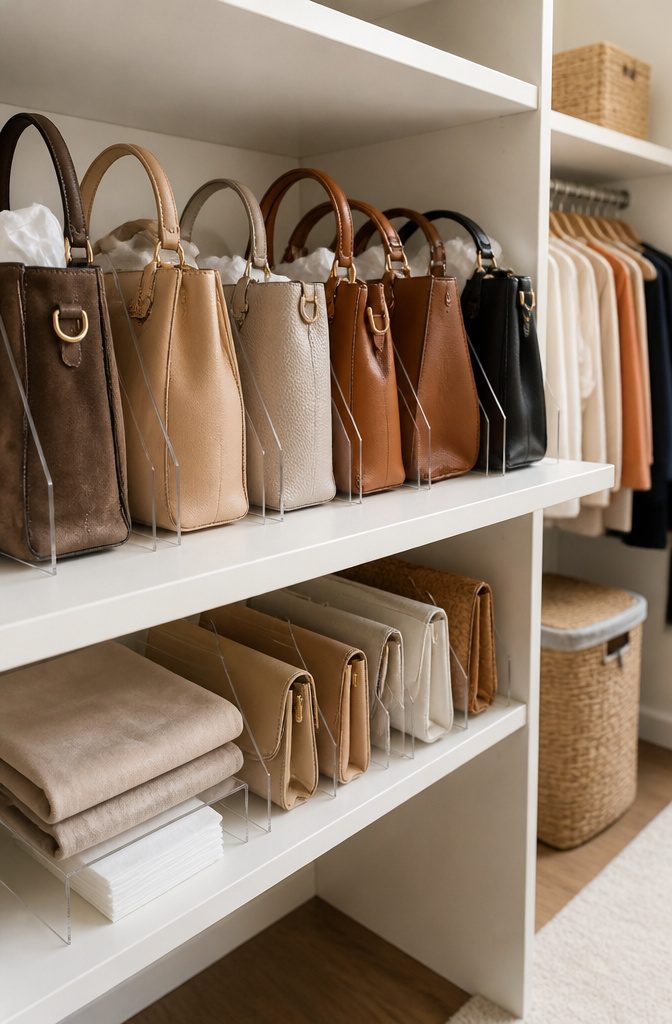
Shelf dividers turn a floppy pile into an organized row. Stuff larger bags with tissue so they hold their shape, then stand them upright between dividers on an existing shelf.
This method keeps each bag visible and prevents the misshaping that comes from stacking or overcrowding. Clutches and smaller purses fit neatly in the divided spaces below, while satchels occupy the sections above.
You can find dividers designed specifically for handbags, or repurpose standard shelf dividers from a bookshelf. The real advantage is that you’re not buying new furniture, just adding structure to storage you already have.
Dust settles less on upright bags, and you’ll actually see what you own instead of reaching past the front row each time you need something.
Stuffing takes a few minutes per bag, and your collection still needs to fit on that one shelf.

KEEP YOUR CLOSET ORGANIZED: Great way to separate clothes or purses, our shelf dividers can keep them in place. Definitely, it can free up more space to make your house look better. The fly in the ointment is that please don't mount it on a board longer than 0.95 inches, it will cause it to break.

Each Set of acrylic purse organizer includes 12 Bases and 16 Partitions,Can form 15 Compartments(or as 3 independent Acrylic Shelf Dividers in Closet for Towel,Sweater,Shirts)
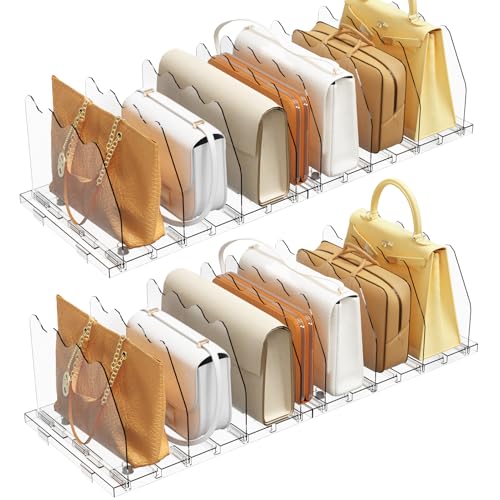
[Adjustable Spacers]: The shelf divide each set is equipped with 4 dividers on each shelf, you can adjust the spacing of the dividers according to your needs to insert the dividers into the slots. It is suitable to organize handbags, purses, wallets, gift bags, and files of different sizes.
4. Shelves and cubbies
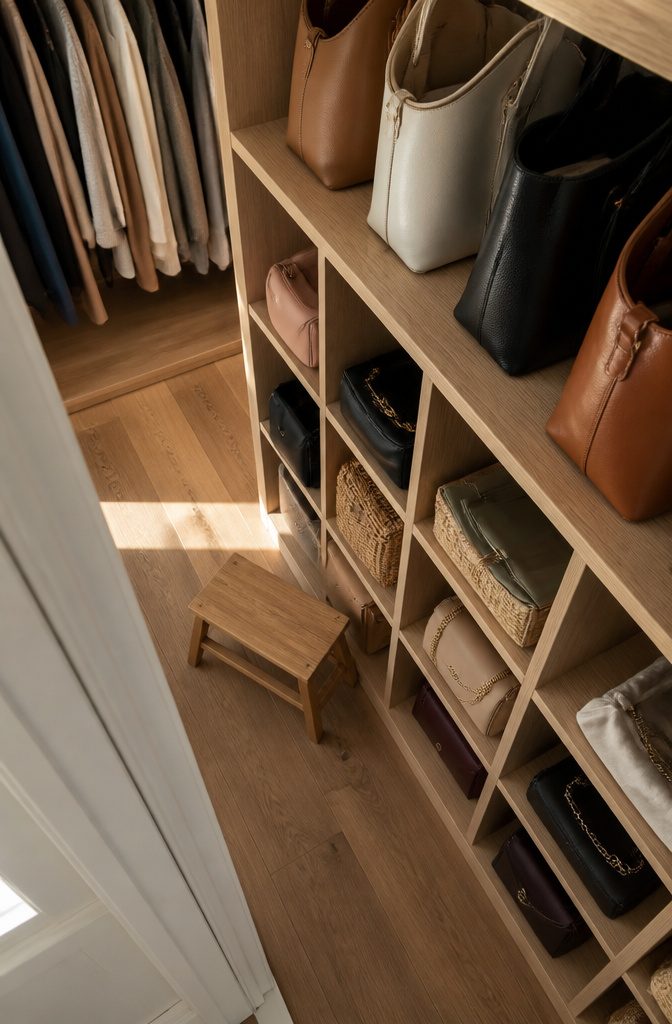
Open shelves, floating shelves, and cube organizers let you see every bag at once, which cuts the time it takes to find what you need.
Visibility also forces you to keep the collection organized; a cluttered shelf is obvious in a way a stuffed drawer is not.
Store larger bags upright on higher shelves for easy access, and use cubbies or dividers to give each smaller bag its own space. Overcrowding leads to misshaping and surface wear, so resist the urge to pack them in.
If your closet already has shelving above the hanging rods, those existing shelves are often the simplest place to start. A stepstool keeps frequently used bags within reach without strain.
Floating shelves work if you want the look to matter as much as the function. They come in a range of sizes and styles, so you can choose a design that suits your closet.
Install a single shelf high up for bags you rotate in and out of use, or go for an entire system if your collection needs the space.
Floating shelves hold less weight than built-in shelves, so check the load capacity before you commit to a full display.

Clear Window: All storage cubes feature a front window, making it easier to see and find items inside. Our storage boxes with lids save time and effort, making storage more convenient and efficient

Foldable Closet Organizer: Keep a Purse Organizer for Closet, Handbag Organizer, and Scarf Belt Toy Storage together, so bags, scarves, belts, and toys stay tidy in closet bedroom dorm areas while Simple Stylish Design and Foldable Space Saving details support a neat routine

Large 92Qt Stackable Storage Bins:Each tier measures 15.35" x 11" x 8.27", total 92Qt capacity. Ideal for organizing toys, snacks, crafts, clothes, and more in closets, bedrooms, garages, or offices.
5. Clear bins or boxes
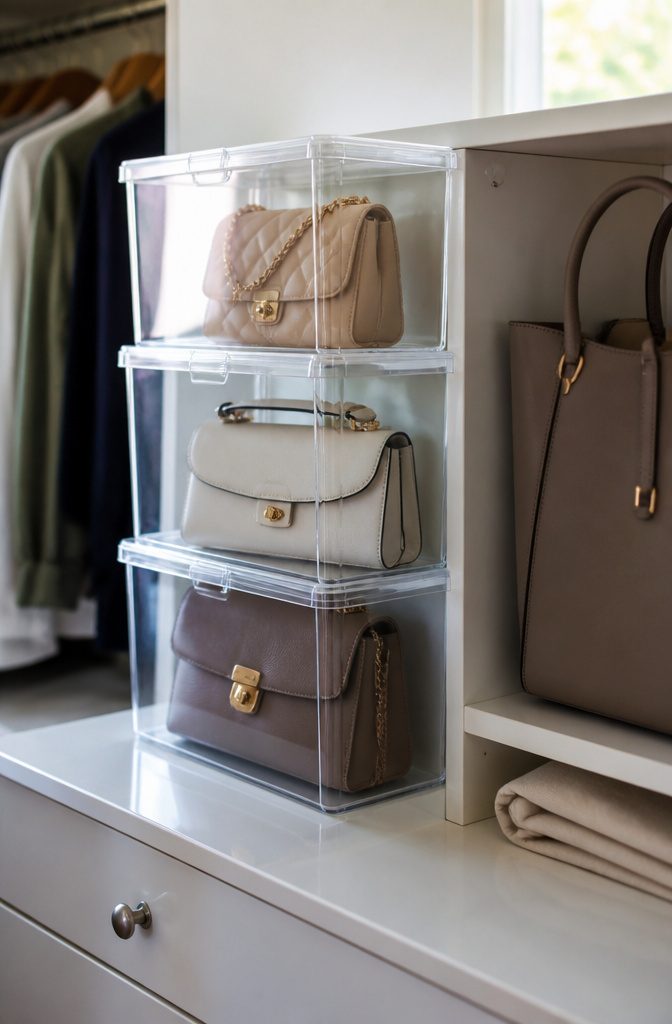
Clear plastic bins keep bags visible and protected from dust in one contained unit. Select a bin size that fits your collection without forcing bags to squeeze, since overstuffing damages handles and hardware over time.
Label each bin by type, color, or style so you know what’s inside without opening it. Stack the bins on a shelf or closet floor to use vertical space efficiently.
Lightweight or smaller bags work especially well in this setup, though larger structured handbags take up more room and may work better on open shelving or in divided compartments where you can see the full shape.
The downside is that clear plastic still requires you to physically pull a bin to check what’s inside, unlike open display where you can scan the full collection at a glance.

【Large Size & Heavy Duty】These robust large rubber coated hooks are 5 inches in total length. The small side opening is 1.6 inches, and the large side opening is 1.8 inches, which fits all standard closet rods perfectly. The two different opening sizes can meet various daily use needs. Extra solid construction allows it to hold heavy objects steadily.
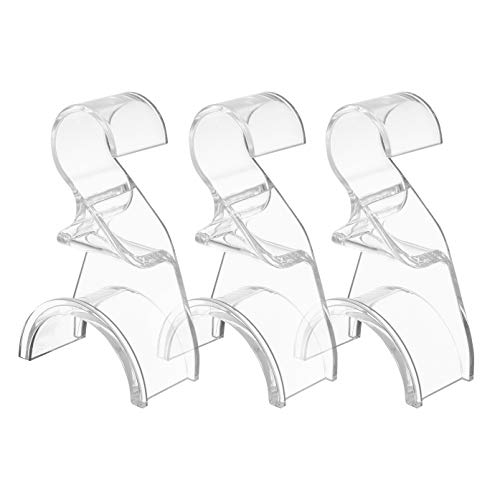
What You Need: Looking for a practical and efficient handbag hangers for closet? Hanger for Purses? Backpack hangers for closet? Want to make sure your expensive purse don’t wrinkle or crease? The Wiosi purse hooks for closet is the perfect solution!

PROTECT HANDLES: Curved design prevents creasing, bending, and long-term deformation of bag handles and straps, suitable for all kind of bags
6. Baskets
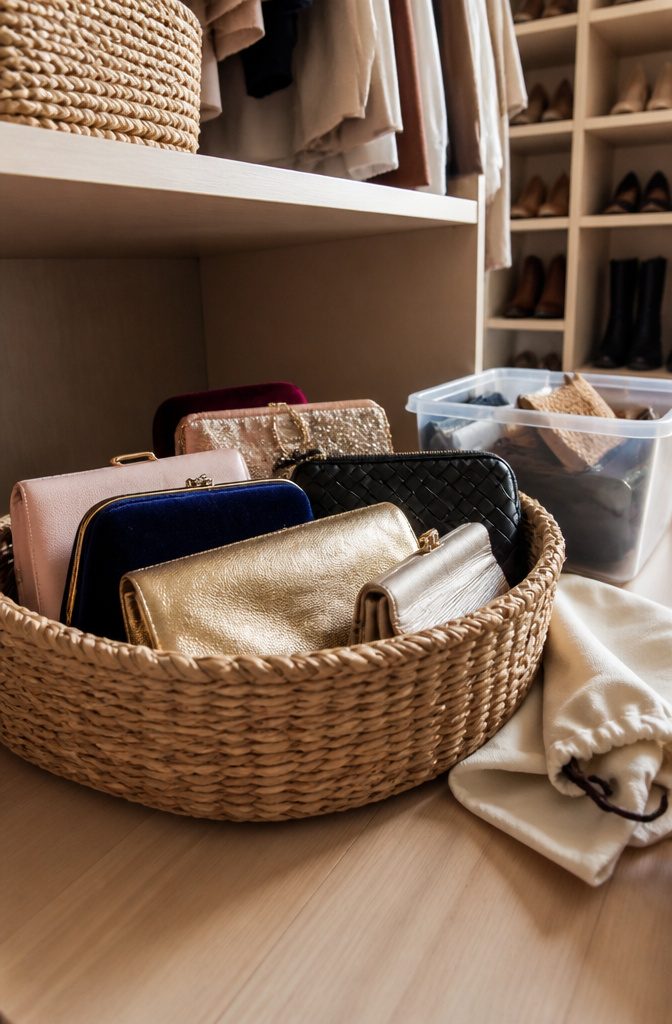
Small bags disappear into larger spaces, so containing them matters more than containing full-sized totes. A small basket keeps clutches, wristlets, and evening bags grouped together instead of scattered across shelves where they’re easy to lose.
Baskets work especially well in a closet corner or under a shelf, since they’re shallow enough to tuck into gaps that wouldn’t hold a drawer or bin.
Choose one that fits your space; they come in all shapes and sizes, so measure before you buy.
Clear plastic bins let you stack bags while keeping them protected from dust, and you can see what’s inside without opening them.
Select the size based on your bags: larger bins for structured handbags, smaller ones for softer styles. Label each one by type, color, or however you search for bags.
Don’t overstuff; too many bags pressed together risks creasing leather or scuffing hardware. A half-full bin protects better than a packed one.

End Bag Clutter & Protect Your Purses: Our purse organizer is a game-changer for your closet, allowing you to hang up to 16 bags in the space of one. Ditch the shelf and floor pile-up—hanging your bags not only saves space but also helps them maintain their perfect shape, season after season.

【Exclusive Design】Imitated the human arm for product design,our purse holder has no match or mimic on the market!. The widely double wire shoulder can keep your bags from scuff marks and creases now and forever..Hurry up!Throw away your wardrobe's small hook which will make your bags' handle hard and wrinkled.

Purse organizer for closet:Purse hanger closet with 360-degree swivel hooks that can be staggered front to back, you can quickly put your bag back in and take it out, minus the hassle of life, and the 4 hooks can neatly organize and tidy up bags.Purse hanger saves space.The purse organizer for closet is the ideal solution for bag organization. The bag holder can hang bag straps up to 1.57in in width, suitable for most bags . Available in white and black
7. Drawer storage
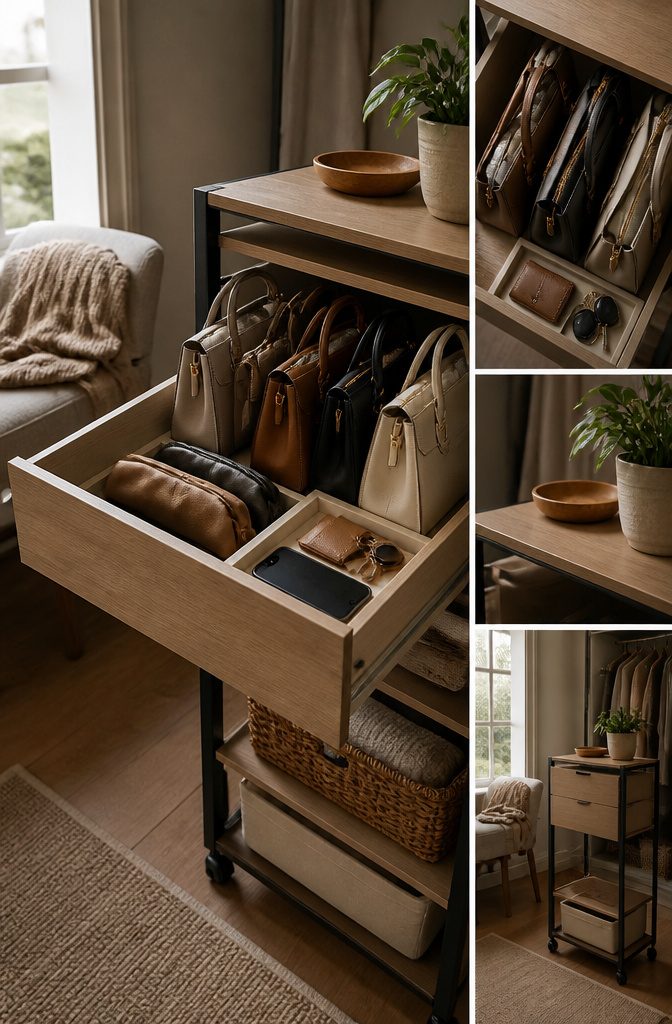
A pull-out drawer keeps frequently used bags within arm’s reach and lets you see the whole collection at a glance without removing anything.
Structured totes and satchels hold their shape best when stored upright and stuffed with tissue or an insert, while soft or slouchy bags should lay flat to prevent creasing.
Crossbody and shoulder bags risk damage from their own weight on thin straps, so nestle them on a drawer with straps tucked inside instead.
The drawer becomes especially useful as a purse station, a place to reload essentials between bags without scattering them across the bedroom.
Keep a small tray or divider inside to corral what moves with you: keys, phone, wallet, whatever rotates daily. If your closet lacks a built-in drawer, a freestanding pull-out cart works the same way.
The FÖRHÖJA kitchen cart from IKEA, originally designed as a mobile prep surface, slides easily and gives you a drawer plus open shelves, all on casters so you can roll it where you need it.

[Save Every Inch of Space]: Transform unused walls and doors into smart storage with this over the door purse organizer, ideal for small rooms, dorms, and apartments. The vertical purse organizer for closet creating clutter-free purse storage for closet with elegance. Perfect for maximizing storage for purses and handbags tidy without cluttering the room

Hanging Door & Wall Mounted Design: This purse organizer hangs over doors up to 1.78 inches thick or mounts on the wall using the included screws and wall anchors. Suitable for entryways, closets, and bedrooms.

[Large Capacity Purse Organizer]: This all-in-one purse storage includes 4 baskets in various sizes and 6 hooks holds everything from totes to small crossbodies, letting you arrange all your bags, wallets, and accessories efficiently. Perfect as a purse organizer for closet, purse rack, or purse storage organizer, it maximizes every inch of your door or wall space for a cleaner, more organized home
8. Magazine holders or letter holders
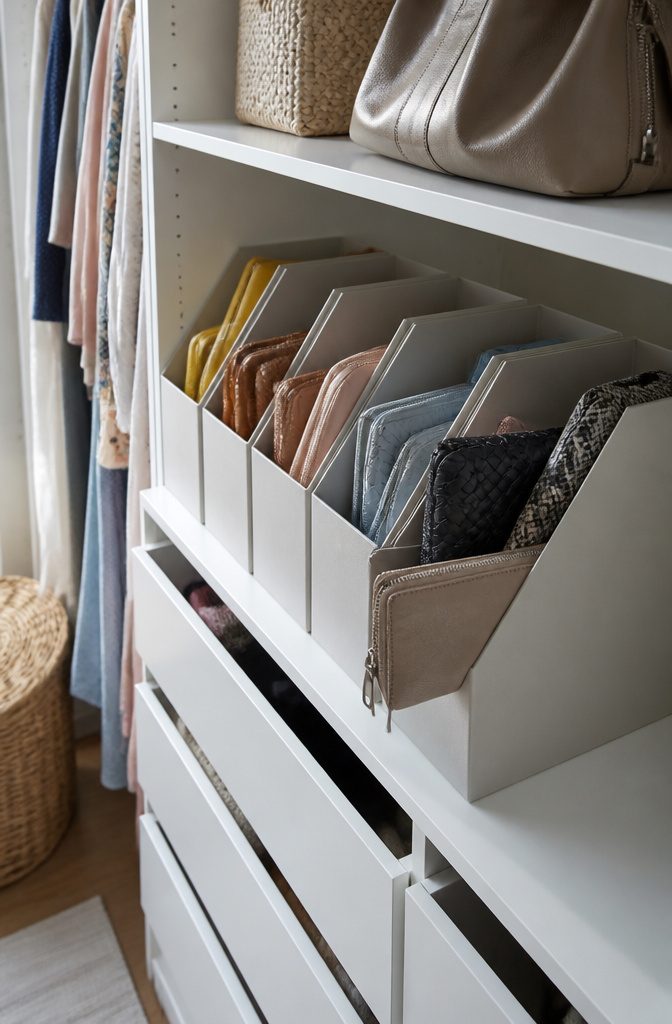
Magazine holders and letter holders turn a shelf into compact storage for clutches and small bags. The holders are inexpensive and come in a wide range of colors and materials, so they fit into existing shelving without major rearrangement.
Set them upright on a shelf the way you’d display magazines, then arrange your smaller bags by color, size, or texture inside them.
This keeps clutches visible and easy to grab without taking up much depth. Order a few holders to create adequate storage space across your shelves, spacing them so you can see what you have at a glance.
The method works best on shelves with enough height to accommodate the holders themselves, leaving room for larger bags nearby if you need the space.

👜Effortless Organization: This 2-pack acrylic handbag organizer is designed to keep your closet tidy and your handbags easily accessible. With 8 spacious slots, it can hold up to 8 handbags, making it perfect for any bag enthusiast.(Stacks securely when stored bags sit below the divider height 4.8inch)

Keep bags neat & upright: No more saggy or misshapen bags! This purse organizer keeps handbags standing upright in place, preventing bags from any deformation and wrinkling

KEEP YOUR CLOSET ORGANIZED: Great way to separate clothes or purses, our shelf dividers can keep them in place. Definitely, it can free up more space to make your house look better. The fly in the ointment is that please don't mount it on a board longer than 0.95 inches, it will cause it to break.
9. Freestanding furniture or racks
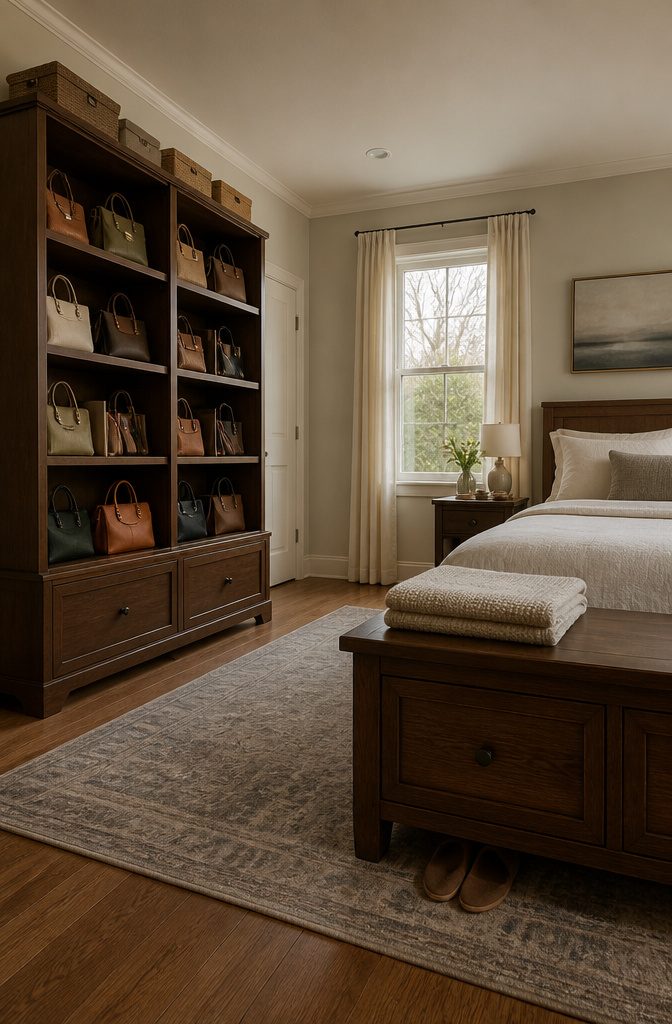
Bookcases work well when closet space runs short or doesn’t exist. A bookcase lets you display handbags while keeping them accessible, and the cost stays low compared to built-in storage.
Shelves need enough height and depth for larger bags, so measure before you buy. Clutches and wallets slip around on open shelves, but letter holders or magazine organizers keep them in place and upright.
Freestanding furniture gives you more options if you have the floor space. A storage bench at the foot of the bed hides bags inside drawers while serving double duty.
A wall-mounted shoe cabinet works the same way. A freestanding wardrobe holds a full collection and keeps everything behind doors, which matters if you want bags out of sight.
Pull-out drawers in any of these pieces beat fixed shelves because you can reach what you need without moving other bags first.

Easy Top Access: The angled front opening gives clear visibility and easy reach, so you can grab what you need from high shelves fast.

Trapezoidal Design: The low-front, high-back trapezoid structure provides easy access and clear visibility. Ideal as shelf baskets for efficient organization.

【𝙇𝘼𝙍𝙂𝙀 𝘾𝘼𝙋𝘼𝘾𝙄𝙏𝙔】Our closet storage bins are home essentials to declutter your closet, wardrobe and cabinet. Large enough baskets for organizing 4-6 towels, 10-15 T-shirts, 1 queen size blanket, 1 king size bed sheet set, 2 pillows, 3 purses, 6-10 hats, full pack yarns or some magazines.
10. Purse tree
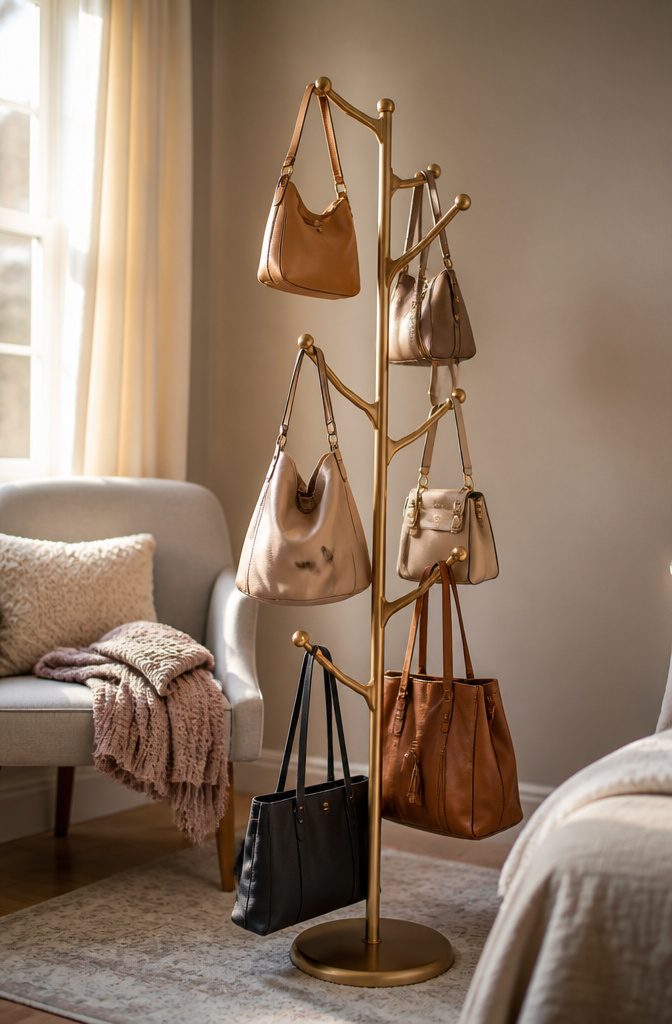
A purse tree is a freestanding display piece designed to hang multiple bags at once, turning storage into something visible and within reach.
These come in wood, metal, or plastic, so you can match whatever style suits your bedroom or another room in your house.
The structure keeps bags organized by sight rather than buried in a closet, which means you’ll actually wear the ones you own instead of forgetting about them.
A purse tree works best in a bedroom where it can anchor a corner or sit beside a chair without blocking traffic.
A tree takes up floor space and leaves your bags on display, so it only makes sense if your collection is something you want to see every day and your room has room to spare.

Heavy Duty Purse Organizer for Closet - Holds up to 6 Purses: Crafted from solid heavy-duty metal, this purse hanger is built to last through years of daily use. It features 3 tiers with 6 large hooks, holding up to 6 purses in one compact unit. Holds up to 20 lbs per hanger, so even your bulkiest bags are secure.
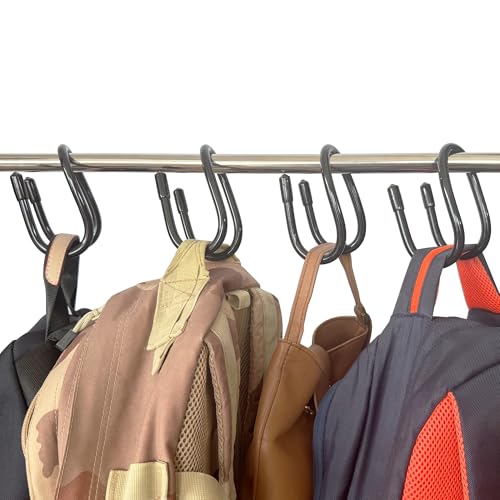
Handbag Hanger For Closet: Item Package Quantity: 4. No more placing your precious handbags on dusty floors, hang them on the closet rod

Wide Compatibility for Closet Rods: Fits closet hanging rods with diameter up to 1.50 in, great for bedroom closet and cloakroom. Ideal for hanging handbags, tote bags, shoulder bags and backpacks. NOT designed for table‑top use.
11. Garment bags
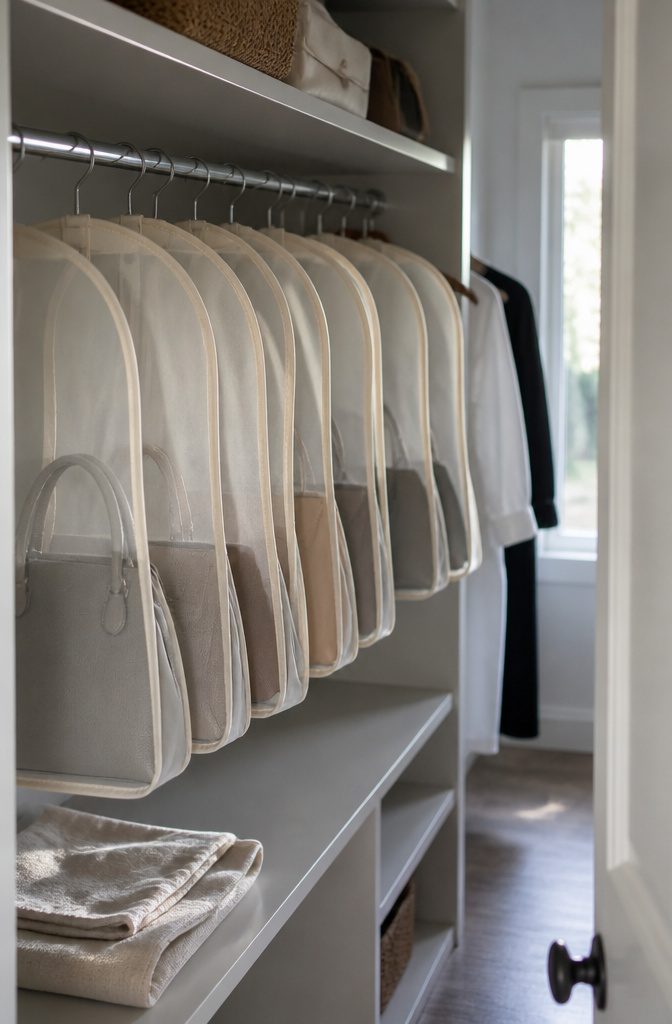
Garment bags work well when closet space is tight. Place each handbag inside its protective bag and hang it on a clothing rod, where dust stays off and the bags stay organized by hanging rather than stacked.
The main advantage is protection: the bags shield leather and fabric from dust, fading, and accidental damage while keeping everything visible at a glance.
This method works best for closets with existing rods, since you’re using space that might otherwise hold only clothes.
Garment bags add bulk, so a small closet can fill up fast if you have many bags. If you go this route, consider one bag per handbag rather than layering them, since stacking defeats the protection you’re after.
12. Dedicated purse wall or closet area
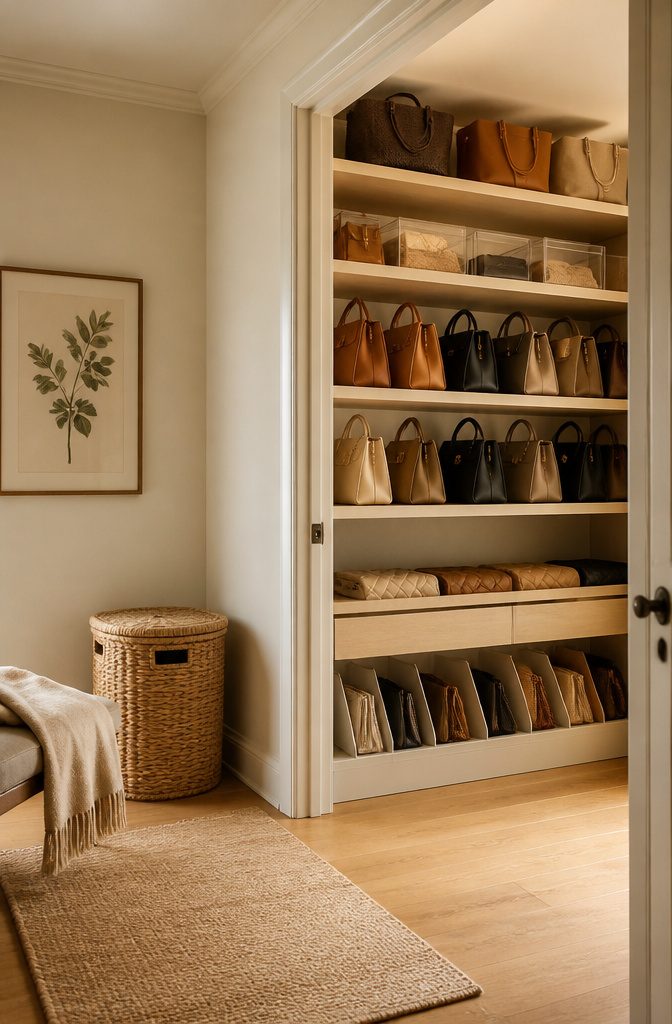
A dedicated purse wall or closet corner gives your collection room to breathe and makes every bag visible at a glance.
The space doesn’t need to be large; even a corner lined with bags works as a focal point that’s both functional and displays what you own.
Floating shelves or cubes work well here because they hold bags upright while keeping them accessible.
How you arrange bags in this zone matters. Structured handbags need to stay upright on open shelves or padded hooks.
Soft bags like quilted totes lay flat in shallow drawers or bins without losing their shape. Small evening bags fit neatly in magazine holders or labeled bins, keeping clutches from getting lost among larger pieces.
Large bags like backpacks go on high shelves where they can lie flat. Seasonal bags stored in clear boxes on upper shelves stay easy to find without taking prime real estate.
The real advantage is knowing where everything is. When everyday bags sit at the most accessible height and special occasion purses below them, you spend less time hunting and more time grabbing what you need.
13. Small-space storage
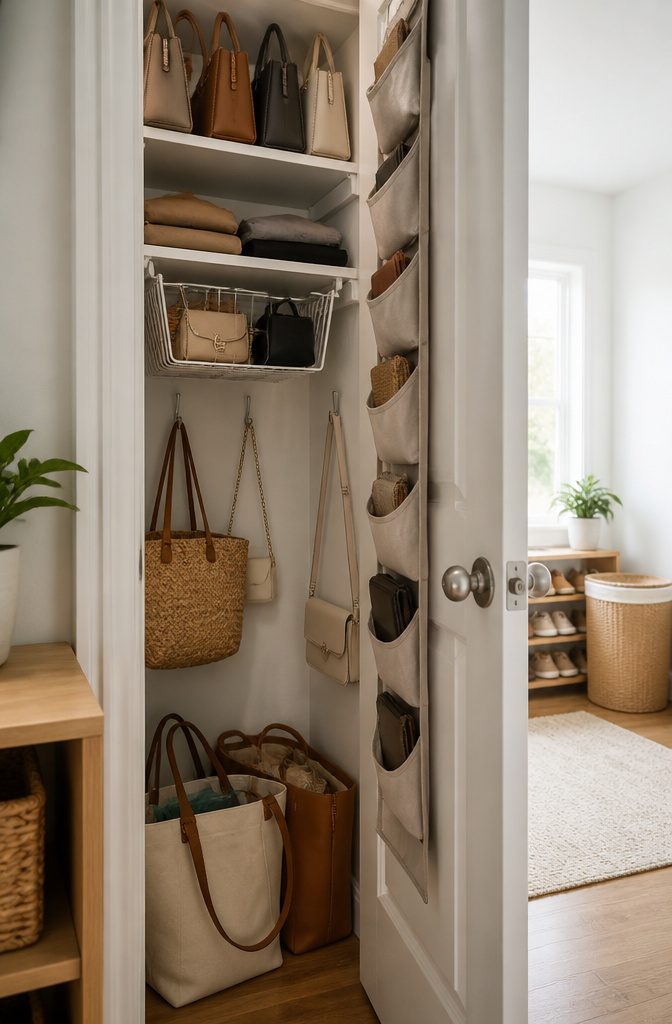
When floor and shelf space vanish in a closet, vertical storage becomes the only option. Structured purses stand upright on shelves without tipping, while soft bags lie flat to avoid creasing; small clutches nest inside larger ones to reclaim room.
Under-shelf baskets hang from existing shelves and hold everyday bags at eye level without eating floor space.
Hooks on the closet wall or door frame work for lightweight styles you reach for often. Drawer inserts corral mini bags and clutches in tight quarters where open shelves won’t fit.
Stuff each bag with tissue or paper to hold its shape, then slide it into a dust bag before stacking or hanging to prevent scuffs and creasing. The back of the closet door is empty real estate most people overlook.
An over-the-door organizer or purse hanger turns that dead space into storage for bags you wear in rotation, freeing prime shelf room for the rest of your collection.
14. Store small bags inside larger bags
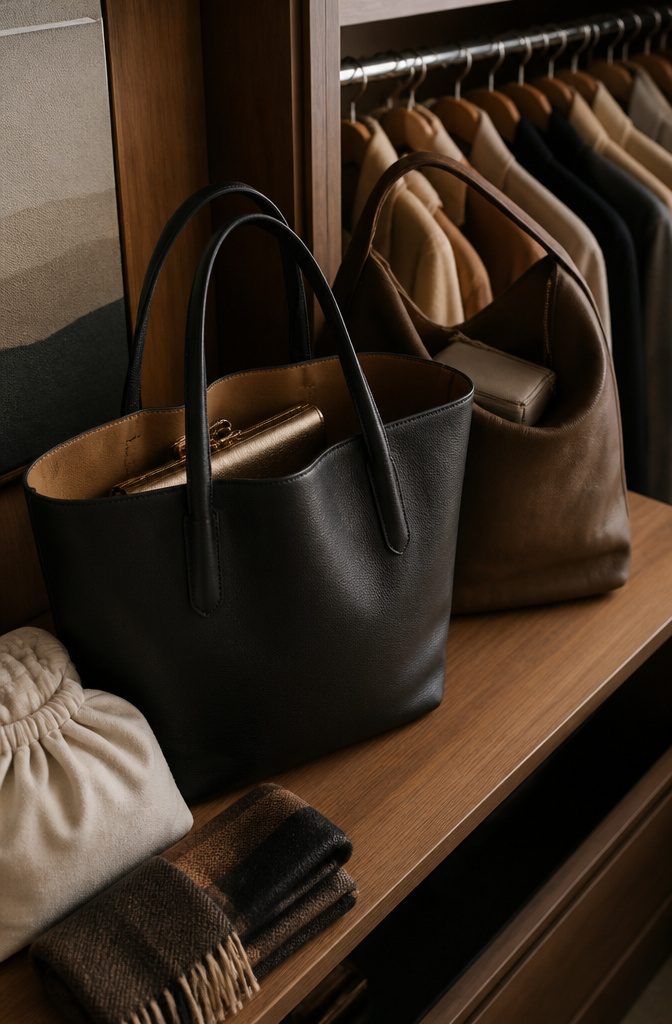
Smaller bags nested inside larger purses reclaim space that would otherwise sit empty. A clutch or evening bag tucked into an oversized tote or hobo bag keeps both pieces organized without claiming additional shelf or hanging room.
This method works especially well when closet real estate is tight and door space or shelf dividers aren’t an option.
You can’t see what’s inside. Bags stored inside other bags disappear from sight, so you risk forgetting what you have or reaching for the outer bag and leaving the inner one behind.
This approach suits bags you don’t rotate often: occasion clutches, seasonal pieces, or duplicates you’re deciding whether to keep.
For everyday rotation, pairing bags inside bags with visible outer storage (hooks or shelves for the larger bag) keeps your most-used pieces accessible while still capturing wasted interior space.
Choose a system that keeps bags accessible
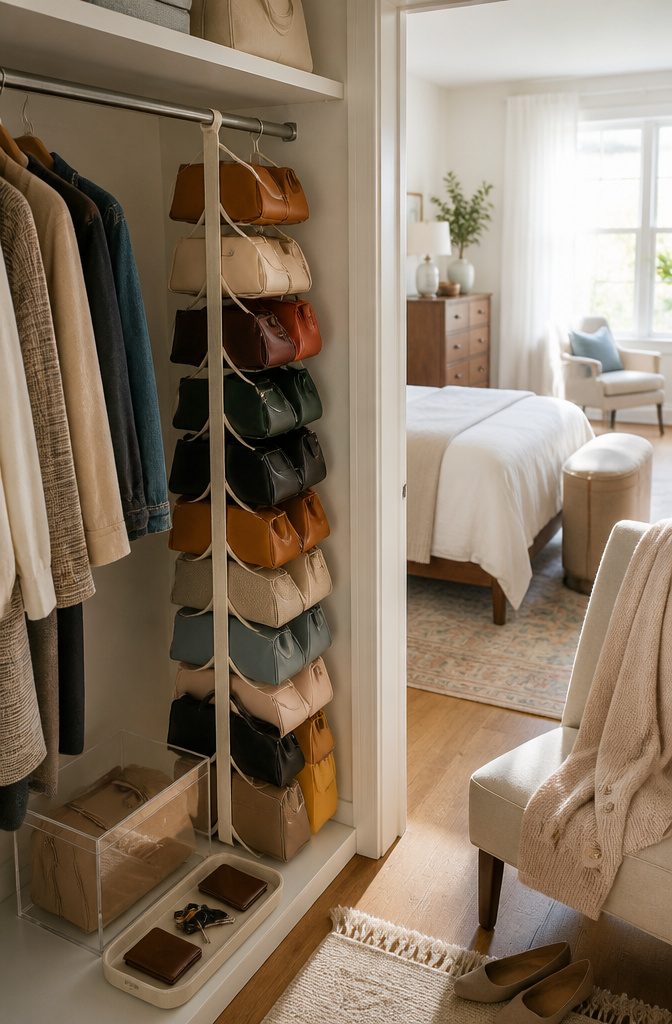
The everyday bags you reach for most need to live where your hand goes first. Keep your go-to styles within arm’s reach; the ones you wear weekly or daily should be the easiest to grab without moving anything else.
Handlers on Reddit mention that storing bag handles inside the bags themselves prevents tangling when you pull one out in a hurry, which matters more than it sounds if you’re switching bags on a weekday morning.
When bags sit where you can see them without moving other things, you’re more likely to actually use them.
Clear plastic containers work well if your bags are small enough; one that opens in the front lets you reach without digging. A 14-loop purse organizer hung over your closet rod keeps frequently used bags visible and accessible.
The real win is matching the system to what you actually do: a well-organized collection that stays organized is the one you can reach into without thinking about it, not the one that looks perfect on Instagram.
Fit storage to your space
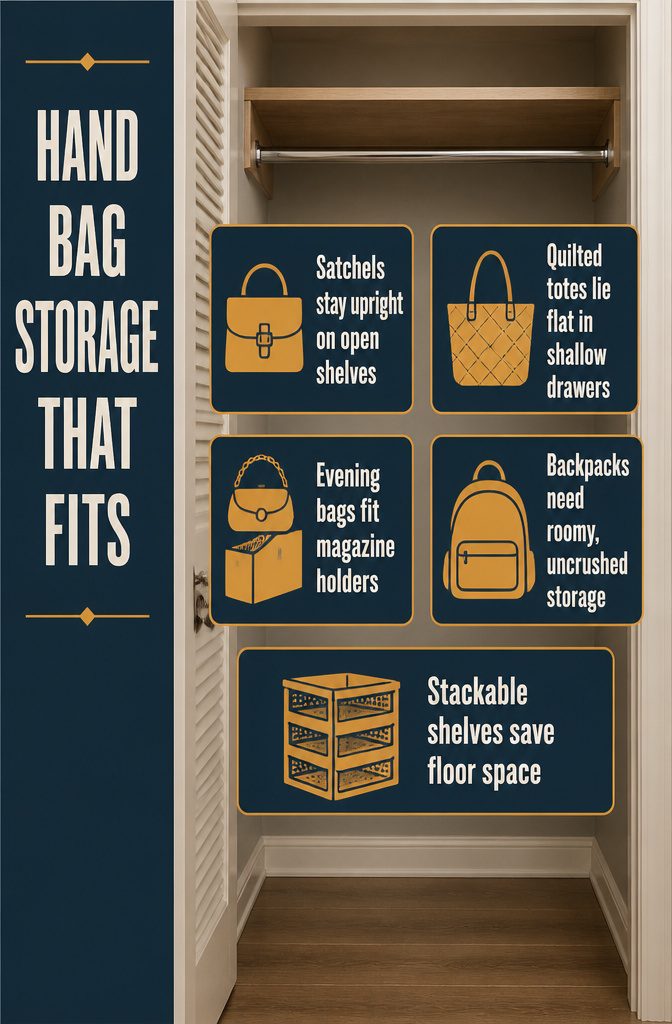
Look at your actual closet before choosing a storage method. A walk-in with deep shelves calls for something different than a narrow reach-in or a bedroom corner.
Structured bags like satchels need to stay upright, so open shelves, padded hooks, or vertical hangers work best. Soft quilted totes can lie flat in shallow drawers, clear bins with dividers, or over-door pockets.
Small evening bags fit neatly in magazine holders or labeled drawer dividers. Large backpacks belong on high shelves or in baskets where they won’t get crushed.
Match the storage type to both the bag shape and the space you have. If you’re short on closet room, stackable shelves, under-shelf baskets, or acrylic organizers maximize vertical space without eating floor area.
Shelf dividers work if you stuff soft bags with tissue so they stand upright between them. For seasonal bags you rarely touch, clear storage boxes stacked high keep them visible but out of the daily rotation.
The goal isn’t finding the perfect system, it’s finding the one that fits your closet and your collection at the same time.
Sort, clean, and protect your collection
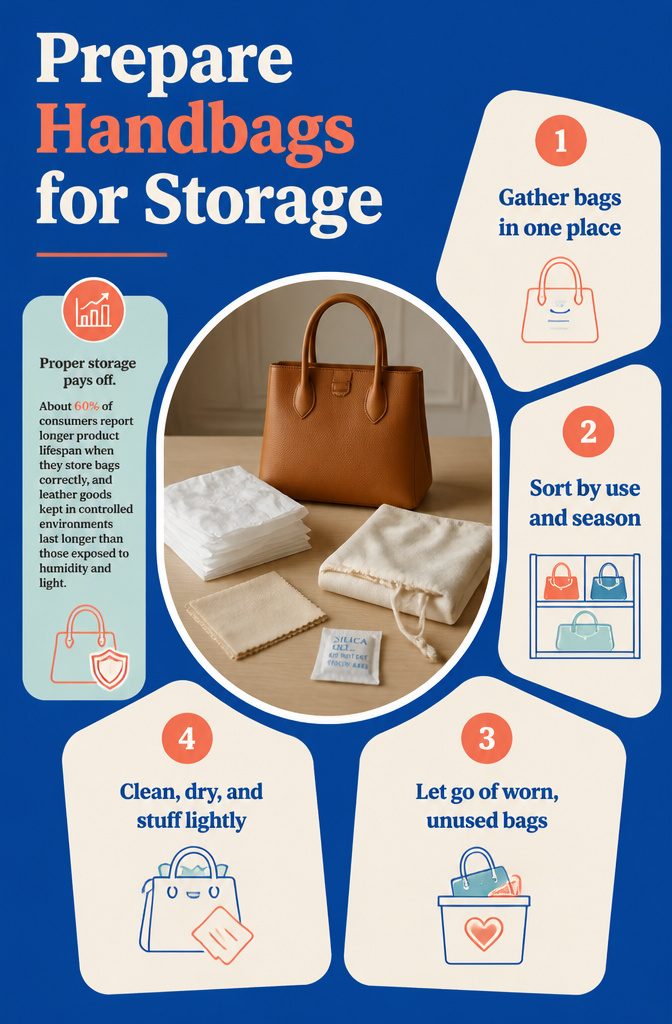
Gather all your bags in one place so you can see the full collection at once.
Sort them by how often you use them: everyday, special occasions, or rarely, and by season. This sorting reveals which bags actually earn their space and which ones don’t.
Look honestly at each bag.
If it shows wear, no longer suits your style, or sits unused season after season, let it go. Donating what you can or saying goodbye to worn pieces frees up room for the bags you reach for.
Before storage, clean each bag according to its material, then let it dry completely. Cleaning prevents stains from setting and helps preserve the material.
Stuff each bag lightly with acid-free tissue paper or packing paper, never newspaper, which can transfer ink. For valuable pieces, use breathable cotton or linen dust bags rather than plastic, since plastic traps moisture.
If you’re using bins, add silica gel packs to manage humidity. Keep bags away from direct sunlight and heat, both of which damage leather and finishes.
Proper storage pays off. About 60% of consumers report longer product lifespan when they store bags correctly, and leather goods kept in controlled environments last longer than those exposed to humidity and light.