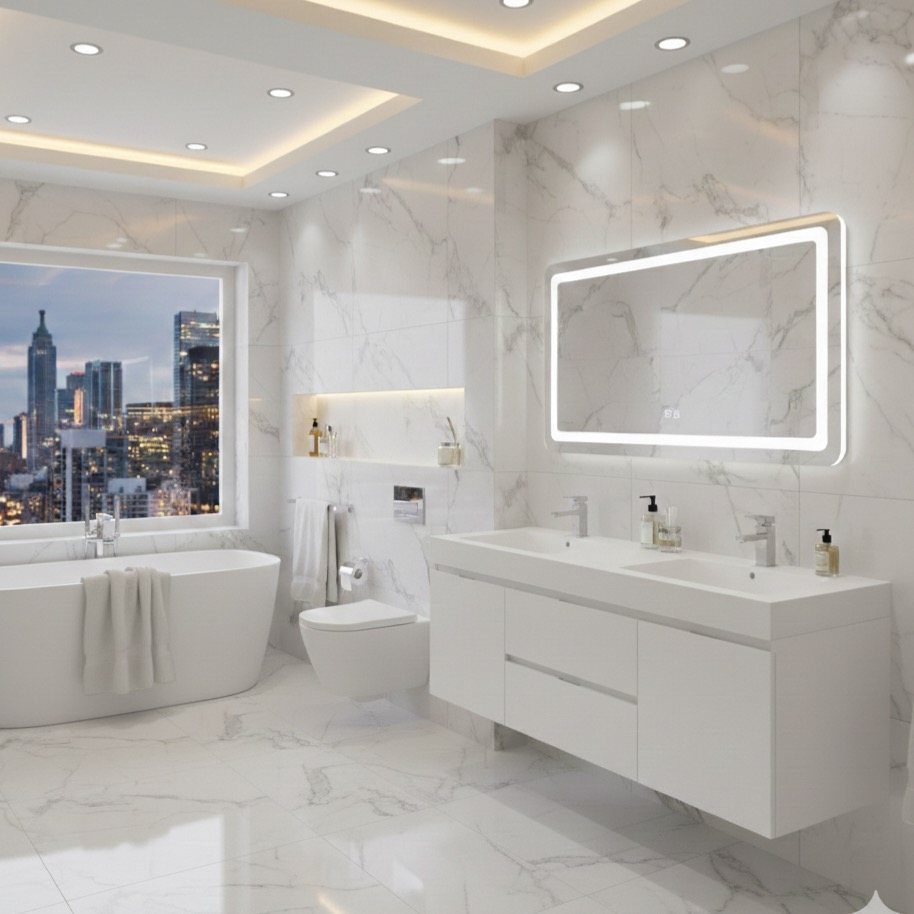
These ideas run from a floating vanity you can install over a weekend to an integrated linen tower that needs a plumber, so the deciding factor is how much of your bathroom you are willing to open up.
A floating vanity only works if the wall can take the load and the plumbing runs inside it, while a Shaker cabinet on legs drops into place without touching a pipe.
The detail that separates one white bathroom from another is not the color but the texture you build into it; a fluted cabinet door or the weave of a storage basket does more to keep the room from feeling sterile than any shade of paint could manage.
1. Floating White Vanities
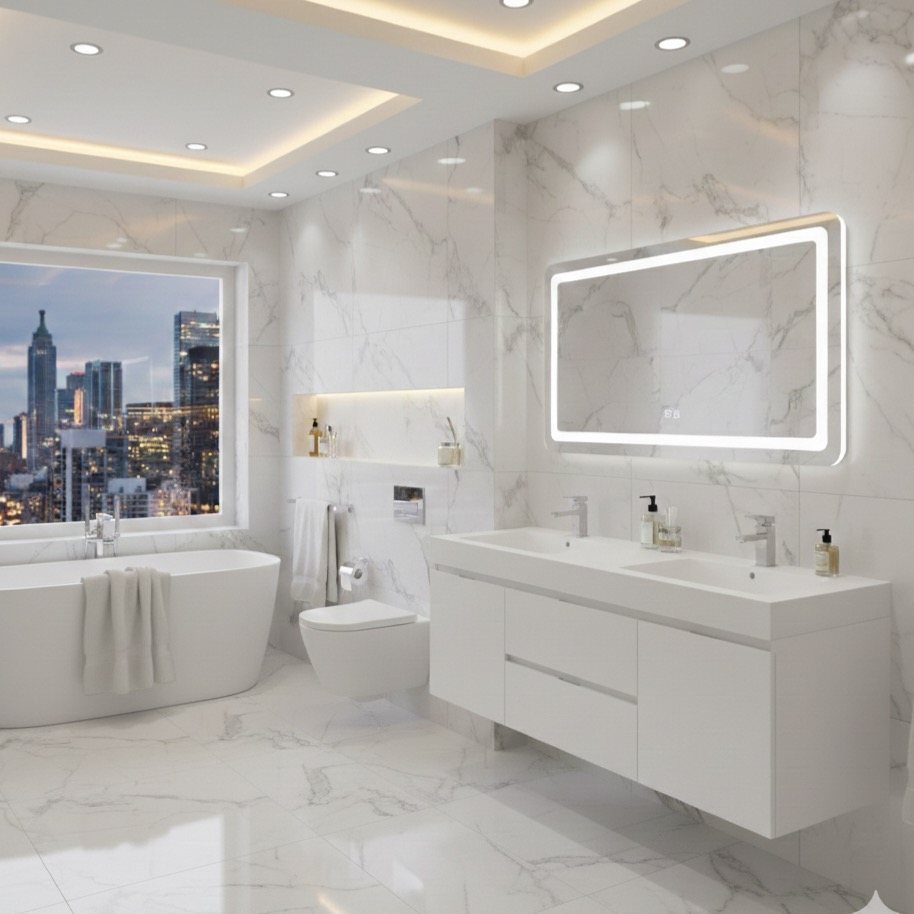
A floating vanity mounts the cabinet to the wall with no legs reaching the floor, which opens up the tile and makes a small bathroom feel larger than it is.
I would check the wall structure before ordering: these need solid blocking or studs, not just drywall anchors, and the plumbing has to run inside the wall rather than through the floor.
That extra step matters most in a powder room or guest bath where every visual inch counts.

【Bathroom Vanity with Ceramic Sink】This 36 inch bathroom vanity with ceramic sink is fixed to the wall, saving space area and making it easy to clean the bathroom floor. The ceramic sink is also easy to clean, making it the perfect choice for a bathroom vanity!
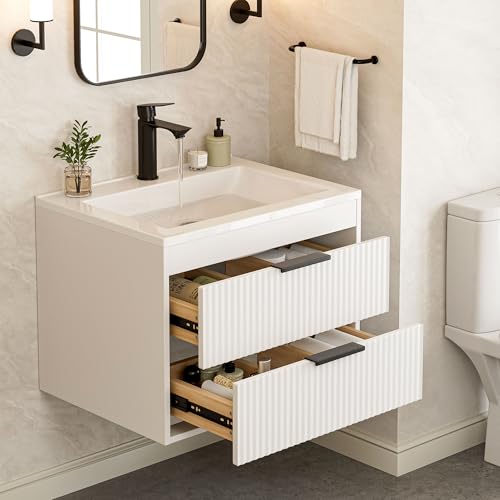
Stylish Design and Ample Storage: This modern style bathroom vanity adheres to minimalist aesthetics with clean lines. Paired with black handles, it exudes a sense of fashion. Equipped with two spacious drawers, it’s convenient for storing various bathroom essentials like skincare products and toiletries, helping you create a tidy and organized bathroom space
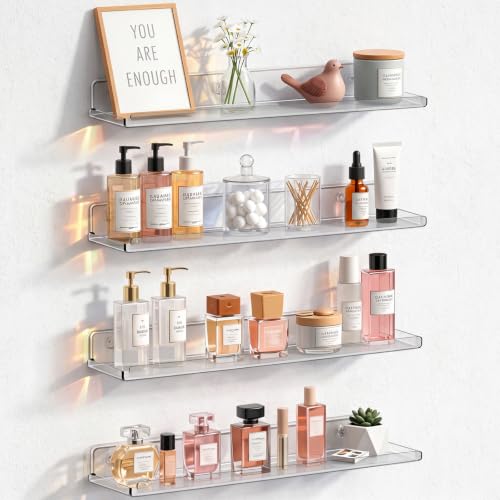
Sturdy & Stable: These floating wall shelves mount securely with expansion screws for a stable hold. Solid plastic material delivers lasting sturdiness, supporting up to 13 lb (6 kg) per shelf. All edges are well-finished for safety and front/side lips keep your essentials secure
2. Open Shelving
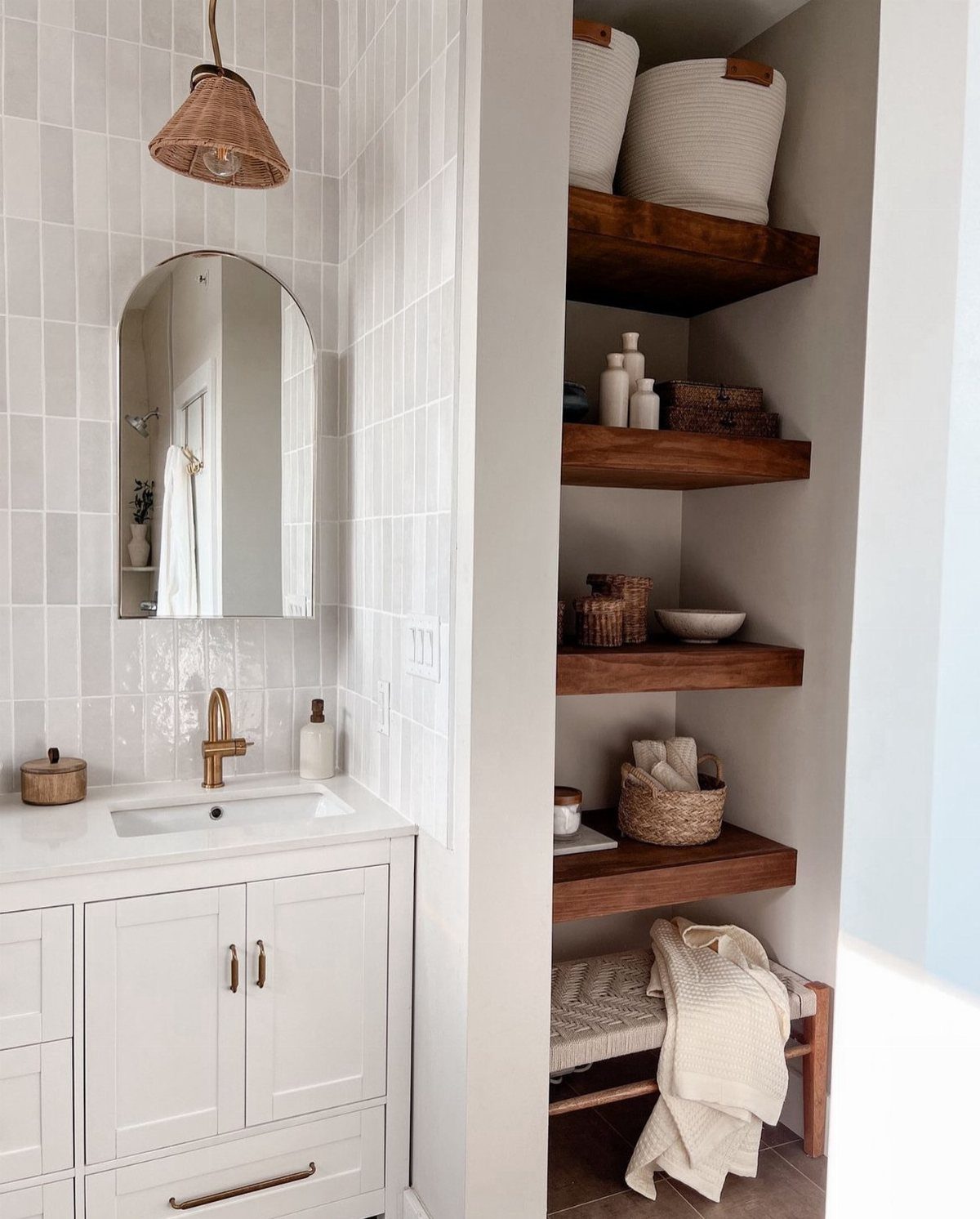
Recessed wall niches with thick wooden shelves keep towels and baskets within arm’s reach without a cabinet box protruding into the room.
I like this best when the shelving material contrasts the white vanity; the warmth of natural wood stops an all-white bathroom from feeling sterile.
You will deal with dust, and you will have to decide what sits there, since everything is on display. If you tend toward clutter, reserve open shelving for one small zone and give the rest of your storage doors.
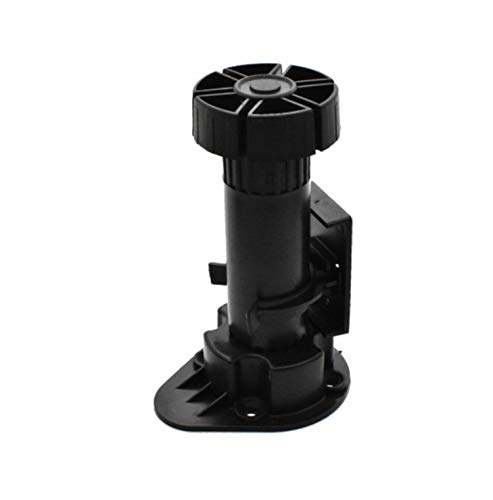
Accessories for DIY furniture, cabinets ect, Widely Applied to a humid environment room like kitchen, bathroom, to prevent ground water corrosion cabinet

HEAVY DUTY - They are durable, Each leg can support about 330 lbs

RARE 40-INCH SIZE SOLUTION: Measuring 39.8" W x 18.5" D x 34.4" H, this vanity fits bathrooms that are too big for a standard 36" cabinet but too tight for a 42". It maximizes your storage potential and counter space without wasting an inch
3. LED-Lit Mirrors
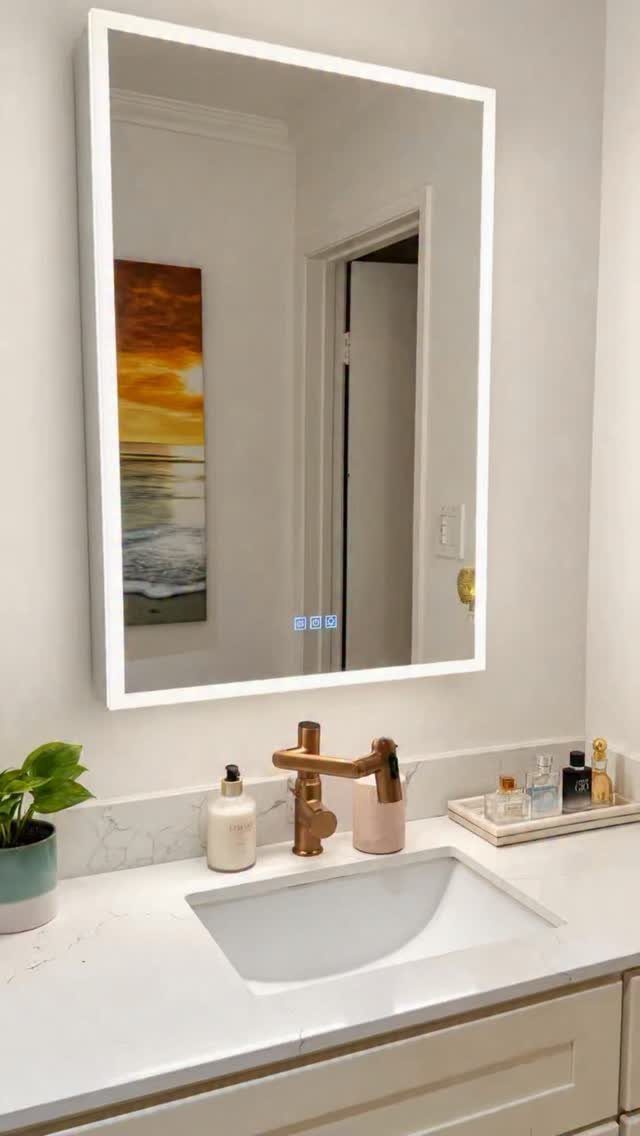
Backlit mirrors do 2 jobs at once: they replace the need for sconces flanking the mirror and they throw an even light across your face for shaving or makeup.
The version I would look for carries magnification and anti-fog, plus adjustable color temperature so you are not stuck with one light mood.
A maker of these units notes theirs includes Bluetooth speakers and a defogger, which I find genuinely useful; just confirm your electrician can place a box behind the mirror before you commit to the purchase.

【Seamless Built-in Design for a Modern Look】Transform empty wall space into a stylish focal point with this recessed wall niche. Designed to blend seamlessly into your home, it creates a sophisticated built-in look that enhances any room. The classic panel detailing and smooth finish add a touch of elegance while keeping your space organized and clutter-free. Please carefully check the product size and recessed openings on pic3 before purchase.
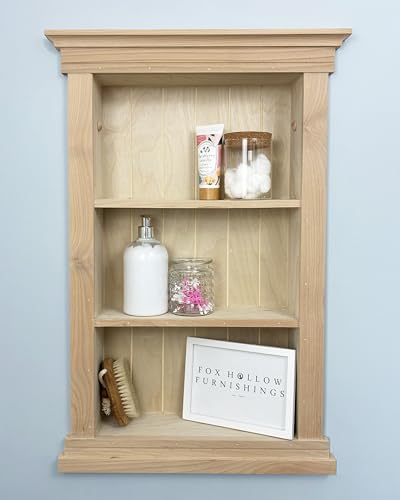
BATHROOM WALL NICHE SHELVES - Easy to install and comes fully assembled, these in-wall storage shelves have a sophisticated design and lacquer finish for moisture resistance, and work perfectly as a beautiful alternative to a bathroom storage cabinet.

【Dimensions】Designed to fit between standard wall studs for a clean built-in look. Inner size: 18"L × 14"W × 3.1"D; outer size: 22"H × 17"W × 3.3"D. Ideal for adding recessed wall storage anywhere in your home.
4. Frameless Mirrors
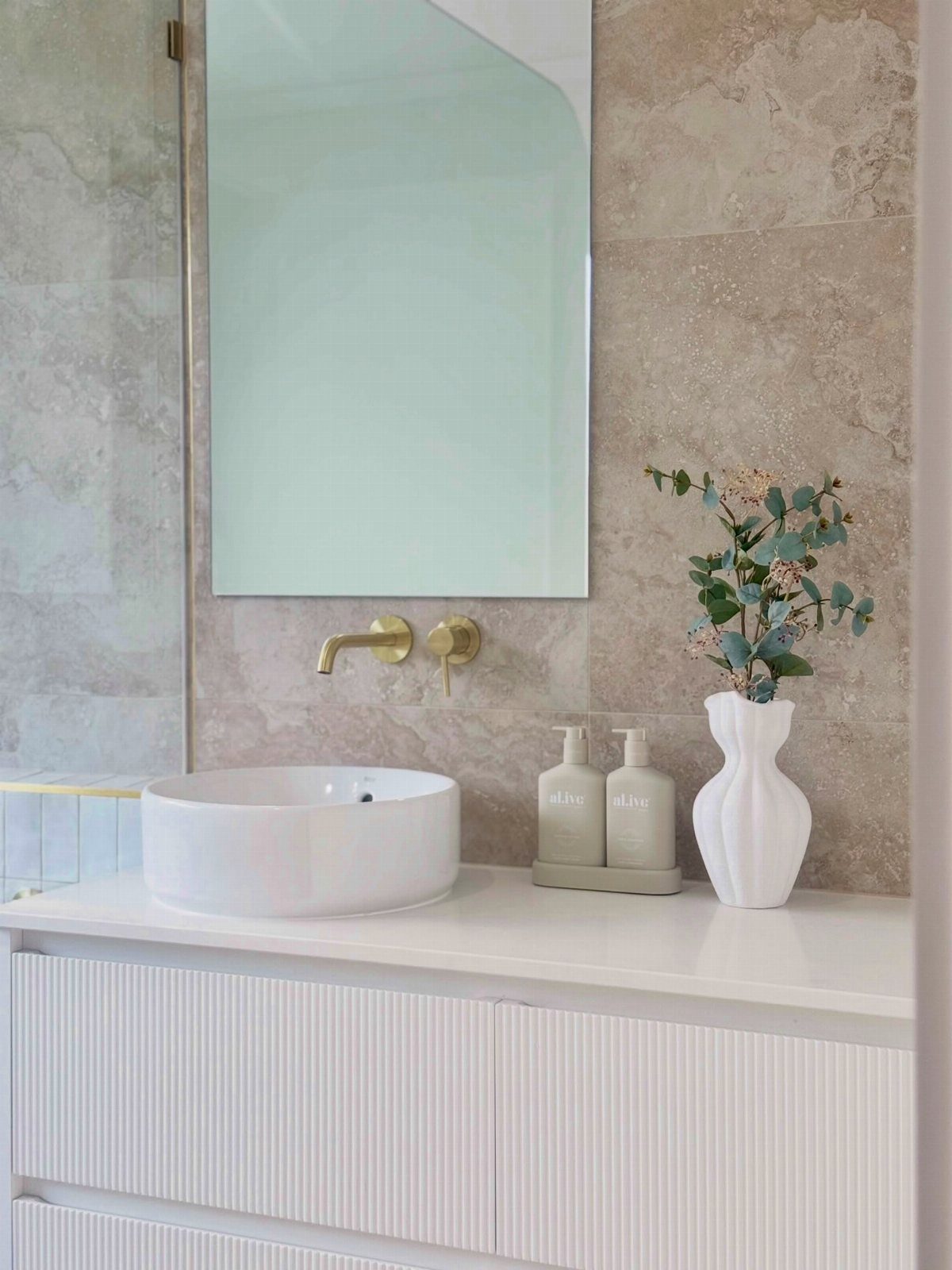
A mirror with no frame at all sits flush to the wall and lets the vanity hardware and tile do the visual work.
I would use this shape, a large rectangle or generous round, only when the wall behind it is finished well; any waviness in drywall or uneven grout lines become obvious without a frame to break the edge.
In my own preference, this pairing works best when the vanity has some texture or the sink is a vessel, so the mirror does not have to carry the whole composition.

【Backlit+Front-lit, Double Lighting Sources】: loaao led bathroom mirror is designed with both backlight and front light; Double lighting sources designed to make the mirror bright enough for doing makeup; skin care; shaving and dressing up; Super bright

【Backlit+Front-lit, Double Lighting Sources】: loaao led bathroom mirror is designed with both backlight and front light; Double lighting sources designed to make the mirror bright enough for doing makeup; skin care; shaving and dressing up; Super bright

DUAL LIGHTING SYSTEM: Features both backlit and front-lit LED illumination for optimal brightness and ambiance, providing professional-quality lighting for makeup application, grooming, and daily routines.
5. Undermount Sinks
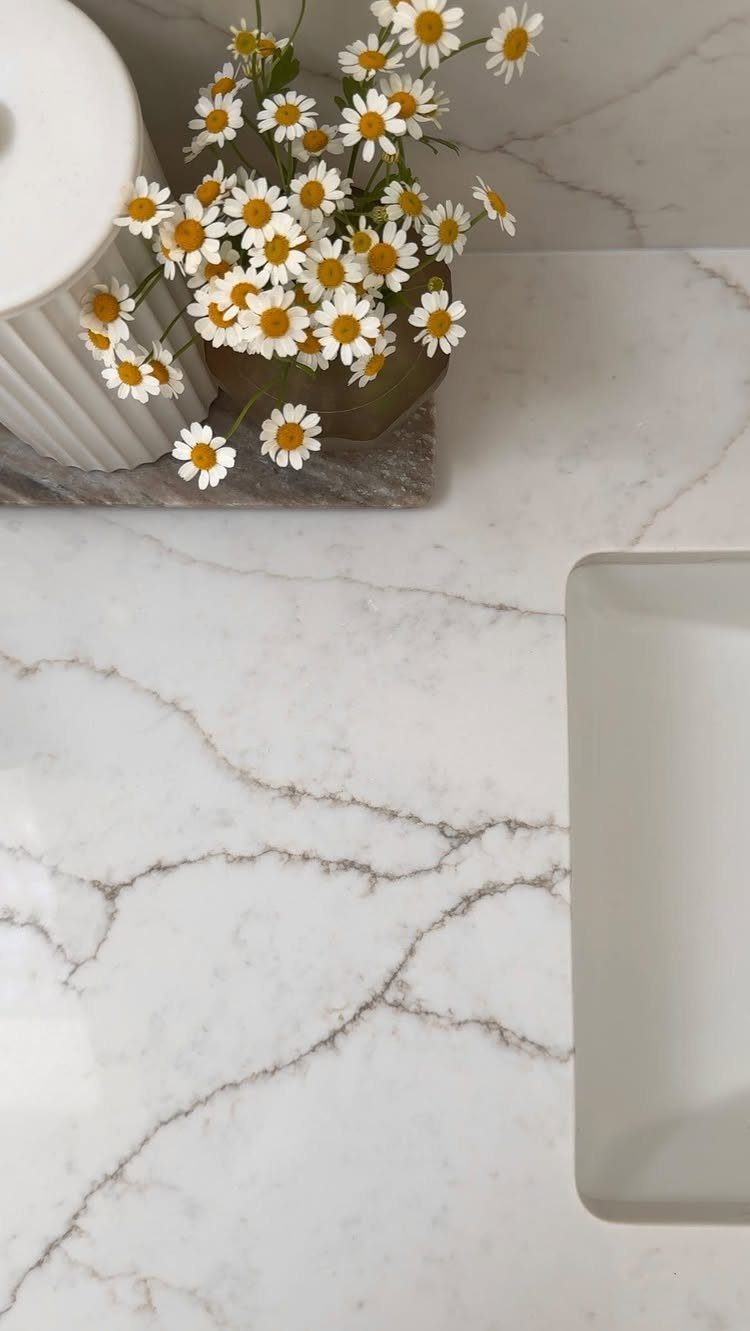
An undermount sink gets installed from below the countertop, leaving a single flat surface to wipe down with no lip catching water or toothpaste.
I would pair this with a quartz or solid-surface top, since the cut edge must be polished clean and natural stone can chip at that seam if the fabricator is not careful.
Veining that reads as marble performs better in an engineered material; that is the choice I would make for a bathroom that sees daily use.

【Clear Reflection & NO Distortion】: LOAAO bathroom vanity mirror is designed with HD float glass to deliver a clear reflection with no distortion; clear lines; simple modern design
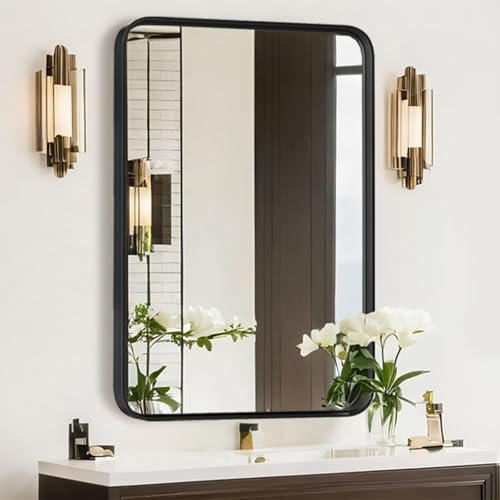
Clear Reflection & No Distortion: Utilizing advanced high-definition float glass, this bathroom vanity mirror delivers a sharp, distortion-free 1:1 image for an accurate and true-to-life reflection—perfect for use in a bathroom, vanity, or above the sink.

【Clear Reflection & NO Distortion】: LOAAO bathroom vanity mirror is designed with HD float glass to deliver a clear reflection with no distortion; clear lines; simple modern design
6. Integrated Linen Towers
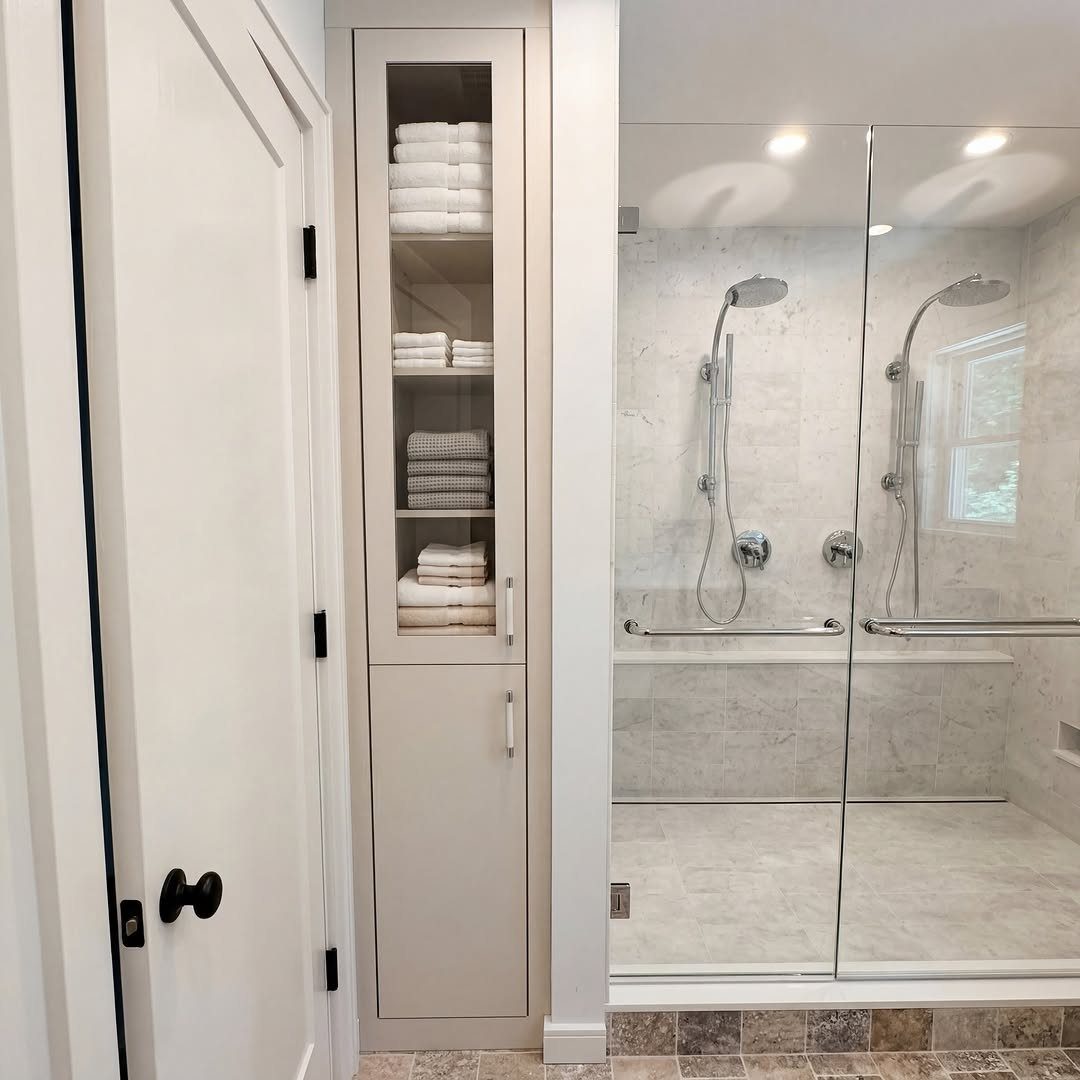
A tall narrow cabinet built into the wall beside the shower, with a glass door on its upper half, turns the gap between studs into storage for towels you can see and reach.
I would place the glass section at eye level and keep a solid panel below for less presentable items.
A shallow depth lets the unit sit on a standard stud bay without stealing floor space. My check before installing: confirm your shower waterproofing extends to the adjacent wall so moisture does not migrate into the cabinet back.

Space-Saving Wall-Mounted Design: Floating installation frees up floor space, making bathrooms feel more open and eliminating hard-to-clean bottom gaps. Adds a sleek, airy vibe to any space.

Item Includes 19 Pcs - 3 pack clear acrylic qtip holder dispensers with black lids(10oz) + 8 black labels with white pre-printed words (Cotton Balls, Cotton Swabs, Cotton Pads, Floss Picks, Bath Salt, Hair Accessory, Clips, Makeup Brush) + 8 black blank labels

Perfect Size for Small Bathrooms – Measuring 14" W x 10" D x 4" H. this compact wall-mounted sink is designed to maximize functionality in tight spaces. Ideal for half baths, powder rooms, or tiny bathrooms.
7. White Shaker Vanity Cabinets
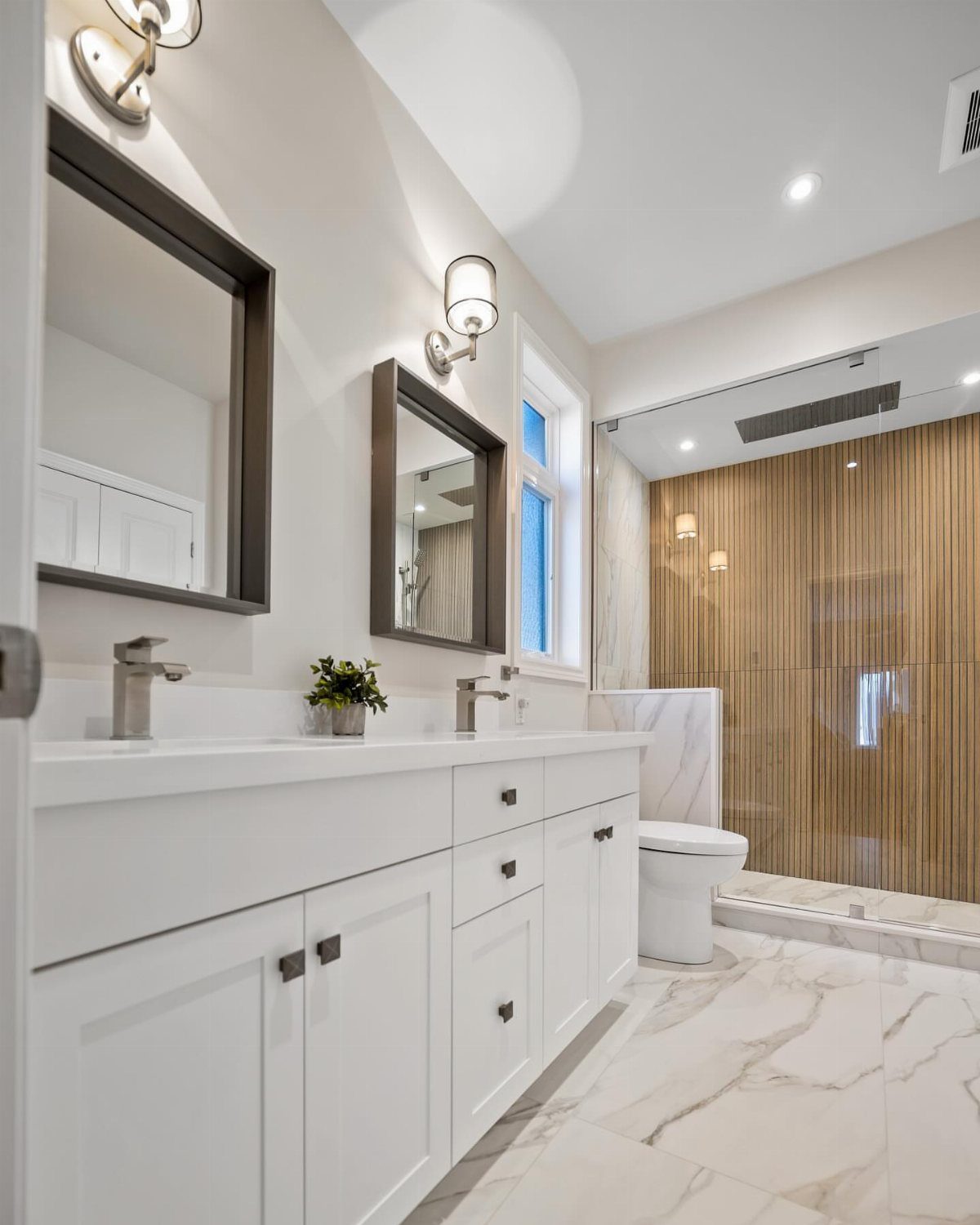
Shaker doors on a white vanity carry the same five-piece construction that has worked in kitchens for decades: a flat center panel inside a squared frame.
I would keep the hardware simple with brushed metal pulls because ornate knobs fight against that plain Shaker geometry.
The style suits a shared bathroom where one person wants traditional and another wants clean; it lands in the middle without looking compromised.
Check that the door overlay is either full or partial, not inset, unless your budget has room for the tighter tolerances inset demands.

Vanity is 60 in. wide, 22 in. deep and 34-1/2 in. high, making it ideal for a master or guest bathroom.

[No Shaking and Never Falling] - There are 2 "long legs" on the back of the toilet shelf, which can be inserted into the bottom from the gap on the back of the toilet, at the same time, 2 strong adhesive glue on the left and right of the storage shelf is firmly attached to the top of the toilet, double protection ensures itims on the shelf organizer won't shake and fall

【48 Inch Bathroom Vanity Base】This 48-inch vanity set includes a freestanding MDF cabinet and integrated composite sink top, providing a complete solution for bathroom renovation and storage needs.The freestanding design provides flexible placement options and works with various bathroom configurations. The elevated structure creates a clean visual style while offering practical storage functionality.
8. Fluted Texture White Cabinets
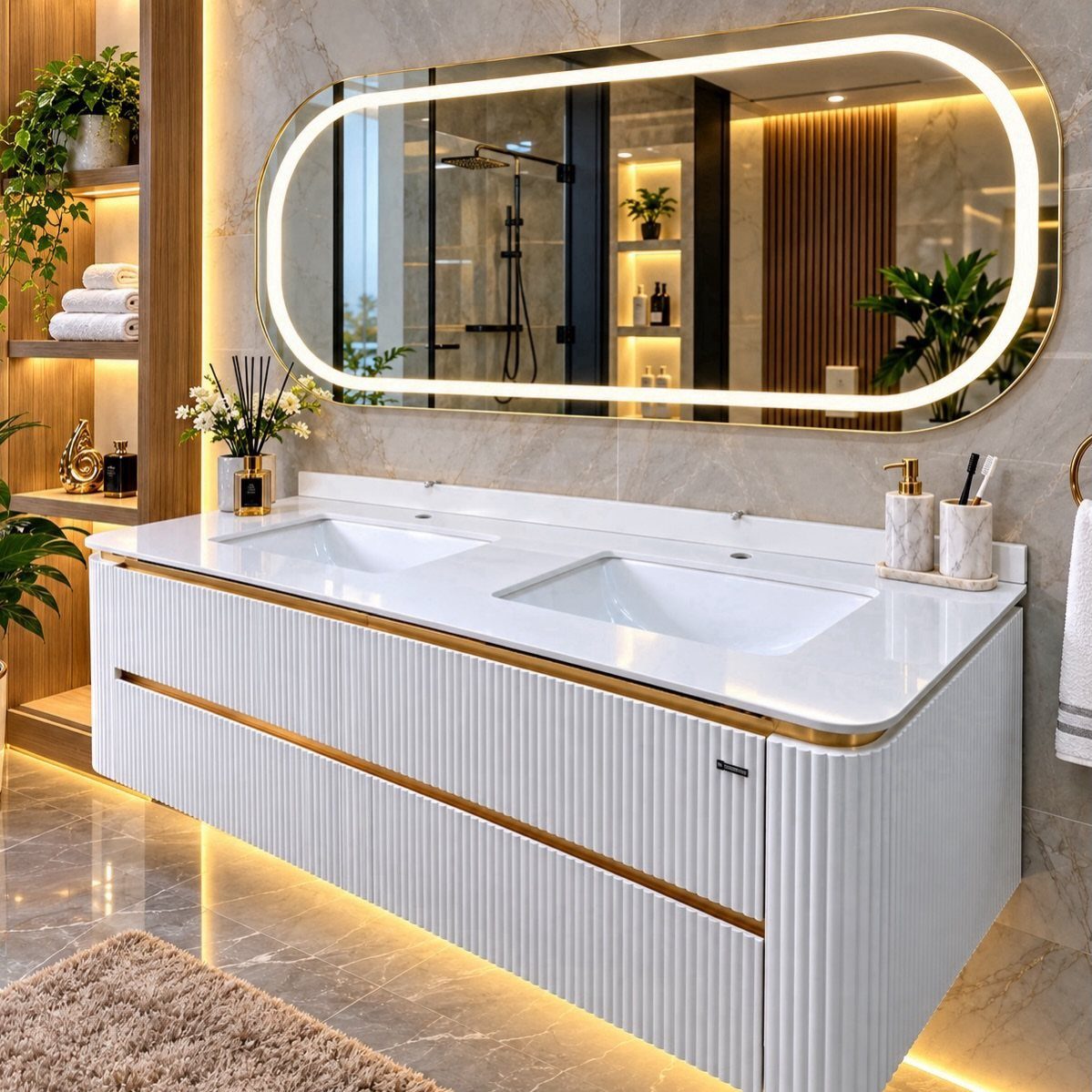
Vertical fluting adds shadow lines to a white vanity without introducing a second color.
Gold trim at the edges is optional; the fluted texture alone carries the design. A floating install like this one keeps the flutes visible from more angles, though the same treatment works on a toe-kick cabinet if you prefer floor-standing.
Wipe-down takes slightly more attention than a flat door, since dust settles in the grooves. I would choose this for a bathroom that needs one strong detail rather than many competing ones.

LAUNDRY ROOM AND BATHROOM SHELVES - The Aiden Wall Niche is handmade from real wood and features four sturdy shelves for storing and displaying personal items

【Dimensions】The recessed medicine cabinet features an inner size of 24"L x 14"W × 3.1"D and an outer size of 28"W × 17"H × 3.3"D. Designed to fit neatly between wall studs for a clean, built-in look.

【Dimensions】The recessed medicine cabinet features an inner size of 18"L x 14"W × 3.1"D and an outer size of 22"W × 17"H × 3.3"D. Designed to fit neatly between wall studs for a clean, built-in look.
9. White Corner Vanity Unit
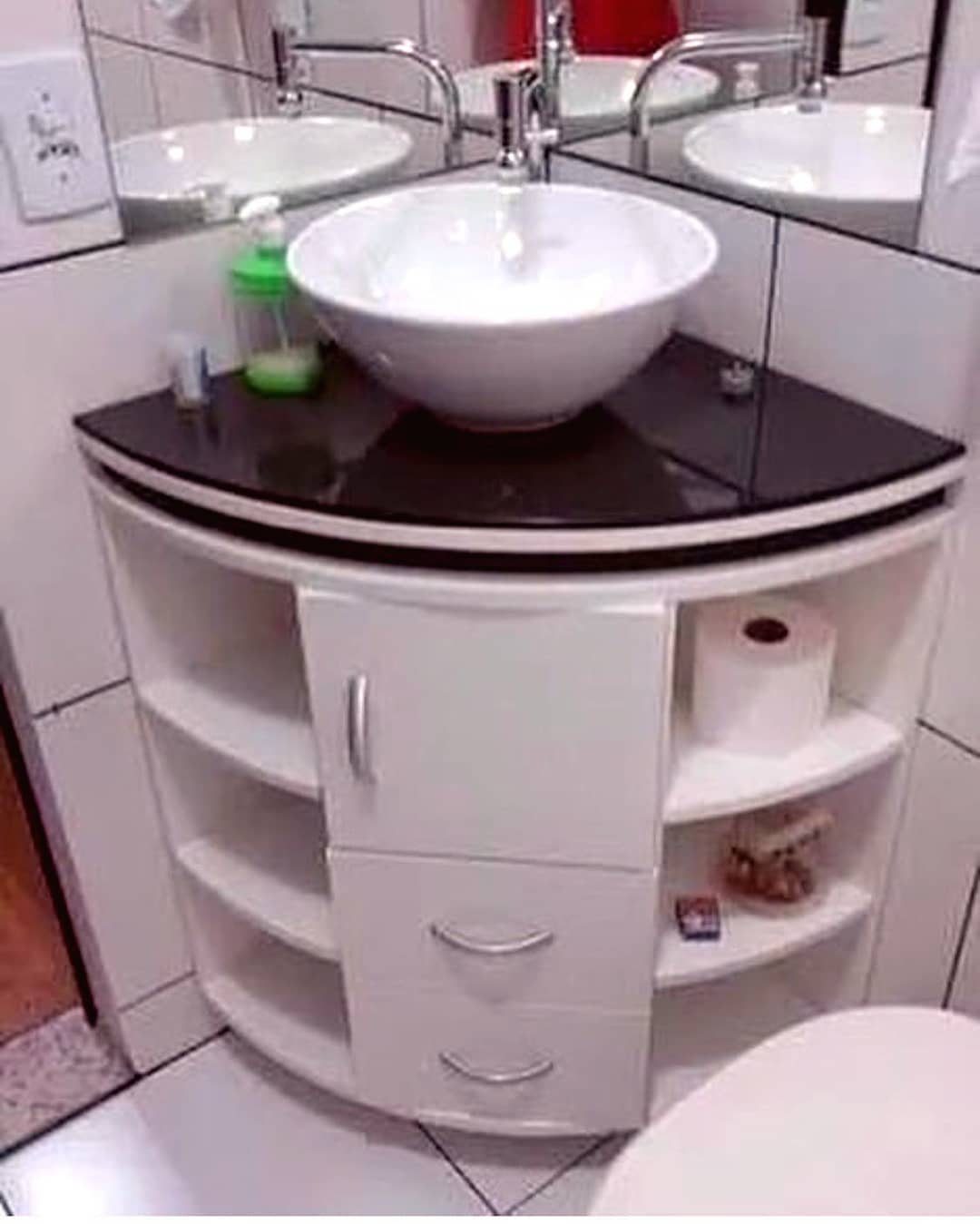
A corner vanity uses the angle that most layouts waste, though it means a smaller sink and less counter depth.
A black countertop against white reads as deliberate contrast, and I would keep that relationship rather than matching it to white, which can look accidental.
The vessel sink sits above the surface, so plan for a taller faucet and expect some splash on the mirror behind it.
Open side shelving, visible here, works for hand towels but not for everything you own. I would fit a small cabinet or drawer stack on the opposite side for the less presentable supplies.

【Backlit+Front-lit, Dual Lighting Sources】WISSMIELS led bathroom mirror is designed with both backlight and front light; Double lighting sources designed to make the mirror bright enough, which is twice or more brighter than other bathroom mirror with only front lit or backlit; Our vanity mirror with lights is bright enough for makeup, shaving, dressing or skin care. No dark, no fuzzy , super bright and clear. The Stylish look and design is perfect for your bathroom remodel and upgrade

Backlight: Creates soft ambient light to enhance the beauty of the bathroom. Ensures a continuous and stable light source. Sufficient light for makeup, shaving or beauty care.T empered glass shatterproof, seamless waterproof design, ensures perfect performance for many years.

【Rgb Backlit+Front-lighted】: Eight light modes for backlight and Three light modes for front light; The back light could be just white as well; With double lights, it provides enough light for applying makeup and shaving; Both light could be dimmable
Creating a Cohesive Look
I like a mirror frame that talks to the vanity finish directly, or steps over to a metal like matte black or aged brass so the room feels intentional rather than pieced together from whatever was left on the shelf.
I would carry that faucet finish through the sink, the shower fixtures, and every piece of hardware so nothing reads as an afterthought.
An all-white bathroom only works when you build in texture.
A little texture goes a long way in an all-white room; I reach for a woven basket, a soft geometric tile, or a shower curtain with a quiet pattern so the eye has somewhere to rest.
Gold hardware and light fixtures against white cabinets lift the room without adding color; I would use that sparingly, on pulls and a single pendant, rather than spreading it so thin it loses impact.

Excellent Design: Our this bathroom wall mirror is designed with a kind of fashion and modern industrial style. The frame is made of brushed matte black metal with an angled design to protect the mirror. Besides, the black mirror is anti-stripping, anti-cracking and anti-water,and it is safer and more premium than traditional recessed frames

【Clear Reflection & NO Distortion】: LOAAO bathroom vanity mirror is designed with HD float glass to deliver a clear reflection with no distortion; clear lines; simple modern design

Exceptional Clarity & Reflection: The Delma bathroom mirror provides a high-definition, distortion-free reflection that captures every detail, making it ideal for makeup application, shaving, and grooming.
Choosing Colors for White Vanities
White vanities accept almost any color you pair with them, which is why they stay popular. The question is how far you want to push the contrast.
For a light, quiet room, I would keep the palette in the same family: soft grays, warm taupes, or a barely-there blue on walls and textiles. The vanity stays the brightest note.
If you want the bathroom to feel grounded, darker shades work against white without overwhelming it.
Navy, charcoal, or forest green on a wall or floor tile gives the vanity something to push against. I would limit that dark color to one surface, though; two and the room starts to feel enclosed.
Gold accents read as intentional against white, not decorative excess. Brushed brass pulls or a single light fixture in a warm metal add that contrast without committing to a second color throughout.
Lighting Considerations
White vanities reflect light, which also means they reveal every shadow. The mirror choice matters here: a backlit unit throws even light across your face and removes the need for wall sconces that break up the wall plane.
I would look for adjustable color temperature so the light shifts from morning tasks to evening.
Sconces belong at eye level, high enough that the light washes across your face instead of falling from above and carving out shadows you do not want to see in the mirror.
A single overhead fixture flattens everything; 2 sources, from mirror and ceiling, give the room dimension.
The finish on your fixtures should match across every piece. Brushed nickel, matte black, or warm brass, repeated on faucet, shower, and hardware, keeps the eye moving instead of catching on a lone mismatched element.
In a white room, that consistency is what makes the space feel finished rather than blank.
Frequently Asked Questions
How to make a white bathroom more interesting?
Texture is what keeps an all-white room from reading as sterile, and in a bathroom that usually means tile variation, natural fiber, or a small pattern in the soft goods.
Gold hardware against white also lifts the room without adding color, though I would use it sparingly on pulls and a single pendant rather than spreading it thin.
What color should you paint bathroom cabinets?
A white vanity accepts almost any wall color or tile you pair with it, which is why it stays the default choice for rentals and first homes.
If you want the room grounded, navy, charcoal, or forest green on one wall or the floor tile gives the vanity something to push against.
Are white bathroom cabinets in style?
Yes, and they have stayed that way because they adapt across design styles without looking dated.
A white Shaker vanity still reads current in a shared bathroom because it splits the difference between traditional and clean; fluted white cabinets add texture without relying on a color trend that will date.
What are the best quality bathroom cabinets?
Solid blocking or studs for floating vanities, proper waterproofing behind integrated linen towers, and tight tolerances if you choose inset doors over standard overlay, those are the build details that separate a cabinet that lasts from one that loosens in the humidity.
Those construction details outlast the finish in daily use.
