
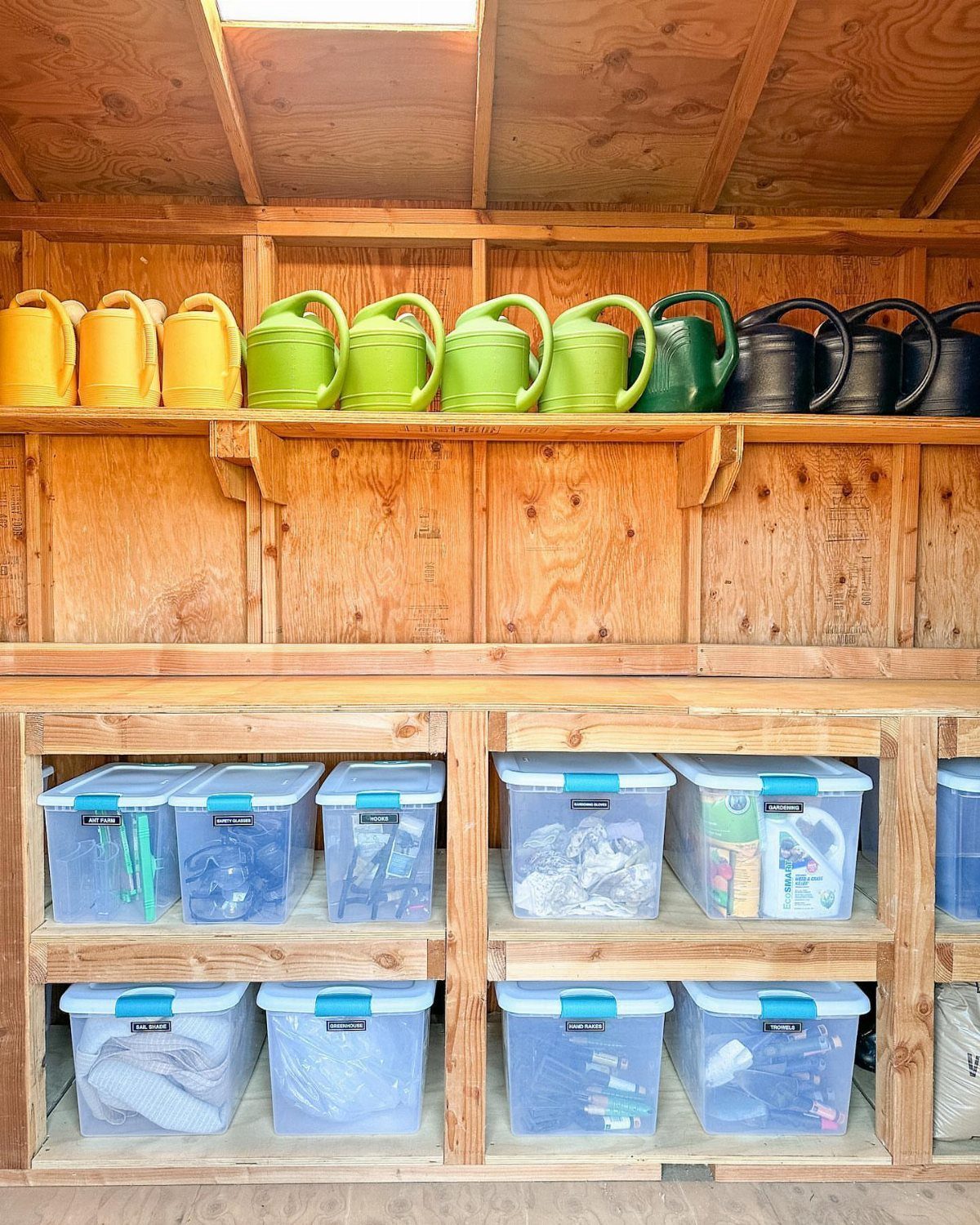
These organizing shed ideas run from a simple pegboard swap to a full ceiling rack install that needs a ladder and joist bolts, so the deciding factor is how permanent your setup is and whether you own the shed or answer to a landlord.
A freestanding tool stand moves with you; lag-bolted overhead racks and wall-mounted storage do not.
The detail that stops most builds early is bracket spacing that clears a PACKOUT box handle, not just the body, or you fight the stack every time you reach below.
1. Labeled Bins and Shelves
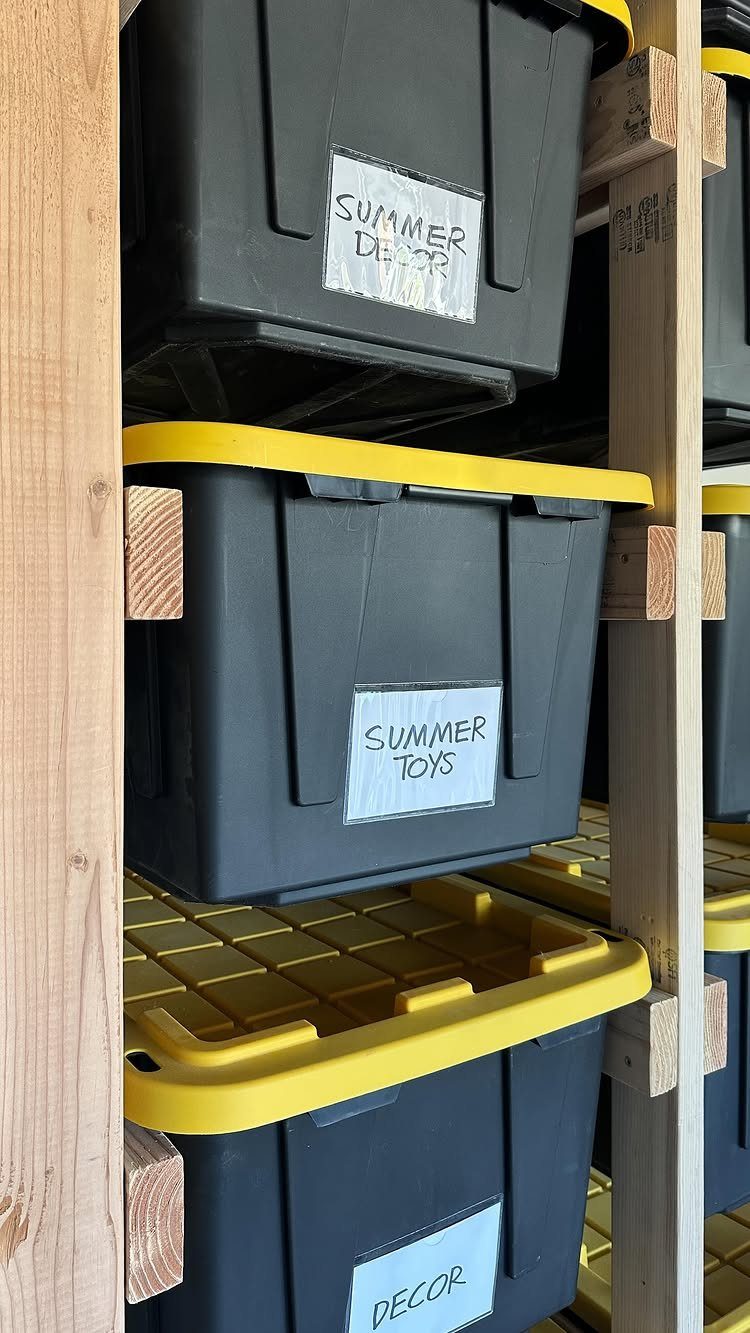
Black bins with yellow lids sliding into wooden framing is the kind of system that only works if the labels are honest. I would spend more time on the wording than on the build itself.
Labels need to be specific enough that someone else can find what they need without opening 3 lids first; "summer decor" and "summer toys" are the level of detail that actually works.
The wooden frame keeps the bins from shifting, which matters more than it looks; a bin that slides out of reach behind others turns into dead storage fast. Check your shelf depth against the bin length before you cut anything.
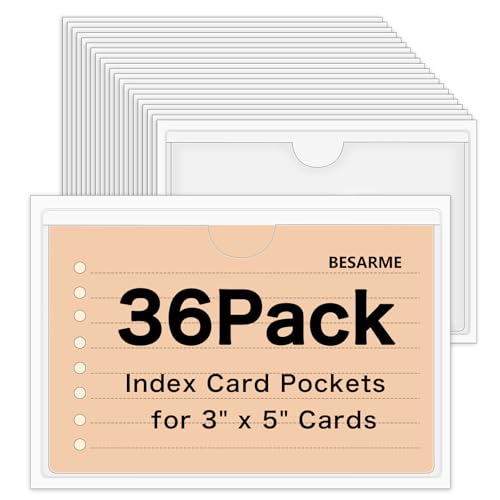
【Size】36 Pack 3.7" x 5.3" clear adhesive index card pockets with top opening for easy index card insertion or removal. 3.7" x 5.3" for 3" x 5" index cards, the right size can be used in many scenarios.

Effortless Storage Organization: White labels with a modern script style ideal for garage organization and home storage spaces. Made from high-quality Polyvinyl Chloride with a clear gloss finish, including 8 sheets with 136 preprinted labels for seamless organizing

Adjustable and Removable Bins Are Color Coded for Easy Organization of Parts and Tools
2. Hang Tools on Pegboards
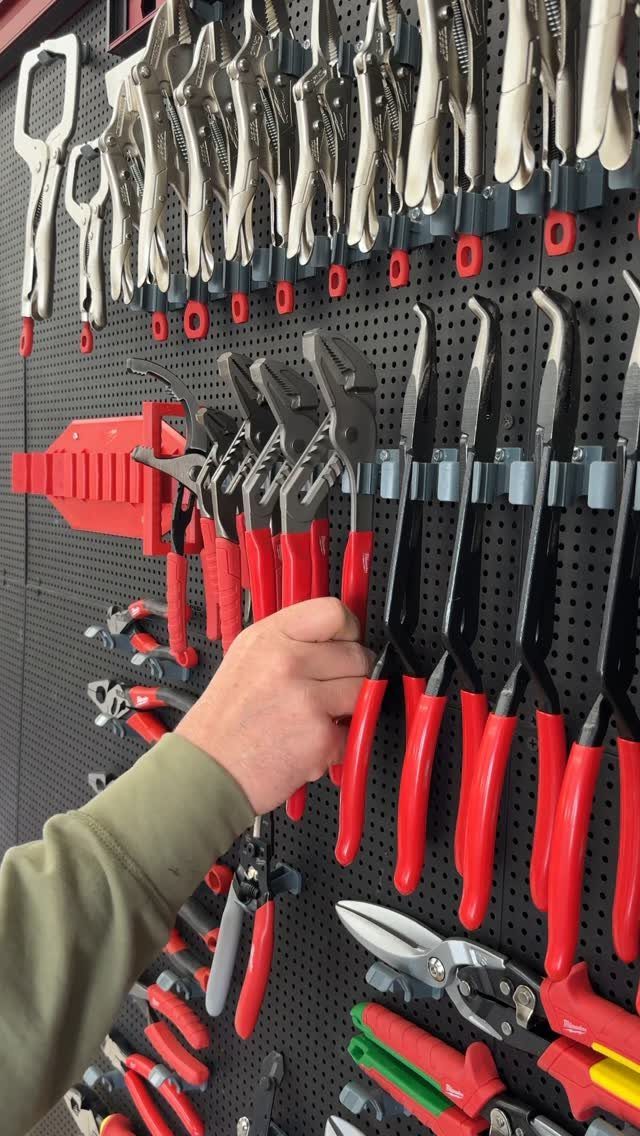
A black metal pegboard with pliers hung by handle color is the version I would pick over painted fiberboard every time.
Metal takes the weight of heavier hand tools without the hooks pulling through, and the dark color hides oil stains that collect in a working shed.
Steel pegboard costs about double the pressed-wood kind, so the choice depends on how wet your climate is and how long you plan to stay in the space.
For a small collection of pliers and drivers, the cheaper board is fine.
For a wall that grows, start with metal and skip replacing it later. Space the hooks so the handles do not knock when you pull one free.

METAL NAILBOARD: Our peg board panels are made of high quality steel with a powder coated finish that is strong, scratch resistant and easy to clean. Each small pegboard has a weight capacity of up to 50 lbs. This is a favorite product for tool organizers, DIY enthusiasts, store owners and office workers.

Wall Control metal pegboard is more than 10 times stronger than conventional pegboard

48-piece pegboard kit for freeing up workspaces and keeping tools neatly organized (tools not included)
3. Install Adjustable Shelving
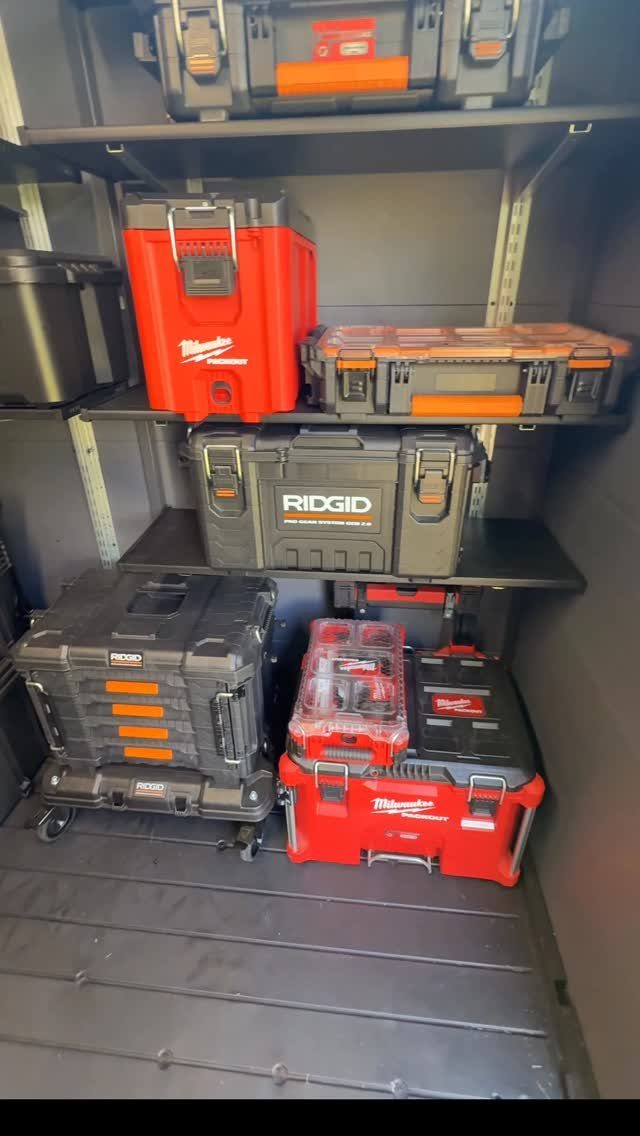
Wall-mounted brackets that let you move shelves up or down suit a shed because the stored items change size season to season.
Bracket spacing needs to clear the top handle on boxes like PACKOUT and RIDGID, not just the box body, or you will be fighting the stack every time you need something from below.
I would mount the lowest bracket at knee height; anything lower and you are crouching in dirt, anything higher and you waste the zone where heavy boxes are easiest to lift.
Check the bracket rating against your heaviest load; the hardware store label usually lists it per pair.

YOUR ITEMS, YOUR WOOD – YOU SUPPLY IT: Supply 3/4" thick wood (e.g., 1x4 to 1x10 pine or plywood, sold separately) for custom-fit shelves that match your items.

YOUR ITEMS, YOUR WOOD – YOU SUPPLY IT: Supply 3/4" thick wood (e.g., 1x4 to 1x10 pine or plywood, sold separately) for custom-fit shelves that match your items.

YOUR ITEMS, YOUR WOOD – YOU SUPPLY IT: Supply 3/4" thick wood (e.g., 1x4 to 1x10 pine or plywood, sold separately) for custom-fit shelves that match your items.
4. Magnetic Strips
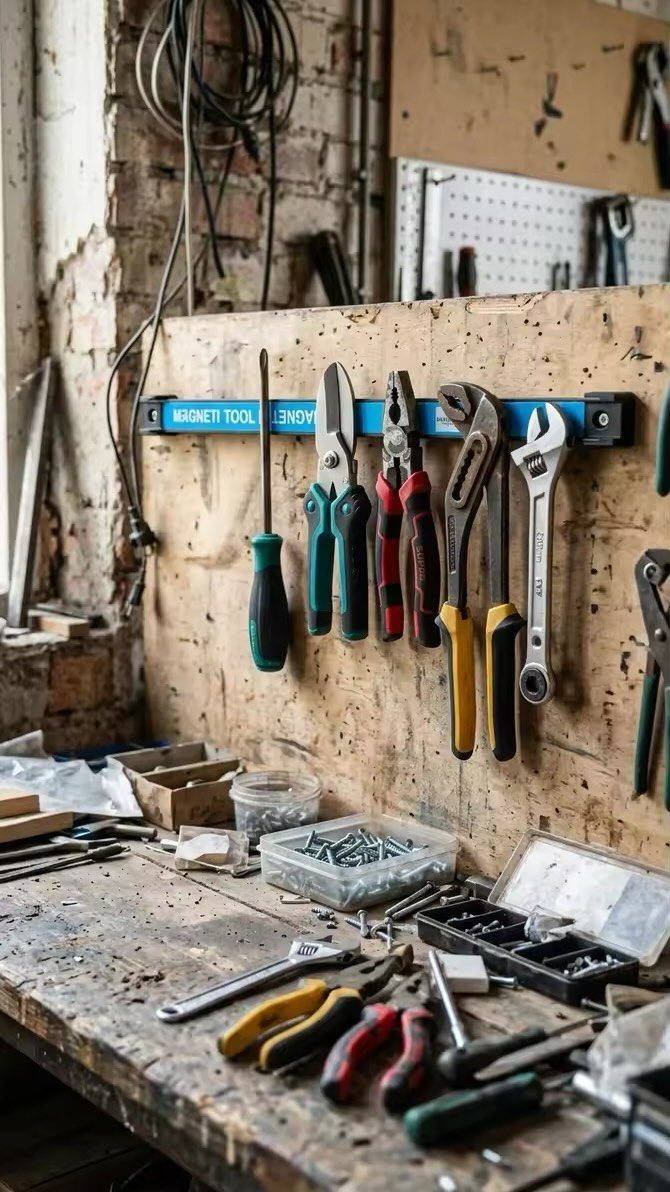
A blue magnetic strip on wood above a workbench is the setup I would use for the tools I reach for 10 times a session, not the ones I need twice a year.
Screwdrivers, pliers, and wrenches stay visible and grab fast; the scattered screws on the bench below are the reality the strip does not fix, only the tool end of it.
Mount the strip with screws, not adhesive; shed humidity weakens backing tape over a single summer. Shorter strips stay rigid; once a magnetic strip gets long enough to flex when you pull against it, it will eventually work loose.

EXCEPTIONAL DURABILITY - Boasting of high-quality alloy steel construction, this Magnetic Tool Holder Storage Organizer provides unmatched sturdiness and longevity. The power magnet strip is a heavy-duty solution for tool organization.

Benefits - The magnetic tool holder keeps all your tools organized and in one place, ensuring you always know where your tools are within reach.

GET RID OF MESSY TOOLBOX: The magnetic tool holder keep your tools and other metal objects organized and in one place. The magnetic bar takes very little space, and using it will help you get rid of messy toolbox, easily hold your wrenches, screwdrivers, spanners and keep them organized.
5. Wall-Mounted Hooks for Tools
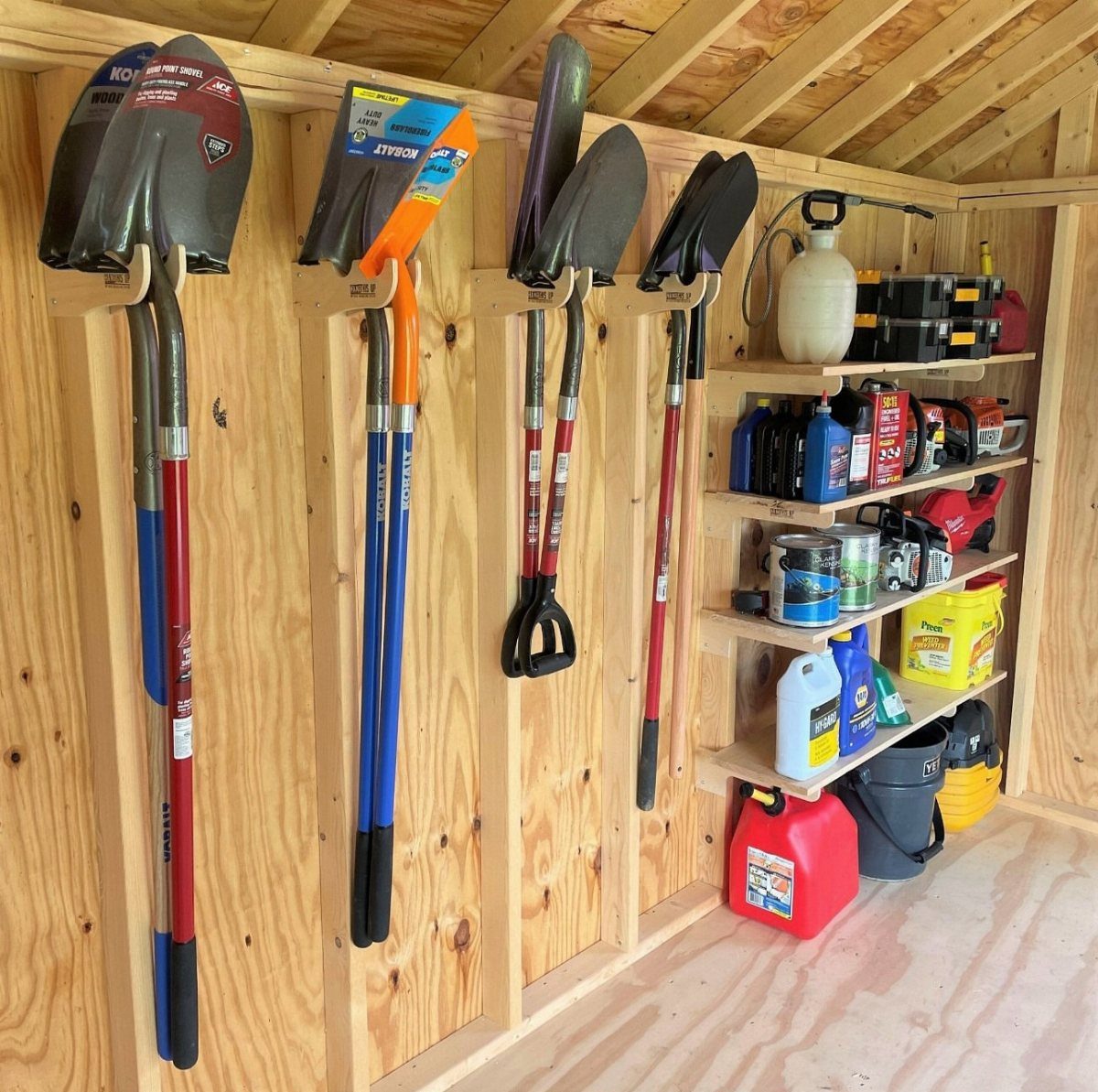
Wooden brackets screwed to wall studs, holding shovels in pairs, is the method I trust when the long-handled tools outnumber the wall space.
The KOBALT and Preen labels on the shelf tell me this is a working shed, not a display, and the brackets are doing a job that fancier systems do not do better.
Hook height should let blade ends clear the floor; too high and you are lifting unnecessarily, too low and dirt builds on the blade and the floor both.
Check that the bracket wood is exterior-grade; interior pine rots where shed walls breathe.

HEAVY-DUTY GARAGE TOOL ORGANIZER: Revolutionize your garage with this wall-mounted storage hero! Designed to hold shovels, brooms, power tools, and more, it can support up to an impressive 300 lbs.

Versatile Garage Storage Hooks: These heavy-duty wall-mounted garage hooks are ideal for storing not only kayaks but also canoes, ladders, bicycles, surfboards, snowboards, and more. They keep your garage or outdoor storage area organized while securely holding various bulky items

Versatile Garage Storage Hooks: These heavy-duty wall-mounted garage hooks are ideal for storing not only kayaks but also canoes, ladders, bicycles, surfboards, snowboards, and more. They keep your garage or outdoor storage area organized while securely holding various bulky items
6. Install Wall Storage
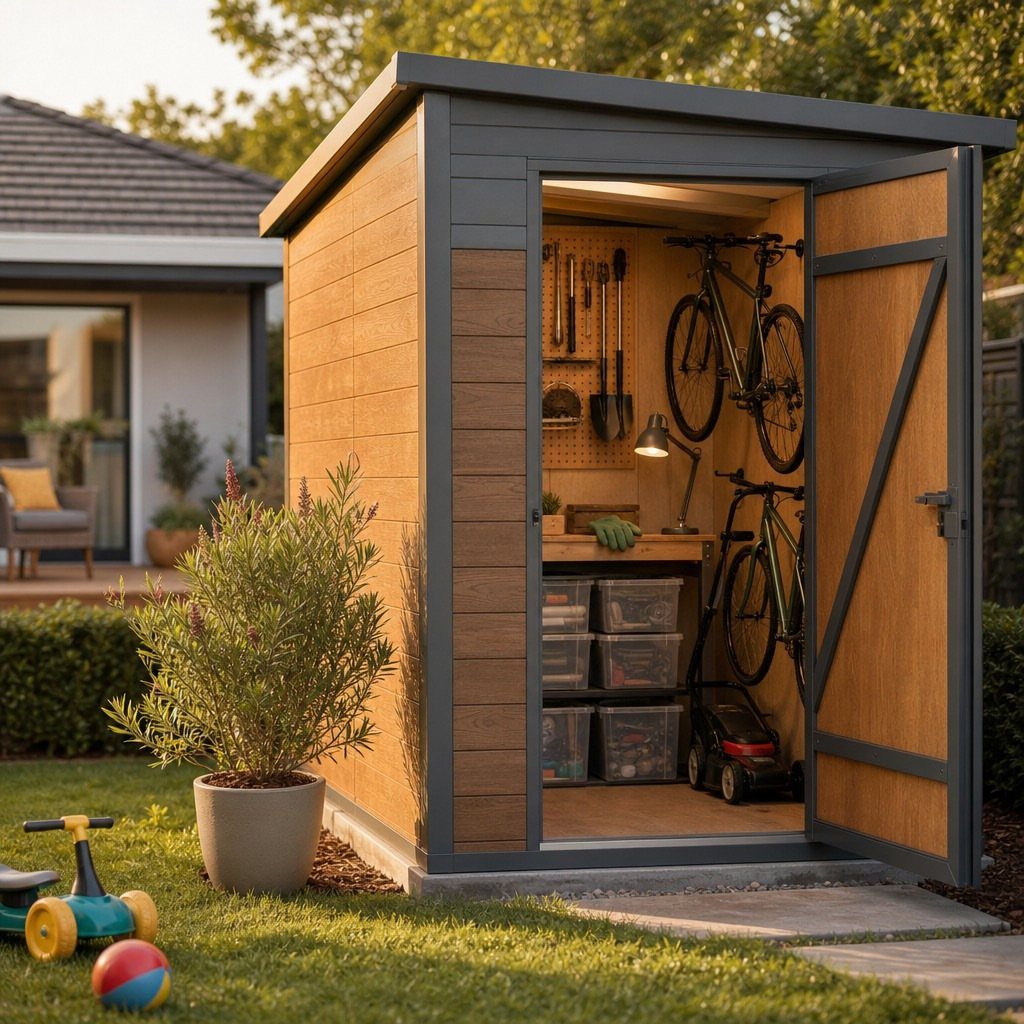
Bikes on wall hooks, a pegboard zone, bench storage below, and lawn gear on the grass outside is multiple functions in a footprint that most sheds treat as one.
This layout only breathes if you can walk the full length without stepping around something, so plan your door swing and first step inside before you mount anything.
I would build the bike wall first and set the hook spacing to the frame width, not the tire; a bike that swings is a bike that dents paint.
The pegboard and bench then fill the remaining wall in that order, since the bench needs floor contact and the board does not.

Efficient Storage Solutions: Talented Kitchen's garage labels and preprinted labels for storage bins transform disorganized areas into streamlined, efficient spaces. These labels feature a sleek black script on a clear background, enhancing the aesthetic appeal of your storage solutions

Dry Fuel Protection: This 2 pack charcoal storage bin includes two scoops for quick filling and measuring, plus two removable flavor labels for easy fuel identification. The lid helps reduce dust and moisture, while the waterproof lining keeps charcoal and pellets dry. Use it as a charcoal storage item for grilling supplies at home or outdoors

Product Size: 48 Pack clear adhesive index card pockets with top opening for easy index card insertion or removal. 4.5" x 6.3" for 4" x 6" index cards, the right size can be used in many scenarios.
7. Use a Potting Bench
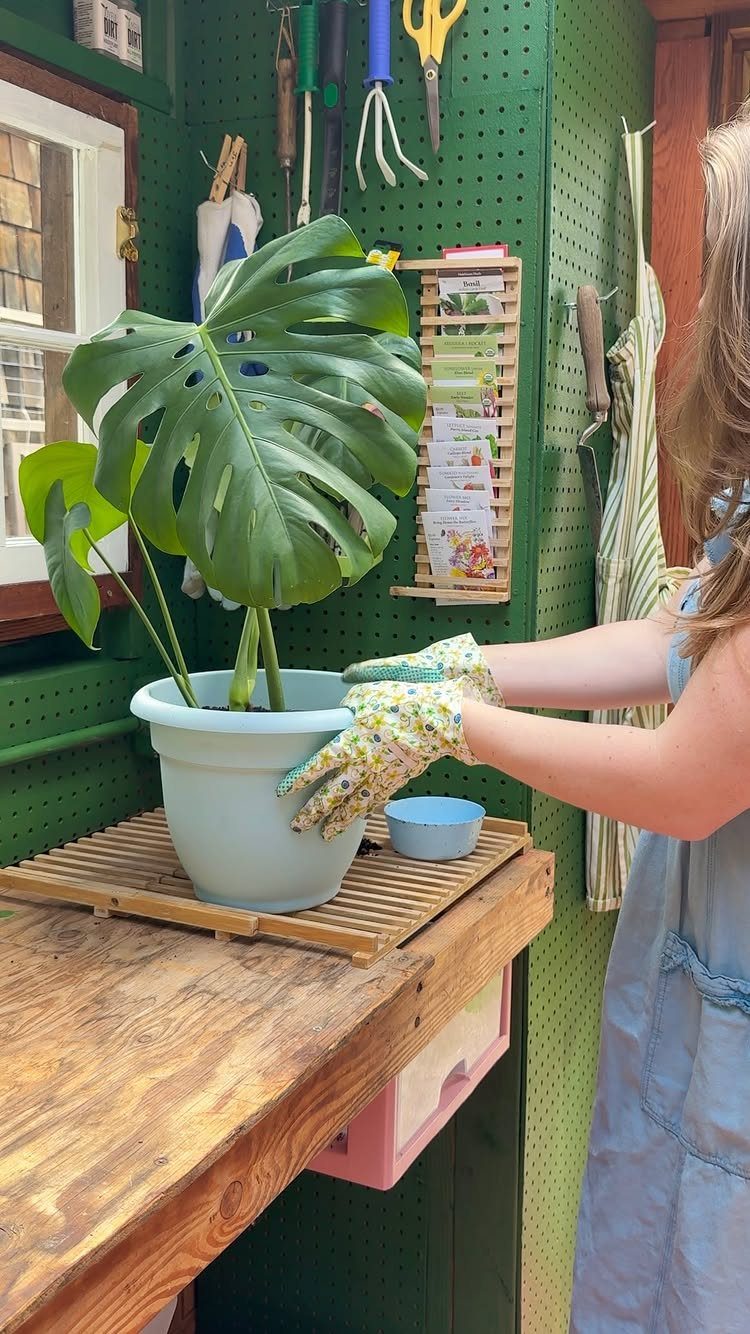
A potting bench inside a shed keeps soil and mess off the floor, and the green pegboard behind it puts seed packets and small tools at eye level while you work.
I would check that the bench height clears your knees when seated on a stool; too tall and you are hunched, too short and your back takes the strain.
A wood potting bench will stain and eventually rot without sealing; a coat of exterior deck sealer on schedule is the minimum.
A shelf below for dry bags of soil keeps them off the damp floor without cluttering the work surface.

Value Package: Our pegboard tool organizer comes with 120pcs pegboard accessories,16 different type pegboard hooks including 5pcs pegboard bins, curved hooks, angled hooks, straight hooks, and ring tool holder, multi tool rack. 49pcs of them are peg locks for fixing hooks

Value Package: Our pegboard tool organizer comes with 278pcs pegboard accessories, 16 different type pegboard hooks including 12pcs peg board bins, curved hooks, angled hooks, straight hooks, and ring tool holder, multi tool rack. 109pcs of them are peg locks for fixing hooks

4-Outlet Power Strip:This garage shelf wall mount features an integrated 4-outlet power strip with a 6.5-foot cord for easy charging. Charge your tools directly on the shelf without the hassle of searching for outlets. By combining storage and functionality, this tool rack saves space while ensuring your power tools are always ready for use.
8. Freestanding Tool Organizer Stand
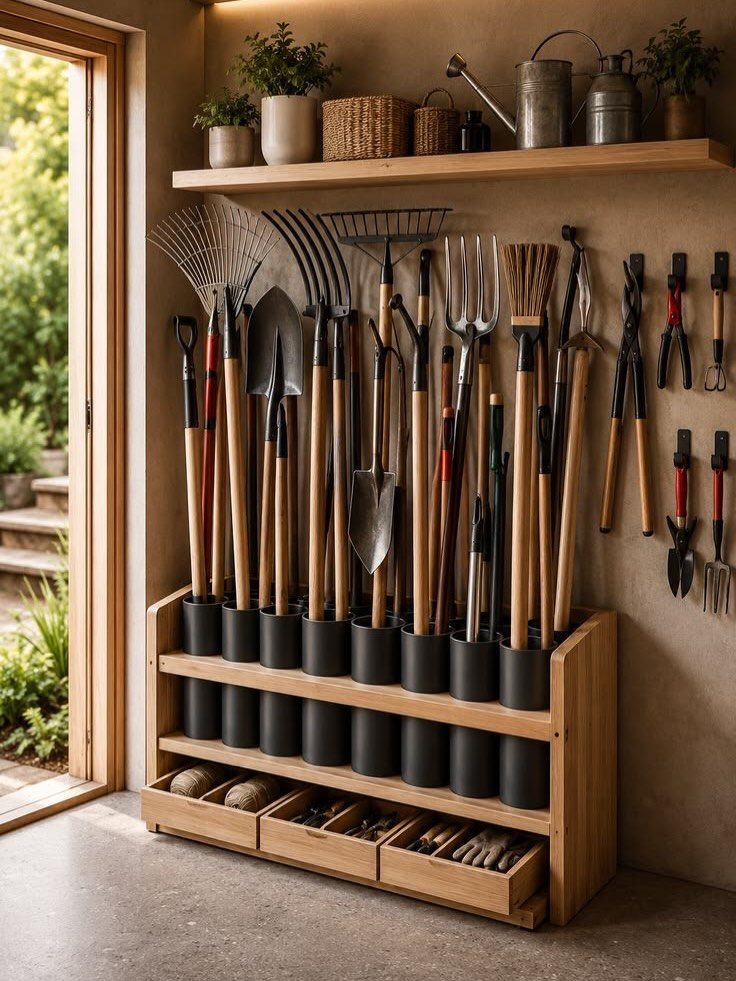
A freestanding wooden stand with cylindrical slots for long-handled tools lets you move the whole collection when you rearrange the shed, which wall-mounted systems cannot do.
Check your ceiling height before you buy or build a freestanding tool organizer; the tool handles need to stand clear of any shelf above by at least a hand width or you will be tilting the stand to free them.
Drawers below are where I would store gloves, twine, and the small items that otherwise migrate to the floor. This unit needs floor space a wall bracket does not.

Designed to support wood shelves 11-inches to 14-inches deep. Brackets sold individually and hardware/tracks not included

Elegant Design: Enhance your living spaces with delta's black 5-tier, set of 10 wall shelf brackets, offering a clean and minimalistic design that seamlessly fits into any decor style. Add your own wood shelf for a sophisticated, modern shelving system.

High quality material:pilaster shelf brackets are made of #45 carbon steel with galvanized finishing, long-lasting and rust resistant.
9. Overhead Racks
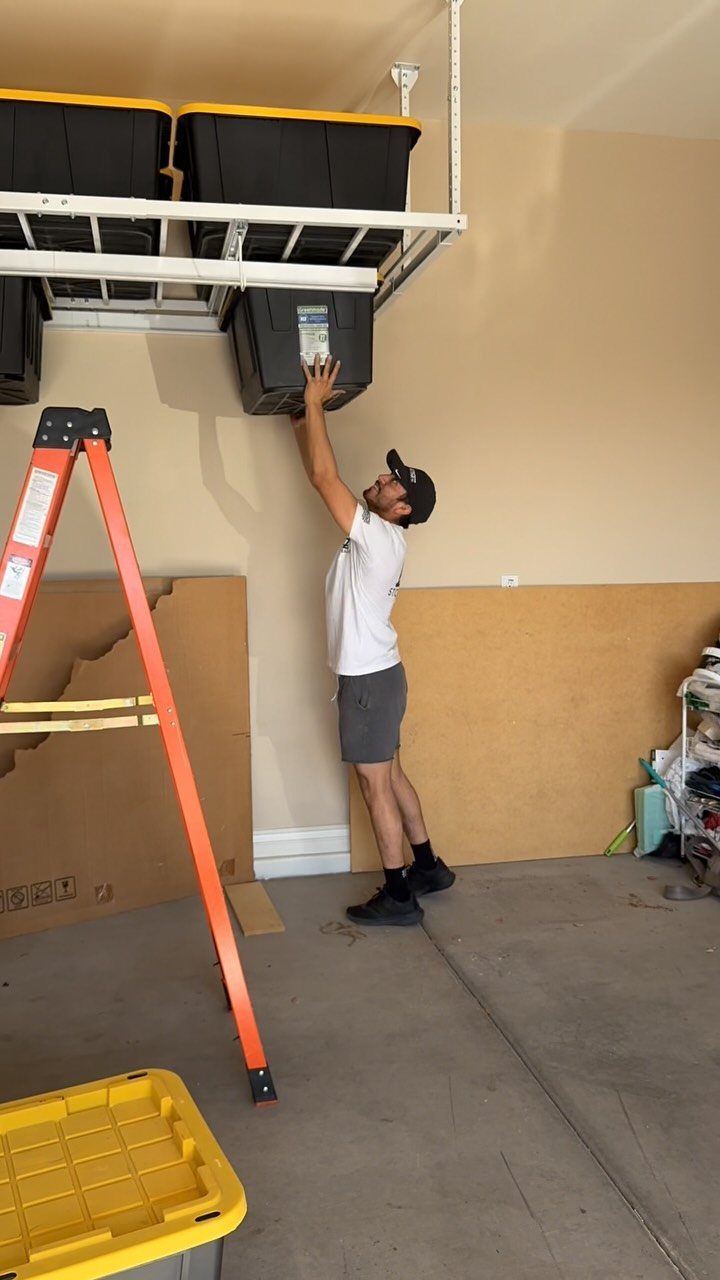
Ceiling-mounted racks in a shed turn the space above your head into storage for bins you need rarely; plan on climbing every time you retrieve or stow.
I would load only lightweight items overhead, and never the single copy of anything you might need in a hurry.
Check that your rack bolts hit joists, not just drywall or thin sheathing; shed roofs vary more than house construction and the wrong anchor pulls out with weight and time.
Flat lids stack and slide where rounded ones jam, so choose totes with that shape for overhead racks.

ROBUST CONSTRUCTION - Fabricated from high-quality alloy steel, the Magnetic Tool Holder ensures superior sturdiness. The potent magnet supports up to 10 lbs, perfect for your tool storage.

ROBUST CONSTRUCTION - Fabricated from high-quality alloy steel, the Magnetic Tool Holder ensures superior sturdiness. The potent magnet supports up to 10 lbs, perfect for your tool storage.

POWERFUL MAGNETIC RETENTION - Features high-strength alloy steel construction with powerful magnet strips that securely hold wrenches, pliers, and screwdrivers in place, providing exceptional durability and long-lasting organization for workshops and garages
Importance of Shed Organization
An organized shed buys back hours you do not notice you are losing until you stop losing them.
I have watched clients spend half an afternoon hunting for a single spade bit, and the math never works out in favor of the mess.
Tools left on concrete or piled against damp walls rust faster than most people expect; a good hand plane becomes yard art in 2 seasons without air circulation around it.
The real cost is not the replacement, it is the project that stalls because the right tool is buried or seized up.
Safety matters more in a shed than in most rooms because the hazards are sharp, heavy, and often gasoline-powered.
A blocked door is a fire code problem and a practical one; you need an exit path clear enough to carry a gas can or a propane tank through without tripping.
I would rather have less stored and reach all of it than fill every corner and fight the space every time I enter.
Whether you use your shed to store tools, seasonal decorations, gardening supplies, or outdoor equipment, a thoughtful approach to shed storage can transform it into a tidy and highly functional space.

KEY INNOVATION: OJY Wall Mount Fishing Rod Storage Rack uses OJY's innovative Rubber band clamp technology, which can firmly place 6 fishing rod racks.

GOLF BAG ORGANIZER: Koova Golf Bag Rack securely stores any size golf bag on the wall and up off the floor. An easy-to-install wall mount design and clamp system keeps bags and clubs in place, upright and from tipping over - potentially damaging clubs.

【Strong, Safe & Secure】 monTEK bike wall mount is made of heavy-duty solid steel are able to hang weights up to 30 kg / 66.2 lbs. Rubber coated wall bike rack relieves pressure on the wheels, rims, and spokes and protects from unwanted scratches. Bike Wall Storage - Hang and store your bike in a vertical position, allowing for convenient storage and removal.
Maintaining Shed Organization
The system fails the first time you leave something out overnight.
I put tools back immediately because the shed is cold, dark, and easy to close the door on; the temptation to deal with it later is strong, and later becomes spring.
A monthly sweep catches the grit that tracks in on boot soles and the spider webs that colonize unused corners fast. I do this on the same weekend I check lawn mower oil, so the habit sticks.
Seasonal review is where most shed organization actually lives or dies. I pull everything out once, usually in late fall, and sort into 3 groups: used this year, might use next year, and did not touch it.
The third group leaves the shed entirely. Damaged tools go to a repair pile or the trash; keeping a broken handle "just in case" is how clutter starts.
Flat surfaces are not storage; if the bench or a shelf top becomes a temporary landing zone, it will be permanent by the next weekend.
Choosing the Right Shed
Double doors are not a luxury if you store a wheelbarrow, a lawn tractor, or anything that needs more clearance than a single door gives.
I have seen sheds rendered half-useless because the single door forced a diagonal approach that wasted floor space.
Built-in ventilation matters more than most buyers notice until August, when stagnant air turns the interior into a moisture box; roof vents or gable vents should move air without letting rain enter.
Stud-mount capability determines whether you can install shelves and hooks that actually hold weight.
Thin panel walls flex and tear; I want framing I can sink a lag bolt into without guessing what is behind the skin. Steel-reinforced resin or treated wood both work if the wall structure is there.
Shelving included from the factory saves a build step, but check the depth; included shelves are often shallow, suited for pots and small bins rather than the deep storage bins a working shed needs.
Quick assembly is worth paying for if the alternative is a three-weekend project that sits half-built through the first frost.
Frequently Asked Questions
How to build a storage shed cheaply?
Reclaimed materials and DIY kits are the usual starting points, though I would put more weight on choosing a shed with stud-mount walls and proper ventilation even if it costs slightly more up front.
What are some good storage ideas for a shed?
Use vertical space in layers: wall-mounted brackets for adjustable shelving, metal pegboard for hand tools, and ceiling racks for bins you need rarely.
Flat-top bins slide overhead where domed ones catch and stop, and I label mine with enough detail that my neighbor could hand me the right box without guessing.
Keep a clear walking path from the door; a blocked exit is a hazard in a space with sharp tools and gasoline-powered equipment.
What are some DIY ideas for outdoor storage?
A freestanding wooden tool stand with cylindrical slots lets you move the whole collection when you rearrange, which wall-mounted systems cannot do.
I mount magnetic strips on wood backing above the bench for screwdrivers and pliers I grab constantly; screws hold, but adhesive backing gives up by August in shed humidity.
